Chapter 7 – Activity-Based Costing and Activity-Based Management
7-1
Activity-Based Costing and
Activity-Based Management
Learning Objectives
(Unit 7.1)
2. Calculate activity-based product costs. (Unit 7.2)
3. Explain the difference between traditional product costs and activity-based product costs. (Unit
7.2)
4. Distinguish between value-added and non-value-added activities. (Unit 7.3)
5. Explain how information about activities can be used to make decisions. (Unit 7.3)
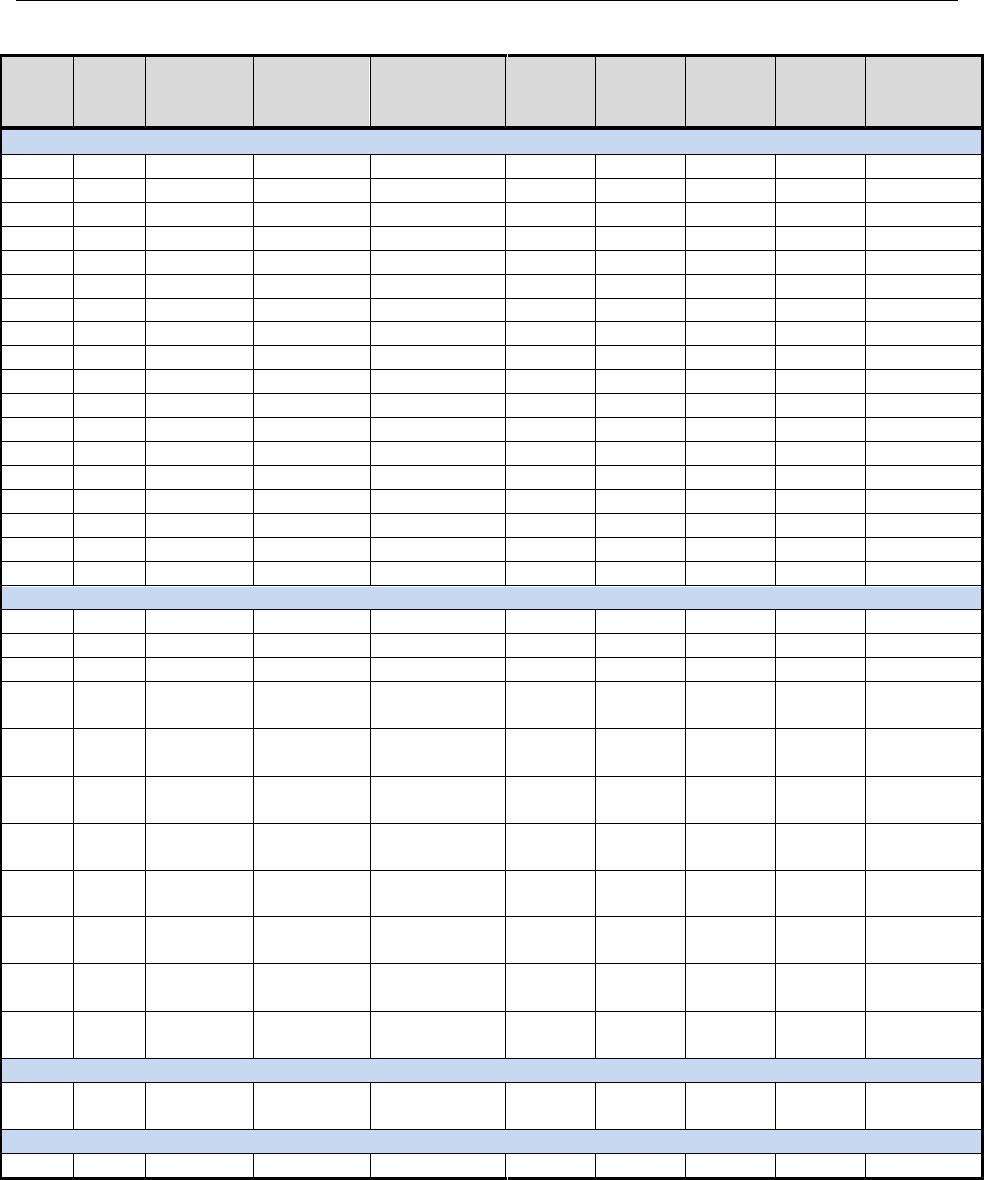
Summary of End of Chapter Material
Difficulty: E = Easy, M = Moderate, D = Difficult
Bloom: K = Knowledge, C = Comprehension, AP = Application, AN = Analysis, S = Synthesis, E = Evaluation
AACSB: A = Analytic, C = Communication, E = Ethics
AICPA FN: DM = Decision modeling, RA = Risk Analysis, M = Measurement, R = Reporting, RS = Research, T = Technology
AICPA PC: C = Communication, I = Interaction, L = Leadership, P = Professional demeanor, PM = Project Management,
PS = Problem Solving and Decision Making, T = Technology
IMA: BA = Business applications, BP = Budget Preparation, CM = Cost Management, DA = Decision Analysis,
PM = Performance Measurement, R = Reporting, SP = Strategic Planning
Item
L. O.
Difficulty
Level
Minutes
to
Complete
Bloom’s
Taxonomy
AACSB
AICPA
FN
AICPA
PC
IMA
Ethics
Coverage
GUIDED UNIT PREPARATION
Unit 7.1
1
1
E
2
K
A
R
C
CM
2
1
M
10
K, C
A
R
C
CM
3
1
D
10
C
A
R
C
CM
Unit 7.2
1
2
E
2
K
A
M
PS
CM
2
2
E
2
K
A
M
PS
CM
3
2
M
2
C
A
M
PS
CM
4
2
M
4
C
A
M
PS
CM
5
2
M
3
C
A
M
PS
CM
6
3
D
4
K
A
R
C
CM
7
3
D
4
K
A
R
C
CM
Unit 7.3
1
4
E
2
K, C
A
M
PS
SP
2
4
E
2
K, C
A
M
PS
SP
3
4
M
2
C
A
M
PS
SP
4
5
D
4
C
A
M
PS
SP, DA
5
5
D
4
AN
A
M
PS
SP, DA
CHAPTER
7
photo: © jsnyderdesign / iStockphoto
Solutions for Davis & Davis, Managerial Accounting, 2nd ed.
7-2
Item
L. O.
Difficulty
Level
Minutes
to
Complete
Bloom’s
Taxonomy
AACS
B
AICPA
FN
AICPA
PC
IMA
Ethics
Coverage
EXERCISES
7-1
1
M
12
AP, AN
A
R
C
CM
7-2
1
M
10–15
C
A
R
C
CM
7-3
2
D
10
AP, AN
A
R
C
CM
7-4
2
D
8-10
AP, AN
A
R
C
CM
7-5
2
E
10–12
AP
A
M
PS
CM
7-6
2
E
10–12
AP
A
M
PS
CM
7-7
2
E
10–12
AP
A
M
PS
CM
7-8
2
D
15–20
AP, AN
A
M
PS
CM
7-9
2
D
15–20
AP, AN
A
M
PS
CM
7-10
2
D
15–20
AP, AN
A
M
PS
CM
7-11
2
D
15–20
AP, AN
A
M
PS
CM
7-12
3
M
15
AP, AN
A
M
PS
CM
7-13
3
D
10
E, AN
A
M
PS
CM
7-14
2, 3
M
15–20
AP, AN
A
M
PS
CM
7-15
4
M
10–15
C
A
M
PS
SP
7-16
4
M
10–15
C
A
M
PS
SP
7-17
5
D
15–18
AN
A
M
PS
SP, DA
7-18
5
D
10–15
AN
A
M
PS
SP, DA
PROBLEMS
7-19
2
M
20–25
AP
A
M
PS
CM
7-20
2
M
20–25
AP, AN
A
M
PS
CM
7-21
2, 3
D
15–20
AP, AN
A
M
PS
CM
7-22
2, 5
D
25–30
AP, AN, E
A
M
PS
CM,
SP
7-23
2, 5
M
15–20
AP, AN
A
M
PS
CM,
SP
7-24
2, 3,
5
M
25–30
AP, AN, E
A
M
PS
CM,
SP
7-25
2, 5
M
25–30
AP, AN, E
A
M
PS
CM,
SP
7-26
2, 5
D
30–35
AP, AN, E
A
M
PS
CM,
SP
7-27
2, 3,
5
D
40–50
AP, AN, E
A
M
PS
CM,
SP
7-28
2, 3,
5
D
50–60
AP, AN, E
A
M
PS
CM,
SP
7-29
2, 3,
5
D
50–60
AP, AN, E
A
M
PS
CM,
SP
C&C CONTINUING CASE
7-30
2, 5
D
30–40
AP, AN, E
A
M
PS
CM,
SP
CASES
7-31
2
D
45–50
AP, AN, E
A, E
M
PS
CN, BA
Chapter 7 – Activity-Based Costing and Activity-Based Management
7-3
SOLUTIONS TO GUIDED UNIT PREPARATION
Unit 7.1
1. An activity is an event that consumes resources. Examples include
2. a. Unit-level activities are performed for each individual unit
produced. Putting a zipper in a pair of C&C’s baseball pants is an
example of a unit-level activity.
c. Product-level activities are performed to support an entire product
an example of a product-level activity.
d. Customer-level activities are performed to provide service to a
e. Organization-level activities are performed to provide productive
capacity and general management. Renting the factory building
3. If a company produces different products that have different
production requirements yet share production resources (e.g.,
bids for simple, “low cost,” high-volume jobs are rejected, competitors
must be doing something differently. These results signal a need to
7-4
investigate whether management is receiving bad costing
information.
company with multiple products has dedicated manufacturing
facilities for each product, there likely will be no benefit to
implementing activity-based costing.
Unit 7.2
1. An activity cost pool is a collection of activities that share a common
2. Once costs have been assigned to an activity cost pool through a
3. A cost object will have one overhead charge for each activity cost
pool in which it consumes resources.
4. Manufacturing overhead and selling and administrative costs are
and direct labor cost per unit are added to this amount to determine
total product unit cost.
5. Organization-level costs are not allocated to products under activity-
6. A traditional costing system allocates manufacturing overhead costs
based on resources consumed by a product rather than the activities
Chapter 7 – Activity-Based Costing and Activity-Based Management
7-5
resulting in distorted product cost information.
7. Low-volume/high complexity products use just as many, if not more,
batch-level and product-level activities as high-volume/low complexity
Unit 7.3
1. Value-added activities are those activities that create the product the
value-added, since a customer would not want a jersey without
buttons.
2. A non-value-added activity is one that doesn’t contribute directly to
value to a product.
3. Non-value-added activities increase the cost to produce and deliver a
added activities.
4. By examining the company’s activities, managers may identify non–
value-added activities that can be eliminated without compromising
product costs.
7-6
5. Raising the selling price of a product may lower the number of units
SOLUTIONS TO EXERCISES
Exercise 7-1
a. Since the single warehouse provides services for all products,
customers, and regions, it would be considered an organization-level
cost.
b. Since each new regional warehouse will provide service for a single
product line, warehouse costs will be a product-level cost.
c. Changing to the regional warehouses will likely change the product
costs under an activity-based costing system. With a single

Chapter 7 – Activity-Based Costing and Activity-Based Management
7-7
Exercise 7-2
Unit
Batch
Product
Customer
Organizational
a.
Setting up a machine for
a production run of 500
units
X
b.
Conducting a seminar for
local doctors on the
benefits of a new drug
X
c.
Embossing a company
logo on every product
made
X
d.
Seating a party of 11 at a
restaurant
X
e.
Providing technical
support for two years
following a sale
X
f.
Managing a corporation’s
accounting department
X
g.
Attaching a price tag to
each product
X
h.
Issuing an invoice
X
i.
Developing a corporate
advertising campaign
X
j.
Recalling a defective
product
X
7-8
Exercise 7-3
pool. The following are representative choices.
Stocking shelves: number of units shelved, number of products carried,
square inches of shelf space occupied
stored, number of pallets stored
Maintaining refrigeration units: number of maintenance hours worked,
purchasing lottery tickets
Maintaining employee records: number of employees, number of labor
hours worked, amount of time spent maintaining employee records
Exercise 7-4
b. Length of call would be the best choice of cost driver for this cost
Chapter 7 – Activity-Based Costing and Activity-Based Management
7-9
Exercise 7-5
a.
Category
Assembling
Packaging
Designing
Salaries
$4,000,000 × 30%; 20%; 50%
$1,200,000
$ 800,000
$2,000,000
Supplies
$1,250,000 × 60%; 25%; 15%
750,000
312,500
187,500
Utilities
$800,000 × 80%; 15%; 5%
640,000
120,000
40,000
Total Cost
$2,590,000
$1,232,500
$2,227,500
7-10
Exercise 7-6
a.
$1,000,000
40,000 DLH
= $25/DLH
b.
Order processing
$175,000
10,000 orders
= $17.50 per order
Setups
$160,000
4,000 setups
= $40 per setup
Milling
$410,000
20,500 machine hours
= $20 per machine hour
Shipping
$255,000
25,000 shipments
= $10.20 per shipment
Exercise 7-7
b.
Product assembly
$350,000 ÷ 40,000 MH = $8.75/MH
Machine setup and calibration
$280,000 ÷ 2,000 setups = $140/setup
Product inspection
$120,000 ÷ 1,500 batches = $80/batch
Raw materials storage
$100,000 ÷ 500,000 lbs. = $0.20/lb.