Chapter 6 – Performance Evaluation: Variance Analysis
Problem 6-31
a.
Actual
Results
Flexible
Budget
Variance
Flexible
Budget
Sales Volume
Variance
Static
Budget
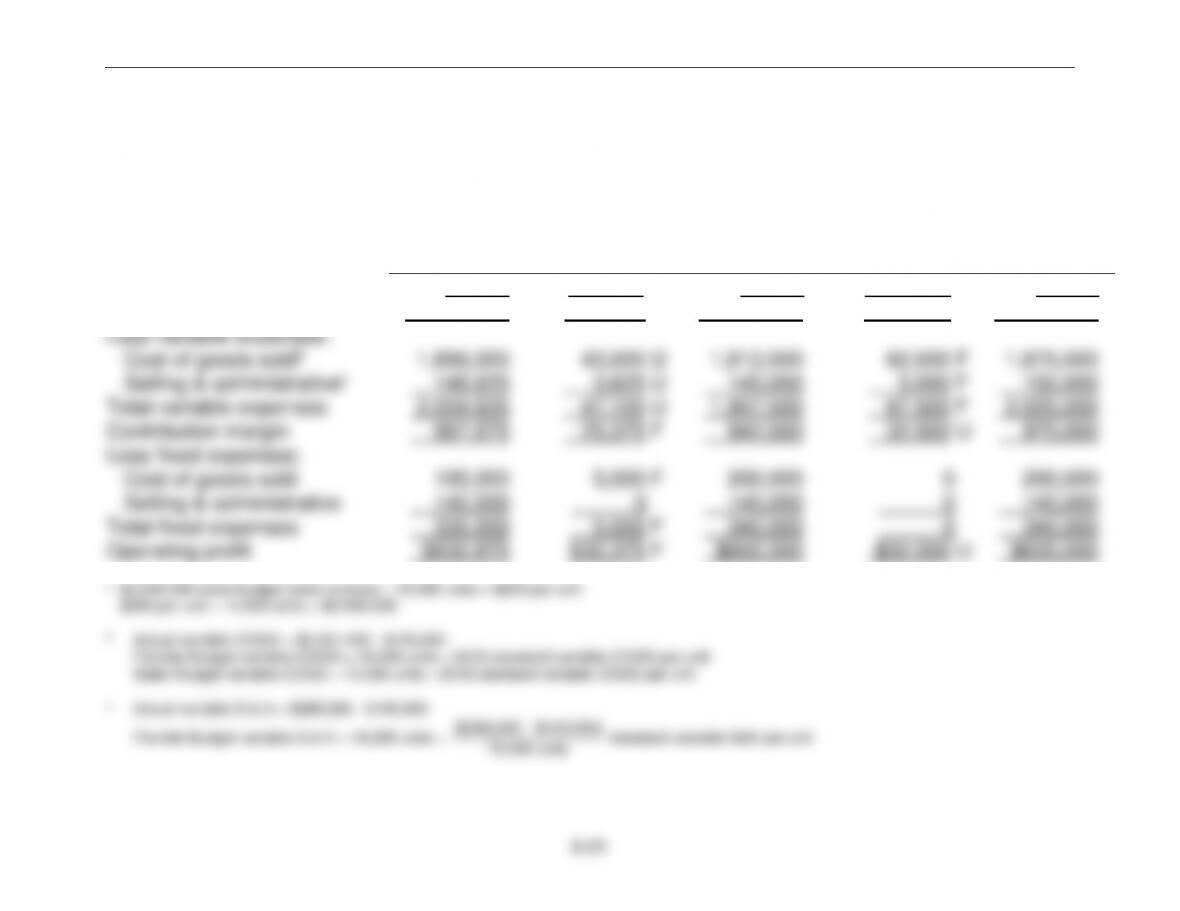
Unit sales
14,500
0
14,500
500 U
15,000
Sales revenue
$2,972,500
$72,500 F
$2,900,000a
$100,000 U
$3,000,000
Less variable expenses:
Cost of goods soldb
1,856,000
43,500 U
1,812,500
62,500 F
1,875,000
Selling & administrativec
148,625
3,625 U
145,000
5,000 F
150,000
Total variable expenses
2,004,625
47,125 U
1,957,500
67,500 F
2,025,000
Contribution margin
967,875
25,375 F
942,500
32,500 U
975,000
Less fixed expenses:
Cost of goods sold
195,000
5,000 F
200,000
0
200,000
Selling & administrative
140,000
0
140,000
0
140,000
Total fixed expenses
335,000
5,000 F
340,000
0
340,000
Operating profit
$632,875
$30,375 F
$602,500
$32,500 U
$635,000

6-32
($290,000 $140,000)
15,000 units
Chapter 6 – Performance Evaluation: Variance Analysis
6-33
Problem 6-31, continued
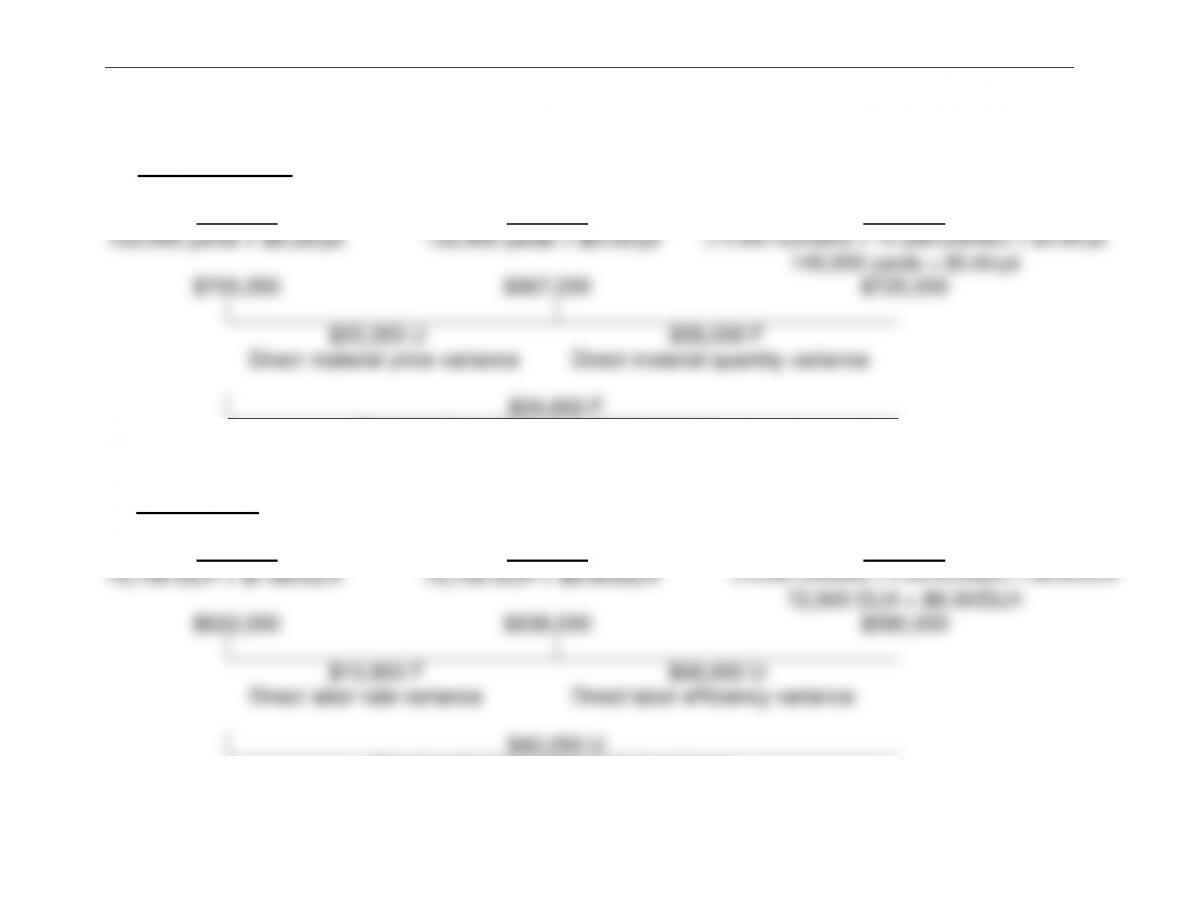
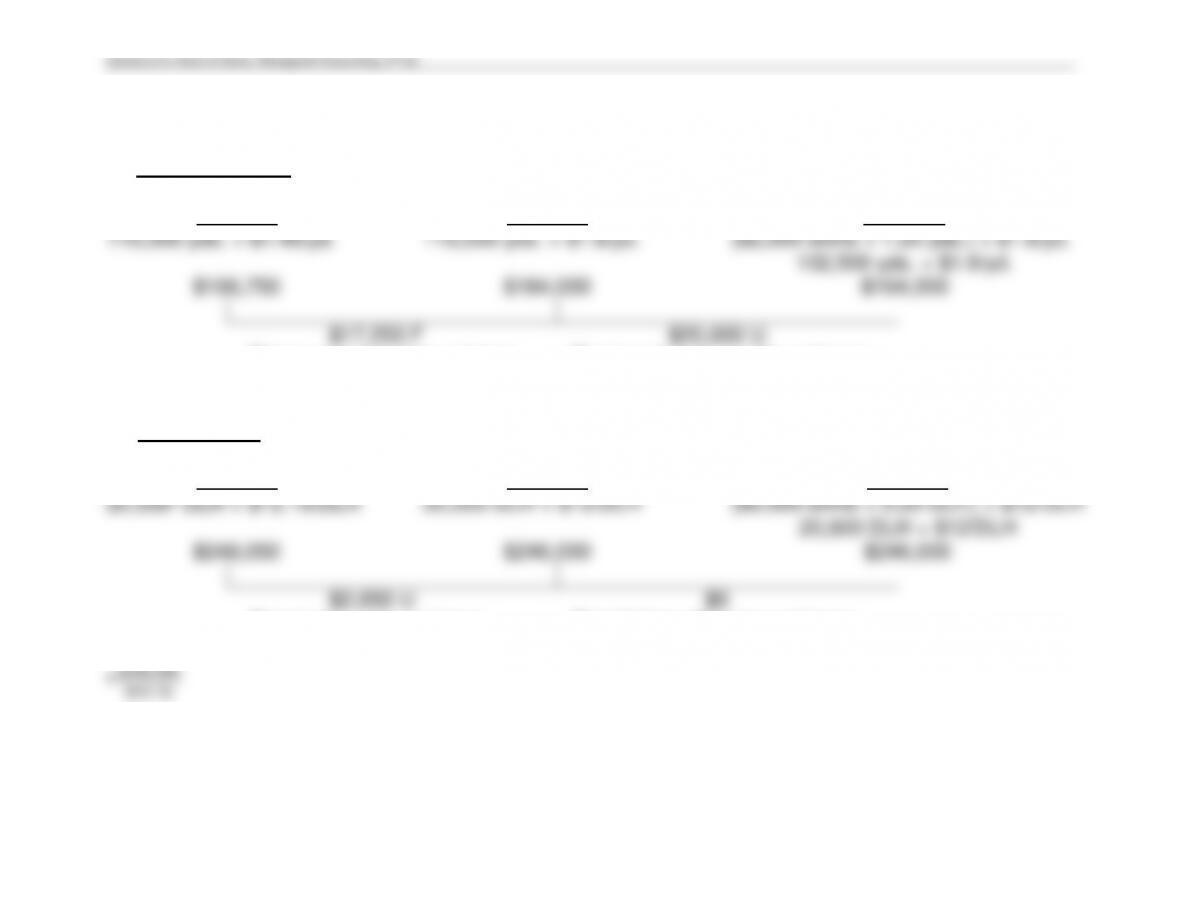
b. Direct Materials
AQ × AP
AQ × SP
SQ × SP
133,400 yards × $5.25/yd
133,400 yards × $5.00/yd
(14,500 cushions × 10 yds/cushion) × $5.00/yd
145,000 yards × $5.00/yd
$700,350
$667,000
$725,000
$33,350 U
$58,000 F
Direct material price variance
Direct material quantity variance
$24,650 F
Direct material flexible budget variance
c. Direct Labor
AQ × AP
AQ × SP
SQ × SP
79,750 DLH × $7.80/DLH
79,750 DLH × $8.00/DLH
(14,500 cushions × 5 DLH/cushion) × $8.00/DLH
72,500 DLH × $8.00/DLH
$622,050
$638,000
$580,000
$15,950 F
$58,000 U
Direct labor rate variance
Direct labor efficiency variance
$42,050 U
Direct material flexible budget variance
6-34
Problem 6-31, continued
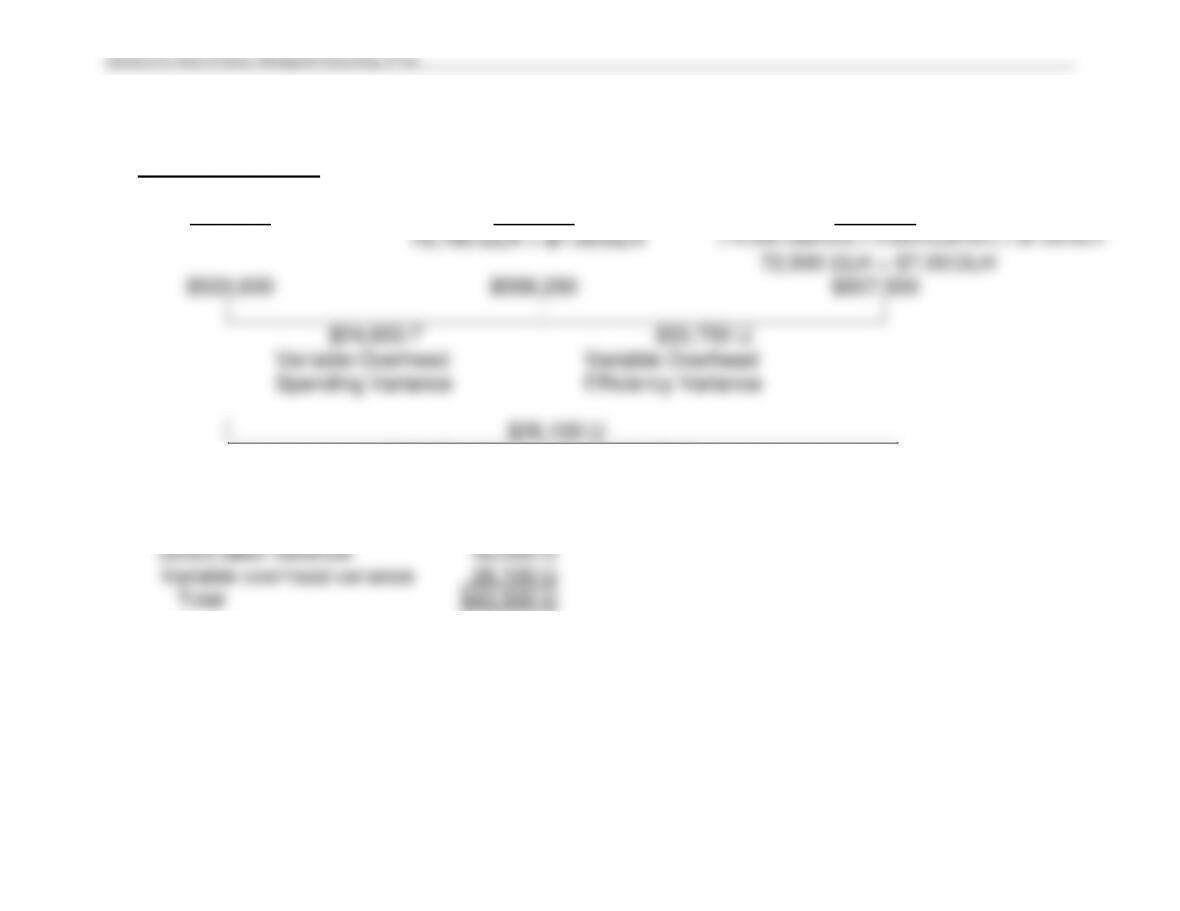
d. Variable Overhead
AQ × AP
AQ × SP
SQ × SP
79,750 DLH × $7.00/DLH
(14,500 cushions × 5 DLH/cushion) × $7.00/DLH
72,500 DLH × $7.00/DLH
$533,600
$558,250
$507,500
$24,650 F
$50,750 U
Variable Overhead
Spending Variance
Variable Overhead
Efficiency Variance
$26,100 U
Variable overhead flexible budget
e. Direct materials variance $24,650 F
Chapter 6 – Performance Evaluation: Variance Analysis
6-35
Problem 6-31, continued
f.
TO: Hank Martinez
FROM: John Student
DATE: January 15, 20XX
RE: Cost of goods sold variance analysis
The company produced fewer units than we planned in the budget: 14,500
The $5.25 per yard price for direct materials was higher than the budgeted
The actual labor rate of $7.80/DLH was less than the standard rate of
Since the company applies overhead on the basis of direct labor hours, the
variable overhead efficiency variance was unfavorable. A favorable
variable overhead spending variance mitigated the large efficiency
variance, resulting in an overall unfavorable variance of $26,100.
6-36
Problem 6-32
a. Direct Materials
AQ × AP
AQ × SP
SQ × SP
115,000 yds. × $1.45/yd.
115,000 yds. × $1.6/yd.
(82,000 shirts × 1.25 yds.) × $1.6/yd.
102,500 yds. × $1.6/yd.
$166,750
$184,000
$164,000
$17,250 F
$20,000 U
Direct material price variance
Direct material quantity variance
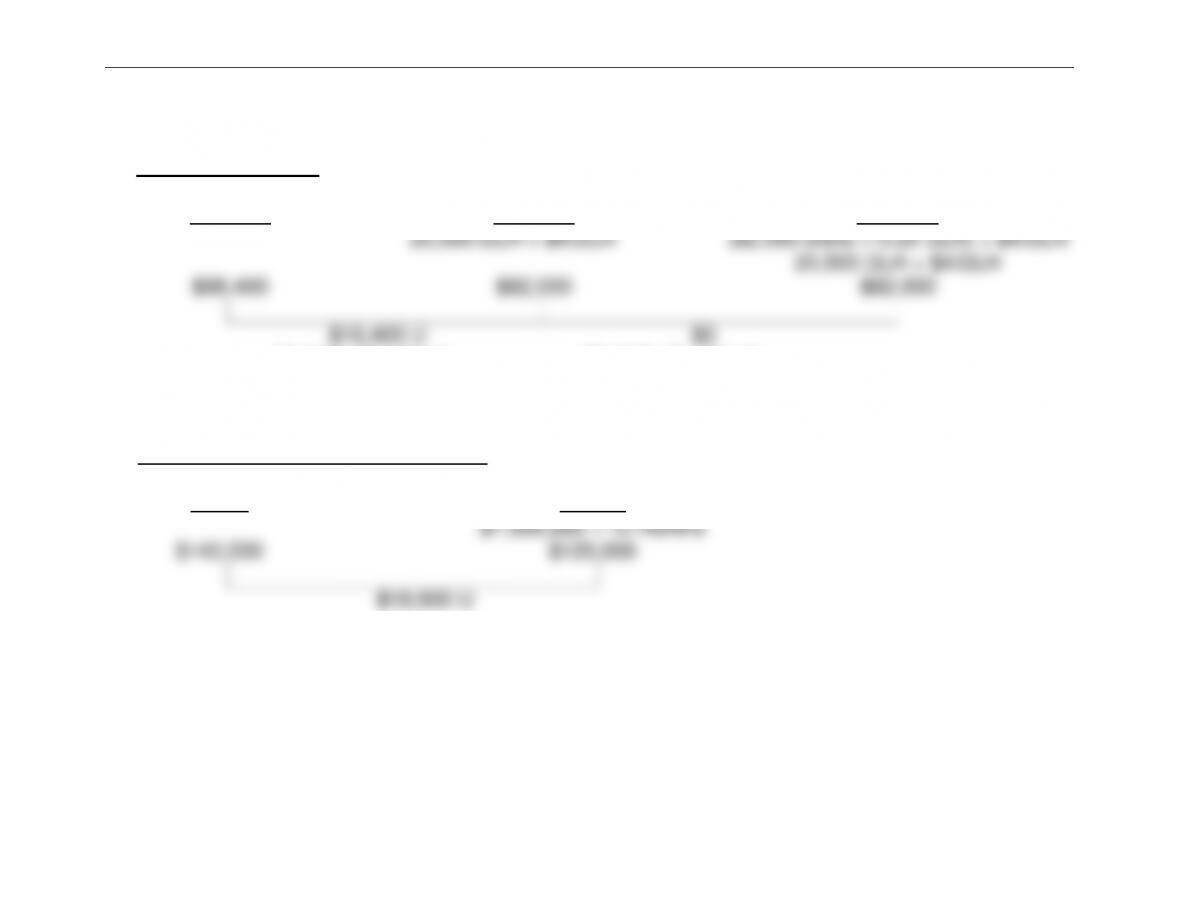
b. Direct Labor
AQ × AP
AQ × SP
SQ × SP
20,500a DLH × $12.10/DLH
20,500 DLH × $12/DLH
(82,000 shirts × 0.25 DLH) × $12/DLH
20,500 DLH × $12/DLH
$248,050
$246,000
$246,000
$2,050 U
$0
Direct labor rate variance
Direct labor efficiency variance
a
$248,050
$12.10
Chapter 6 – Performance Evaluation: Variance Analysis
6-37
Problem 6-32, continued
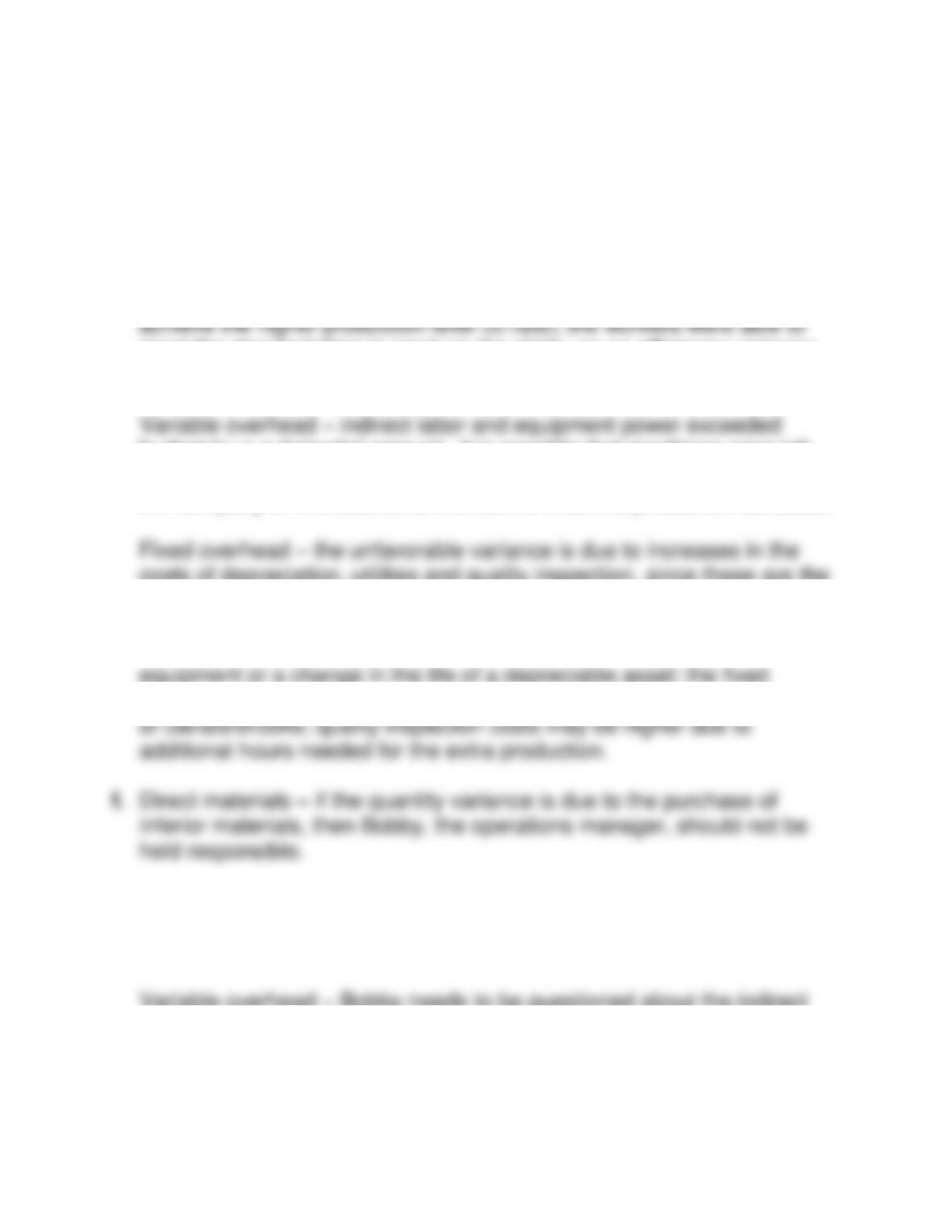
c. Variable Overhead
AQ × AP
AQ × SP
SQ × SP
20,500 DLH × $4/DLH
(82,000 shirts × 0.25 DLH) × $4/DLH
20,500 DLH × $4/DLH
$98,400
$82,000
$82,000
$16,400 U
$0
Variable Overhead
Spending Variance
Variable Overhead
Efficiency Variance
d. Fixed Overhead Spending Variance
Actual
Budget
$1,500,000 ÷ 12 months
$143,500
$125,000
$18,500 U
6-38
Problem 6-32, continued
quantity).
Direct labor – the same skill-level workers were used as budgeted, but
Variable overhead – indirect labor and equipment power exceeded
budget by a substantial amount. It is possible that machines were left
running but not productive. The additional production may have caused
Fixed overhead – the unfavorable variance is due to increases in the
f. Direct materials – if the quantity variance is due to the purchase of
inferior materials, then Bobby, the operations manager, should not be
held responsible.
higher-paid class of workers.
Variable overhead – Bobby needs to be questioned about the indirect
labor and utility usage. He is the one who has direct authority over
these areas, though there may be very good reasons for the increases
in cost.
Chapter 6 – Performance Evaluation: Variance Analysis
6-39
Problem 6-32, continued
Fixed overhead – depreciation and utilities costs are likely outside
that capacity is not exceeded.
SOLUTIONS TO C&C RUNNING CASE
Case 6-33
quality as specified in the standard.
The direct material quantity variance should be reduced, but will not be
$0 if C&C Sports continues to use inexperienced workers to produce the
jackets.
demands.
The direct labor efficiency variance is likely to be reduced because
If the training proves to be effective, then the direct materials quantity
variance should be close to $0.
Solutions for Davis & Davis, Managerial Accounting, 2nd ed.
6-40
Case 6-33, continued
demands.
If the training proves to be effective, then the direct labor efficiency
variance should be close to $0.
The direct materials quantity variance may be greater than $0 as the
workers gear back up to make award jackets.
The direct labor rate variance should not be affected.
SOLUTIONS TO CASES
Case 6-34
a.
based on two different sales volumes.
The performance report does not indicate which items are
controllable by Ken and which items are beyond his control. Ken
should be evaluated only on those items under his control.
Selling and administrative expenses are not broken down between