Chapter 11 – Performance Evaluations Revisited: A Balanced Approach
11–19
Problem 11–18
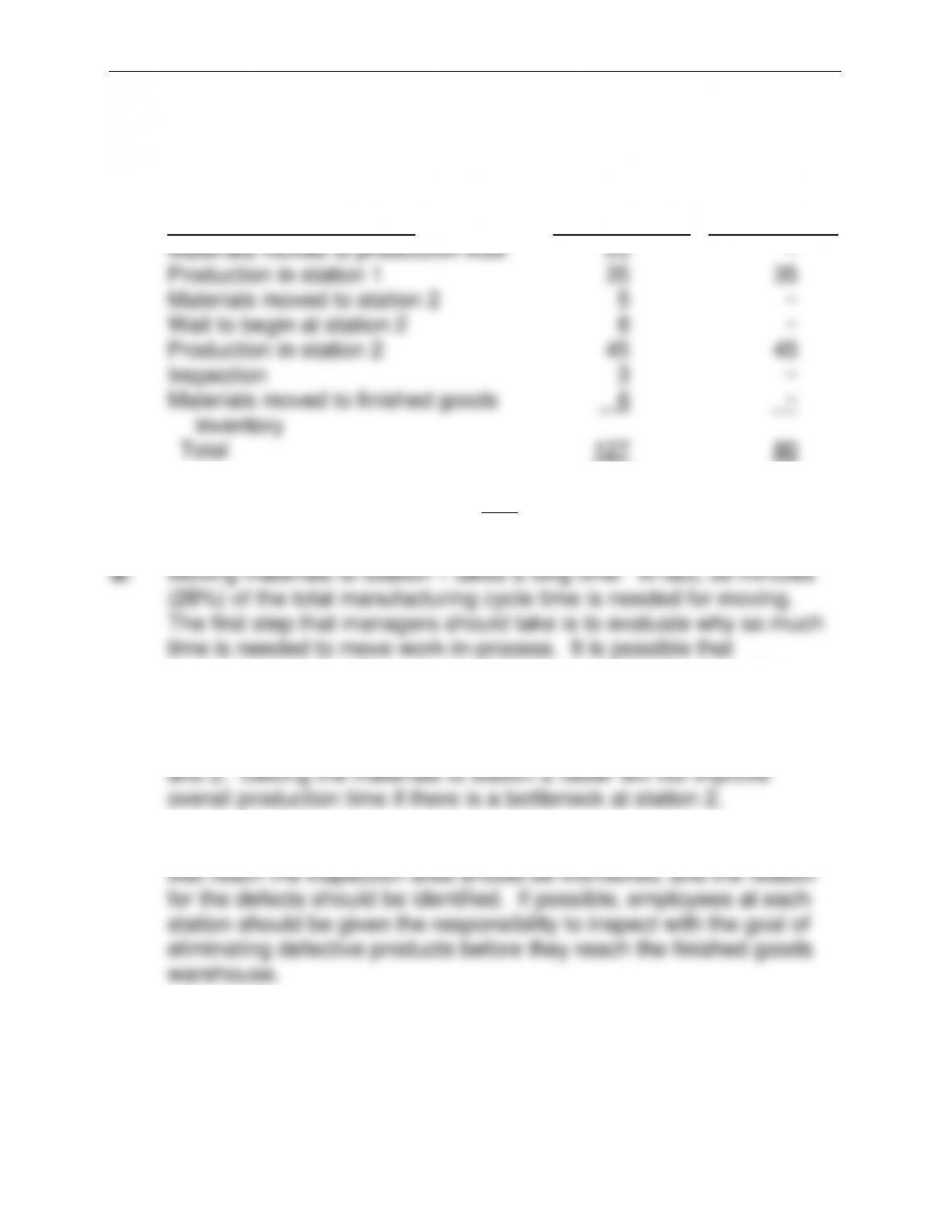
Activity
a.
Manufacturing
time
b.
Value–added
time
Materials moved to production floor
25
–
Production in station 1
35
35
Materials moved to station 2
5
–
Wait to begin at station 2
8
–
Production in station 2
45
45
Inspection
3
–
Materials moved to finished goods
inventory
6
–
Total
127
80
c.
63=
127
80
=Efficiency Cycle ingManufactur
rearranging workstations could eliminate considerable non-value-
added time.
The next area for managers to review is the wait between stations 1
The final area to review is inspection. The number of defective items
Solutions for Davis & Davis, Managerial Accounting, 2nd ed.
11–20
SOLUTIONS TO C&C CONTINUING CASE
Case 11-19
Based on the balanced scorecard results, it appears that providing
increased cost, along with the increased time between payments for
raw materials inventory purchases and eventual cash collection from
Over the long run, it is likely in C&C Sports’ best interest to rely more
on full-time employment rather than highly seasonal employment
the company.
Chapter 11 – Performance Evaluations Revisited: A Balanced Approach
11–21
SOLUTIONS TO CASE
Case 11-20
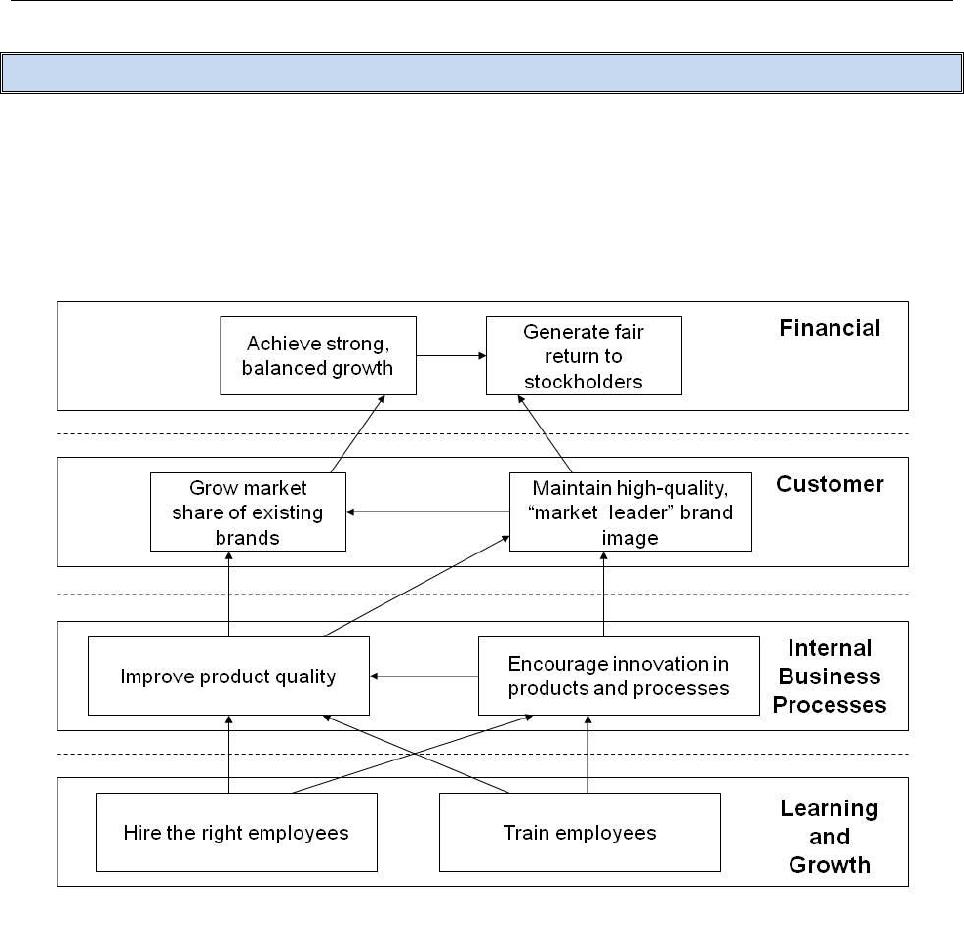
a.
Case 11-20, continued
b.
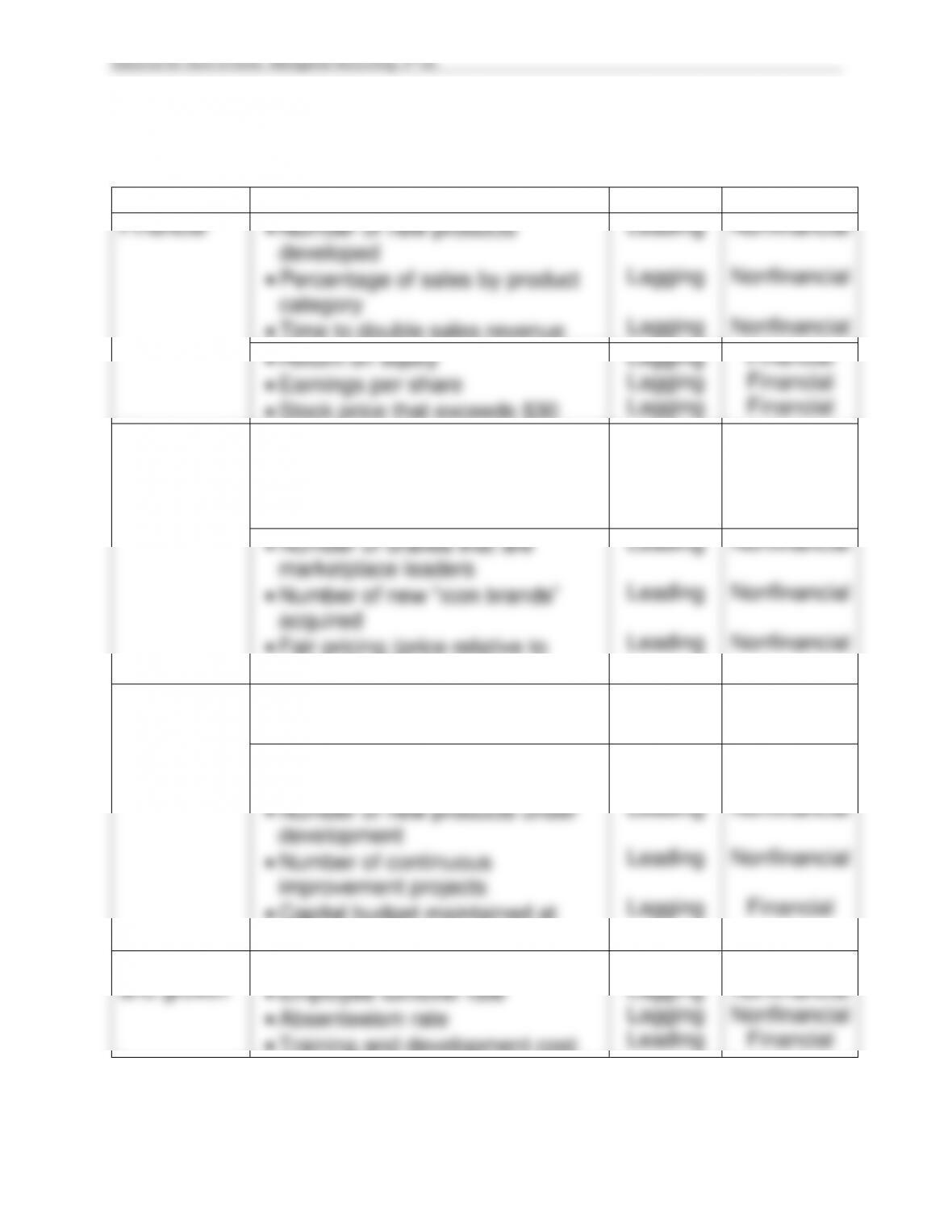
Perspective
Measures
Lead/Lag
Fin/Nonfin.
Financial
Number of new products
developed
Percentage of sales by product
category
Time to double sales revenue
Leading
Lagging
Lagging
Nonfinancial
Nonfinancial
Nonfinancial
Return on equity
Earnings per share
Stock price that exceeds $30
Lagging
Lagging
Lagging
Financial
Financial
Financial
Customer
Number of new accounts
Number of retained accounts
Increased domestic and foreign
sales
Leading
Lagging
Lagging
Nonfinancial
Nonfinancial
Financial
Number of brands that are
marketplace leaders
Number of new “icon brands”
acquired
Fair pricing (price relative to
competitors’ prices)
Leading
Leading
Leading
Nonfinancial
Nonfinancial
Nonfinancial
Internal
business
processes
Defect rate
Sales growth
Leading
Lagging
Nonfinancial
Nonfinancial
Establish inventory turnover
measures
Number of new products under
development
Number of continuous
improvement projects
Capital budget maintained at
4.7% of sales
Lagging
Leading
Leading
Lagging
Nonfinancial
Nonfinancial
Nonfinancial
Financial
Learning
and growth
Number of appropriate hires
Employee turnover rate
Absenteeism rate
Training and development cost
Leading
Lagging
Lagging
Leading
Nonfinancial
Nonfinancial
Nonfinancial
Financial
Chapter 11 – Performance Evaluations Revisited: A Balanced Approach
11–23
Case 11-20, continued
MetroMed’s managers have developed a balanced scorecard using a
measures which only report outcomes.
The scorecard contains 16 nonfinancial measures and only 6
training, for example, and while important, it doesn’t help achieve the
objective. A more specific measure is “dollars spent on company
mission and values training.”
that the company needs?
“Employee turnover rate,” while desirably low, is not as specific as
“Absenteeism rate,” like “appropriate hires” doesn’t get at the
objective of being a values-driven company.
11–24
Case 11-20, continued
Internal business processes: The two objectives of product quality
of quality is “warranty claims.”
“Sales growth” has little to do with internal business processes.
With the combination of quality and innovation, managers should be
motivated to design quality products that get to market quickly.
The other measures, “establish inventory turnover measures,”
“Fair pricing,” while important, is not specific or relevant to the
company’s brand image objective.
Chapter 11 – Performance Evaluations Revisited: A Balanced Approach
11–25
Case 11-20, continued
then market share could decrease.
Financial: The objective “achieve strong, balanced growth” tends to
the Dow Jones Industrial Average and market price” would better
capture the value created by the company apart from changes in the
shareholders.