Chapter 5 – Planning and Forecasting
5-31
5-31 continued
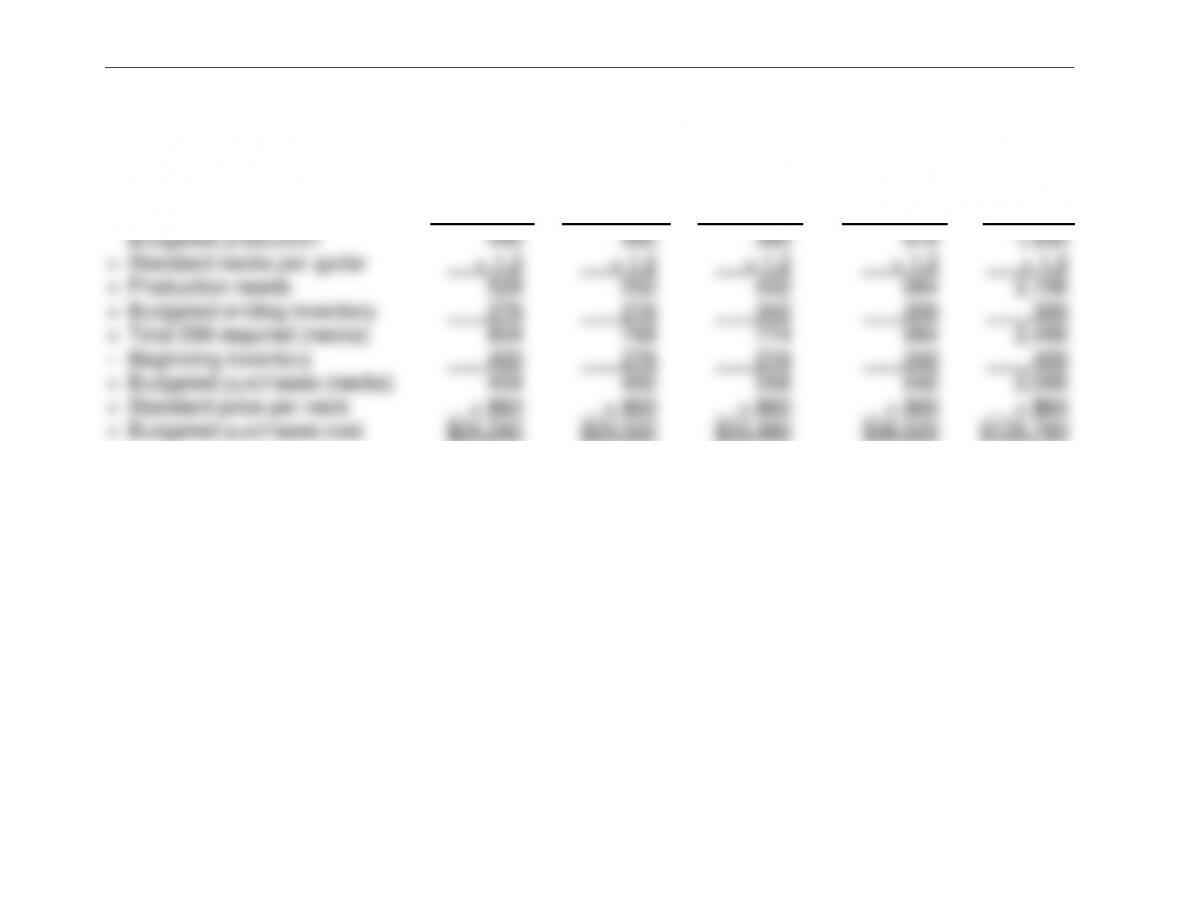
c.
1st Quarter
2nd Quarter
3rd Quarter
4th Quarter
Annual
Budgeted production
440
460
360
570
1,830
×
Standard necks per guitar
× 1.2
× 1.2
× 1.2
× 1.2
× 1.2
=
Production needs
528
552
432
684
2,196
+
Budgeted ending inventory
276
216
342
300
300
=
Total DM required (necks)
804
768
774
984
2,496
–
Beginning inventory
400
276
216
342
400
=
Budgeted purchases (necks)
404
492
558
642
2,096
×
Standard price per neck
× $60
× $60
× $60
× $60
× $60
=
Budgeted purchases cost
$24,240
$29,520
$33,480
$38,520
$125,760
5-32
Problem 5-32
a.
1st Quarter
2nd Quarter
3rd Quarter
4th Quarter
Annual
Budgeted unit sales
2,500
2,700
2,900
2,200
10,300
+
Budgeted ending inventory
540
580
440
600
600
=
Total units required
3,040
3,280
3,340
2,800
10,900
–
Beginning inventory
500
540
580
440
500
=
Budgeted production
2,540
2,740
2,760
2,360
10,400
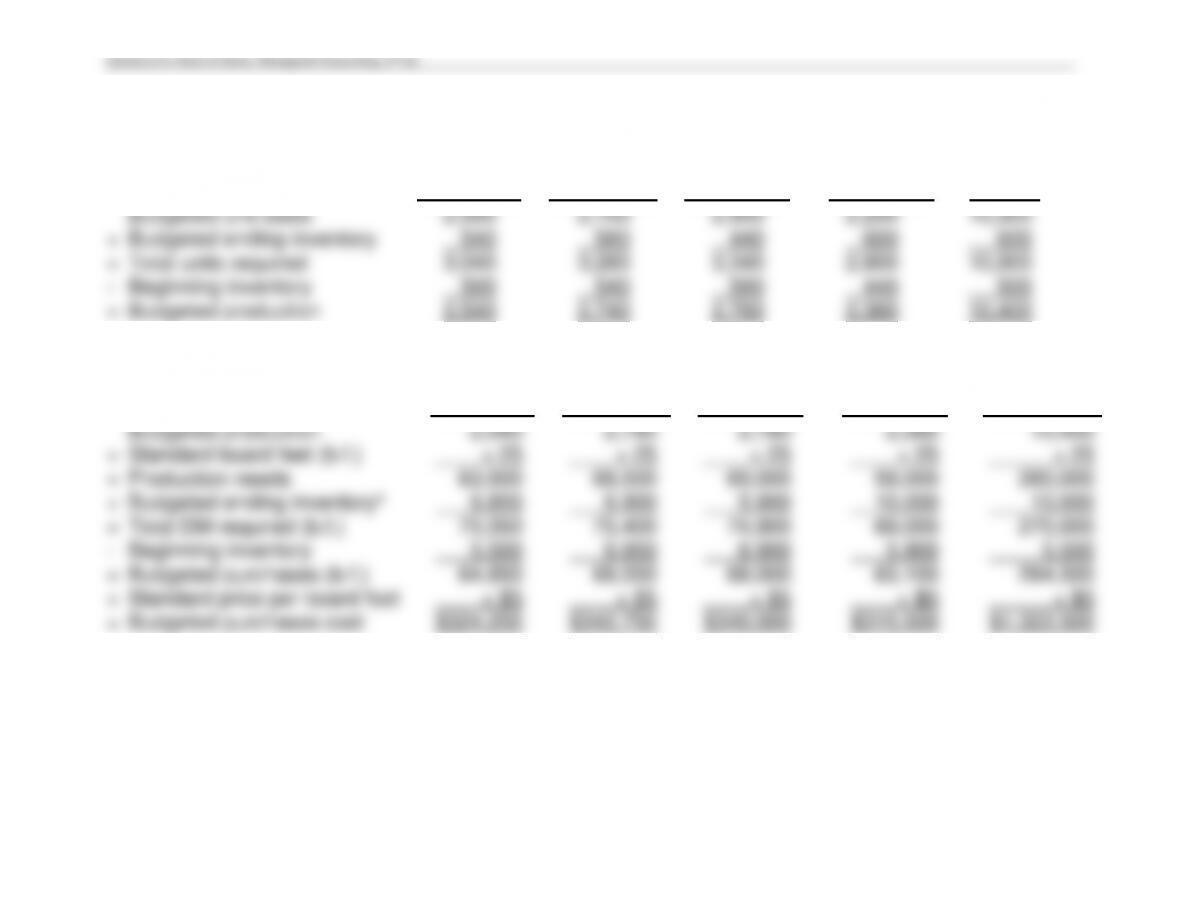
b.
1st Quarter
2nd Quarter
3rd Quarter
4th Quarter
Annual
Budgeted production
2,540
2,740
2,760
2,360
10,400
×
Standard board feet (b.f.)
× 25
× 25
× 25
× 25
× 25
=
Production needs
63,500
68,500
69,000
59,000
260,000
+
Budgeted ending inventorya
6,850
6,900
5,900
10,000
10,000
=
Total DM required (b.f.)
70,350
75,400
74,900
69,000
270,000
–
Beginning inventory
5,500
6,850
6,900
5,900
5,500
=
Budgeted purchases (b.f.)
64,850
68,550
68,000
63,100
264,500
×
Standard price per board foot
× $5
× $5
× $5
× $5
× $5
=
Budgeted purchases cost
$324,250
$342,750
$340,000
$315,500
$1,322,500
a10% of next quarter’s production needs
Chapter 5 – Planning and Forecasting
5-33
5-32 continued
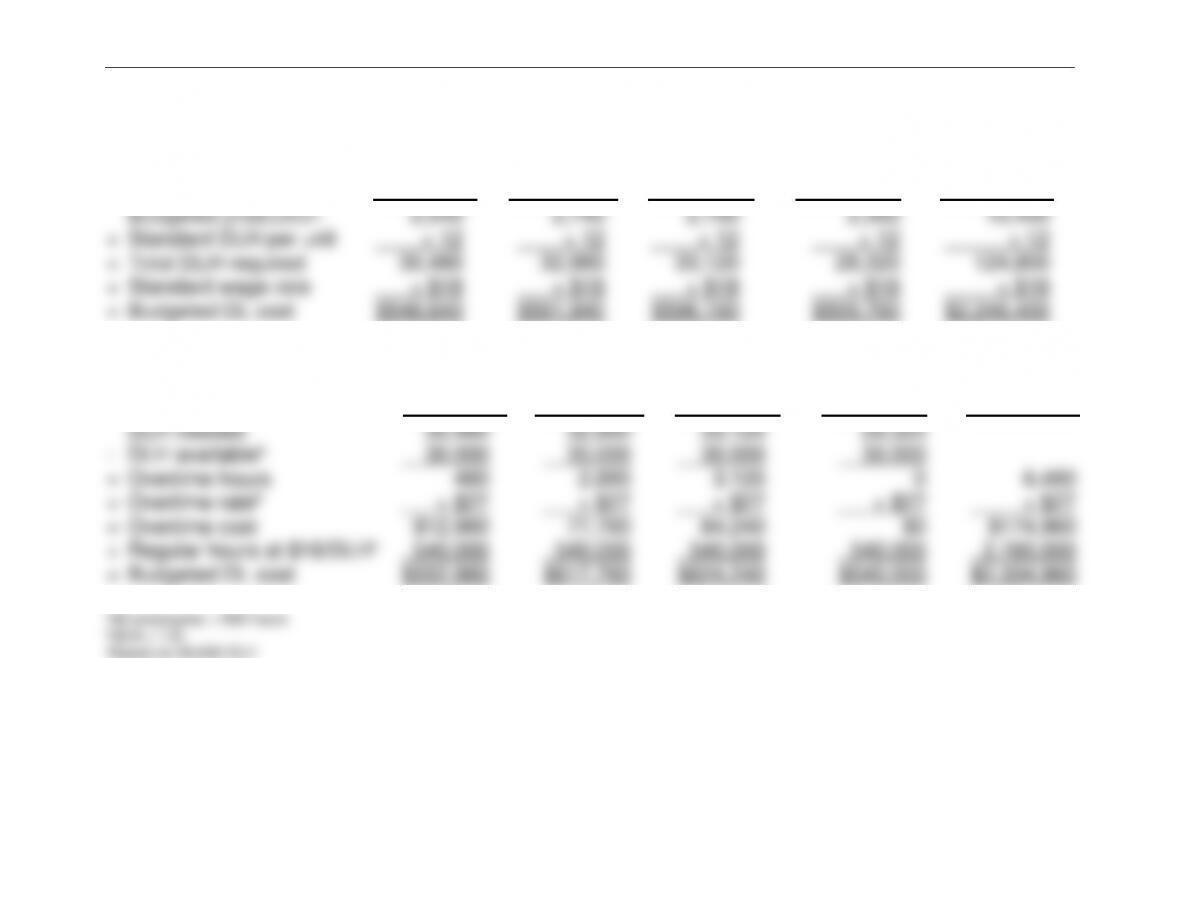
c.
1st Quarter
2nd Quarter
3rd Quarter
4th Quarter
Annual
Budgeted production
2,540
2,740
2,760
2,360
10,400
×
Standard DLH per unit
× 12
× 12
× 12
× 12
× 12
=
Total DLH required
30,480
32,880
33,120
28,320
124,800
×
Standard wage rate
× $18
× $18
× $18
× $18
× $18
=
Budgeted DL cost
$548,640
$591,840
$596,160
$509,760
$2,246,400
d.
1st Quarter
2nd Quarter
3rd Quarter
4th Quarter
Annual
DLH needed
30,480
32,880
33,120
28,320
–
DLH availablea
30,000
30,000
30,000
30,000
=
Overtime hours
480
2,880
3,120
0
6,480
×
Overtime rateb
× $27
× $27
× $27
× $27
× $27
=
Overtime cost
$12,960
77,760
84,240
$0
$174,960
+
Regular hours at $18/DLHc
540,000
540,000
540,000
540,000
2,160,000
=
Budgeted DL cost
$552,960
$617,760
$624,240
$540,000
$2,334,960
5-34
Problem 5-33
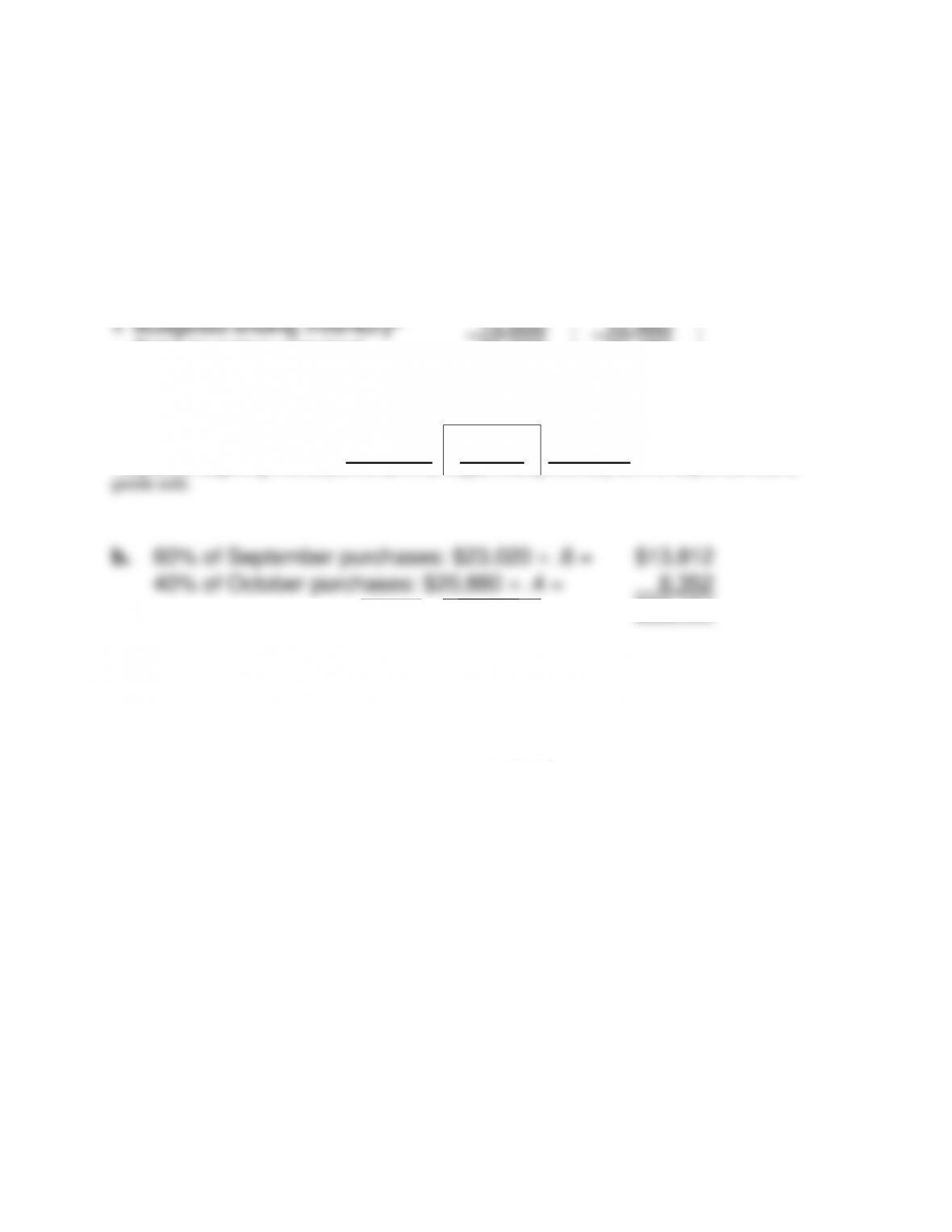
a.
September
October
November
Budgeted sales
$53,000
$60,000
$48,000
×
COGS percentage
× .40
× .40
× .40
=
Cost of goods sold
21,200
24,000
19,200
+
Budgeted ending inventorya
15,600
12,480
=
Total inventory required
36,800
36,480
–
Beginning inventoryb
13,780
15,600
=
Budgeted purchases
$23,020
$20,880
goods sold.
Chapter 5 – Planning and Forecasting
5-35
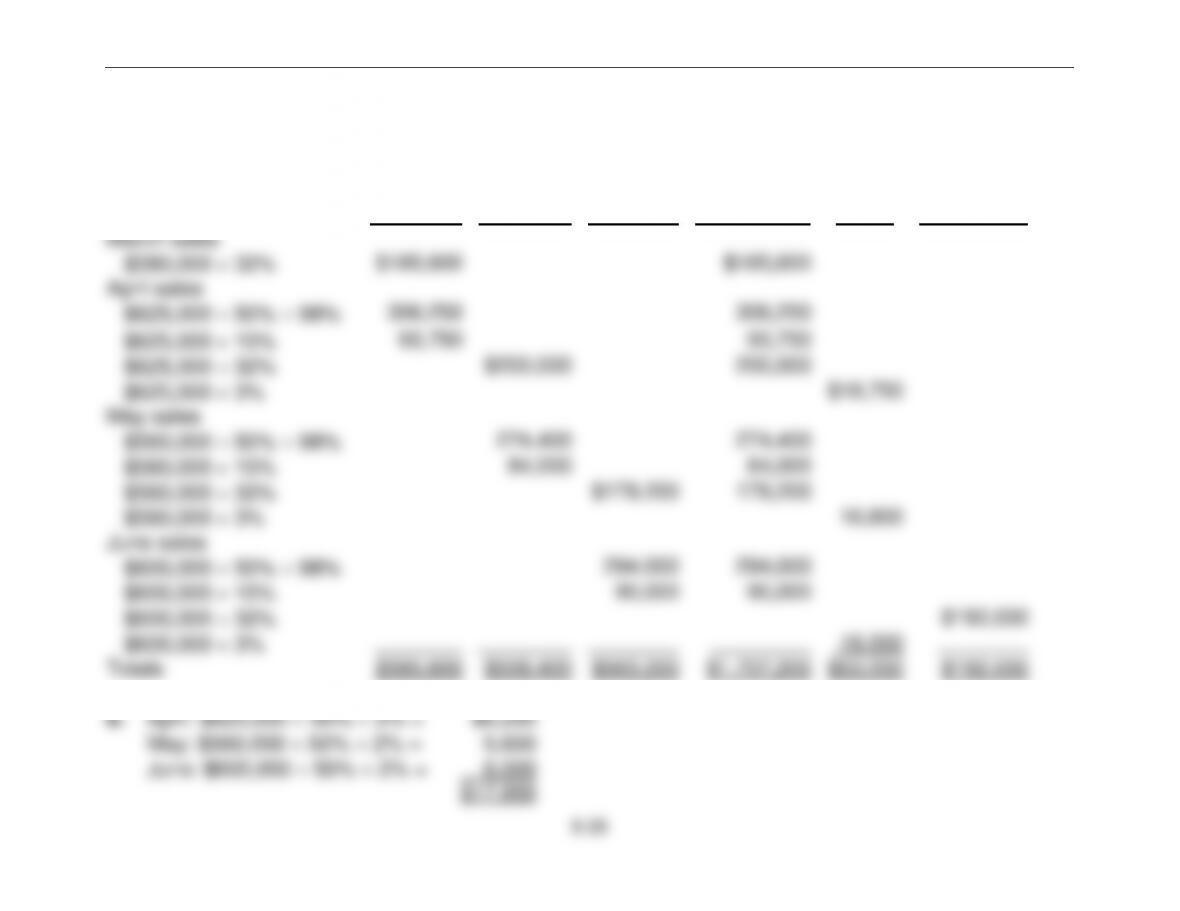
Problem 5-34
a.
April
May
June
Total Cash
Receipts
Bad
Debts
Accounts
Receivable
March sales
$580,000 32%
$185,600
$185,600
April sales
$625,000 50% 98%
306,250
306,250
$625,000 15%
93,750
93,750
$625,000 32%
$200,000
200,000
$625,000 3%
$18,750
May sales
$560,000 50% 98%
274,400
274,400
$560,000 15%
84,000
84,000
$560,000 32%
$179,200
179,200
$560,000 3%
16,800
June sales
$600,000 50% 98%
294,000
294,000
$600,000 15%
90,000
90,000
$600,000 32%
$192,000
$600,000 3%
18,000
Totals
$585,600
$558,400
$563,200
$1,707,200
$53,550
$192,000
5-36
5-34 continued
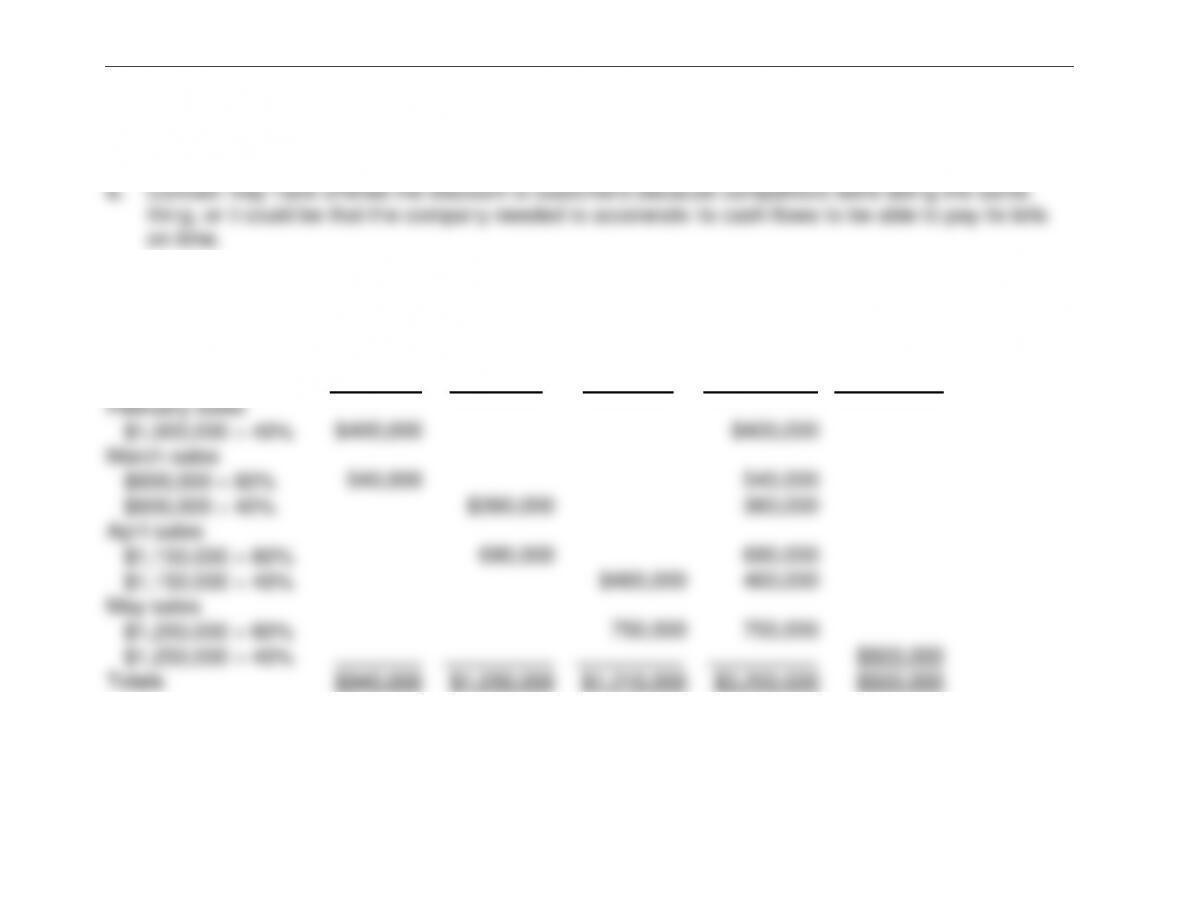
Problem 5-35
a.
April
May
June
Total Cash
Receipts
Accounts
Receivable
February sales
$1,000,000 40%
$400,000
$400,000
March sales
$900,000 60%
540,000
540,000
$900,000 40%
$360,000
360,000
April sales
$1,150,000 60%
690,000
690,000
$1,150,000 40%
$460,000
460,000
May sales
$1,250,000 60%
750,000
750,000
$1,250,000 40%
$500,000
Totals
$940,000
$1,050,000
$1,210,000
$3,200,000
$500,000
Chapter 5 – Planning and Forecasting
5-37
5-35 continued
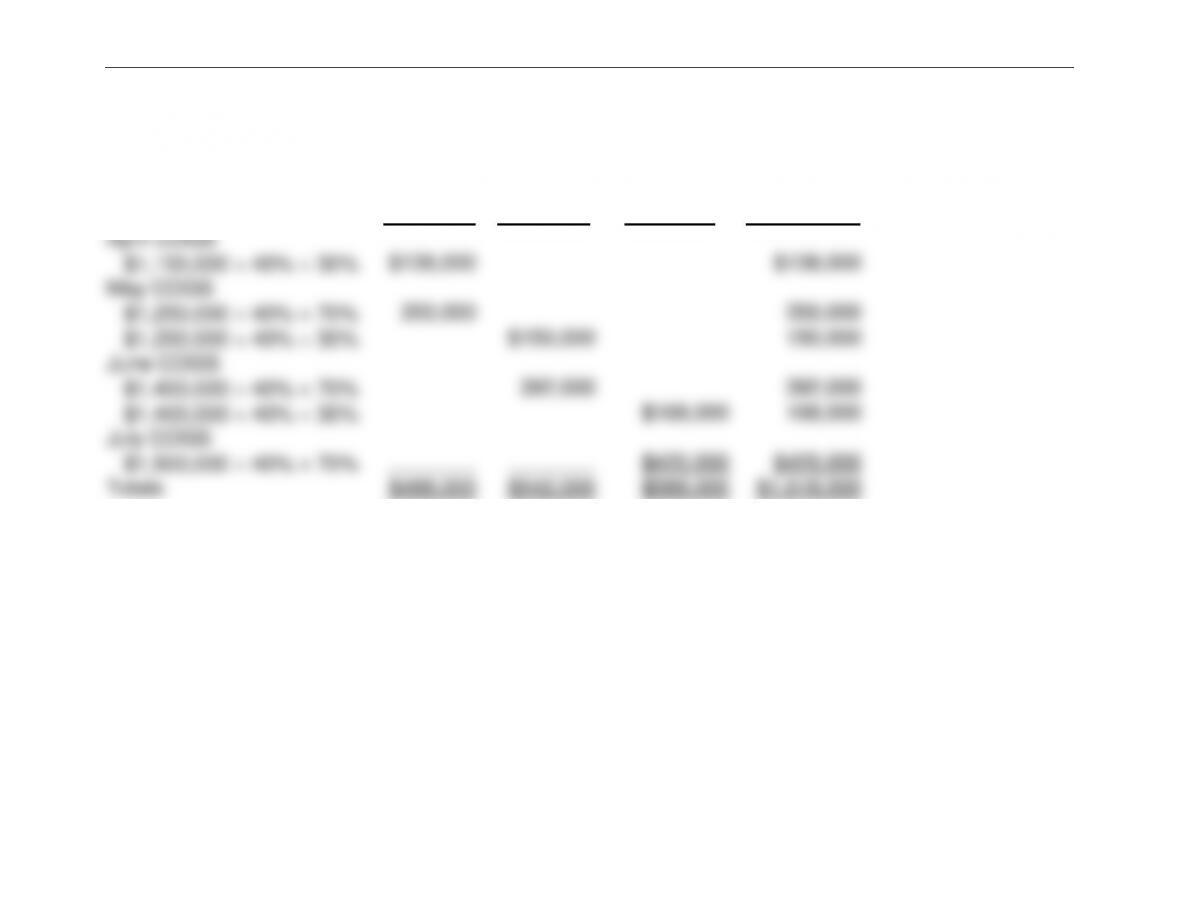
b.
April
May
June
Total
Purchases
April COGS
$1,150,000 40% 30%
$138,000
$138,000
May COGS
$1,250,000 40% 70%
350,000
350,000
$1,250,000 40% 30%
$150,000
150,000
June COGS
$1,400,000 40% 70%
392,000
392,000
$1,400,000 40% 30%
$168,000
168,000
July COGS
$1,500,000 40% 70%
$420,000
$420,000
Totals
$488,000
$542,000
$588,000
$1,618,000
5-38
5-35 continued
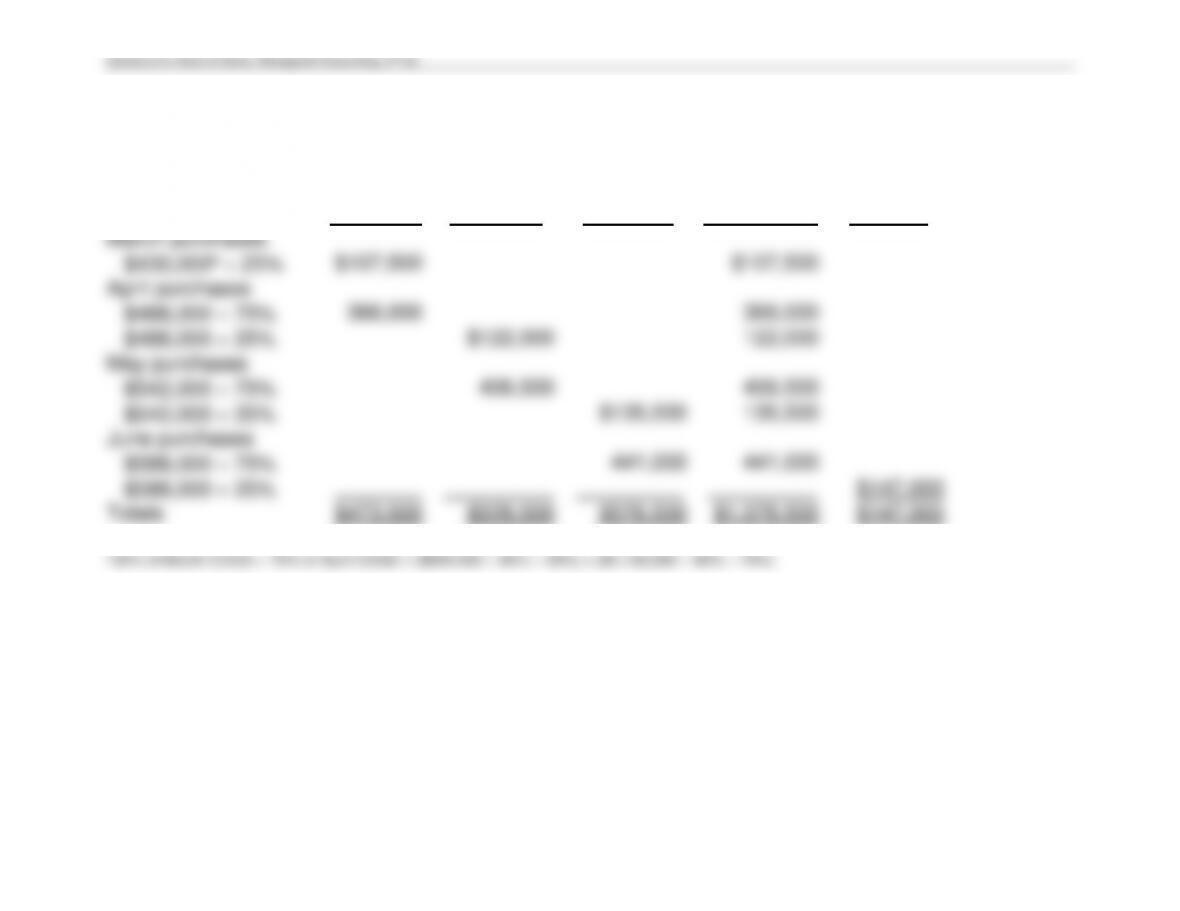
c.
April
May
June
Total Cash
Payments
Accounts
Payable
March purchases
$430,000a 25%
$107,500
$107,500
April purchases
$488,000 75%
366,000
366,000
$488,000 25%
$122,000
122,000
May purchases
$542,000 75%
406,500
406,500
$542,000 25%
$135,500
135,500
June purchases
$588,000 75%
441,000
441,000
$588,000 25%
$147,000
Totals
$473,500
$528,500
$576,500
$1,578,500
$147,000
Chapter 5 – Planning and Forecasting
5-39
5-35 continued
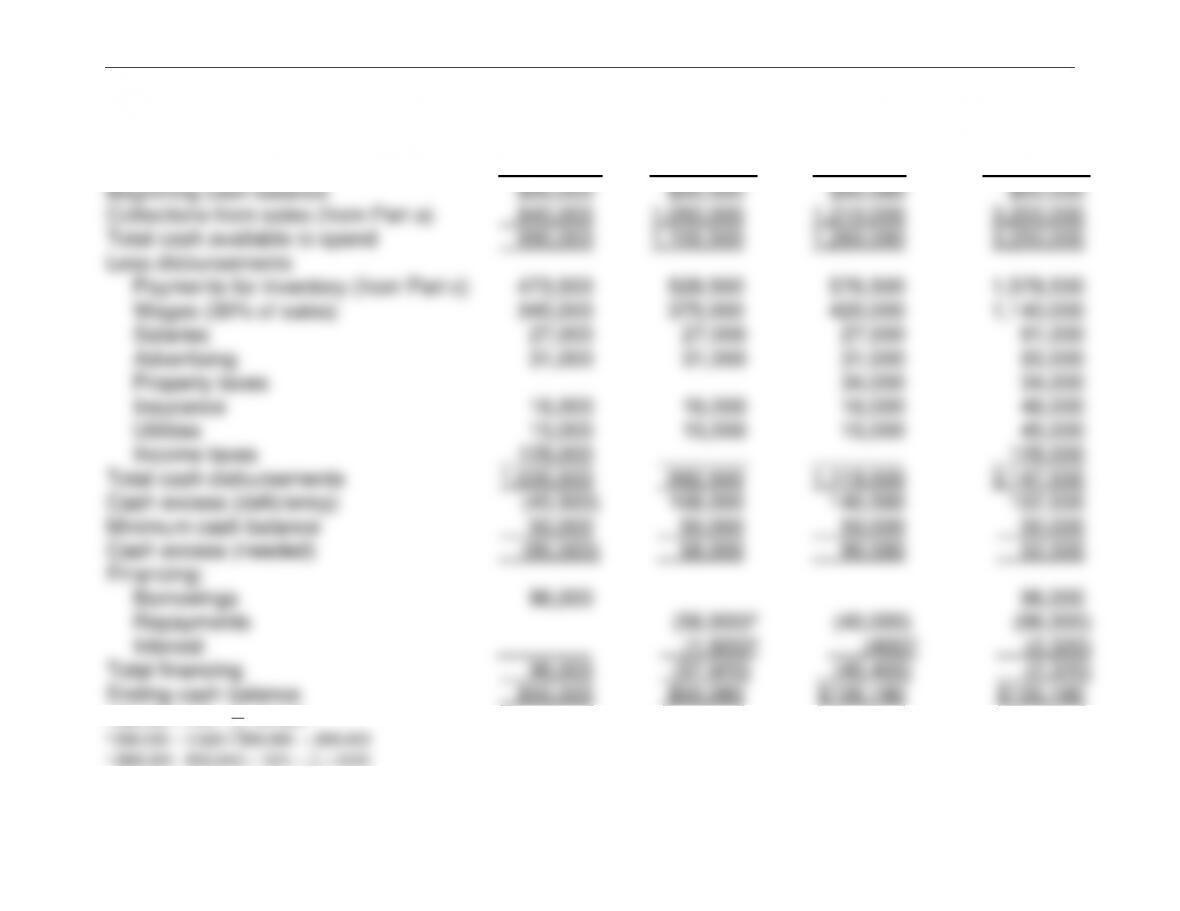
d.
April
May
June
Quarter
Beginning cash balance
$50,000
$50,500
$50,080
$50,000
Collections from sales (from Part a)
940,000
1,050,000
1,210,000
3,200,000
Total cash available to spend
990,000
1,100,500
1,260,080
3,250,000
Less disbursements
Payments for inventory (from Part c)
473,500
528,500
576,500
1,578,500
Wages (30% of sales)
345,000
375,000
420,000
1,140,000
Salaries
27,000
27,000
27,000
81,000
Advertising
31,000
31,000
31,000
93,000
Property taxes
34,000
34,000
Insurance
16,000
16,000
16,000
48,000
Utilities
15,000
15,000
15,000
45,000
Income taxes
128,000
128,000
Total cash disbursements
1,035,500
992,500
1,119,500
3,147,500
Cash excess (deficiency)
(45,500)
108,000
140,580
102,500
Minimum cash balance
50,000
50,000
50,000
50,000
Cash excess (needed)
(95,500)
58,000
90,580
52,500
Financing:
Borrowings
96,000
96,000
Repayments
(56,000)b
(40,000)
(96,000)
Interest
(1,920)a
(400)c
(2,320)
Total financing
96,000
(57,920)
(40,400)
(2,320)
Ending cash balance
$50,500
$50,080
$100,180
$100,180
a $96,000 12% 2
12 = $400
5-40
SOLUTIONS TO C&C RUNNING CASE
Case 5-36
a.
October
November
December
Quarter
Budgeted units sold
4,000
6,000
15,000
25,000
Budgeted sales price
× $14.80
× $14.80
× $14.80
× $14.80
Budgeted revenue
$ 59,200
$ 88,800
$222,000
$370,000
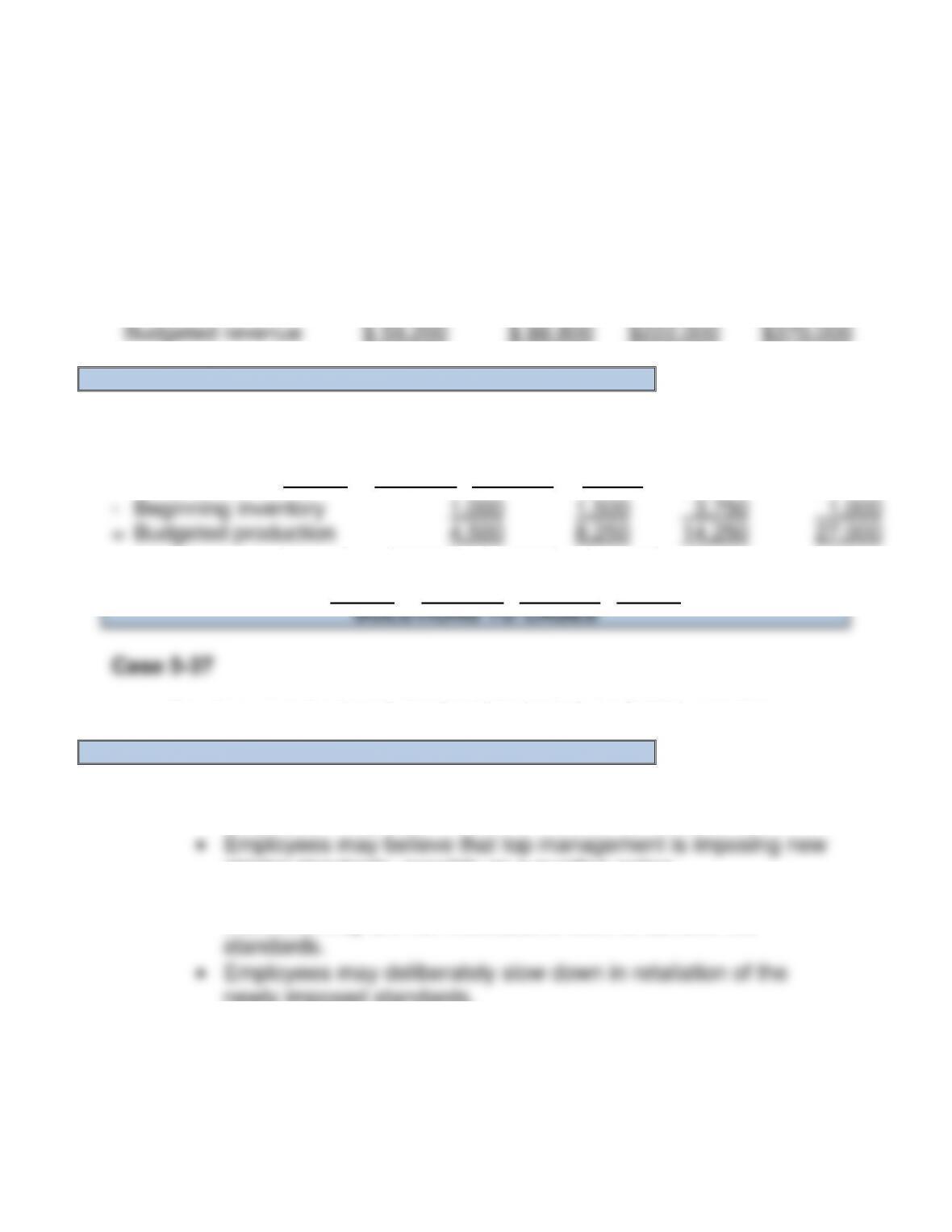
b.
October
November
December
Quarter
Budgeted unit sales
4,000
6,000
15,000
25,000
+
Budgeted ending inventory
1,500
3,750
3,000
3,000
=
Total units required
5,500
9,750
18,000
28,000
–
Beginning inventory
1,000
1,500
3,750
1,000
=
Budgeted production
4,500
8,250
14,250
27,000
SOLUTIONS TO CASES
Case 5-37
might occur are:
Employees may view the new standards as unreasonable.
standards.
Employees may deliberately slow down in retaliation of the
newly imposed standards.