Chapter 5 – Planning and Forecasting
5-21
Exercise 5-23
January
February
March
Total Cash
Receipts
Uncollectible
Accounts
Receivable
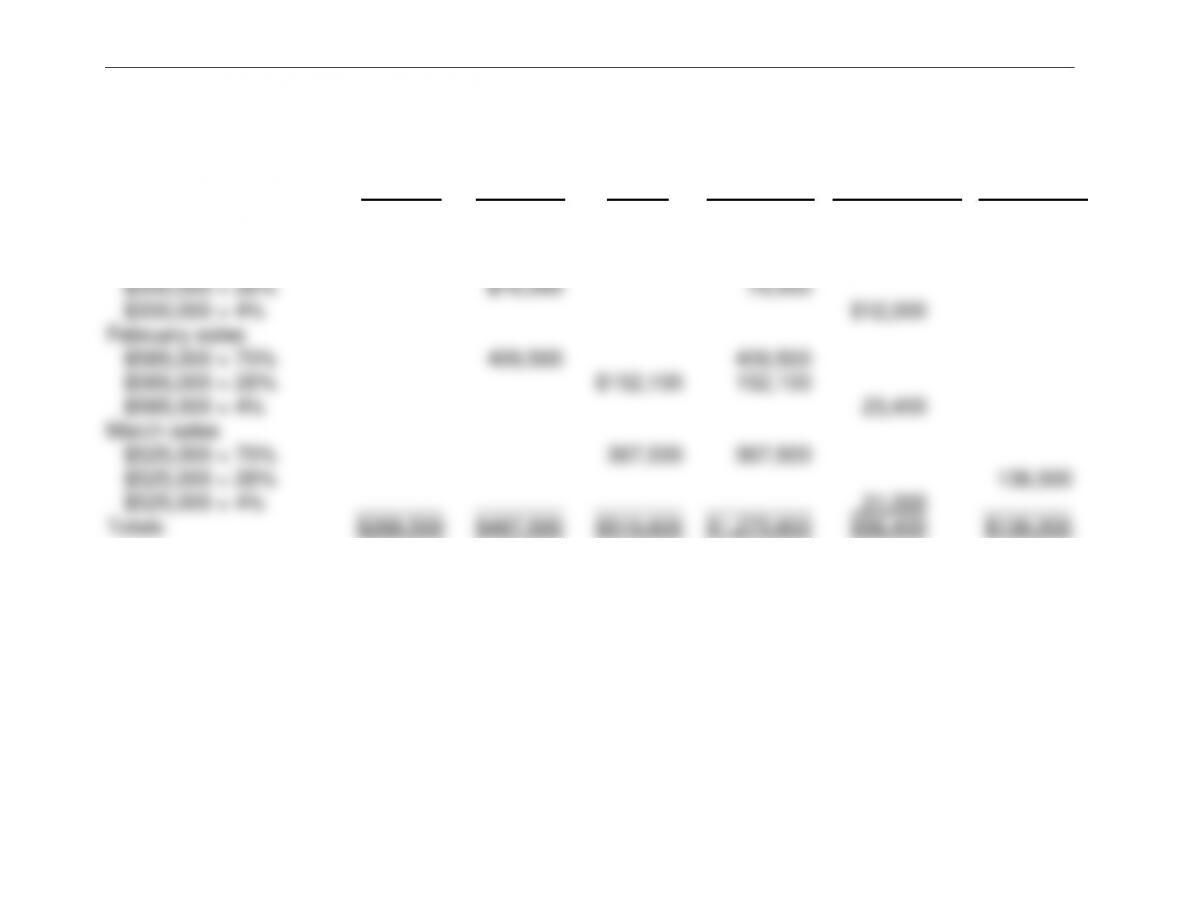
December credit sales
$ 58,500
$ 58,500
January salesa
$300,000 × 70%
210,000
210,000
$300,000 × 26%
$78,000
78,000
$300,000 × 4%
$12,000
February sales
$585,000 × 70%
409,500
409,500
$585,000 × 26%
$152,100
152,100
$585,000 × 4%
23,400
March sales
$525,000 × 70%
367,500
367,500
$525,000 × 26%
136,500
$525,000 × 4%
21,000
Totals
$268,500
$487,500
$519,600
$1,275,600
$56,400
$136,500
a See Exercise 5-8
5-22
Exercise 5-24
1st Quarter
2nd Quarter
3rd Quarter
4th Quarter
Annual
Accounts
Payable
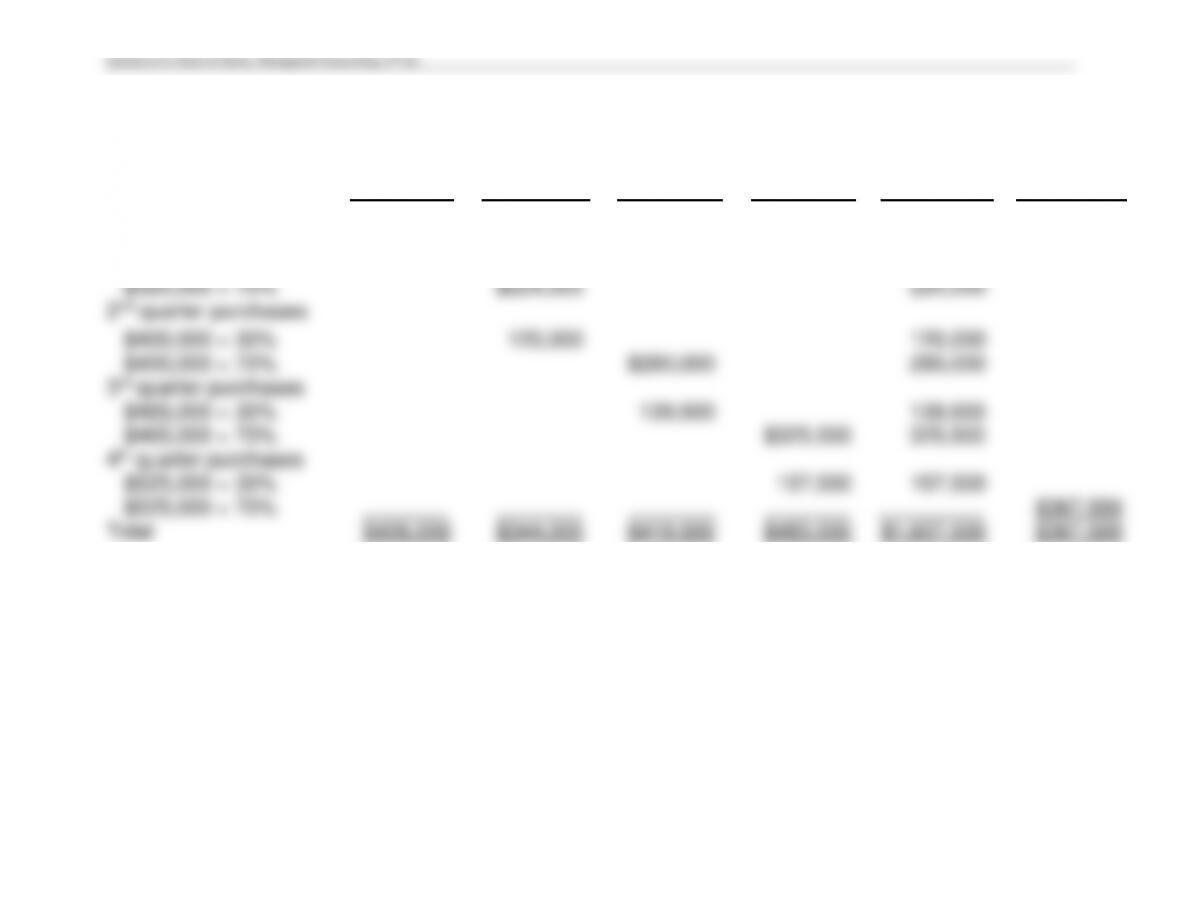
A/P from last quarter
$330,000
$ 330,000
1st quarter purchases
$320,000 × 30%
96,000
96,000
$320,000 × 70%
$224,000
224,000
2nd quarter purchases
$400,000 × 30%
120,000
120,000
$400,000 × 70%
$280,000
280,000
3rd quarter purchases
$465,000 × 30%
139,500
139,500
$465,000 × 70%
$325,500
325,500
4th quarter purchases
$525,000 × 30%
157,500
157,500
$525,000 × 70%
$367,500
Total
$426,000
$344,000
$419,500
$483,000
$1,627,500
$367,500
Chapter 5 – Planning and Forecasting
5-23
Exercise 5-25
January
February
March
Total Cash
Payments
Accounts
Payable
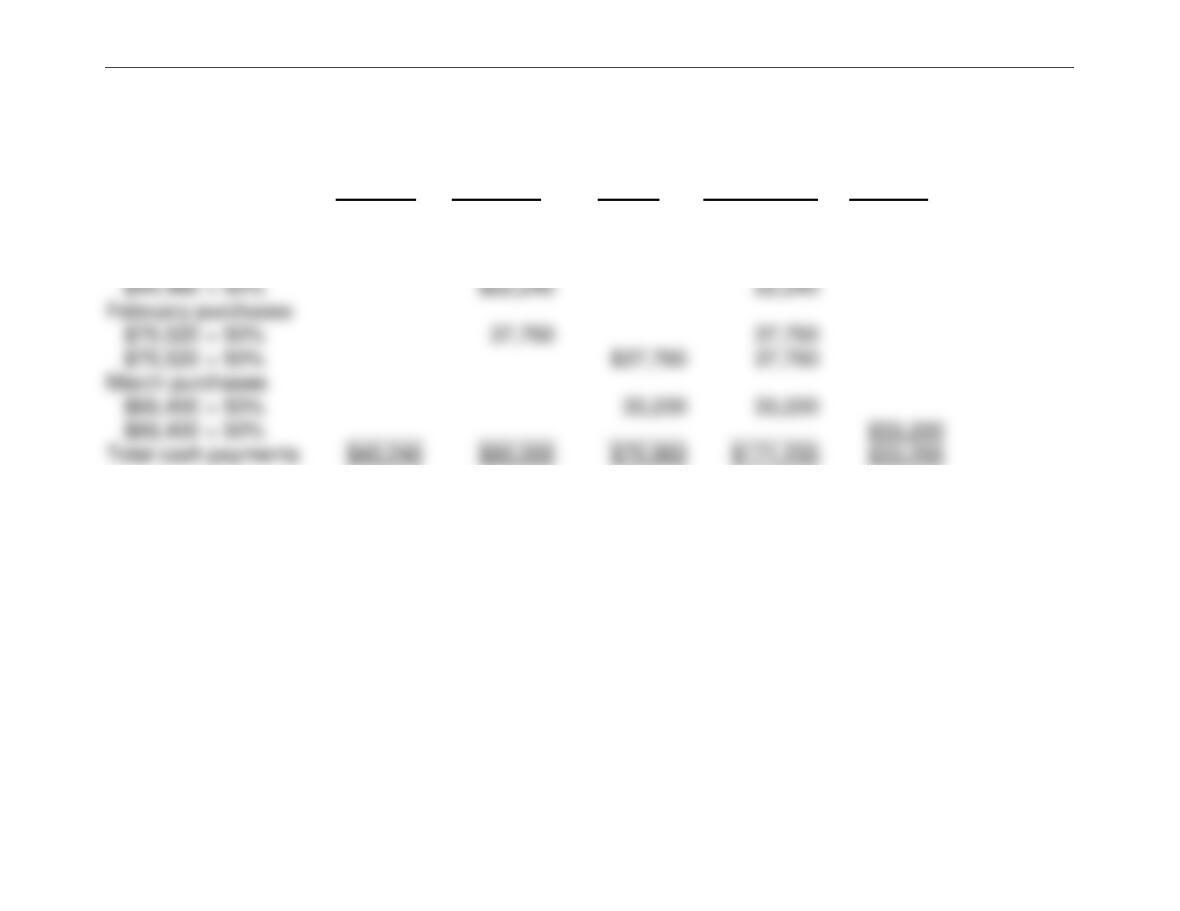
December A/P
$18,000
$18,000
January purchasesa
$44,480 × 50%
22,240
22,240
$44,480 × 50%
$22,240
22,240
February purchases
$75,520 × 50%
37,760
37,760
$75,520 × 50%
$37,760
37,760
March purchases
$66,400 × 50%
33,200
33,200
$66,400 × 50%
$33,200
Total cash payments
$40,240
$60,000
$70,960
$171,200
$33,200
a See Exercise 5-15
5-24
Exercise 5-26
a.
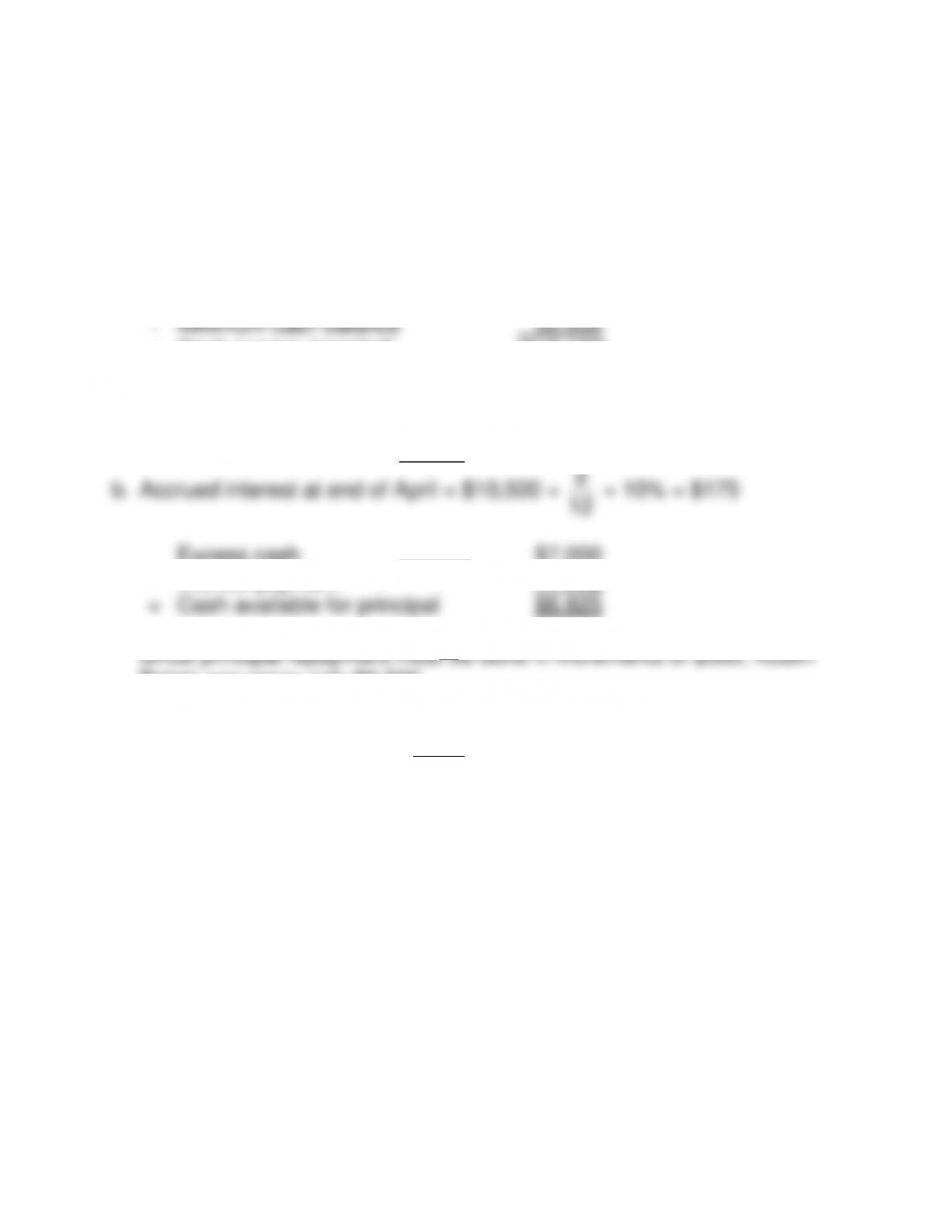
Beginning cash balance
$ 50,200
+
Cash collections, March
700,000
=
Total cash available to spend
750,200
–
Cash disbursements, March
710,300
=
Cash excess (deficiency)
39,900
–
Minimum cash balance
50,000
=
Cash excess (needed)
($10,100)
2
12
Excess cash
$7,000
–
Interest payment
175
=
Cash available for principal
$6,825
Paints can repay only $6,500.
Chapter 5 – Planning and Forecasting
5-25
Exercise 5-27
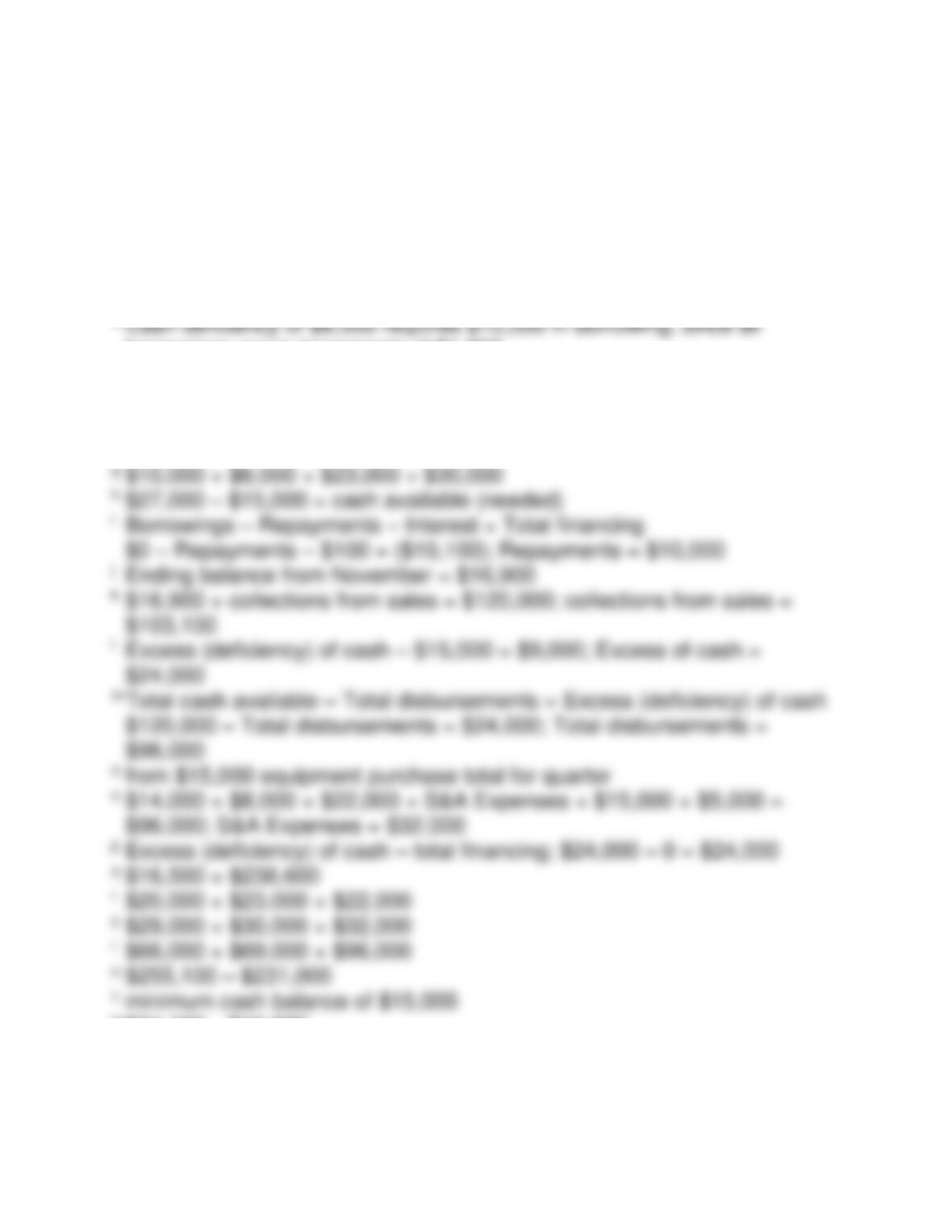
October
November
December
Quarter
Beginning cash balance
$16,500a
$15,500
$16,900j
$16,500
Collections from sales
55,000
80,500f
103,100k
238,600
Total cash available
71,500
96,000
120,000
255,100q
Less disbursements
Materials purchases
12,000b
10,000
14,000
36,000
Direct labor
5,000
6,000
8,000
19,000
Manufacturing overhead
20,000
23,000
22,000
65,000r
Selling & administrative
expenses
29,000
30,000
32,000o
91,000s
Equipment purchase
15,000n
15,000
Dividends
5,000
5,000
Total disbursements
66,000
69,000g
96,000m
231,000t
Excess (deficiency) of cash
5,500c
27,000
24,000l
24,100u
Minimum cash balance
15,000
15,000
15,000
15,000v
Cash available (needed)
(9,500)
12,000h
9,000
9,100w
Financing:
Borrowings
10,000d
10,000
Repayments
(10,000)i
(10,000)
Interest
(100)
(100)
Total financing
10,000e
(10,100)
(100)
Ending cash balance
$15,500
$16,900
$24,000p
$24,000x
5-26
5-27, continued
Solve in order of notation
a Beg. Cash Bal. + $55,000 = $71,500; Beg. Cash Bal. = $16,500
u $255,100 – $231,000
v minimum cash balance of $15,000
w $24,100 – $15,000
x $24,100 + $10,000 – $10,000 – $100
Chapter 5 – Planning and Forecasting
5-27
Exercise 5-28
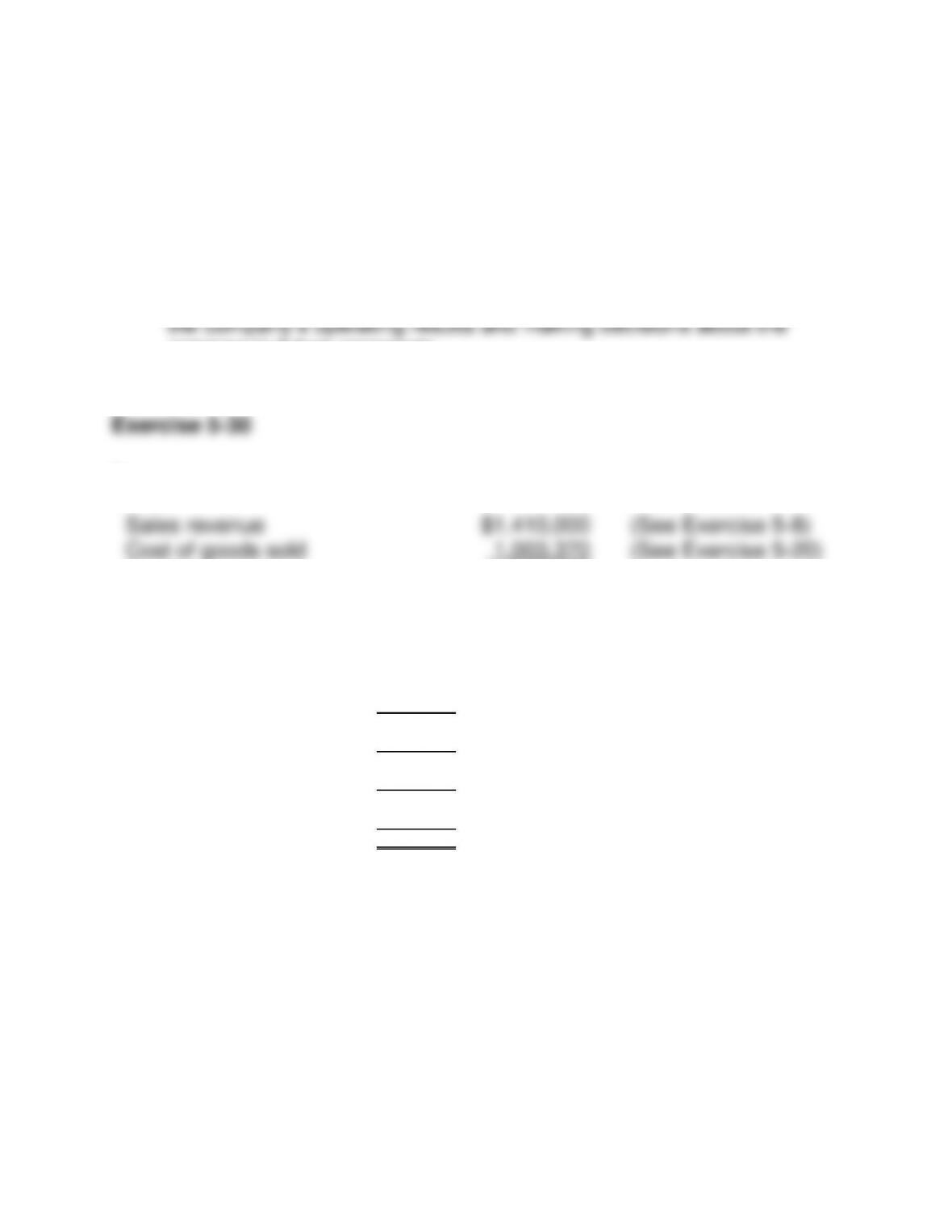
January
February
March
Quarter
Beginning cash balance
$ 60,000
$ 30,115
$ 30,380
$ 60,000
Collections from salesa
268,500
487,500
519,600
1,275,600
Total cash available to spend
328,500
517,615
549,980
1,335,600
Less disbursements
Payments for direct materialsb
40,240
60,000
70,960
171,200
Direct laborc
111,000
191,000
169,000
471,000
Manufacturing overheadd
86,385
89,185
88,415
263,985
Selling & administrative expensese
51,500
65,750
62,750
180,000
Income taxes
75,260
75,260
Equipment purchases
72,000
60,000
132,000
Dividends
49,000
49,000
Total cash disbursements
413,385
477,935
451,125
1,342,445
Cash excess (deficiency)
(84,885)
39,680
98,855
(6,845)
Minimum cash balance
(30,000)
(30,000)
(30,000)
(30,000)
Cash excess (needed)
(114,885)
9,680
68,855
(36,845)
Financing:
Borrowings
115,000
115,000
Repayments
(7,000)
(67,000)
(74,000)
Interest
(2,300)f
(1,080)
(3,380)
Total financing
115,000
(9,300)
(68,080)
37,620
Ending cash balance
$ 30,115
$ 30,380
$ 30,775
$ 30,775
12
5-28
Exercise 5-29
b. Monterey Holdings reported the pro-forma amounts to provide users of
Exercise 5-30
a.
Sales revenue
$1,410,000
(See Exercise 5-8)
Cost of goods sold
1,003,370
(See Exercise 5-20)
Gross margin
406,630
Selling & administrative expense
266,400
(See Exercise 5-9)
Operating income
140,230
Interest expense
3,380
(See Exercise 5-28)
Income before taxes
136,850
Income tax expense
41,055
Net income
$ 95,795

Chapter 5 – Planning and Forecasting
5-29
b.
Cash
$ 30,775
(See Exercise 5-28)
Accounts receivable
136,500
(See Exercise 5-23)
Direct materials inventory
5,560
(See Exercise 5-20)
Finished goods inventory
59,015
(See Exercise 5-20)
Property, plant & equipment
432,000
($300,000 + 72,000 + 60,000)
Accumulated depreciation
(195,000)
($75,000 + 30,000 + 90,000)
Total assets
$468,850
Accounts payable
$ 33,200
(See Exercise 5-25)
Taxes payable
41,055
(See income statement above)
Note payable
41,000
(See Exercise 5-28)
Common stock
100,000
Retained earnings
253,595
($206,800 + 95,795 – 49,000)
Total liabilities and equities
$468,850
5-30
SOLUTIONS TO PROBLEMS
Problem 5-31
a.
1st Quarter
2nd Quarter
3rd Quarter
4th Quarter
Annual
Acoustic:
Budgeted units sold
400
500
300
600
1,800
Budgeted sales price
× $ 1,260
× $ 1,260
× $ 1,260
× $ 1,260
× $ 1,260
Budgeted revenue
$504,000
$630,000
$378,000
$756,000
$2,268,000
Electric:
Budgeted units sold
200
80
100
120
500
Budgeted sales price
× $ 2,530
× $ 2,530
× $ 2,530
× $ 2,530
× $ 2,530
Budgeted revenue
$506,000
$202,400
$253,000
$303,600
$1,265,000
Total revenue
$1,010,000
$832,400
$631,000
$1,059,600
$3,533,000
b.
1st Quarter
2nd Quarter
3rd Quarter
4th Quarter
Annual
Budgeted unit sales
400
500
300
600
1,800
+
Budgeted ending inventorya
100
60
120
90
90
=
Total units required
500
560
420
690
1,890
–
Beginning inventory
60
100
60
120
60
=
Budgeted production
440
460
360
570
1,830
sales of 450 acoustic guitars.