Solutions for Davis & Davis, Managerial Accounting, 2nd ed.
3-48
SOLUTIONS TO CASES
Case 3-42
a. Tiffany’s fixed expenses are a much higher percentage of sales than
b. While Blue Nile’s gross margin percentage is 38.3 points below
margin.
e. Amazon.com’s cost structure is most like Blue Nile. Both are online
retailers with little investment in buildings.
Chapter 3 – Cost-Volume-Profit Analysis and Pricing Decisions
3-49
Case 3-43
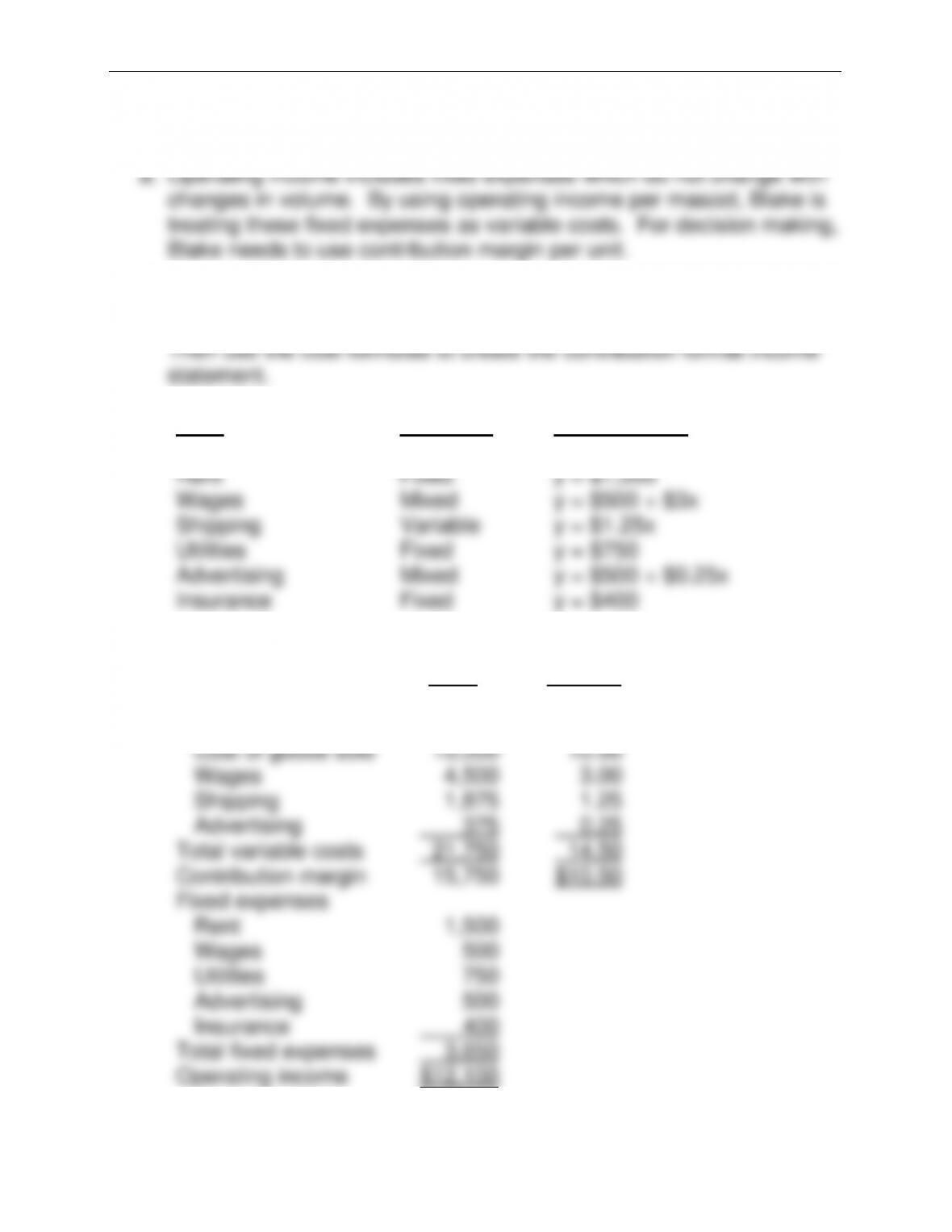
b. Use the high-low method to calculate the cost formula for each cost.
Cost
Behavior
Cost formula
Cost of goods sold
Variable
y = $10x
Rent
Fixed
y = $1,500
Wages
Mixed
y = $500 + $3x
Shipping
Variable
y = $1.25x
Utilities
Fixed
y = $750
Advertising
Mixed
y = $500 + $0.25x
Insurance
Fixed
y = $400
Total
Per unit
Sales
$37,500
$25.00
Variable costs
Cost of goods sold
15,000
10.00
Wages
4,500
3.00
Shipping
1,875
1.25
Advertising
375
0.25
Total variable costs
21,750
14.50
Contribution margin
15,750
$10.50
Fixed expenses
Rent
1,500
Wages
500
Utilities
750
Advertising
500
Insurance
400
Total fixed expenses
3,650
Operating income
$12,100
3-50
Case 3-43, continued
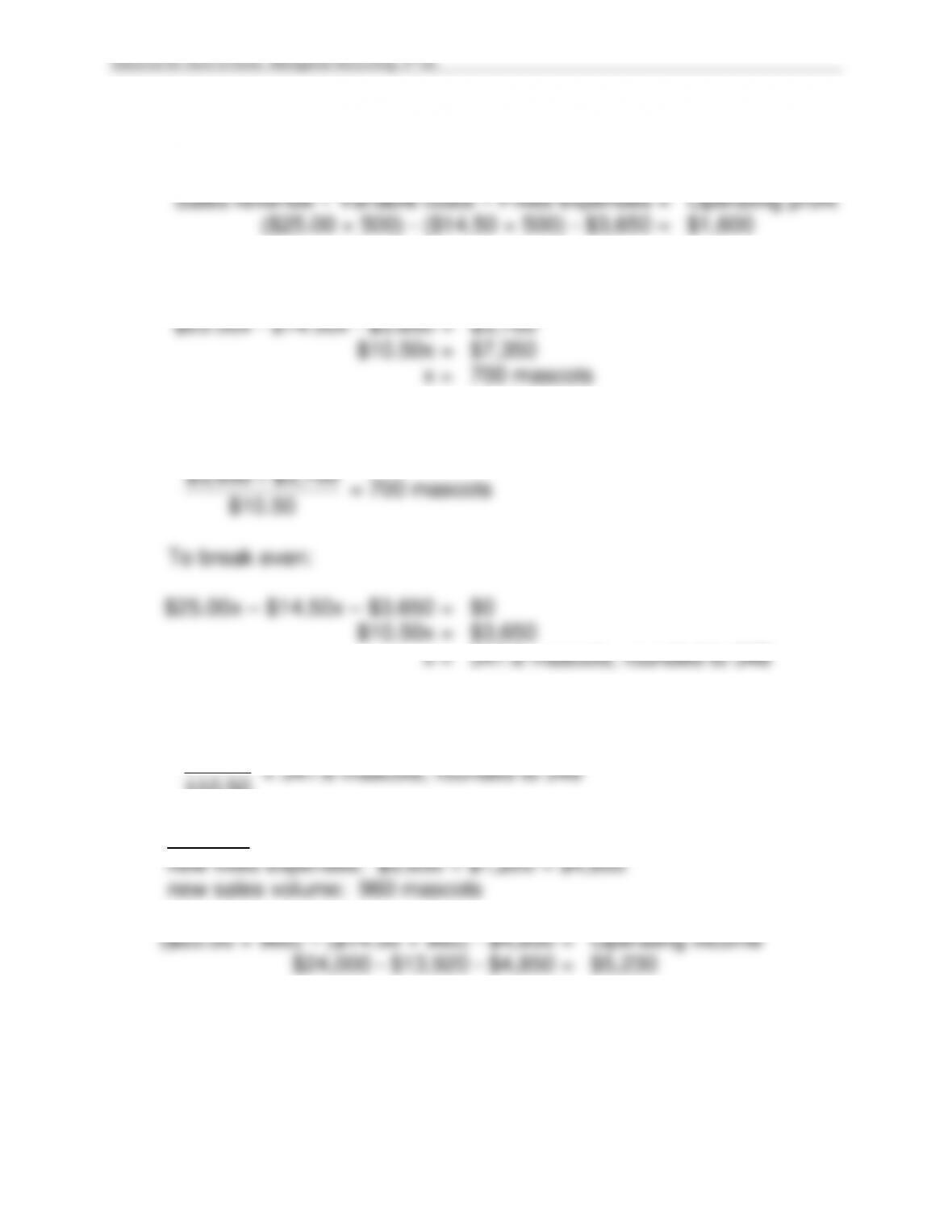
c.
Sales revenue – Variable costs – Fixed expenses =
Operating profit
($25.00 × 500) – ($14.50 × 500) – $3,650 =
$1,600
d.
$25.00x – $14.50x – $3,650 =
$3,700
$10.50x =
$7,350
x =
700 mascots
Or
$3,650 $3,700
$10.50
= 700 mascots
To break even:
$25.00x – $14.50x – $3,650 =
$0
$10.50x =
$3,650
x =
347.6 mascots, rounded to 348
Or
e. Option 1
($25.00 × 960) – ($14.50 × 960) – $4,850 =
Operating income
$24,000 – $13,920 – $4,850 =
$5,230
5010
6503
.$
,$
Chapter 3 – Cost-Volume-Profit Analysis and Pricing Decisions
Case 3-43, continued
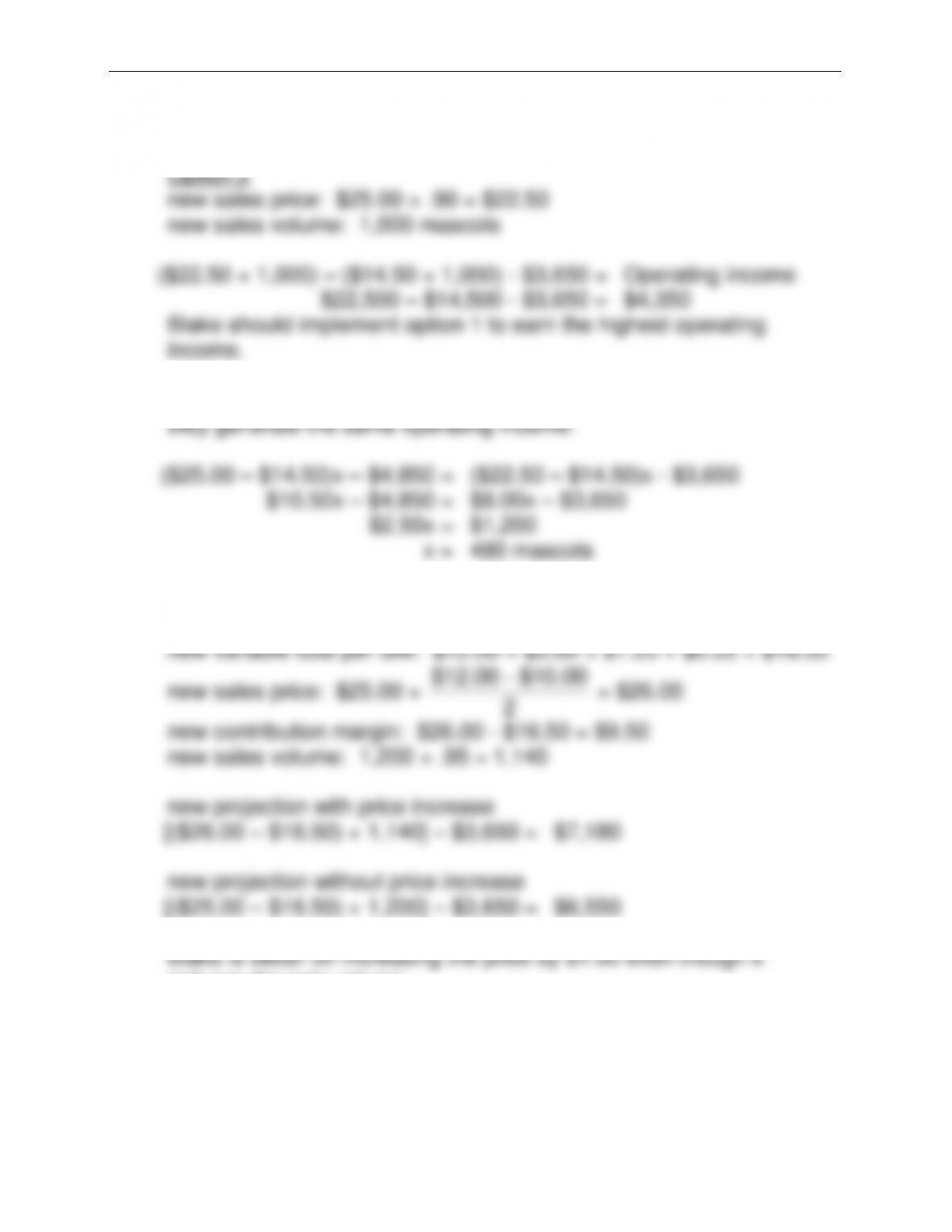
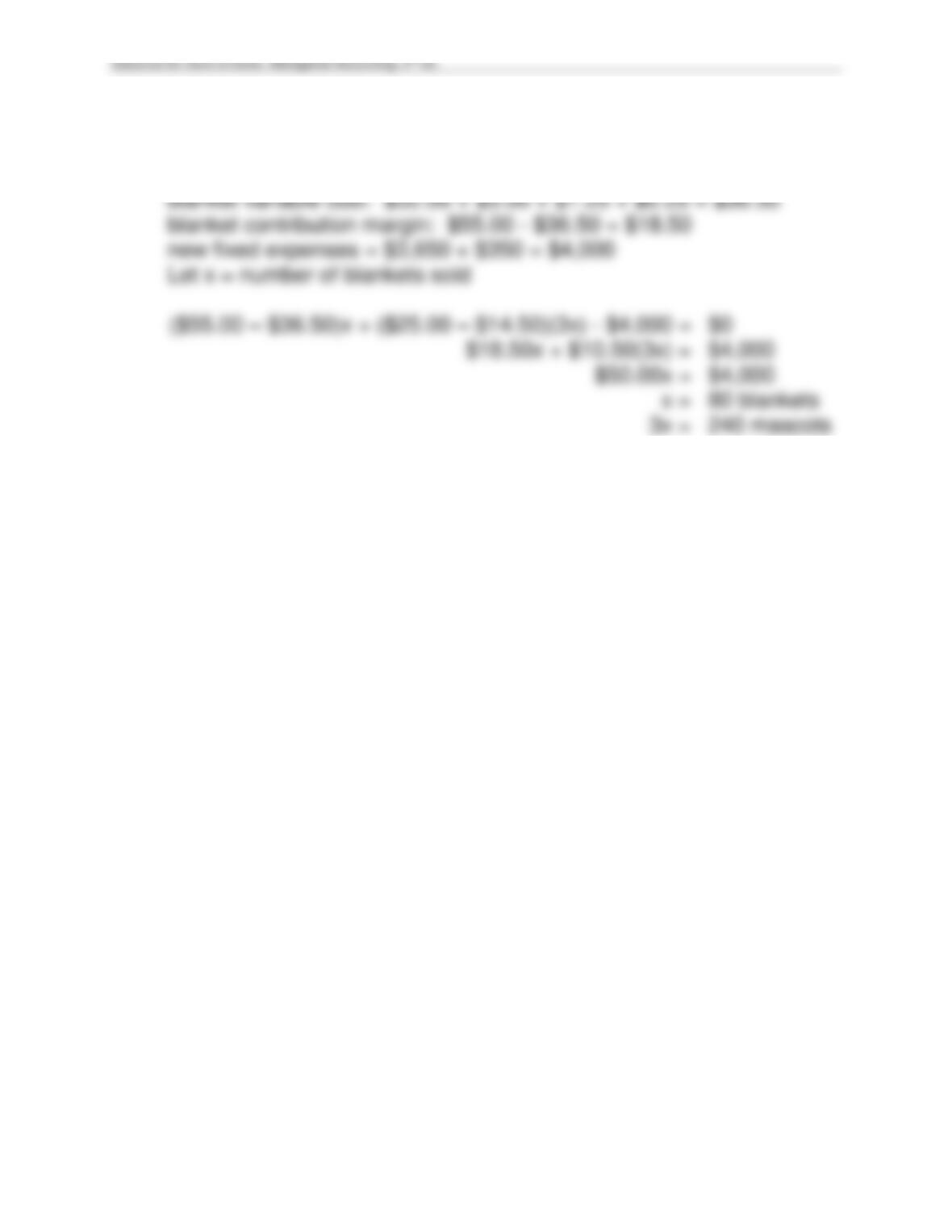
Blake would be indifferent between the two plans at the point where
Case 3-43, continued
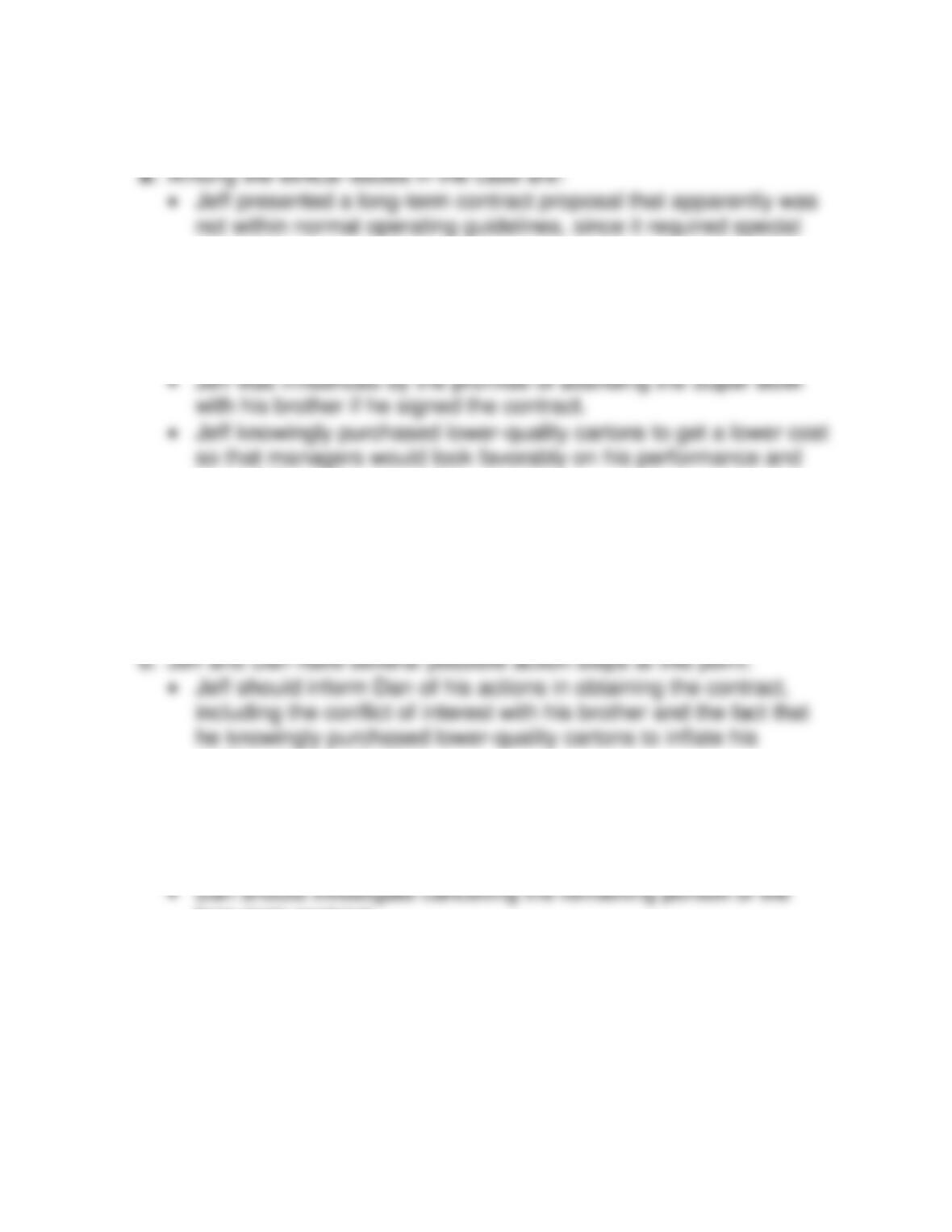
g. new sales mix: 1 blanket for every 3 mascots
Chapter 3 – Cost-Volume-Profit Analysis and Pricing Decisions
3-53
Case 3-44
approval.
Jeff withheld critical information about the contract and the quality
of the cartons.
Jeff created a conflict of interest by entering into a contract with his
brother.
reward him with a promotion.
The company has collected damages from freight carriers under
the pretense that the carrier caused the damage when it was due
to the lower-quality cartons.
Jeff continued to withhold information when confronted by Dan
about the lower-quality cartons.
performance evaluation.
Dan should contact the carriers and offer to reimburse the claims
that have been paid to date.
Dan should stop using the lower-quality cartons immediately to
prevent future damage claims by customers.
long-term contract.
Dan should purchase cartons of the correct quality.
Solutions for Davis & Davis, Managerial Accounting, 2nd ed.
3-54
Case 3-44, continued
The cost of damage claims
The cost of inferior cartons if they can’t be returned or if the
contract cannot be voided
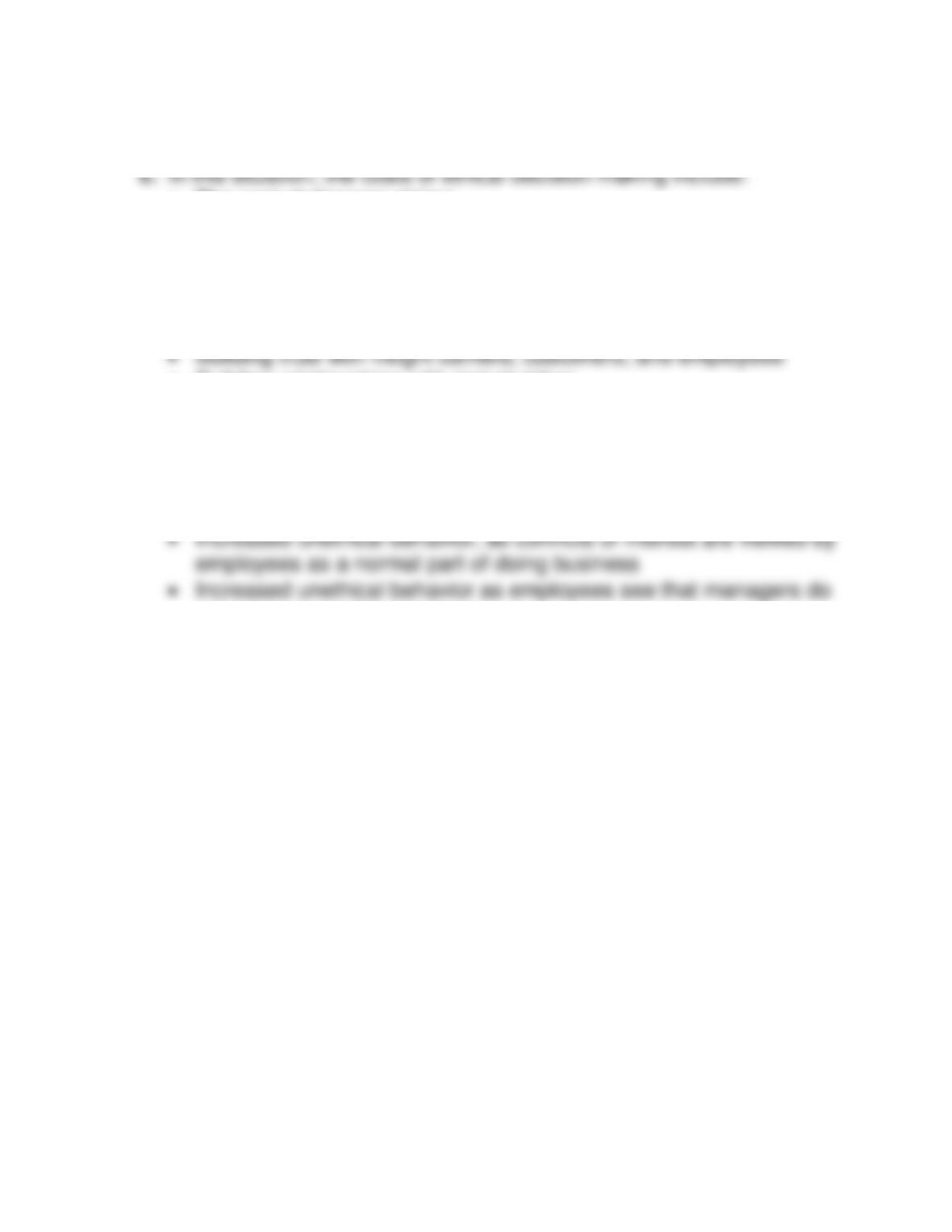
In this situation, the benefits of ethical decision making include:
Repairing the company’s reputation
Building relationships with stakeholders
Demonstrating to employees that ethical decision making is valued
The costs of not making the appropriate decision include:
Continued damage to company reputation from damaged goods
Implicit approval of unethical behavior
not address unethical behavior