Chapter 3 – Cost-Volume-Profit Analysis and Pricing Decisions
3-31
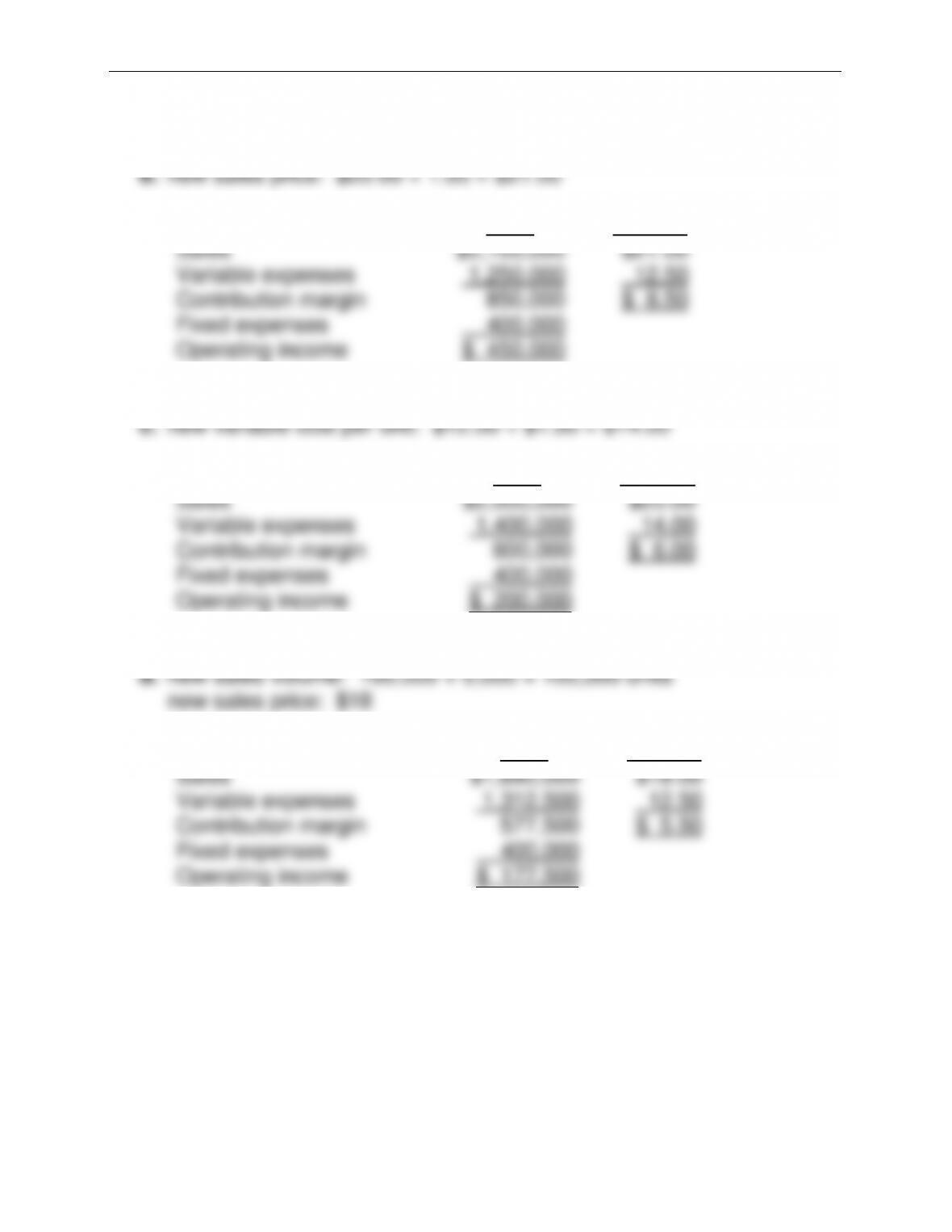
Problem 3-30, continued
Total
Per unit
Sales
$2,100,000
$21.00
Variable expenses
1,250,000
12.50
Contribution margin
850,000
$ 8.50
Fixed expenses
400,000
Operating income
$ 450,000
Total
Per unit
Sales
$2,000,000
$20.00
Variable expenses
1,400,000
14.00
Contribution margin
600,000
$ 6.00
Fixed expenses
400,000
Operating income
$ 200,000
Total
Per unit
Sales
$1,890,000
$18.00
Variable expenses
1,312,500
12.50
Contribution margin
577,500
$ 5.50
Fixed expenses
400,000
Operating income
$ 177,500
3-32
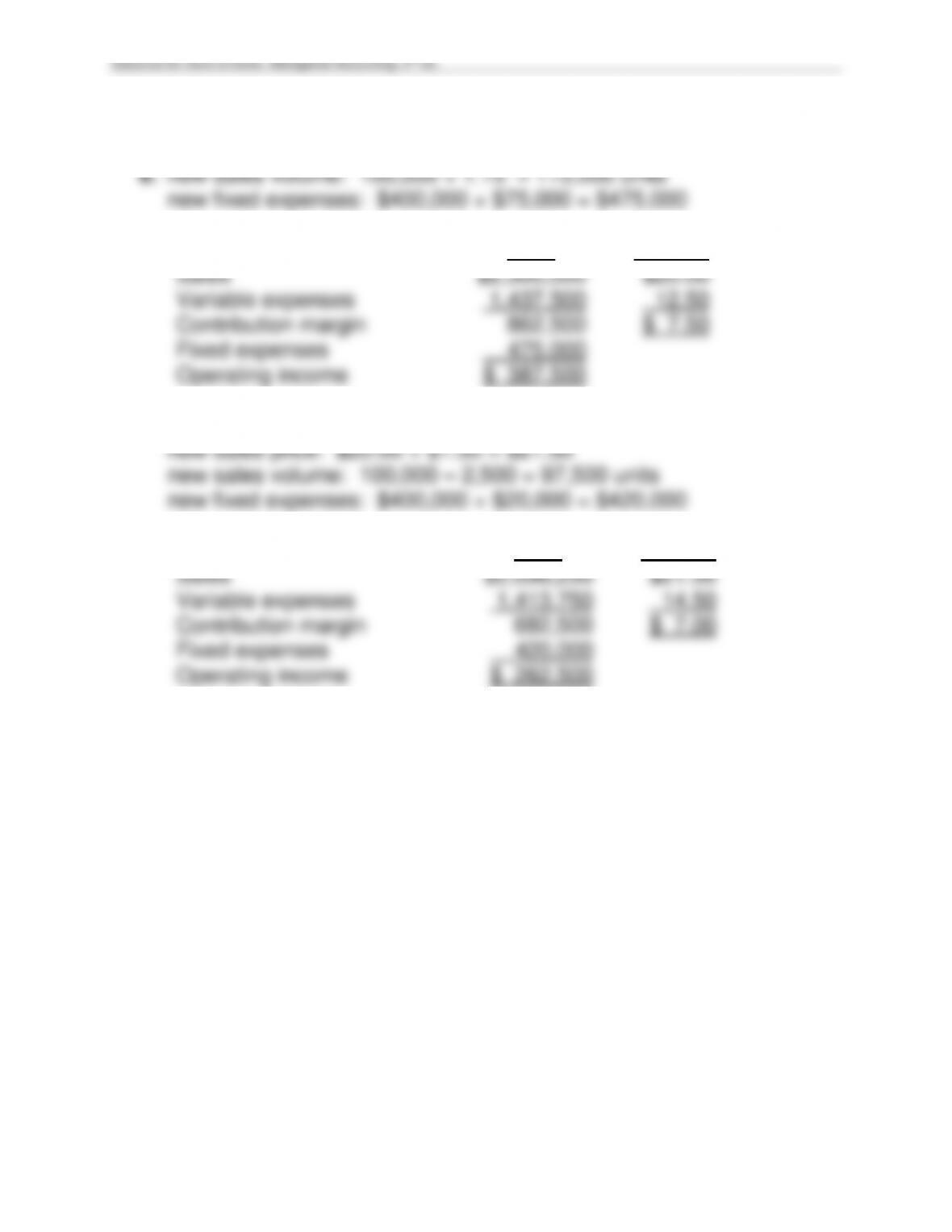
Problem 3-30, continued
Total
Per unit
Sales
$2,300,000
$20.00
Variable expenses
1,437,500
12.50
Contribution margin
862,500
$ 7.50
Fixed expenses
475,000
Operating income
$ 387,500
f. new variable cost per unit: $12.50 + $2.00 = $14.50
Total
Per unit
Sales
$2,096,250
$21.50
Variable expenses
1,413,750
14.50
Contribution margin
682,500
$ 7.00
Fixed expenses
420,000
Operating income
$ 262,500
Chapter 3 – Cost-Volume-Profit Analysis and Pricing Decisions
3-33
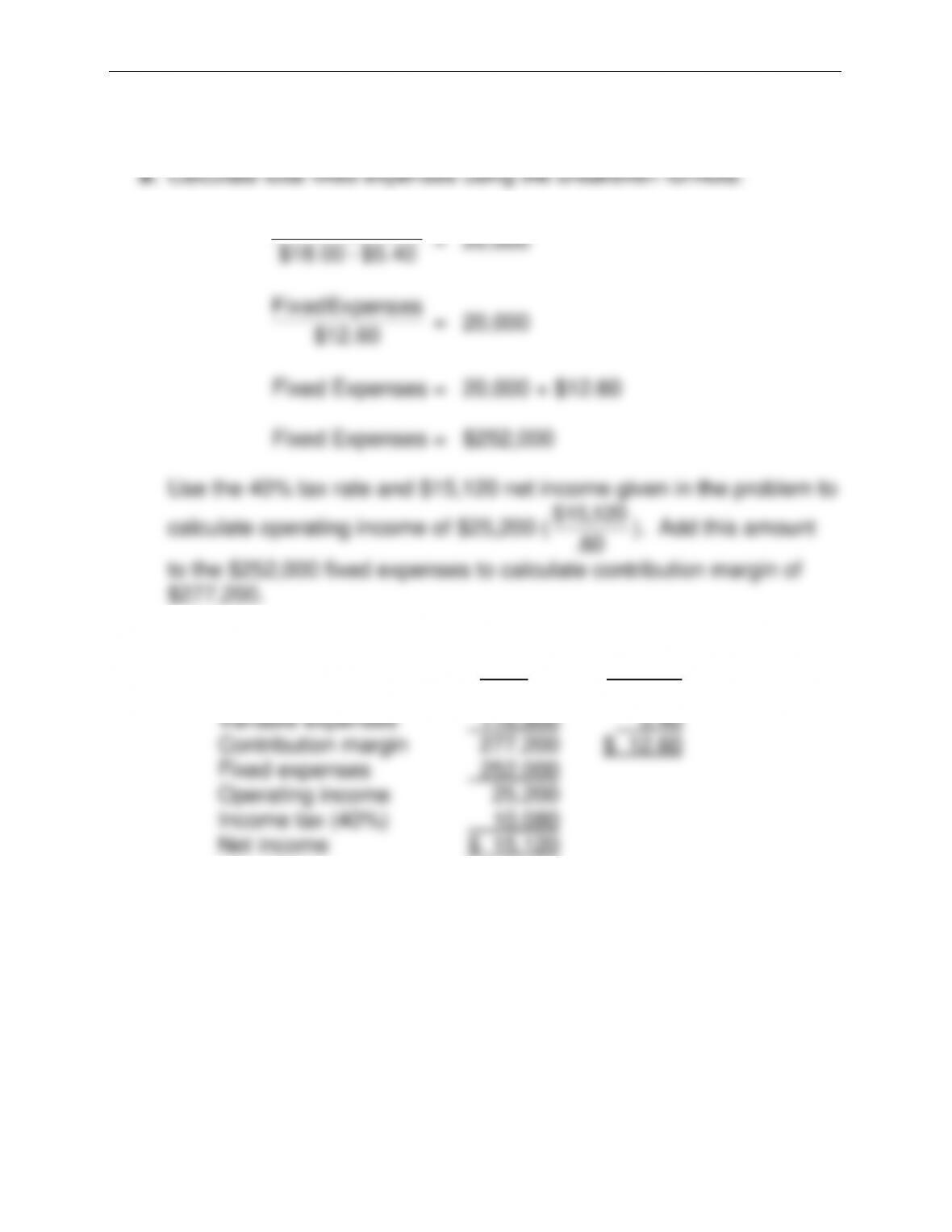
Problem 3-31
=
20,000
=
20,000
Fixed Expenses =
20,000 × $12.60
Fixed Expenses =
$252,000
Use the 40% tax rate and $15,120 net income given in the problem to
calculate operating income of $25,200 ( ). Add this amount
to the $252,000 fixed expenses to calculate contribution margin of
$277,200.
Total
Per unit
Sales
$396,000
$18.00
Variable expenses
118,800
5.40
Contribution margin
277,200
$ 12.60
Fixed expenses
252,000
Operating income
25,200
Income tax (40%)
10,080
Net income
$ 15,120
$5.40 – $18.00
Expenses Fixed
$12.60
Expenses Fixed
60.
120,15$
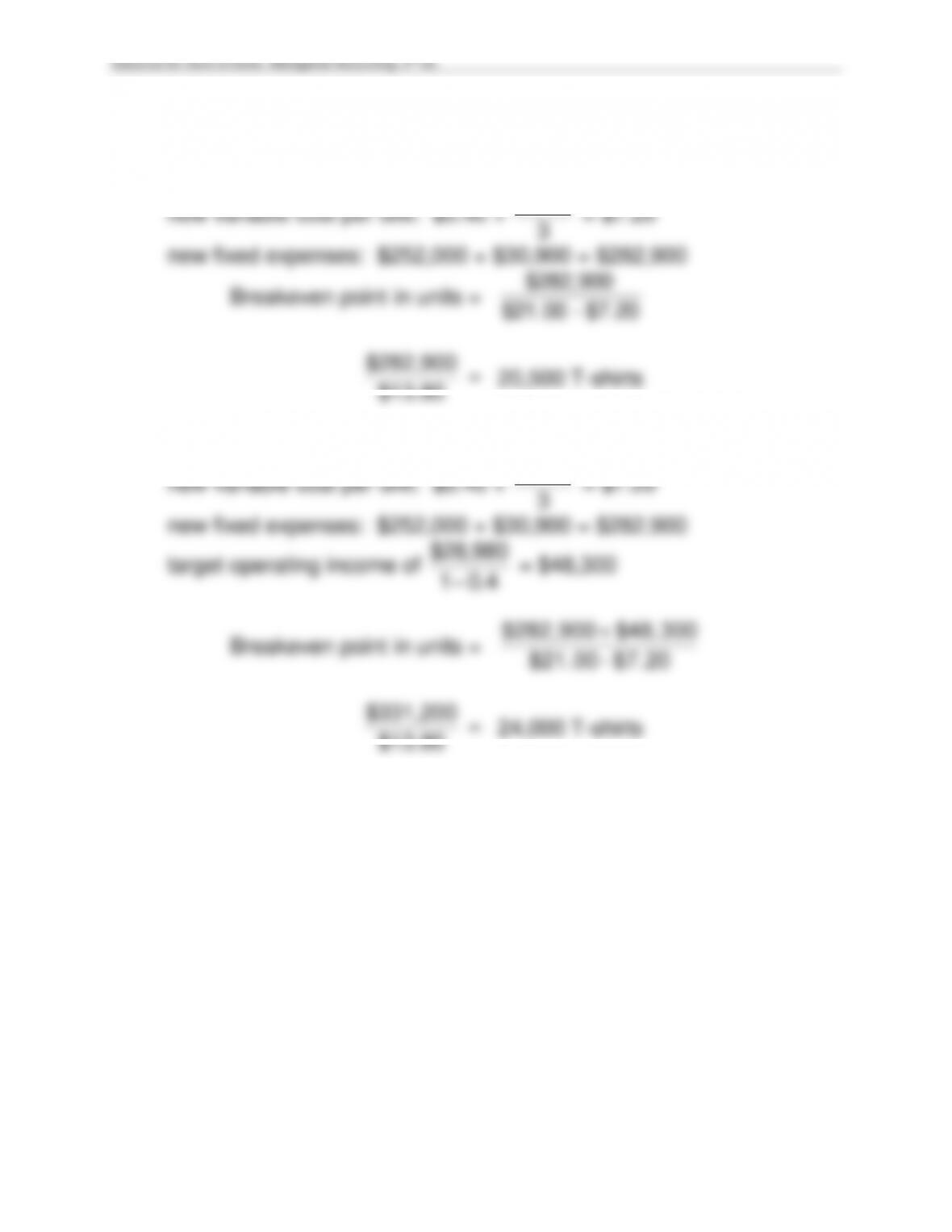
Problem 3-31, continued
b. new sales price: $21.00
40.5$
Chapter 3 – Cost-Volume-Profit Analysis and Pricing Decisions
Problem 3-32
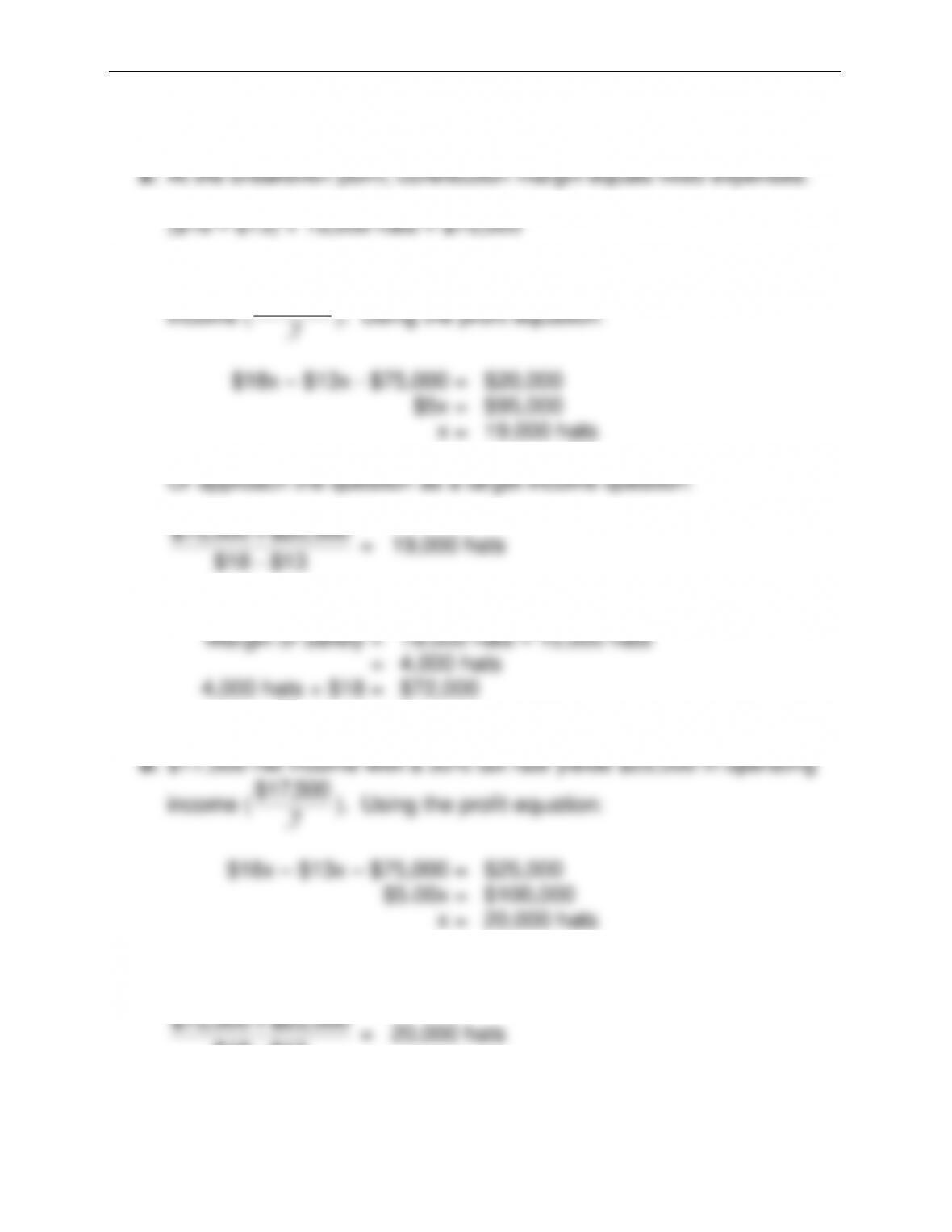
b. $14,000 net income with a 30% tax rate yields $20,000 in operating
000,14$
Problem 3-32, continued
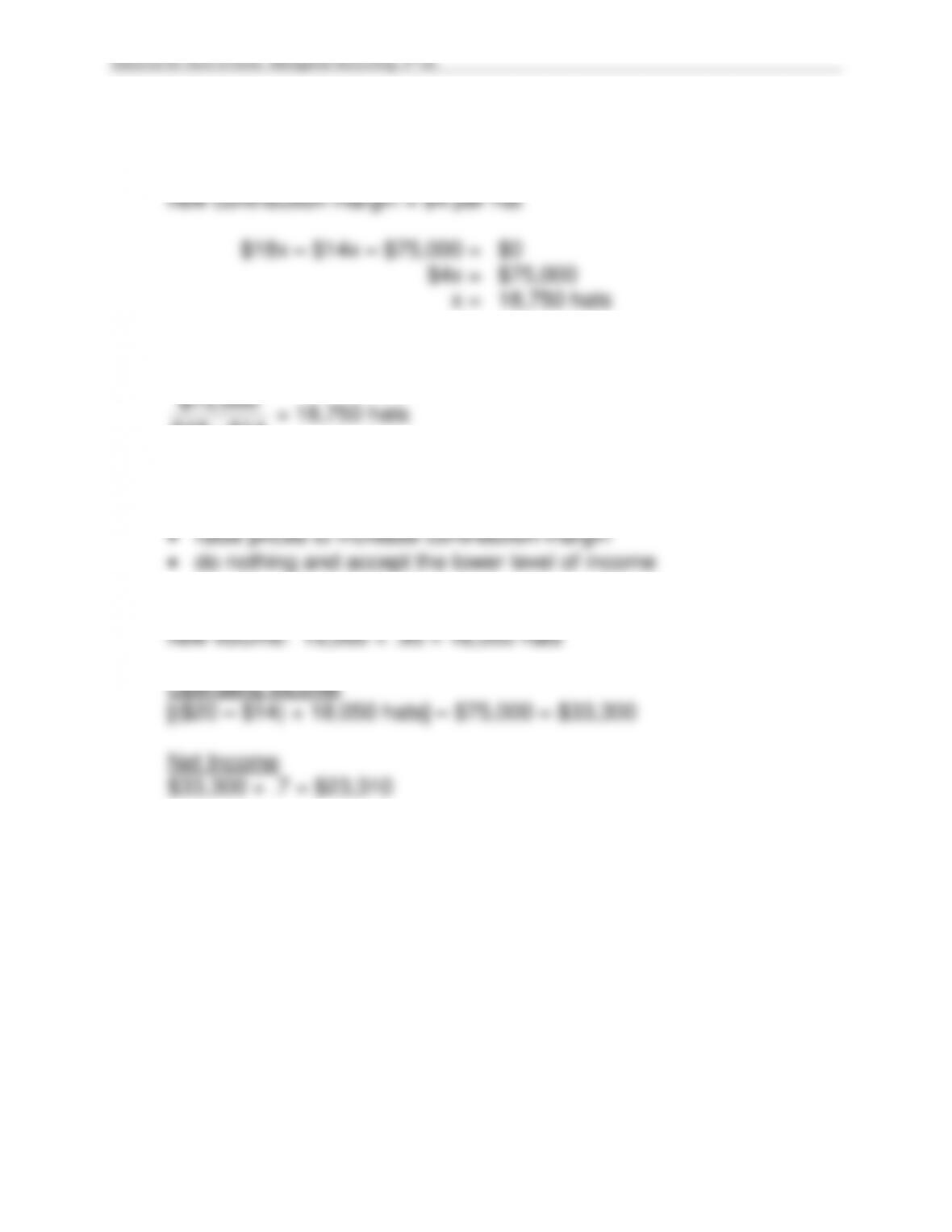
e. new variable cost = $14 per hat
Chapter 3 – Cost-Volume-Profit Analysis and Pricing Decisions
Problem 3-33
a.
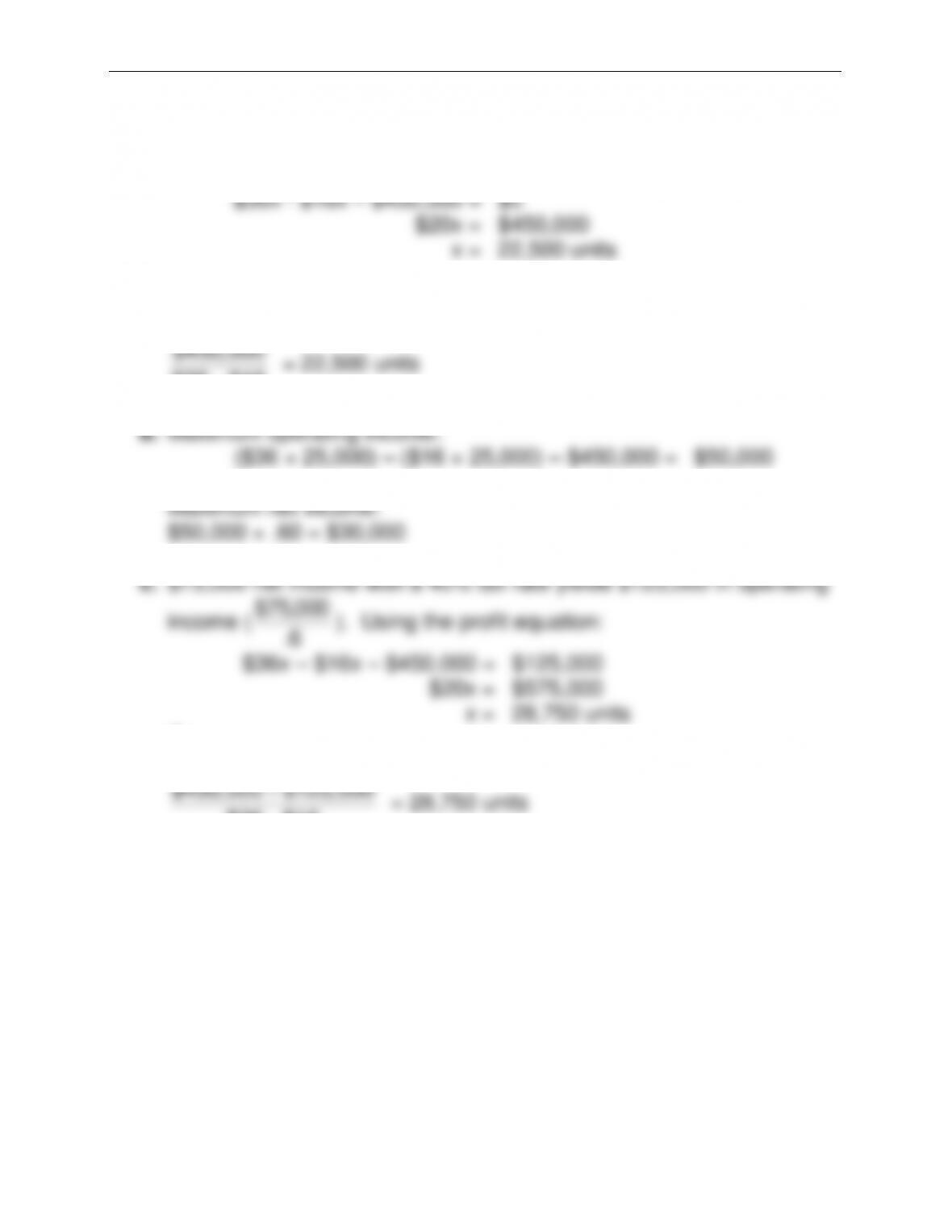
$36x – $16x – $450,000 =
$0
$20x =
$450,000
x =
22,500 units
Or:
$450,000
$36 $16
= 22,500 units
$50,000
$125,000
28,750 units
Problem 3-33, continued
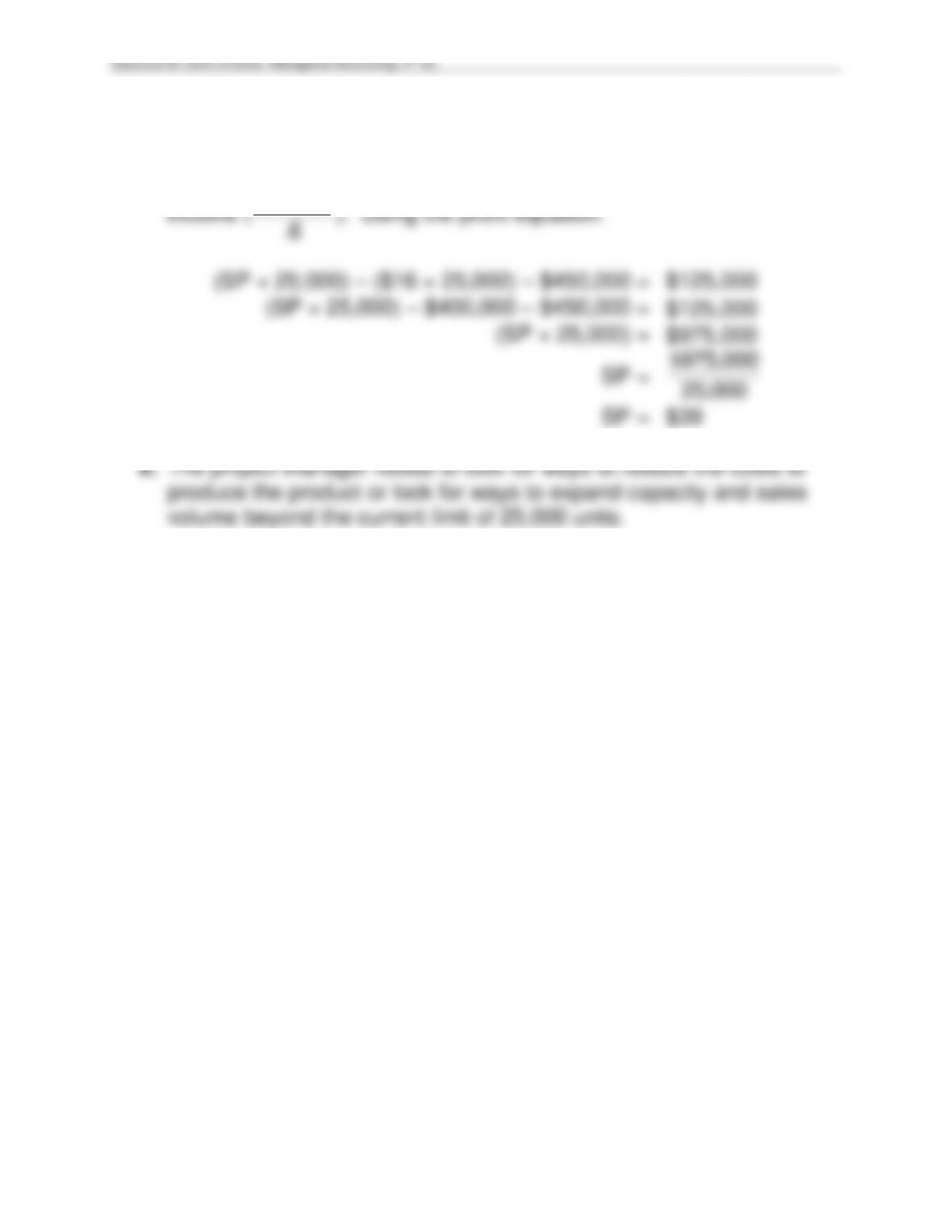
d. $75,000 net income with a 40% tax rate yields $125,000 in operating
000,75$
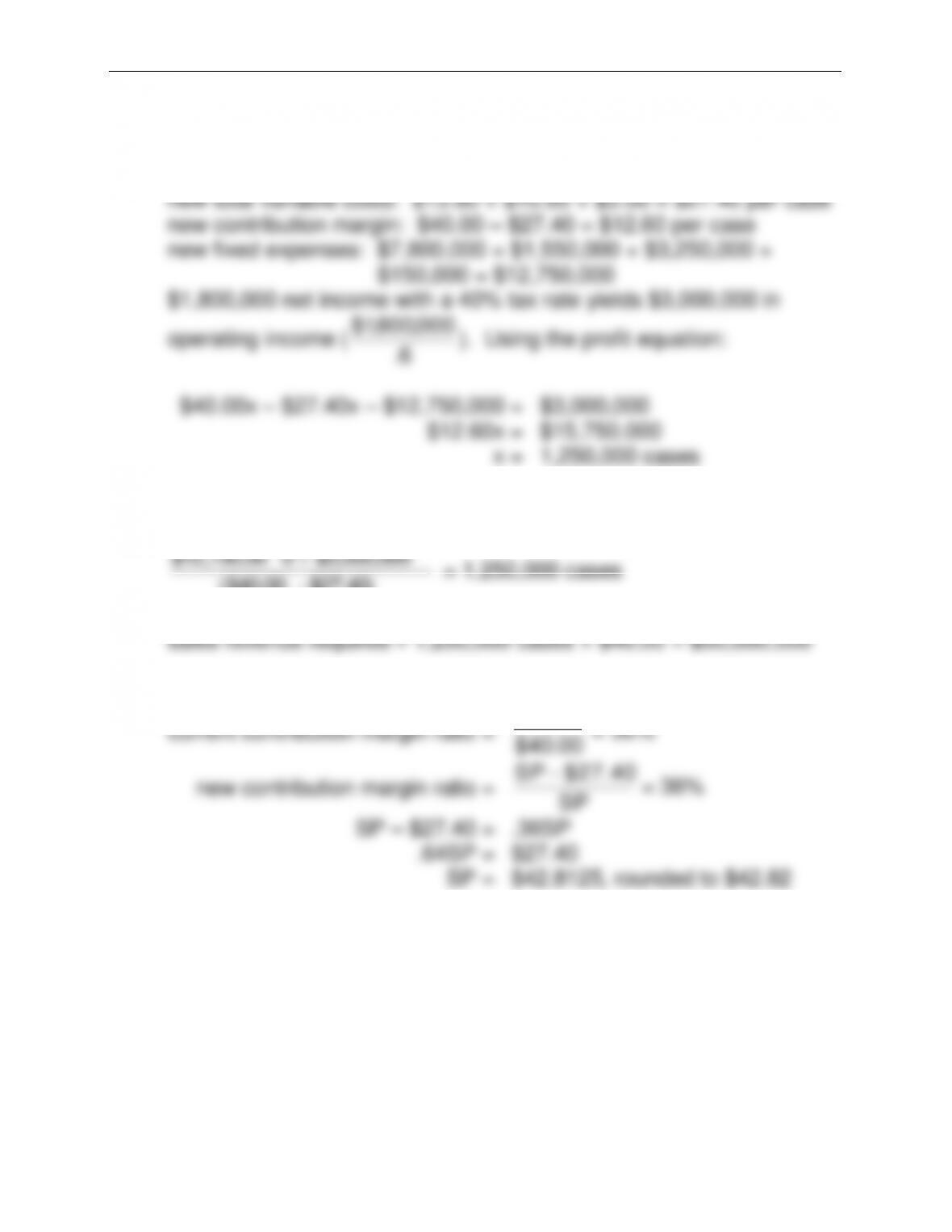
Chapter 3 – Cost-Volume-Profit Analysis and Pricing Decisions
Problem 3-34
a. new variable cost of goods sold: $12.00 × 1.15 = $13.80 per case
3-40
Problem 3-35
a.
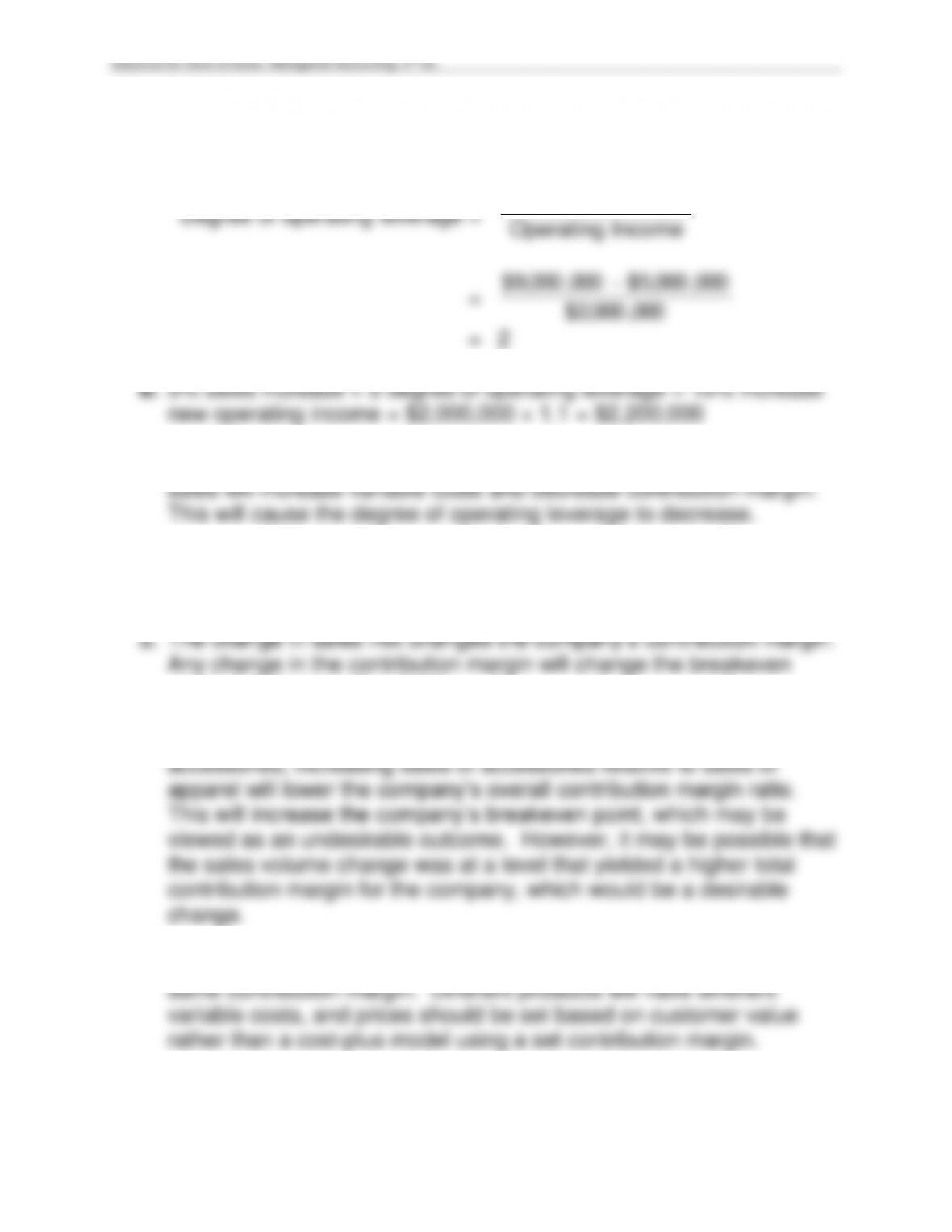
Degree of operating leverage =
Contribution Margin
Operating Income
=
=
2
c. Moving employees from a fixed salary to a commission based on
Problem 3-36
point and the operating income.
b. Assuming that apparel has a higher contribution margin ratio than
c. No, it is very unlikely that all products within the apparel line have the
000,000,2$
000,000,5$000,000,9$