PROBLEM 9-5A (Continued)
Cost $500,000
Accum. depreciation—
(b) Dec. 31 Depreciation Expense ………………… 570,000
31 Depreciation Expense ………………… 4,800,000
(c) GRAND COMPANY
Partial Balance Sheet
December 31, 2016
Plant Assets*
Land …………………………………………….. $ 5,730,000
Buildings ………………………………………. $28,500,000
Less: Accumulated depreciation—
*See T-accounts which follow.
PROBLEM 9-5A (Continued)
Land
Bal. 4,000,000
Apr. 1 2,130,000
June 1 400,000
Bal. 5,730,000
Buildings
Bal. 28,500,000
Bal. 28,500,000
Accumulated Depreciation—Buildings
Bal. 12,100,000
Dec. 31 adj. 570,000
Bal. 12,670,000
Equipment
Bal. 48,000,000
July 1 2,500,000
May 1 750,000
Dec. 31 500,000
Bal. 49,250,000
Accumulated Depreciation—Equipment
May 1 325,000
Dec. 31 500,000
Bal. 5,000,000
May 1 25,000
Dec. 31 50,000
Dec. 31 adj. 4,800,000
Bal. 9,050,000
PROBLEM 9-6A
(a) Accumulated Depreciation—Equipment ……………… 50,000
(b) Cash ……………………………………………………….………… 21,000
(c) Cash ……………………………………………………….………… 31,000
PROBLEM 9-7A
(a) Jan. 2 Patents …………………………………………….. 27,000
Jan.– Research and Development
June Expense ……………………………………….. 140,000
Sept. 1 Advertising Expense …………………………. 50,000
Oct. 1 Franchises ……………………………………….. 140,000
(b) Dec. 31 Amortization Expense ……………………….. 10,000
31 Amortization Expense ……………………….. 5,500
(c) Intangible Assets
Patents ($97,000 cost – $17,000 amortization) (1) …………… $ 80,000
PROBLEM 9-8A
1. Research and Development Expense ………………. 136,000
Patents ………………………………………………………….. 13,600
Amortization Expense
2. Goodwill ………………………………………………………… 920
Note: Goodwill should not be amortized because it has an indefinite life unlike
Patents.
PROBLEM 9-9A
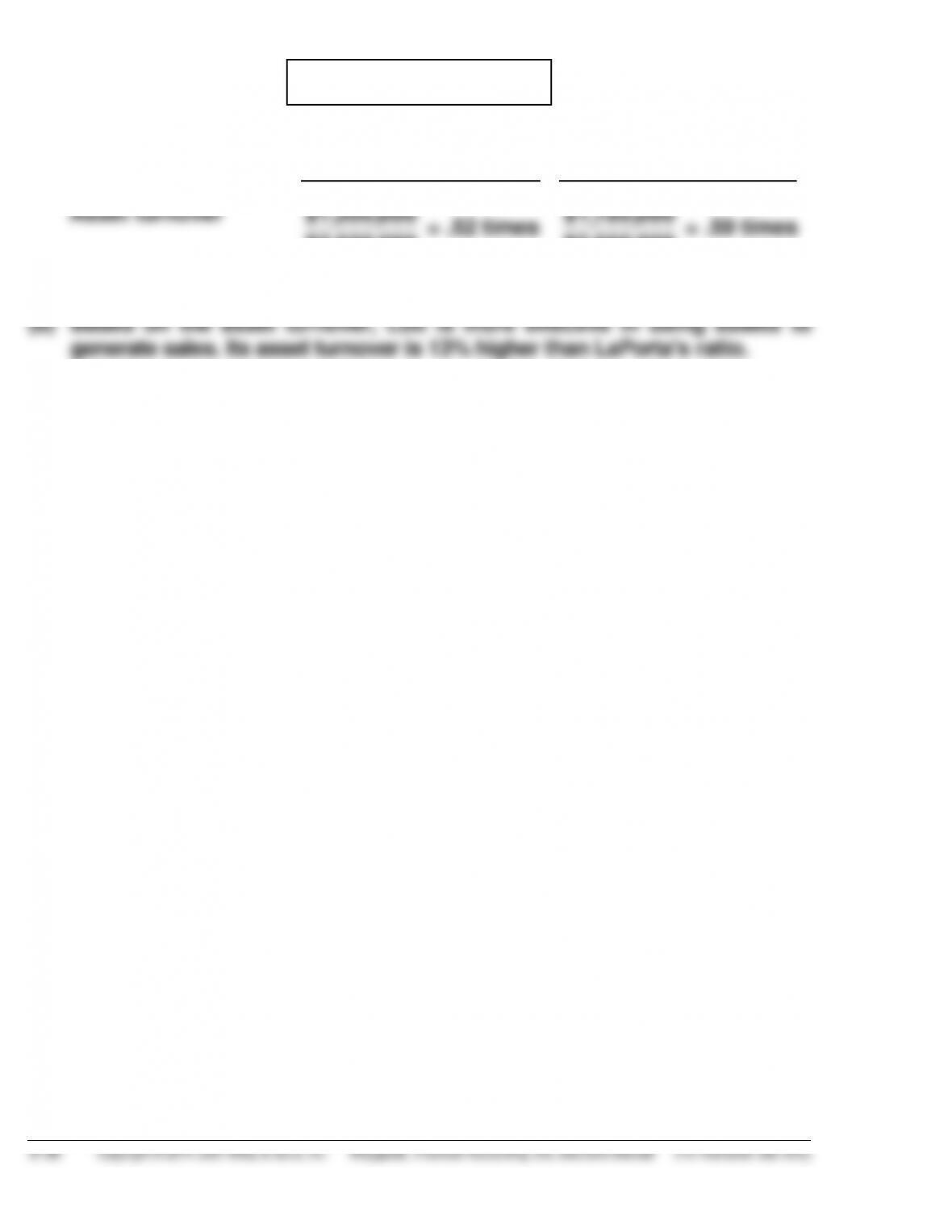
(a)
LaPorta
Lott
Asset turnover
$1,300,000
$2,500,000
= .52 times
$1,180,000
$2,000,000
= .59 times
PROBLEM 9-1B
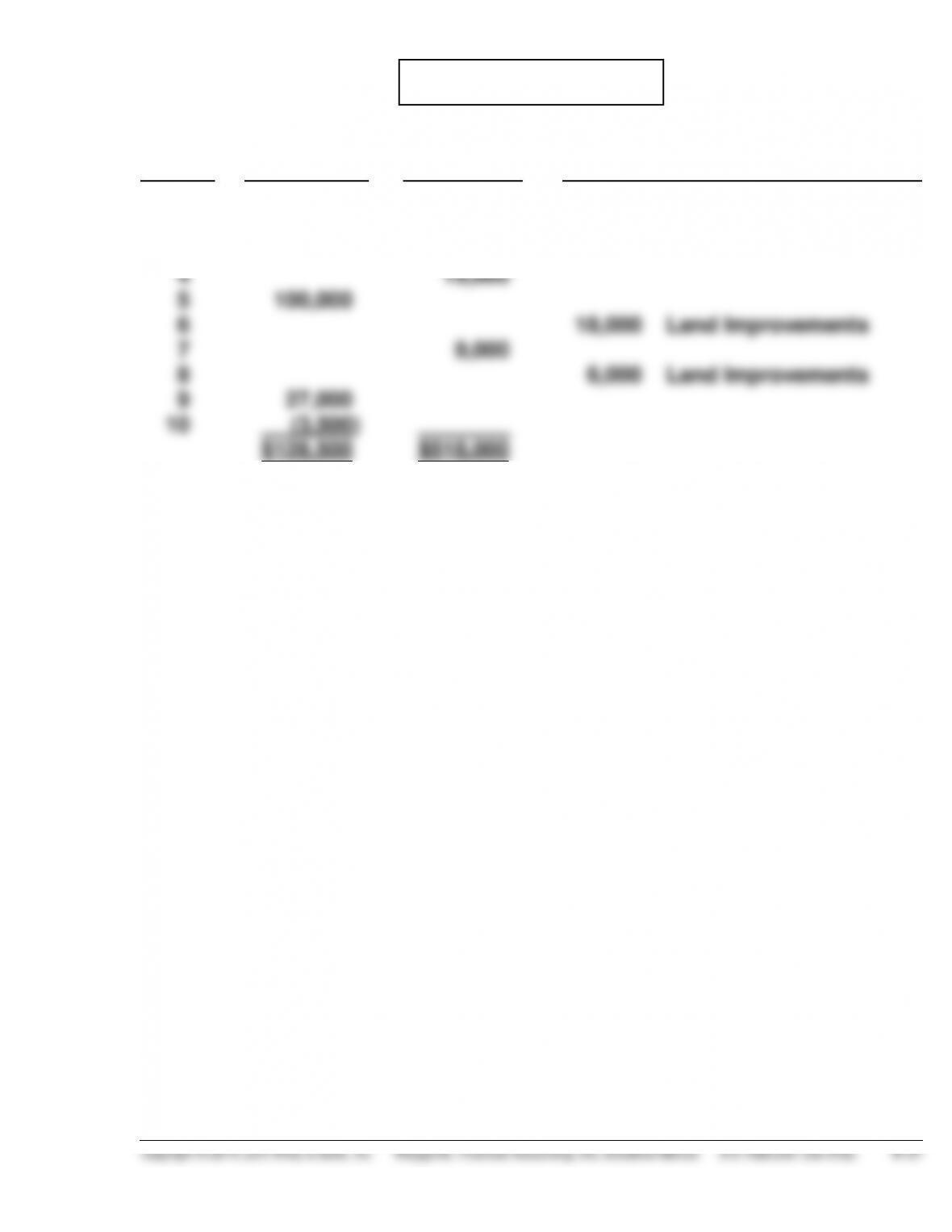
Item
Land
Buildings
Other Accounts
1
2
3
4
5
6
7
8
9
10
($ 5,000)
100,000
( 27,000)
( (3,500)
($128,500)
$490,000
19,000
9,000
$518,000
$ 7,500 Property Tax Expense
18,000 Land Improvements
6,000 Land Improvements
PROBLEM 9-2B
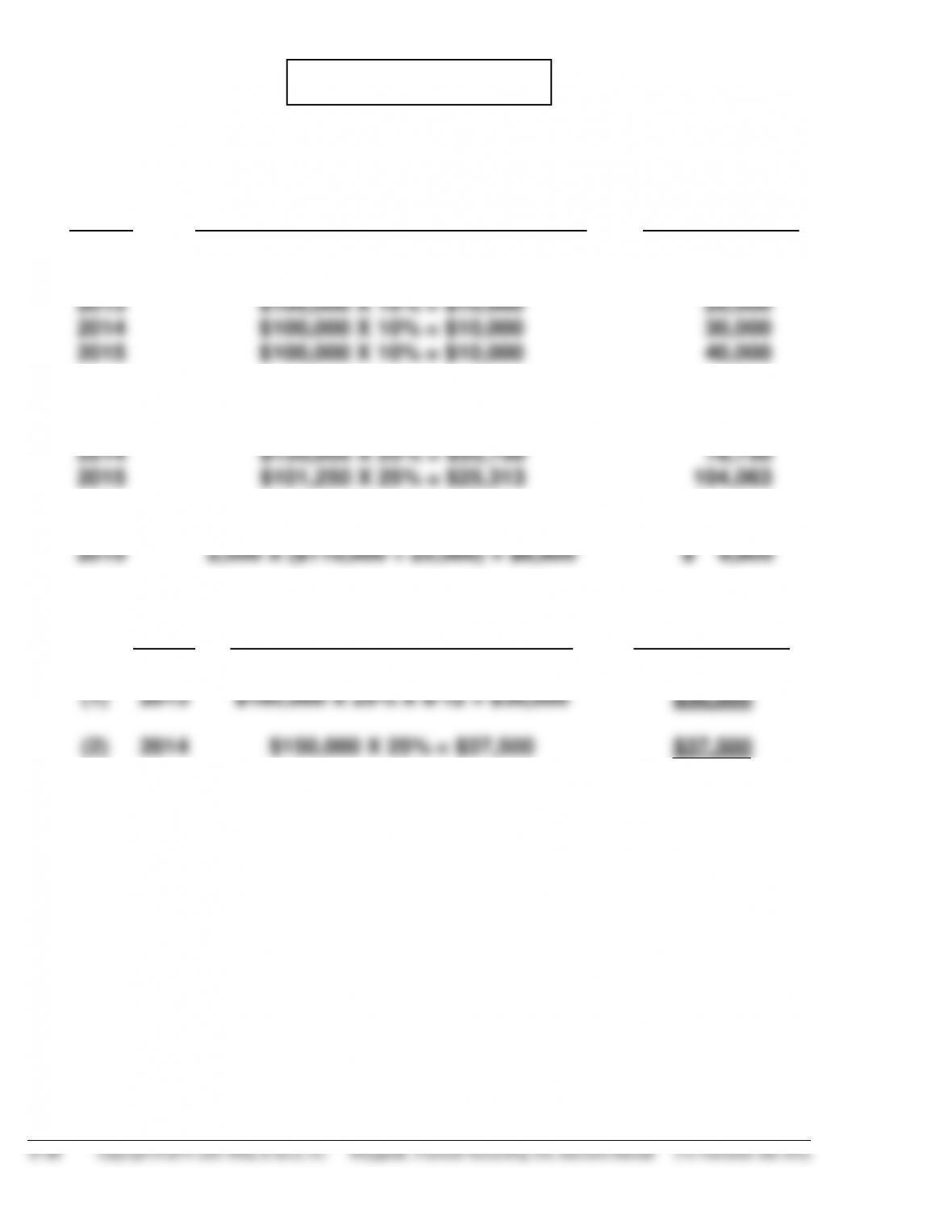
(a)
Year
Computation
Accumulated
Depreciation
12/31
MACHINE 1
2012
2013
2014
2015
$100,000 X 10% = $10,000
$100,000 X 10% = $10,000
$100,000 X 10% = $10,000
$100,000 X 10% = $10,000
$ 10,000
20,000
30,000
40,000
MACHINE 2
2013
2014
2015
$180,000 X 25% = $45,000
$135,000 X 25% = $33,750
$101,250 X 25% = $25,313
$ 45,000
78,750
104,063
MACHINE 3
2015
2,000 X ($110,000 ÷ 25,000) = $8,800
$ 8,800
(b)
Year
Depreciation Computation
Expense
MACHINE 2
(1)
(2)
2013
2014
$180,000 X 25% X 8/12 = $30,000
$150,000 X 25% = $37,500
$30,000
$37,500
PROBLEM 9-3B
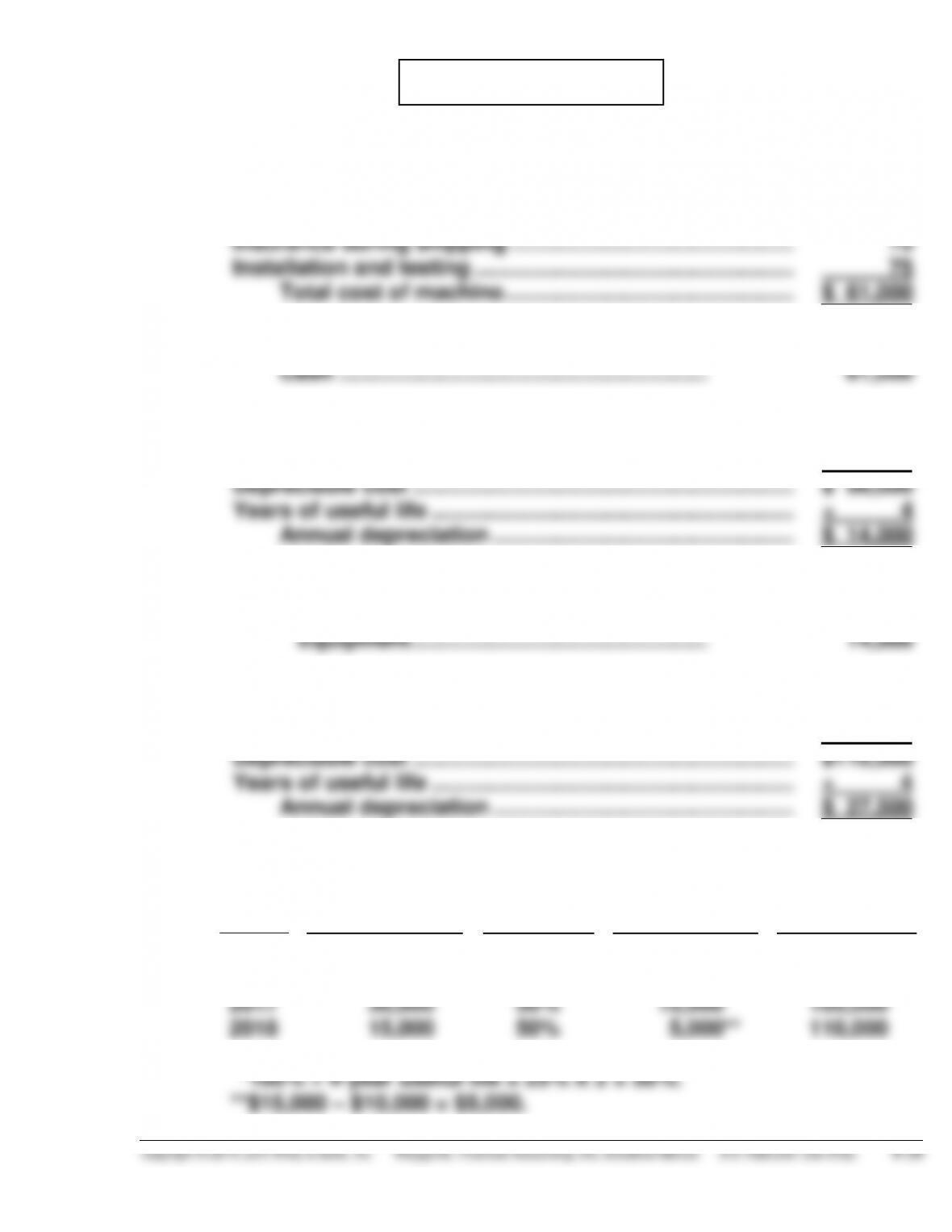
(a) (1) Purchase price ……………………………………………………….. $ 58,000
Sales tax ………………………………………………………………… 2,750
Shipping costs ……………………………………………………….. 100
Equipment …………………………..…………………….. 61,000
(2) Recorded cost ………………………………………………………… $ 61,000
Less: Salvage value ……………………………………………….. 5,000
Depreciation Expense …………………………………. 14,000
Accumulated Depreciation—
(b) (1) Recorded cost ………………………………………………………… $120,000
Less: Salvage value ……………………………………………….. 10,000
(2)
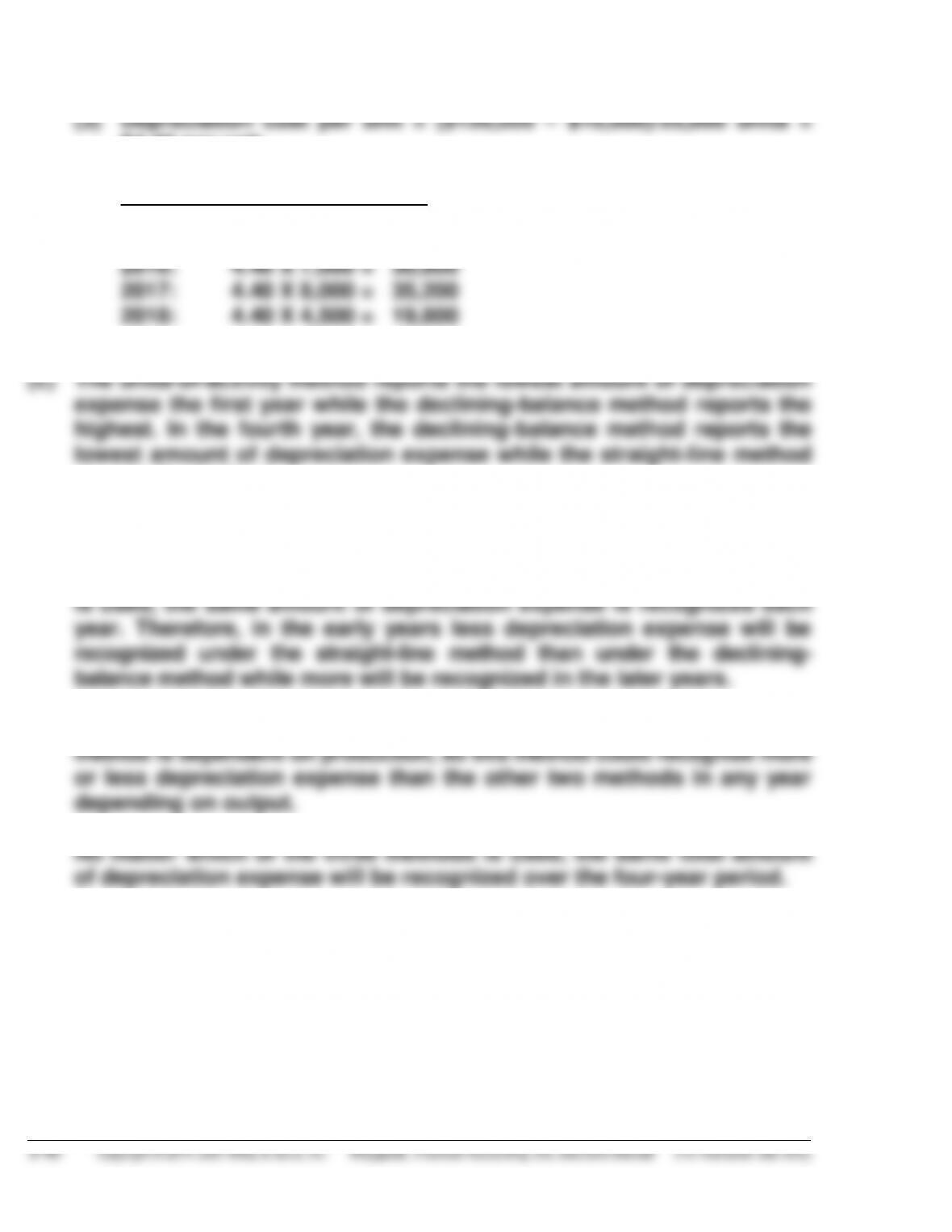
Year
Book Value at
Beginning of
Year
DDB Rate
Annual
Depreciation
Expense
Accumulated
Depreciation
2015
2016
2017
2018
$120,000
60,000
30,000
15,000
*50%*
*50%*
*50%*
*50%*
$60,000
30,000
15,000
5,000**
$60,000
90,000
105,000
110,000
PROBLEM 9-3B (Continued)
$4.40 per unit.
Annual Depreciation Expense
2015: $4.40 X 5,500 = $24,200
reports the highest.
These facts occur because the declining-balance method is an accelerated
depreciation method in which the largest amount of depreciation is
recognized in the early years of the asset’s life. If the straight–line method
The amount of depreciation expense recognized using the units–of–activity