EXERCISE 8-3 (Continued)
(c) The highest acceptable cost would be the target cost. The target cost
is $80 as shown below:
Target cost = Market price – Desired profit
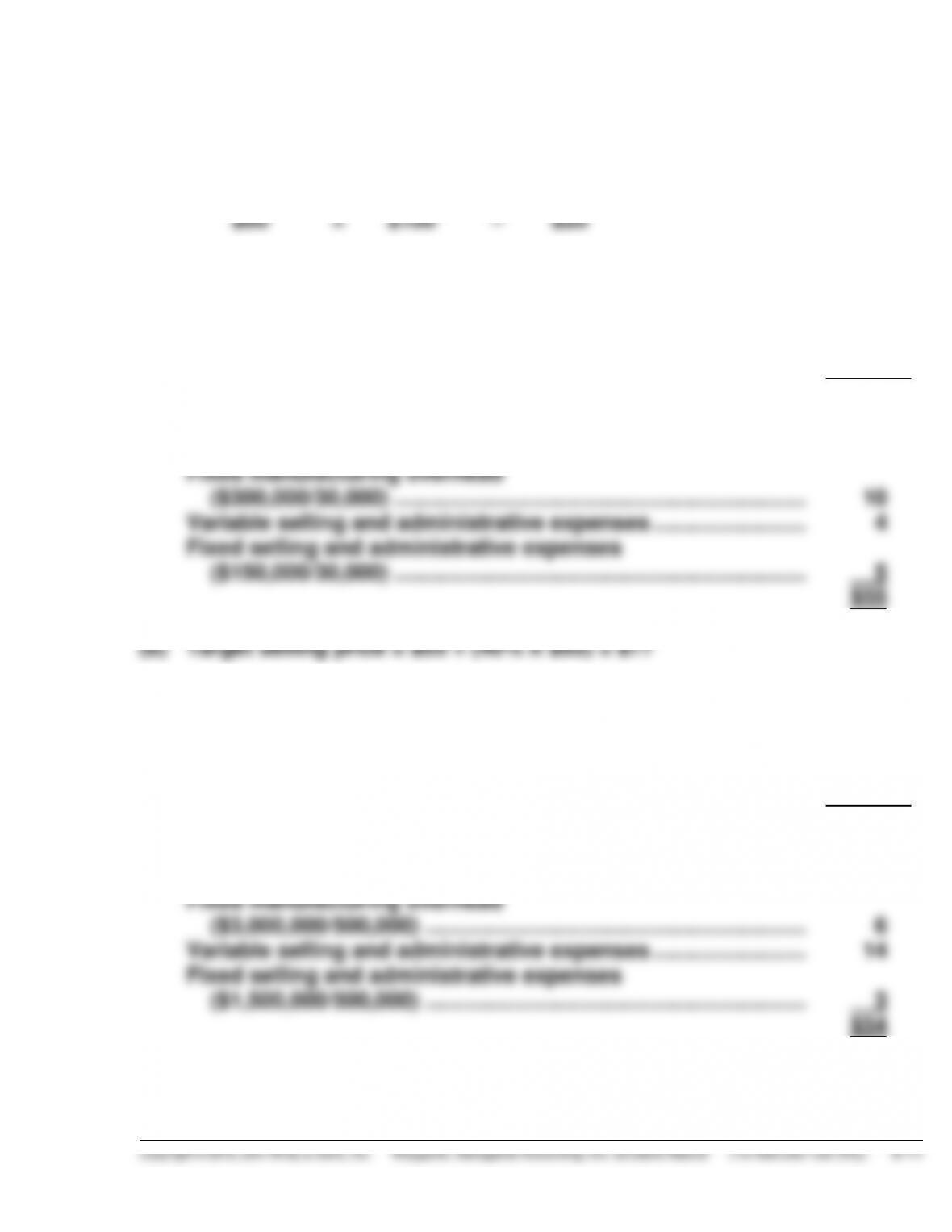
EXERCISE 8-4
(a) Total cost per unit:
Per Unit
Direct materials ………………………………………………………………..
Direct labor ………………………………………………………………………
Variable manufacturing overhead ……………………………………..
Fixed manufacturing overhead
($300,000/30,000) ………………………………………………………….
Variable selling and administrative expenses …………………….
Fixed selling and administrative expenses
($150,000/30,000) ………………………………………………………….
$17
8
11
10
4
5
$55
EXERCISE 8-5
(a) Total cost per unit:
Per Unit
Direct materials ………………………………………………………………..
Direct labor ………………………………………………………………………
Variable manufacturing overhead ……………………………………..
Fixed manufacturing overhead
($3,000,000/500,000) ……………………………………………………..
Variable selling and administrative expenses …………………….
Fixed selling and administrative expenses
($1,500,000/500,000) ……………………………………………………..
$ 7
9
15
6
14
3
$54
(b) Desired ROI per unit = (25% X $26,000,000)/500,000 = $13
EXERCISE 8-5 (Continued)
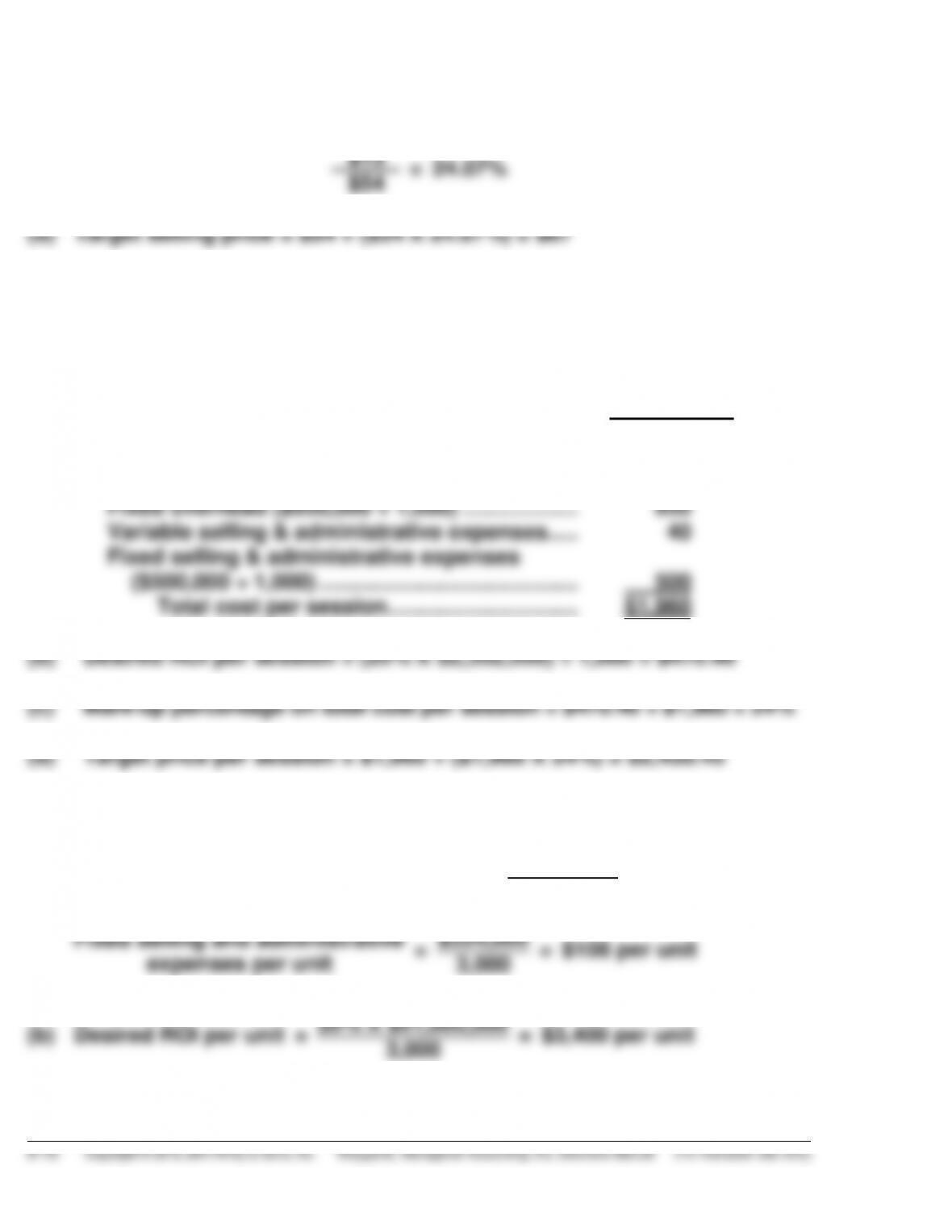
(c) Markup percentage using total cost per unit:
$13
=
24.07%
$54
EXERCISE 8-6
(a)
Total cost per session:
Per Session
Direct materials …………………………..……………..
$ 20
Direct labor ………………………………………………..
400
Variable overhead ……………………………………….
50
Fixed overhead ($950,000 ÷ 1,000) ……………….
950
Variable selling & administrative expenses…..
40
Fixed selling & administrative expenses
($500,000 ÷ 1,000) ……………………………………
500
Total cost per session ………………………….
$1,960
EXERCISE 8-7
(a)
Fixed manufacturing overhead per unit
=
$1,800,000
=
$600 per unit
3,000
Fixed selling and administrative
expenses per unit
=
$324,000
=
$108 per unit
3,000
(b)
Desired ROI per unit
=
20% X $51,000,000
=
$3,400 per unit
3,000
EXERCISE 8-7 (Continued)
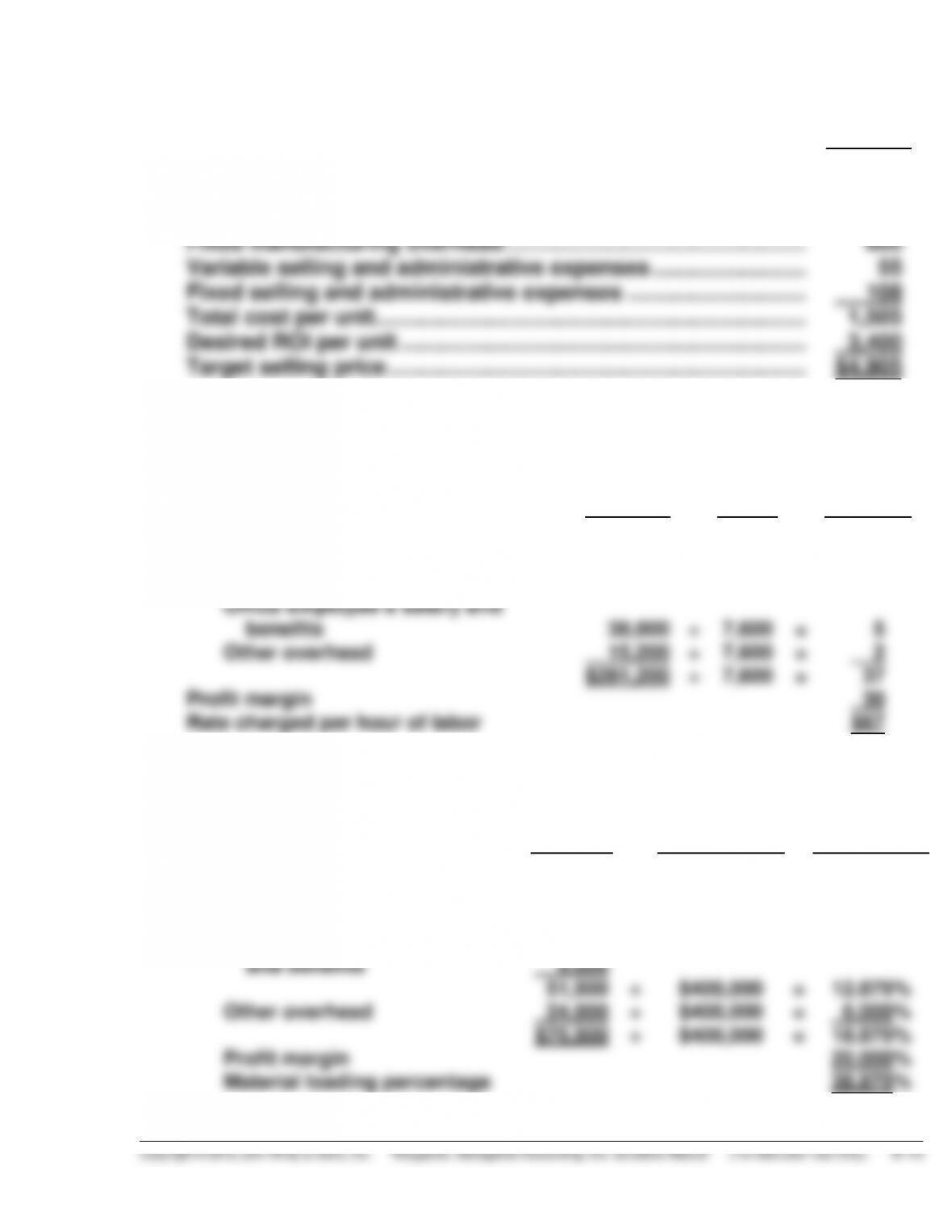
(c)
Per Unit
Direct materials ………………………………………………………………..
Direct labor ………………………………………………………………………
Variable manufacturing overhead ……………………………………..
Fixed manufacturing overhead ………………………………………….
Variable selling and administrative expenses …………………….
Fixed selling and administrative expenses ………………………..
Total cost per unit …………………………………………………………….
Desired ROI per unit …………………………..…………………………….
Target selling price …………………………………………………………..
$ 380
290
72
600
55
108
1,505
3,400
$4,905
EXERCISE 8-8
(a)
Total
Cost
÷
Total
Hours
=
Per Hour
Charge
Hourly labor rate for repairs
Technician’s wages and benefits
Overhead costs
Office employee’s salary and
benefits
Other overhead
Profit margin
Rate charged per hour of labor
$228,000
38,000
15,200
$281,200
÷
÷
÷
÷
7,600
7,600
7,600
7,600
=
=
=
=
$30
5
2
37
30
$67
(b)
Material
Loading
Charges
÷
Total
Invoice Cost,
Parts and
Materials
=
Material
Loading
Percentage
Overhead costs
Parts manager’s salary and
benefits
Office employee’s salary
and benefits
Other overhead
Material loading percentage
$42,500
9,000
51,500
24,000
÷
÷
$400,000
$400,000
=
=
12.875%
6.000%
EXERCISE 8-8 (Continued)
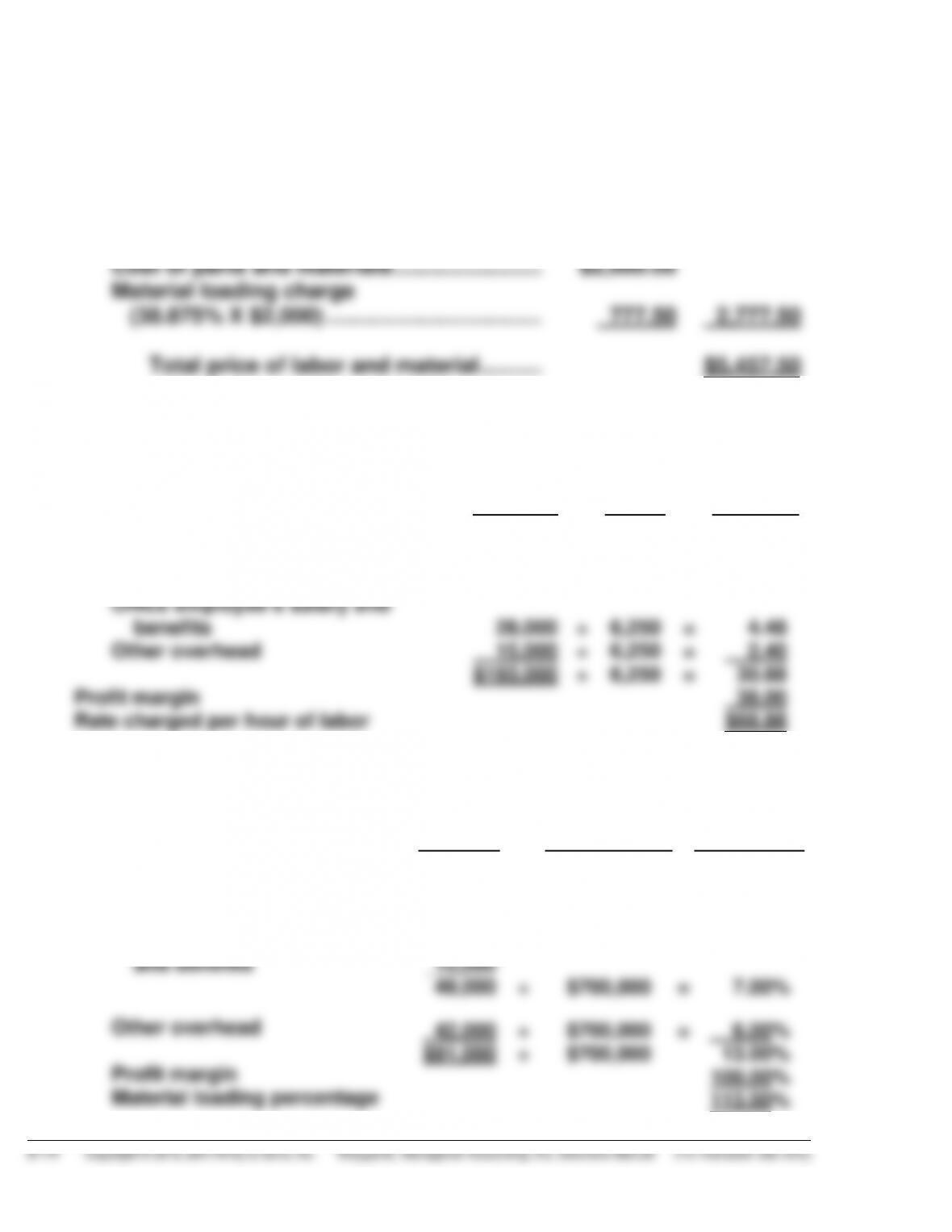
(c) Job: Pace Corporation—Rebuild spot welder
Labor charges
40 hours @ $67 ……………………………………. $2,680.00
Material charges
EXERCISE 8-9
(a)
Total
Cost
÷
Total
Hours
=
Per Hour
Charge
Hourly labor rate for repairs
Technician’s wages and benefits
Overhead costs
Office employee’s salary and
benefits
Other overhead
Profit margin
Rate charged per hour of labor
$150,000
28,000
15,000
$193,000
÷
÷
÷
÷
6,250
6,250
6,250
6,250
=
=
=
=
$24.00
4.48
2.40
30.88
38.00
$68.88
(b)
Material
Loading
Charges
÷
Total
Invoice Cost,
Parts and
Materials
=
Material
Loading
Percentage
Overhead costs
Parts manager’s salary and
benefits
Office employee’s salary
and benefits
Other overhead
$34,000
15,000
49,000
÷
$700,000
=
7.00%
EXERCISE 8-9 (Continued)
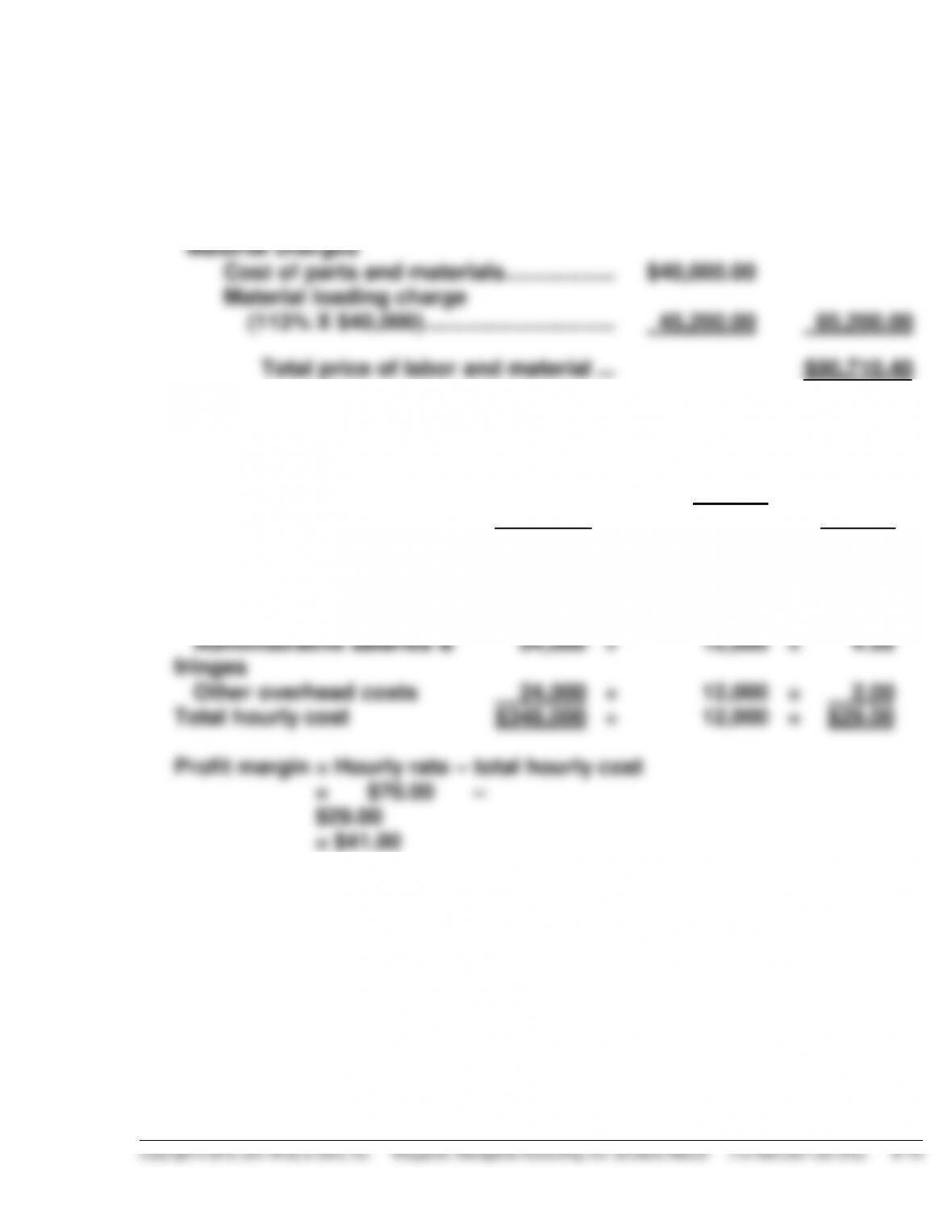
(c) Job: Buil Builders
Labor charges
80 hours @ $68.88 ………………………….. $ 5,510.40
EXERCISE 8-10
(a)
Total
Cost
÷
Total Hours
=
Hourly
Charge
Hourly labor rate:
Restorers’ wages and
fringes
$270,000
÷
12,000
=
$22.50
Overhead costs:
Administrative salaries &
fringes
54,000
÷
12,000
=
4.50
Other overhead costs
24,000
÷
12,000
=
2.00
Total hourly cost
$348,000
÷
12,000
=
$29.00
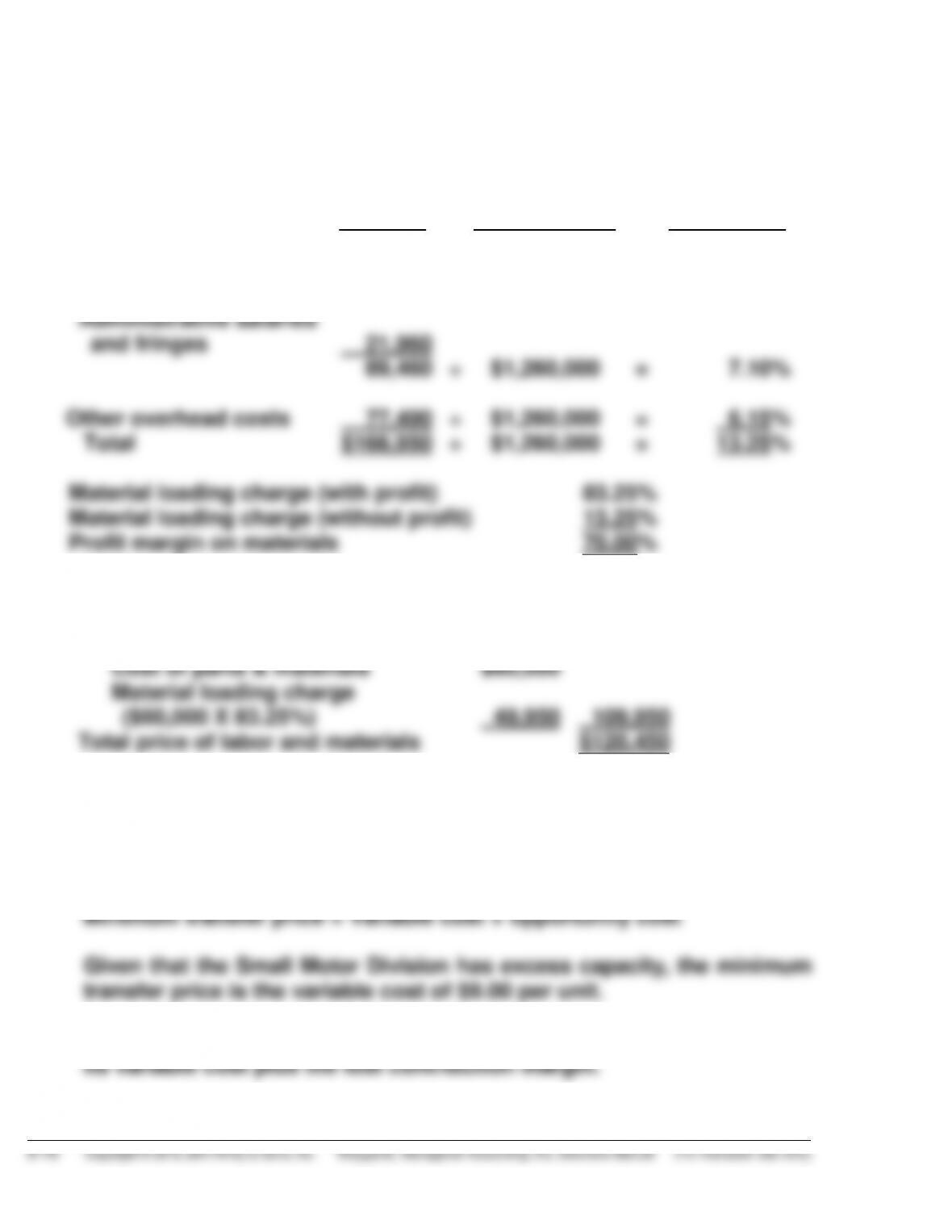
Profit margin = Hourly rate – total hourly cost
= $70.00 –
$29.00
= $41.00
EXERCISE 8-10 (Continued)
(b)
Material
Loading
Charges
÷
Total Invoice
Cost, Parts &
Materials
=
Material
Loading
Percentage
Overhead costs:
Purchasing agent’s
salary and fringes
$ 67,500
Administrative salaries
and fringes
21,960
89,460
÷
$1,260,000
=
7.10%
Other overhead costs
77,490
÷
$1,260,000
=
6.15%
Total
$166,950
÷
$1,260,000
=
13.25%
Material loading charge (with profit) 83.25%
Material loading charge (without profit) 13.25%
Profit margin on materials 70.00%
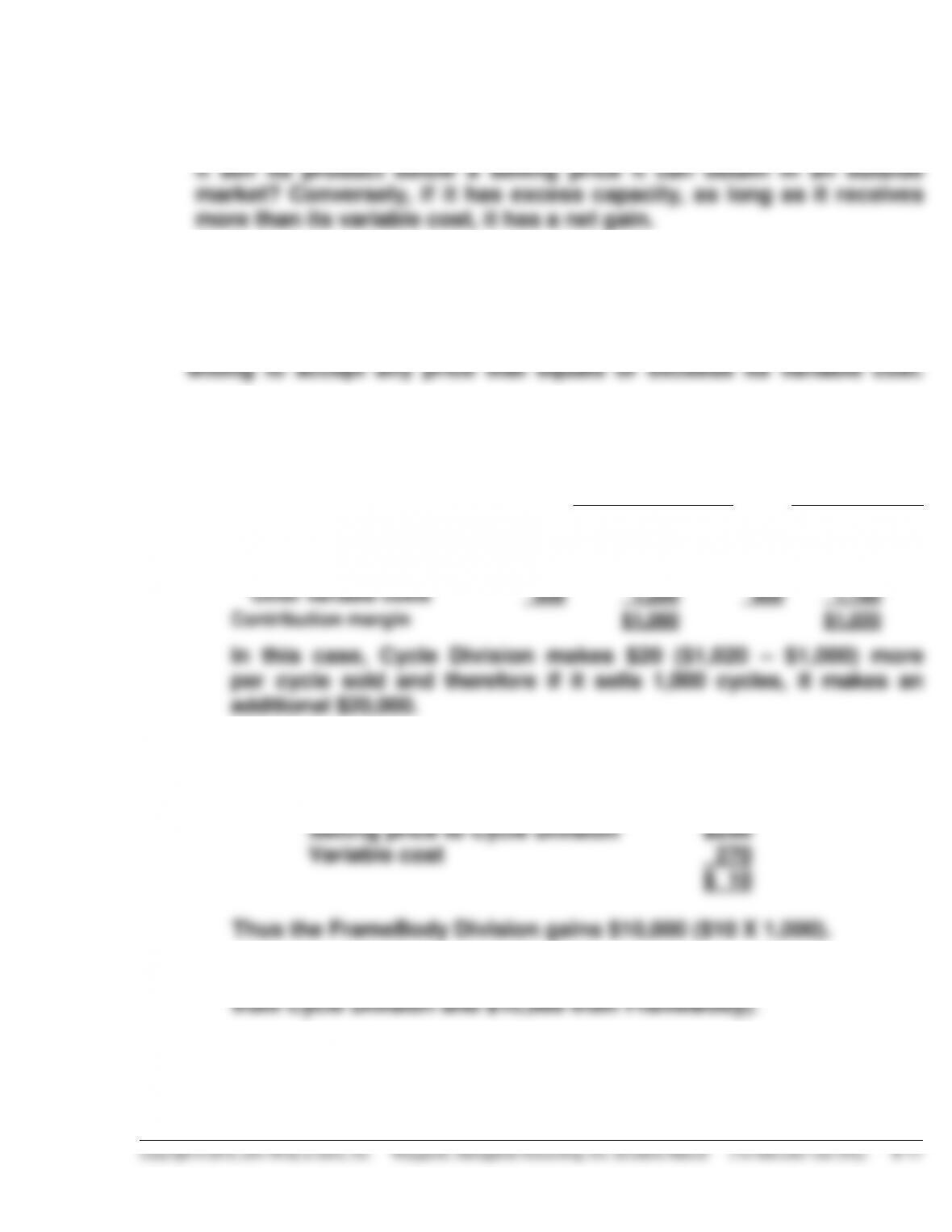
(c)
Labor charges:
150 hours @ $70
$ 10,500
Material charges:
Cost of parts & materials
$60,000
Material loading charge
($60,000 X 83.25%)
49,950
109,950
Total price of labor and materials
$120,450
EXERCISE 8-11
(a) The minimum transfer price is:
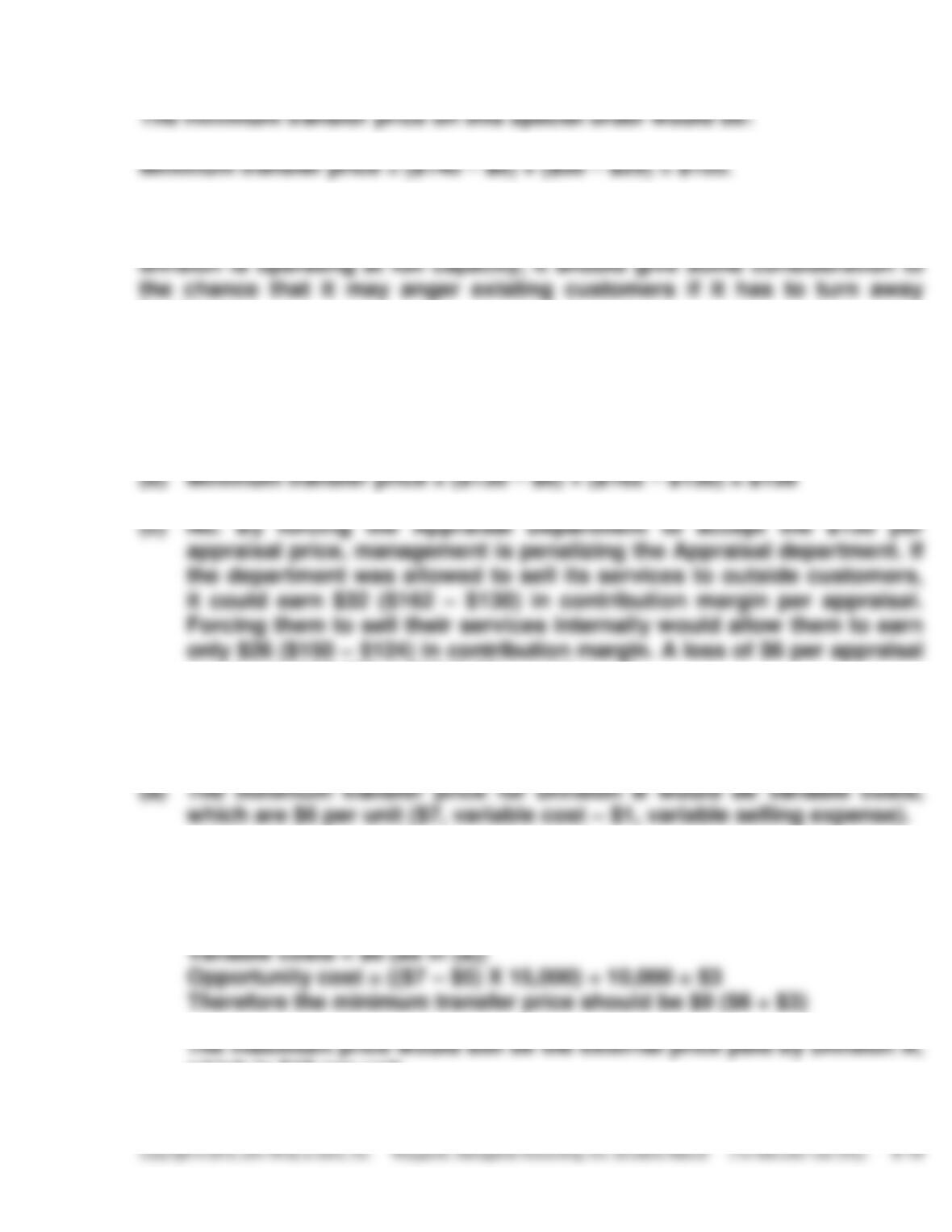
(b) Given no excess capacity, the minimum transfer price is $30, which is
EXERCISE 8-11 (Continued)
(c) The level of capacity plays a significant role in determining the appro-
priate transfer price. If a division has no excess capacity, why should
EXERCISE 8-12
(a) As indicated, FrameBody has excess capacity and therefore should be
1. The effect on Cycle Division is as follows:
Present Situation
Purchase from
FrameBody
Selling price
Variable cost of goods sold
Body frame
Other variable costs
Contribution margin
$300
900
$2,200
1,200
$1,000
$280
900
$2,200
1,180
$1,020
In this case, Cycle Division makes $20 ($1,020 – $1,000) more
per cycle sold and therefore if it sells 1,000 cycles, it makes an
additional $20,000.
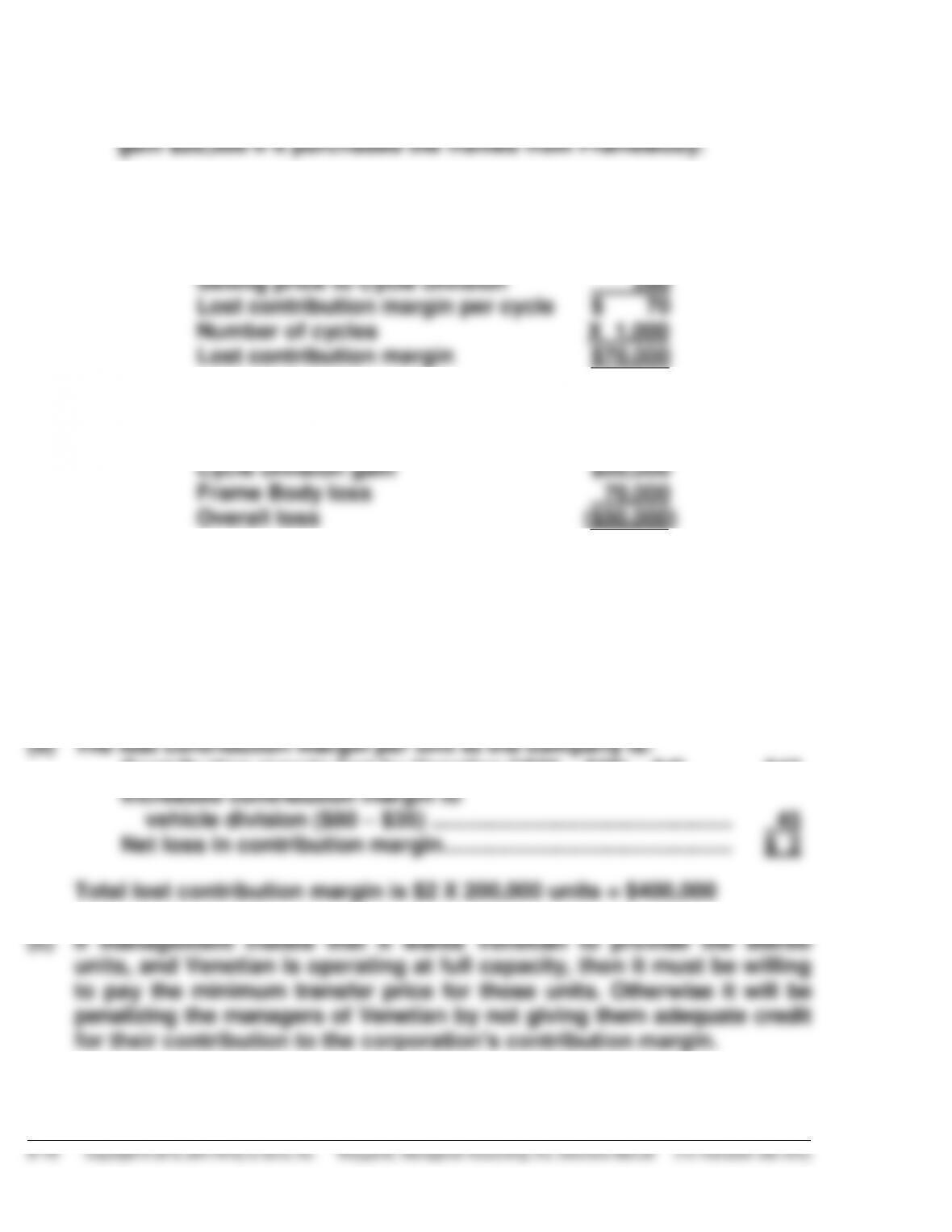
2. The effect on FrameBody is that it makes $10 on each frame sold
as shown below:
3. As a result, the overall income for Ayala increases $30,000 ($20,000
EXERCISE 8-12 (Continued)
(b) 1. The answer would not change from (a)(1). Cycle Division would
2. However, FrameBody would incur a loss of $70,000 as computed
below:
Selling price to outside buyer $ 350
3. The effect on the overall income to Ayala is a net loss of $50,000 as
shown below:
EXERCISE 8-13
(a) The minimum transfer price that Venetian should accept is:
Minimum transfer price = ($35 – $4) + ($86 – $35) = $82
Contribution margin lost by Venetian [($86 – $35) – $4] ……. $47
EXERCISE 8-14
Since the $160 price offered by the Bathtub Division exceeds this minimum
price, the offer should probably be accepted. However, given that the
business.
EXERCISE 8-15
(a) Minimum transfer price = ($130 – $6) + $0 = $124
or a total of $7,200 (1,200 X $6) would result.
EXERCISE 8-16
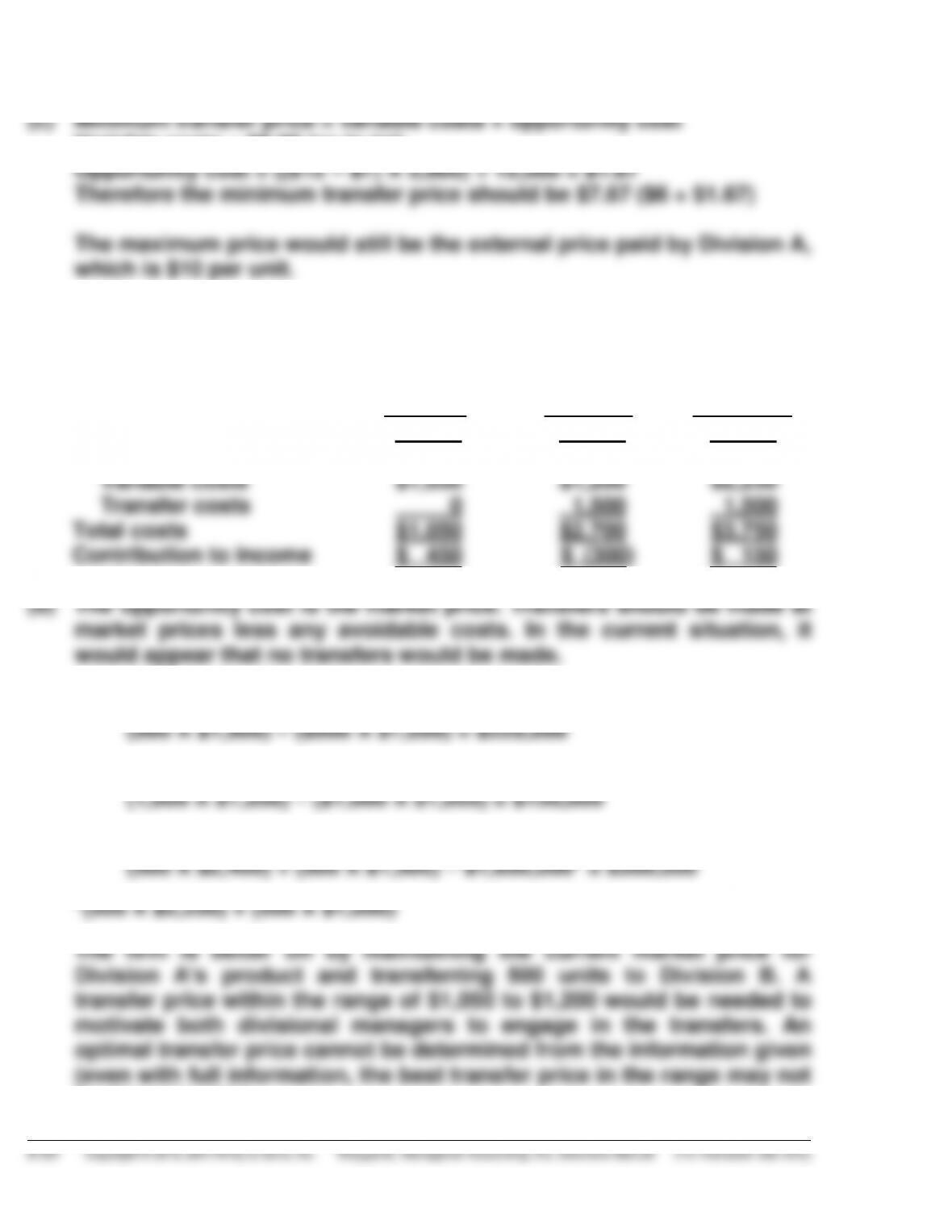
The maximum price would be the external price paid by Division A,
which is $10 per unit.
(b) Minimum transfer price = variable costs + opportunity cost
which is $10 per unit.
EXERCISE 8-16 (Continued)
Variable costs = $6.00 (as in (a))
EXERCISE 8-17
(a) Division Division Total
A B Company
Sales $1,500 $2,400 $3,900
Less: Costs
(c) (i) Maintain price, no transfers
(ii) Cut price, no transfers
(iii) Maintain price and transfers
be determinable).