CHAPTER 7
Incremental Analysis
ASSIGNMENT CLASSIFICATION TABLE
Learning Objectives
Questions
Brief
Exercises
Do It!
Exercises
A
Problems
B
Problems
1. Identify the steps in
management’s decision-
making process.
1, 2
1
1
2. Describe the concept
of incremental analysis.
3, 4
2
1, 17
3. Identify the relevant
costs in accepting an
order at a special price.
5
3
1
2, 3, 4, 18
1A
1B
4. Identify the relevant
costs in a make-or-buy
decision.
6, 7
4
2
5, 6, 7,
8, 18
2A
2B
5. Identify the relevant costs
in determining whether to
sell or process materials
further.
8, 9, 10
5, 6
3
9, 10, 11,
12, 18
3A
3B
6. Identify the relevant costs
to be considered in
repairing, retaining or
replacing equipment.
11
7
13, 14, 18
4A
4B
7. Identify the relevant costs
in deciding whether to
eliminate an unprofitable
segment.
12
8
4
15, 16,
17, 18
5A
5B
ASSIGNMENT CHARACTERISTICS TABLE
Problem
Number
Description
Difficulty
Level
Time
Allotted (min.)
1A
Use incremental analysis for special order and identify
nonfinancial factors in the decision.
Simple
20–30
2A
Use incremental analysis related to make or buy,
consider opportunity cost, and identify nonfinancial
factors.
Moderate
30–40
3A
Determine if product should be sold or processed further.
Moderate
30–40
4A
Compute gain or loss, and determine if equipment should
be replaced.
Moderate
30–40
5A
Prepare incremental analysis concerning elimination of
divisions.
Moderate
30–40
1B
Use incremental analysis for special order and identify
nonfinancial factors in the decision.
Simple
20–30
2B
Use incremental analysis related to make or buy,
consider opportunity cost, and identify nonfinancial
factors.
Moderate
30–40
3B
Determine if product should be sold or processed further.
Moderate
30–40
4B
Compute gain or loss, and determine if equipment should
be replaced.
Moderate
30–40
5B
Prepare incremental analysis concerning elimination of
divisions.
Moderate
20–30
BLOOM’S TAXONOMY TABLE
Copyright © 2012 John Wiley & Sons, Inc. Weygandt, Managerial Accounting, 6/e, Solutions Manual (For Instructor Use Only) 7-3
Correlation Chart between Bloom’s Taxonomy, Learning Objectives and End-of-Chapter Exercises and Problems
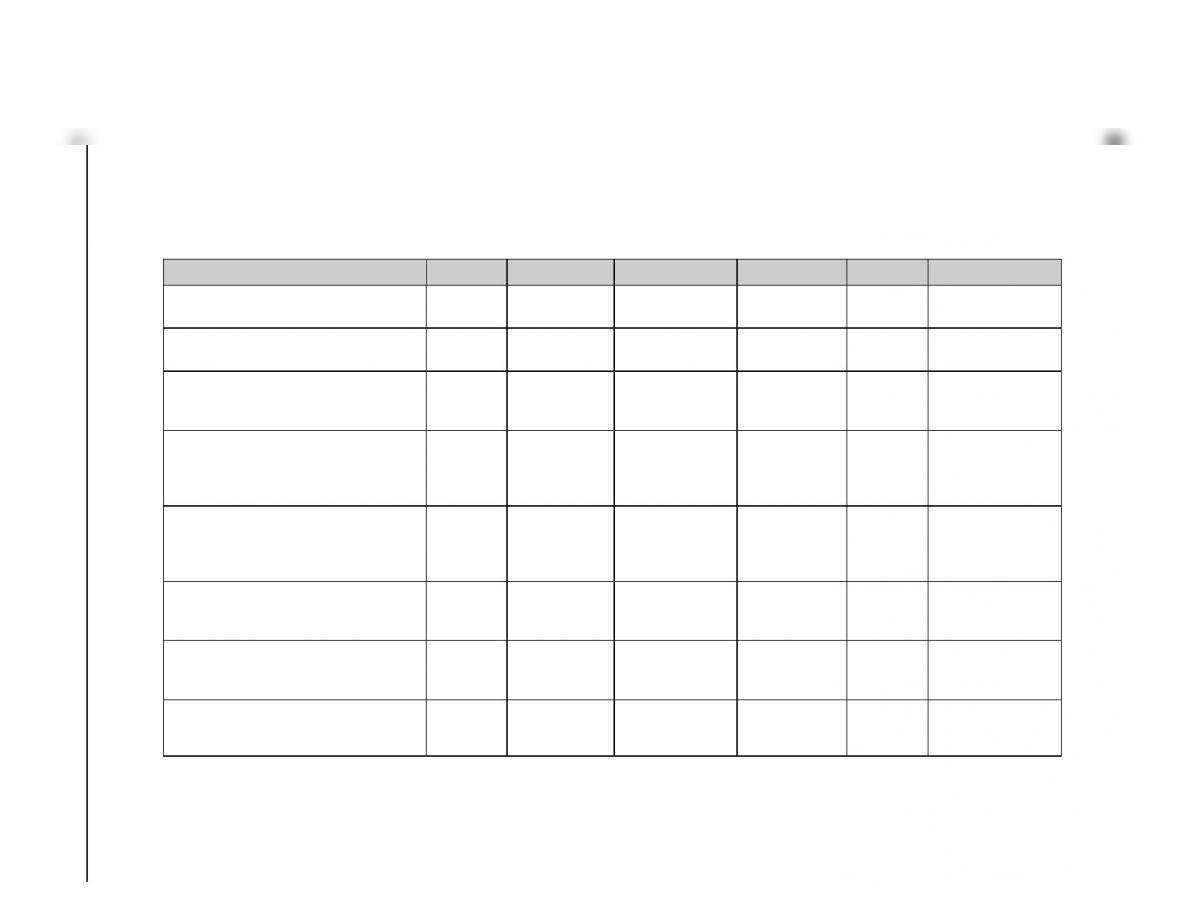
Learning Objective
Knowledge
Comprehension
Application
Analysis
Synthesis
Evaluation
*1. Identify the steps in management’s
decision-making process.
BE7-1
Q7-1
Q7-2
E7-1
*2. Describe the concept of
incremental analysis.
Q7-3
Q7-4
E7-1
BE7-2
E7–17
*3. Identify the relevant costs in
accepting an order at a special
price.
Q7-5
BE7-3
DI7-1
E7-2
E7-3
E7-4
E7–18
P7–1A
P7–1B
*4. Identify the relevant costs in a
make–or-buy decision.
Q7-6
Q7-7
BE7-4
DI7-2
E7-5
E7-6
E7-7
E7-8
E7–18
P7–2A
P7–2B
*5. Identify the relevant costs in
determining whether to sell or
process materials further.
Q7-8
Q7-9
Q7–10
BE7-5
BE7-6
DI7-3
E7-9
E7–10
E7–11
E7–12
E7–18
P7–3A
P7–3B
*6. Identify the relevant costs to be
considered in repairing, retaining
or replacing equipment.
Q7–11
BE7-7
E7–13
E7–14
E7–18
P7–4A
P7–4B
*7. Identify the relevant costs in
deciding whether to eliminate
an unprofitable segment.
Q7–12
BE7-8
DI7-4
E7–15
E7–16
E7–17
E7–18
P7–5A
P7–5B
Broadening Your Perspective
BYP7-1
BYP7-4
BYP7-5
BYP7-2
BYP7-8
BYP7-9
BYP7-3
BYP7-6
BYP7-7
ANSWERS TO QUESTIONS
1. The following steps are frequently involved in management’s decision-making process:
(1) Identify the problem and assign responsibility.
2. My roommate is incorrect. Accounting contributes to the decision-making process at Steps 2 and 4.
3. Disagree. Incremental analysis involves the identification of financial data that change under
alternative courses of action.
4. In incremental analysis, the important point to consider is whether costs will differ (change)
5. The relevant data in deciding whether to accept an order at a special price are the incremental
6. The manufacturing costs that are relevant in the make-or–buy decision are those that will change
if the parts are purchased.
7. Opportunity cost may be defined as the potential benefit that may be obtained by following an
8. The decision rule in a decision to sell a product or to process it further is: Process further as
processing costs.
9. Joint products are products that are produced from a single raw material and a common
10. Joint costs are irrelevant to a sell-or-process-further decision because they are sunk costs and
11. A sunk cost is a cost that cannot be changed by any present or future decision. Sunk costs, such
or replace equipment.
12. Net income will be lower if an unprofitable product line is eliminated when the product line is
producing a positive contribution margin and its fixed costs cannot be avoided or reduced.
SOLUTIONS TO BRIEF EXERCISES
BRIEF EXERCISE 7-1
The correct order is:
1. Identify the problem and assign responsibility.
2. Determine and evaluate possible courses of action.
3. Make a decision.
4. Review results of the decision.
BRIEF EXERCISE 7-2
Alternative
A
Alternative
B
Net Income
Increase
(Decrease)
Revenues
Costs
Net income
$160,000
100,000
$ 60,000
$180,000
125,000
$ 55,000
($ 20,000)
(25,000)
($ 5,000)
Alternative A is better than Alternative B.
BRIEF EXERCISE 7-3
Reject
Order
Accept
Order
Net Income
Increase
(Decrease)
Revenues
Costs—Variable manufacturing
Shipping
Net income
$0
0
0
$0
$75,000
60,000
6,000
$ 9,000
*
**
***
($ 75,000)
( (60,000)
( (6,000)
($ 9,000)
The special order should be accepted.
*3,000 X $25
**3,000 X $20
***3,000 X $ 2

BRIEF EXERCISE 7-4
Make
Buy
Net Income
Increase
(Decrease)
Variable manufacturing costs
Fixed manufacturing costs
Purchase price
Total annual cost
$50,000
30,000
–0–
$80,000
$ –0–
30,000
60,000
$90,000
$ 50,000
0
(60,000)
($(10,000)
BRIEF EXERCISE 7-5
Sell
Process
Further
Net Income
Increase (Decrease)
Sales price per unit
Cost per unit
Variable
Fixed
Total
Net income per unit
$62.00
36.00
10.00
46.00
$16.00
$70.00
43.00
10.00
53.00
$17.00
$8.00
( (7.00)
0
( (7.00)
$1.00
The bookcases should be processed further because the incremental
revenues exceed incremental costs by $1.00 per unit.
BRIEF EXERCISE 7-6
The allocated joint costs are irrelevant to the sell or process further
decisions. If AB1 is processed further, the company will earn incremental
revenue of $50,000 ($150,000 – $100,000) and only incur incremental costs of
BRIEF EXERCISE 7-7
Retain
Equipment
Replace
Equipment
Net 4-Year
Income
Increase
(Decrease)
Variable manufacturing costs
for 4 years
New machine cost
Sell old machine
Total
$3,000,000
(30,000)
$3,000,000
$2,500,000
300,000
(30,000)
$2,770,000
($ 500,000
((300,000)
30,000
$ 230,000
The old factory machine should be replaced.
BRIEF EXERCISE 7-8
Continue
Eliminate
Net Income
Increase (Decrease)
Sales
Variable costs
Contribution margin
Fixed costs
Net income
$200,000
180,000
20,000
30,000
($ (10,000)
$ –0–
–0–
( –0–
20,000)
$(20,000)
$(200,000)
(180,000)
(20,000)
( 10,000)
$ (10,000)
SOLUTIONS FOR DO IT! REVIEW EXERCISES
DO IT! 7-1
Reject
Accept
Net Income
Increase (Decrease)
Revenues
$ –0–
$180,000
$180,000
Costs
$ –0–
138,000*
(138,000)
Net income
$ –0–
$ 42,000
$ 42,000
*(6,000 X $20) + (6,000 X $3)
Given the results of the above analysis, Maize Company should accept the
special order.

DO IT! 7-2
(a)
Make
Buy
Net Income
Increase (Decrease)
Direct materials
$ 30,000
$ –0–
$ 30,000
Direct labor
42,000
–0–
42,000
Variable manufacturing
costs
45,000
–0–
45,000
Fixed manufacturing
costs
60,000
45,000
15,000
Purchase price
–0–
162,000
(162,000)
Total cost
$177,000
$207,000
$ (30,000)
(b)
Make
Buy
Net Income
Increase (Decrease)
Total cost
$177,000
$207,000
$(30,000)
Opportunity cost
34,000
–0–
34,000
Total cost
$211,000
$207,000
$ 4,000
DO IT! 7-3
Sell
Process
Further
Net Income Increase
(Decrease)
Sales per unit
Cost per unit
Variable
Fixed
Total
Net income per unit
$75
$40
10
$50
$25
$100
$ 57
13
$ 70
$ 30
$25
($17)
(3)
($20)
$ 5
$5 per unit.

DO IT! 7-4
Continue
Eliminate
Net Income
Increase (Decrease)
Sales
$500,000
$ 0
$(500,000)
Variable costs
370,000
0
370,000
Contribution margin
130,000
0
(130,000)
Fixed costs
150,000
38,000
112,000
Net income
$ (20,000)
$(38,000)
$ (18,000)
line because net income would decrease $18,000.

SOLUTIONS TO EXERCISES
EXERCISE 7-1
the problem and assign responsibility”.
2. False. The final step in management’s decision-making process is to
review the results of the decision.
3. True.
4. False. In making business decisions, management ordinarily considers
both financial and nonfinancial information.
5. True.
6. True.
not affect the decision.
will change under alternative courses of action.
9. False. Sometimes variable costs will not change under alternative courses
of action, but fixed costs will.
EXERCISE 7-2
(a)
Reject
Order
Accept
Order
Net Income
Increase
(Decrease)
Revenues ($4.80)
Materials ($0.50)
Labor ($1.50)
Variable overhead ($1.00)
Fixed overhead
Sales commissions
Net income
$ –0–
–0–
–0–
–0–
–0–
–0–
$ –0–
$24,000
(2,500)
(7,500)
(5,000)
(6,000)
–0–
$ 3,000
$24,000
(2,500)
(7,500)
(5,000)
(6,000)
–0–
$ 3,000
$3,000.
(c) It is assumed that sales of the golf discs in other markets would not be
affected by this special order. If other sales were affected, Gruden would
have to consider the lost sales in making the decision. Second, if Gruden
rejected.