Problem 14-50 Name:
Insert your answers into the gray-shaded cells. If an answer is incorrect, the
word “wrong” will appear.
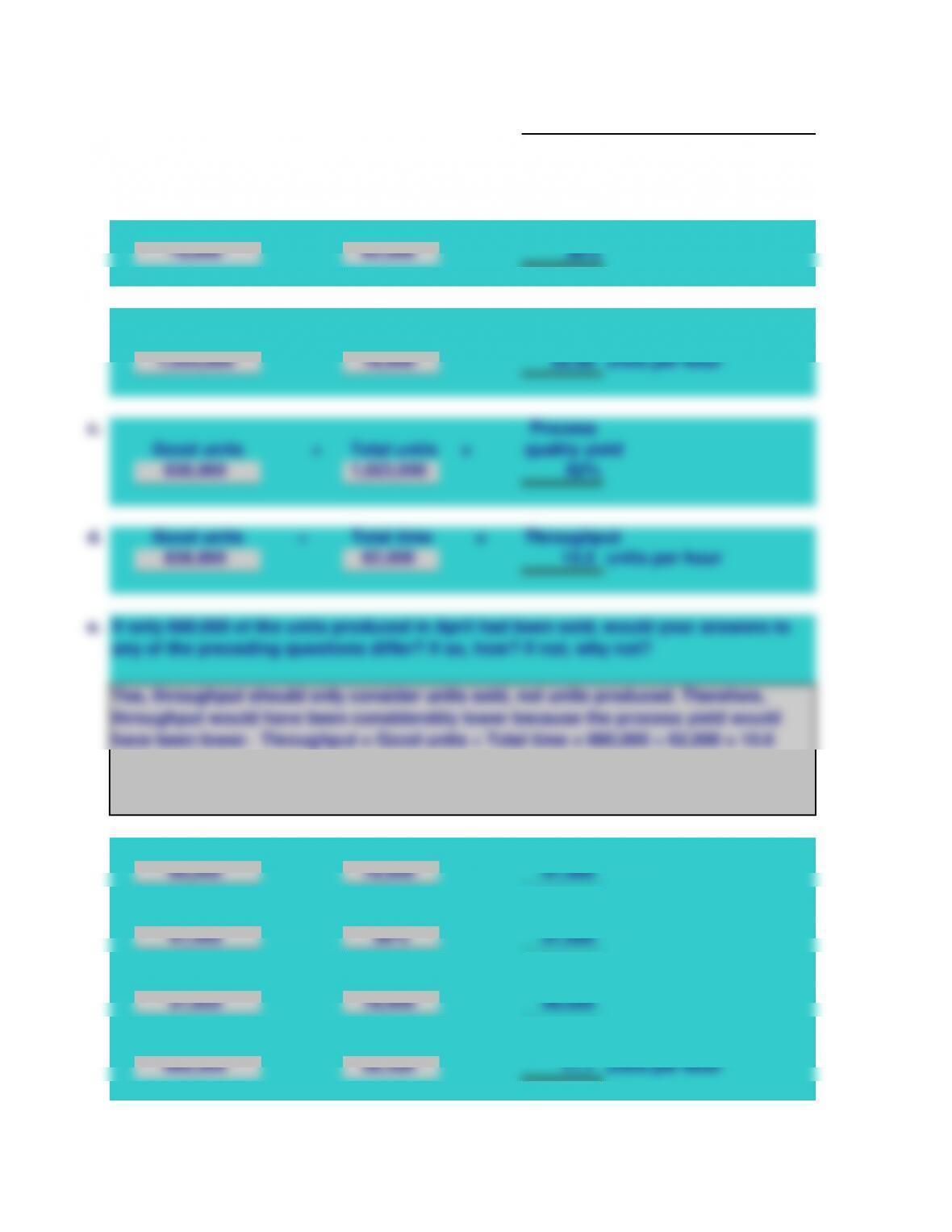
a. ÷ Total time = MCE
62,000 30%
b. Process
productivity
18,600 55.00 units per hour
c. Process
quality yield
1,023,000 82%
d. ÷ Total time = Throughput
62,000 13.5 units per hour
e.
f. – Value-added time = Non-value-added time
18,600 47,400
Percentage = New NVA time
80% 37,920
+ Value-added time = Total time
18,600 56,520
÷ Total time = Throughput
56,520 11.7 units per hour
Solution
Value-added time
Good units
838,860
838,860
÷ Total units =
÷ Value-added time =
Total time
66,000
18,600
Good units
Total units
1,023,000
If only 660,000 of the units produced in April had been sold, would your answers to
any of the preceding questions differ? If so, how? If not, why not?
Yes, throughput should only consider units sold, not units produced. Therefore,
throughput would have been considerably lower because the process yield would
have been lower. Throughput = Good units ÷ Total time = 660,000 ÷ 62,000 = 10.6
units per hour
47,400
Non-value-added time x
New NVA time
37,920
Good units
660,000
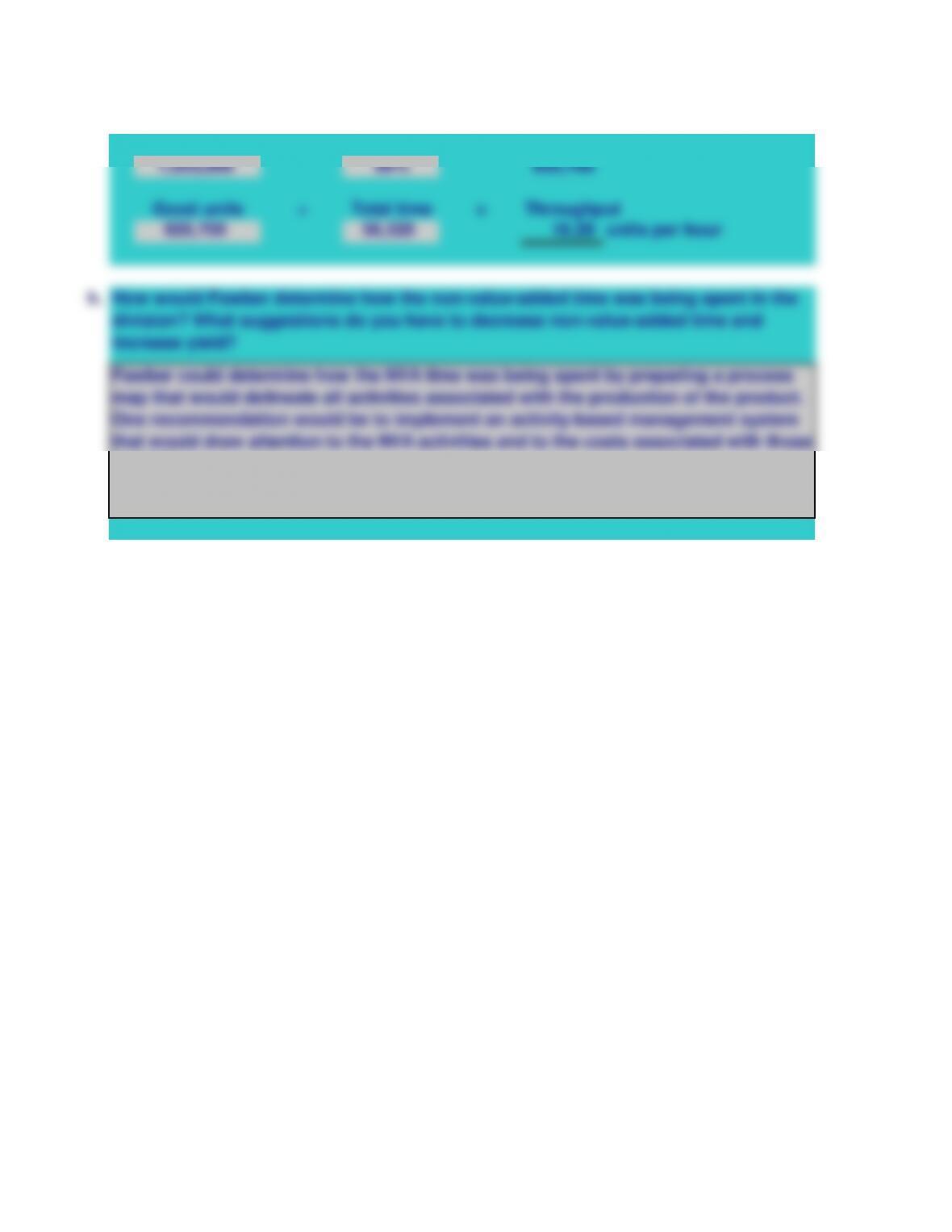
g. Percentage = Good units
90% 920,700
÷ Total time = Throughput
56,520 16.29 units per hour
h.
Total units x
1,023,000
Fawber could determine how the NVA time was being spent by preparing a process
map that would delineate all activities associated with the production of the product.
One recommendation would be to implement an activity-based management system
that would draw attention to the NVA activities and to the costs associated with those
activities.
Good units
920,700
How would Fawber determine how the non-value-added time was being spent in the
division? What suggestions do you have to decrease non-value-added time and
increase yield?