FORCUR-1 Web Site Solutions
An increase in the value of the foreign currency relative to the reporting
currency results in a credit change in other comprehensive income. The
parent company is better o# from having invested funds in a foreign
currency whose value increased relative to the reporting currency than
FORCUR 5.
A foreign exchange gain arises when (1) the foreign entity is in a net
monetary asset position and the foreign currency increases in value, or
(2) the foreign entity is in a net monetary liability position and the foreign
currency decreases in value, relative to the reporting currency. The gain
occurs in the .rst case because the net monetary asset position converts
A foreign exchange loss arises when (1) the foreign entity is in a net
monetary asset position and the foreign currency decreases in value, or
(2) the foreign entity is in a net monetary liability position and the foreign
FORCUR 6.
a. This statement is not correct. Cost of goods sold and depreciation
expense translate using the current exchange rate under the
all-current method and at the historical exchange rate under the
b. This statement is incorrect for reasons similar to those in Part a.
above. The all-current method translates nonmonetary assets and
liabilities using the current exchange rate, whereas the
monetary-nonmonetary method translates them using the historical
exchange rate. Furthermore, the cumulative foreign exchange
Web Site Solutions FORCUR-2
FORCUR 7.
The all-current translation method uses the net assets position (= assets
minus liabilities) as the basis when computing the foreign exchange
adjustment, whereas the monetary-nonmonetary translation method
uses the net monetary asset or net monetary liability position. The
FORCUR 8. (Selecting the exchange rate for foreign currency
translation.)
(1) (2)
All-Current
Monetary- Nonmonetary
Method Method
a. Cash C-E C-E
b. Accounts Receivable C-E C-E
FORCUR-3 Web Site Solutions
a The historical rate is technically correct; in these cases it is the average
exchange rate during the current period. Thus, we accept either C-A or H as
correct answers.
Web Site Solutions FORCUR-4
FORCUR 9. (Identifying the foreign currency translation method.)
a. M f. N
FORCUR 10.(Identifying the nature of a foreign exchange adjustment.)
a. Use of the all-current translation method results in a credit change in
the foreign exchange adjustment account. The parent company’s
investment in the net assets (= assets minus liabilities =
b. Use of the all-current translation method results in a debit change in
the foreign exchange adjustment account. The parent’s investment
in the net assets of the subsidiary decreases in value as a result of
FORCUR 11. (Interpreting translated .nancial statements.)
a. The British pound decreased in value relative to the euro. Indicators
(1) The translated euro amount for inventories using the
11. a. continued.
FORCUR-5 Web Site Solutions
(2) The translated euro amount for property, plant and equipment
(3) The net asset position of the foreign entity resulted in a negative
(4) The net monetary liability position of the foreign entity resulted
b. The subsidiary is in a net asset position. A decrease in the value of
c. The subsidiary is in a net monetary liability position. A decrease in
FORCUR 12. (U.S. Manufacturing; translating foreign currency .nancial
statements.)
a. All-Current Translation Method—2013
Exchange U.S.
Balance Sheet Euros Rate Dollars
Assets:
Cash……………………………. € 100 $1.00: €1
$ 100
Statement of Income and
Web Site Solutions FORCUR-6
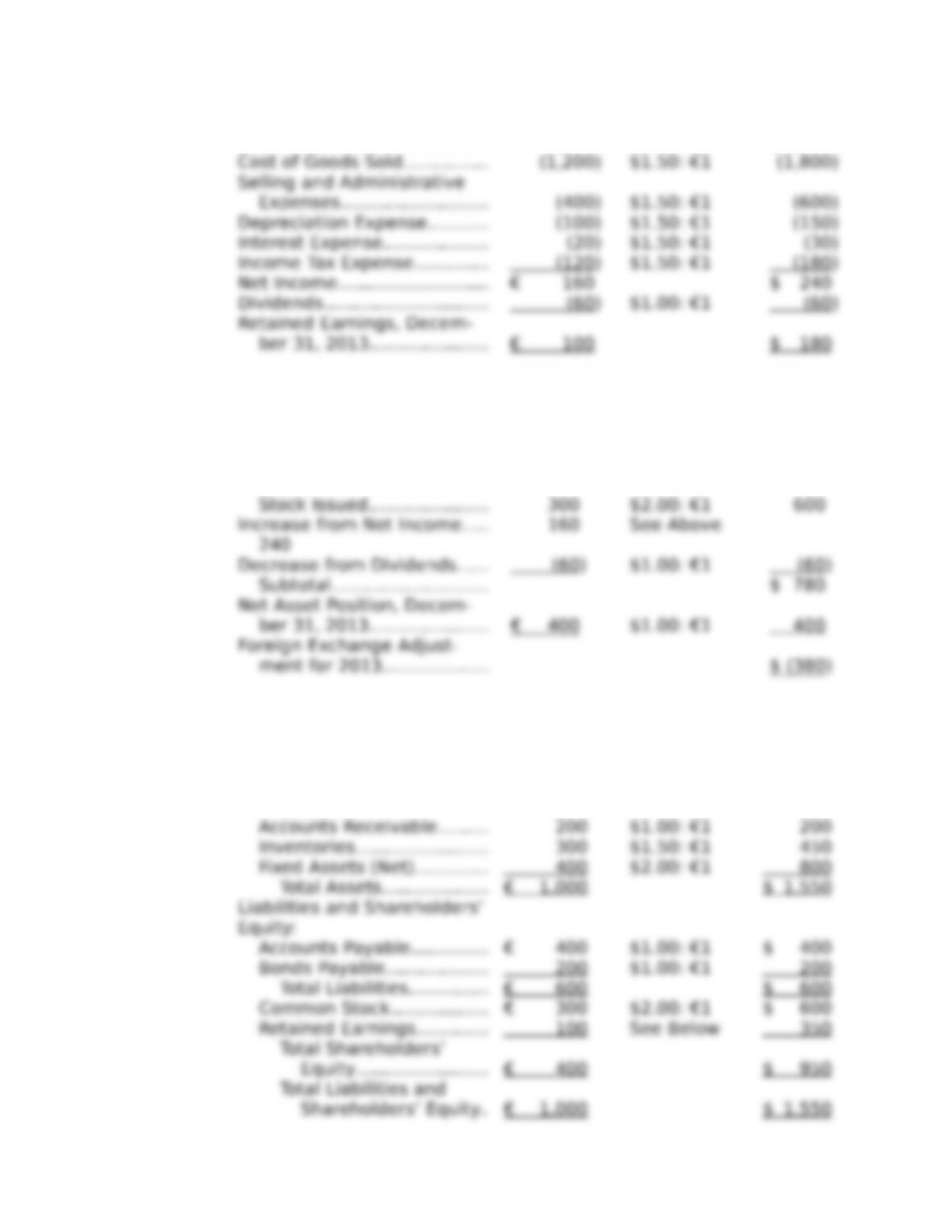
Retained Earnings
Sales Revenue…………………. € 2,000 $1.50: €1 $ 3,000
Calculation of Foreign Exchange Adjustment for 2013
Exchange U.S.
Euros Rate Dollars
Net Asset Position, Jan-
uary 1, 2013…………………. € — $ —
Increase from Common
b. Monetary-Nonmonetary Translation Method—2013
Exchange U.S.
Balance Sheet Euros Rate Dollars
Assets:
Cash……………………………. € 100 $1.00: €1
$ 100
FORCUR-7 Web Site Solutions
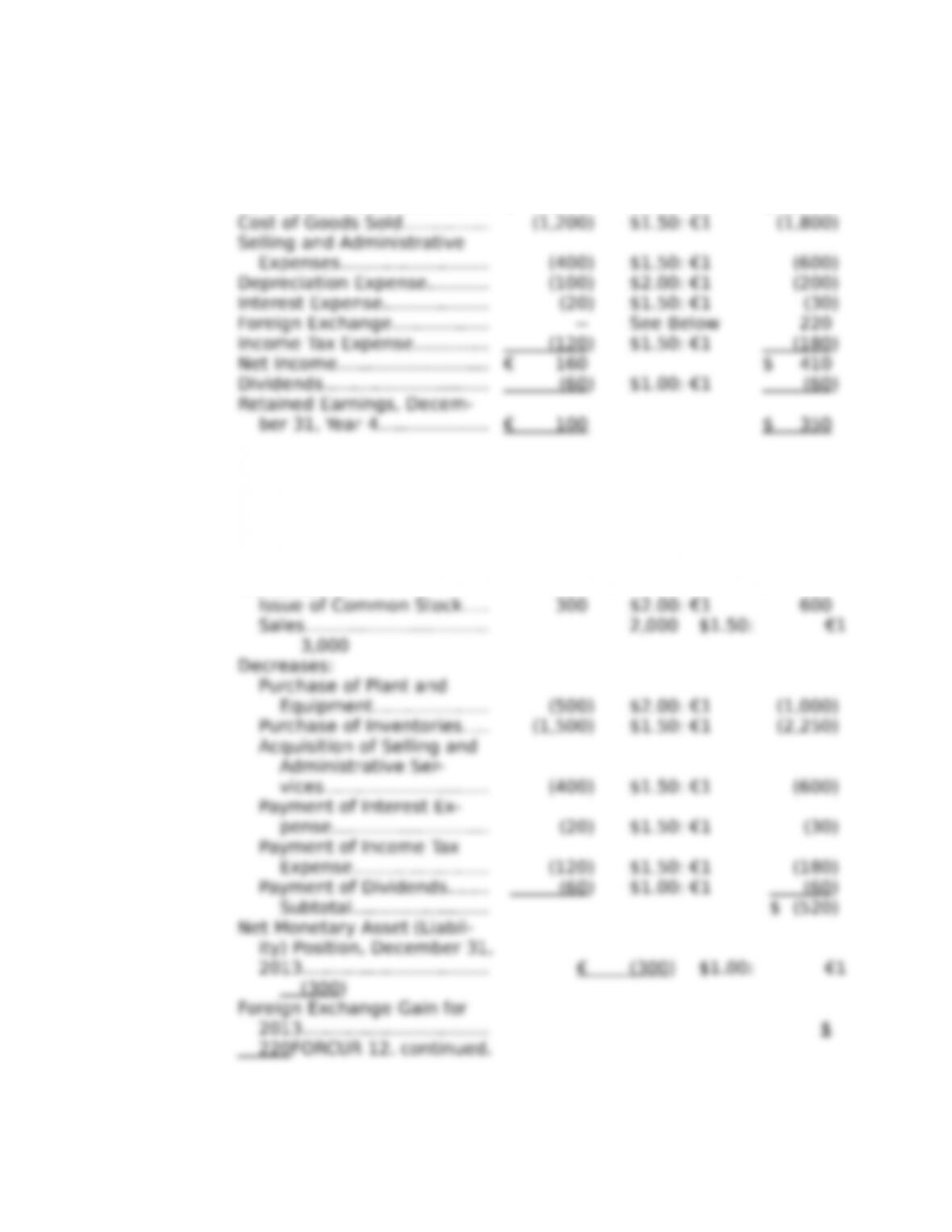
FORCUR 12. b. continued.
Statement of Income and
Retained Earnings
Sales Revenue…………………. € 2,000 $1.50: €1 $ 3,000
Calculation of Foreign Exchange Gain for 2013
Exchange U.S.
Euros Rate Dollars
Net Monetary Position, Jan-
uary 1, 2013…………………. € — $ —
Increases:
c. The euro decreased in value relative to the U.S. dollar during 2013,
resulting in a negative foreign exchange adjustment on the
Web Site Solutions FORCUR-8
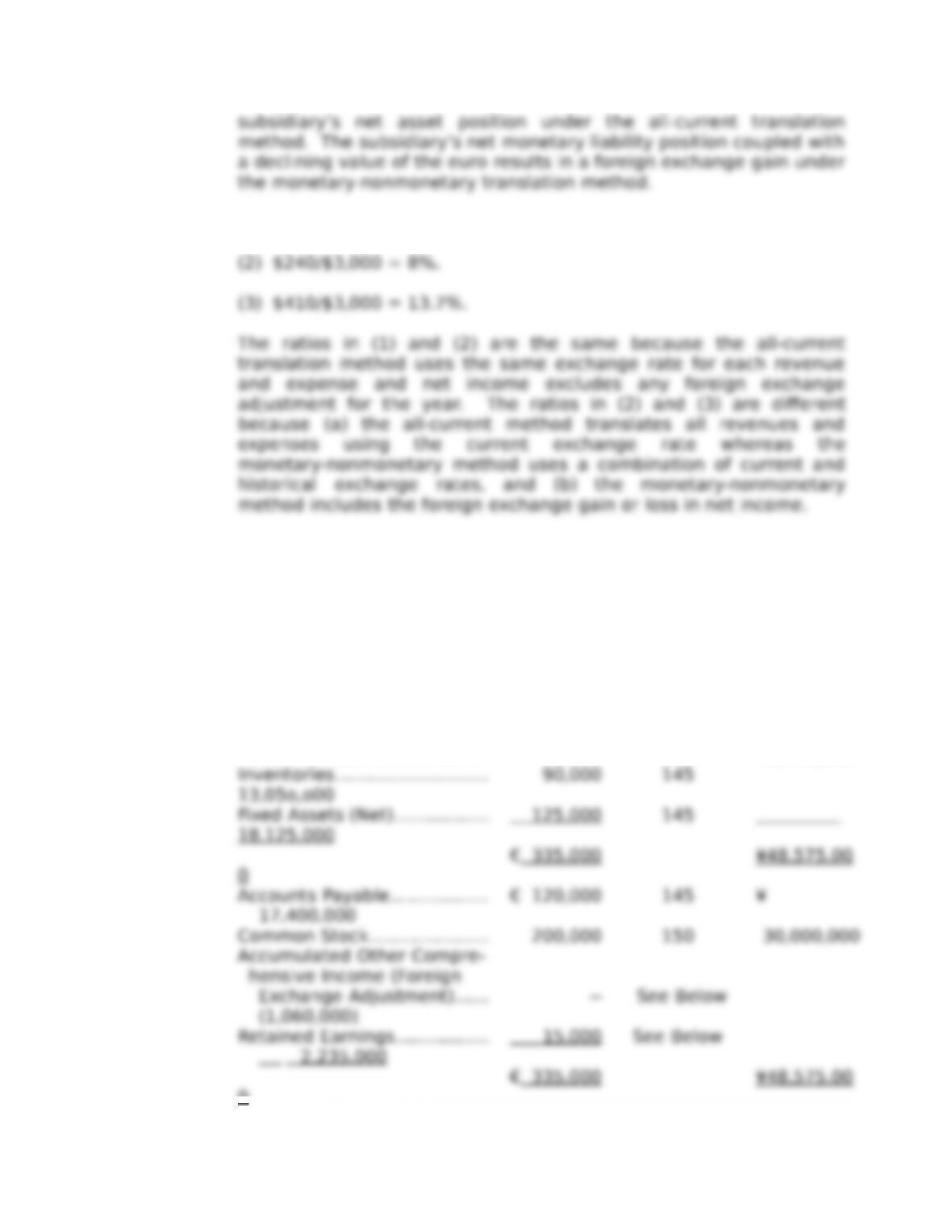
d. (1) €160/€2,000 = 8%.
FORCUR 13. (Casey Corporation; translating foreign currency .nancial
statements using the all-current method.)
a.
Translation of Financial Statements
of McCann Corporation—2013
All-Current Method
Exchange Japanese
Balance Sheet Euros Rate Yen
Cash……………………………….. € 40,000 145 ¥5,8oo,000
Accounts Receivable…………. 80,000 145 11,6oo,000
0
FORCUR-9 Web Site Solutions
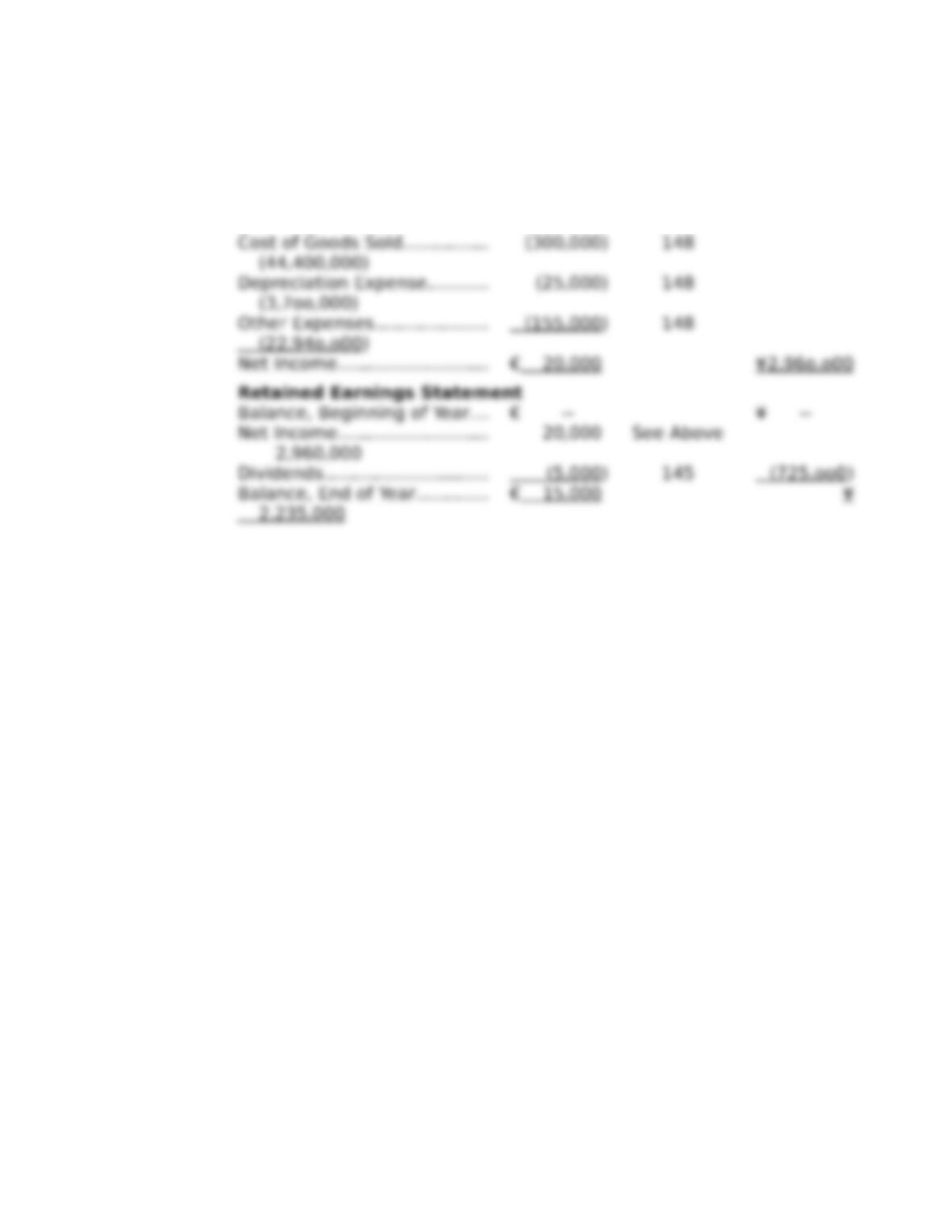
Income Statement
Sales………………………………. € 500,000 148 ¥74,0oo,00
0
Web Site Solutions FORCUR-10
An increase in the value of the foreign currency relative to the reporting
currency results in a credit change in other comprehensive income. The
parent company is better o# from having invested funds in a foreign
currency whose value increased relative to the reporting currency than
FORCUR 5.
A foreign exchange gain arises when (1) the foreign entity is in a net
monetary asset position and the foreign currency increases in value, or
(2) the foreign entity is in a net monetary liability position and the foreign
currency decreases in value, relative to the reporting currency. The gain
occurs in the .rst case because the net monetary asset position converts
A foreign exchange loss arises when (1) the foreign entity is in a net
monetary asset position and the foreign currency decreases in value, or
(2) the foreign entity is in a net monetary liability position and the foreign
FORCUR 6.
a. This statement is not correct. Cost of goods sold and depreciation
expense translate using the current exchange rate under the
all-current method and at the historical exchange rate under the
b. This statement is incorrect for reasons similar to those in Part a.
above. The all-current method translates nonmonetary assets and
liabilities using the current exchange rate, whereas the
monetary-nonmonetary method translates them using the historical
exchange rate. Furthermore, the cumulative foreign exchange
Web Site Solutions FORCUR-2
FORCUR 7.
The all-current translation method uses the net assets position (= assets
minus liabilities) as the basis when computing the foreign exchange
adjustment, whereas the monetary-nonmonetary translation method
uses the net monetary asset or net monetary liability position. The
FORCUR 8. (Selecting the exchange rate for foreign currency
translation.)
(1) (2)
All-Current
Monetary- Nonmonetary
Method Method
a. Cash C-E C-E
b. Accounts Receivable C-E C-E
FORCUR-3 Web Site Solutions
a The historical rate is technically correct; in these cases it is the average
exchange rate during the current period. Thus, we accept either C-A or H as
correct answers.
Web Site Solutions FORCUR-4
FORCUR 9. (Identifying the foreign currency translation method.)
a. M f. N
FORCUR 10.(Identifying the nature of a foreign exchange adjustment.)
a. Use of the all-current translation method results in a credit change in
the foreign exchange adjustment account. The parent company’s
investment in the net assets (= assets minus liabilities =
b. Use of the all-current translation method results in a debit change in
the foreign exchange adjustment account. The parent’s investment
in the net assets of the subsidiary decreases in value as a result of
FORCUR 11. (Interpreting translated .nancial statements.)
a. The British pound decreased in value relative to the euro. Indicators
(1) The translated euro amount for inventories using the
11. a. continued.
FORCUR-5 Web Site Solutions
(2) The translated euro amount for property, plant and equipment
(3) The net asset position of the foreign entity resulted in a negative
(4) The net monetary liability position of the foreign entity resulted
b. The subsidiary is in a net asset position. A decrease in the value of
c. The subsidiary is in a net monetary liability position. A decrease in
FORCUR 12. (U.S. Manufacturing; translating foreign currency .nancial
statements.)
a. All-Current Translation Method—2013
Exchange U.S.
Balance Sheet Euros Rate Dollars
Assets:
Cash……………………………. € 100 $1.00: €1
$ 100
Statement of Income and
Web Site Solutions FORCUR-6
Retained Earnings
Sales Revenue…………………. € 2,000 $1.50: €1 $ 3,000
Calculation of Foreign Exchange Adjustment for 2013
Exchange U.S.
Euros Rate Dollars
Net Asset Position, Jan-
uary 1, 2013…………………. € — $ —
Increase from Common
b. Monetary-Nonmonetary Translation Method—2013
Exchange U.S.
Balance Sheet Euros Rate Dollars
Assets:
Cash……………………………. € 100 $1.00: €1
$ 100
FORCUR-7 Web Site Solutions
FORCUR 12. b. continued.
Statement of Income and
Retained Earnings
Sales Revenue…………………. € 2,000 $1.50: €1 $ 3,000
Calculation of Foreign Exchange Gain for 2013
Exchange U.S.
Euros Rate Dollars
Net Monetary Position, Jan-
uary 1, 2013…………………. € — $ —
Increases:
c. The euro decreased in value relative to the U.S. dollar during 2013,
resulting in a negative foreign exchange adjustment on the
Web Site Solutions FORCUR-8
d. (1) €160/€2,000 = 8%.
FORCUR 13. (Casey Corporation; translating foreign currency .nancial
statements using the all-current method.)
a.
Translation of Financial Statements
of McCann Corporation—2013
All-Current Method
Exchange Japanese
Balance Sheet Euros Rate Yen
Cash……………………………….. € 40,000 145 ¥5,8oo,000
Accounts Receivable…………. 80,000 145 11,6oo,000
0
FORCUR-9 Web Site Solutions
Income Statement
Sales………………………………. € 500,000 148 ¥74,0oo,00
0
Web Site Solutions FORCUR-10