
3-1
© 2013 Cengage Learning. All
r
ights reserved. No
d
is
t
r
ibution allowed without express
a
u
t
hor
ization.
Solution
s
CHAPTER
3
THE BASICS OF RECORD KEEPING
A
ND
FINANCIAL STATEMENT PREPARATION: INCOME
S
T
A
T
EME
NT
Questions, Exercises, and Problems: Answers and
S
ol
u
tio
ns
3.1 See the text or the glossary at the end of the book.
3.2 Temporary accounts are for recording revenues and expenses.
These accounts are temporary in the sense that once they have
served their purpose of accumulating specific revenue and expense
items for an accounting period, they are closed, so that they begin
the following accounting period with a zero balance, ready for the
revenue and expense entries of the new period. Although it would
be possible to record both revenues and expenses directly in the
Retained Earnings account, doing so would suppress information
about the components of net income. The temporary revenue and
expense accounts accumulate the information that is displayed in
the line items or rows on the income statement. This display
provides information about the sources and amounts of revenues
and the nature and amounts of expenses that net to earnings for the
period.
3.3 The balance sheet and the income statement are linked (that is,
they articulate) through the shareholders’ equity account, Retained
Earnings. Retained Earnings measures the cumulative excess of net
income over dividends for the life of a firm; all undistributed
earnings are aggregated in Retained Earnings. The following
equation describes the articulation of the Retained Earnings:
Retained Earnings (beginning) + Net Income – Dividends = Retained Earnings
(end).
3.4 The purpose of the income statement is to show the user of the
financial statements the components of net income, that is, the
causes of net income. A user of financial statements can calculate
net income by analyzing the change in retained earnings, but this
analysis does not reveal the specific factors that combine to produce
the net income number.

© 2013 Cengage Learning. All
r
ights reserved. No
d
is
t
r
ibution allowed without express
a
u
t
hor
ization.
3.5 An adjusting entry is used to record the effects of an event or
transaction that was not previously recorded. Many adjusting
entries result from the efects of the passage of time, for
example, interest accrues on amounts owed over time. The accrual
of interest at the end of an accounting period is an example of an
adjusting entry. A correcting entry is a special case of an adjusting
entry. A correcting entry is used to record properly the efects of an
event or transaction that was improperly recorded during the
accounting period.
3.6 (BrasPetro S.A.; analyzing changes in accounts receivable.)
(amounts in millions of reals [R$])
Accounts Receivable, Beginning of Year 7 …………………………..
R$ 1,594.9
Plus Sales on Account during Year 7 ………………………………….
12,134.5
Less Cash Collections during Year 7…………………………………. ( ? )
Accounts Receivable, End of Year 7 …………………………………… R
$
1
, 49
7
.0
Cash collections during Year 7 total R$12,232.4 million.
3.7 (BigWing Company; analyzing changes in inventory.) (amounts in
millions of US$)
Inventory, Beginning of Year 7 …………………………………………….. $
8,105
Plus Purchases or Production of Inventory during Year 7 ……….. ?
Less Cost of Goods Sold for Year 7 ……………………………………….
(
4
5
, 37
5
) Inventory, End of Year 7
……………………………………………………… $
9
, 56
3
Purchases or production of inventory during Year 7 total $46,833
million.
3.8 (EkaPhone; analyzing changes in inventory and accounts payable.
) (amounts in millions of Swedish kronor [SEK])
Inventory, Beginning of Year 7 ……………………………………….. SEK
21,470
Plus Purchases of Inventory during Year 7 ………………………. ?
Less Cost of Goods Sold for Year 7 ………………………………….
(
11
4
, 05
9
)
Inventory, End of Year 7 ………………………………………………… S E K
2
2
, 47
5
8 continued.
Purchases during Year 7 total SEK115,064 million.

© 2013 Cengage Learning. All
r
ights reserved. No
d
is
t
r
ibution allowed without express
a
u
t
hor
ization.
Accounts Payable, Beginning of Year 7……………………………. SEK
18,183
Plus Purchases of Inventory on Account during Year 7 from
above …………………………………………………………………….. 115,06
4
Less Cash Payments to Suppliers during Year 7 ……………..
( ? )
Accounts
Payable, End of Year 7…………………………………….. S E K
1
7
, 42
7
Cash payments to suppliers during Year 7 total SEK115,820 million.
3.9 (Conima Corporation; analyzing changes in income taxes
payable.) (amounts in millions of yen)
Income Taxes Payable, Beginning of Year 7 ………………………….. ¥
3,736
Plus Income Tax Expense for Year 7 (0.43 X ¥73,051) …………….
31,412
Less Income Taxes Paid during Year 7 ………………………………….
( ? )
Income Taxes Payable, End of Year 7 …………………………………… ¥
1
4
, 31
0
Income taxes paid during Year 7 total ¥20,838 million.
3.10 (Ealing Corporation; analyzing changes in retained earnings.)
(amounts in millions of US$)
Retained Earnings, Beginning of Year 7……………………………….. $
2,796
Plus Net Income for Year 7………………………………………………….. ?
Less Dividends Declared and Paid during Year 7 …………………..
(
25
1
)
Retained Earnings, End of Year 7 …………………………………………$
3
, 25
7
Net Income for Year 7 totals $712 million.
3.11 (Bayer Group; relations between financial statements.)
(amounts
in millions of euros)
a. €5,868 + €32,385 – €5,830 = a; a =
€32,423. b. €109 + b – €763 = €56; b =
€710.
c. €14,723 – c + €2,155 = €12,911; c = €3,967.
© 2013 Cengage Learning. All
r
ights reserved. No
d
is
t
r
ibution allowed without express
a
u
t
hor
ization.
d. €6,782 + €4,711 – d = €10,749; d = €744.
3-3
3.12 (Beyond Petroleum; relations between financial statements.)
(amounts in millions of US$)
a. a + $288,951 – $289,623 = $38,020; a =
$38,692. b. $2,635 + $10,442 – b = $3,282;
b = $9,795.
c. $42,236 + $15,162 + c = $43,152; c =
$14,246. d. $88,453 + $21,169 – $8,106 =
d; d = $101,516.
3.13 (Journal entries for inventories and accounts payable.)
(amounts
in
millions of yen)
Merchandise I
n
ve
n
t
ori
e
s
………………………………………… 1,456,412
Accounts Payable ……………………………………………….
1,456,41
2
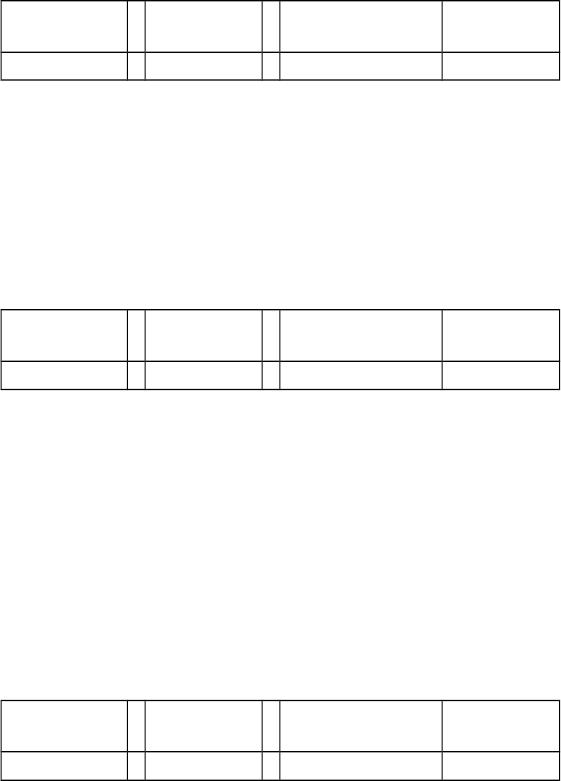
Assets = Liabilities +
Shareholders’
Equity (Class.)
+1,456,412 +1,456,412
Cost of Goods Sold (= ¥408,710 + ¥1,456,412 –
¥412,387)………………………………………………………….. 1,452,735
Merchandise I
n
ve
n
t
ori
e
s
………………………………….
1,452,73
5
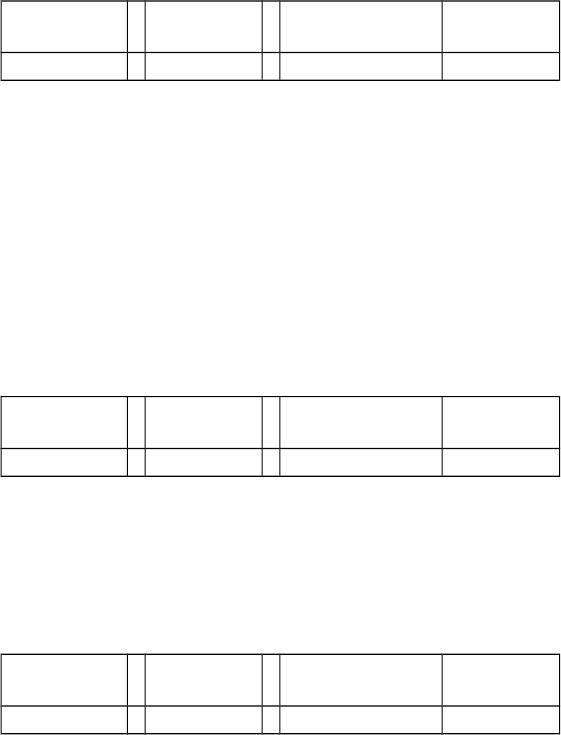
Assets = Liabilities +
Shareholders’
Equity (Class.)
–1,452,735 –1,452,735
IncSt
RE
Accounts Payable (= ¥757,006 + $1,456,412 –
¥824,825)…………………………………………………………..
1,388,593
Ca
sh
……………………………………………………………… 1,388,59
3
© 2013 Cengage Learning. All
r
ights reserved. No
d
is
t
r
ibution allowed without express
a
u
t
hor
ization.
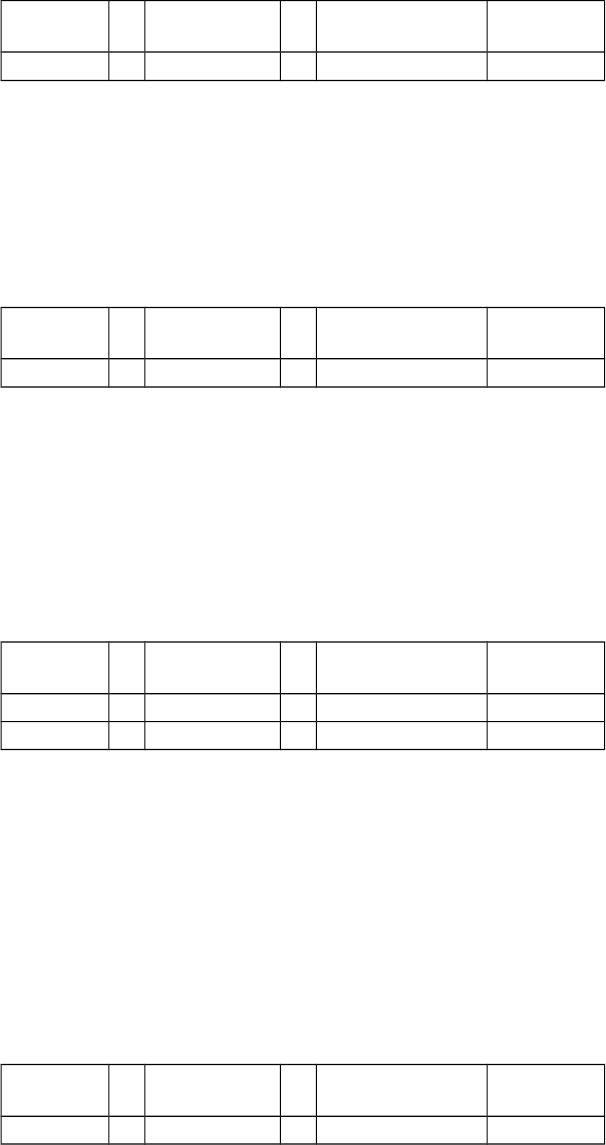
Assets = Liabilities +
Shareholders’
Equity (Class.)
–1,388,593 –1,388,593
Solutions 3-4
3.14 (Bonana Company; journal entries for insurance.) (amounts in
millions of
US$)
April 30, Year 8
Insurance Expe
ns
e ………………………………………………….12
Prepaid Insurance ………………………………………………12
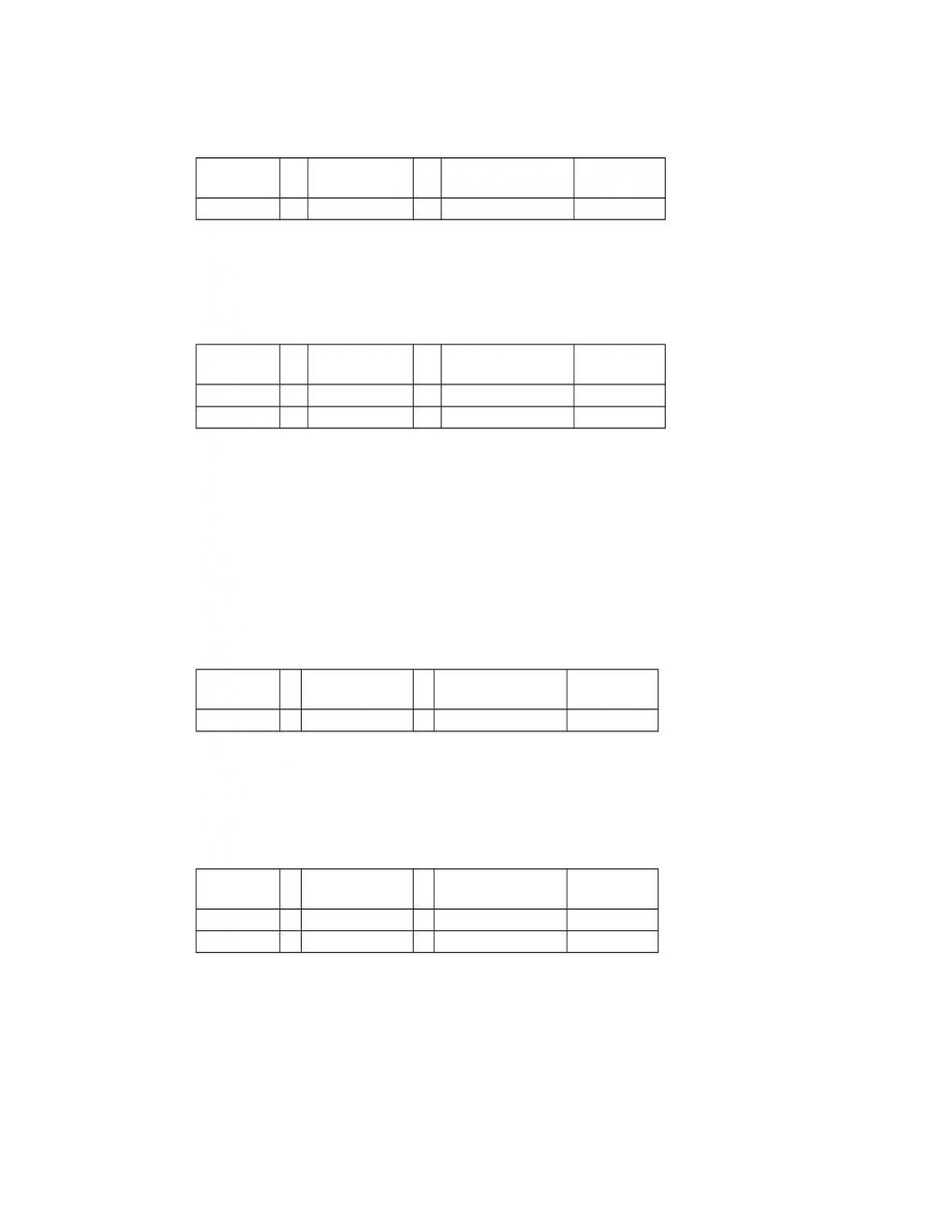
Assets = Liabilities +
Shareholders’
Equity (Class.)
–12 –12
IncSt
RE
Adjusting entry required for prepaid insurance
consumed
during April, Year
8.
May 31, Year 8
Insurance Expe
ns
e ………………………………………………….12
Prepaid Insurance ………………………………………………12
Assets = Liabilities +
Shareholders’
Equity (Class.)
–12 –12
IncSt
RE
Adjusting entry required for prepaid insurance
consumed
during May, Year
8.
June 1, Year 8
Prepaid Insurance………………………………………………….. 156
Ca
sh
…………………………………………………………………. 156
Assets = Liabilities +
Shareholders’
Equity (Class.)
+156
–156
To record payment of insurance for next 12
months.
3-5
3.14 continued.
June 30, Year 8
Insurance Expe
ns
e …………………………………………………. 13
Prepaid Insurance……………………………………………. 13
Assets = Liabilities +
Shareholders’
Equity (Class.)
–13 –13
IncSt
RE
© 2013 Cengage Learning. All
r
ights reserved. No
d
is
t
r
ibution allowed without express
a
u
t
hor
ization.
Adjusting entry required for prepaid insurance
consumed
during June, Year 8 ($13 = $156/12
months).
July 31, Year 8
Insurance Expe
ns
e …………………………………………………. 13
Prepaid Insurance……………………………………………. 13
Assets = Liabilities +
Shareholders’
Equity (Class.)
–13 –13
IncSt
RE
Adjusting entry required for prepaid insurance
consumed
during July, Year
8.
3.15 (EBB Group; journal entries for prepaid rent.) (amounts in
millions of
US$)
a. Journal Entries for January, Year
7: January 31, Year 7
Rent Expense …………………………………………………..
247
Prepaid R
en
t ……………………………………………….. 247
Assets = Liabilities +
Shareholders’
Equity (Class.)
–247 –247
IncSt
RE
To record the adjusting entry for the consumption
of
the prepaid portion of rent expense for the
month
o
f January.
Solutions 3-6
3.15 a. continued.
January 31, Year 7
Prepaid R
en
t …………………………………………………… 3,200
Cash …………………………………………………………… 3,200
Assets = Liabilities +
Shareholders’
Equity (Class.)
+3,200
–3,200
To record the prepayment of rent for the next
12 months.
b. Journal Entry in December, Year
© 2013 Cengage Learning. All
r
ights reserved. No
d
is
t
r
ibution allowed without express
a
u
t
hor
ization.
7: December 31, Year 7
Rent Expense ………………………………………………….. 2,933
Prepaid R
en
t ……………………………………………….. 2,933
Assets = Liabilities +
Shareholders’
Equity (Class.)
–2,933 –2,933
IncSt
RE
To record the adjusting entry for the consumption
of
the prepaid portion of rent expense for the
months
of
February through
December.
Amount of Prepaid Rent consumed = [($3,200/12 months) X 11
months]
= $2,933
million.
3.16 (SAPC Limited; journal entries for borrowing.) (amounts in
millions of
US$)
a. SAPC repaid liabilities in fiscal Year 7, in the amount of
$1,634 +
$1,200 – $1,828 = $1,006 million. To record the repayment,
SAPC
made the following journal
entry:
Date of Repayment, Fiscal
Year 7
Noncurrent Financial
Liabilities
……………………….
1,006
Cash …………………………………………………………… 1
,
006
Assets = Liabilities +
Shareholders’
Equity (Class.)
–1,006 –1,006
3-7 Solutions
Shareholders’
© 2013 Cengage Learning. All
r
ights reserved. No
d
is
t
r
ibution allowed without express
a
u
t
hor
ization.
3.5 An adjusting entry is used to record the effects of an event or
transaction that was not previously recorded. Many adjusting
entries result from the efects of the passage of time, for
example, interest accrues on amounts owed over time. The accrual
of interest at the end of an accounting period is an example of an
adjusting entry. A correcting entry is a special case of an adjusting
entry. A correcting entry is used to record properly the efects of an
event or transaction that was improperly recorded during the
accounting period.
3.6 (BrasPetro S.A.; analyzing changes in accounts receivable.)
(amounts in millions of reals [R$])
Accounts Receivable, Beginning of Year 7 …………………………..
R$ 1,594.9
Plus Sales on Account during Year 7 ………………………………….
12,134.5
Less Cash Collections during Year 7…………………………………. ( ? )
Accounts Receivable, End of Year 7 …………………………………… R
$
1
, 49
7
.0
Cash collections during Year 7 total R$12,232.4 million.
3.7 (BigWing Company; analyzing changes in inventory.) (amounts in
millions of US$)
Inventory, Beginning of Year 7 …………………………………………….. $
8,105
Plus Purchases or Production of Inventory during Year 7 ……….. ?
Less Cost of Goods Sold for Year 7 ……………………………………….
(
4
5
, 37
5
) Inventory, End of Year 7
……………………………………………………… $
9
, 56
3
Purchases or production of inventory during Year 7 total $46,833
million.
3.8 (EkaPhone; analyzing changes in inventory and accounts payable.
) (amounts in millions of Swedish kronor [SEK])
Inventory, Beginning of Year 7 ……………………………………….. SEK
21,470
Plus Purchases of Inventory during Year 7 ………………………. ?
Less Cost of Goods Sold for Year 7 ………………………………….
(
11
4
, 05
9
)
Inventory, End of Year 7 ………………………………………………… S E K
2
2
, 47
5
8 continued.
Purchases during Year 7 total SEK115,064 million.
© 2013 Cengage Learning. All
r
ights reserved. No
d
is
t
r
ibution allowed without express
a
u
t
hor
ization.
Accounts Payable, Beginning of Year 7……………………………. SEK
18,183
Plus Purchases of Inventory on Account during Year 7 from
above …………………………………………………………………….. 115,06
4
Less Cash Payments to Suppliers during Year 7 ……………..
( ? )
Accounts
Payable, End of Year 7…………………………………….. S E K
1
7
, 42
7
Cash payments to suppliers during Year 7 total SEK115,820 million.
3.9 (Conima Corporation; analyzing changes in income taxes
payable.) (amounts in millions of yen)
Income Taxes Payable, Beginning of Year 7 ………………………….. ¥
3,736
Plus Income Tax Expense for Year 7 (0.43 X ¥73,051) …………….
31,412
Less Income Taxes Paid during Year 7 ………………………………….
( ? )
Income Taxes Payable, End of Year 7 …………………………………… ¥
1
4
, 31
0
Income taxes paid during Year 7 total ¥20,838 million.
3.10 (Ealing Corporation; analyzing changes in retained earnings.)
(amounts in millions of US$)
Retained Earnings, Beginning of Year 7……………………………….. $
2,796
Plus Net Income for Year 7………………………………………………….. ?
Less Dividends Declared and Paid during Year 7 …………………..
(
25
1
)
Retained Earnings, End of Year 7 …………………………………………$
3
, 25
7
Net Income for Year 7 totals $712 million.
3.11 (Bayer Group; relations between financial statements.)
(amounts
in millions of euros)
a. €5,868 + €32,385 – €5,830 = a; a =
€32,423. b. €109 + b – €763 = €56; b =
€710.
c. €14,723 – c + €2,155 = €12,911; c = €3,967.
© 2013 Cengage Learning. All
r
ights reserved. No
d
is
t
r
ibution allowed without express
a
u
t
hor
ization.
d. €6,782 + €4,711 – d = €10,749; d = €744.
3-3
3.12 (Beyond Petroleum; relations between financial statements.)
(amounts in millions of US$)
a. a + $288,951 – $289,623 = $38,020; a =
$38,692. b. $2,635 + $10,442 – b = $3,282;
b = $9,795.
c. $42,236 + $15,162 + c = $43,152; c =
$14,246. d. $88,453 + $21,169 – $8,106 =
d; d = $101,516.
3.13 (Journal entries for inventories and accounts payable.)
(amounts
in
millions of yen)
Merchandise I
n
ve
n
t
ori
e
s
………………………………………… 1,456,412
Accounts Payable ……………………………………………….
1,456,41
2
Assets = Liabilities +
Shareholders’
Equity (Class.)
+1,456,412 +1,456,412
Cost of Goods Sold (= ¥408,710 + ¥1,456,412 –
¥412,387)………………………………………………………….. 1,452,735
Merchandise I
n
ve
n
t
ori
e
s
………………………………….
1,452,73
5
Assets = Liabilities +
Shareholders’
Equity (Class.)
–1,452,735 –1,452,735
IncSt
RE
Accounts Payable (= ¥757,006 + $1,456,412 –
¥824,825)…………………………………………………………..
1,388,593
Ca
sh
……………………………………………………………… 1,388,59
3
© 2013 Cengage Learning. All
r
ights reserved. No
d
is
t
r
ibution allowed without express
a
u
t
hor
ization.
Assets = Liabilities +
Shareholders’
Equity (Class.)
–1,388,593 –1,388,593
Solutions 3-4
3.14 (Bonana Company; journal entries for insurance.) (amounts in
millions of
US$)
April 30, Year 8
Insurance Expe
ns
e ………………………………………………….12
Prepaid Insurance ………………………………………………12
Assets = Liabilities +
Shareholders’
Equity (Class.)
–12 –12
IncSt
RE
Adjusting entry required for prepaid insurance
consumed
during April, Year
8.
May 31, Year 8
Insurance Expe
ns
e ………………………………………………….12
Prepaid Insurance ………………………………………………12
Assets = Liabilities +
Shareholders’
Equity (Class.)
–12 –12
IncSt
RE
Adjusting entry required for prepaid insurance
consumed
during May, Year
8.
June 1, Year 8
Prepaid Insurance………………………………………………….. 156
Ca
sh
…………………………………………………………………. 156
Assets = Liabilities +
Shareholders’
Equity (Class.)
+156
–156
To record payment of insurance for next 12
months.
3-5
3.14 continued.
June 30, Year 8
Insurance Expe
ns
e …………………………………………………. 13
Prepaid Insurance……………………………………………. 13
Assets = Liabilities +
Shareholders’
Equity (Class.)
–13 –13
IncSt
RE
© 2013 Cengage Learning. All
r
ights reserved. No
d
is
t
r
ibution allowed without express
a
u
t
hor
ization.
Adjusting entry required for prepaid insurance
consumed
during June, Year 8 ($13 = $156/12
months).
July 31, Year 8
Insurance Expe
ns
e …………………………………………………. 13
Prepaid Insurance……………………………………………. 13
Assets = Liabilities +
Shareholders’
Equity (Class.)
–13 –13
IncSt
RE
Adjusting entry required for prepaid insurance
consumed
during July, Year
8.
3.15 (EBB Group; journal entries for prepaid rent.) (amounts in
millions of
US$)
a. Journal Entries for January, Year
7: January 31, Year 7
Rent Expense …………………………………………………..
247
Prepaid R
en
t ……………………………………………….. 247
Assets = Liabilities +
Shareholders’
Equity (Class.)
–247 –247
IncSt
RE
To record the adjusting entry for the consumption
of
the prepaid portion of rent expense for the
month
o
f January.
Solutions 3-6
3.15 a. continued.
January 31, Year 7
Prepaid R
en
t …………………………………………………… 3,200
Cash …………………………………………………………… 3,200
Assets = Liabilities +
Shareholders’
Equity (Class.)
+3,200
–3,200
To record the prepayment of rent for the next
12 months.
b. Journal Entry in December, Year
© 2013 Cengage Learning. All
r
ights reserved. No
d
is
t
r
ibution allowed without express
a
u
t
hor
ization.
7: December 31, Year 7
Rent Expense ………………………………………………….. 2,933
Prepaid R
en
t ……………………………………………….. 2,933
Assets = Liabilities +
Shareholders’
Equity (Class.)
–2,933 –2,933
IncSt
RE
To record the adjusting entry for the consumption
of
the prepaid portion of rent expense for the
months
of
February through
December.
Amount of Prepaid Rent consumed = [($3,200/12 months) X 11
months]
= $2,933
million.
3.16 (SAPC Limited; journal entries for borrowing.) (amounts in
millions of
US$)
a. SAPC repaid liabilities in fiscal Year 7, in the amount of
$1,634 +
$1,200 – $1,828 = $1,006 million. To record the repayment,
SAPC
made the following journal
entry:
Date of Repayment, Fiscal
Year 7
Noncurrent Financial
Liabilities
……………………….
1,006
Cash …………………………………………………………… 1
,
006
Assets = Liabilities +
Shareholders’
Equity (Class.)
–1,006 –1,006
3-7 Solutions
Shareholders’