1. (Identifying accounting
p
rinci
p
l
e
s.
)
a. FIFO cost flow
assumption. b. Allowance method.
assumption. f. Effective interest method.
method. j. Allowance method.
2. (Identifying accounting principles.)
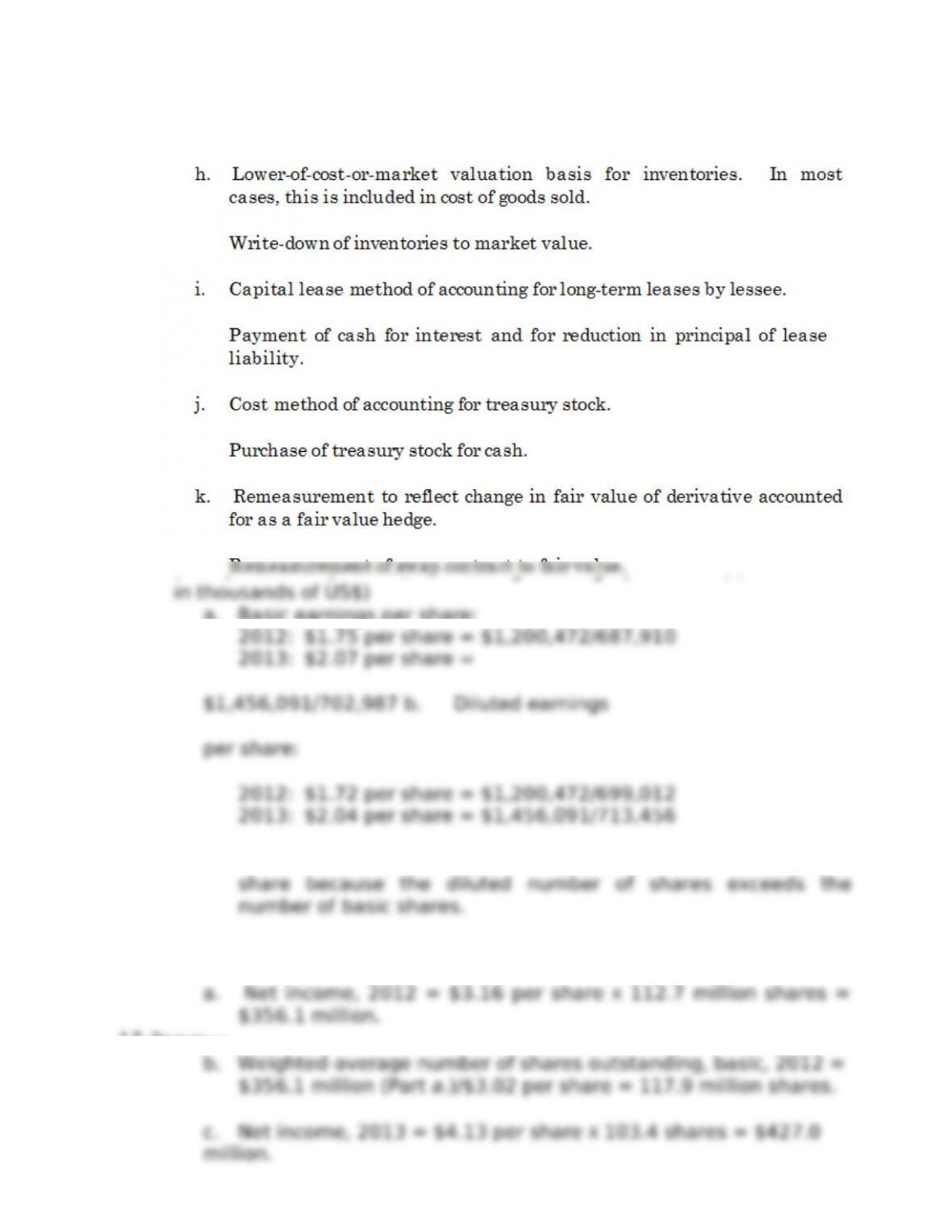
a. Basic earnings per share:
c. Diluted earnings per share are smaller than basic earnings per
17.4 (Hatchet Limited; calculating earnings per share.) (amounts in US$)
17-3Solutions
d. Weighted-average number of shares outstanding, diluted,
sh
a
res.
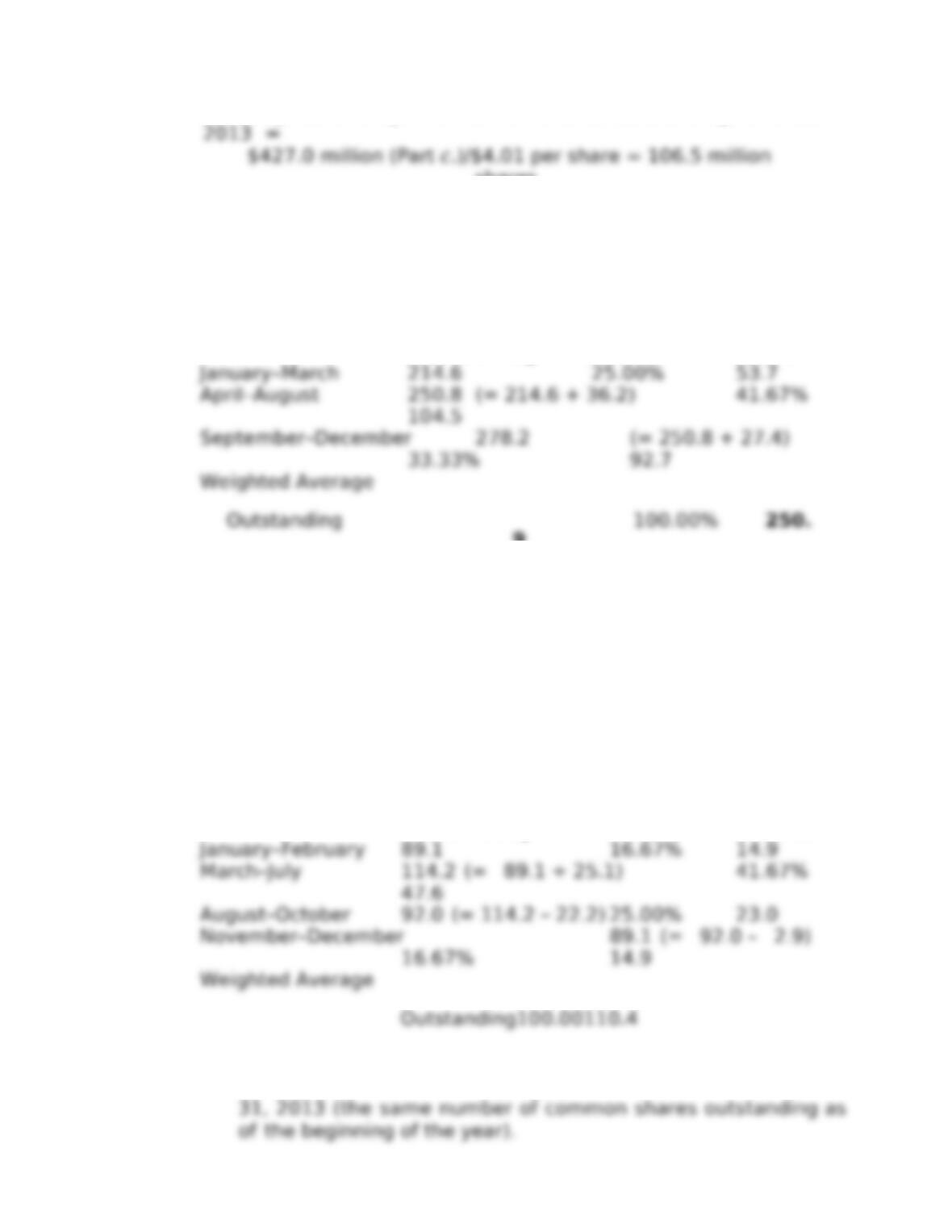
17.5 (Kennett Corporation; calculating weighted-average shares
outstanding.)
Period Shares Fraction of
Outstanding Year Product
9
a. Kennett had 278.2 million common shares outstanding as of
December 31, 2013.
b. Kennett’s weighted-average number of common shares is
250.9 million, calculated above.
17.6 (Boslan Group; calculating weighted-average shares outstanding.)
Period Shares Fraction of
Outstanding Year Product
a. Boslan had 89.1 million common shares outstanding as of
D
e
c
emb
er
b. Boslan’s weighted-average number of common shares is 92.9
Solutions17-4
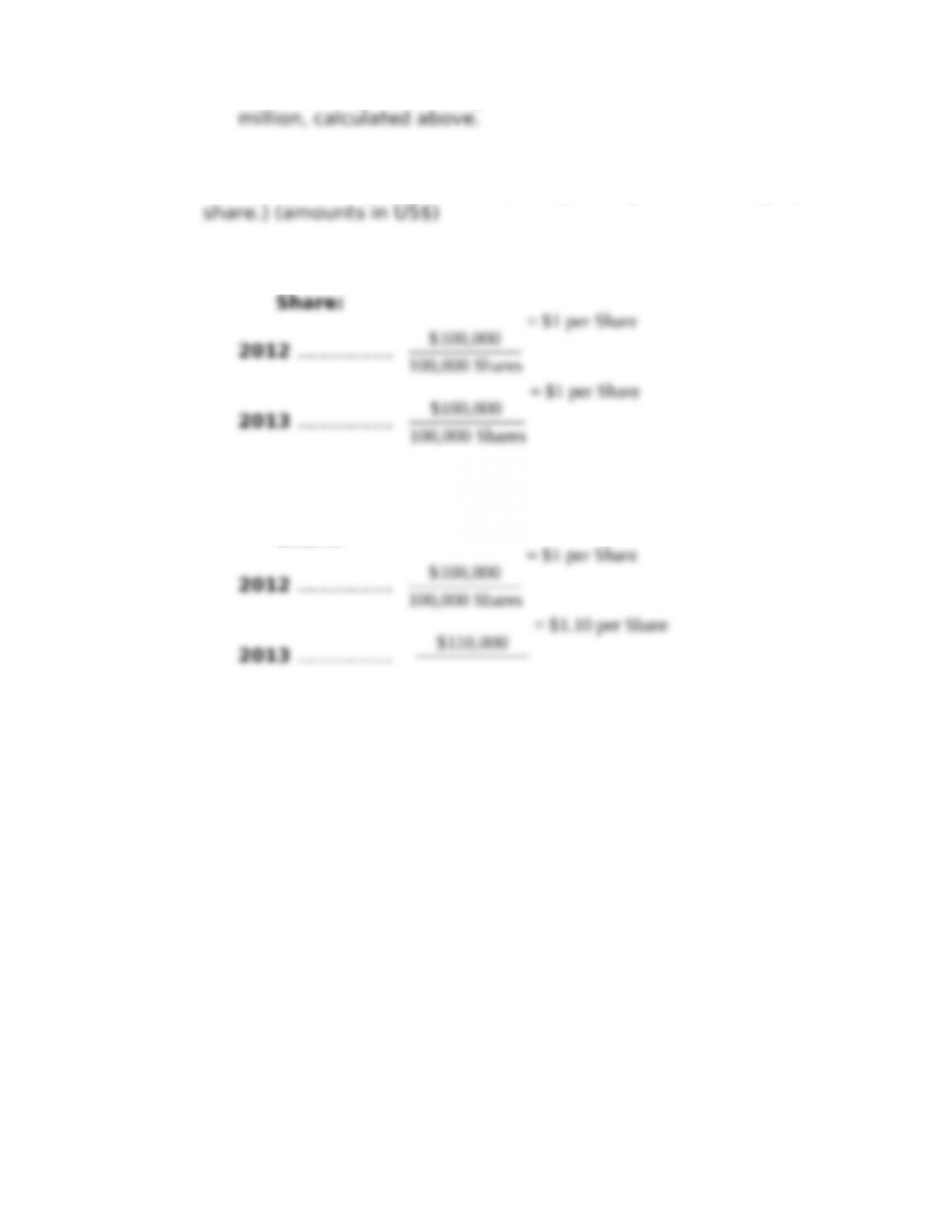
17.7 (Company A/Company B; interpreting changes in earnings per
a. Company A Earnings
Per
2013 ……………. $100,000
100,000 Shares
Company B Earnings
Per
S
h
a
re
:
100,000
Shares
b. Company A: No growth [= ($1.00/$1.00) – 1.0].
c. Company B: This result is misleading. Comparisons of
d. The problem states that both Company A and Company B
17.8 (Gen/Dyn; treatment of accounting errors, changes in accounting
principles, and changes in accounting estimates.) (amounts in
US$)
1. Accounting Error:
17-5Solutions
2. Change in Accounting Principle:
3. Change in Accounting Estimate:
17.9 (Union Cable Company; journal entries to correct errors and
adjust for changes in estimates.) (amounts in US$)
a. Retained Earnings……………………………………………. 12,000
Assets
=Liabilities+Shareholders’ Equity (Class.)
b. Accumulated Depreciation………………………………… 7,000
Retained Earnings…………………………………………3,000
Assets
=Liabilities +Shareholders’ Equity (Class.)
Solutions17-6
Assets
d. Bad Debt
Expense
……………………………………………. 10,000
17.10 (Chicago Corporation; comprehensive review problem.) (amounts in
US$)
a. Balance, December 31, 2012
.
……………….……….…….………...
LIFO FIFO
Beginning Inventory
…..……….…….………….
$ 1,500,000 $
1,800,000
Purchases………………………………………
…….
5
,
30
0
,
00
0
5
, 30
0
, 00
0
Available for
Sale…………………………………
$ 6,800,000 $
7,100,000
Less Ending
Inventory…………………………..
(
1
,
80
0
,
00
0
)
(
1
, 70
0
, 00
0
)
Cost of Goods
Sold………………………………..
$
5
, 00
0
, 00
0 $
5
, 40
0
, 00
0
Net Sales
…..……….…….……………..………….
$ 13,920,000 $
13,920,000
Less Cost of Goods
S
o
l
d
…..……….…….…….
(
5
,
00
0
,
00
0
)
(
5
, 40
0
, 00
0
)
Gross
Profit………………………………………….
$
8
, 92
0
, 00
0 $
8
, 52
0
, 00
0
b.
c. The quantity of inventory increased because the LIFO
ending inventory is larger than the LIFO beginning inventory.
The acquisition costs of the inventory items decreased
because the FIFO ending inventory is less than the FIFO
beginning inventory despite an increase in quantity during
the year.
17-7Solutions
d. None of the companies declared dividends during 2013
e. Investment in Chicago Finance Corporation………..1,800,000
Assets
=
Liabilities
+ Shareholders’ Equity
(Class.)
f. $4,000,000/40 = $100,000
g. Ca
sh
……………………………………………………………….. 400,000
Assets
= Liabilities + Shareholders’ Equity
Solutions17-
i. Effective interest rate X $3,600,000 = $288,000. The
j. Difference between book and taxable depreciation =
k. Ca
sh
………………………………………………………………..
1,000,000
l. Acquisition Co
s
t .…………….……….…….……………..…….……… $
m. If Chicago Corporation owns less than 20% of the common
17-9Solutions
17.10 m. continued.
n. Capitalized Lease Obligation ($1,100,000 –
=Liabilities + Shareholders’ Equity (Class.)
o. The income statement would show a $200,000 loss from the
$120,000)/1,600,000 =
Solutions17-10
17.10 continued.
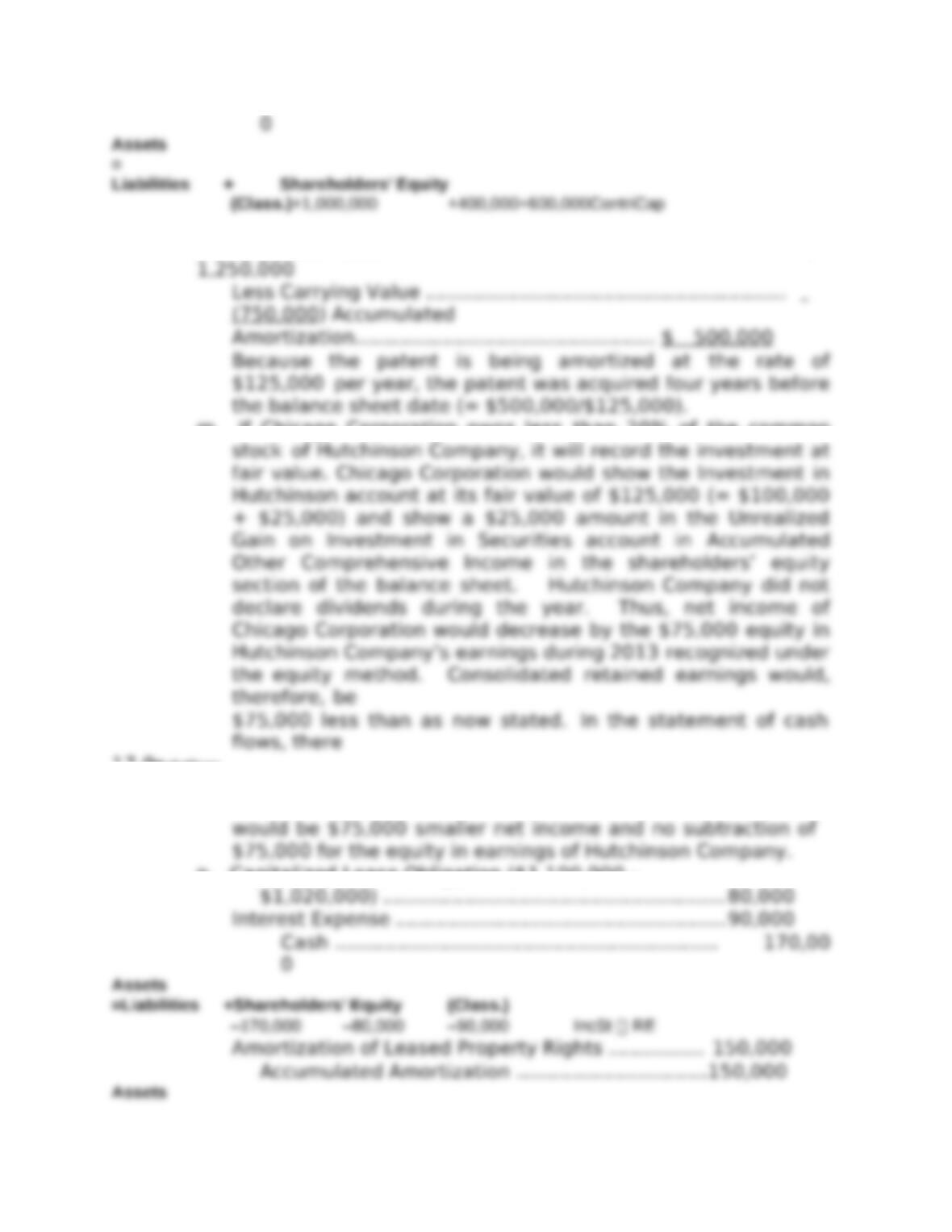
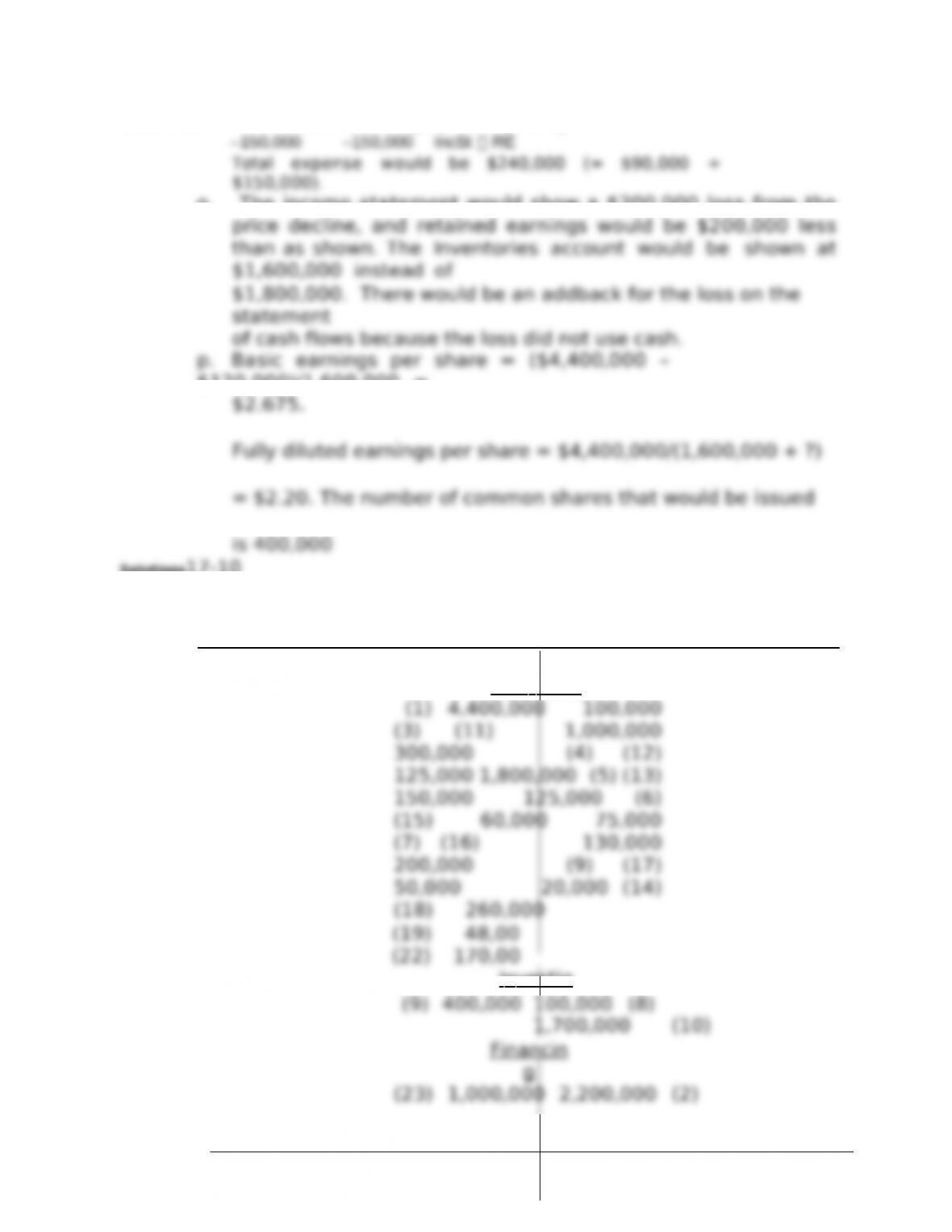
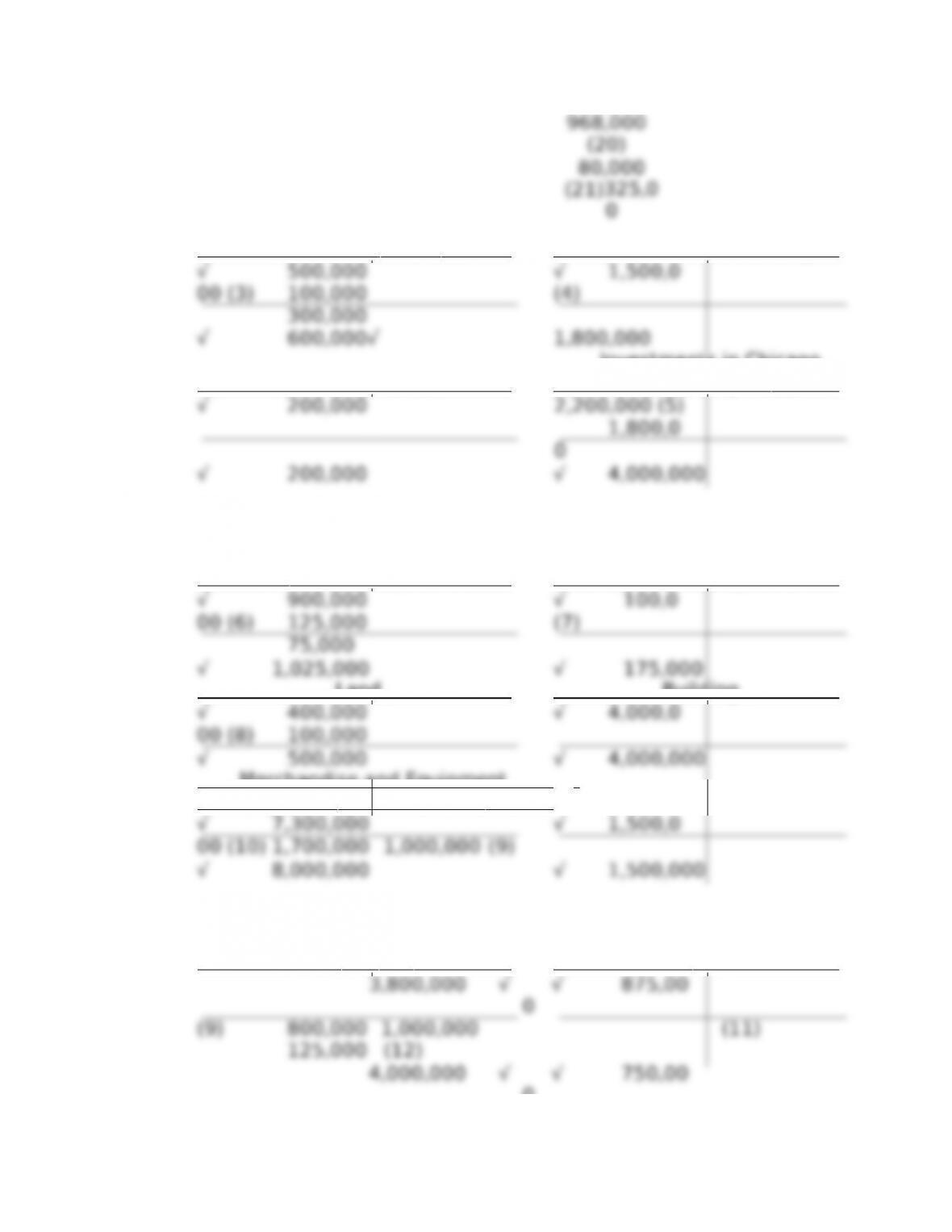
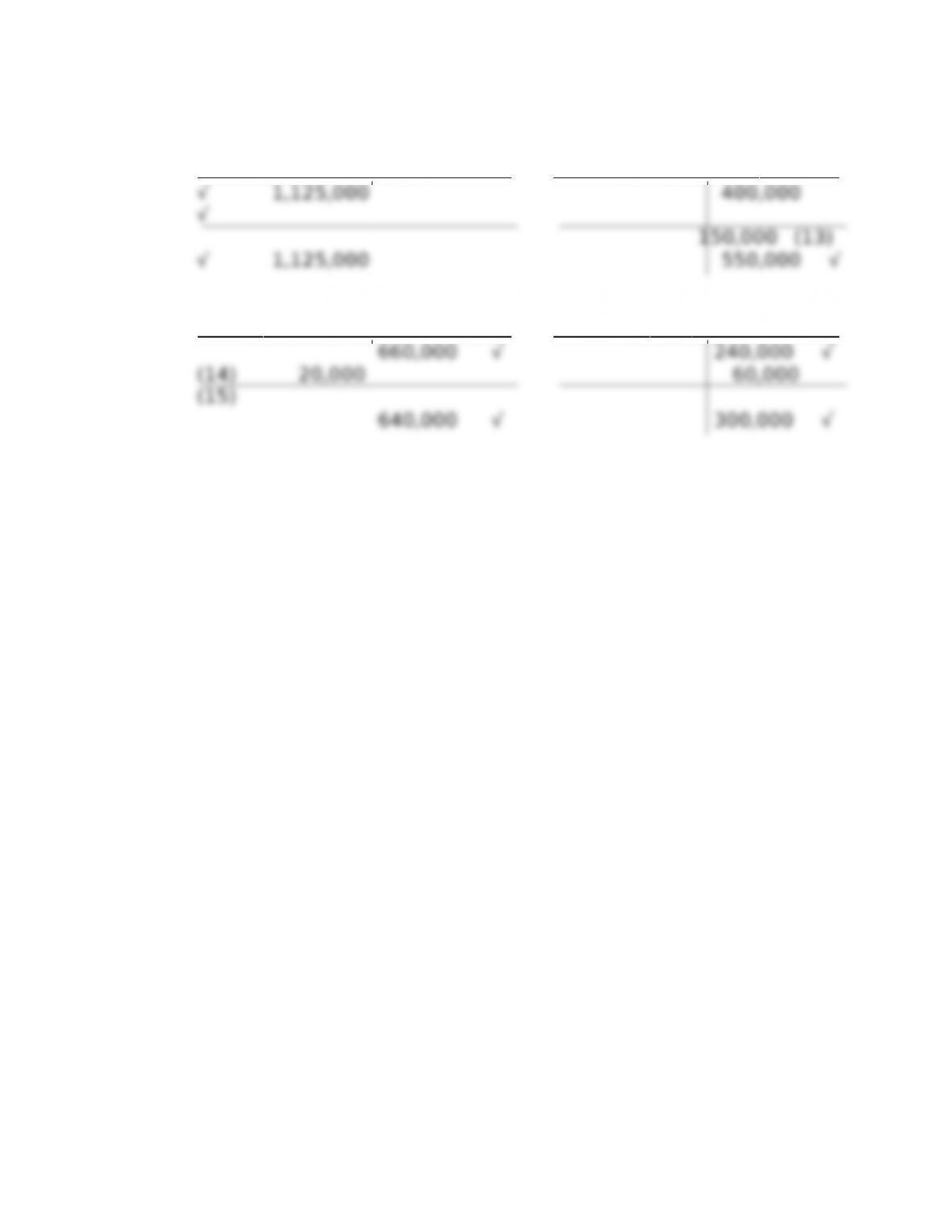
q.
C
a
s h
√200
,
000
O
p
e
r
a
t
i
os
I
n
v
es
t
i
g
A
cc
o
u n
t
s
R
e c e i
va
b
l
e
M
e r c h
a
n
d
i
s
e
I
n
v
e
n
t
o r
y
Investments in Chicago
P r
e
p
a
y
m
e n
t
s
F i
n
a
n c
e
C
o r
p
o
r
a
t
i
on
17-11Solutions
Investment in Investment
in
R
o
s
e n w
a
l
d
C
o r
p
o r
a
t
i
on
H
u
t
c h
i n
s on
C
o
r
p
o
r
a
t
i
on
L
a
n
d
B
u
il
d
i
n
g
M
e r c h
a
n
d
i
s
e
a
n
d
E
q
u
i
p
m
e n
t
P
r
o p
e
r
t y
R
i
g
h
t
s
U
n
d
e
r
L
e a
s
e
Accumulated Depreciation
a
n
d
A
m
o r
t
i
z
a
t
i
on
P
a
t
e n
t
0
G
oo
d
w il
l
A
cc
o
u n
t
s P
ay
a
b
l
e
A
dv
a
n c es
f
r
om
C
u
s
t
o
m
e r
s
S
a
l
a
r
i
e
s P
aya
b
l
e
a. Basic earnings per share:
c. Diluted earnings per share are smaller than basic earnings per
17.4 (Hatchet Limited; calculating earnings per share.) (amounts in US$)
17-3Solutions
d. Weighted-average number of shares outstanding, diluted,
sh
a
res.
17.5 (Kennett Corporation; calculating weighted-average shares
outstanding.)
Period Shares Fraction of
Outstanding Year Product
9
a. Kennett had 278.2 million common shares outstanding as of
December 31, 2013.
b. Kennett’s weighted-average number of common shares is
250.9 million, calculated above.
17.6 (Boslan Group; calculating weighted-average shares outstanding.)
Period Shares Fraction of
Outstanding Year Product
a. Boslan had 89.1 million common shares outstanding as of
D
e
c
emb
er
b. Boslan’s weighted-average number of common shares is 92.9
Solutions17-4
17.7 (Company A/Company B; interpreting changes in earnings per
a. Company A Earnings
Per
2013 ……………. $100,000
100,000 Shares
Company B Earnings
Per
S
h
a
re
:
100,000
Shares
b. Company A: No growth [= ($1.00/$1.00) – 1.0].
c. Company B: This result is misleading. Comparisons of
d. The problem states that both Company A and Company B
17.8 (Gen/Dyn; treatment of accounting errors, changes in accounting
principles, and changes in accounting estimates.) (amounts in
US$)
1. Accounting Error:
17-5Solutions
2. Change in Accounting Principle:
3. Change in Accounting Estimate:
17.9 (Union Cable Company; journal entries to correct errors and
adjust for changes in estimates.) (amounts in US$)
a. Retained Earnings……………………………………………. 12,000
Assets
=Liabilities+Shareholders’ Equity (Class.)
b. Accumulated Depreciation………………………………… 7,000
Retained Earnings…………………………………………3,000
Assets
=Liabilities +Shareholders’ Equity (Class.)
Solutions17-6
Assets
d. Bad Debt
Expense
……………………………………………. 10,000
17.10 (Chicago Corporation; comprehensive review problem.) (amounts in
US$)
a. Balance, December 31, 2012
.
……………….……….…….………...
LIFO FIFO
Beginning Inventory
…..……….…….………….
$ 1,500,000 $
1,800,000
Purchases………………………………………
…….
5
,
30
0
,
00
0
5
, 30
0
, 00
0
Available for
Sale…………………………………
$ 6,800,000 $
7,100,000
Less Ending
Inventory…………………………..
(
1
,
80
0
,
00
0
)
(
1
, 70
0
, 00
0
)
Cost of Goods
Sold………………………………..
$
5
, 00
0
, 00
0 $
5
, 40
0
, 00
0
Net Sales
…..……….…….……………..………….
$ 13,920,000 $
13,920,000
Less Cost of Goods
S
o
l
d
…..……….…….…….
(
5
,
00
0
,
00
0
)
(
5
, 40
0
, 00
0
)
Gross
Profit………………………………………….
$
8
, 92
0
, 00
0 $
8
, 52
0
, 00
0
b.
c. The quantity of inventory increased because the LIFO
ending inventory is larger than the LIFO beginning inventory.
The acquisition costs of the inventory items decreased
because the FIFO ending inventory is less than the FIFO
beginning inventory despite an increase in quantity during
the year.
17-7Solutions
d. None of the companies declared dividends during 2013
e. Investment in Chicago Finance Corporation………..1,800,000
Assets
=
Liabilities
+ Shareholders’ Equity
(Class.)
f. $4,000,000/40 = $100,000
g. Ca
sh
……………………………………………………………….. 400,000
Assets
= Liabilities + Shareholders’ Equity
Solutions17-
i. Effective interest rate X $3,600,000 = $288,000. The
j. Difference between book and taxable depreciation =
k. Ca
sh
………………………………………………………………..
1,000,000
l. Acquisition Co
s
t .…………….……….…….……………..…….……… $
m. If Chicago Corporation owns less than 20% of the common
17-9Solutions
17.10 m. continued.
n. Capitalized Lease Obligation ($1,100,000 –
=Liabilities + Shareholders’ Equity (Class.)
o. The income statement would show a $200,000 loss from the
$120,000)/1,600,000 =
Solutions17-10
17.10 continued.
q.
C
a
s h
√200
,
000
O
p
e
r
a
t
i
os
I
n
v
es
t
i
g
A
cc
o
u n
t
s
R
e c e i
va
b
l
e
M
e r c h
a
n
d
i
s
e
I
n
v
e
n
t
o r
y
Investments in Chicago
P r
e
p
a
y
m
e n
t
s
F i
n
a
n c
e
C
o r
p
o
r
a
t
i
on
17-11Solutions
Investment in Investment
in
R
o
s
e n w
a
l
d
C
o r
p
o r
a
t
i
on
H
u
t
c h
i n
s on
C
o
r
p
o
r
a
t
i
on
L
a
n
d
B
u
il
d
i
n
g
M
e r c h
a
n
d
i
s
e
a
n
d
E
q
u
i
p
m
e n
t
P
r
o p
e
r
t y
R
i
g
h
t
s
U
n
d
e
r
L
e a
s
e
Accumulated Depreciation
a
n
d
A
m
o r
t
i
z
a
t
i
on
P
a
t
e n
t
0
G
oo
d
w il
l
A
cc
o
u n
t
s P
ay
a
b
l
e
A
dv
a
n c es
f
r
om
C
u
s
t
o
m
e r
s
S
a
l
a
r
i
e
s P
aya
b
l
e