CHAPTER
15
SHAREHOLDERS’ EQUITY: CAPITAL
C
ONT
RIB
UT
I
ON
S
AND D
IS
T
RIB
UT
I
ON
S
Questions, Exercises, and Problems: Answers and
S
ol
u
tio
ns
15.1 See the text or the glossary at the end of the book.
15.2 The two provisions provide diferent benefits and risks to the
15.3 Seniority means that, in the event of bankruptcy, the
15.4 All three items permit their holder to acquire shares of common
stock at a set price. Their values depend on the diference
between the market price and the exercise price on the exercise
15.5 The greater the volatility of the stock price, the larger is the
potential excess of the market price over the exercise price on the
15.6 The theoretical rationale is allocating the cost of employee
15.7 The accounting for each of these transactions potentially
15.8 In the case of a cash dividend, the shareholder now holds the
investment in two parts—cash and stock certificates. The sum of
the cash and the book value of the stock after the dividend
Solutions15-2
15.9 The managers of a firm have knowledge of the plans and risks
of the firm that external investors may not possess. Although

15.10 If a firm uses the constructive retirement method to account
for treasury shares, this answer is correct. If, however, a firm
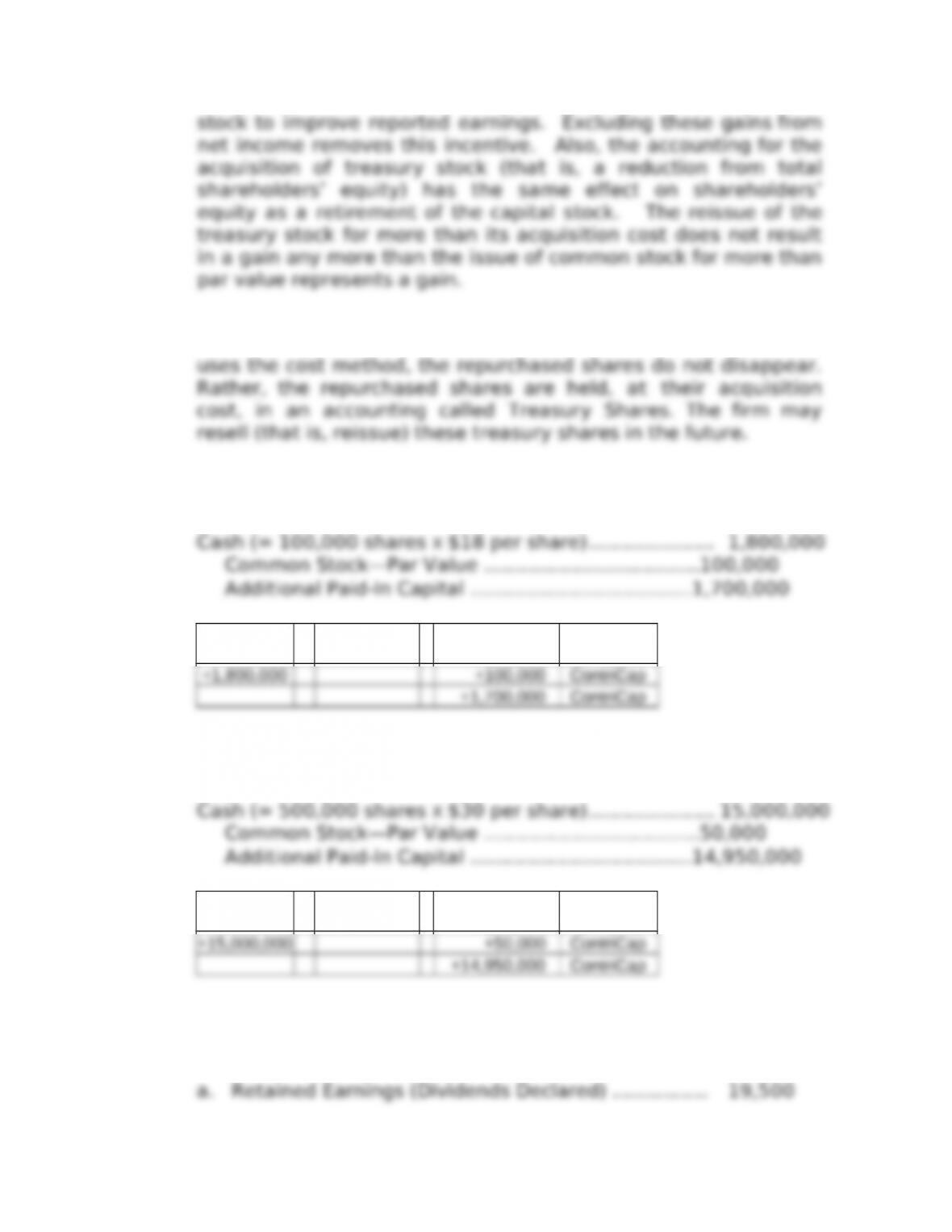
15.11 (Carter, Inc.; issuing common stock.) (amounts in US$)
December 1, 2013
Assets = Liabilities +
Shareholders’
Equity (Class.)
15.12 (Homing Corporation; issuing common stock.) (amounts in US$)
September 30, 2014
Assets = Liabilities +
Shareholders’
Equity (Class.)
15-3Solutions
15.13 (Grable, Inc.; journal entries for dividends.) (amounts in US$)
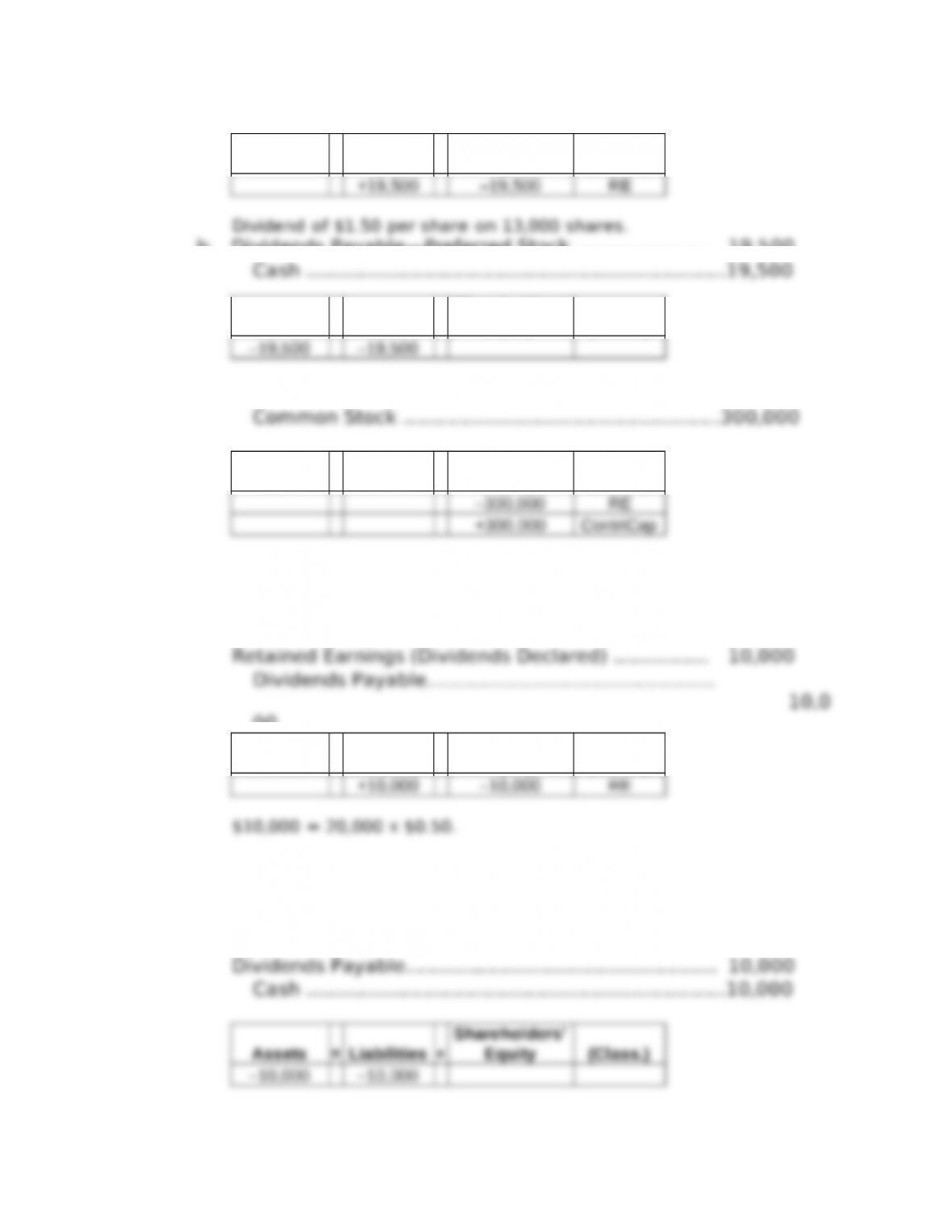

Dividends Payable—Preferred Stock ………………19,500
Assets = Liabilities +
Shareholders’
Equity (Class.)
b. Dividends Payable—Preferred Stock …………………. 19,500
Ca
sh
Assets = Liabilities +
Shareholders’
Equity (Class.)
c. Retained Earnings (Dividends
Declared)
……………. 300,000
Assets = Liabilities +
Shareholders’
Equity (Class.)
d. No entry.
15.14 (Watt Corporation; journal entries for dividends.) (amounts in US$)
a. March 31, 2013
00
Assets = Liabilities +
Shareholders’
Equity (Class.)
Solutions15-4
15.14 continued.
b. April 15, 2013
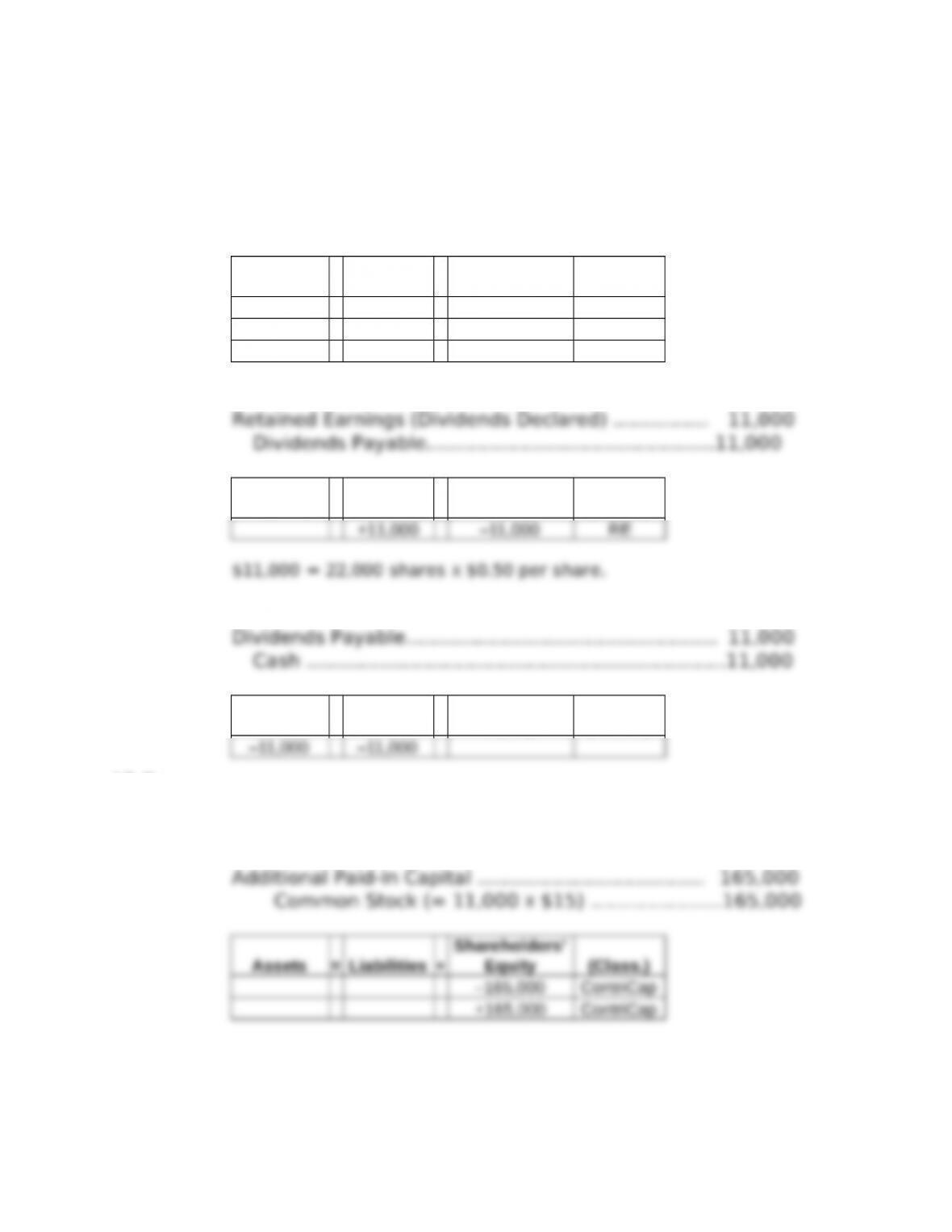

c. June 30, 2013
d. September 30, 2013
Assets = Liabilities +
Shareholders’
Equity (Class.)
e. October 15, 2013
Assets = Liabilities +
Shareholders’
Equity (Class.)
15-5Solutions
15.14 continued.
f. December 31, 2013
15.15 (Danos Corporation; journal entries for treasury stock
transactions.) (amounts in US$)
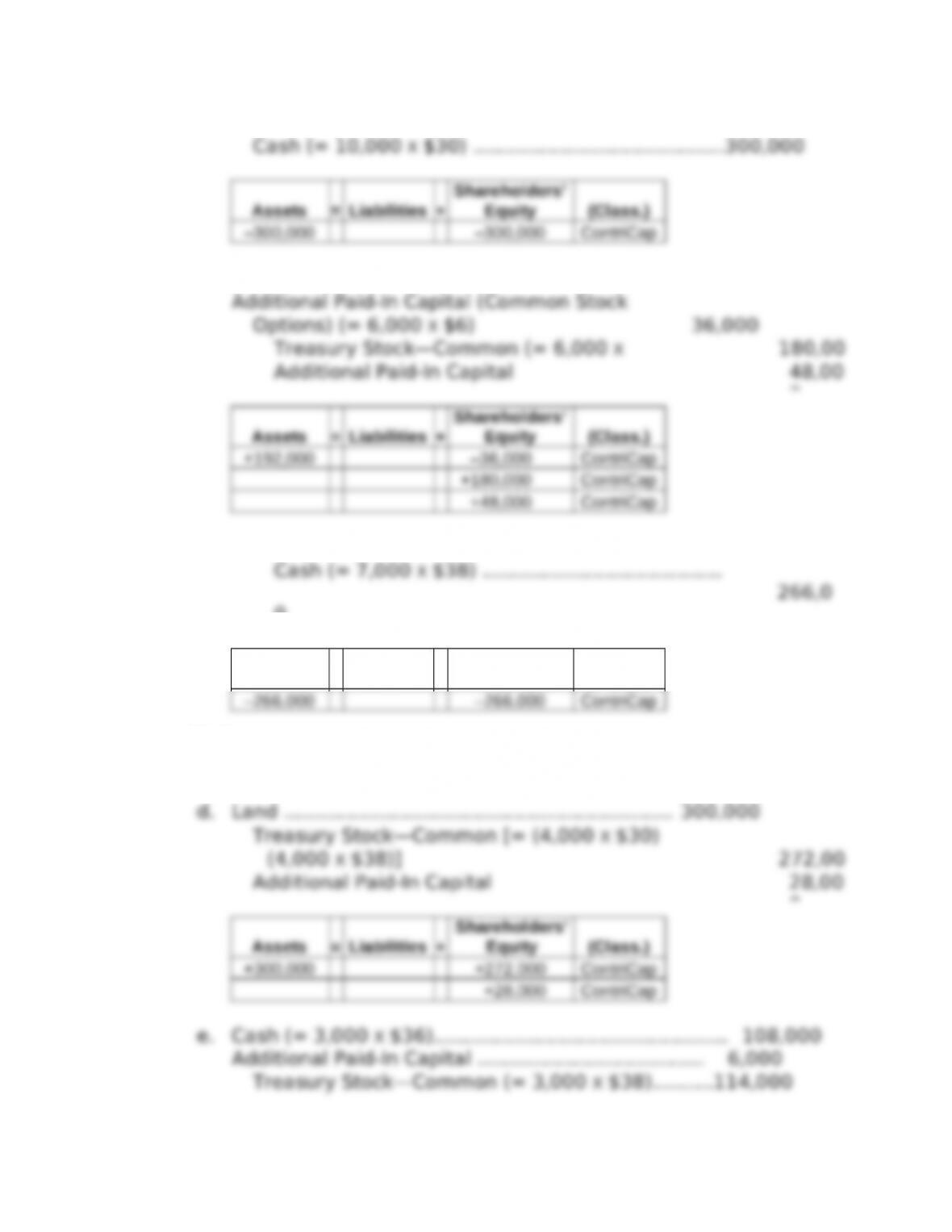

a. Treasury
Stock—Common
………………………………… 300,000
b. Cash (= 6,000 X
$32)………………………………………….
192,000
0
c. Treasury
Stock—Common
………………………………… 266,000
0
Assets = Liabilities +
Shareholders’
Equity (Class.)
Solutions15-6
15.15 continued.
d.
L
a
n
d
………………………………………………………..
………
Treasury Stock—Common [= (4,000 X $30)
(4,000 X $38)]
0
Additional Paid-In Cap
i
ta
l
…………………………….
0
Assets = Liabilities +
Shareholders’
Equity (Class.)

Assets = Liabilities +
Shareholders’
Equity (Class.)
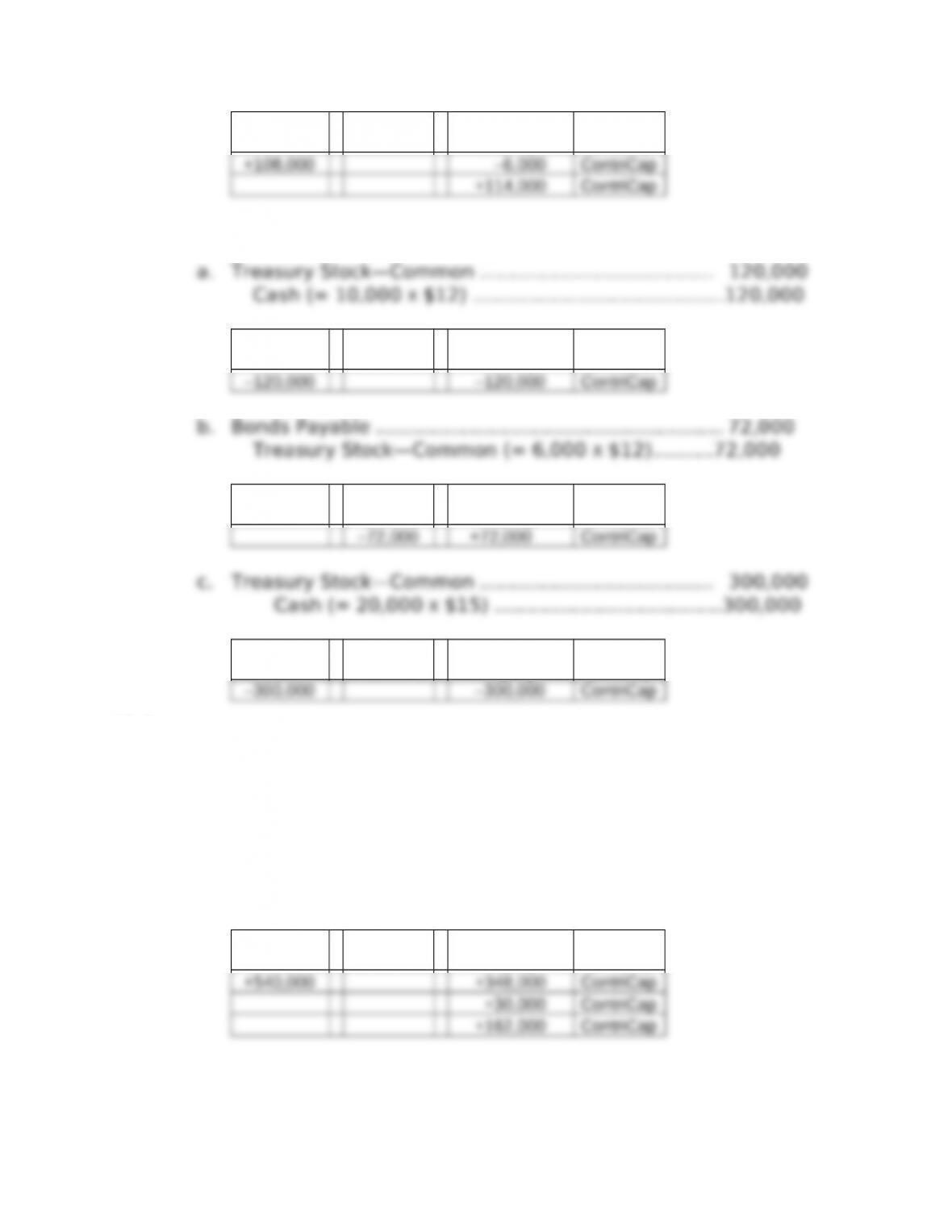
15.16 (Melissa Corporation; journal entries for treasury stock
transactions.) (amounts in US$)
a. Treasury
Stock—Common
Assets = Liabilities +
Shareholders’
Equity (Class.)
b. Bonds
P
ayab
l
Assets = Liabilities +
Shareholders’
Equity (Class.)
Assets = Liabilities +
Shareholders’
Equity (Class.)
15-7Solutions
15.16 continued.
d.
L
a
n
d
………………………………………………………..
………
540,000
Treasury Stock—Common [= (4,000 X $12)
+
(20,000 X $15)]
……………………………………………
0
Common Stock (= 6,000 X $5)
…………………………
0
Additional Paid-In Cap
i
ta
l
…………………………….
0
Assets = Liabilities +
Shareholders’
Equity (Class.)
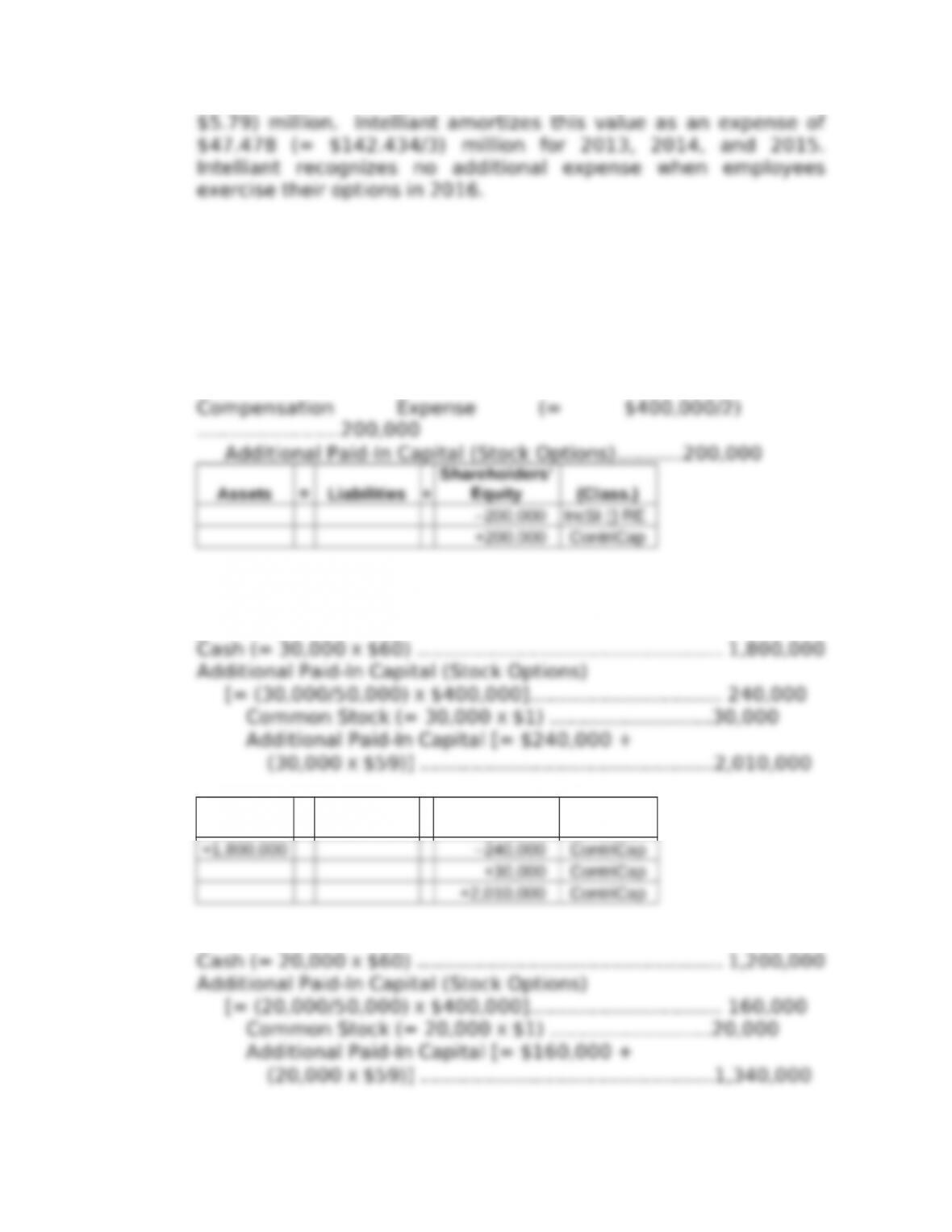
15.17 (Intelliant; accounting for stock options.) (amounts in US$)The
value of the stock options on January 1, 2013, is $142.434 (= 24.6
X

15.18 (Morrissey Corporation; journal entries for employee stock
options.) (amounts in US$)
December 31,
2013
No
entry.
December 31, 2014 and December
31, 2015
Solutions15-8
15.18 continued.
June 30, 2016
Assets = Liabilities +
Shareholders’
Equity (Class.)
November 15, 2016
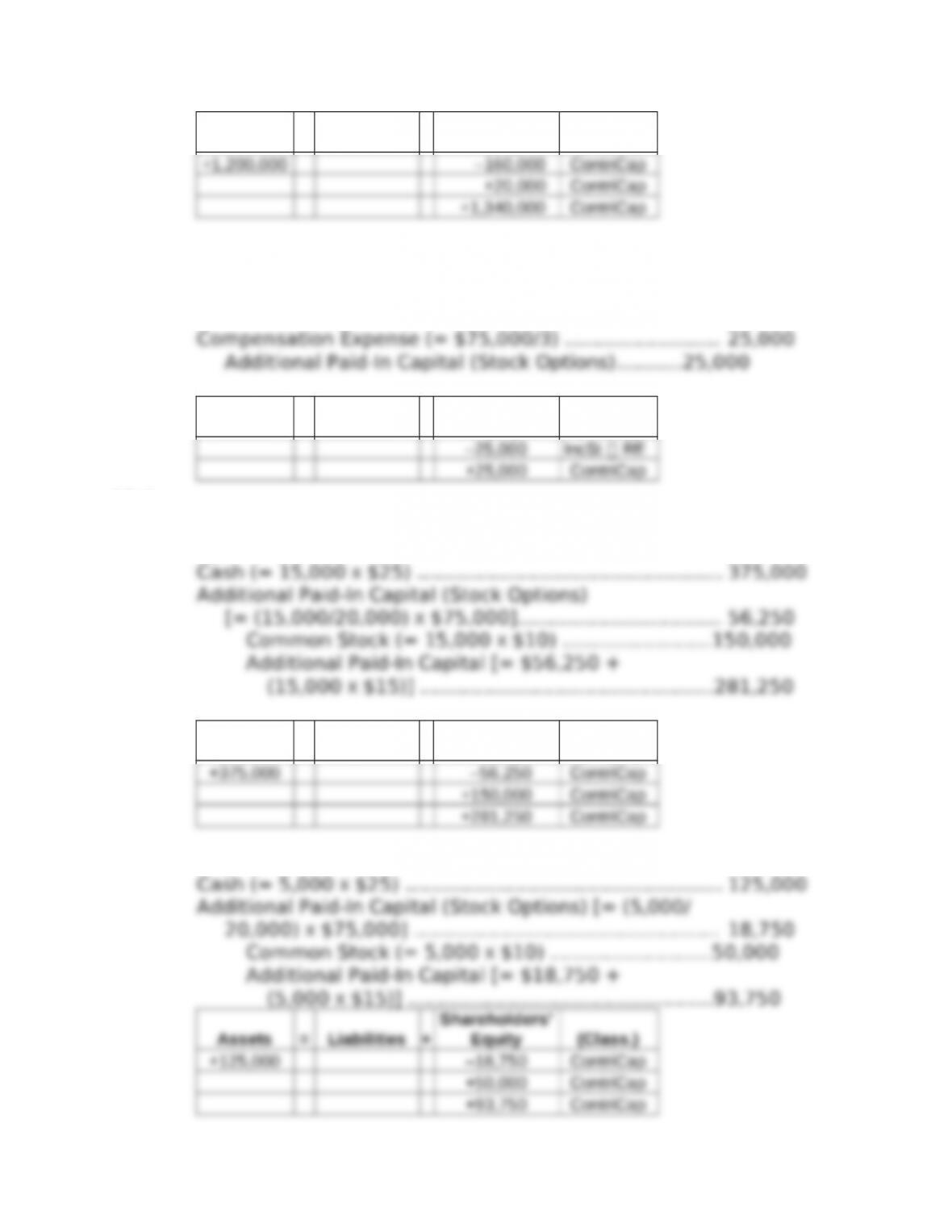

Assets = Liabilities +
Shareholders’
Equity (Class.)
15.19 (Watson Corporation; journal entries for employee stock option
s.) (amounts in US$)
December 31, 2014, 2015, and 2016
Assets = Liabilities +
Shareholders’
Equity (Class.)
15-9Solutions
15.19 continued.
April 30, 2017
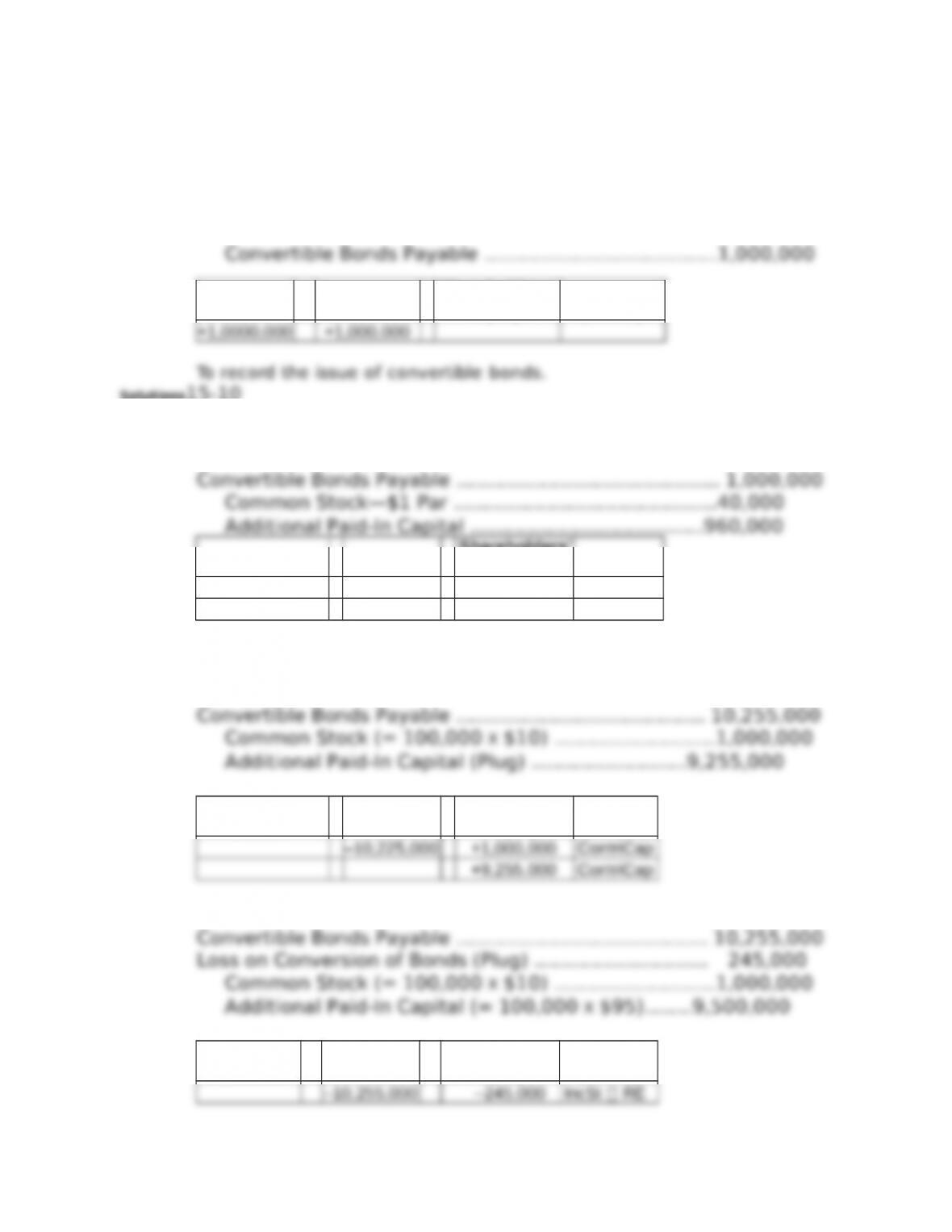
Assets = Liabilities +
Shareholders’
Equity (Class.)
September 15, 2018

15.20 (Higgins Corporation; journal entries for convertible bonds.)
(amounts
in
US$)
1/02/2013
Cash………………………………………………………………………
1,000,000
Convertible Bonds
P
ayab
l
Assets = Liabilities +
Shareholders’
Equity (Class.)
Solutions15-10
15.20 continued
1/02/2017
Assets = Liabilities +
Shareholders’
Equity (Class.)
–1,000,000 +40,000 ContriCap
+960,000 ContriCap
To record conversion using carrying value of
bonds.
15.21 (Symantec; accounting for conversion of bonds.) (amounts in US$)
Carrying Value Method
Convertible Bonds Payable
……………………………………
Assets = Liabilities +
Shareholders’
Equity (Class.)
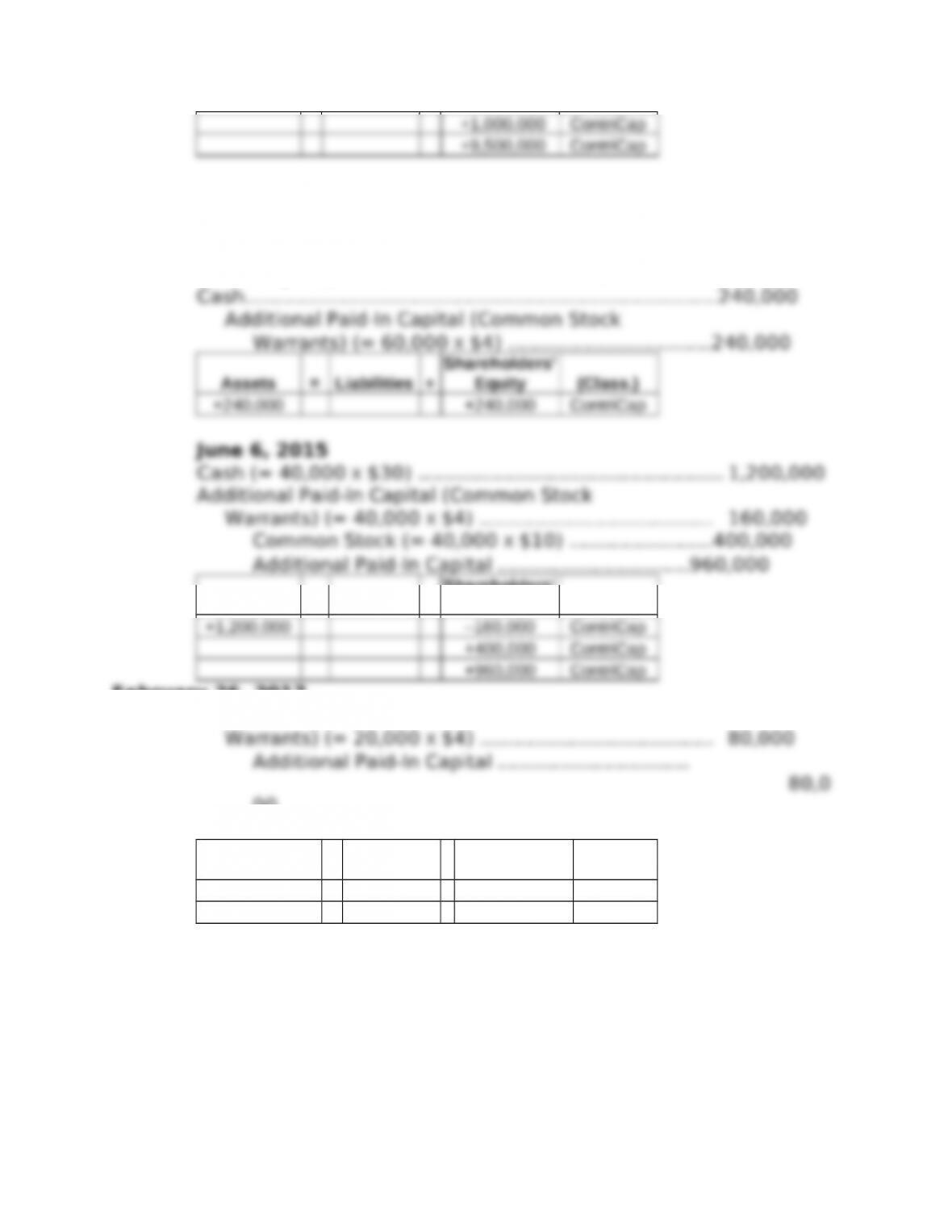
Fair Value Method
Assets = Liabilities +
Shareholders’
Equity (Class.)
RE

15-11Solutions
15.22 (Kiersten Corporation; journal entries for stock warrants.)
(amounts
in
US$)
February 26, 2013
Assets = Liabilities +
Shareholders’
Equity (Class.)
February 26, 2017
Additional Paid-In Capital (Common Stock
00
Assets = Liabilities +
Shareholders’
Equity (Class.)
–80,000 ContriCap
+80,000 ContriCap
15.6 The theoretical rationale is allocating the cost of employee
15.7 The accounting for each of these transactions potentially
15.8 In the case of a cash dividend, the shareholder now holds the
investment in two parts—cash and stock certificates. The sum of
the cash and the book value of the stock after the dividend
Solutions15-2
15.9 The managers of a firm have knowledge of the plans and risks
of the firm that external investors may not possess. Although
15.10 If a firm uses the constructive retirement method to account
for treasury shares, this answer is correct. If, however, a firm
15.11 (Carter, Inc.; issuing common stock.) (amounts in US$)
December 1, 2013
Assets = Liabilities +
Shareholders’
Equity (Class.)
15.12 (Homing Corporation; issuing common stock.) (amounts in US$)
September 30, 2014
Assets = Liabilities +
Shareholders’
Equity (Class.)
15-3Solutions
15.13 (Grable, Inc.; journal entries for dividends.) (amounts in US$)
Dividends Payable—Preferred Stock ………………19,500
Assets = Liabilities +
Shareholders’
Equity (Class.)
b. Dividends Payable—Preferred Stock …………………. 19,500
Ca
sh
Assets = Liabilities +
Shareholders’
Equity (Class.)
c. Retained Earnings (Dividends
Declared)
……………. 300,000
Assets = Liabilities +
Shareholders’
Equity (Class.)
d. No entry.
15.14 (Watt Corporation; journal entries for dividends.) (amounts in US$)
a. March 31, 2013
00
Assets = Liabilities +
Shareholders’
Equity (Class.)
Solutions15-4
15.14 continued.
b. April 15, 2013
c. June 30, 2013
d. September 30, 2013
Assets = Liabilities +
Shareholders’
Equity (Class.)
e. October 15, 2013
Assets = Liabilities +
Shareholders’
Equity (Class.)
15-5Solutions
15.14 continued.
f. December 31, 2013
15.15 (Danos Corporation; journal entries for treasury stock
transactions.) (amounts in US$)
a. Treasury
Stock—Common
………………………………… 300,000
b. Cash (= 6,000 X
$32)………………………………………….
192,000
0
c. Treasury
Stock—Common
………………………………… 266,000
0
Assets = Liabilities +
Shareholders’
Equity (Class.)
Solutions15-6
15.15 continued.
d.
L
a
n
d
………………………………………………………..
………
Treasury Stock—Common [= (4,000 X $30)
(4,000 X $38)]
0
Additional Paid-In Cap
i
ta
l
…………………………….
0
Assets = Liabilities +
Shareholders’
Equity (Class.)
Assets = Liabilities +
Shareholders’
Equity (Class.)
15.16 (Melissa Corporation; journal entries for treasury stock
transactions.) (amounts in US$)
a. Treasury
Stock—Common
Assets = Liabilities +
Shareholders’
Equity (Class.)
b. Bonds
P
ayab
l
Assets = Liabilities +
Shareholders’
Equity (Class.)
Assets = Liabilities +
Shareholders’
Equity (Class.)
15-7Solutions
15.16 continued.
d.
L
a
n
d
………………………………………………………..
………
540,000
Treasury Stock—Common [= (4,000 X $12)
+
(20,000 X $15)]
……………………………………………
0
Common Stock (= 6,000 X $5)
…………………………
0
Additional Paid-In Cap
i
ta
l
…………………………….
0
Assets = Liabilities +
Shareholders’
Equity (Class.)
15.17 (Intelliant; accounting for stock options.) (amounts in US$)The
value of the stock options on January 1, 2013, is $142.434 (= 24.6
X
15.18 (Morrissey Corporation; journal entries for employee stock
options.) (amounts in US$)
December 31,
2013
No
entry.
December 31, 2014 and December
31, 2015
Solutions15-8
15.18 continued.
June 30, 2016
Assets = Liabilities +
Shareholders’
Equity (Class.)
November 15, 2016
Assets = Liabilities +
Shareholders’
Equity (Class.)
15.19 (Watson Corporation; journal entries for employee stock option
s.) (amounts in US$)
December 31, 2014, 2015, and 2016
Assets = Liabilities +
Shareholders’
Equity (Class.)
15-9Solutions
15.19 continued.
April 30, 2017
Assets = Liabilities +
Shareholders’
Equity (Class.)
September 15, 2018
15.20 (Higgins Corporation; journal entries for convertible bonds.)
(amounts
in
US$)
1/02/2013
Cash………………………………………………………………………
1,000,000
Convertible Bonds
P
ayab
l
Assets = Liabilities +
Shareholders’
Equity (Class.)
Solutions15-10
15.20 continued
1/02/2017
Assets = Liabilities +
Shareholders’
Equity (Class.)
–1,000,000 +40,000 ContriCap
+960,000 ContriCap
To record conversion using carrying value of
bonds.
15.21 (Symantec; accounting for conversion of bonds.) (amounts in US$)
Carrying Value Method
Convertible Bonds Payable
……………………………………
Assets = Liabilities +
Shareholders’
Equity (Class.)
Fair Value Method
Assets = Liabilities +
Shareholders’
Equity (Class.)
RE
15-11Solutions
15.22 (Kiersten Corporation; journal entries for stock warrants.)
(amounts
in
US$)
February 26, 2013
Assets = Liabilities +
Shareholders’
Equity (Class.)
February 26, 2017
Additional Paid-In Capital (Common Stock
00
Assets = Liabilities +
Shareholders’
Equity (Class.)
–80,000 ContriCap
+80,000 ContriCap