CHAPTER
11
NOTES, BONDS, AND L
EASES
Questions, Exercises, and Problems: Answers and
S
ol
u
tio
ns
11.1 See the text or the glossary at the end of the book.
11.2 Generally, accountants initially record assets at acquisition cost
11.3 Applying the efective interest method using the historical market
interest rate gives a constant amount of interest expense only if a
11.4 Firms repay a portion of the principal on serial bonds each period
11.5 The initial issue prices will difer. Although the present value of
t
h
e
11.6 This statement is correct. Over the life of the bonds, the efect
on net income before taxes is the diference between the cash
received when the firm issued the bonds and the cash disbursed for
11.7 The statement is still correct. Instead of repaying the bonds at
11.8 First, we give an example. Imagine the borrowing firm issues $1
The borrowing firm has enjoyed a gain from its borrowing activity.
The
gain results because it locked in for a 10-year period a borrowing of
about
11.9 Old/current rules: The retailer will likely treat it as an operating
lease.
The minimum contractual lease payments do not include the rental
based on sales. If sales are zero, the lease payment will be zero.
11.10 New/proposed rules: The present value of the minimum lease
payments is the initial amount recorded in the capital lease. The
11.11 Under the current rules, the distinction depends upon which criteria
of the lease made it a capital lease. The major diference is that at
the end of a lease term the asset reverts to the lessor in a capital
lease, whereas at the end of the installment payments, the asset
belongs to the purchaser. The criteria for capitalizing a lease are
11.12 Disagree. Operating Lease: Rent revenue for the lessor will
equal rent expense for the lessee on an operating lease, but lessor
also has depreciation expense on leased assets. Capital Lease:
Disagree. Operating Lease: On an operating lease, compared to rent expense
Capital Lease: On a capital lease, Interest revenue for the lessor and interest
11.13 Using the operating lease method for financial reporting permits
the lessee to keep the lease liability off the balance sheet and
report less cumulative expenses than the capital lease method.
11.14 Using the capital lease method for financial reporting permits the
lessor to report a gross margin from the “sale” of the leased asset
11.15 (Hagar Company; amortization schedule for note where stated
interest rate difers from historical market rate of interest.)
(amounts in US$)
a. Amortization Schedule for a Three-Year Note with a
Maturity
Value of $40,000, Calling for 6%
A
nnu
a
l
Interest Payments, Yield of 8% per
Ye
a
r
Carrying Interest Interest
Ca
rr
y
in
g
Va
lue Expense Added to
Va
lue
Start of for Carrying
End
o
f
Year Year Period Payment Value Ye
a
r
(1) (2) (3)a(4) (5) (6)
a(3) = (2) X 0.08.
b. Computer………………………………………………………… 37,938
Annual Journal Entry for Interest and Principal
Interest
Expense…………
Amount in Col. (3)
Cash ……………………
..
Amount in Col.
(4)*
Note
Payable
………….
Amount in Col.
(5)*
*In third year, the firm also debits Note Payable and credits Cash
for
11.16 (Computing the issue price of bonds.) (amounts in US$)
a. $10,000,000 X 0
.
20829a ……………………………………………… $
11.17 (Computing the issue price of bonds.) (amounts in US$)
a. $1,000,000 X 0
.
14205a ………………………………………………… $
c. $50,000 X 19
.
79277a …………………………………………………… $
d. $30,000 X 12
.
46221a …………………………………………………… $
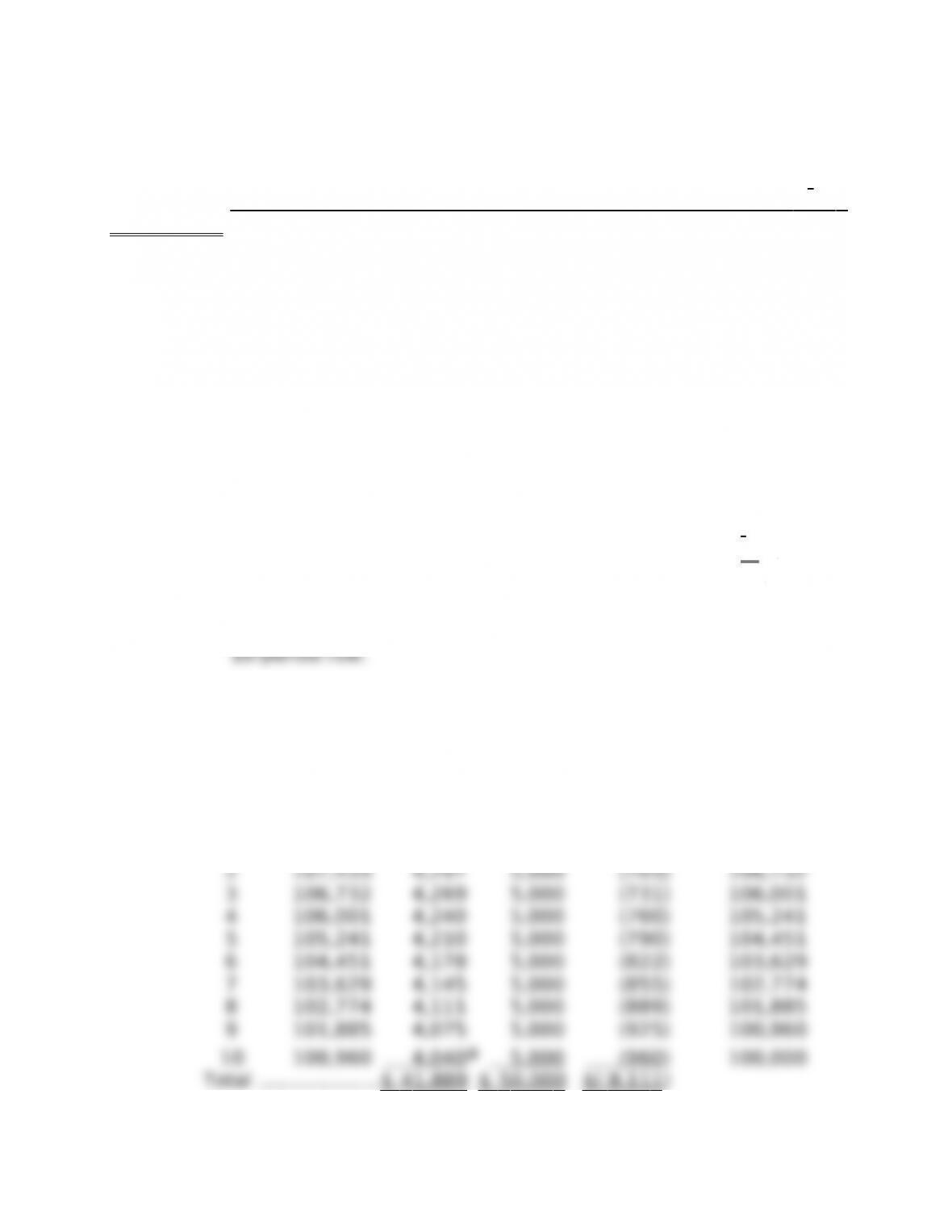
11.18 (Womack Company; amortization schedule for bonds.) (amounts in
US$)
a. $100,000 X 0
.
67556a
……………………………………………………
$
67,556
$5,000 X
8.11090b
……………………………………………………….
4
0
, 55
Issue Price
………………………………………………………………
$
10
8
, 11
1
aTable 2, 4% column and 10-period
row. bTable 4, 4% column and
b. Decrease in
Six- Liability Interest Carrying
Liability Month at Start at 4% Cash Value
of at End of Period of Period for Period Payment
Liability Period
0 $ 108,111
1 $ 108,111 $ 4,324 $ 5,000 $ (676) 107,435
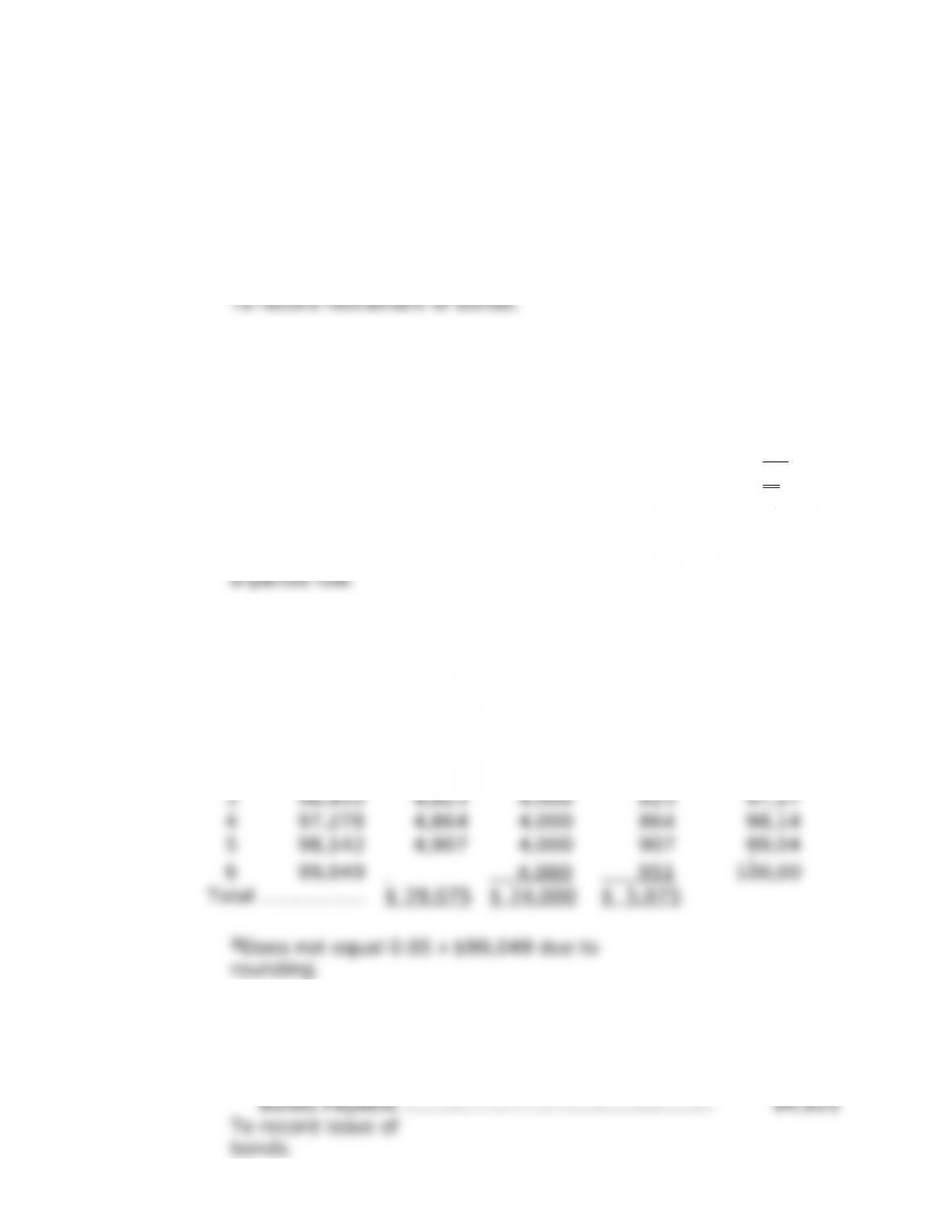
aDoes not equal 0.04 X $100,960 due to
rounding. c. Carrying Value of Bonds: $10,363.
Bonds
Payable………………………………………………….
10,363
Gain on Bond
Retirement……………………………..
63
Cash ……………………………………………………
10,30
11.19 (Seward Corporation; amortization schedule for bonds.) (amounts in
US$)
a. $100,000 X 0
.
74622a
…………………………………………………….
$
74,622
$4,000 X
5.07569b
………………………………………………………..
2
0
, 30
3
Issue Price
……………………………………………………………….
$
9
4
, 92
5
aTable 2, 5% column and 6-period
row. bTable 4, 5% column and
b. Increase in
Six- Liability Interest Carrying
Liability Month at Start at 5% Cash Value
of at End of Period of Period for Period Payment
Liability Period
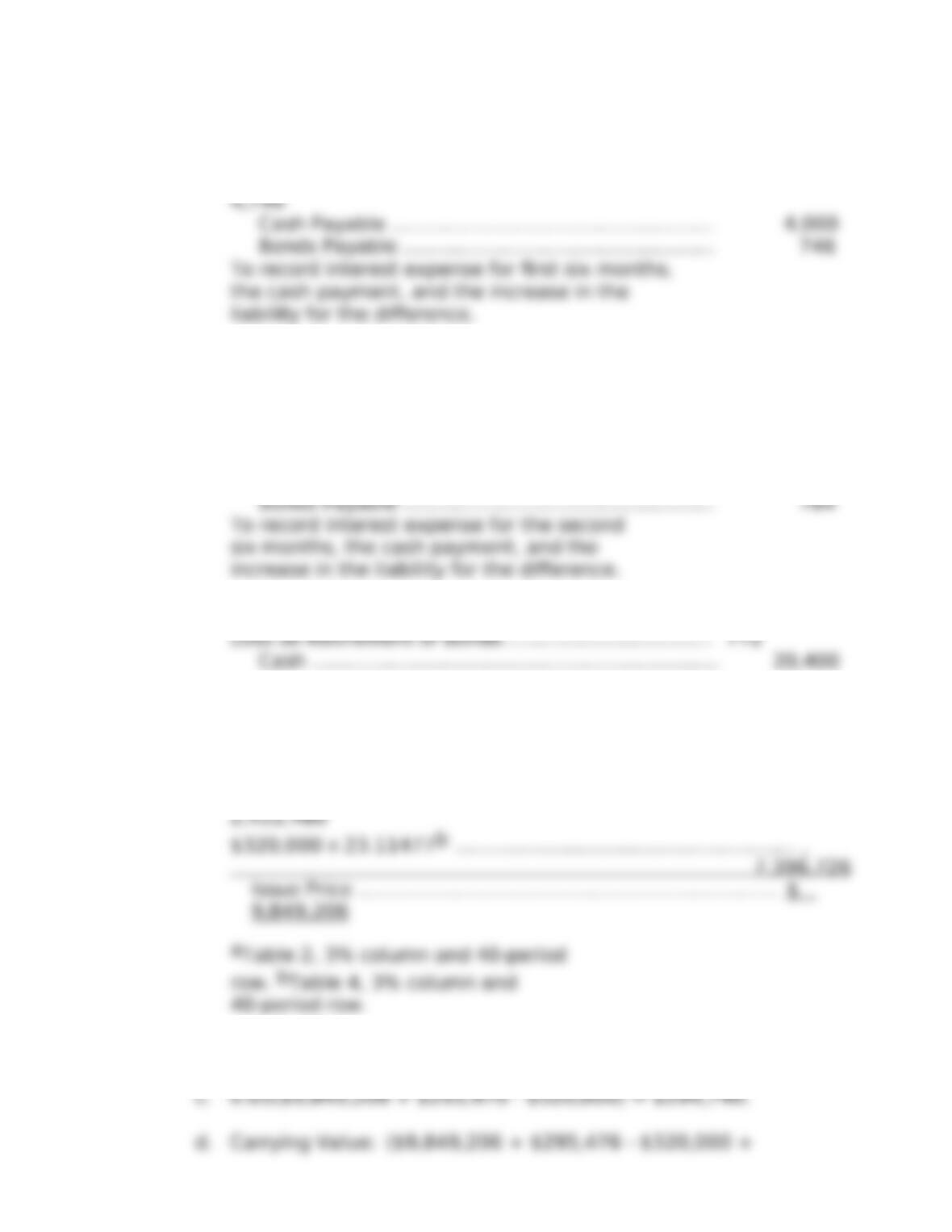
1 $94,925 $ 4,746 $ 4,000 $ 746 $
95,671
2 95,671 4,784 4,000 784
96,45
8
98,14
8
98,14
a
.
a
.
June 30,
2012
Interest Expense……………………………………………….
11Solutions
11.19 c. continued.
December 31, 2012
Interest Expense………………………………………………. 4,784
Cash ………………………………………………………….. 4,000
d. Bonds Payable (= 0.20 X $98,142) ……………………… 19,628
11.20 (O’Brien Corporation; accounting for bonds using amortized cost
measurement based on the historical market interest rate.)
(amounts in US$)
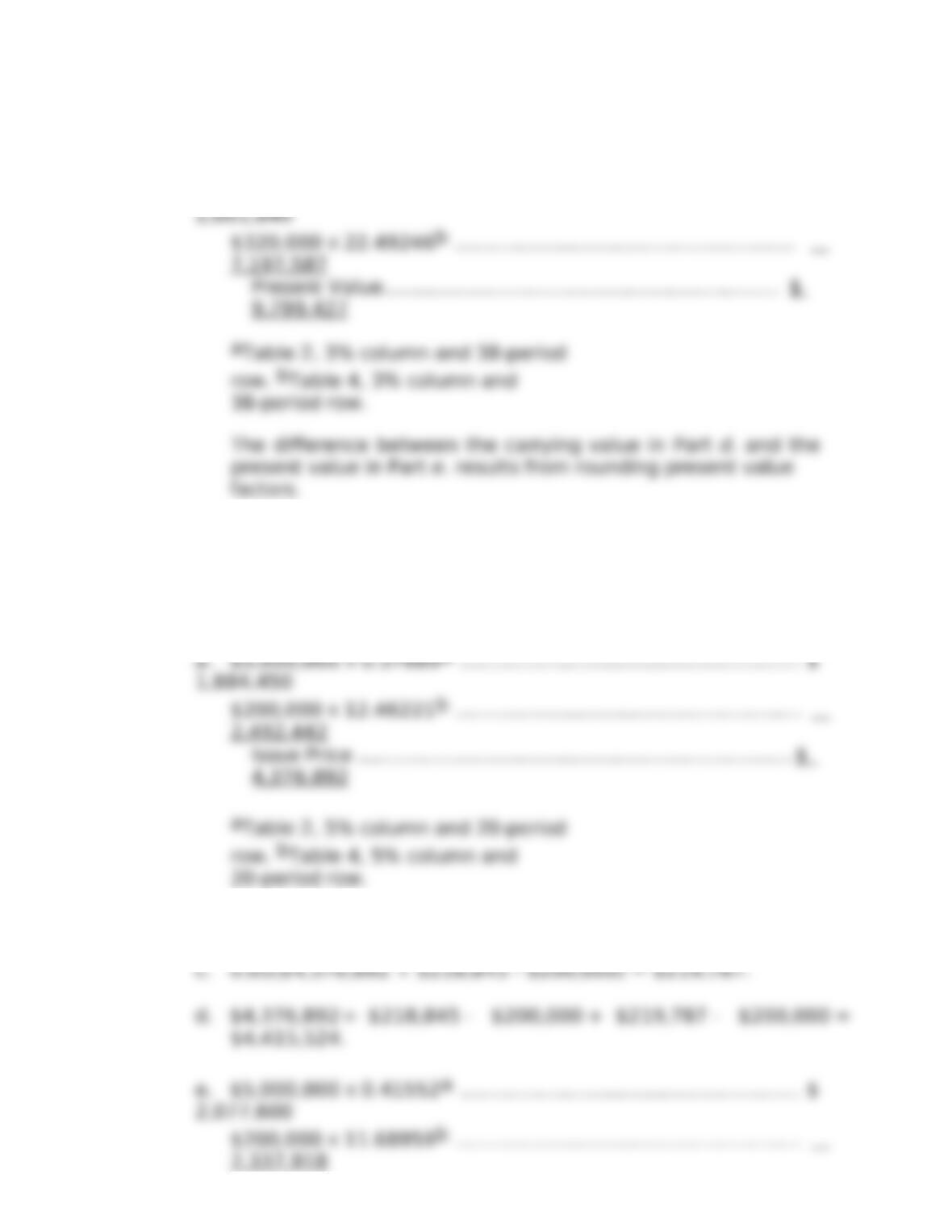
a. $8,000,000 X 0
.
30656a ……………………………………………….. $
b. 0.03 X $9,849,206 = $295,476.
e. $8,000,000 X 0
.
32523a ……………………………………………….. $
Solutions11-8
11.21 (Robinson Company; accounting for bonds using amortized cost
measurement based on the historical market interest rate.)
(amounts in US$)
b. 0.05 X $4,376,892 = $218,845.
11.22 (Huergo Dooley Corporation; accounting for bonds using amortized
a
.
$2,000,000 X 0
.
61391a ………………………………………………… $ 1
,
227
,
820
11.7 The statement is still correct. Instead of repaying the bonds at
11.8 First, we give an example. Imagine the borrowing firm issues $1
The borrowing firm has enjoyed a gain from its borrowing activity.
The
gain results because it locked in for a 10-year period a borrowing of
about
11.9 Old/current rules: The retailer will likely treat it as an operating
lease.
The minimum contractual lease payments do not include the rental
based on sales. If sales are zero, the lease payment will be zero.
11.10 New/proposed rules: The present value of the minimum lease
payments is the initial amount recorded in the capital lease. The
11.11 Under the current rules, the distinction depends upon which criteria
of the lease made it a capital lease. The major diference is that at
the end of a lease term the asset reverts to the lessor in a capital
lease, whereas at the end of the installment payments, the asset
belongs to the purchaser. The criteria for capitalizing a lease are
11.12 Disagree. Operating Lease: Rent revenue for the lessor will
equal rent expense for the lessee on an operating lease, but lessor
also has depreciation expense on leased assets. Capital Lease:
Disagree. Operating Lease: On an operating lease, compared to rent expense
Capital Lease: On a capital lease, Interest revenue for the lessor and interest
11.13 Using the operating lease method for financial reporting permits
the lessee to keep the lease liability off the balance sheet and
report less cumulative expenses than the capital lease method.
11.14 Using the capital lease method for financial reporting permits the
lessor to report a gross margin from the “sale” of the leased asset
11.15 (Hagar Company; amortization schedule for note where stated
interest rate difers from historical market rate of interest.)
(amounts in US$)
a. Amortization Schedule for a Three-Year Note with a
Maturity
Value of $40,000, Calling for 6%
A
nnu
a
l
Interest Payments, Yield of 8% per
Ye
a
r
Carrying Interest Interest
Ca
rr
y
in
g
Va
lue Expense Added to
Va
lue
Start of for Carrying
End
o
f
Year Year Period Payment Value Ye
a
r
(1) (2) (3)a(4) (5) (6)
a(3) = (2) X 0.08.
b. Computer………………………………………………………… 37,938
Annual Journal Entry for Interest and Principal
Interest
Expense…………
Amount in Col. (3)
Cash ……………………
..
Amount in Col.
(4)*
Note
Payable
………….
Amount in Col.
(5)*
*In third year, the firm also debits Note Payable and credits Cash
for
11.16 (Computing the issue price of bonds.) (amounts in US$)
a. $10,000,000 X 0
.
20829a ……………………………………………… $
11.17 (Computing the issue price of bonds.) (amounts in US$)
a. $1,000,000 X 0
.
14205a ………………………………………………… $
c. $50,000 X 19
.
79277a …………………………………………………… $
d. $30,000 X 12
.
46221a …………………………………………………… $
11.18 (Womack Company; amortization schedule for bonds.) (amounts in
US$)
a. $100,000 X 0
.
67556a
……………………………………………………
$
67,556
$5,000 X
8.11090b
……………………………………………………….
4
0
, 55
Issue Price
………………………………………………………………
$
10
8
, 11
1
aTable 2, 4% column and 10-period
row. bTable 4, 4% column and
b. Decrease in
Six- Liability Interest Carrying
Liability Month at Start at 4% Cash Value
of at End of Period of Period for Period Payment
Liability Period
0 $ 108,111
1 $ 108,111 $ 4,324 $ 5,000 $ (676) 107,435
aDoes not equal 0.04 X $100,960 due to
rounding. c. Carrying Value of Bonds: $10,363.
Bonds
Payable………………………………………………….
10,363
Gain on Bond
Retirement……………………………..
63
Cash ……………………………………………………
10,30
11.19 (Seward Corporation; amortization schedule for bonds.) (amounts in
US$)
a. $100,000 X 0
.
74622a
…………………………………………………….
$
74,622
$4,000 X
5.07569b
………………………………………………………..
2
0
, 30
3
Issue Price
……………………………………………………………….
$
9
4
, 92
5
aTable 2, 5% column and 6-period
row. bTable 4, 5% column and
b. Increase in
Six- Liability Interest Carrying
Liability Month at Start at 5% Cash Value
of at End of Period of Period for Period Payment
Liability Period
1 $94,925 $ 4,746 $ 4,000 $ 746 $
95,671
2 95,671 4,784 4,000 784
96,45
June 30,
2012
Interest Expense……………………………………………….
11Solutions
11.19 c. continued.
December 31, 2012
Interest Expense………………………………………………. 4,784
Cash ………………………………………………………….. 4,000
d. Bonds Payable (= 0.20 X $98,142) ……………………… 19,628
11.20 (O’Brien Corporation; accounting for bonds using amortized cost
measurement based on the historical market interest rate.)
(amounts in US$)
a. $8,000,000 X 0
.
30656a ……………………………………………….. $
b. 0.03 X $9,849,206 = $295,476.
e. $8,000,000 X 0
.
32523a ……………………………………………….. $
Solutions11-8
11.21 (Robinson Company; accounting for bonds using amortized cost
measurement based on the historical market interest rate.)
(amounts in US$)
b. 0.05 X $4,376,892 = $218,845.
11.22 (Huergo Dooley Corporation; accounting for bonds using amortized
a
.
$2,000,000 X 0
.
61391a ………………………………………………… $ 1
,
227
,
820