
Chapter2: The Balanced Scorecard and Strategy Map
–47–
Suggestions for Classroom Use
A productive way to begin the class discussion is to focus for a few minutes
on why financial measures are not sufficient to direct managers’ attention to
what needs to be done. In some ways the power of financial measures is
derived from the fact that managers can approach achievement by putting
different combinations of inputs and outputs together. This assumes that
managers know the relationships between the change in inputs and the
By adding nonfinancial measures, the Balanced Scorecard provides leading
indicators of long-term financial wealth creation and directs attention to
specific areas consistent with improvement in long-term corporate
performance. Properly selected, those measures teach managers what is
Students should share their views on general impressions of a balanced
scorecard. Why is each perspective important and separate from the others?
They should also consider the nature of linkages between perspectives of
[The discussion can proceed in at least two ways. You can go perspective by
perspective, encouraging students to generate measures for each

Atkinson, Solutions Manual t/a Management Accounting, 6E
–48–
while all the measures might have merit for the company, it needs to focus
on the critical few. Go through a voting process in which students are
allowed to vote for, at most, three measures per perspective. You can take
the votes on the measures quickly. Or you can list all the measures on flip
[Alternatively, it] is useful to get two or three different student scorecards in
front of the class. The differences are the subject of classroom discussion. In
practice, companies experience differences not unlike those that will emerge
Once the nature of a balanced scorecard has been discussed, the discussion
should turn to whether Greenfield and Wagner at the Norwalk Division of
Chadwick, Inc. are off to a good start in developing a scorecard. Greenfield
has quickly sketched out a business strategy. It provides some direction in
building a balanced scorecard and is responsive to the needs of Norwalk. In
This is not a class in which agreement needs to be total. It is sufficient
students see that the balanced scorecard is a comprehensive approach to
2 See evolution of the BSC management system for National Insurance described in R. S.
Kaplan and D. P. Norton, “Using the Balanced Scorecard as a Strategic Management System,”

Chapter2: The Balanced Scorecard and Strategy Map
–49–
objective setting and performance measurement. It succeeds where
managers are committed to it and are willing to devote the time and effort
necessary to create an effective scorecard and to implement the measures
2-54 Domestic Auto Parts, Harvard Business School Case (HBS Case 9-105–078).
The case discussion can proceed perspective by perspective, working from
the Financial through the Customer, Process, and Learning and Growth
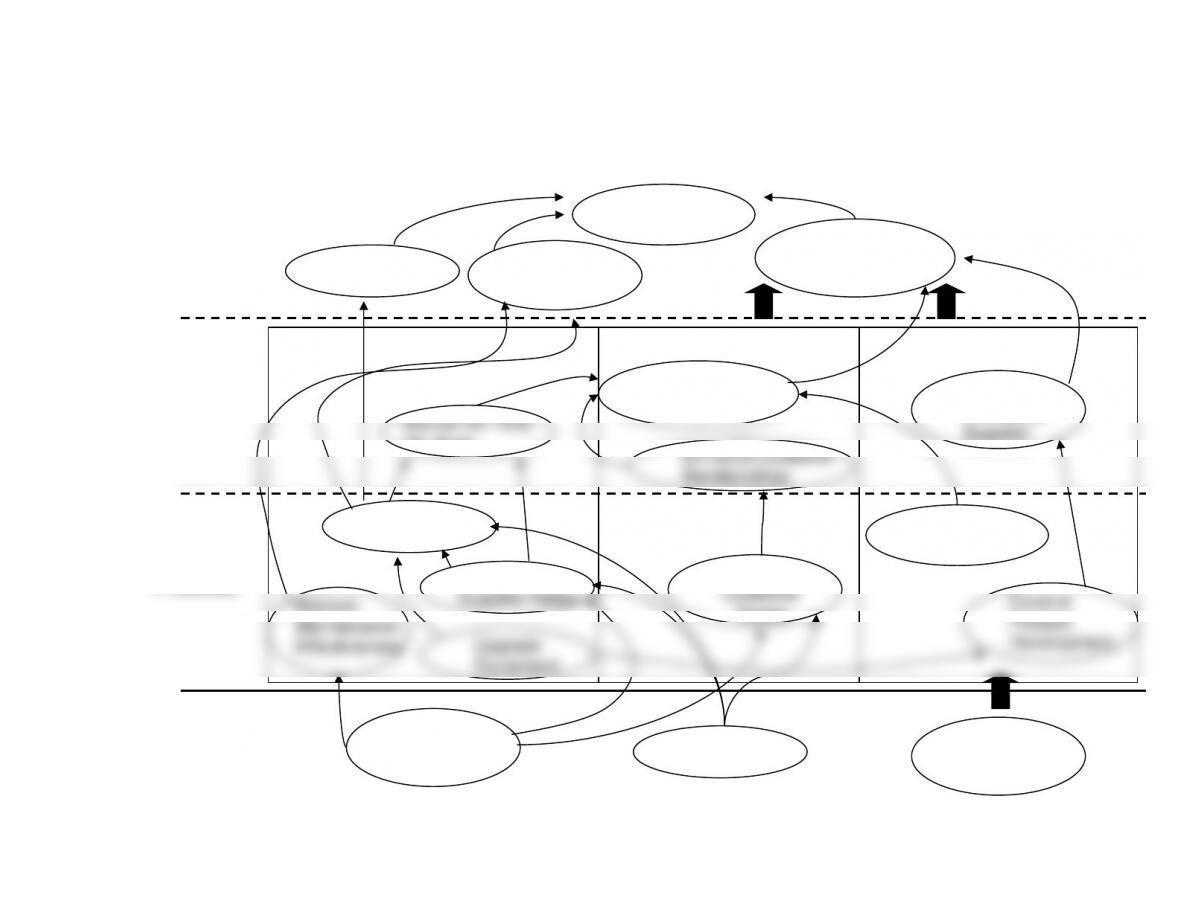
objectives. After developing a strategy map of objectives, encourage
Atkinson, Solutions Manual t/a Management Accounting, 6E
–50–
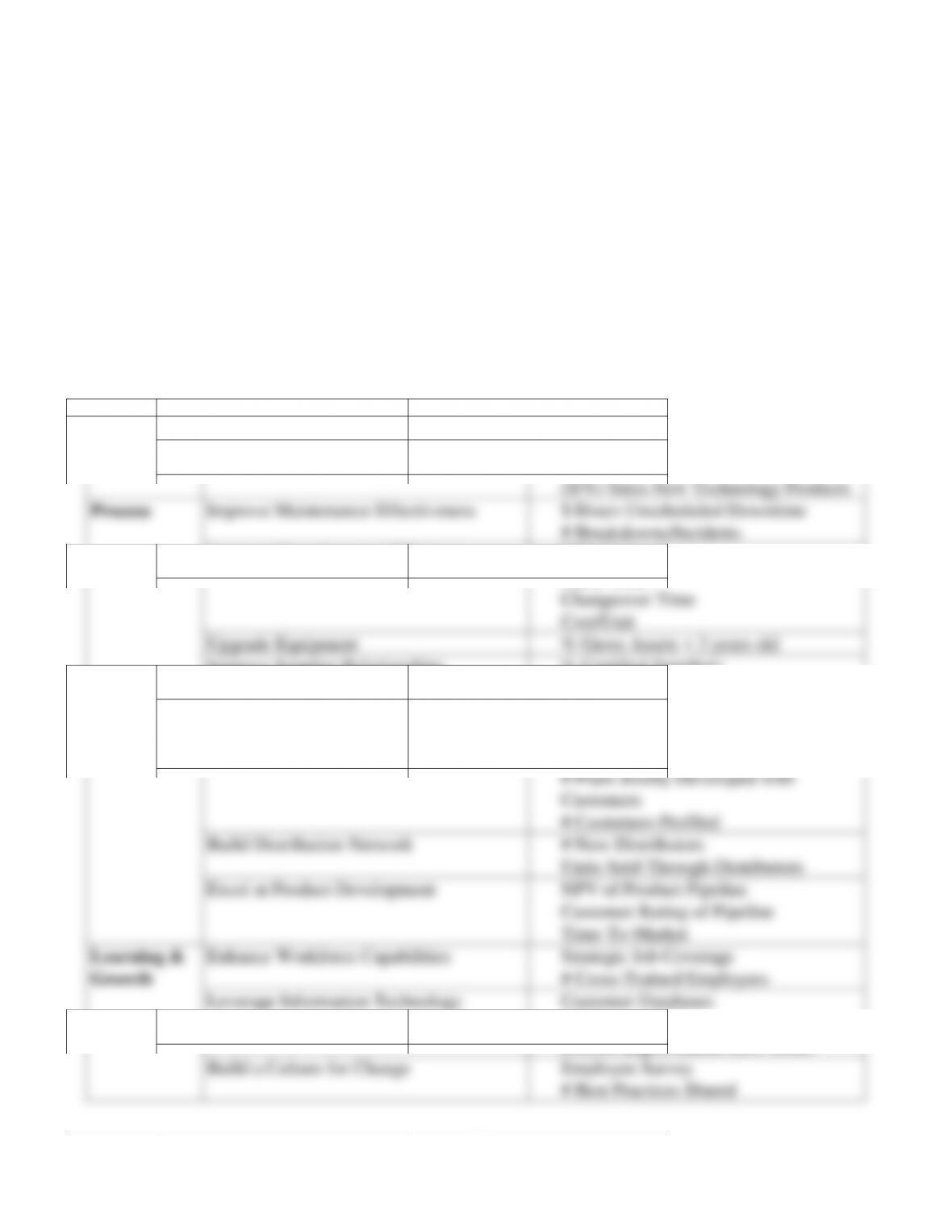
Domestic Auto Parts—Balanced Scorecard
Perspective
Objectives
Measures
Financial
Increase Return on Capital Employed
ROCE (12%)
Reduce Unit Costs
% Productivity Improvement
Gross Margin
Increase Asset Utilization
Sales/Assets
% Capacity Utilization (90%)
Grow Revenue/Increase Market Share
% Revenue Growth (12%/yr.)
Market Share (#1 or #2)
Customer
Deliver On-Time, On-Spec
OTD %
Customer Defects/Returns
Achieve Image of Trusted Supplier
Customer Retention
Customer Ranking
Enhance Customer Relationships
Key Customer Account Share
Become Innovative Supplier
($/%) Sales New Products
($/%) Sales New Technology Products
Process
Improve Maintenance Effectiveness
$ Hours Unscheduled Downtime
# Breakdowns/Incidents
Improve Manufacturing Efficiency
PPM Defect Rates
Cycle Time
Changeover Time
Cost/Unit
Upgrade Equipment
% Gross Assets < 3 years old
Improve Supplier Relationships
% Certified Suppliers
Supplier OTD
Supplier PPM Defect Rate
Supplier Cost Reduction
Understand Customer Needs
# Hours with Key Customers
# Plans Jointly Developed with
Customers
# Customers Profiled
Build Distribution Network
# New Distributors
Units Sold Through Distributors
Excel at Product Development
NPV of Product Pipeline
Customer Rating of Pipeline
Time-To-Market
Learning &
Growth
Enhance Workforce Capabilities
Strategic Job Coverage
# Cross-Trained Employees
Leverage Information Technology
Customer Databases
CRM Availability
Process Improvement (JIT) Tools
Build a Culture for Change
Employee Survey
# Best Practices Shared
Chapter2: The Balanced Scorecard and Strategy Map
–51–
Financial
Customer
Internal
& Growth
Increase
ROCE
Increase
Asset
Utilization
Reduce Unit
Costs
Grow Revenues/
Increase Market Share
Deliver On-Time,
On-Spec
Achieve Image of
Trusted Supplier
Enhance Customer
Relationships
Become
Innovative
Supplier
Customer
Needs
Network
Excel at
Product
Development
Change
Improve Mfg.
Efficiency
Improve
Maintenance
Effectiveness Upgrade
Equipment
Supplier Reltps
Strategy Map: Domestic Auto Parts
Operational Excellence Customer Intimacy Innovation