
Web Chapter 17
Tax-Advantaged Investments
◼ Outline
Learning Goals
I. Tax Fundamentals
A. Taxable Income
B. Determining Taxable Income
1. Gross Income
3. Adjusted Gross Income
5. Exemptions
7. Tax Credits
9. The Alternative Minimum Tax
Concepts in Review
II. Tax Strategies
A. Tax Avoidance and Tax Deferral
B. Tax Shelters
Concepts in Review
III. Tax-Favored Income
A. Income Excluded from Taxation
1. Tax-Free Municipal Bond Interest
2. Treasury and Government Agency Issues
3. Sale of a Principal Residence
B. Strategies That Defer Tax Liabilities to the Next Year
1. Put Hedge
2. Deep-in-the-Money Call Option
3. Summary of the Strategies

Web Chapter 17 Tax-Advantaged Investments 313
C. Programs That Defer Tax Liabilities to Retirement
1. 401(k) Plans
2. Keogh Plans
3. Individual Retirement Arrangements (IRAs)
a. Roth IRAs
b. Nondeductible IRAs
5. Funding Keoghs and IRAs
D. Tax-Deferred Investing in Education Savings Plans
1. Coverdell Education Savings Accounts (ESA)
2. Section 529 College Savings Plans
E. Strategies That Trade Current Income for Capital Gains
2. Deep-Discount Bonds
3. Income Property Depreciation
F. Tax Swaps: A Strategy That Reduces or Eliminates a Tax Liability
Concepts in Review
IV. Deferred Annuities
A. Annuities: An Overview
B. Characteristics of Deferred Annuities
1. Special Tax Features
2. Investment Payout
C. Deferred Annuities and Retirement Plans
D. Fixed Versus Variable Annuity
E. Annuities as Investment Vehicles
1. Investment Suitability
2. Buying Annuities
Concepts in Review
V. Syndicated Investments: Limited Partnerships and Limited Liability Corporations
A. Investing in Limited Partnership and Limited Liability Corporations
Concepts in Review
Summary
Key Terms
Discussion Questions
Problems
Case Problems
17.1 Tax Planning for the Wilsons

314 Gitman/Joehnk/Smart • Fundamentals of Investing, Eleventh Edition
Home Page Exercises

Web Chapter 17 Tax-Advantaged Investments 315
◼ Key Concepts
2. Taxable income and its determination
3. Tax avoidance and tax deferral
4. Tax shelter fundamentals
5. Tax-favored income and categories of income excluded from taxation, partially or wholly
6. Strategies that defer tax liabilities to the next year
7. Strategies that defer taxes until retirement
8. Strategies that trade current income for capital gains
9. Tax swaps to reduce or eliminate a tax liability
10. The concept of annuities, their use as an investment vehicle, and their associated tax benefits
12. The structure and popular forms of limited partnerships and their potential tax-sheltering abilities
13. Analysis of limited partnerships as investment vehicles
◼ Overview
The sheltering of income from taxation through various investment media is emphasized in this chapter.
1. The fundamentals of taxation and tax shelters are presented. The student should understand the
different types of income, how they are taxed, and the basic procedure used to determine taxable
income. This is necessary to be able to evaluate the tax-sheltering abilities of alternative investment
vehicles. The concepts of tax avoidance, tax deferral, and tax shelters are presented and compared to
tax evasion.
2. Tax-favored income is defined. Categories of this income include interest on tax-free municipal bonds
and Treasury and government agency issues, and certain proceeds from the sale of a
principal residence.
3. Strategies that defer tax liabilities to the next year are described and demonstrated. They include
shorting-against-the-box, put hedges, and deep-in-the-money call options. The instructor should
emphasize the tax-deferring benefits of these strategies.



Web Chapter 17 Tax-Advantaged Investments 323
The limited partnership (LP) is a syndicate involving one or more general partners who are
responsible for the management of the partnership’s activities and are liable for all of its debts and
19. The limited liability corporation (LLC) combines the corporate advantage of limited liability with the
partnership-like tax regulations. LLC businesses are owned by members, who can manage the firm
◼ Suggested Answers to Discussion Questions
326 Gitman/Joehnk/Smart • Fundamentals of Investing, Eleventh Edition
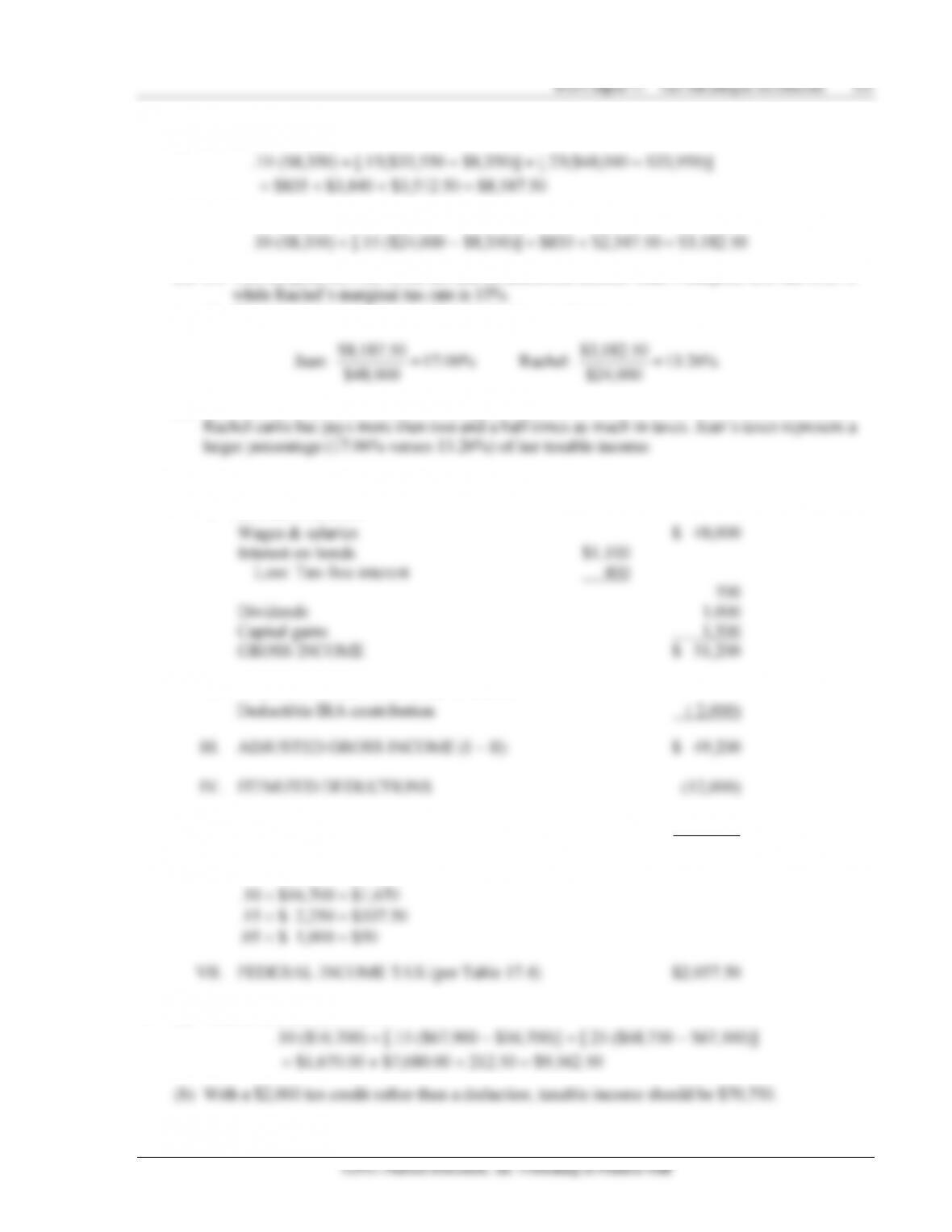
(c) Taxable income of $70,750:
(d) The tax credit results in lower taxes due because it provides a dollar for dollar reduction of taxes,
5. Initial cost of shares = 300 $32 = $9,600
Gain if sold at present time = (300 $47) − $9,600 = $4,500
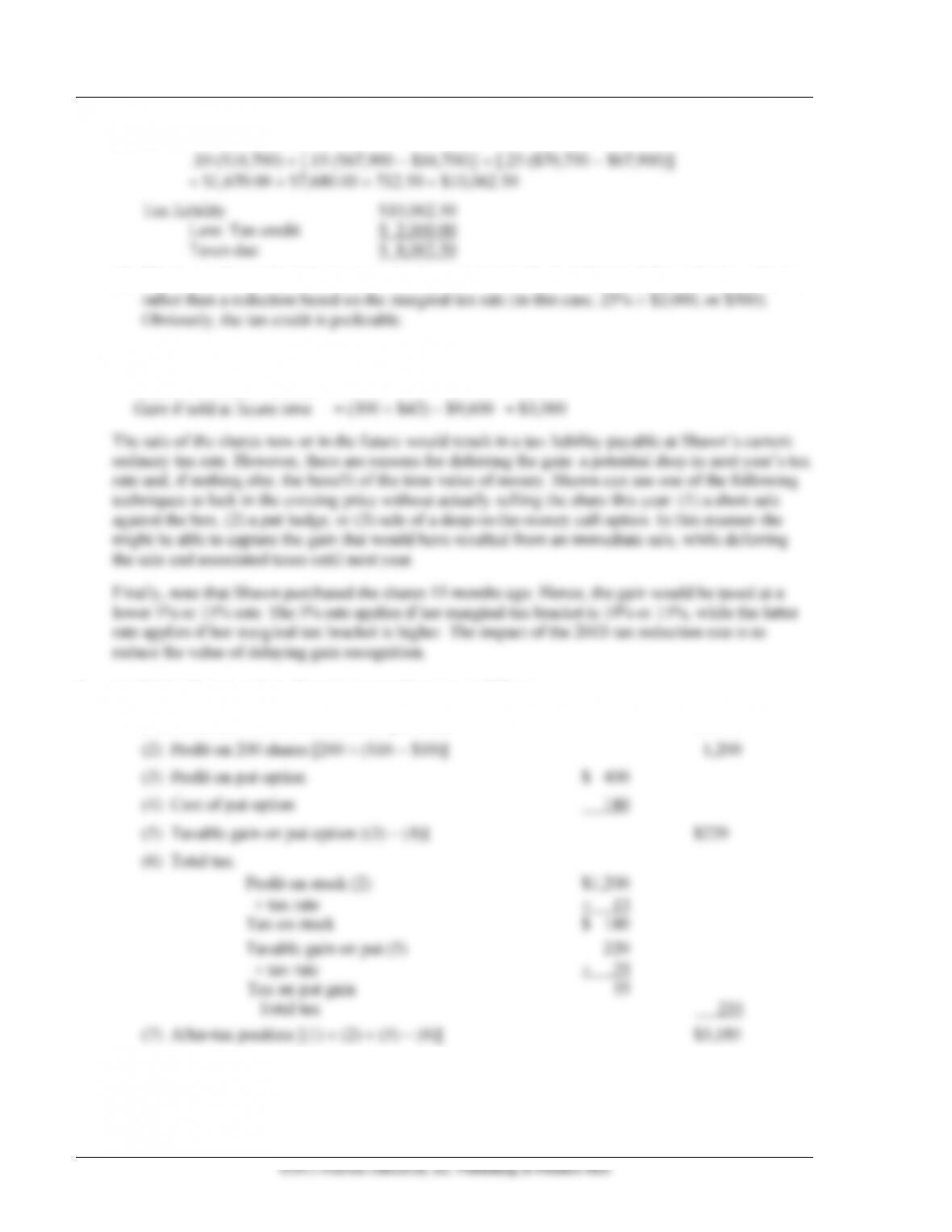
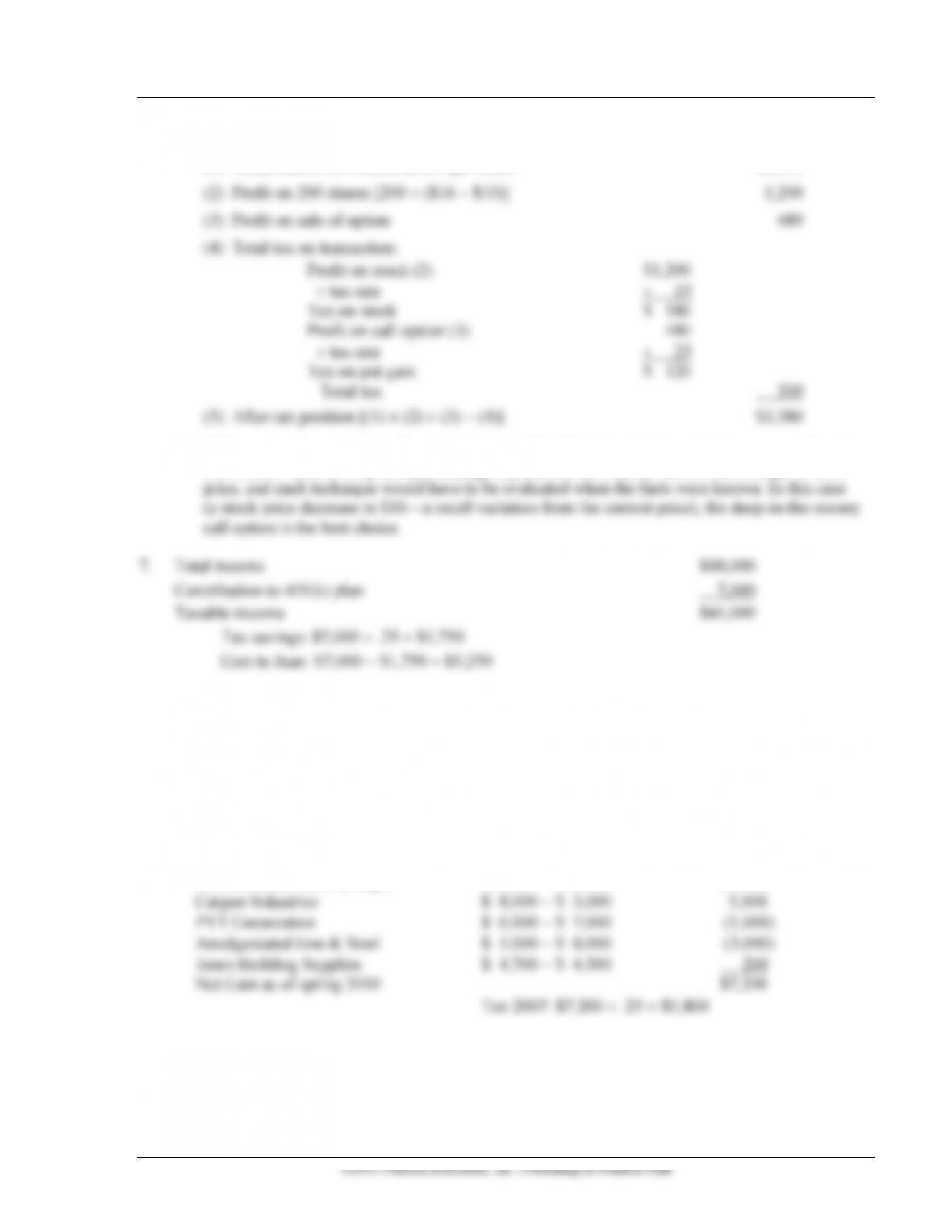
6. (a) Using the put options, Karen’s transactions are as follows:
(1) Initial cost of 200 shares at $10 per share $2,000
With this strategy, Karen can benefit from future price increases because she does not have to
exercise the put option if the price goes up.
Web Chapter 17 Tax-Advantaged Investments 327
(b) Using the deep-in–the-money call option:
(1) Initial cost of 200 shares at $10 per share $2,000
(c) With a put option, Karen’s after-tax position is $3,185. Using the deep-in-the-money call option,
it is $3,380. Determining the best strategy depends on the exact amount of the change in stock
◼ Solutions to Case Problems
Case 17.1 Tax Planning for the Wilsons
This case problem applies some of the tax concepts introduced in this chapter and discusses strategies for
reducing the tax liability on investments.
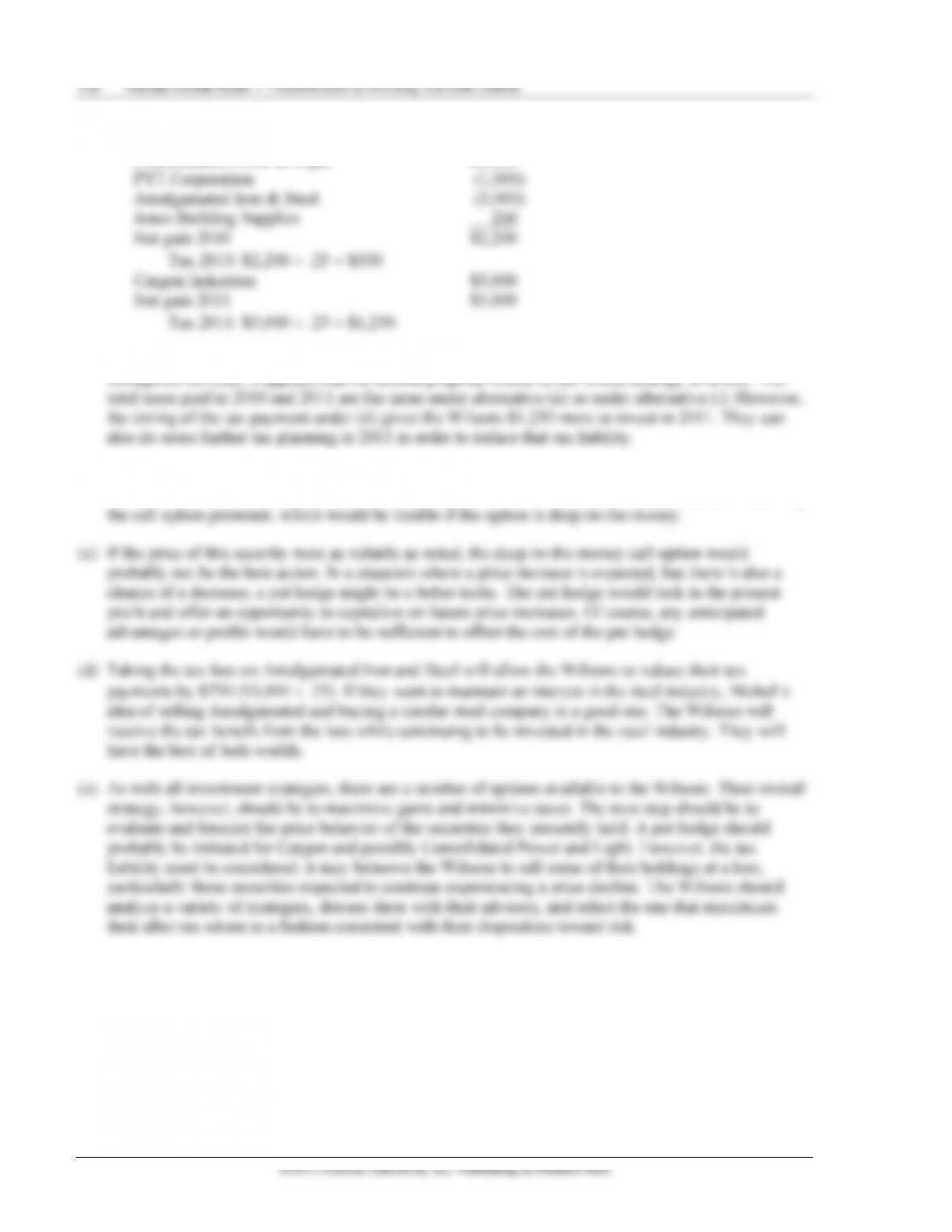
(a) (1)
Stock Calculation Gain (or Loss)
Consolidated Power & Light $16,000 − $10,000 $6,000

Web Chapter 17 Tax-Advantaged Investments 329
◼ Outside Project
Chapter 17 Developing Your Retirement Program
Although retirement may seem far off, it is never too early to begin planning your retirement investment
program. Having adequate funds to live comfortably during retirement is one of the major goals of most
investors. Our longer life spans and high standard of living mean that we will need more income than we
will probably receive from Social Security and employee pension funds. The sooner you start saving for
retirement, the easier it will be to achieve your goal, thanks to compound interest.
Assume that you plan to retire in 30 years and you will require $30,000 annual income to supplement what
you will receive from Social Security and a company pension. Now develop your retirement plan. Select
the average rate of return you expect to earn on your assets during retirement. Calculate the level of assets
that will generate this income without dipping into principal. (Annual need Rate of return = Total assets
required.) Next, choose the average rate of return you expect to earn on your retirement savings and use
future value techniques to determine how much you need to save annually.
Now decide in what types of vehicles (stocks, bonds, mutual funds, real estate, etc.) you plan to invest
your annual requirement for the first five years, including those in tax-deferred plans (401(k) plans, IRAs,
perhaps Keogh plans, and annuities). Choose specific investments from several categories. Compare two
or three annuity programs, evaluating their annual fees and expenses and performance over five years
using a source such as Morningstar. Taking into account the penalty for early withdrawal of funds, decide
whether annuities have a role in your retirement planning, and if so, at what point in time.
Finally, review your plan assuming that 10 and 20 years have passed, making appropriate changes in
investment allocations based on age and changing life situation.