Supply Chain Design ⚫ CHAPTER 12 ⚫
12-21
Forms for Single Product (Quick Hit) Version:
FACTORY MATL. DELIVERY FORM
FACTORY MATL. DELIVERY FORM
Day Shipped:
Day Rec’d.:
Day Shipped:
Day Rec’d.:
Quantity:
Quantity:
FACTORY MATL. DELIVERY FORM
FACTORY MATL. DELIVERY FORM
Day Shipped:
Day Rec’d.:
Day Shipped:
Day Rec’d.:
Quantity:
Quantity:
FACTORY MATL. DELIVERY FORM
FACTORY MATL. DELIVERY FORM
Day Shipped:
Day Rec’d.:
Day Shipped:
Day Rec’d.:
Quantity:
Quantity:
FACTORY MATL. DELIVERY FORM
FACTORY MATL. DELIVERY FORM
Day Shipped:
Day Rec’d.:
Day Shipped:
Day Rec’d.:
Quantity:
Quantity:
FACTORY MATL. DELIVERY FORM
FACTORY MATL. DELIVERY FORM
Day Shipped:
Day Rec’d.:
Day Shipped:
Day Rec’d.:
Quantity:
Quantity:
FACTORY MATL. DELIVERY FORM
FACTORY MATL. DELIVERY FORM
Day Shipped:
Day Rec’d.:
Day Shipped:
Day Rec’d.:
Quantity:
Quantity:
FACTORY MATL. DELIVERY FORM
FACTORY MATL. DELIVERY FORM
Day Shipped:
Day Rec’d.:
Day Shipped:
Day Rec’d.:
Quantity:
Quantity:
FACTORY MATL. DELIVERY FORM
FACTORY MATL. DELIVERY FORM
Day Shipped:
Day Rec’d.:
Day Shipped:
Day Rec’d.:
Quantity:
Quantity:
FACTORY MATL. DELIVERY FORM
FACTORY MATL. DELIVERY FORM
Day Shipped:
Day Rec’d.:
Day Shipped:
Day Rec’d.:
Quantity:
Quantity:
FACTORY MATL. DELIVERY FORM
FACTORY MATL. DELIVERY FORM
Day Shipped:
Day Rec’d.:
Day Shipped:
Day Rec’d.:
Quantity:
Quantity:
⚫ PART 3 ⚫ Managing Supply Chains
12-22
Forms for Single Product (Quick Hit) Version:
DIST. CNTR. MATL. DELIV. FORM
DIST. CNTR. MATL. DELIV. FORM
To Store:
Day Ship:
Day Rec.:
To Store:
Day Ship:
Day Rec.:
Quantity:
Quantity:
DIST. CNTR. MATL. DELIV. FORM
DIST. CNTR. MATL. DELIV. FORM
To Store:
Day Ship:
Day Rec.:
To Store:
Day Ship:
Day Rec.:
Quantity:
Quantity:
DIST. CNTR. MATL. DELIV. FORM
DIST. CNTR. MATL. DELIV. FORM
To Store:
Day Ship:
Day Rec.:
To Store:
Day Ship:
Day Rec.:
Quantity:
Quantity:
DIST. CNTR. MATL. DELIV. FORM
DIST. CNTR. MATL. DELIV. FORM
To Store:
Day Ship:
Day Rec.:
To Store:
Day Ship:
Day Rec.:
Quantity:
Quantity:
DIST. CNTR. MATL. DELIV. FORM
DIST. CNTR. MATL. DELIV. FORM
To Store:
Day Ship:
Day Rec.:
To Store:
Day Ship:
Day Rec.:
Quantity:
Quantity:
DIST. CNTR. MATL. DELIV. FORM
DIST. CNTR. MATL. DELIV. FORM
To Store:
Day Ship:
Day Rec.:
To Store:
Day Ship:
Day Rec.:
Quantity:
Quantity:
DIST. CNTR. MATL. DELIV. FORM
DIST. CNTR. MATL. DELIV. FORM
To Store:
Day Ship:
Day Rec.:
To Store:
Day Ship:
Day Rec.:
Quantity:
Quantity:
DIST. CNTR. MATL. DELIV. FORM
DIST. CNTR. MATL. DELIV. FORM
To Store:
Day Ship:
Day Rec.:
To Store:
Day Ship:
Day Rec.:
Quantity:
Quantity:
DIST. CNTR. MATL. DELIV. FORM
DIST. CNTR. MATL. DELIV. FORM
To Store:
Day Ship:
Day Rec.:
To Store:
Day Ship:
Day Rec.:
Quantity:
Quantity:
DIST. CNTR. MATL. DELIV. FORM
DIST. CNTR. MATL. DELIV. FORM
To Store:
Day Ship:
Day Rec.:
To Store:
Day Ship:
Day Rec.:
Quantity:
Quantity:
Supply Chain Design ⚫ CHAPTER 12 ⚫
12-23
Retailer Inventory Position Worksheet—One for each Retail Store
INVENTORY POSITION RETAIL STORE #
Day
Ending
Inven–
tory
Stock-
outs
Quantity
Ordered
Day
Ending
Inven-
tory
Stock-
outs
Quantity
Ordered
1
21
2
22
3
23
4
24
5
25
6
26
7
27
8
28
9
29
10
30
11
31
12
32
13
33
14
34
15
35
16
36
17
37
18
38
19
39
20
40
Cumulative sum of both columns for each category
Total number of check marks for orders
Holding cost/day/unit in first column,
stockout cost (lost sale per unit) in second column,
ordering cost/order in last column
Cumulative holding, ordering, and stockout costs
Total operating cost (sum of all costs)
⚫ PART 3 ⚫ Managing Supply Chains
12-24
Distributor Inventory Position Worksheet—One for each Distribution Center
DISTRIBUTION CENTER INVENTORY POSITION
Day
Ending
Inven-
tory
Back
Orders
Quantity
Ordered
Day
Ending
Inven-
tory
Back
Orders
Quantity
Ordered
1
21
2
22
3
23
4
24
5
25
6
26
7
27
8
28
9
29
10
30
11
31
12
32
13
33
14
34
15
35
16
36
17
37
18
38
19
39
20
40
Cumulative sum of both columns for each category
Total number of check marks for orders
Holding cost/day/unit in first column,
ordering cost/order in last column
0
Resulting cumulative holding and ordering costs
Total operating cost (sum of both costs)
Supply Chain Design ⚫ CHAPTER 12 ⚫
12-25
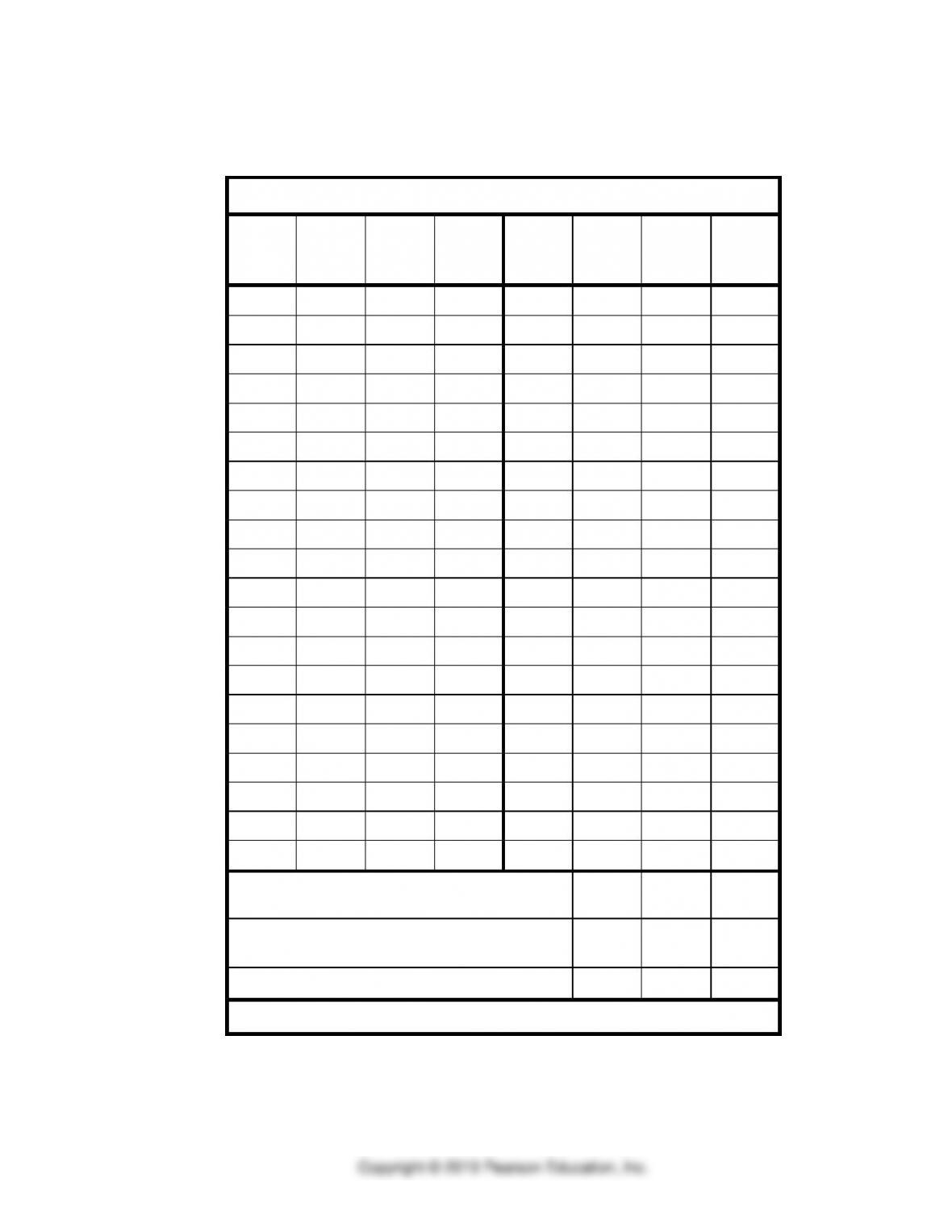
Factory Inventory Position Worksheet
FACTORY INVENTORY POSITION
Day
Ending
Inven-
tory
Back
Orders
Produc-
tion
Order
Day
Ending
Inven-
tory
Back
Orders
Produc-
tion
Order
1
21
2
22
3
23
4
24
5
25
6
26
7
27
8
28
9
29
10
30
11
31
12
32
13
33
14
34
15
35
16
36
17
37
18
38
19
39
20
40
Cumulative sum of both columns for each category
Total number of check marks for orders
Holding cost/day/unit in first column,
production order cost/order in last column
0
Resulting cumulative holding and ordering costs
Total operating cost (sum of both costs)
⚫ PART 3 ⚫ Managing Supply Chains
12-26
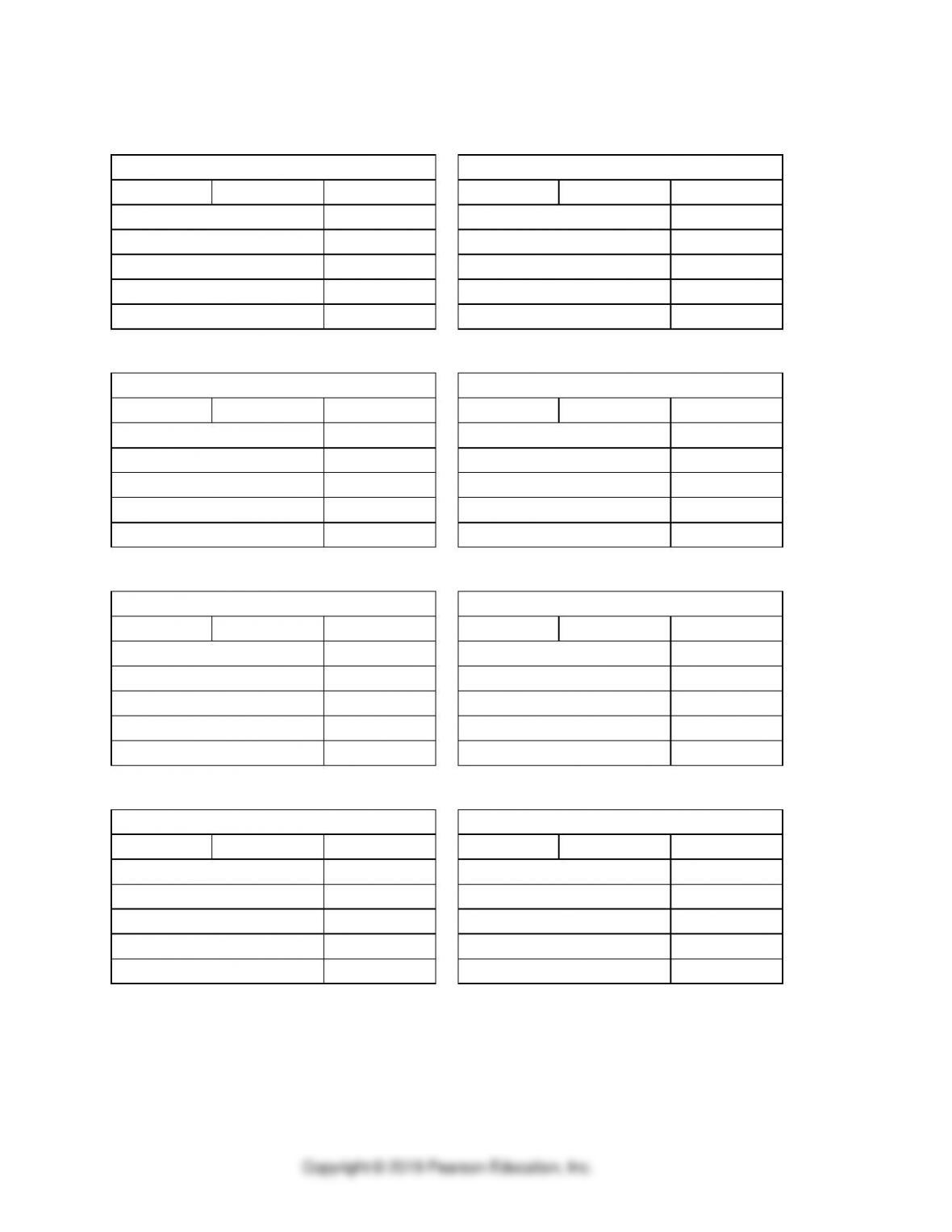
Forms for Multiple Product Versions:
RETAIL STORE PURCHASE ORDER
RETAIL STORE PURCHASE ORDER
Retailer:
Day Sent:
Day Rec.:
Retailer:
Day Sent:
Day Rec.:
CD Artist:
Quantity:
CD Artist:
Quantity:
Jake Spade and the Diggers
Jake Spade and the Diggers
The Heartmenders
The Heartmenders
Diamonds in the Ruff
Diamonds in the Ruff
Kulture Klub
Kulture Klub
RETAIL STORE PURCHASE ORDER
RETAIL STORE PURCHASE ORDER
Retailer:
Day Sent:
Day Rec.:
Retailer:
Day Sent:
Day Rec.:
CD Artist:
Quantity:
CD Artist:
Quantity:
Jake Spade and the Diggers
Jake Spade and the Diggers
The Heartmenders
The Heartmenders
Diamonds in the Ruff
Diamonds in the Ruff
Kulture Klub
Kulture Klub
RETAIL STORE PURCHASE ORDER
RETAIL STORE PURCHASE ORDER
Retailer:
Day Sent:
Day Rec.:
Retailer:
Day Sent:
Day Rec.:
CD Artist:
Quantity:
CD Artist:
Quantity:
Jake Spade and the Diggers
Jake Spade and the Diggers
The Heartmenders
The Heartmenders
Diamonds in the Ruff
Diamonds in the Ruff
Kulture Klub
Kulture Klub
RETAIL STORE PURCHASE ORDER
RETAIL STORE PURCHASE ORDER
Retailer:
Day Sent:
Day Rec.:
Retailer:
Day Sent:
Day Rec.:
CD Artist:
Quantity:
CD Artist:
Quantity:
Jake Spade and the Diggers
Jake Spade and the Diggers
The Heartmenders
The Heartmenders
Diamonds in the Ruff
Diamonds in the Ruff
Kulture Klub
Kulture Klub
Supply Chain Design ⚫ CHAPTER 12 ⚫
12-27
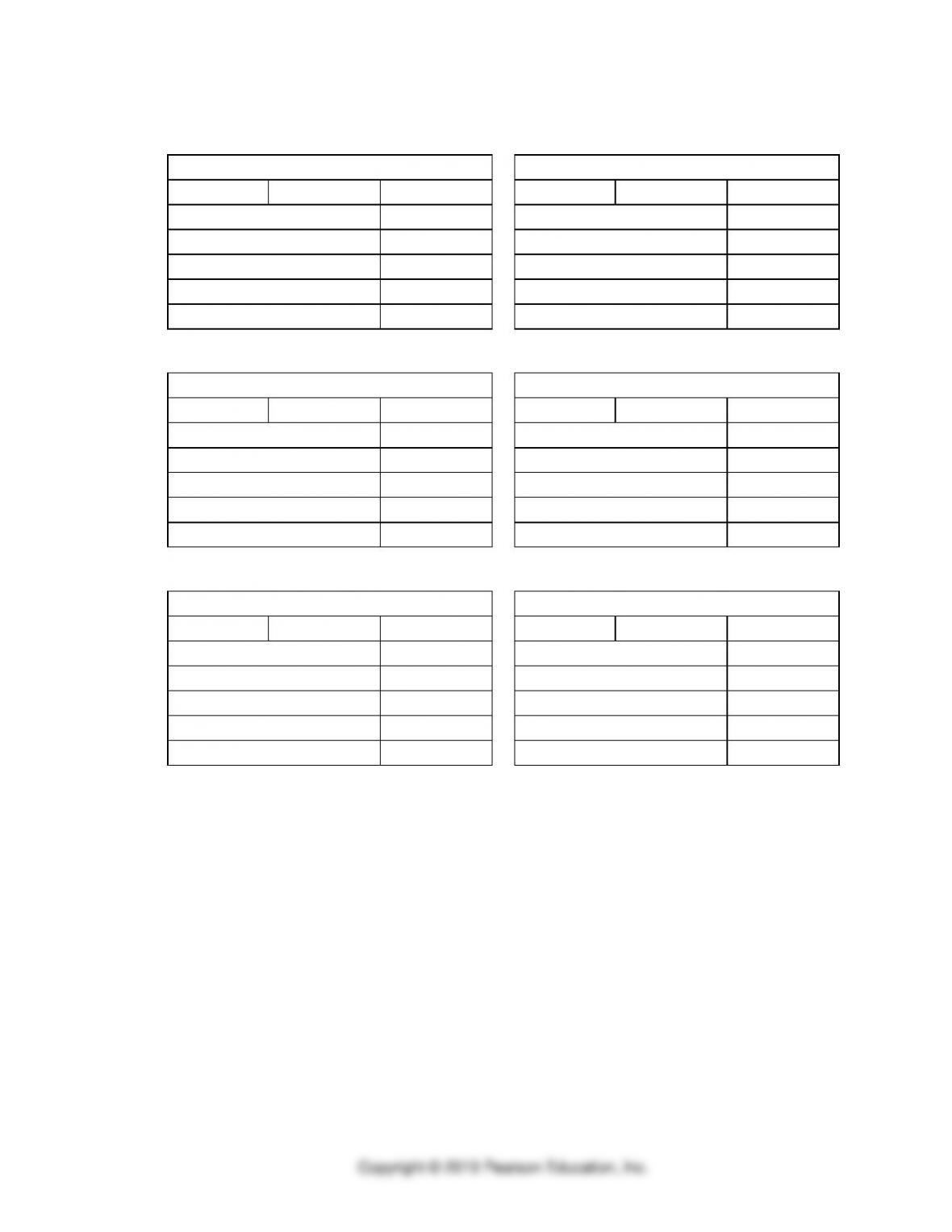
Forms for Multiple Product Versions:
DISTRIBUTION CENTER P. 0.
DISTRIBUTION CENTER P. 0.
Center:
Day Sent:
Day Rec.:
Center:
Day Sent:
Day Rec.:
CD Artist:
Quantity:
CD Artist:
Quantity:
Jake Spade and the Diggers
Jake Spade and the Diggers
The Heartmenders
The Heartmenders
Diamonds in the Ruff
Diamonds in the Ruff
Kulture Klub
Kulture Klub
DISTRIBUTION CENTER P. 0.
DISTRIBUTION CENTER P. 0.
Center:
Day Sent:
Day Rec.:
Center:
Day Sent:
Day Rec.:
CD Artist:
Quantity:
CD Artist:
Quantity:
Jake Spade and the Diggers
Jake Spade and the Diggers
The Heartmenders
The Heartmenders
Diamonds in the Ruff
Diamonds in the Ruff
Kulture Klub
Kulture Klub
DISTRIBUTION CENTER P. 0.
DISTRIBUTION CENTER P. 0.
Center:
Day Sent:
Day Rec.:
Center:
Day Sent:
Day Rec.:
CD Artist:
Quantity:
CD Artist:
Quantity:
Jake Spade and the Diggers
Jake Spade and the Diggers
The Heartmenders
The Heartmenders
Diamonds in the Ruff
Diamonds in the Ruff
Kulture Klub
Kulture Klub
⚫ PART 3 ⚫ Managing Supply Chains
12-28
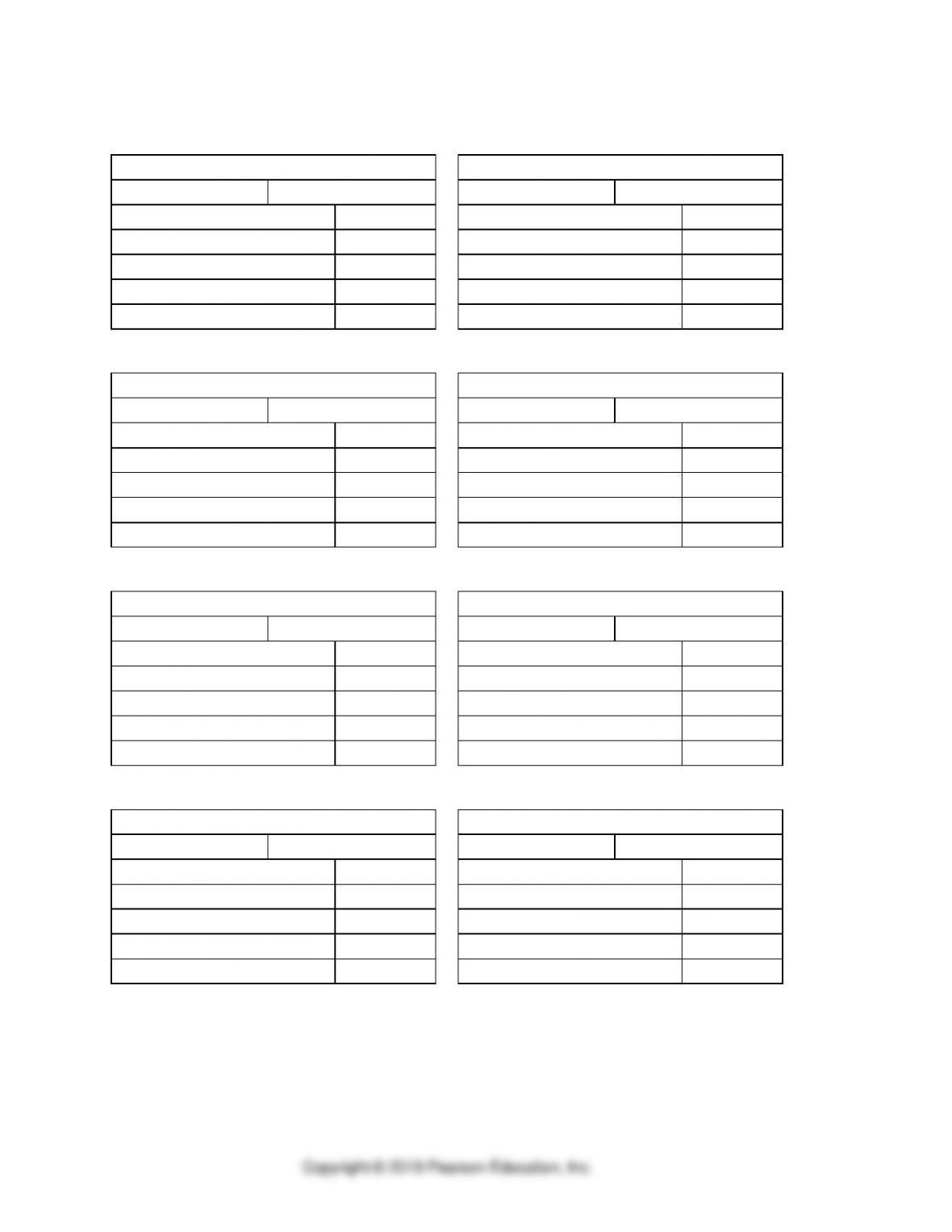
Forms for Multiple Product Versions:
FACTORY WORK ORDER
FACTORY WORK ORDER
Day Placed:
Day Complete:
Day Placed:
Day Complete:
CD Artist—Check One:
Quantity:
CD Artist—Check One:
Quantity:
Jake Spade and the Diggers
Jake Spade and the Diggers
The Heartmenders
The Heartmenders
Diamonds in the Ruff
Diamonds in the Ruff
Kulture Klub
Kulture Klub
FACTORY WORK ORDER
FACTORY WORK ORDER
Day Placed:
Day Complete:
Day Placed:
Day Complete:
CD Artist—Check One:
Quantity:
CD Artist—Check One:
Quantity:
Jake Spade and the Diggers
Jake Spade and the Diggers
The Heartmenders
The Heartmenders
Diamonds in the Ruff
Diamonds in the Ruff
Kulture Klub
Kulture Klub
FACTORY WORK ORDER
FACTORY WORK ORDER
Day Placed:
Day Complete:
Day Placed:
Day Complete:
CD Artist—Check One:
Quantity:
CD Artist—Check One:
Quantity:
Jake Spade and the Diggers
Jake Spade and the Diggers
The Heartmenders
The Heartmenders
Diamonds in the Ruff
Diamonds in the Ruff
Kulture Klub
Kulture Klub
FACTORY WORK ORDER
FACTORY WORK ORDER
Day Placed:
Day Complete:
Day Placed:
Day Complete:
CD Artist—Check One:
Quantity:
CD Artist—Check One:
Quantity:
Jake Spade and the Diggers
Jake Spade and the Diggers
The Heartmenders
The Heartmenders
Diamonds in the Ruff
Diamonds in the Ruff
Kulture Klub
Kulture Klub
Supply Chain Design ⚫ CHAPTER 12 ⚫
12-29
Forms for Multiple Product Versions:
FACTORY MATL. DELIVERY FORM
FACTORY MATL. DELIVERY FORM
To Cntr:
Day Ship:
Day Rec.:
To Cntr:
Day Ship:
Day Rec.:
CD Artist:
Quantity:
CD Artist:
Quantity:
Jake Spade and the Diggers
Jake Spade and the Diggers
The Heartmenders
The Heartmenders
Diamonds in the Ruff
Diamonds in the Ruff
Kulture Klub
Kulture Klub
FACTORY MATL. DELIVERY FORM
FACTORY MATL. DELIVERY FORM
To Cntr:
Day Ship:
Day Rec.:
To Cntr:
Day Ship:
Day Rec.:
CD Artist:
Quantity:
CD Artist:
Quantity:
Jake Spade and the Diggers
Jake Spade and the Diggers
The Heartmenders
The Heartmenders
Diamonds in the Ruff
Diamonds in the Ruff
Kulture Klub
Kulture Klub
FACTORY MATL. DELIVERY FORM
FACTORY MATL. DELIVERY FORM
To Cntr:
Day Ship:
Day Rec.:
To Cntr:
Day Ship:
Day Rec.:
CD Artist:
Quantity:
CD Artist:
Quantity:
Jake Spade and the Diggers
Jake Spade and the Diggers
The Heartmenders
The Heartmenders
Diamonds in the Ruff
Diamonds in the Ruff
Kulture Klub
Kulture Klub
FACTORY MATL. DELIVERY FORM
FACTORY MATL. DELIVERY FORM
To Cntr:
Day Ship:
Day Rec.:
To Cntr:
Day Ship:
Day Rec.:
CD Artist:
Quantity:
CD Artist:
Quantity:
Jake Spade and the Diggers
Jake Spade and the Diggers
The Heartmenders
The Heartmenders
Diamonds in the Ruff
Diamonds in the Ruff
Kulture Klub
Kulture Klub
⚫ PART 3 ⚫ Managing Supply Chains
12-30
Forms for Multiple Product Versions:
DIST. CNTR. MATL. DELIV. FORM
DIST. CNTR. MATL. DELIV. FORM
To Store:
Day Ship:
Day Rec.:
To Store:
Day Ship:
Day Rec.:
CD Artist:
Quantity:
CD Artist:
Quantity:
Jake Spade and the Diggers
Jake Spade and the Diggers
The Heartmenders
The Heartmenders
Diamonds in the Ruff
Diamonds in the Ruff
Kulture Klub
Kulture Klub
DIST. CNTR. MATL. DELIV. FORM
DIST. CNTR. MATL. DELIV. FORM
To Store:
Day Ship:
Day Rec.:
To Store:
Day Ship:
Day Rec.:
CD Artist:
Quantity:
CD Artist:
Quantity:
Jake Spade and the Diggers
Jake Spade and the Diggers
The Heartmenders
The Heartmenders
Diamonds in the Ruff
Diamonds in the Ruff
Kulture Klub
Kulture Klub
DIST. CNTR. MATL. DELIV. FORM
DIST. CNTR. MATL. DELIV. FORM
To Store:
Day Ship:
Day Rec.:
To Store:
Day Ship:
Day Rec.:
CD Artist:
Quantity:
CD Artist:
Quantity:
Jake Spade and the Diggers
Jake Spade and the Diggers
The Heartmenders
The Heartmenders
Diamonds in the Ruff
Diamonds in the Ruff
Kulture Klub
Kulture Klub
DIST. CNTR. MATL. DELIV. FORM
DIST. CNTR. MATL. DELIV. FORM
To Store:
Day Ship:
Day Rec.:
To Store:
Day Ship:
Day Rec.:
CD Artist:
Quantity:
CD Artist:
Quantity:
Jake Spade and the Diggers
Jake Spade and the Diggers
The Heartmenders
The Heartmenders
Diamonds in the Ruff
Diamonds in the Ruff
Kulture Klub
Kulture Klub
Supply Chain Design ⚫ CHAPTER 12 ⚫
12-31
Retailer Inventory Position Worksheet—One for each Retail Store
RETAIL STORE INVENTORY POSITION WORKSHEET
RETAIL STORE #
Ending Inventory
Stock-
outs
Order
Quantity
Ending Inventory
Stock-
outs
Order
Quantity
Day
«
ª
©
¨
Day
«
ª
©
¨
1
21
2
22
3
23
4
24
5
25
6
26
7
27
8
28
9
29
10
30
11
31
12
32
13
33
14
34
15
35
16
36
17
37
18
38
19
39
20
40
Cumulative sum of both columns for each category
Total number of check marks for orders
Cost/unit (supplied by instructor).
Holding cost/day/unit in first four columns,
stockout cost (lost sale per unit) in fifth column,
ordering cost/order in last column
Cumulative holding, ordering, and stockout costs
Total operating cost (sum of all costs)
⚫ PART 3 ⚫ Managing Supply Chains
12-32
Distributor Inventory Position Worksheet—One for each Distribution Center
DISTRIBUTION CENTER
INVENTORY POSITION WORKSHEET
CENTER #
Ending Inventory
Back
Orders
Order
Quantity
Ending Inventory
Back
Orders
Order
Quantity
Day
«
ª
©
¨
Day
«
ª
©
¨
1
21
2
22
3
23
4
24
5
25
6
26
7
27
8
28
9
29
10
30
11
31
12
32
13
33
14
34
15
35
16
36
17
37
18
38
19
39
20
40
Cumulative sum of both columns for each category
Total number of check marks for orders
Cost/unit (supplied by instructor)
Holding cost/day/unit in first four columns,
ordering cost/order in last column.
Resulting cumulative holding and ordering costs
Total operating cost (sum of all costs)
Supply Chain Design ⚫ CHAPTER 12 ⚫
12-33
Factory Inventory Position Worksheet
FACTORY INVENTORY POSITION WORKSHEET
Ending Inventory
Back
Orders
Production
Order
Back
Orders
Production
Order
Day
«
ª
©
¨
Day
«
ª
©
¨
1
21
2
22
3
23
4
24
5
25
6
26
7
27
8
28
9
29
10
30
11
31
12
32
13
33
14
34
15
35
16
36
17
37
18
38
19
39
20
40
Cumulative sum of both columns for each category
Total number of check marks for orders
Cost/unit (supplied by instructor)
Holding cost/day/unit in first four columns,
production order cost/order in last column
Resulting cumulative holding and production costs
Total operating cost (sum of all costs)

⚫ PART 3 ⚫ Managing Supply Chains
12-34
CASE: BRUNSWICK DISTRIBUTION, INC.
There are two options that need to be considered in the analysis of Brunswick
Distribution, Inc. (BDI). Students will need to perform an NPV analysis to completely
analyze the case. This case offers a good opportunity to team teach its analysis with a finance
professor. The following information in the students’ assignment will facilitate a financial
analysis of the options.
Use a weighted average cost of capital of 12 percent as the discount rate.
Use the Modified Accelerated Cost Recovery System (MACRS) for depreciation
charges. The Financial Analysis Solver, in OM Explorer, uses MACRS in the Net
Present Value Analysis. The starting year for the investments is year zero.
Assume that the MACRS recovery period for both options is 10 years.
The warehouse building and equipment can be sold for $7.50 million after 10 years
(which comes at the middle of year 11 with MACRS). The land can be sold for its
book value of $2 million. This information is needed so that a comparison can be
made between the two options, the warehouse with an economic life of 20 years and
the new infrastructure with a life of 10 years. The new infrastructure has no
terminal value.
For a more elaborate analysis of this case, students could use the Financial Measures
Analyzer Solver, which is found in OM Explorer under Supply Chain Design. The
implications of the investments on a multitude of financial measures can be addressed with
the program. A summary of the conclusions from a more simplified, less-involved, analysis
of the two options posed in the case follows.
Option 1: New warehouse facilities overview
Inventory turnover is COGS/Aggregate Inventory Value = $23,337 / $7,200 = 3.24,
which indicates that this option will not solve the problem of low inventory
turnover.
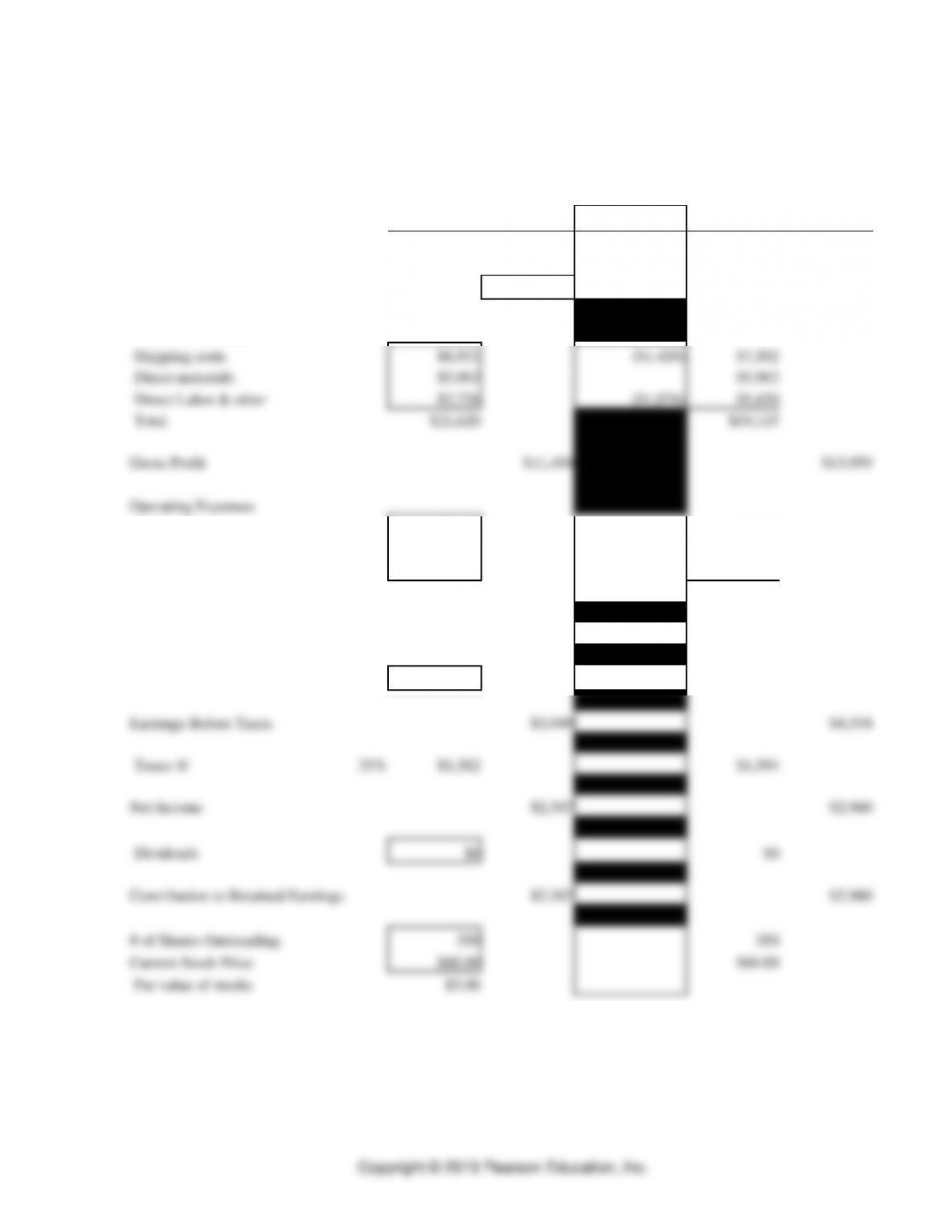
Net income goes up slightly. Using Exhibit 1 in the text, and using the average
depreciation over the 10-year recovery period of $1 million the ROA can be
calculated to be $2,820 / $43,551 = 6.5 percent; or, if it is preferred to use earnings
before interest and taxes (EBIT) the ROA is $6,496 / $43,551 = 14.9 percent. See
the Income Statement below for the Warehouse option.
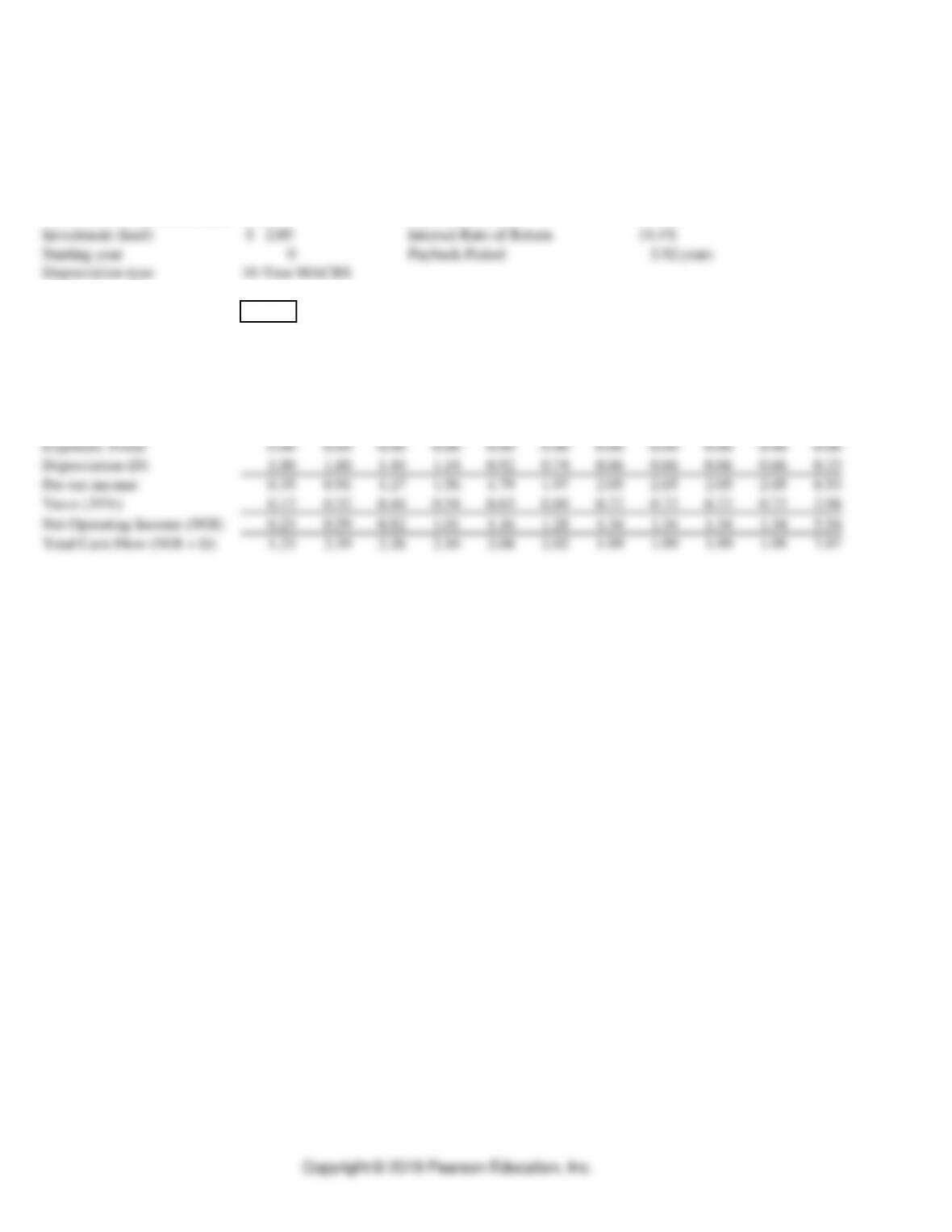
Using MACRS and a 10-year recovery period, the net present value (NPV) for this
option is $1.52 million, which makes it a viable alternative to consider. The internal
rate of return is 14.4%, and the payback period is 5.92 years. See the Financial
Analysis Solver spreadsheet for the Warehouse option.
The investment would put Brunswick in a precarious debt to equity situation.
Option 2: New infrastructure overview.
Inventory turnover is COGS / Aggregate Inventory Value = $19,115 / $4,500 = 4.2,
which at least is larger than option 1.
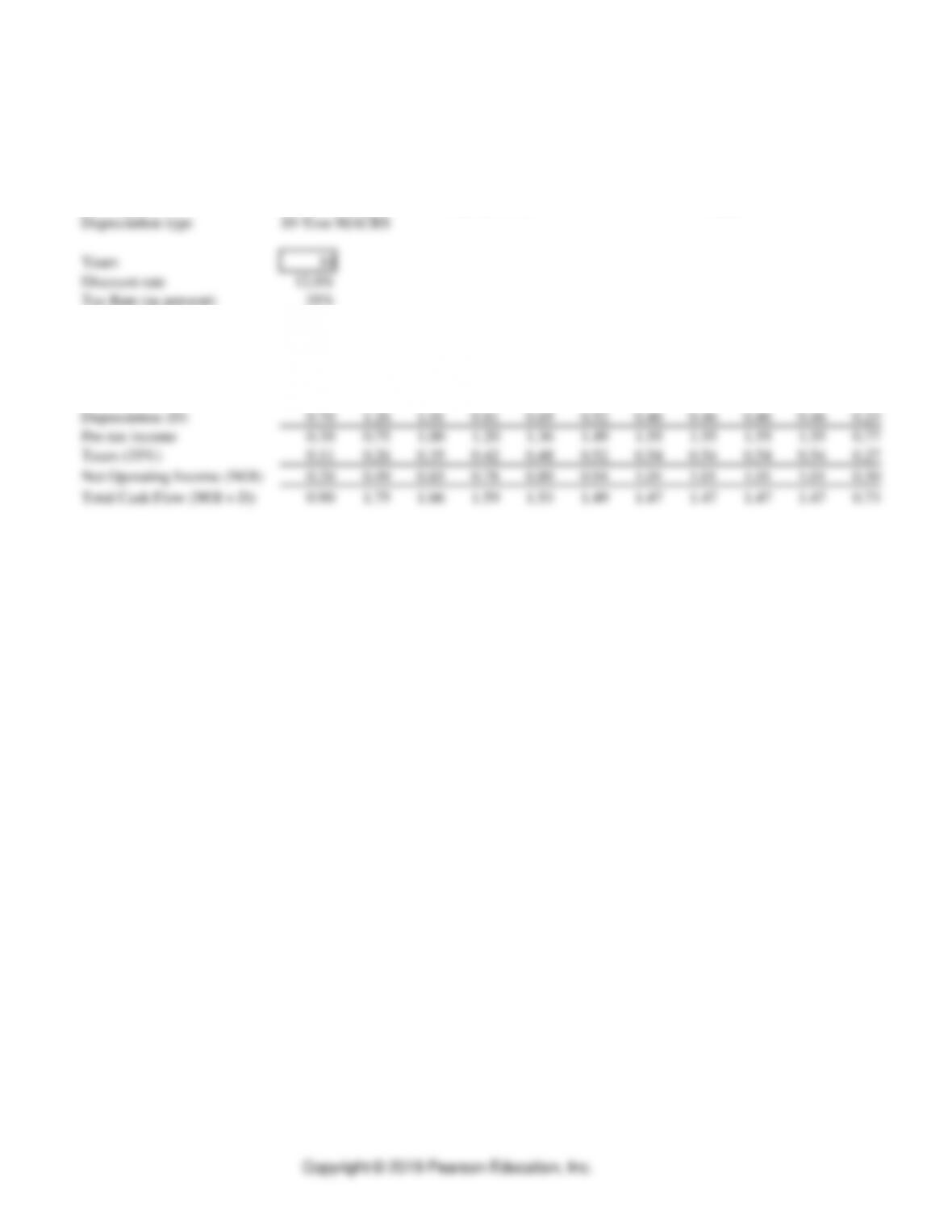
Net income goes up slightly. The ROA using Exhibit 1 is $2,960 / $35,932 = 8.2
percent. Using EBIT for the calculation instead, the ROA is $6,092 / $35,932 = 17.0
percent. See the Income statement below for the new infrastructure option.
Supply Chain Design ⚫ CHAPTER 12 ⚫
12-35
The NPV for this option is $1.47 million, which is less than option 1. However, the
internal rate of return of 16.6% and the payback period of 4.72 years are better than
option 1.
While Option 2 – new infrastructure – dominates Option 1 from the perspective of inventory
turnover, ROA, internal rate of return, and payback period, it is slightly worse off in NPV
and it does not increase revenues or improve market share. Nonetheless, this option may
improve customer service and drive increases in customer demands in the future. The
analysis of these two options shows the tradeoff in attempting to build market share (Option
1) and becoming more efficient (Option 2). It should be pointed out to the students that it is
debatable which of the two options may have more long-term benefits.
Educational objectives
To critically examine the inter-related activities of marketing, finance and
operations.
To link supply chain design decisions to the net present value analysis.
To study how seemingly small changes in various aspects of the business affect
return on assets and financial measures.
To emphasize that supply chain design changes can affect the cost of goods sold
(such as direct materials costs or labor costs) or other operational expenses in an
income statement can have an effect on the important performance measures for a
business.
DISCUSSION
Option 1
Income statement
This option increases annual revenue by $4.426 million.
This option would increase costs by a total of $1,717,000, split up between shipping
($955 thousand), direct material ($358 thousand), and direct labor cost ($404
thousand).
Net present value
The NPV analysis assumes the investment can be liquidated after 10 years (actually
in year 11 to correspond to MACRS assumptions) in order to be able to compare
this investment to that of the distribution system improvements, which has a life of
⚫ PART 3 ⚫ Managing Supply Chains
12-36
See the spreadsheet reports below.
Option 2
The improved infrastructure option would contribute 16% in direct cost savings in
shipping and direct labor which is computed as 16% * ($8,931,000 + $6,726,000). This
works out to be $1,429,000 in shipping and $1,076,000 for direct labor.
Income statement
See the spreadsheet reports below.
If the financial analysis is the only consideration, the new infrastructure option is a good
choice. However, the discussion should raise the question of which competitive
OTHER ISSUES TO DISCUSS
One of the biggest issues facing BDI is the predictability of sales. Since orders do not come
in from retailers in a timely fashion, considerable emphasis is placed on forecasting sales for
manufacturers. This forecasting is largely historical and therefore does not reflect the
changes that have occurred over the past two years. To better determine levels of safety
stock, a better integration of the supply chain is required. Getting the end customer involved
by showcasing the product in a kitchen-like setting and acquiring forward-looking
information from the end user might help Brunswick in determining demand.
With the additional business, and the extra product lines, BDI has acquired some
deadweight. The company already supplies the majority of high-end appliances and the
new lines have cut into the profit margins that the company has historically observed.
Supply Chain Design ⚫ CHAPTER 12 ⚫
12-37
OPTION 1 – Warehouse
Income Statement
Inc. Stmt.
Before Investments
Change
After Investment
$000’s
$000’s
$000’s
Revenue
$33,074
$4,426
$37,500
Cost of Goods Sold
Shipping costs
$8,931
$955
$9,886
Direct materials
$5,963
$358
$6,321
Direct Labor & other
$6,726
$404
$7,130
Total
$21,620
$23,337
Gross Profit
$11,454
$14,163
Operating Expenses
Selling Expenses
$2,232
$2,232
Fixed Expenses
$2,641
$2,641
Depreciation
$1,794
$1,000
$2,794
Total
$6,667
$7,667
Earnings Before Interest and Taxes
$4,787
$6,496
Interest Expense
$838
$1,320
$2,158
Earnings Before Taxes
$3,949
$4,338
Taxes @
35%
$1,382
$1,518
Net Income
$2,567
$2,820
Dividends
$0
$0
Contribution to Retained Earnings
$2,567
$2,820
# of Shares Outstanding
350
350
Current Stock Price
$60.00
$60.00
Par value of stocks
$5.00
⚫ PART 3 ⚫ Managing Supply Chains
12-38
NPV – Warehouse
Investment amount (non land)
$ 10.00
Net Present Value
$1.52
Investment (land)
$ 2.00
Internal Rate of Return
14.4%
Starting year
0
Payback Period
5.92
years
Depreciation type
10-Year MACRS
Years
10
Discount rate
12.0%
Tax Rate (as percent)
35%
1
2
3
4
5
6
7
8
9
10
11
Revenue
2.21
4.43
4.43
4.43
4.43
4.43
4.43
4.43
4.43
4.43
9.71
Expenses: Variable
0.86
1.72
1.72
1.72
1.72
1.72
1.72
1.72
1.72
1.72
0.86
Expenses: Fixed
0.00
0.00
0.00
0.00
0.00
0.00
0.00
0.00
0.00
0.00
0.00
Depreciation (D)
1.00
1.80
1.44
1.14
0.92
0.74
0.66
0.66
0.66
0.66
0.33
Pre-tax income
0.35
0.91
1.27
1.56
1.79
1.97
2.05
2.05
2.05
2.05
8.53
Taxes (35%)
0.12
0.32
0.44
0.54
0.63
0.69
0.72
0.72
0.72
0.72
2.98
Net Operating Income (NOI)
0.23
0.59
0.82
1.01
1.16
1.28
1.34
1.34
1.34
1.34
5.54
Total Cash Flow (NOI + D)
1.23
2.39
2.26
2.16
2.08
2.02
1.99
1.99
1.99
1.99
7.87
Supply Chain Design ⚫ CHAPTER 12 ⚫
12-39
OPTION 2 – Improve Distribution System
Income Statement
Inc. Stmt.
Before Investments
Change
After Investment
$000’s
Revenue
$33,074
$33,074
Cost of Goods Sold
Shipping costs
$8,931
($1,429)
$7,502
Direct materials
$5,963
$5,963
Direct Labor & other
$3,726
($1,076)
$5,650
Total
$21,620
$19,115
Gross Profit
$11,454
$13,959
Operating Expenses
Selling Expenses
$2,232
$2,232
Fixed Expenses
$2,641
$500
$3,141
Depreciation
$1,794
$700
$2,494
Total
$6,667
$7,867
Earnings Before Interest and Taxes
$4,787
$6,092
Interest Expense
$838
$700
$1,538
Earnings Before Taxes
$3,949
$4,554
Taxes @
35%
$1,382
$1,594
Net Income
$2,567
$2,960
Dividends
$0
$0
Contribution to Retained Earnings
$2,567
$2,960
# of Shares Outstanding
350
350
Current Stock Price
$60.00
$60.00
Par value of stocks
$5.00
⚫ PART 3 ⚫ Managing Supply Chains
12-40
NPV – Improve Distribution System
Investment amount (non land)
$ 7.00
Net Present Value
$1.52
Investment (land)
Internal Rate of Return
14.4%
Starting year
0
Payback Period
5.92
years
Depreciation type
10-Year MACRS
Years
10
Discount rate
12.0%
Tax Rate (as percent)
35%
1
2
3
4
5
6
7
8
9
10
11
Revenue
Expenses: Variable
-1.25
-2.51
-2.51
-2.51
-2.51
-2.51
-2.51
-2.51
-2.51
-2.51
-1.25
Expenses: Fixed
0.25
0.50
0.50
0.50
0.50
0.50
0.50
0.50
0.50
0.50
0.25
Depreciation (D)
0.70
1.26
1.01
0.81
0.65
0.52
0.46
0.46
0.46
0.46
0.23
Pre-tax income
0.30
0.75
1.00
1.20
1.36
1.49
1.55
1.55
1.55
1.55
0.77
Taxes (35%)
0.11
0.26
0.35
0.42
0.48
0.52
0.54
0.54
0.54
0.54
0.27
Net Operating Income (NOI)
0.20
0.49
0.65
0.78
0.89
0.94
1.01
1.01
1.01
1.01
0.50
Total Cash Flow (NOI + D)
0.90
1.75
1.66
1.59
1.53
1.49
1.47
1.47
1.47
1.47
0.73