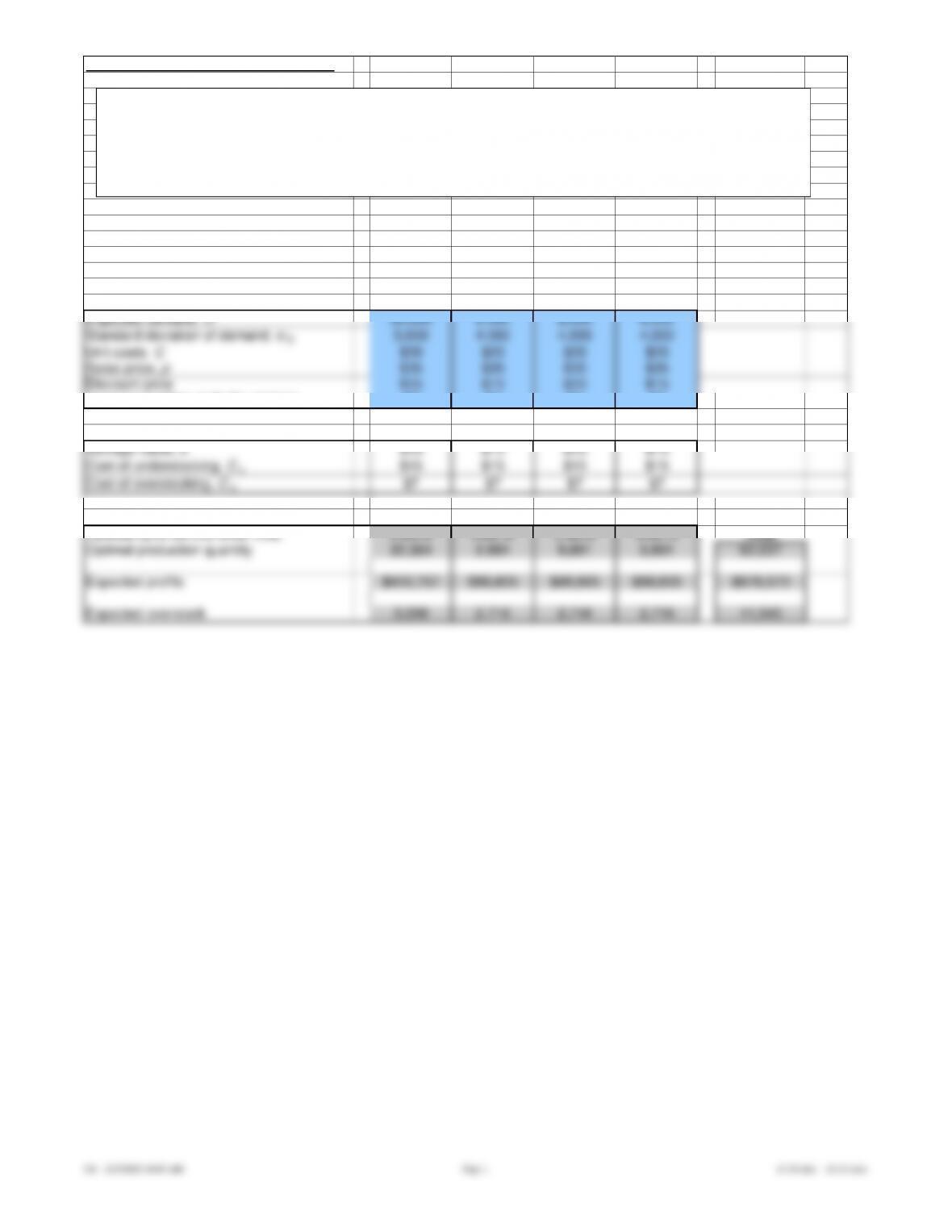
Exercise 13-13: The Knitting Company
Inputs Style 1 Style 2 Style 3 Style 4
Expected demand, D30,000 8,000 8,000 8,000
Standard deviation of demand, σD5,000 4,000 4,000 4,000
Unit costs, C$20 $20 $20 $20
Sales price, p$35 $35 $35 $35
Discount price $15 $15 $15 $15
Inventory holding costs for season $2 $2 $2 $2
Salvage value, s$13 $13 $13 $13
Cost of understocking, Cu$15 $15 $15 $15
Cost of overstocking, Co$7 $7 $7 $7
Outputs
Optimal cycle service level, CSL 0.6818 0.6818 0.6818 0.6818 Total
Optimal production quantity 32,364 9,891 9,891 9,891 62,037
Expected profits $410,757 $88,605 $88,605 $88,605 $676,573
Expected overstock 3,396 2,716 2,716 2,716 11,545
The Knitting Company (TKC) is planning production for its four sweater styles that are popular during Christmas. All four styles have demand that is normally
distributed. The best-selling style has an expected demand of 30,000 and a standard deviation of 5,000. Each of the other three styles has an expected demand of 10,000
with a standard deviation of 4,000. Currently, all sweaters are produced before the start of the season. Production cost is $20 per sweater, and they are sold for a
wholesale price of $35. Any unsold sweaters at the end of the season are discounted to $15, and they all sell at that price. It costs $2 to hold the sweater in inventory for
the entire season if it does not sell.
a. How many sweaters of each type should TKC manufacture?
b. What is the expected profit from this policy?
c. How many sweaters does TKC expect to sell at a discount?
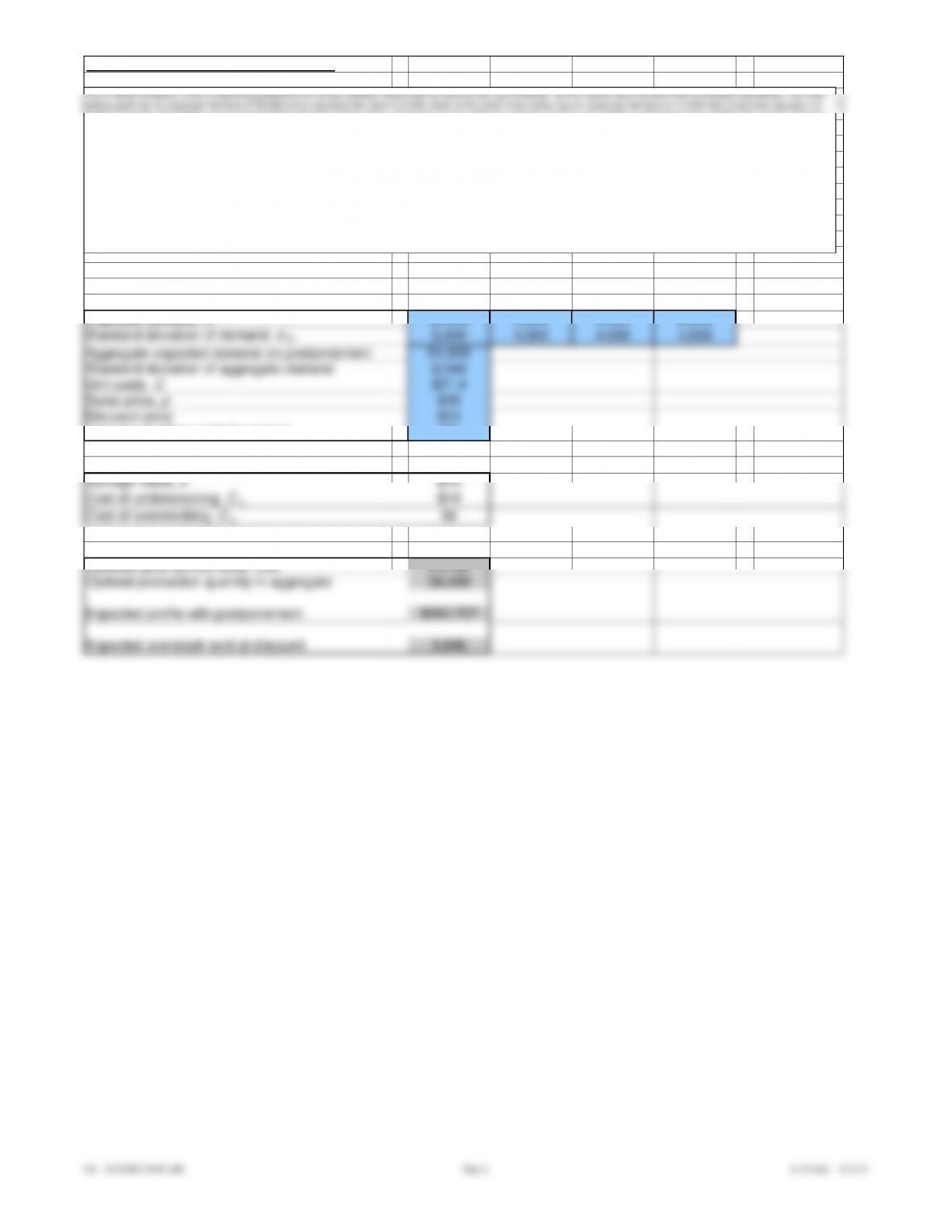
Exercise 13-13: The Knitting Company
Inputs Style 1 Style 2 Style 3 Style 4
Expected demand, D30,000 8,000 8,000 8,000
Standard deviation of demand, σD5,000 4,000 4,000 4,000
Aggregate expected demand on postponement 54,000
Standard deviation of aggregate demand 8,544
Unit costs, C$21.4
Sales price, p$35
Discount price $15
Inventory holding costs for season $2
Salvage value, s$13
Cost of understocking, Cu$14
Cost of overstocking, Co$8
Outputs
Optimal cycle service level, CSL 0.6182
Optimal production quantity in aggregate 56,569
Expected profits with postponement $662,727
Expected overstock sold at discount 4,846
The Knitting Company (TKC) is planning production for its four sweater styles that are popular during Christmas. All four styles have demand that is normally distributed. The best–
selling style has an expected demand of 30,000 and a standard deviation of 5,000. Each of the other three styles has an expected demand of 10,000 with a standard deviation of
4,000. Currently, all sweaters are produced before the start of the season. Production cost is $20 per sweater, and they are sold for a wholesale price of $35. Any unsold sweaters
at the end of the season are discounted to $15, and they all sell at that price. It costs $2 to hold the sweater in inventory for the entire season if it does not sell.
d. TKC is considering the postponement of knitting and using flexible machines. This will require the base sweaters to be made in advance (identical for each of the four
types) and the final patterns to be knit later. This will increase production cost per sweater to $21.40. How many sweaters should TKC manufacture with postponement?
What is the expected profit from this policy?
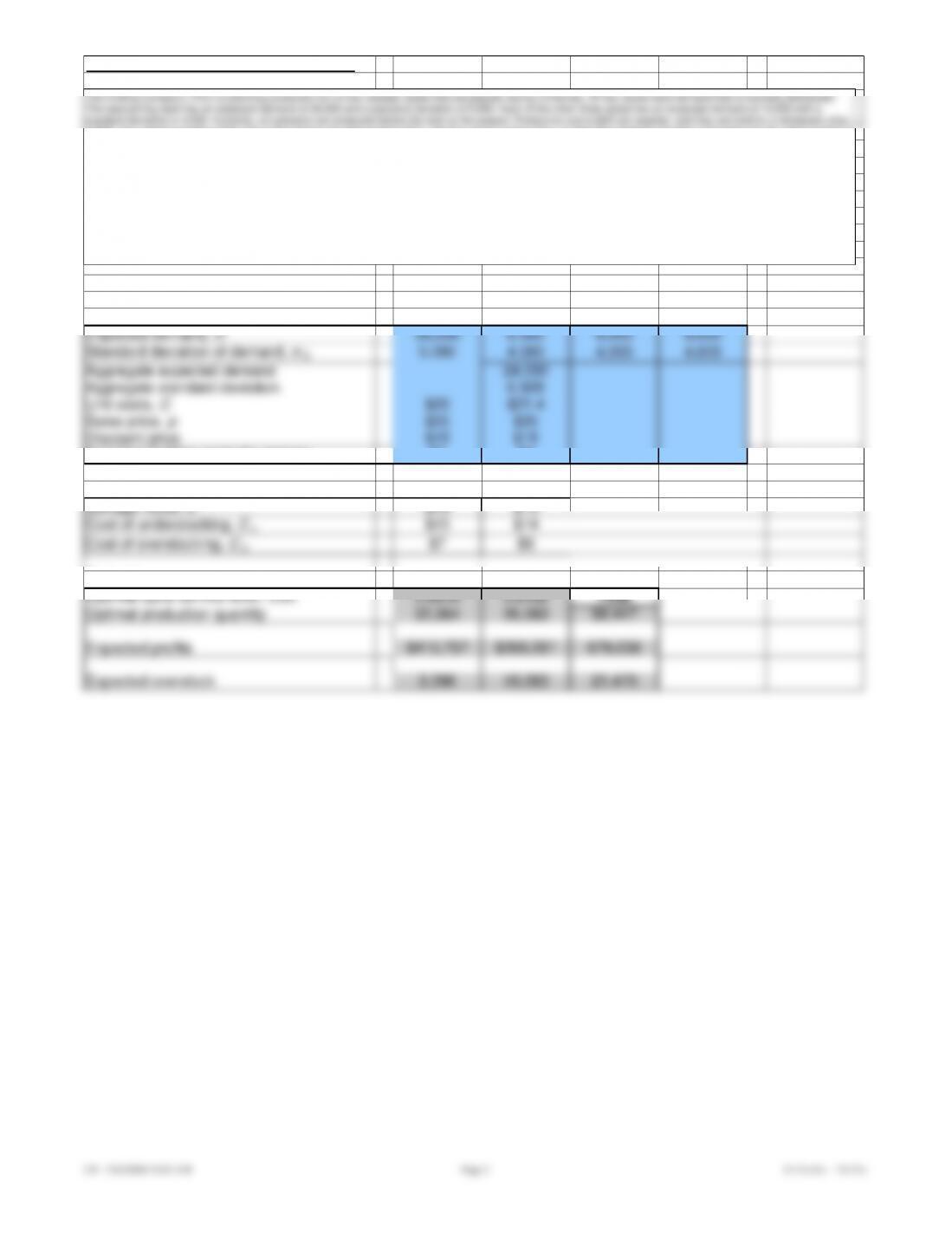
Exercise 13-13: The Knitting Company
Inputs Style 1 Style 2 Style 3 Style 4
Expected demand, D30,000 8,000 8,000 8,000
Standard deviation of demand, σD5,000 4,000 4,000 4,000
Aggregate expected demand 24,000
Aggregate standard deviation 6,928
Unit costs, C$20 $21.4
Sales price, p$35 $35
Discount price $15 $15
Inventory holding costs for season $2 $2
Salvage value, s$13 $13
Cost of understocking, Cu$15 $14
Cost of overstocking, Co$7 $8
Outputs
Optimal cycle service level, CSL 0.6818 0.6182 Total
Optimal production quantity 32,364 26,083 58,447
Expected profits $410,757 $268,281 679,038
Expected overstock 3,396 18,083 21,479
The Knitting Company (TKC) is planning production for its four sweater styles that are popular during Christmas. All four styles have demand that is normally distributed.
The best-selling style has an expected demand of 30,000 and a standard deviation of 5,000. Each of the other three styles has an expected demand of 10,000 with a
standard deviation of 4,000. Currently, all sweaters are produced before the start of the season. Production cost is $20 per sweater, and they are sold for a wholesale price
of $35. Any unsold sweaters at the end of the season are discounted to $15, and they all sell at that price. It costs $2 to hold the sweater in inventory for the entire season if
it does not sell.
e. Another option is to produce the popular style without postponement and the other three styles using postponement. What is the expected profit under this policy?