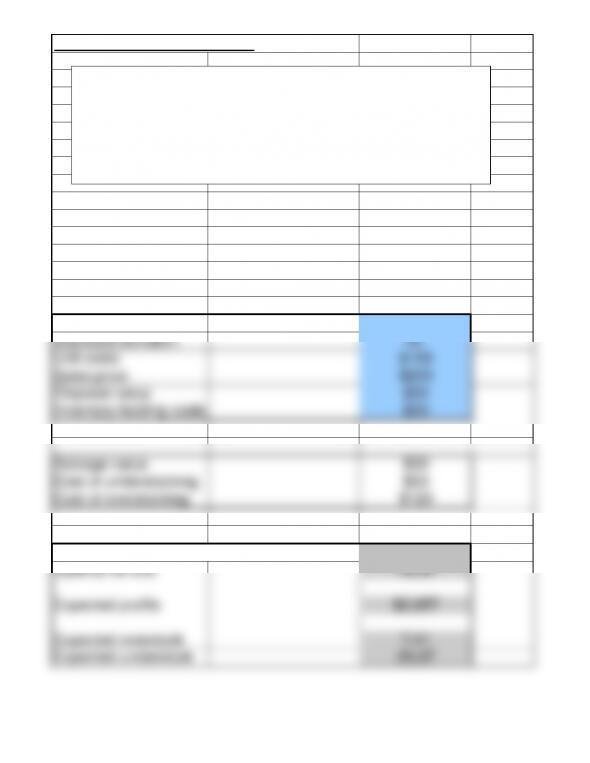
Exercise 13-1: Green Thumb
Inputs
Anticipated demand 100
Standard deviation 40
Unit costs $150
Sales price $200
Disposal value $50
Inventory holding costs $20
Salvage value $30
Cost of understocking $50
Cost of overstocking $120
Outputs
Optimal cycle service level 0.2941
Optimal lot size 78.34
Expected profits $2,657
Expected overstock 7.41
Expected understock 29.07
Green Thumb, a manufacturer of lawn care equipment, has introduced a new product. Each
unit costs $150 to manufacture, and the introductory price is $200. At this price, the
anticipated demand is normally distributed, with a mean of μ= 100 and a standard deviation
of σ= 40. Any unsold units at the end of the season will be disposed of in a postseason sale
for $50 each. It costs $20 to hold a unit in inventory for the entire season. How many units
should Green Thumb manufacture for sale? What is the expected profit from this policy? On
average, how many customers does Green Thumb expect to turn away because of stocking
out?
CR – 12/3/2020 10:02 AM Page 1 13-1.xlsx – 13.1
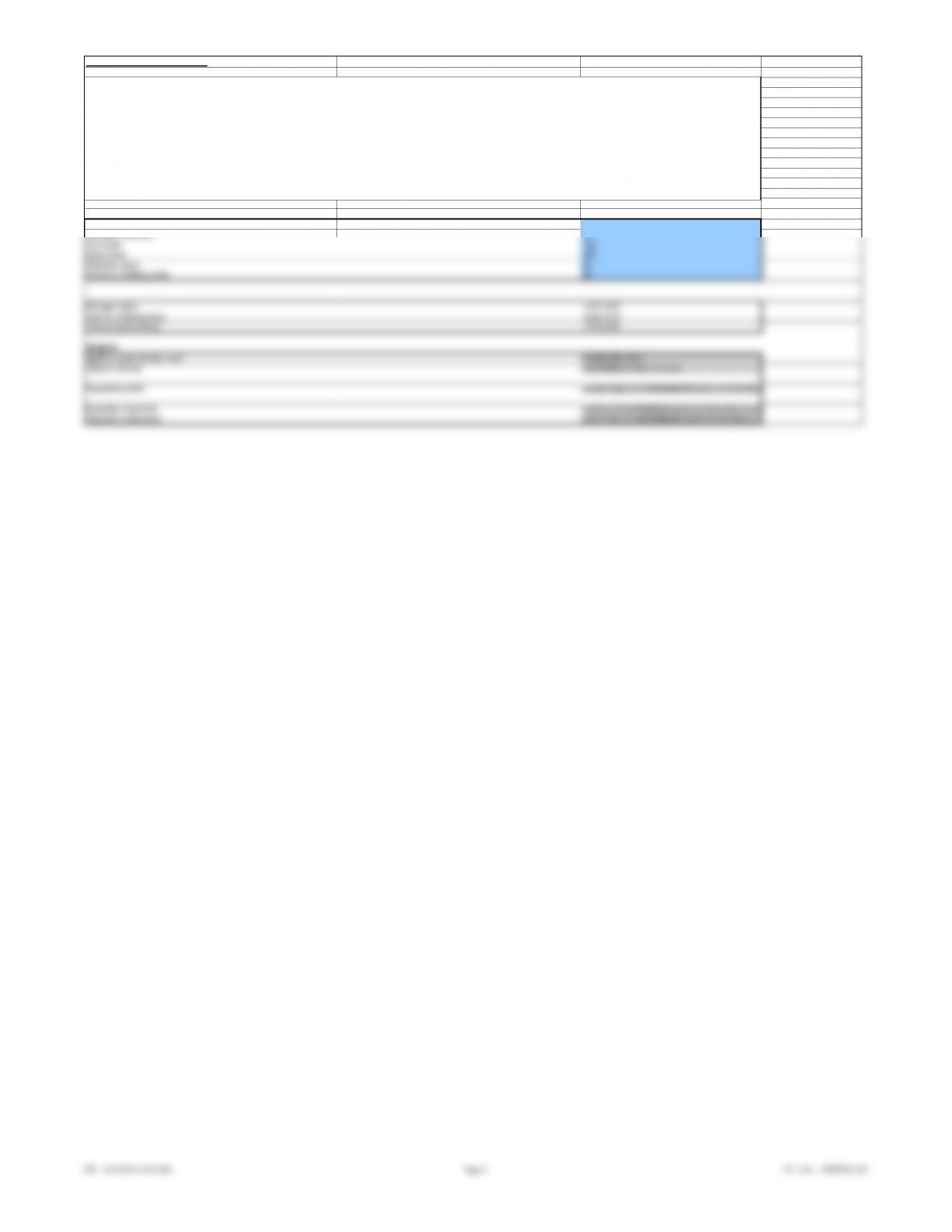
Exercise 13-1: Green Thumb
Inputs
Anticipated demand 100
Standard deviation 40
Unit costs 150
Sales price 200
Disposal value 50
Inventory holding costs 20
Salvage value =C21-C22
Cost of understocking =C20-C19
Cost of overstocking =C19-C25
Outputs
Optimal cycle service level =C26/(C26+C27)
Optimal lot size =NORMINV(C30,C17,C18)
Expected profits
=(C20-C25)*C17*NORMSDIST((C31-C17)/C18)-(C20-C25)*C18*NORMDIST((C31-C17)/C18,0,1,0)-C31*C27*NORMDIST(C31,C17,C18,1)+C31*C26*(1-NORMDIST(C31,C17,C18,1))
Expected overstock
=(C31-C17)*NORMDIST((C31-C17)/C18,0,1,1)+C18*NORMDIST((C31-C17)/C18,0,1,0)
Expected understock
=(C17-C31)*(1-NORMDIST((C31-C17)/C18,0,1,1))+C18*NORMDIST((C31-C17)/C18,0,1,0)
Green Thumb, a manufacturer of lawn care equipment, has introduced a new product. Each unit costs $150 to manufacture, and the introductory price is $200. At this price, the anticipated demand is
normally distributed, with a mean of μ= 100 and a standard deviation of σ= 40. Any unsold units at the end of the season will be disposed of in a postseason sale for $50 each. It costs $20 to hold a unit
in inventory for the entire season. How many units should Green Thumb manufacture for sale? What is the expected profit from this policy? On average, how many customers does Green Thumb expect
to turn away because of stocking out?