Excercise 12-6: Hewlett Packard
Inputs
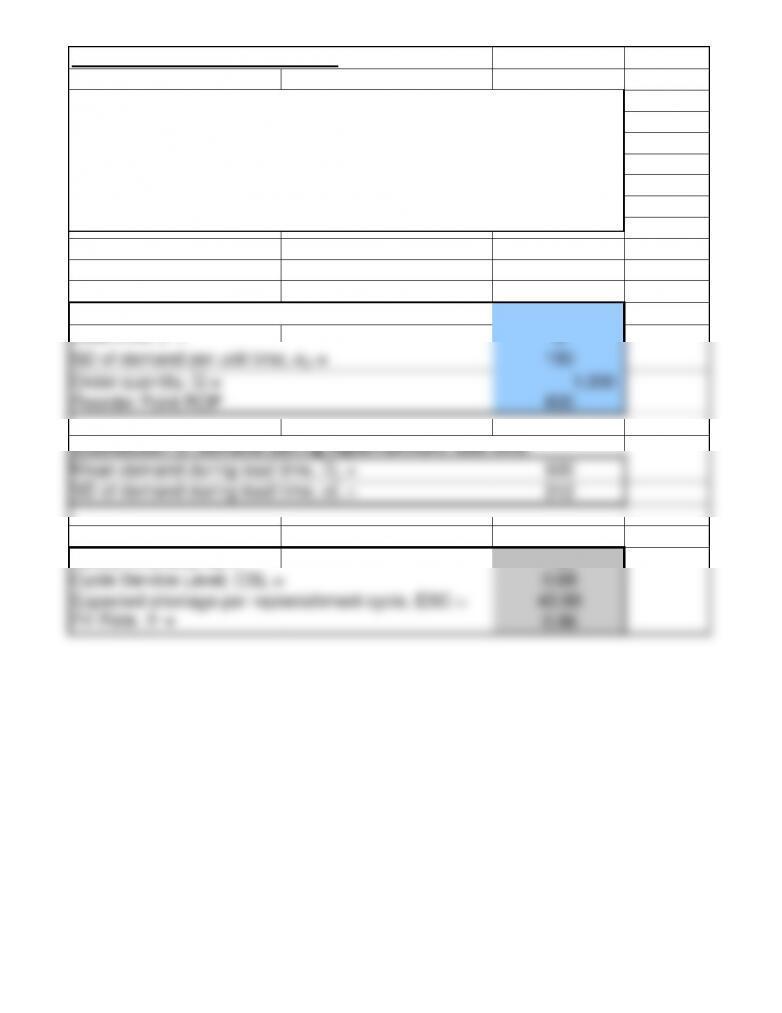
Average demand per unit time, D = 250
Lead time, L = 2
SD of demand per unit time, σD = 150
Order quantity, Q = 1,000
Reorder Point ROP 600
Distribution of demand during replenishment lead time
Mean demand during lead time, DL = 500
SD of demand during lead time, σL = 212
Outputs
Safety Inventory, ss = 100
Cycle Service Level, CSL = 0.68
Expected shortage per replenishment cycle, ESC = 43.86
Fill Rate, fr = 0.96
Weekly demand for Hewlett Packard printers at a Sam’s Club store is normally distributed
with a mean of 250 and a standard deviation of 150. The store manager continuously
monitors inventory and currently orders a thousand printers each time the inventory drops
to 600 printers. Hewlett Packard currently takes two weeks to fill an order. How much
safety inventory does the store carry? What cycle service level does Sam’s Club achieve
as a result of this policy? What fill rate does the store achieve?
Exercise 12-6: Hewlett Packard
Inputs
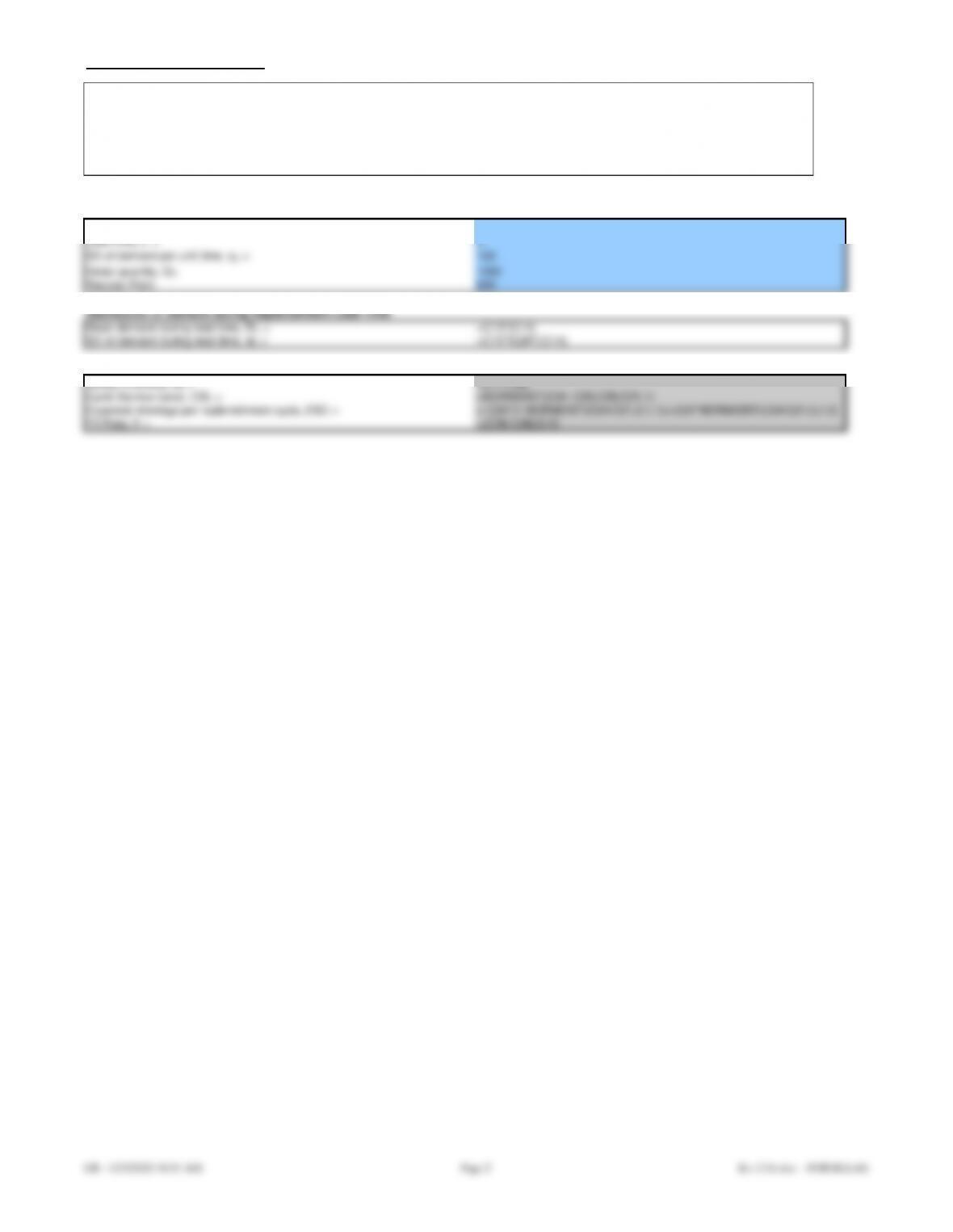
Average demand per unit time, R = 250
Lead time, L = 2
SD of demand per unit time, sR = 150
Order quantity, Q= 1000
Reorder Point 600
Distribution of Demand during Replenishment Lead Time
Mean demand during lead time, RL = =C13*(C14)
SD of demand during lead time, sL = =C15*SQRT(C14)
Outputs
Safety Inventory, ss = =C17-C20
Cycle Service Level, CSL = =NORMDIST(C24+C20,C20,C21,1)
Expected shortage per replenishment cycle, ESC = =-C24*(1-NORMDIST(C24/C21,0,1,1))+C21*NORMDIST(C24/C21,0,1,0)
Fill Rate, fr = =(C16-C26)/C16
Weekly demand for Hewlett Packard printers at a Sam’s Club store is normally distributed with a mean of 250 and a standard deviation of 150. The
store manager continuously monitors inventory and currently orders a thousand printers each time the inventory drops to 600 printers. Hewlett
Packard currently takes two weeks to fill an order. How much safety inventory does the store carry? What cycle service level does Sam’s Club
achieve as a result of this policy? What fill rate does the store achieve?