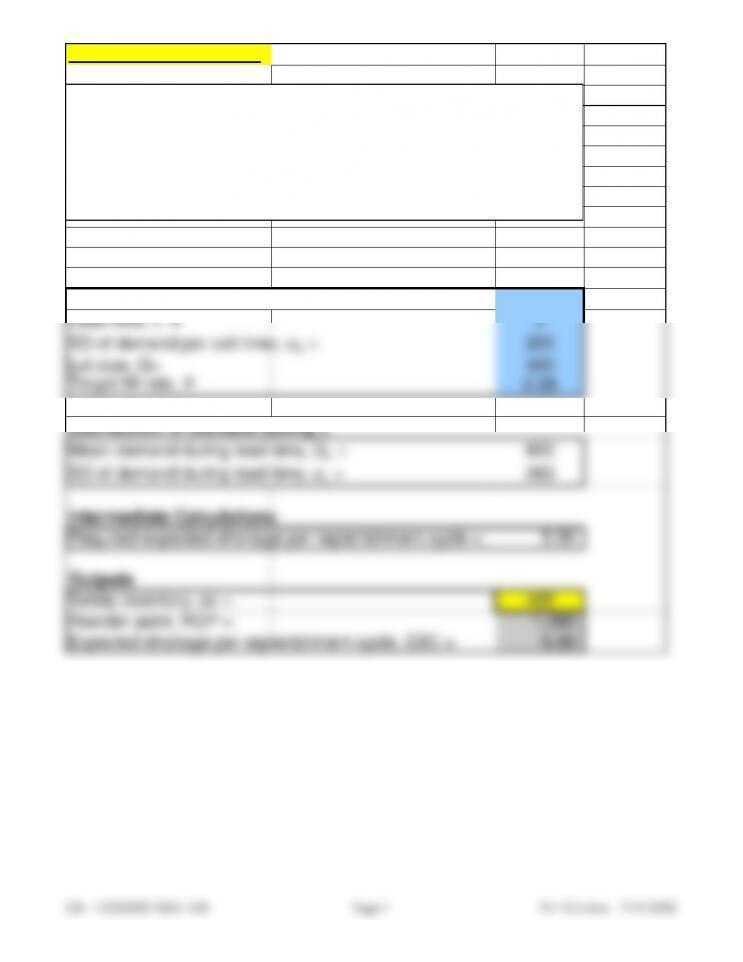
Exercise 12-5: Best Buy
Inputs
Average demand per unit time, D = 300
Lead time, L = 2
SD of demand per unit time, σD = 200
Lot size, Q= 500
Target fill rate, fr 0.99
Distribution of Demand during L
Mean demand during lead time, DL = 600
SD of demand during lead time, σL = 283
Intermediate Calculations
Required expected shortage per replenishment cycle = 5.00
Outputs
Safety inventory, ss = 485
Reorder point, ROP = 1,085
Expected shortage per replenishment cycle, ESC = 5.00
Assume that the Best Buy store has a policy of ordering cell phones from Motorola in
lots of 500. Weekly demand for Motorola cell phones at the store is normally distributed
with a mean of 300 and a standard deviation of 200. Motorola takes two weeks to
supply an order. If the store manager is targeting a fill rate of 99 percent, what safety
inventory should they carry? What should their reorder point be?
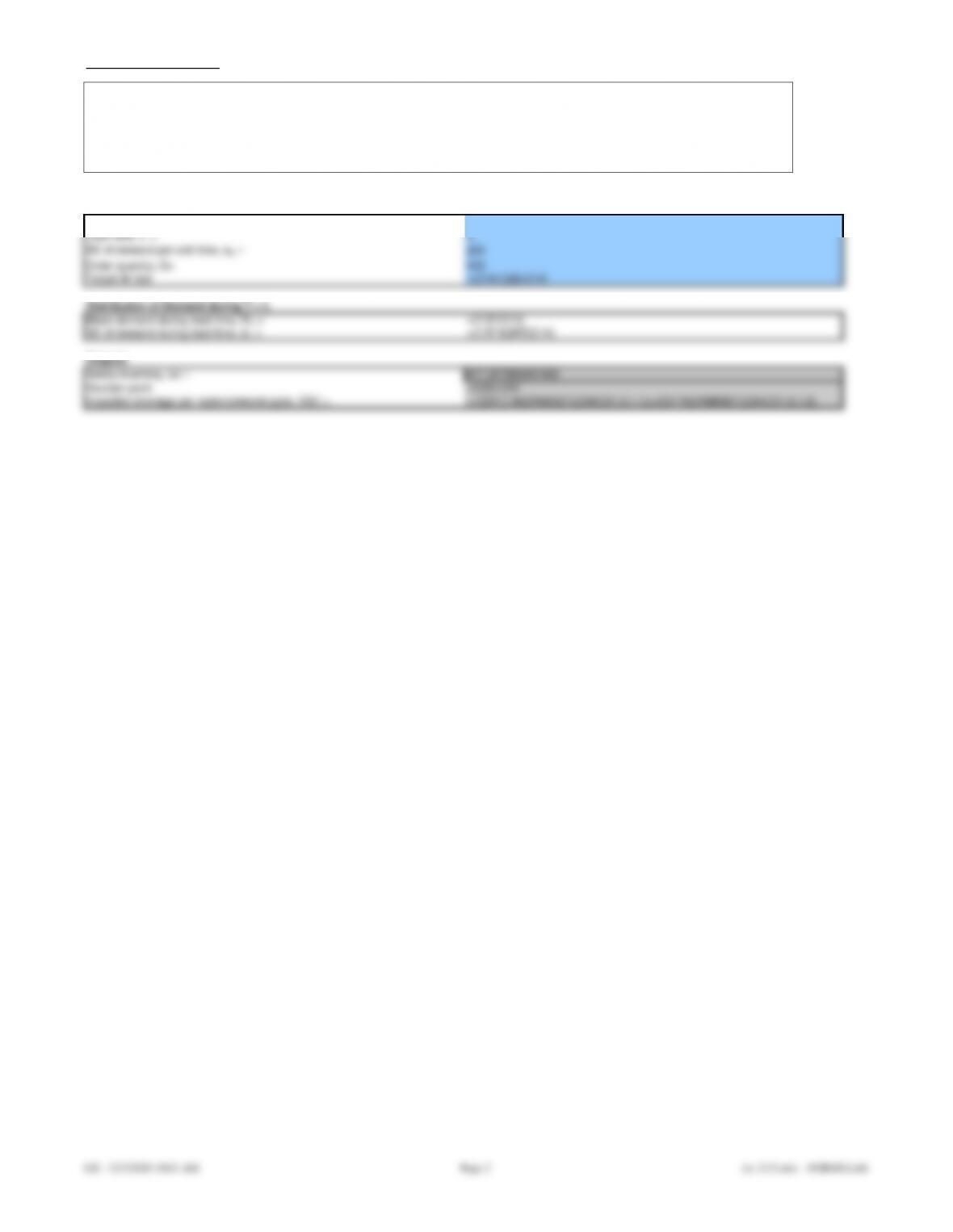
Exercise 12-5: Best Buy
Inputs
Average demand per unit time, R = 300
Lead time, L = 2
SD of demand per unit time, sR = 200
Order quantity, Q= 500
Target fill rate =(C16-C26)/C16
Distribution of Demand during T + L
Mean demand during lead time, RL = =C13*(C14)
SD of demand during lead time, sL = =C15*SQRT(C14)
Outputs
Safety inventory, ss = 477.357885667402
Reorder point =C20+C24
Expected shortage per replenishment cycle, ESC = =-C24*(1-NORMDIST(C24/C21,0,1,1))+C21*NORMDIST(C24/C21,0,1,0)
Assume that the Best Buy store has a policy of ordering cell phones from Motorola in lots of 500. Weekly demand for Motorola cell phones at the
store is normally distributed with a mean of 300 and a standard deviation of 200. Motorola takes two weeks to supply an order. If the store manager
is targeting a fill rate of 99 percent, what safety inventory should they carry? What should their reorder point be?