
Chapter 15: The Role of Accountants and Accounting Information
Chapter Overview
Every organization relies on accounting information and financial statements in order to gauge
business activity over periods of time. Accounting information can be thought of as a measuring
stick of an organization’s performance in specific periods of time.
This chapter unfolds with a discussion of the role of accountants and an explanation of the types
of accountants in the U.S. business system—public accountants, private accountants, management
accountants, and forensic accountants. In addition, the chapter discusses the accounting equation
as well as the three basic financial statements, showing how they reflect the activity and financial
condition of a business. It also looks at the key standards and principles for reporting financial
statements and describes how computing financial ratios can help users get more information
from financial statements to determine the financial strengths of a business. Finally, the chapter
ends with a discussion of the role of ethics in accounting—a subject that has received much press
in recent years.
Learning Objectives
15-1. Explain the role of accountants and distinguish among the kinds of work done by public
accountants, private accountants, management accountants, and forensic accountants.
15-3. Describe the three basic financial statements and show how they reflect the activity and
financial condition of a business.
15-5. Describe how computing financial ratios can help users get more information from
financial statements to determine the financial strengths of a business.
15-7. Describe the purpose of the International Accounting Standards Board and explain why
it exists.
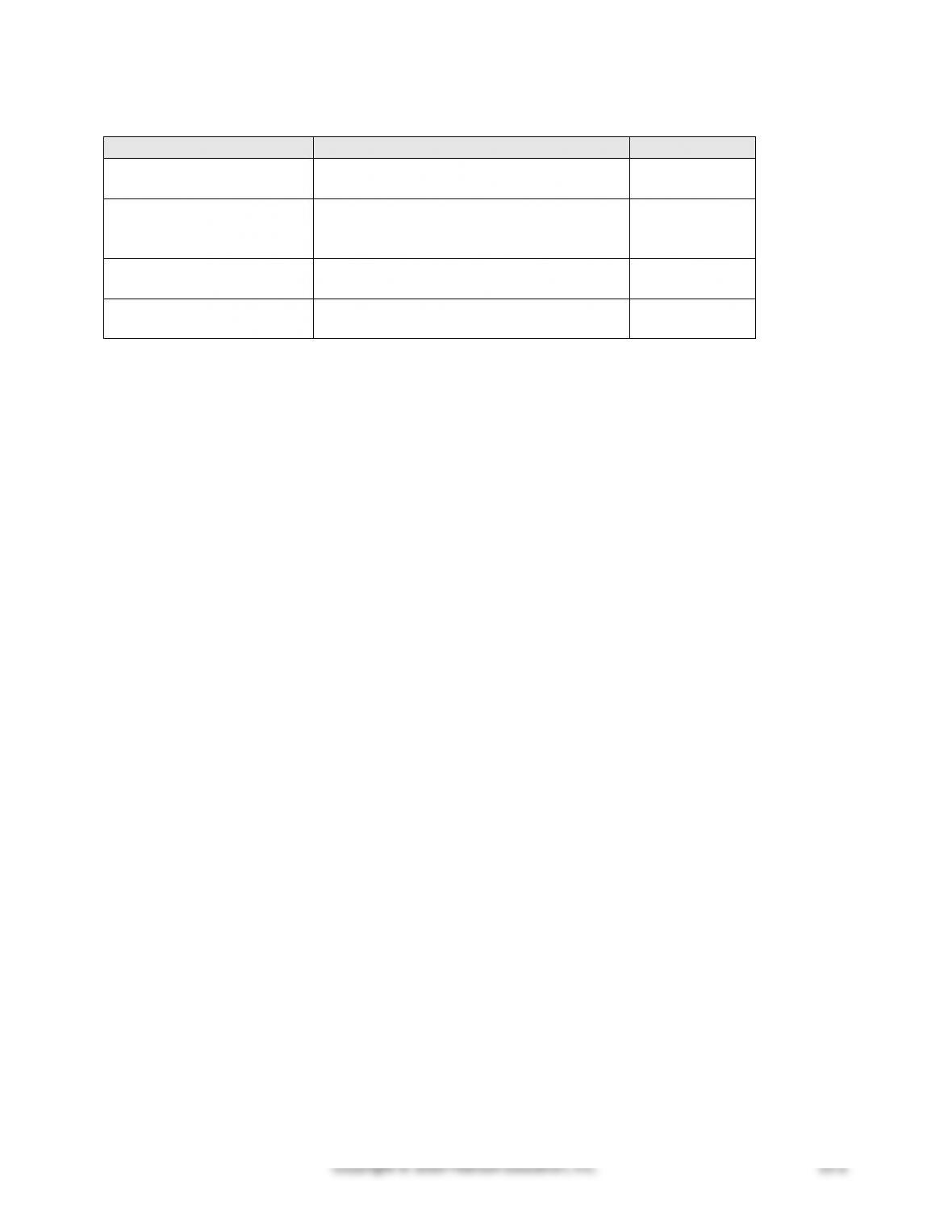
LIST OF IN-CLASS ACTIVITIES: INSTRUCTOR’S CHOICE
Activity
Description
Time Limit
1. Ice–Breaker: Do You Use
Accounting?
Students think about ways in which they
use accounting in their personal lives.
20 min.
2. Class Discussion:
Interpreting Financial
Statements
Students determine in which financial
statement specific pieces of information are
included.
20 min.
3. Small-Group Discussion:
Annual Reports
Students review financial information from
annual reports of real companies.
45 min.
4. Class Discussion:
Choose an Investment
Students calculate financial ratios and
interpret their results.
30 min.
CHAPTER OUTLINE
Learning Objective 15-1
Explain the role of accountants and distinguish among the kinds of work done by public
accountants, private accountants, management accountants, and forensic accountants.
What is Accounting, and Who Uses Accounting Information?
Accounting is a comprehensive system for collecting, analyzing, and communicating financial
information that is used to prepare financial statements and management reports. Bookkeeping is
The controller manages a firm’s accounting activities. As chief accounting officer, the controller
ensures that the AIS provides the reports and statements needed for planning, controlling,
decision making, and other management activities.
A. Financial versus Managerial Accounting
1. Financial Accounting. A firm’s financial accounting system is concerned with external
information users—the firm’s external stakeholders: consumer groups, unions,
2. Managerial Accounting. Managerial (management) accounting serves internal users.
Managers at all levels need information to make departmental decisions, monitor projects,
and plan future activities. Other employees also need accounting information. Engineers
B. Certified Public Accountants (CPAs)
Certified public accountants (CPAs) offer accounting services to the public, whether a
business or individual client. They are independent from the clients they serve. They are
licensed by a state after passing an exam prepared by the American Institute of Certified
Public Accountants (AICPA).
1. The “Big Four” Public Accounting Firms. The “Big Four” public accounting firms,
Deloitte Touche Tohmatsu (United States), Ernst & Young (United Kingdom),
Copyright © 2019 Pearson Education, Inc.
15-4
PricewaterhouseCoopers, PwC (United Kingdom), and KPMG (Netherlands) account for
one-half of the total revenue generated by accounting firms active in the United States.
2. CPA Services. Most CPA firms provide auditing services, tax services, and management
services.
a. Auditing. An audit examines a company’s AIS to determine whether financial reports
3. Noncertified Public Accountants. This category includes accountants who do not take the
CPA exam, who are preparing for it, or who are waiting for state certification.
4. The CPA Vision Project. The CPA Vision Project is a profession-wide program that was
established to assess the future of accounting; a prime reason for the project is the decline
in the number of people who have entered the profession in recent years. The CPA Vision
Project identifies core competencies for accounting that will be necessary for the future
CPA.
C. Private Accountants and Management Accountants
Private accountants are hired as salaried employees of a firm who perform day-to-day
activities. Management accountants provide services to support managers in various
activities. Many hold the certified management accountant (CMA) designation.
D. Forensic Accountants
Forensic accounting is the use of accounting for legal purposes. Forensic accountants may be
called on by law enforcement agencies, insurance companies, or law firms for investigative
accounting and litigation support in crimes against companies, crimes by companies, and civil
disagreements.
2. Litigation Support. Forensic accountants assist in the application of accounting evidence
for judicial proceedings by preparing and preserving evidence for these proceedings,
focus specifically on fraud-related issues, including fraud prevention and deterrence,
financial transactions, fraud investigation, and legal elements of fraud.
E. Federal Restrictions on CPA Services and Financial Reporting: Sarbox
The Sarbanes-Oxley Act (2002) was enacted to restore public trust in corporate accounting
practices; Sarbox restricts the kinds of nonaudit services that CPAs can provide.
Sarbox Compliance Requirements. The CFO and CEO must pledge that the company’s
finances are correct and must vouch for the methods and internal controls used to get those
KEY TEACHING TIPS
Remind students that accounting is a comprehensive system for collecting, analyzing, and
communicating financial information, whereas bookkeeping is the recording of
transactions.
Point out that the controller manages a firm’s accounting activities.
Make sure students keep these two points separate: Financial accounting is concerned
with external information users; managerial accounting serves internal users and is not
limited to managers.
Make sure students understand the role of a CPA, who offers accounting services to the
public and who is licensed by a state after passing an exam.
may want to spend some time discussing these accountants to pique their interest.
QUICK QUESTIONS
Who uses accounting information and for what purpose do they use it?
Outside of the company, who might have an interest in a company’s financial situation?
What types of services do CPAs perform?

What has occurred in the business environment that has prompted the need for forensic
accountants and certified fraud examiners?
The Sarbanes-Oxley Act of 2002 (Sarbox) is a critical piece of federal legislation enacted
to restore public trust in corporate accounting practices. What are some of Sarbox’s
provisions?
Use In-Class Activity 1: Ice-Breaker: Do You Use Accounting?
Time Limit: 20 minutes

Learning Objective 15-2:
Explain how the accounting equation is used.
The Accounting Equation
Underlying all record-keeping procedures is the most basic tool of accounting—the accounting
equation.
A. Assets and Liabilities
An asset is any economic resource that is expected to benefit a firm or an individual who
owns it; a liability is a debt that the firm owes to an outside organization.
B. Owners’ Equity
Owners’ equity refers to the amount of money that owners would receive if they sold all
assets and paid all debts. Assets – Liabilities = Owners’ Equity.
KEY TEACHING TIPS
Make sure that students understand the accounting equation:
An asset is any economic resource that is expected to benefit a firm that owns it; a liability
is a debt that the firm owes. What are some examples of assets and liabilities found in
organizations?
Make sure students understand that owners’ equity is the money owners would receive if
they sold all of a company’s assets and paid all of its liabilities.
QUICK QUESTION
In what way(s) do businesses benefit from intangible assets?
How does the term net worth fit into the accounting equation?
Why is owners’ equity meaningful to investors and lenders?
Learning Objective 15-3:
Describe the three basic financial statements and show how they reflect the activity and
financial condition of a business.
Financial Statements
Accountants summarize the results of a firm’s transactions and issue reports to help managers
make informed decisions. Among the most important reports are financial statements, which fall
into three broad categories—balance sheets, income statements, and statements of cash flows.
A. Balance Sheets
Balance sheets display a firm’s financial condition at one point in time. They supply
information about assets, liabilities, and owners’ equity.
1. Assets. An asset is any economic resource that a company owns and from which it
expects to get some future benefit.
a. Current Assets. Current assets include cash and assets that can be converted into cash
within a year. The act of converting something into cash is called liquidating. Assets
benefits. These usually include the cost of obtaining rights or privileges, such as
patents, trademarks, copyrights, and franchise fees. Goodwill is the amount paid for an
existing business beyond the value of its other assets.
2. Liabilities. Current liabilities are debts that must be paid within one year. Accounts
3. Owners’ Equity. Owners’ equity is broken down into paid-in capital and retained
earnings. Paid-in capital is additional money invested in the firm by its owners. Retained
earnings are net profits kept by a firm rather than paid out as dividend payments to
stockholders.
B. Income Statements
The income statement is sometimes called a profit-and-loss statement because its description
of revenues and expenses results in a figure showing the firm’s annual profit or loss.
1. Revenues. Revenues are funds that flow into a business from the sale of goods or services.
2. Cost of Revenues (Cost of Goods Sold). The cost of revenues section shows the costs of
obtaining the revenues from other companies during the year (used for service providers).
Cost of goods sold are costs of obtaining materials to make products sold during the year
3. Operating and Net Income. Operating income compares the gross profit from operations
against operation expenses. Net income (net profit or net earnings) is calculated by
subtracting income taxes from operating income.
C. Statements of Cash Flows
Required of all firms whose stock is publicly traded, the statement of cash flows shows a
company’s yearly cash receipts and cash payments. This statement shows cash flows from
operating, investing, and financing activities.
D. The Budget: An Internal Financial Statement
A budget is a detailed statement of estimated receipts and expenditures for a future period of
time.
KEY TEACHING TIPS
Reinforce that financial statements include the summaries of a firm’s transactions and
help managers make informed decisions; financial statements include balance sheets,
income statements, and statements of cash flows. Go over each of the financial statements
carefully with students.
Make sure that students understand the distinction between current assets and fixed assets
and that they can provide examples of each.
Make sure students understand the difference between current liabilities and long-term
liabilities and that they can provide examples of each.
main areas of the income statement: revenues, cost of revenues, and operating expenses.

Reinforce that revenues are the funds that flow into a business from the sale of goods or
services; the cost of revenues (or the cost of goods sold) are the costs of obtaining
materials to make products sold during the year (for goods) or the costs of obtaining the
revenues from other companies (for services).
Point out that a statement of cash flows describes yearly cash receipts and cash payments;
it includes cash flows from operations, investing, and financing activities.
QUICK QUESTIONS
What are some examples of operating expenses?
Who might be interested in the information revealed in a statement of cash flows? Why?
What might be included in a budget for a typical household in the United States?
HOMEWORK
Using a Budget
Now is a good time to assign Application Exercise 9 from the end-of-chapter materials as
homework. This assignment asks students to interview an accountant and ask how the firm uses
budgets.
At-Home Completion Time: 1 hour
Use In-Class Activity 2: Class Discussion: Interpreting Financial Statements
Time Limit: 20 minutes
Use In-Class Activity 3: Small-Group Discussion: Annual Reports
Time Limit: 45 minutes
Learning Objective 15-4:
Explain the key standards and principles for reporting financial statements.
Reporting Standards and Practices
Spelled out in GAAP, these practices and principles cover a range of issues. The purpose is to
give external users confidence in the accuracy and meaning of financial information.
A. Revenue Recognition and Activity Timing
Revenue recognition is the formal recording and reporting of revenues in financial statements,
B. Full Disclosure
This indicates that financial statements should not include just numbers; they should include
management’s interpretation and explanation of those numbers.
KEY TEACHING TIP
Remind students that full disclosure requires that financial statements include both the
“numbers” and management’s interpretations/explanations of those numbers.
Reinforce that two conditions must be met for an earnings cycle to be complete: the sale is
complete and the product delivered; and the sale price has been collected or is collectible.
Learning Objective 15-5:
Describe how computing financial ratios can help users get more information from financial
statements to determine the financial strengths of a business.
Analyzing Financial Statements
Financial statements provide data, which can reveal trends and be applied to create various ratios.
These trends and ratios can be used to evaluate a firm’s financial health, its progress, and its
prospects.
A. Solvency Ratios: Borrower’s Ability to Repay Debt
Solvency ratios provide measures of the firm’s ability to meet its debt obligations. They can
be used to estimate short-term and long-term risk.
1. The Current Ratio and Short-Term Solvency. Short-term solvency ratios measure a
company’s liquidity and its ability to pay immediate debts. The most commonly used of
2. Long-Term Solvency. Long-term solvency is calculated by dividing debt—total
liabilities—by owners’ equity; this ratio illustrates the extent to which a firm is
financed through borrowed money. The lower the debt, the lower the risk to investors and
creditors.
B. Profitability Ratios: Earnings Power for Owners
Profitability ratios are used for measuring potential earnings.
Earnings per Share. This ratio is calculated by dividing net income by the number of shares
outstanding; this determines the size of the dividend that a firm can pay shareholders. As the
ratio goes up, stock value increases because investors know that the firm can better afford to
pay dividends.
C. Activity Ratios: How Efficiently Is the Firm Using Its Resources?
Activity ratios reveal the efficiency with which firms have used resources; an example is
when annual sales revenues can increase without an increase in operating costs. These ratios
are used for evaluating management’s use of assets.
KEY TEACHING TIPS
Reinforce that the current ratio measures a company’s ability to meet current obligations
out of current assets. The formula is Current Assets/Current Liabilities.

Reinforce that long-term solvency indicates a company’s ability to repay debts in future
years; the formula is Total Liabilities/Owners’ Equity.
Point out earnings per share determines the size of the dividend a firm can pay
shareholders; this can be determined using the formula Net Income/Number of Shares of
Stock Outstanding.
QUICK QUESTIONS
What do solvency ratios measure?
How can high debt be desirable for a company?
Of what value is earnings per share to an investor in analyzing the quality of the
investment?
Use In-Class Activity 4: Class Discussion: Choose an Investment
Time Limit: 30 minutes
HOMEWORK
Interview a Manager
Now is a good time to assign Application Exercise 10 from the end-of-chapter materials as
homework. This assignment asks students to interview the manager of a local retailer, wholesale
business, or manufacturing firm about the role of ethics in that company’s accounting practices.
At-Home Completion Time: 1 hour
Learning Objective 15-6:
Discuss the role of ethics in accounting.
Bringing Ethics into the Accounting Equation
A. Why Accounting Ethics?
1. AICPA’s Code of Professional Conduct. The code of professional conduct for public
2. Violation of Accounting Ethics and GAAP. The majority of recent accounting
thing” can make a difference.
KEY TEACHING TIP
It is critical that students recognize the purpose of ethics in accounting: to maintain public
confidence in business institutions, financial markets, and the products and services of the
accounting profession.
QUICK QUESTIONS
What are the six ethics-related areas outlined by the AICPA in its Code of Professional
Conduct?
What is the connection between the Sarbanes-Oxley Act of 2002 and the recent
widespread violations of accounting ethics?
Learning Objective 15-7:
Describe the purpose of the International Accounting Standards Board and explain why it
exists.
Internationalizing Accounting. By the late twentieth century, it was apparent that the upsurge in
multinational organizations and the global economy demanded more uniformity among
accounting practices. The development of “universal” procedures would allow governments and
investors in, say, China, Brazil, and Italy to read, interpret, and compare financial statements from
all those countries, whereas such comparisons even today are difficult if not sometimes
impossible.
A. International Accounting Standards Board
Established in 2001 and housed at London, England, the International Accounting Standards
Board (IASB) is an independent, nonprofit organization responsible for developing a set of
global accounting standards, and for gaining the support and cooperation of the world’s
various accounting organizations to implement those standards.
B. Why One Set of Global Practices?
Although more than 138 countries have adopted IASB’s accounting practices, nearly 50
1. Example Areas Targeted for Aligning U.S. GAAP and IASB
Among the many differences between the practices of U.S. GAAP and IASB—some
reports identify more than 400 such discrepancies—the following examples illustrate
some discrepancies and proposals for convergence toward universal standards in financial
reporting.
2. Timetable for Implementation
The U.S. Securities and Exchange Commission originally targeted 2015 as the earliest