
Chapter 1: The U.S. Business Environment
Chapter Overview
Many students come to an introduction to business class not quite sure what it’s all about. The
course has something for everyone, from those who have been in the business world a while to
those just getting started. As the book unfolds, you’ll develop an understanding of the
foundations of business and will be able to apply what you already know (or what you are
starting to learn) about business to many aspects of the course.
This first chapter dives right into the world of business, explaining what business is, what its
main goals and functions are, and how the external environments of business affect the success
and failure of any organization. The chapter also:
Defines the nature of U.S. business, describes the external environments of business, and
discusses how these environments affect the success or failure of organizations.
Describes global economic systems according to the means by which they control the
factors of production.
Shows how markets, demand, and supply affect resource distribution in the United States.
Discusses the elements of private enterprise and the degrees of competition in the U.S.
economic system.
Explains the importance of the economic environment to business and identifies the
factors used to evaluate the performance of an economic system.
Learning Objectives
1. Define the nature of U.S. business, describe the external environments of business, and
discuss how these environments affect the success or failure of organizations.
2. Describe the different types of global economic systems according to the means by which
they control the factors of production.
3. Show how markets, demand, and supply affect resource distribution in the United States,
identify the elements of private enterprise, and explain the various degrees of competition
in the U.S. economic system.
4. Explain the importance of the economic environment to business and identify the factors
used to evaluate the performance of an economic system.
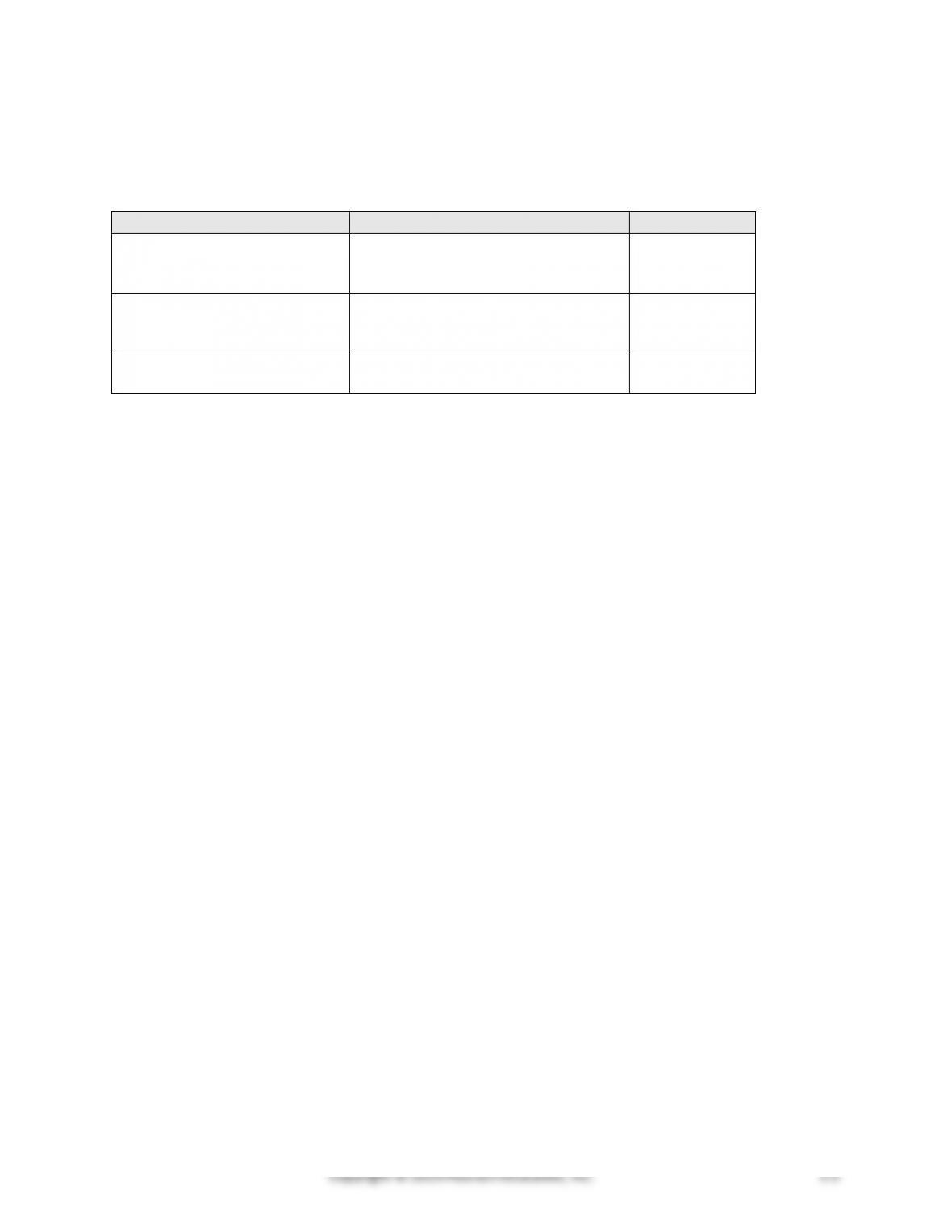
LIST OF IN-CLASS ACTIVITIES: INSTRUCTOR’S CHOICE
Activity
Description
Time Limit
1. Ice–Breaker: What Do You
Know About Business?
Students assess their level of
knowledge about business and set
their own learning goals for the class.
20 min.
2. Small Group Discussion:
Scanning the Environment
Students consider how parts of the
external environment affect
businesses and industries.
25 min.
3. Up for Debate: Comparing
Economic Systems
Teams of students discuss types of
economic systems.
30 min.
CHAPTER OUTLINE
Learning Objective 1-1:
Define the nature of U.S. business, describe the external environments of business and
discuss how these environments affect the success or failure of organizations.
Business and Profit
A business is an organization that provides goods and services to earn profits. Profits are the
difference between a business’s revenues and expenses.
1. Consumer Choice and Demand: In a capitalistic system like that of the United States,
2. Opportunity and Enterprise: Opportunity involves goods or services that consumers
3. The Benefits of Business: Businesses produce most of the goods and services consumed,
employ most working people, create new innovations, and provide opportunities for new
businesses to serve as suppliers. Further, businesses contribute to the quality of life and
the standard of living in a society. Businesses provide incomes, taxes to support
government, support to charities and community leadership.
The External Environments of Business
The external environment consists of everything outside an organization’s boundaries that
might affect it. Managers must understand their environment to understand how to operate and
compete within it. Businesses can also influence their environments. Six major dimensions of the
external environment are:
1. Domestic Business Environment. The domestic business environment refers to the
2. Global Business Environment. The global business environment refers to the inter–
national forces that affect a business; various factors including international trade
3. Technological Environment. The technological environment generally includes all the
4. Political-Legal Environment. The political-legal environment reflects the relationship
5. Sociocultural Environment. The sociocultural environment includes the customs, mores,
values, and demographic characteristics of the society in which an organization functions.
6. Economic Environment. The economic environment refers to relevant conditions that
exist in the economic system in which a company operates.
Use In-Class Activity 1: Ice-Breaker: What Do You Know About Business?
Learning Objective 1-2:
Describe the different types of global economic systems according to the means by which
they control the factors of production.
Economic System
An economic system is a nation’s system for allocating its resources among its individual
citizens and organizations.
A. Factors of Production
A basic difference between economic systems is the way in which a system manages its
factors of production, the resources that a country’s businesses use to produce goods and
services. Economists focus on five factors of production:
2. Capital: The financial resources needed to operate an enterprise are known as capital.
4. Physical Resources: The tangible things that organizations use to conduct their business
5. Information Resources: Businesses rely on information resources, such as market
forecasts, the specialized knowledge of people, and economic data.
KEY TEACHING TIPS
The production of tangible goods once dominated most economic systems. But now, the
most important factors of production are entrepreneurial skills and informational
resources. The more a country can create an environment that promotes entrepreneurship
and harnesses knowledge and information, the better off it will be.
Remind students that inputs used to produce outputs are also called factors of production;
they include physical resources, labor, capital, entrepreneurship, and information
resources.
QUICK QUESTIONS
What are the factors of production used to produce orange juice?
What are the factors of production used to produce an online video game?
Entrepreneurship involves tremendous risk-taking and is a welcome ingredient in a free-
market system. What characteristics of our free-market system encourage risk taking?
1. Planned Economies: These systems rely on partial or total government control of all or
2. Market Economies: Producers and consumers control production and allocation
decisions through supply and demand. The political basis of a market economy is
3. Mixed Market Economies: This type of economy features characteristics of both
planned and market economies; many countries are moving from planned systems to
mixed market systems through privatization, which involves the transformation of
government-controlled businesses into privately owned enterprises. In the partially
planned system called socialism, the government owns and operates selected major
industries. Many Western European countries, including England and France, allow free
market operations in most economic areas but keep government control of others, such as
health care. The United States currently is wrestling with who should control health care
for the portion of the population that is not eligible (by age) for Medicare.
KEY TEACHING TIPS
Remind students that a government’s level of control distinguishes capitalism from
socialism. If you have foreign students in your class, you may want them to say a bit
about the economic system in their native country.
government ownership of major industries working alongside privately owned industries.
Ask students to give their opinions about the health care system in the United States, and
the debates regarding restructuring it. In addition, you could ask students to research and
report on any new stories concerning the health care system that appear in publications
such as the Wall Street Journal. It is never too early to get students to regularly read the

business news!
Use In-Class Activity 3: Class Discussion: Up for Debate: Comparing Economic Systems
Time Limit: 30 Minutes
QUICK QUESTIONS
Give an example of a country with a planned economy. What makes this economy
planned?
Give an example of a country with a market economy. How is the economic system
different in this country?
Do you think the government should be involved in supporting the health care insurance
system in the U.S.? Why or why not?
Learning Objective 1-3
Show how markets, demand, and supply affect resource distribution in the United States,
identify the elements of private enterprise, and explain the various degrees of competition
in the U.S. economic system.
1. The Laws of Demand and Supply: Demand is the willingness and ability of buyers
to purchase a product; supply is the willingness and ability of producers to offer a good
or service for sale. The law of demand states that buyers will purchase more of a product
as its price drops; the law of supply states that producers will offer more of a product for
sale as its price increases.
a. The Demand and Supply Schedule: The demand and supply schedule indicates how
much of a product will be sold at various prices. Generally speaking, the more
consumers are willing to pay for a good, the more producers are likely to divert
resources to make more of the good. Conversely, as the price at which consumers are
willing to pay for a product falls, production becomes less profitable and producers
cut back on production to divert resources to more profitable areas.
b. Demand and Supply Curves: A demand curve shows how many products will be
demanded at different prices; a supply curve shows how many products will be
supplied at various prices. The point at which the curves intersect is the market price
(or equilibrium price).
c. Surpluses and Shortages: With a surplus, the quantity supplied exceeds the quantity
demanded; quantity demanded exceeds quantity supplied with a shortage. Businesses
should seek the ideal combination of price charged and quantity supplied so as to
maximize profits, maintain goodwill among customers, and discourage competition.
QUICK QUESTION
What is equilibrium price? What happens if incomes rise and demand increases? What happens
if producers have a surplus and supply increases? Why should producers aim to meet, but not
exceed, demand at the equilibrium price?
B. Private Enterprise and Competition in a Market Economy
Individuals pursue their own interests with minimal government restriction in a private
1. Degrees of Competition. Economists have identified four degrees of competition in a
private enterprise system:
a. Perfect Competition. Many small firms exist in an industry; no single firm is
powerful enough to influence price.
b. Monopolistic Competition. Many sellers of all sizes, but also many buyers exist, so
sellers focus on numerous differentiation strategies, such as brand names, design, and
advertising.
c. Oligopoly. An industry has only a handful of sellers; market entry is difficult because
large capital investment is needed. Sellers tend to be large.
d. Monopoly. An industry or market has only one producer; that producer enjoys
complete control over price. Utility companies are natural monopolies, industries in
which one company can most efficiently supply all needed goods or services.
Duplicate facilities would be wasteful.
KEY TEACHING TIPS
Remind students that perfect competition is characterized by (a) many buyers, (b) many
sellers, and (c) buyers and sellers who accept a going price.
Remind students that a monopoly is characterized by (a) many buyers, (b) only one seller,
and (c) prices being set by the one seller.

QUICK QUESTION
Which level of competition best describes the market in each of the following scenarios?
o Your local Pizza Hut (monopolistic competition)
o Apple store (monopolistic competition)
o Local utility/power company (monopoly)
HOMEWORK
Visit a Shopping Mall!
Now is a good time to assign Application Exercise 9 from the end-of-chapter materials as
homework. This assignment asks students to visit a local shopping mall and determine the
degree of competition stores in the mall face in their immediate environment.
At-Home Completion Time: 1 to 1.5 hours
Learning Objective 1-4
Explain the importance of the economic environment to business and identify the factors
used to evaluate the performance of an economic system.
Economic Indicators
A. Economic Indicators
These statistics show whether an economic system is strengthening, weakening, or remaining
stable.
1. Economic Growth, Aggregate Output, and Standard of Living. The business cycle is
the pattern of short-term expansions and contractions in an economy; one important use
of economic measures is to help governments and businesses understand where in the
2. Gross Domestic Product (GDP): The GDP is the total value of all goods and services
produced within a given period through domestic factors of production; GDP is a
measurement of aggregate output. If GDP is going up, aggregate output is going up; if
aggregate output is going up, the nation is experiencing economic growth. Gross
national product (GNP) refers to the total value of all goods and services produced by a
national economy within a given period regardless of where the factors of production are
located.
a. Real Growth Rate: Real growth depends on output increasing at a faster rate than
population; the real growth rate in 2015 of the U.S. economic system was 2.4 percent
while the population grew at a rate of 0.70 percent, thus indicating the real growth
rate is modest.
b. GDP per Capita: GDP per capita means GDP per person. GDP divided by total
population equals GDP per capita. It is a better measure than GDP itself of the
economic well–being of the average person.
c. Real GDP: Real GDP means that GDP has been adjusted to account for changes in
living around the world.
3. Productivity: Productivity compares how much a system produces with the resources
needed to produce it; increases in productivity yield increases in the standard of
living.
a. Balance of Trade: A country’s balance of trade is the economic value of all the
products that it exports minus the economic value of its imported products. A positive
balance results when the value of a country’s exports is greater than its imports; that
is, more money is flowing into the country as a result of exporting. A negative
balance results when a country imports more than it exports.
b. National Debt: A country’s national debt is the amount of money that is owed by
the government to creditors.
B. Economic Stability
Stability results when the amount of money available in an economic system and the
quantity of goods and services produced in it are growing at about the same rate.
1. Inflation. Inflation occurs when widespread price increases plague an economic system;
the amount of money in the economic system exceeds the amount of actual output.
2. Unemployment. Unemployment is the level of joblessness among people actively
seeking work in an economic system; when unemployment is high, a surplus of available
workers exists. When unemployment is low, there is a shortage of labor available for
businesses to hire.
Unemployment is sometimes a symptom of a recession, when aggregate output declines,
or of a depression, a prolonged and deep recession. For example, during downturns in
U.S. was 10.2 percent. By November 2011, it was 8.7 percent. By the end of 2016, it was
4.9 percent.
3. Recession and Depression. Aggregate output is measured to determine whether an
economy is going through a recession. Governments and economists define a recession