10–40$
P10–17)(b))
)
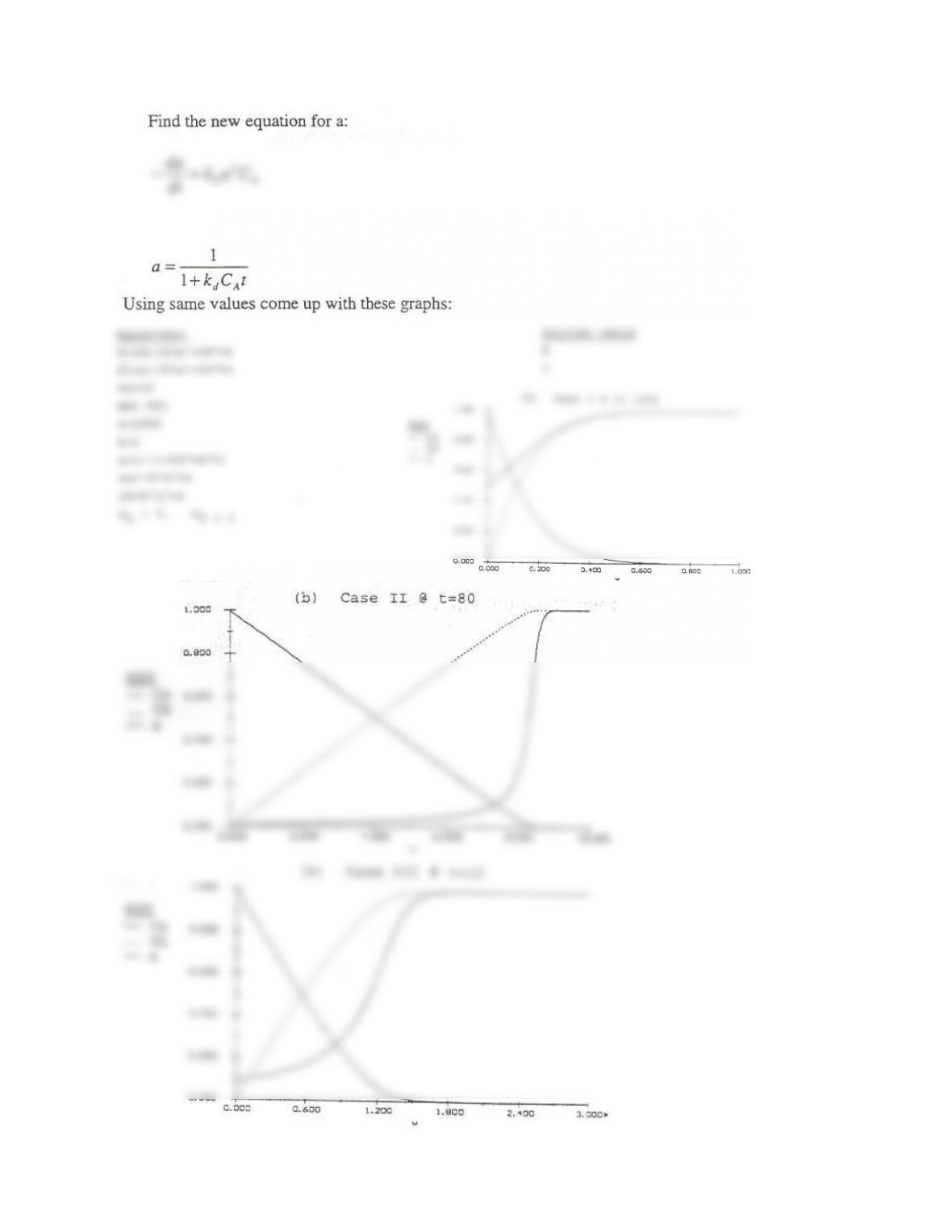
$assume$CA$changes$very$slowly$w.r.t.$“a”$changing$
)
$
$
$
10–41$
P10–17)(c)$
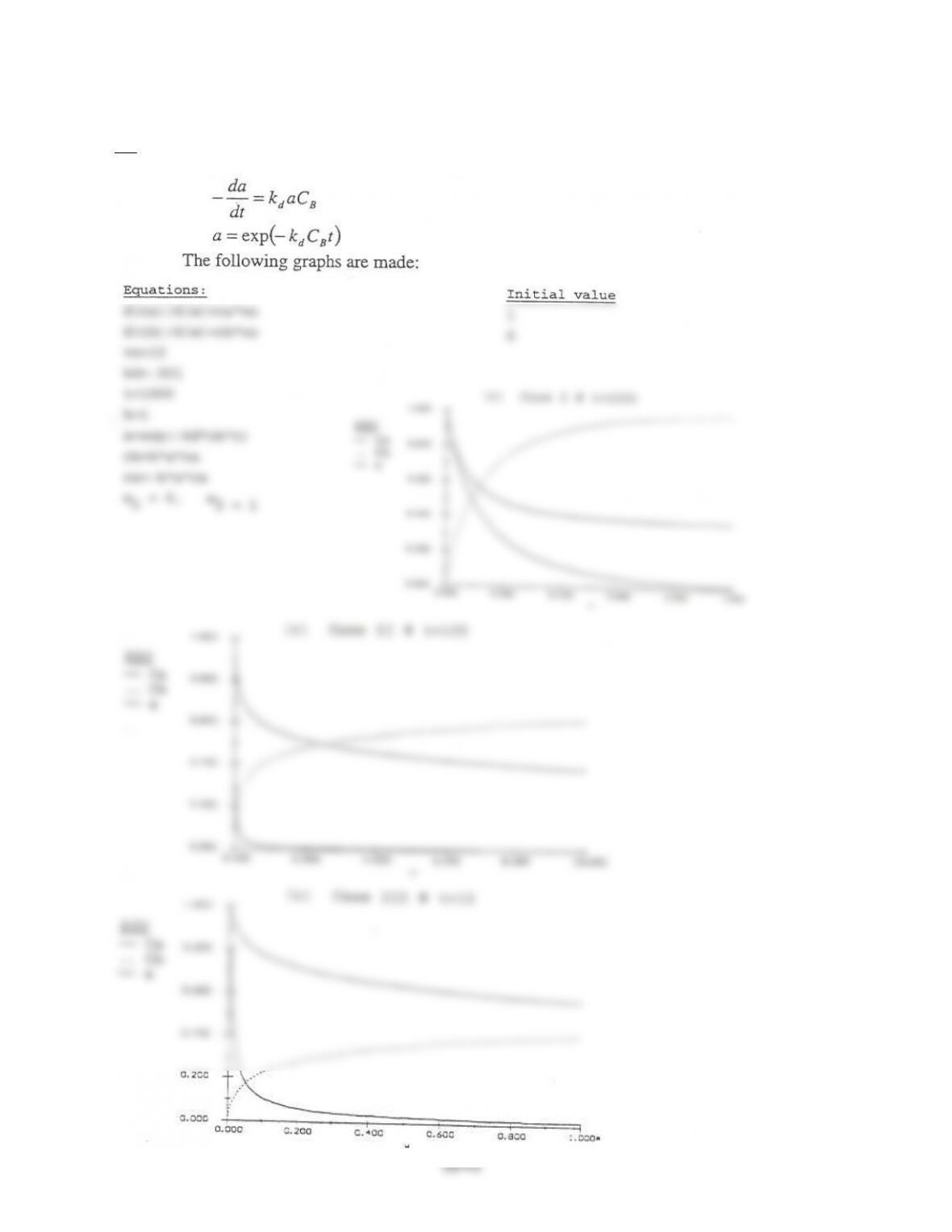
Find$the$new$equation$for$a:$again$assuming$CB$changes$slowly$w.r.t.$“a”.$A$better$solutions$is$to$put$$
da
d
τ
=$–kaC$B$into$the$Polymath$program$
$
$
10–42$
P10–17)(d))
$
$
10–43$
P10–17)(e))
$
$
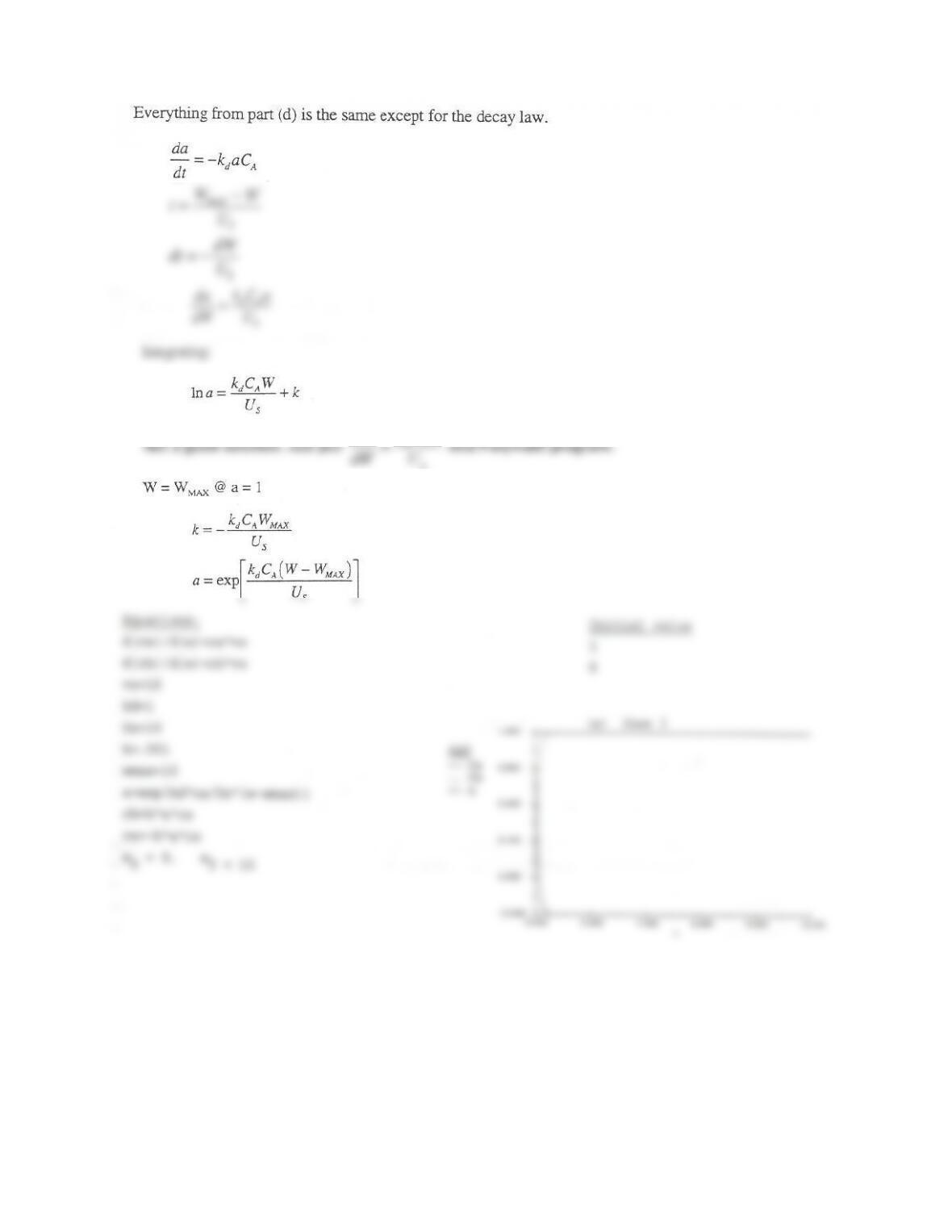
$$$$$$$$Not$a$good$solution.$Just$put$
da
dW =kdCAa
Us
$into$Polymath$program.$$
$
$
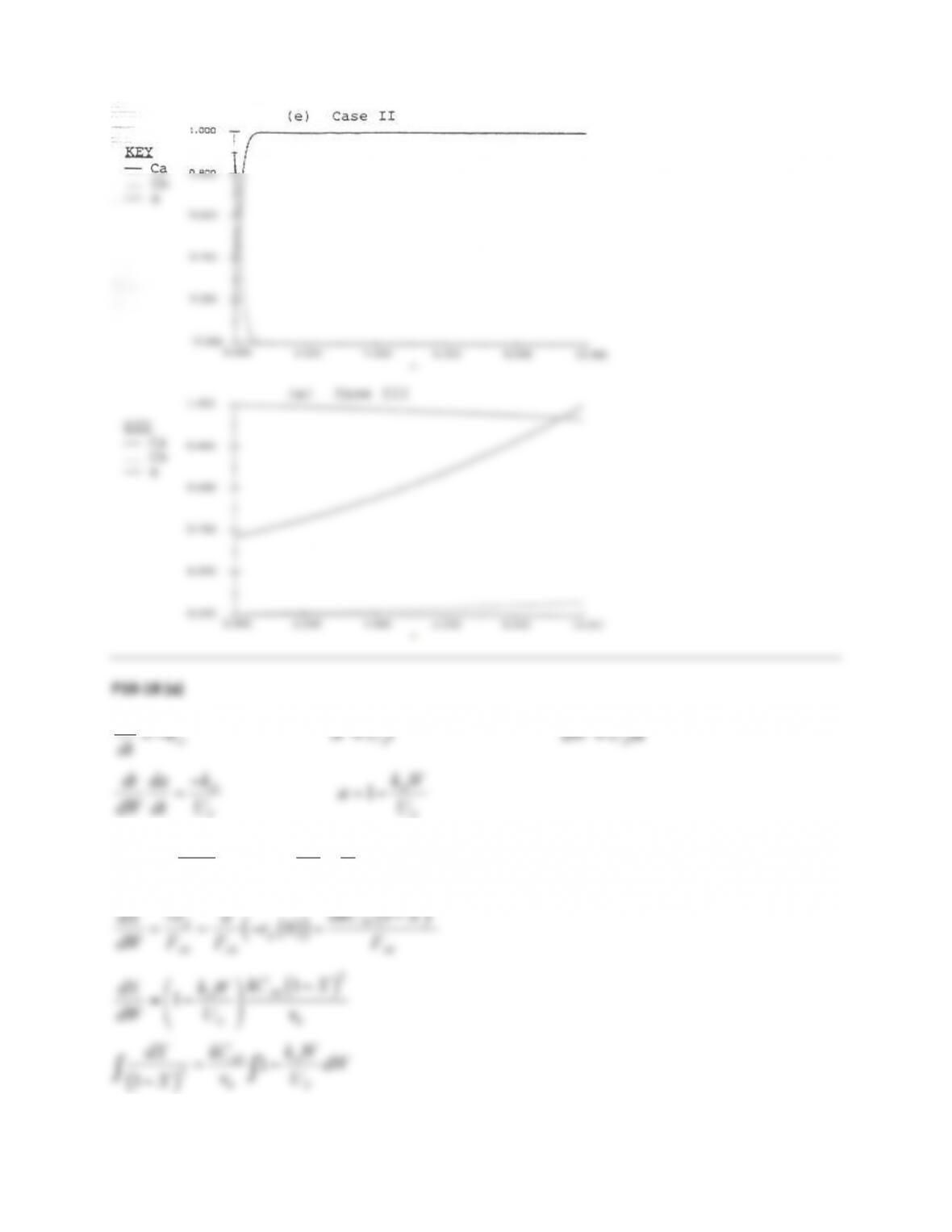
P10–17)(e))Continued$
$
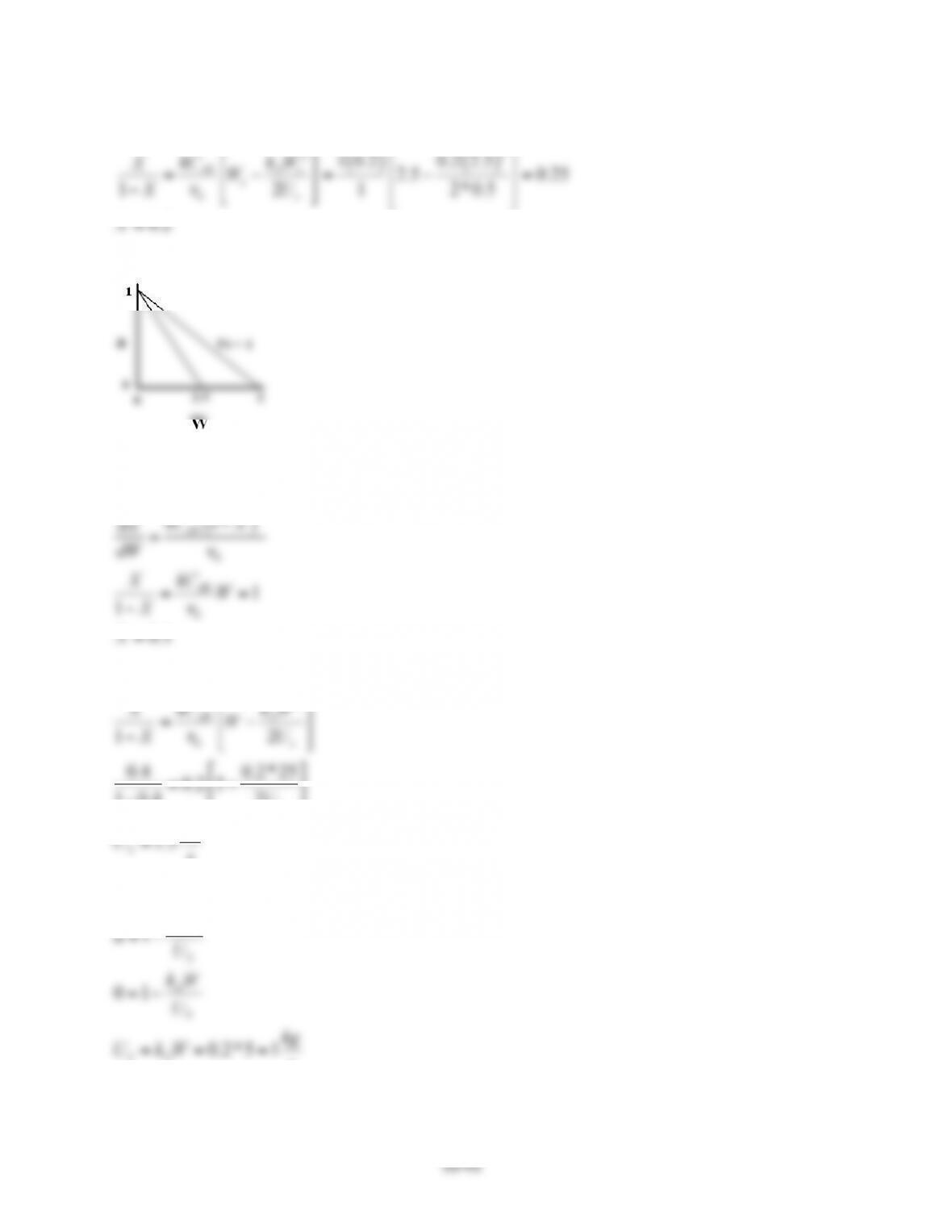
P10-18)(a))Continued$
Activity$is$zero$for$W$>$2.5$kg,$so$the$catalyst$weight$only$goes$to$the$effective$weight.$
$
( ) ( )
2
2
0
1 0.2 0.2 2.5
2.5 0.25
ADe
e
kC k W
XW
⎡⎤
⎡⎤
=−=−=
⎢⎥
⎢⎥
$
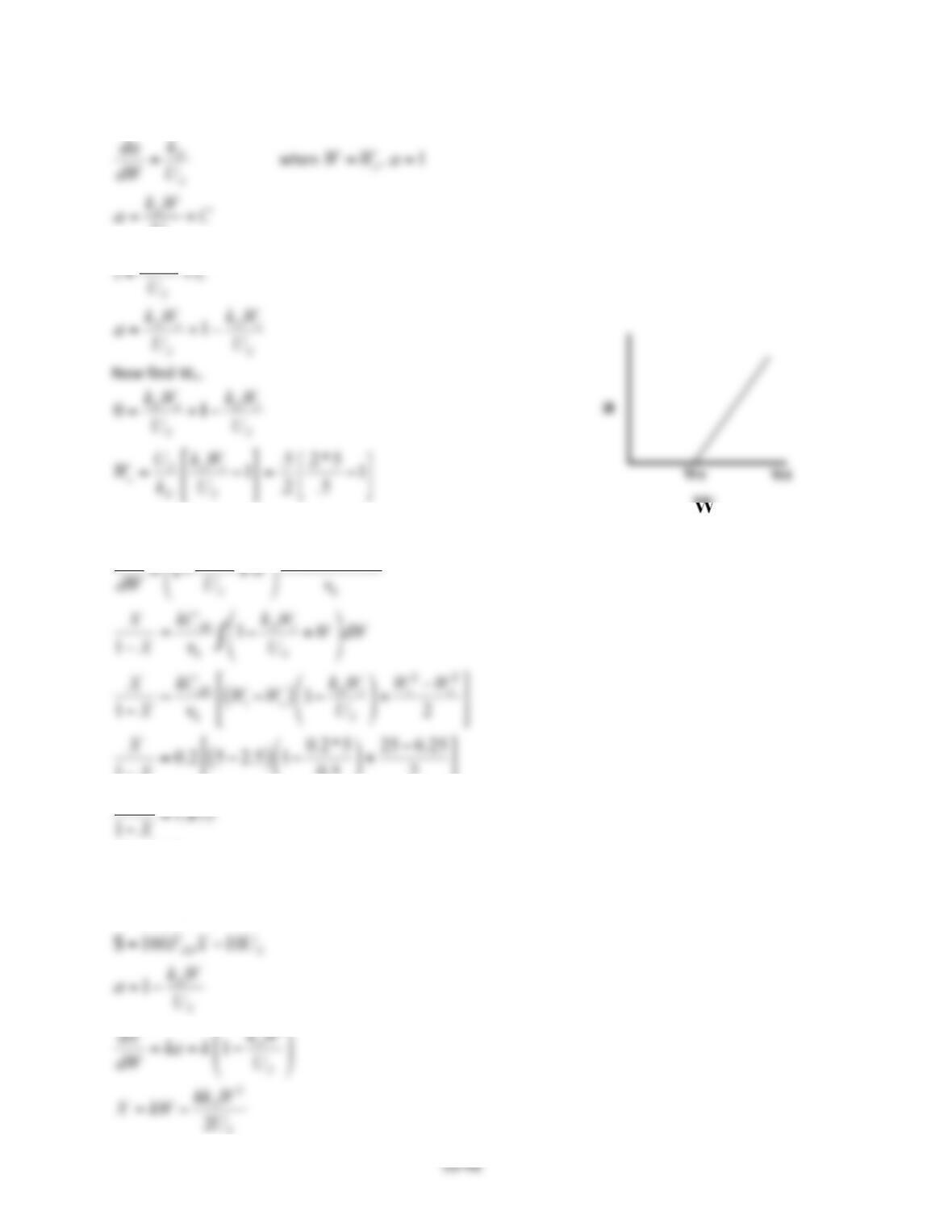
P10–18)(g))
S
UU=−
$
D
S
k
da
dW U
=
$ $ when$
t
WW=
,$
1a=
$
D
S
kW
aC
U
=+
$
1Dt
S
kW C
U
=+
$
1
De Dt
SS
kW kW
a
UU
=+−
$
Now$find$We.$
01
De Dt
SS
kW kW
UU
=+−
$
.5 .2*5
11
.2 .5
SDt
e
DS
UkW
W
kU
⎡⎤
⎡⎤
=−=−
⎢⎥
⎢⎥
⎣⎦
⎣⎦
$
2.5
e
W=
$
( )
2
0
0
1
1A
Dt
S
kC X
kW
dX W
dW U v
−
⎛⎞
=−+
⎜⎟
⎝⎠
$
0
0
1
1
ADt
S
kC k W
XWdW
Xv U
⎛⎞
=−+
⎜⎟
−⎝⎠
∫
$
( )
22
0
0
1
12
ADtte
te
S
kC k W W W
XWW
Xv U
⎡⎤
⎛⎞
−
=−−+
⎢⎥
⎜⎟
−⎢⎥
⎝⎠
⎣⎦
$
( )
0.2 * 5 25 6.25
0.2 5 2.5 1
X
⎡⎤
−
⎛⎞
=−− +
⎜⎟
⎢⎥
$
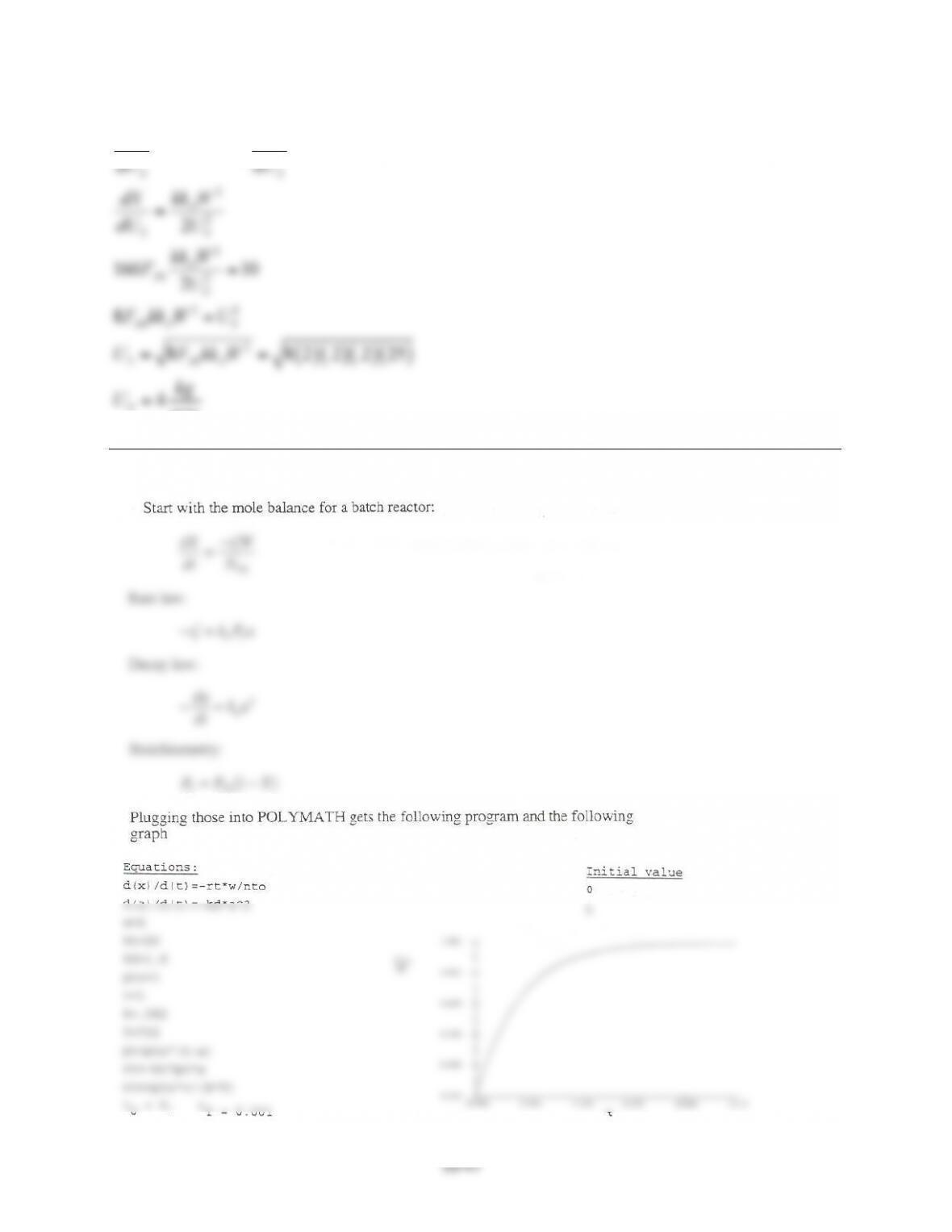
10–47$
P10-18)(h))Continued$
To$maximize$profit,$a$maximum$in$profit$is$reached$and$so$we$set$the$differential$of$profit$equal$to$0.$
0
$0160 10
A
SS
ddX
F
dU dU
== −
)
2
2
2
D
SS
kk W
dX
dU U
=
)
2
02
160 10
2
D
A
S
kk W
F
U=
)
22
0
8AD S
FkkW U=
)
( )( )( )( )
2
0
8 8 2 .2 .2 25
SAD
UFkkW==
)
4
min
S
kg
U=
)
$
)
P10–19)(a))
)
$
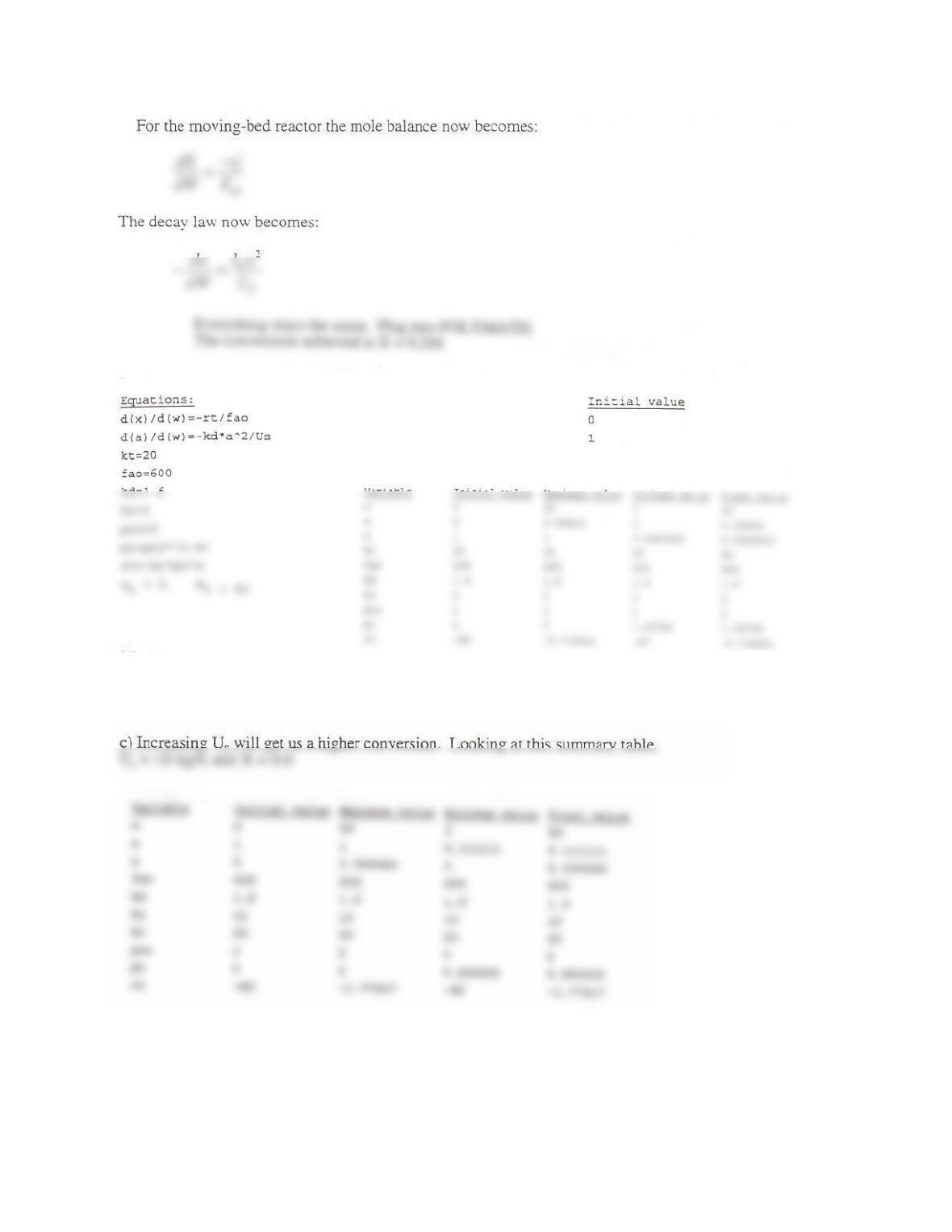
10–48$
P10–19)(b))
)
$
$
P10–19)(c))
$
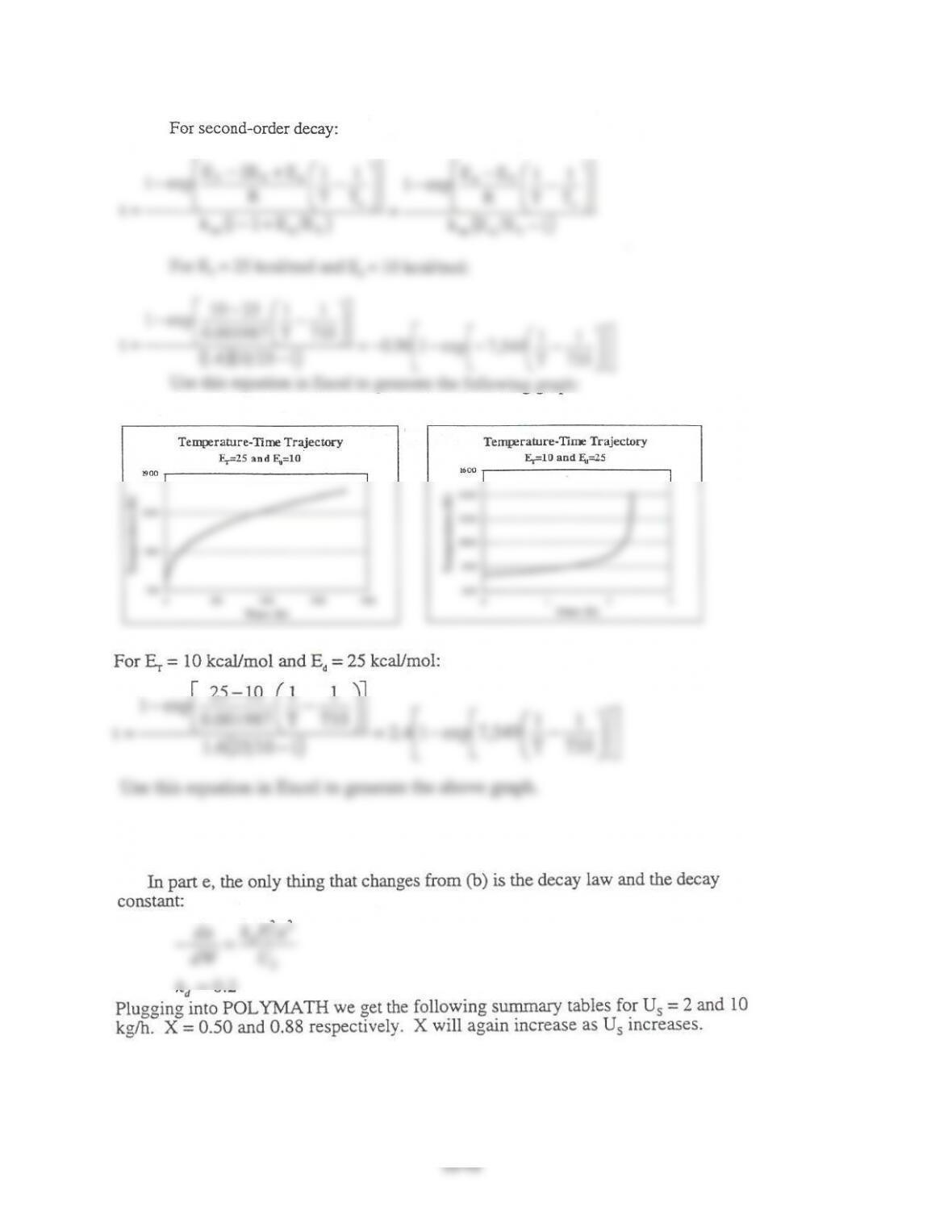
10–49$
P10–19)(d))
$
$
$
$
P10–19)(e))
$
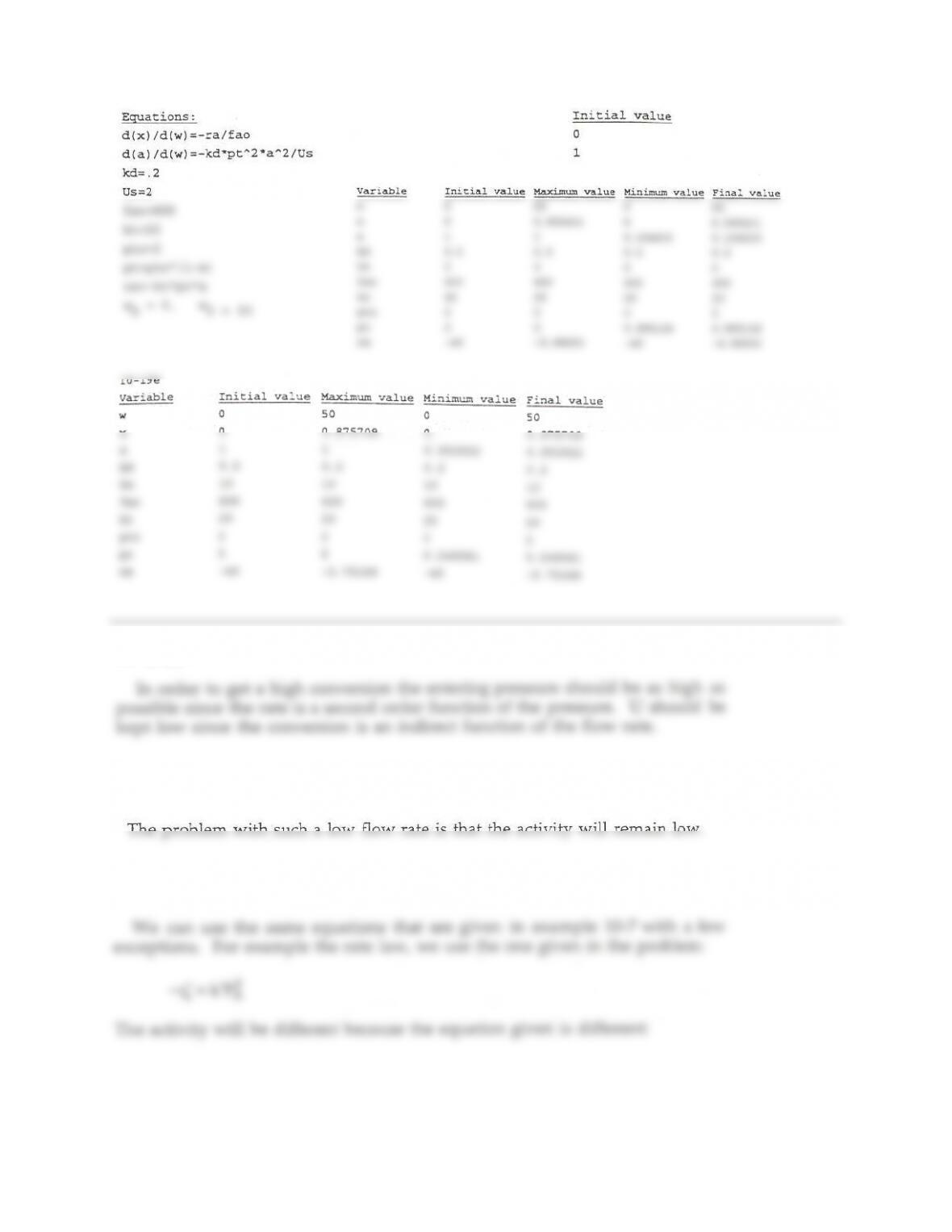
10–50$
P10-19)(e))Continued$
$
)
P10–20)(a))
)
)
P10–20)(b))
)
)
P10–20)(c))
)
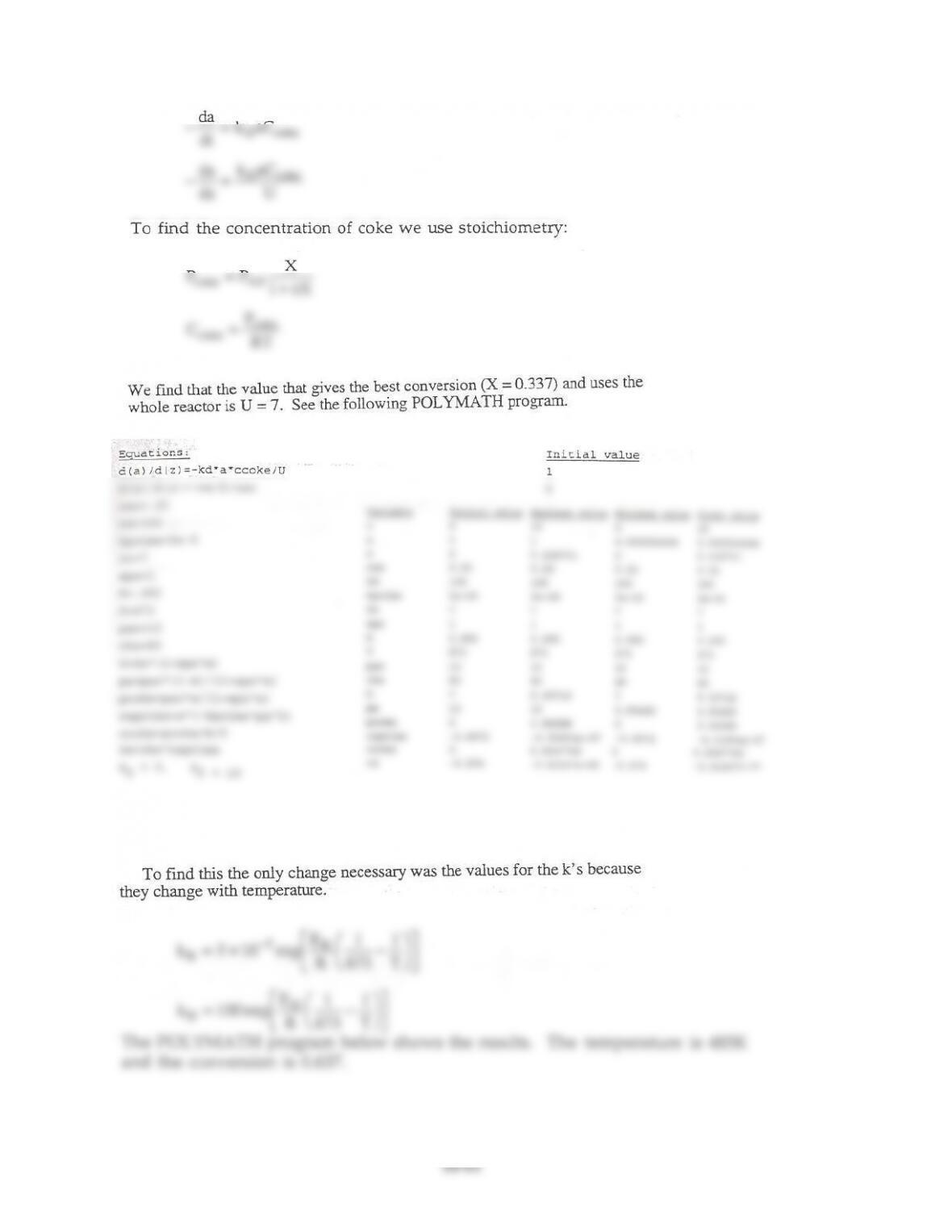
10–51$
P10–20)(c))Continued$
$
$
$
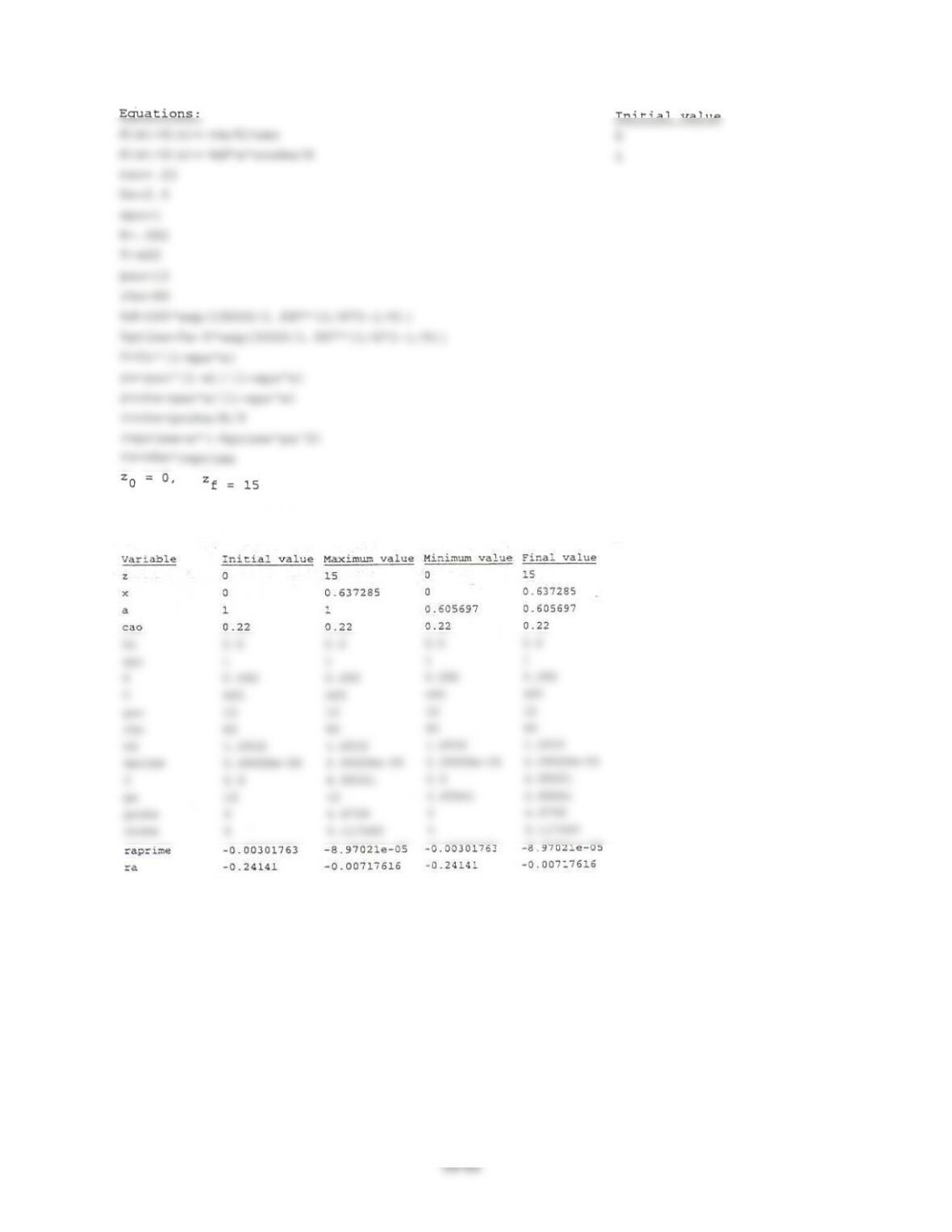
P10–20)(d))
$
10–52$
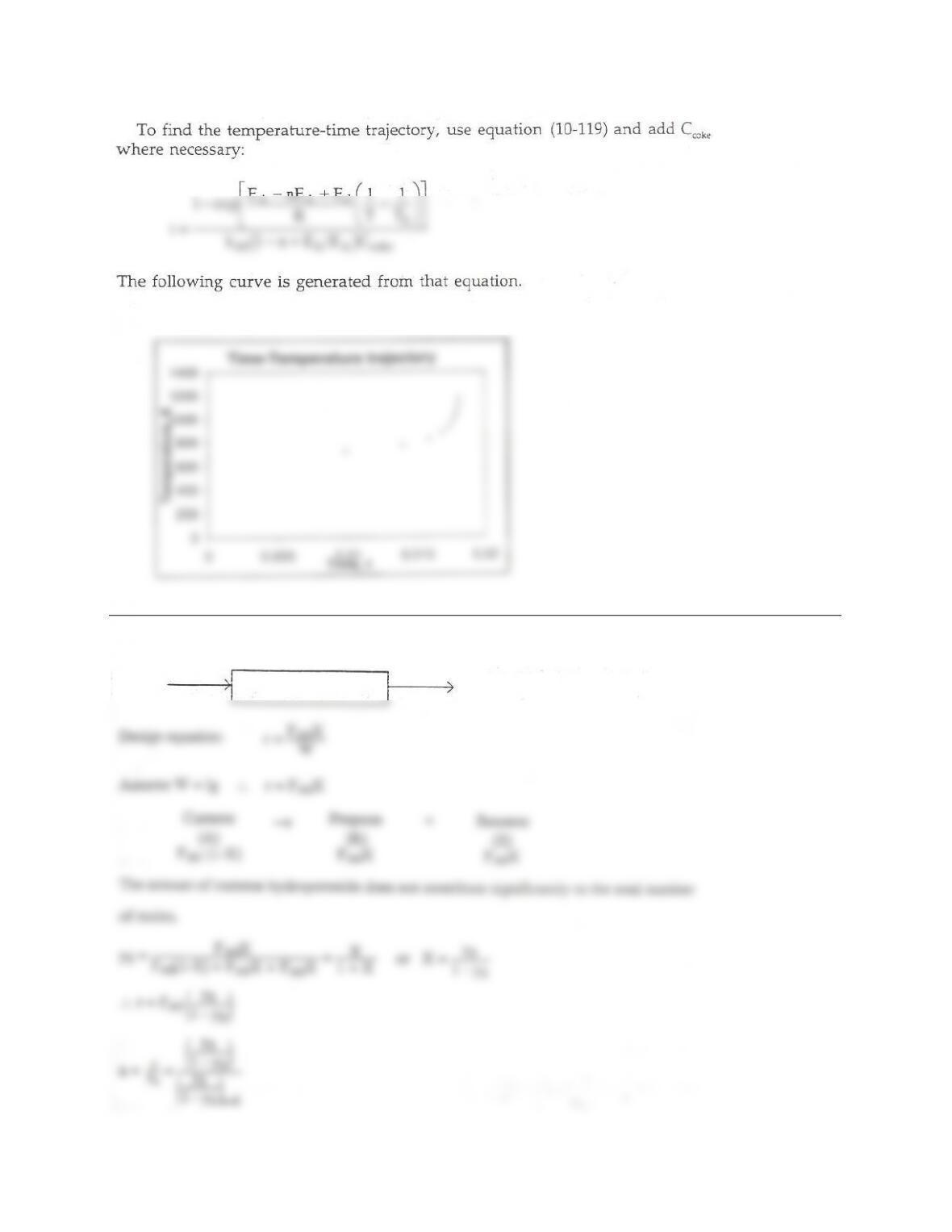
P10–20)(d))Continued$
$
$
$
)
10–53$
P10–20)(e))
)
$
)
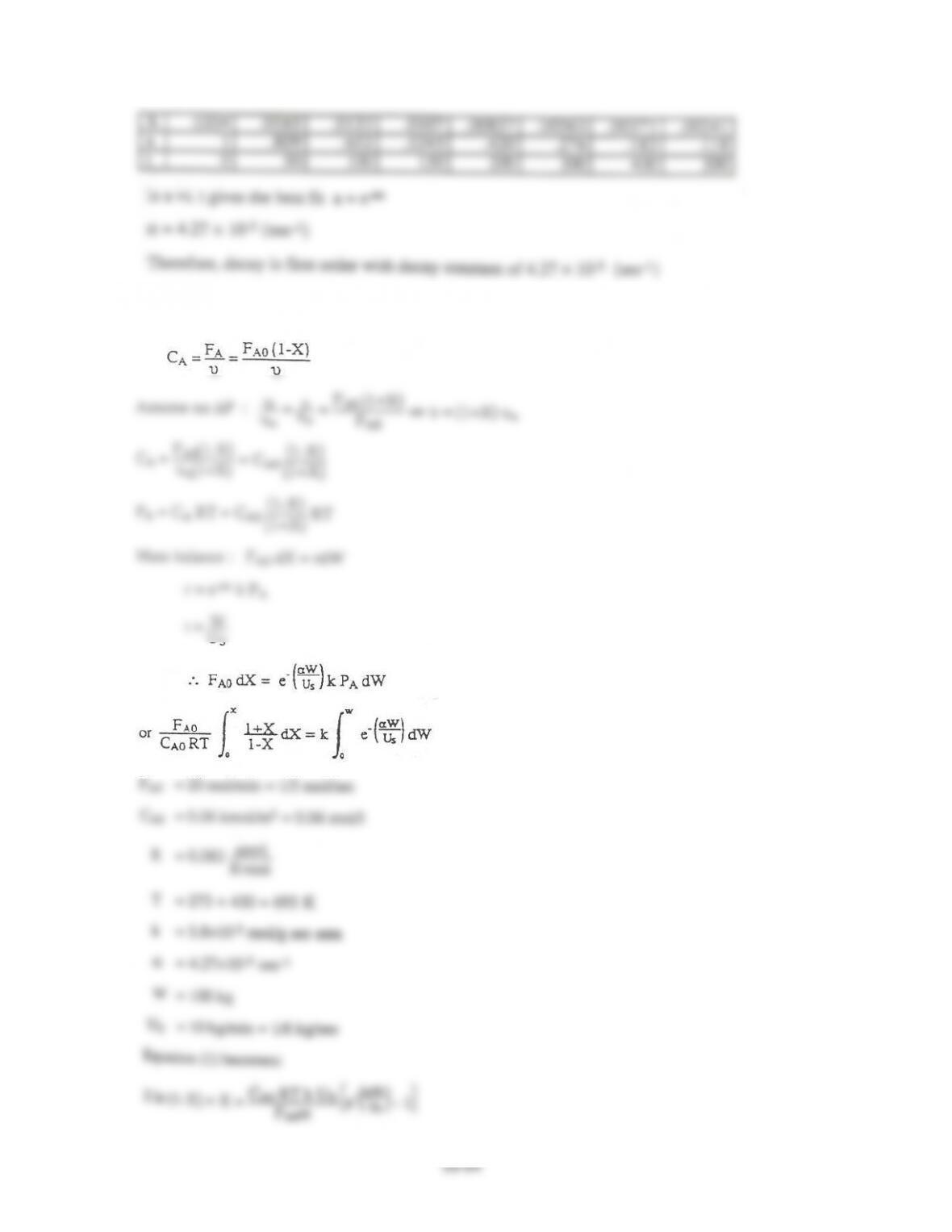
P10–21)(a))
$
10–54$
P10–21)(a))Continued$
$
$
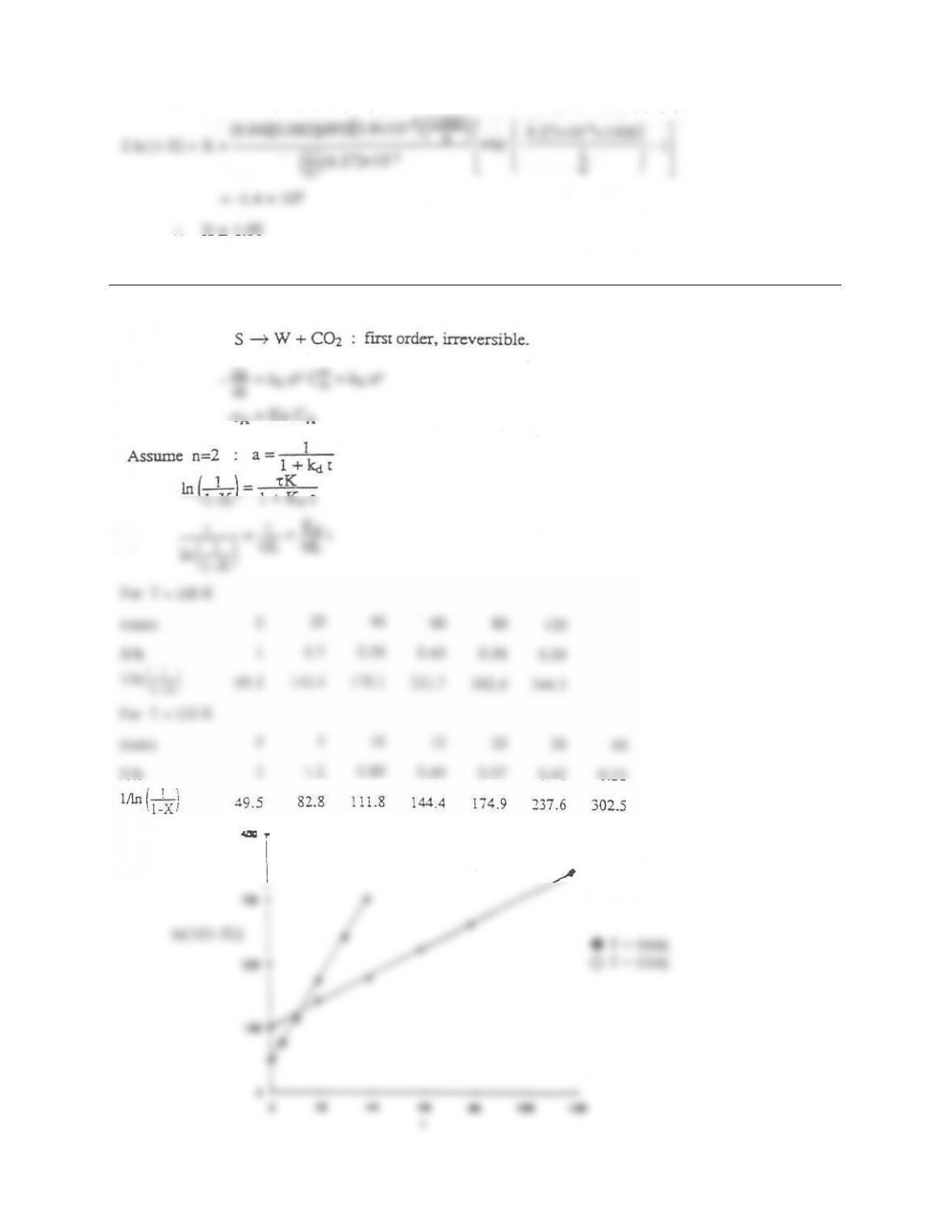
P10–21)(b))
$
$
10–55$
P10–21)(b))Continued$
$
$
)
P10–22)(a))
)
$
$ $
10–56$
P10–22)(a)$continued$
$
$
$
10–57$
P10–22)(b))
$
$
$
$
)
P10–23)
$
$
10–58$
P10-23)continued$
$
$
$
)
$