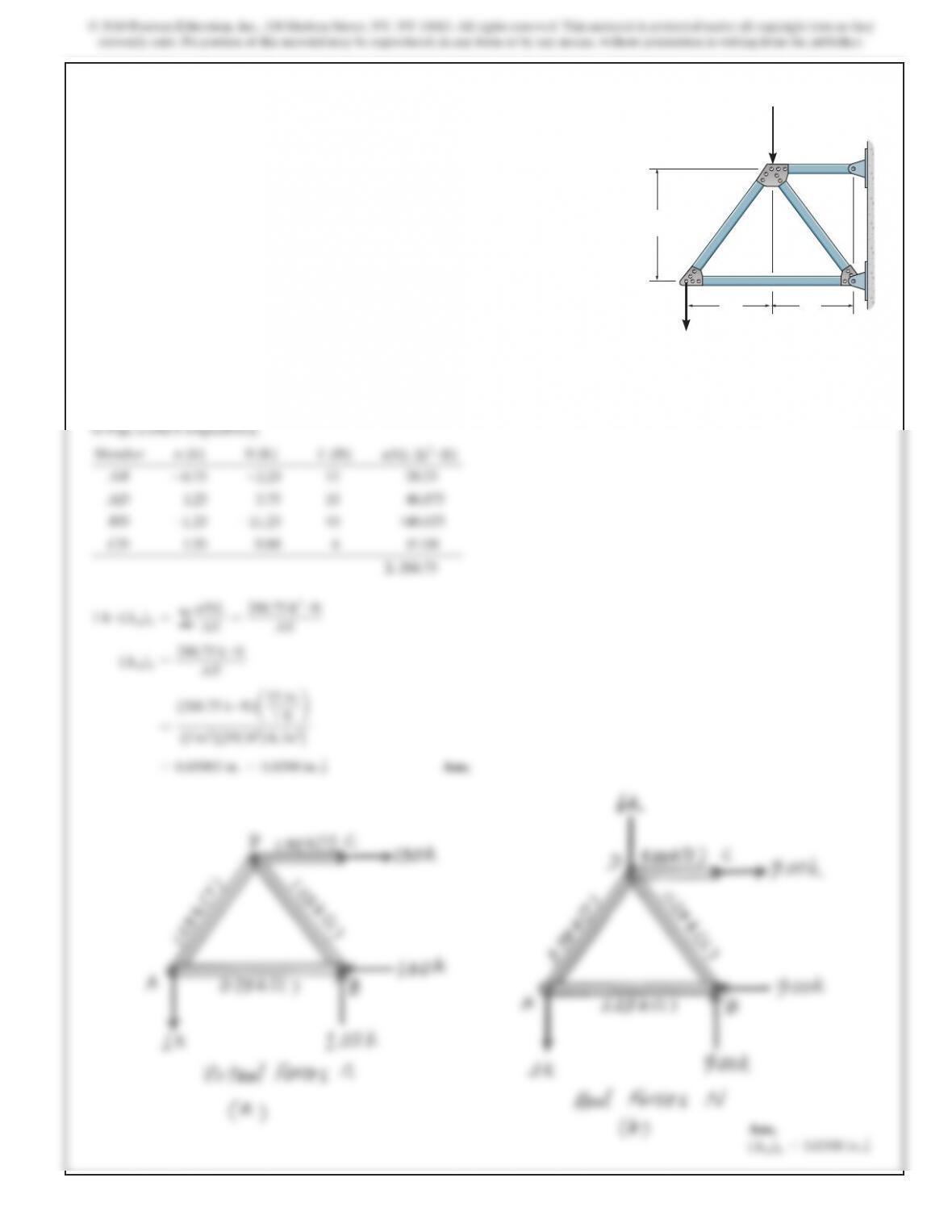
8–1. Determine the vertical displacement of joint A. Assume
the members are pin connected at their end points. Take
A=3
in2
and
E=29(103)
ksi
for each member. Use the
method of virtual work. DC
B
A
6 ft
8 ft
6 ft
3 k
6 k
SOLUTION
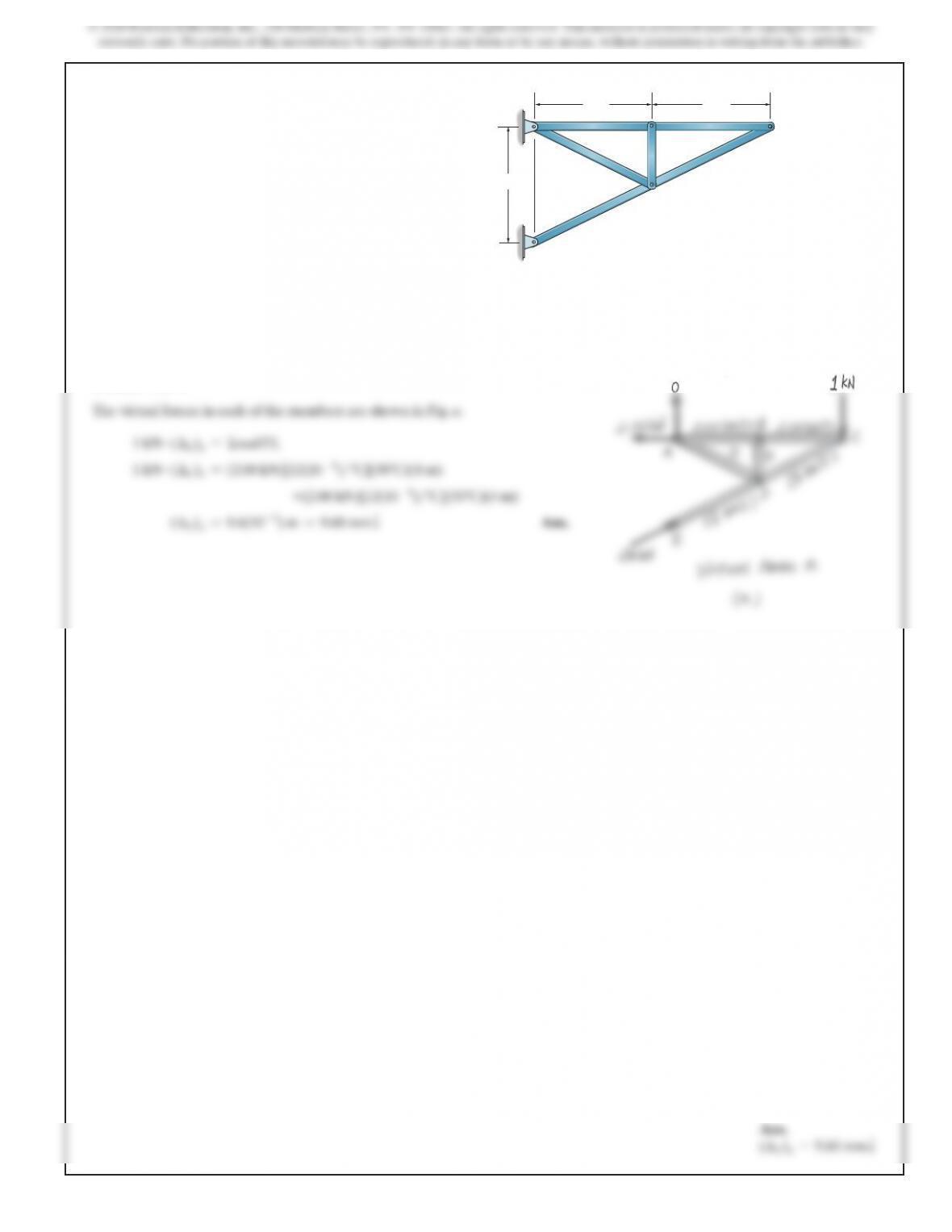
The virtual forces and real forces in each member are shown
SOLUTION
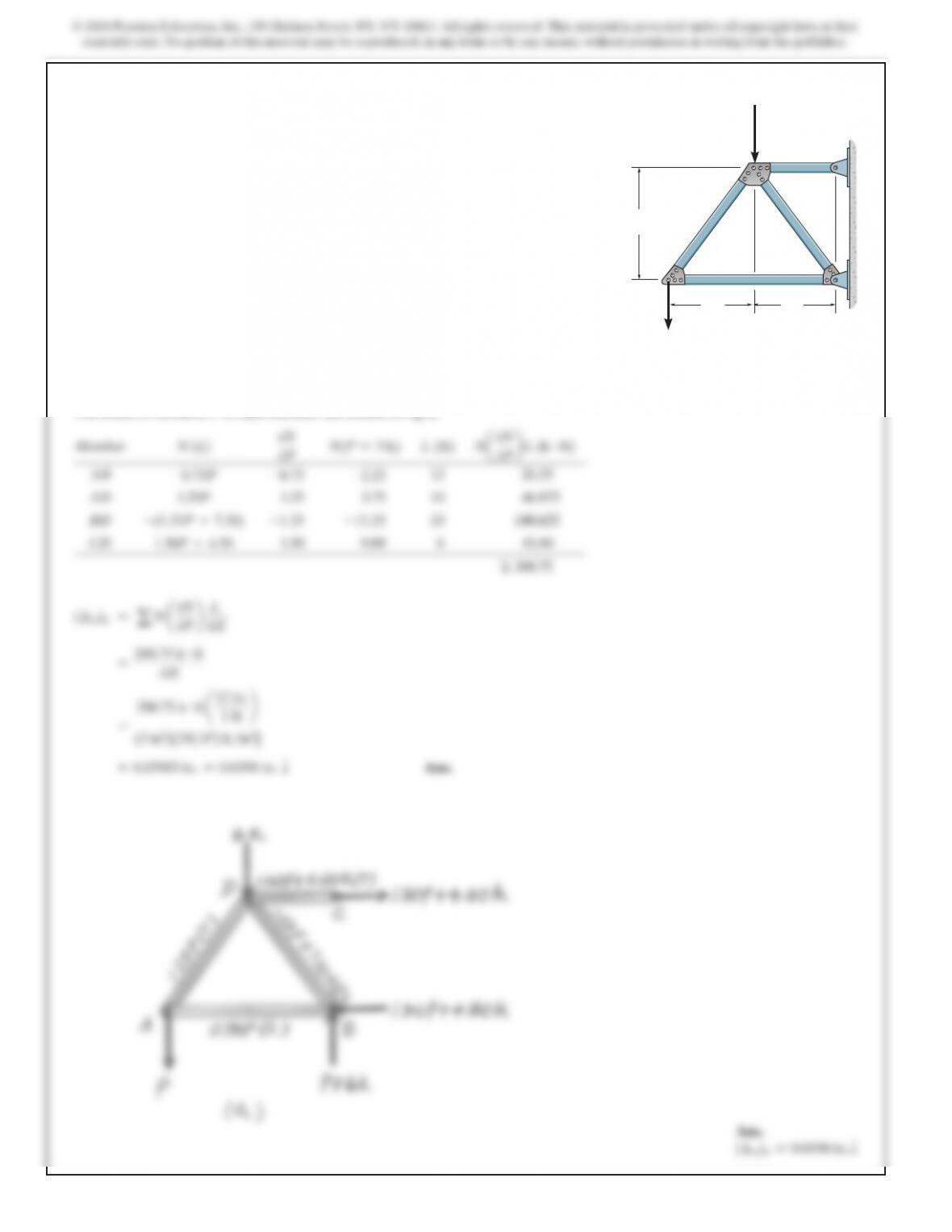
The forces in terms of P in each member are shown in Fig. a.
0N
DC
B
A
6 ft
8 ft
6 ft
3 k
6 k
8–2. Solve Prob. 8–1 using Castigliano’s theorem.
361
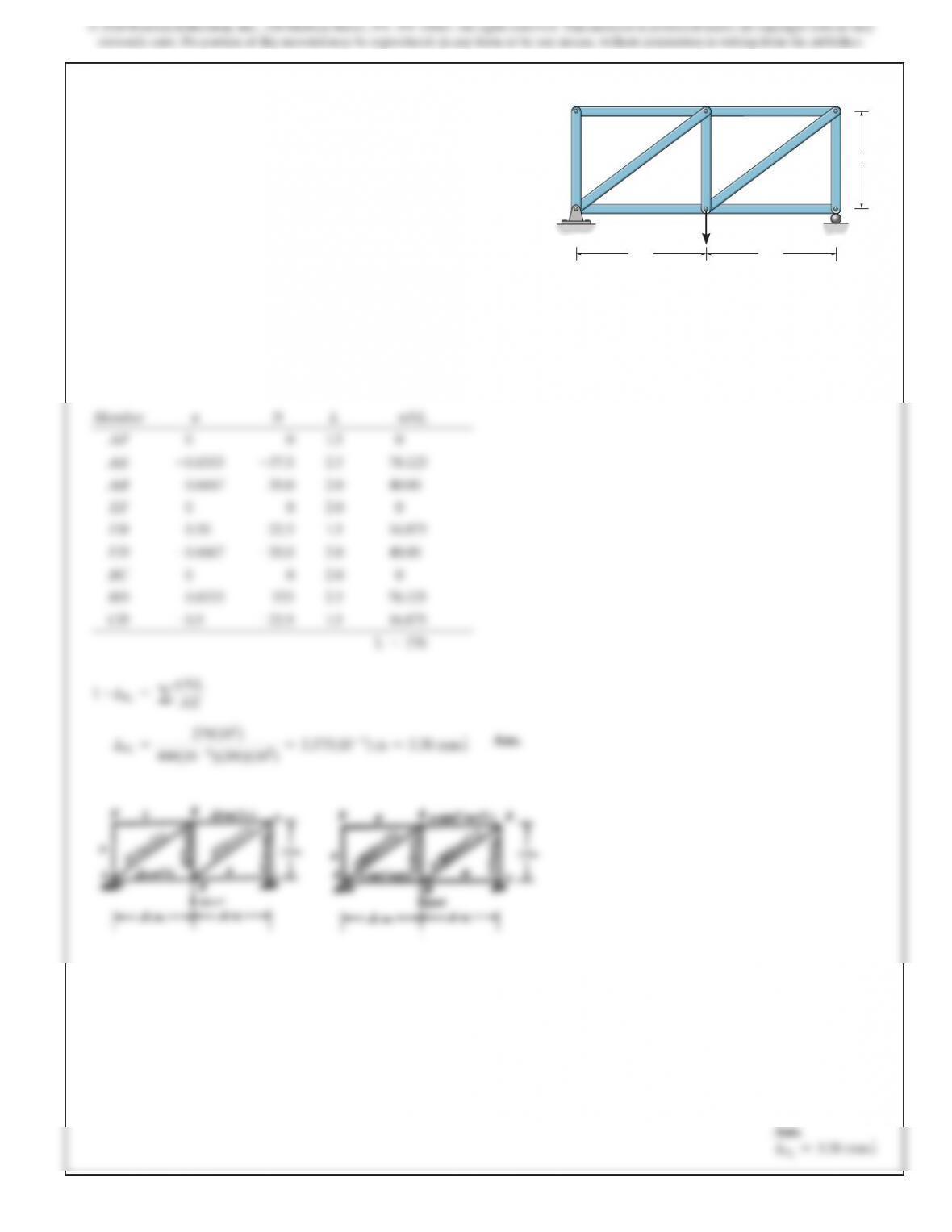
8–3. Determine the vertical displacement of joint B. For
each member
A=400
mm2,
E=200
GPa.
Use the method
of virtual work.
C
1.5
m
A
D
EF
45 kN
2 m
B
2 m
SOLUTION
∆By
=
400(10
–6
)(200)(10
9
)
=3.375(10 –3) m =3.38 mmT
Ans.
∆By
=
3.38 mm
T
SOLUTION
0N
400(10
–6
)(200)(10
9
)
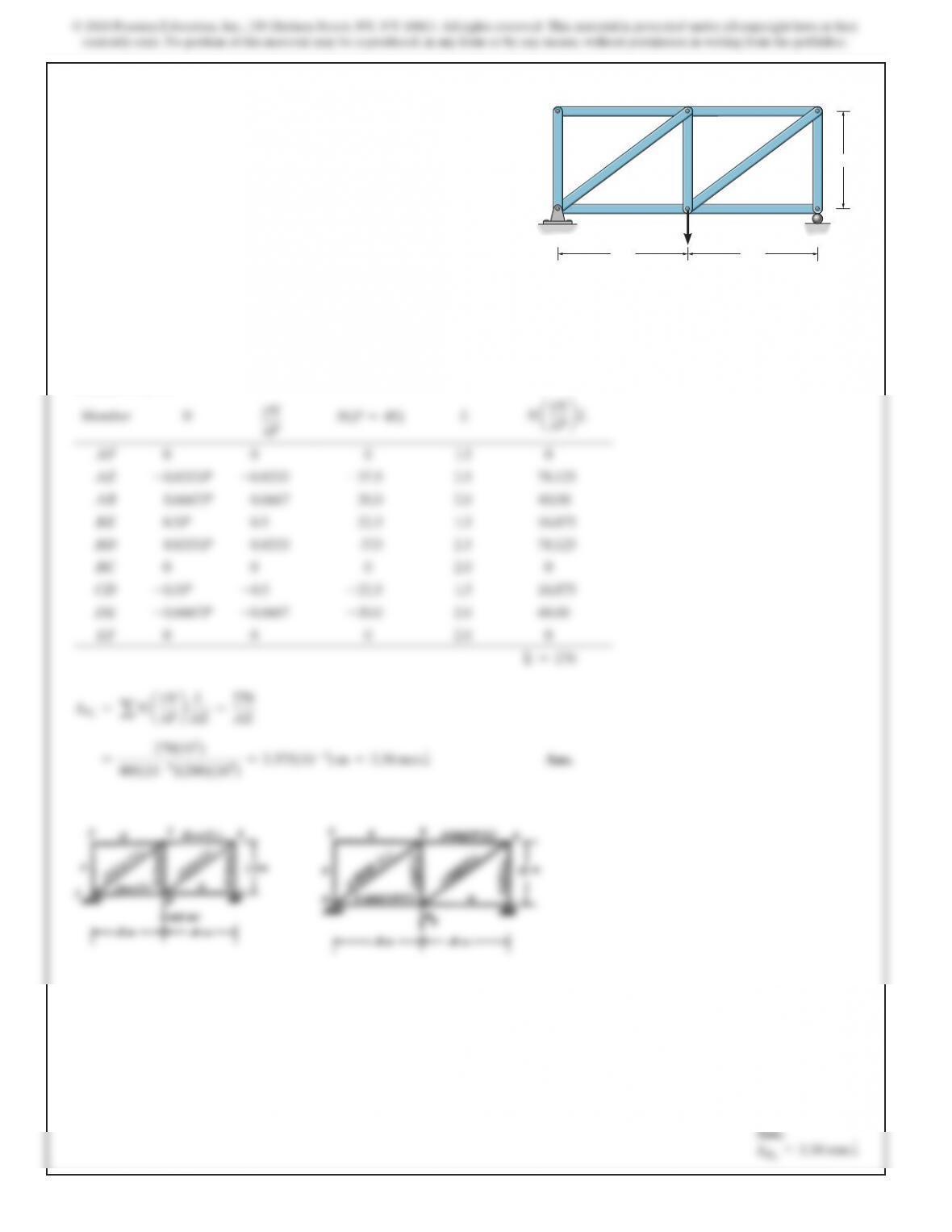
*8–4. Solve Prob. 8–3 using Castigliano’s theorem.
C
1.5
m
A
D
EF
45 kN
2 m
B
2 m
SOLUTION
0N
C
1.5
m
A
D
EF
45 kN
2 m
B
2 m
8–6. Solve Prob. 8–5 using Castigliano’s theorem.
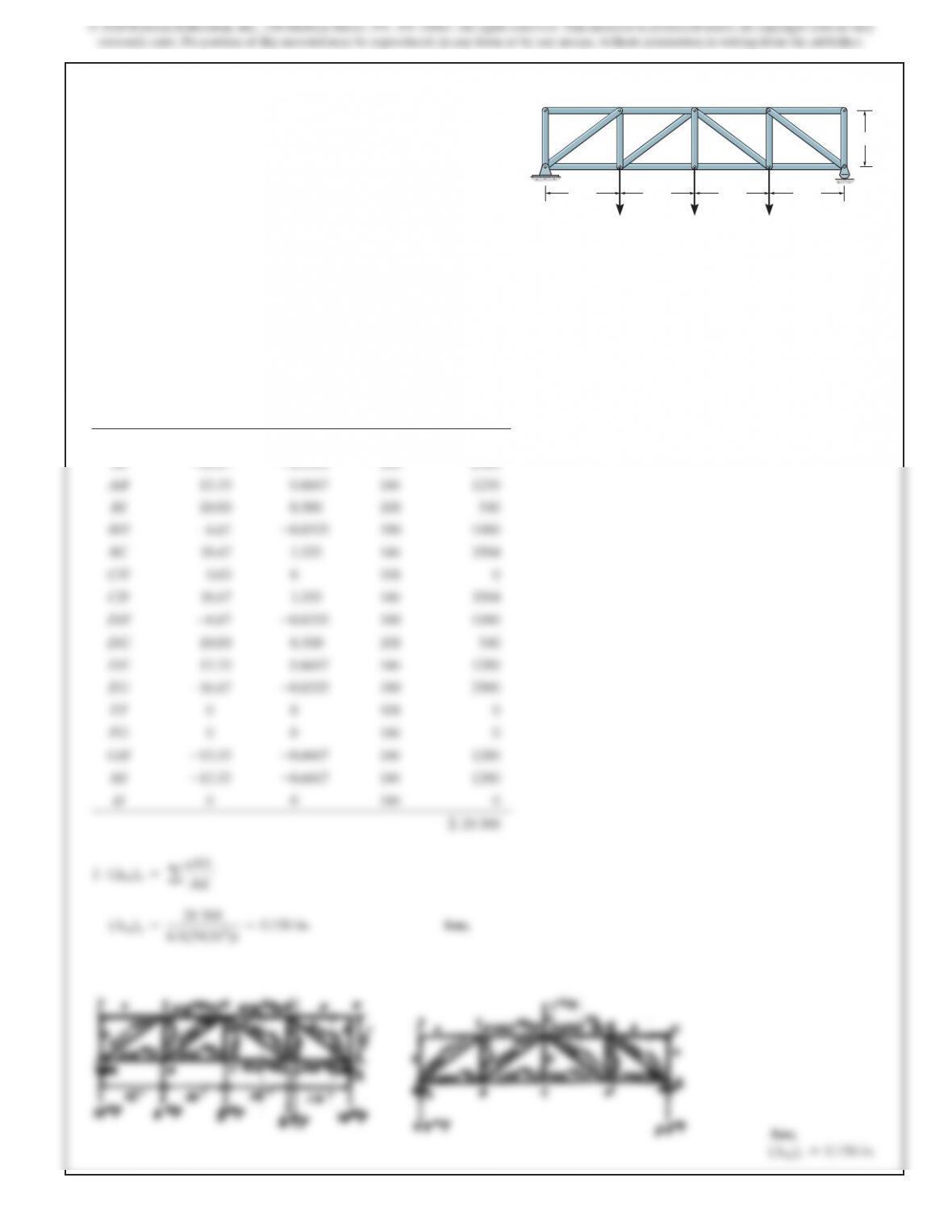
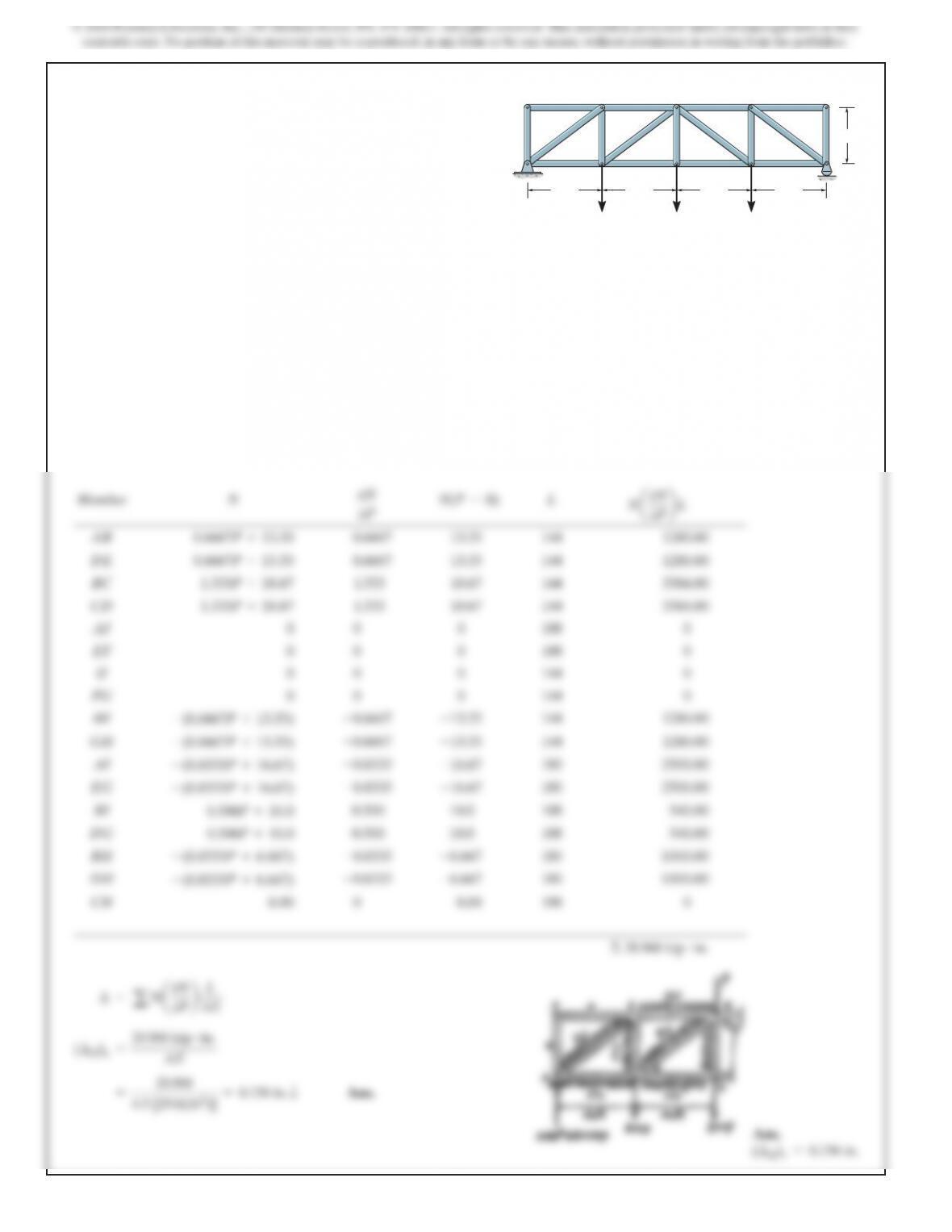
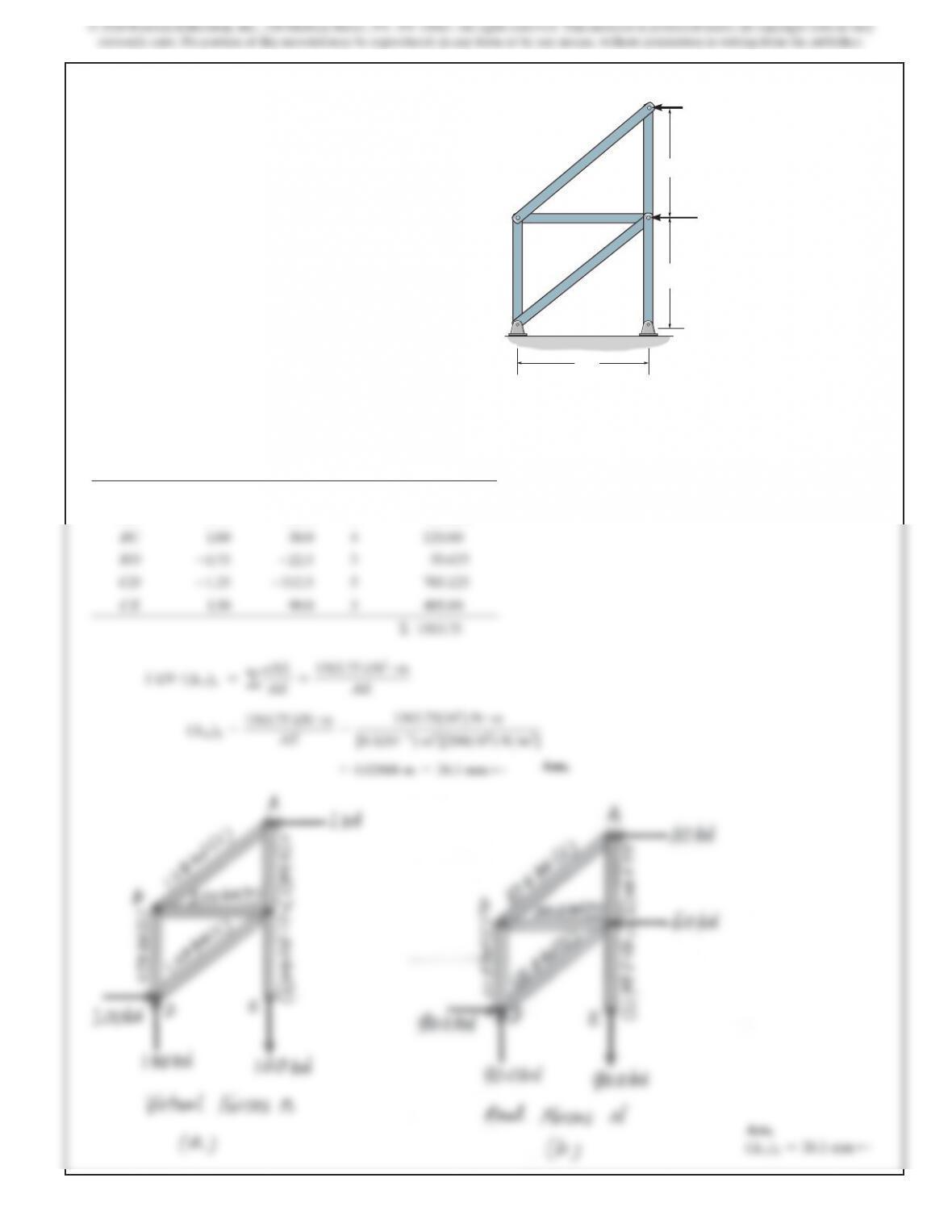
SOLUTION
The virtual forces and real forces in each member are shown
in Figs. a and b, respectively.
Member n (kN) N (kN) L (m) nNL
(kN2#m)
AB
–1.25
–37.5
5 234.375
AC 0.75 22.5 3 50.625
–0.75
–22.5
–1.25
–112.5
8–11. Determine the horizontal displacement of joint A
of the truss. Each member has a cross-sectional area of
A=300
mm2,
E=200
GPa.
Use the method of virtual work.
3 m
3 m
30 kN
60 kN
A
D
E
C
B
4 m
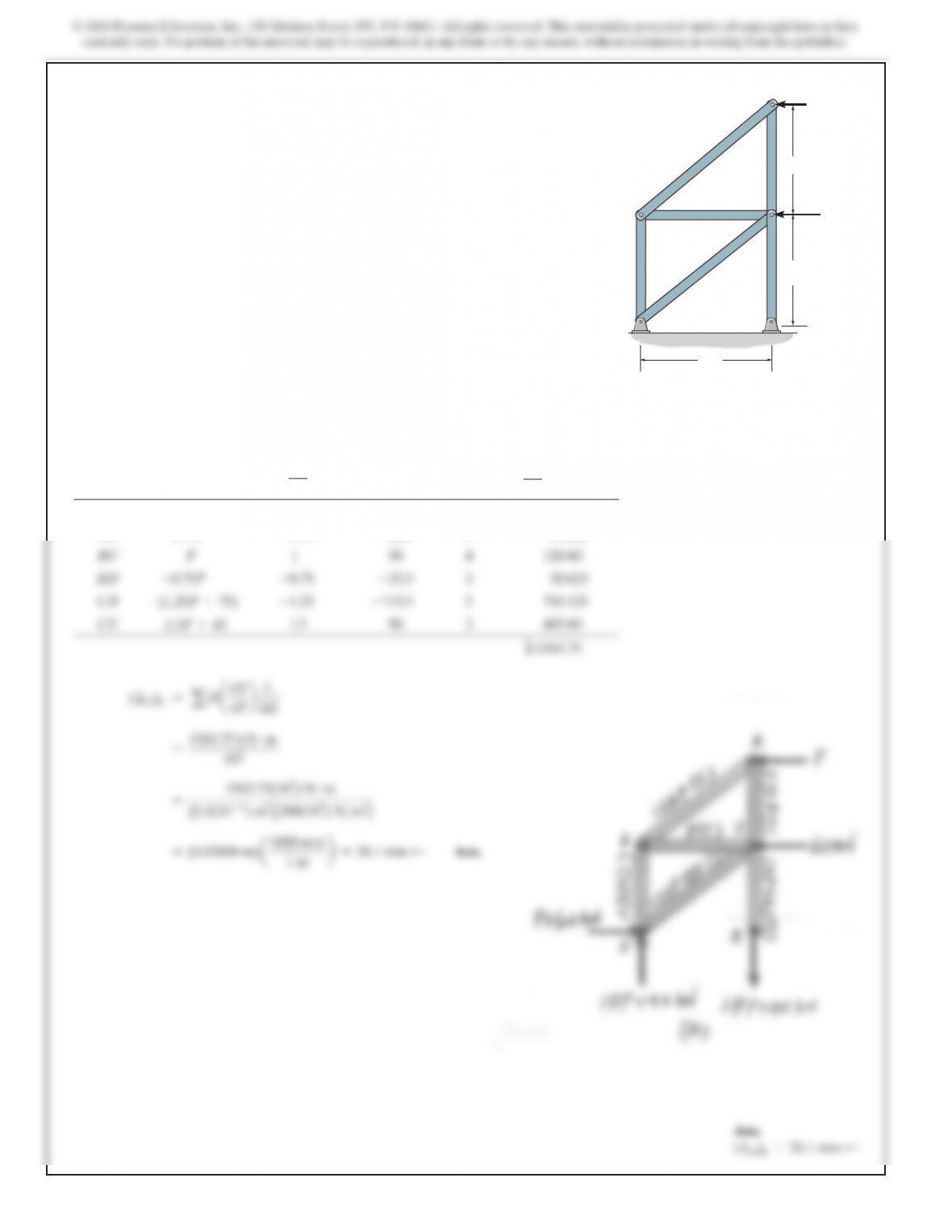
SOLUTION
The forces in each of the member in terms of P are shown
in Fig. a.
Member N (kN)
0N
0P
N(P=30 kN)
L (m)
Na0N
0Pb
L (kN
#
m
)
AB
–1.25P
–1.25
–37.5
5 234.375
AC 0.75P0.75 22.5 3 50.625
–0.75P
–0.75
–22.5
3 m
3 m
30 kN
60 kN
A
D
E
C
B
4 m
*8–12. Solve Prob. 8–11 using Castigliano’s theorem.
–1.25
–112.5
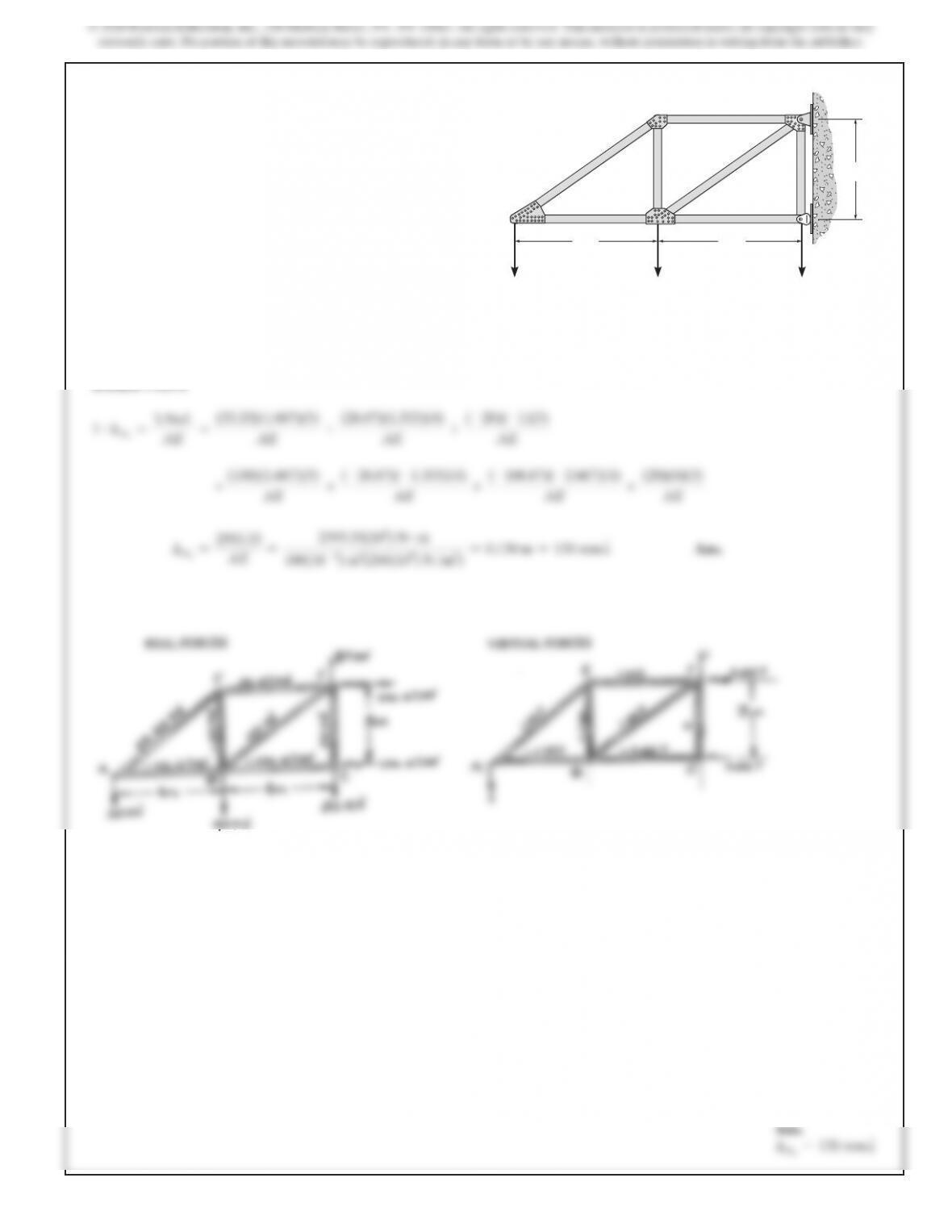
SOLUTION
1#
∆Ay
=
ΣNnL
AE
=
(33.33)(1.667)(5)
AE
+
(26.67)(1.333)(4)
AE
+
(–20)(–1)(3)
AE
+
(100)(1.667)(5)
AE
+
(–26.67)(–1.333)(4)
AE
+
(–106.67)(–2.667)(4)
AE
+
(20)(0)(3)
AE
∆
Ay
=
2593.33
AE
=
2593.33(103) N #m
100(10
–6
) m
2
(200(10
9
) N>m
2
)
=0.130 m =130 mmT Ans.
8–13. Determine the vertical displacement of point A. Assume
the members are pin connected at their ends. Take
A=100
mm2
and
E=200
GPa
for each member. Use the
method of virtual work.
20 kN 20 kN
ABC
EF
4 m
40 kN
4 m
3 m
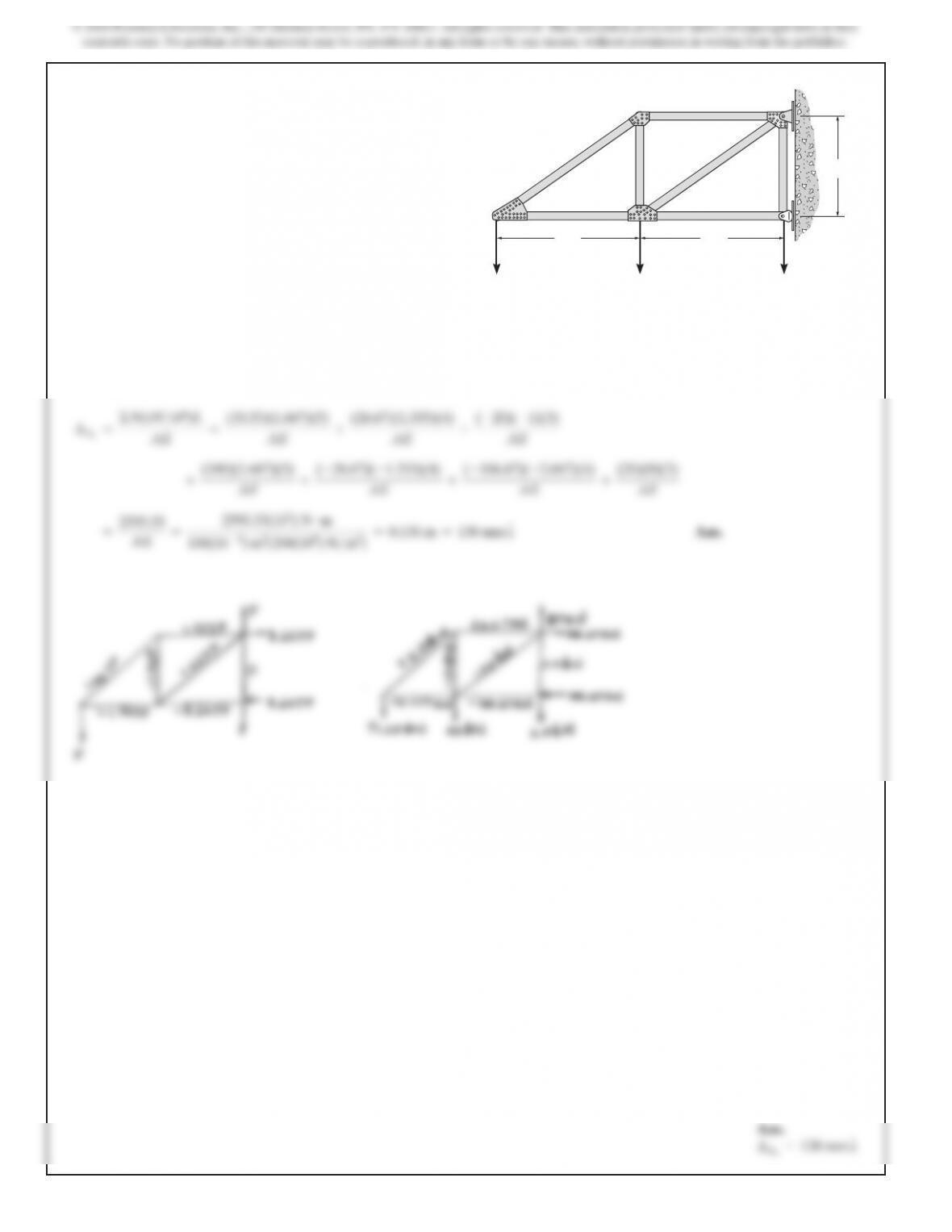
SOLUTION
ΣN(0N>0P)L
(33.33)(1.667)(5)
(26.67)(1.333)(4)
(–20)(–1)(3)
AE
100(10
–6
) m
2
(200(10
9
) N>m
2
)
20 kN 20 kN
A BC
EF
4 m
40 kN
4 m
3 m
8–14. Solve Prob. 8–13 using Castigliano’s theorem.
373
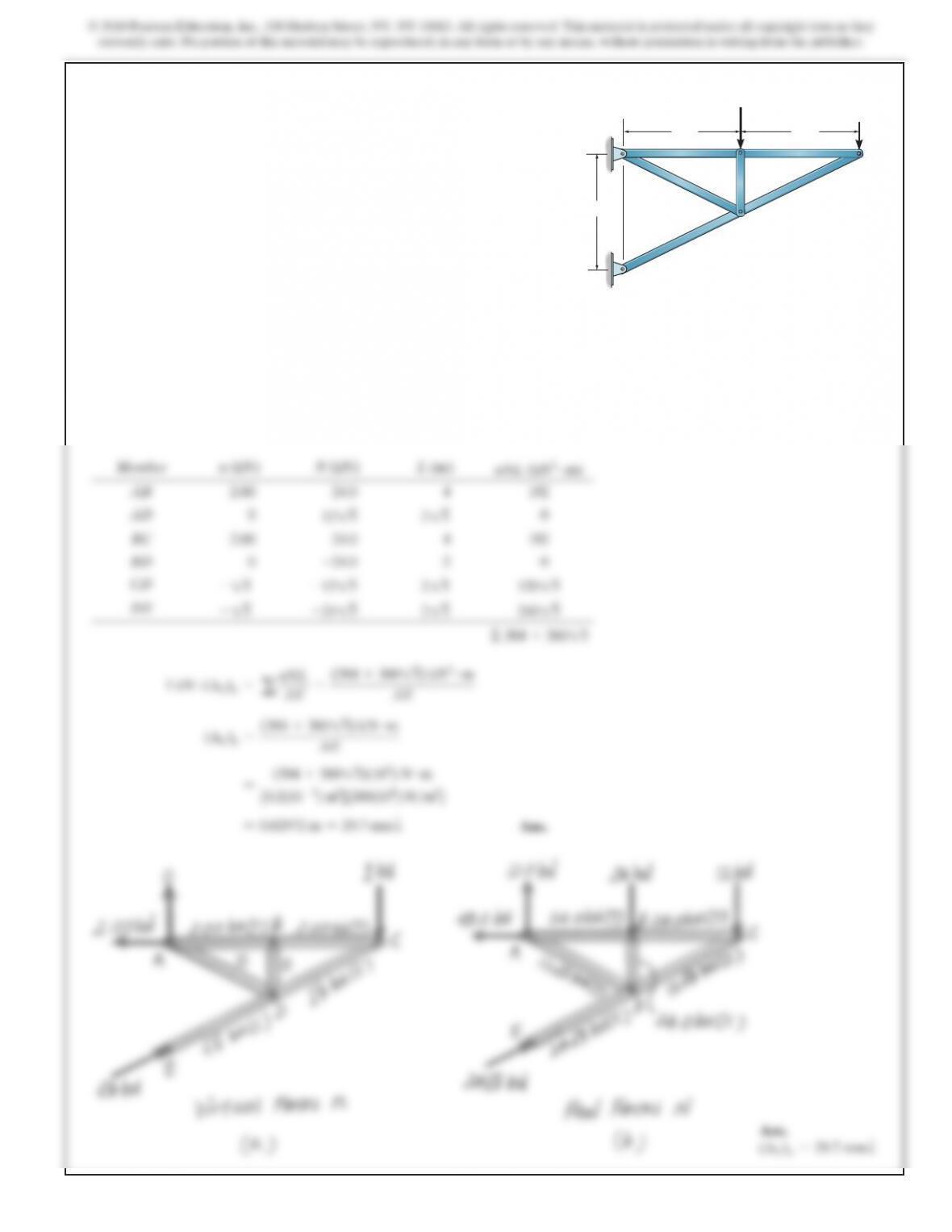
8–15. Determine the vertical displacement of joint C. Assume
the members are pin connected at their end points. Take
A=200
mm2
and
E=200
GPa
for each member. Use the
method of virtual work. AB
C
E
4
m4
m
24 kN
12 kN
4 m
D
SOLUTION
The virtual forces and real forces in each member are shown
in Figs. a and b, respectively.
Ans.
(∆C)y=29.7 mmT
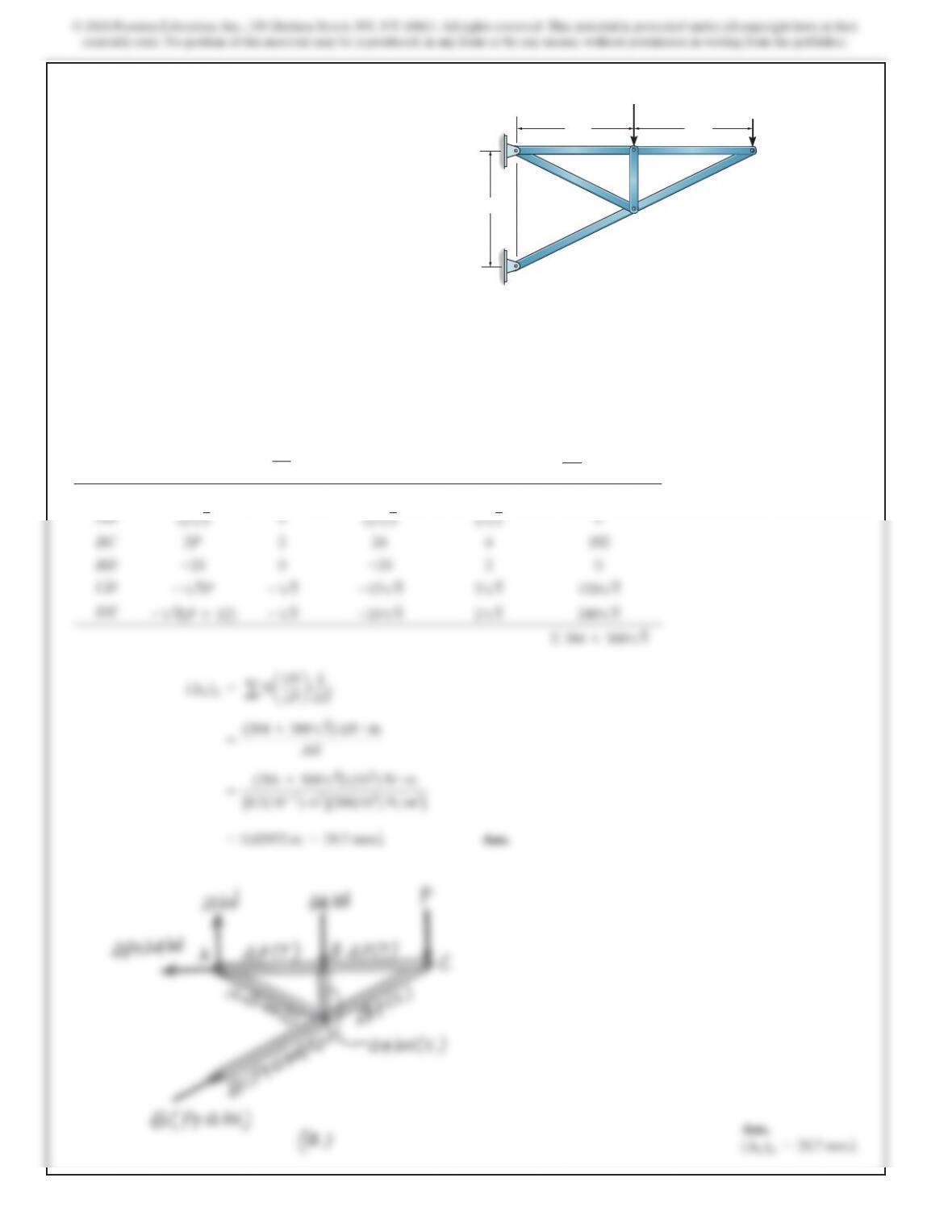
SOLUTION
The forces in terms of P in each member are shown in Fig. a.
Member N (kN)
0N
0P
N(P=12 kN)
L (m)
Na0N
0Pb
L (kN
#
m
)
AB 2P 2 24 4 192
AB
C
E
4
m4
m
24 kN
12 kN
4 m
D
*8–16. Solve Prob. 8–15 using Castigliano’s theorem.
8–17. Determine the vertical displacement of joint C if
members AB and BC experience a temperature increase of
dT=50°C.
Take
a=12(10 –6)>°C
.
AB
C
E
4
m4
m
4 m
D
SOLUTION
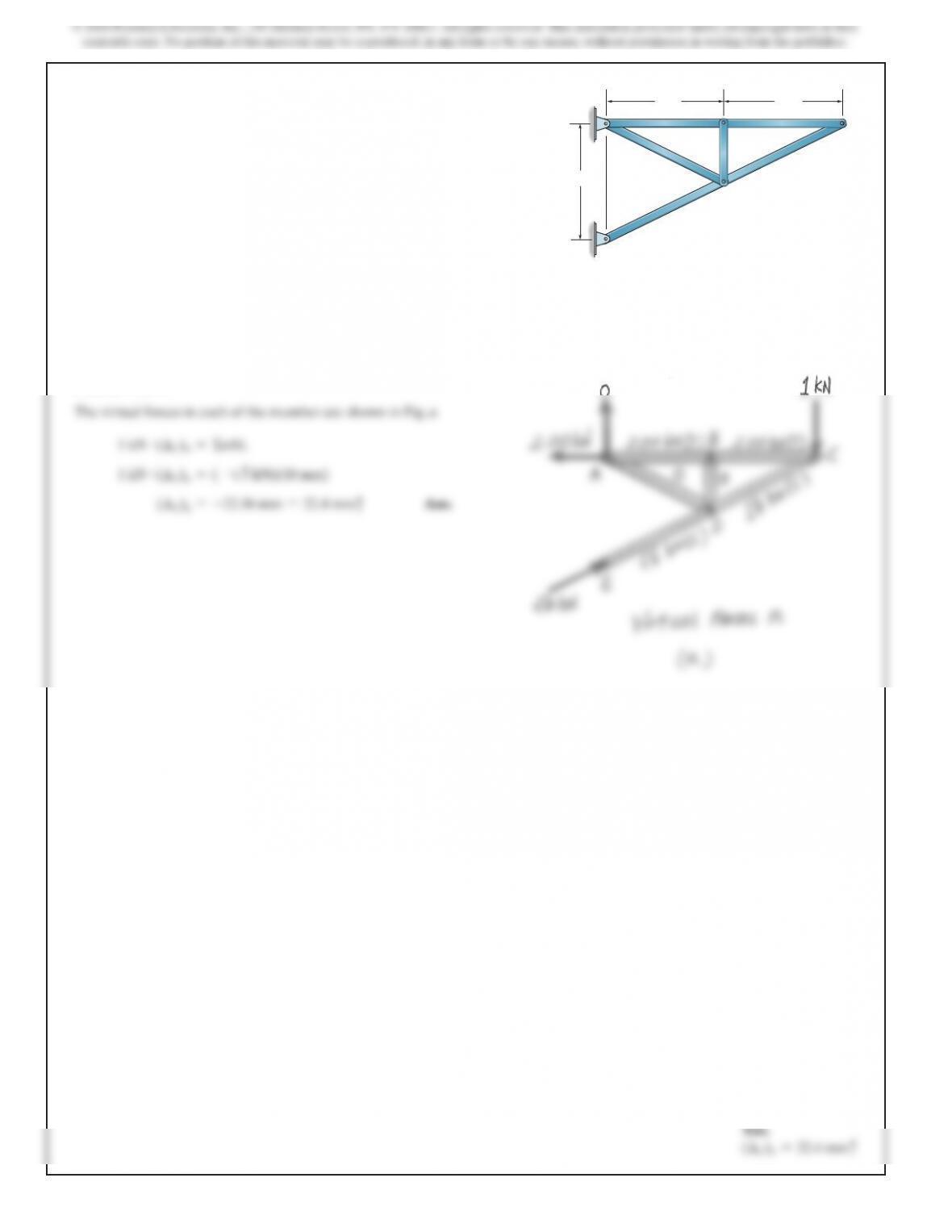
SOLUTION
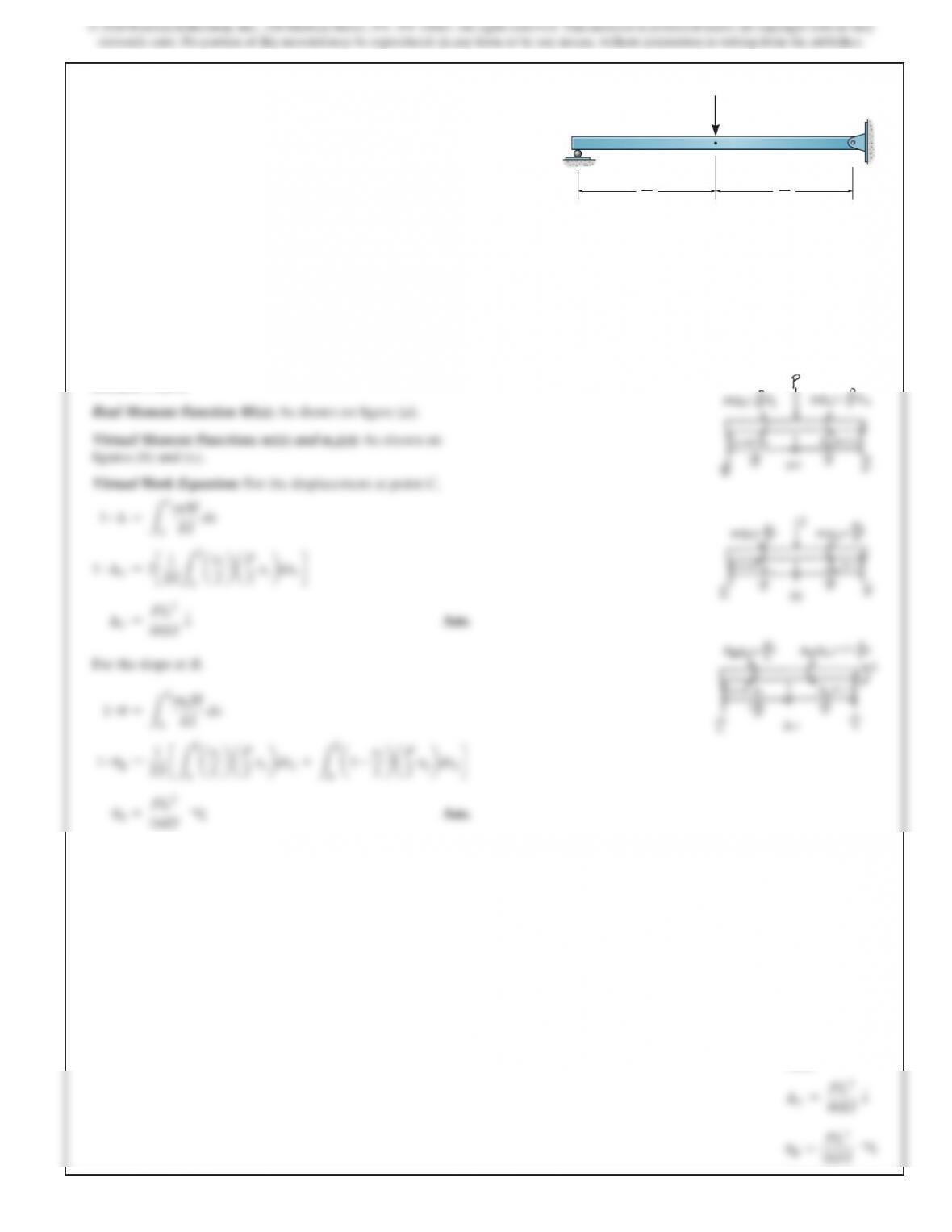
8–18. Determine the vertical displacement of joint C if
member CD is fabricated 10 mm too long. AB
C
E
4
m4
m
4 m
D
377
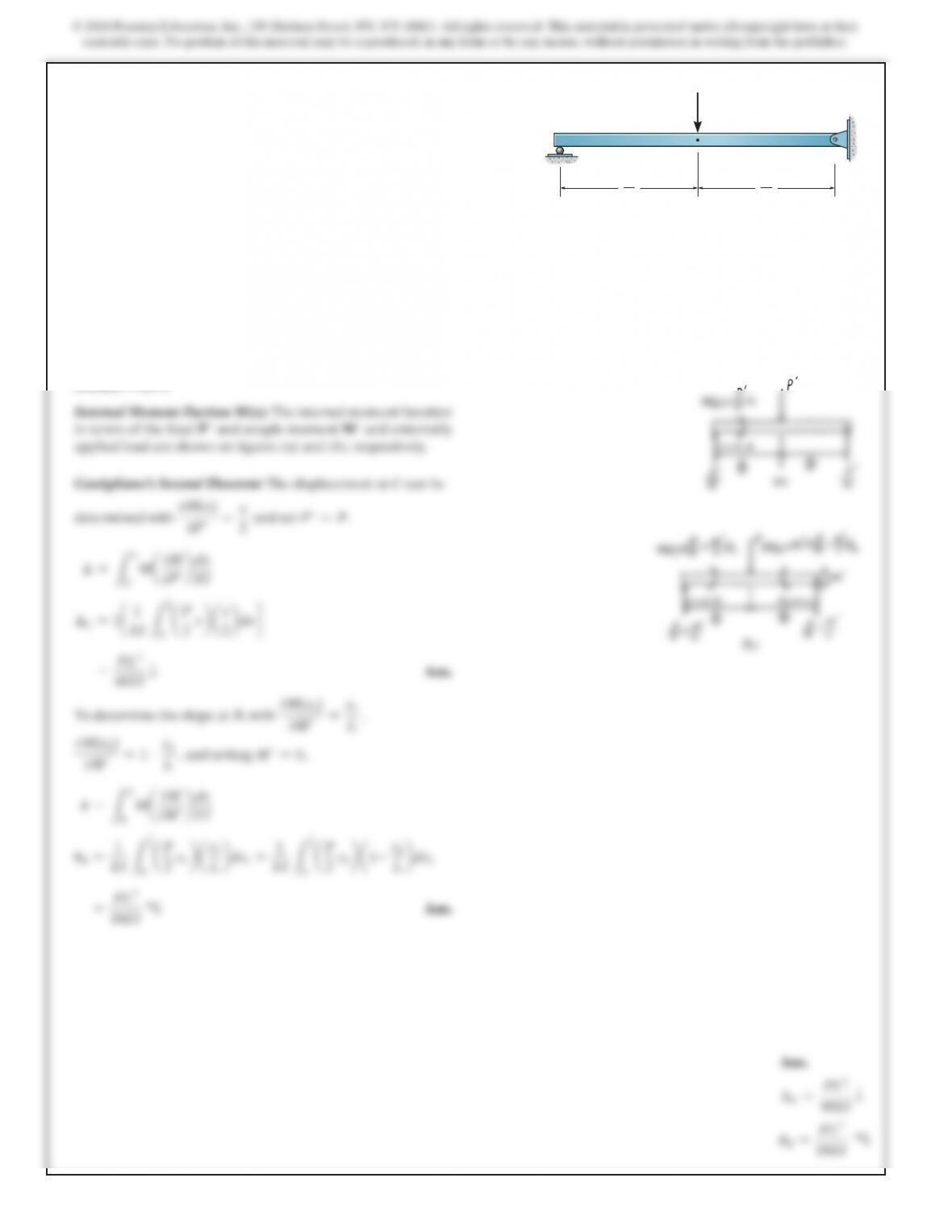
8–19. Determine the displacement of point C and the slope at
point B. EI is constant. Use the principle of virtual work.
B
C
P
L
2
L
2
SOLUTION
16EI
Ans.
∆
C=
PL3
48EI
T
u
B=
PL2
16EI
SOLUTION
16EI
B
C
P
L
2
L
2
*8–20. Solve Prob. 8–19 using Castigliano’s theorem.