347
*7–28. Determine the slope and the displacement at C. EI is
constant. Use the moment-area theorems.
AB
C
12
k?ft
6 k
4 ft 6 ft
SOLUTION
M
EI
348
7–29. Solve Prob. 7–28 using the conjugate-beam method.
AB
C
12
k?ft
6 k
4 ft 6 ft
SOLUTION
u
180 k #ft2
EI
∆C=M′
C=–
EI
=
EI
T
Ans.
u
C=
180 k #ft2
EI
∆
C=
648 k #ft3
EI
T
349
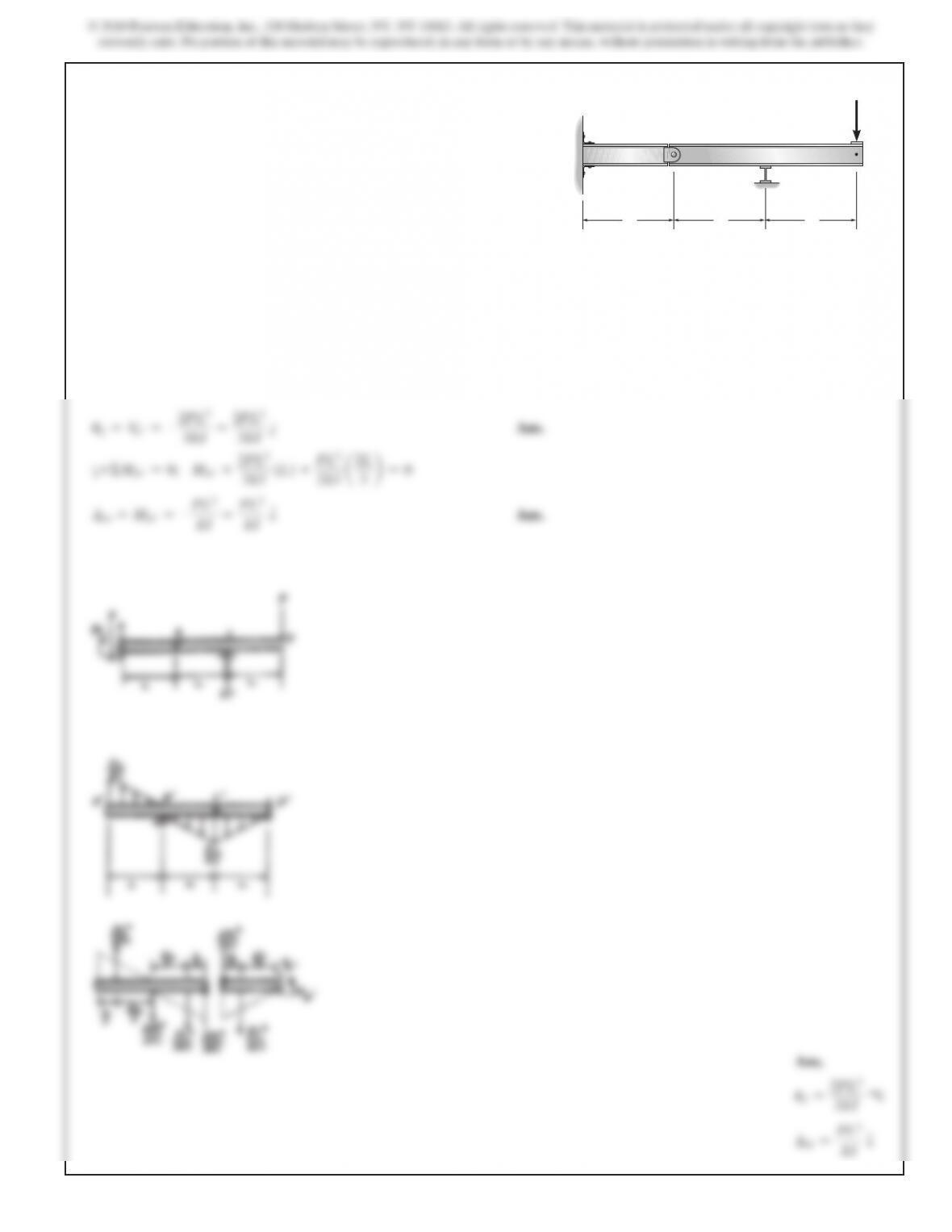
7–30. Use the conjugate-beam method and determine the
displacement at D and the slope at C. Assume A is a fixed
support and C is a roller. EI is constant.
P
L L L
ABC
D
SOLUTION
u
C=V
C′=–
2PL2
3EI
=
2PL2
3EI
A
Ans.
a
+ΣMD′=0;
MD′+
2PL2
3EI
(L)+
PL2
2EI
a2L
3b
=
0
∆D=MD′=–
PL3
EI
=
PL3
EI
T Ans.
Ans.
u
C=
2PL2
3EI
∆
D=
PL3
EI
T
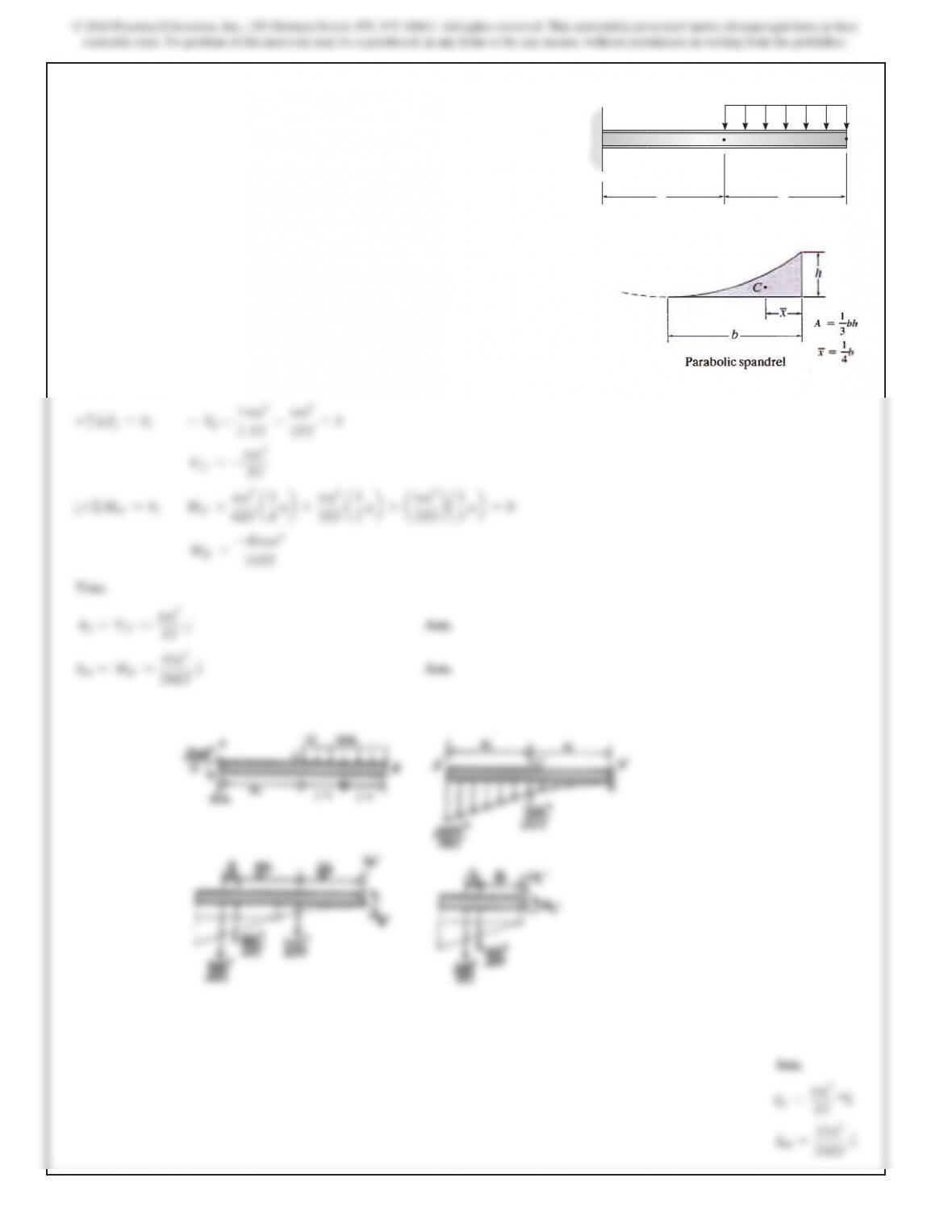
7–31. Use the conjugate-beam method and determine the
slope at C and the displacement at B. EI is constant.
B
C
a a
w
A
SOLUTION
1
wa3
wa3
351
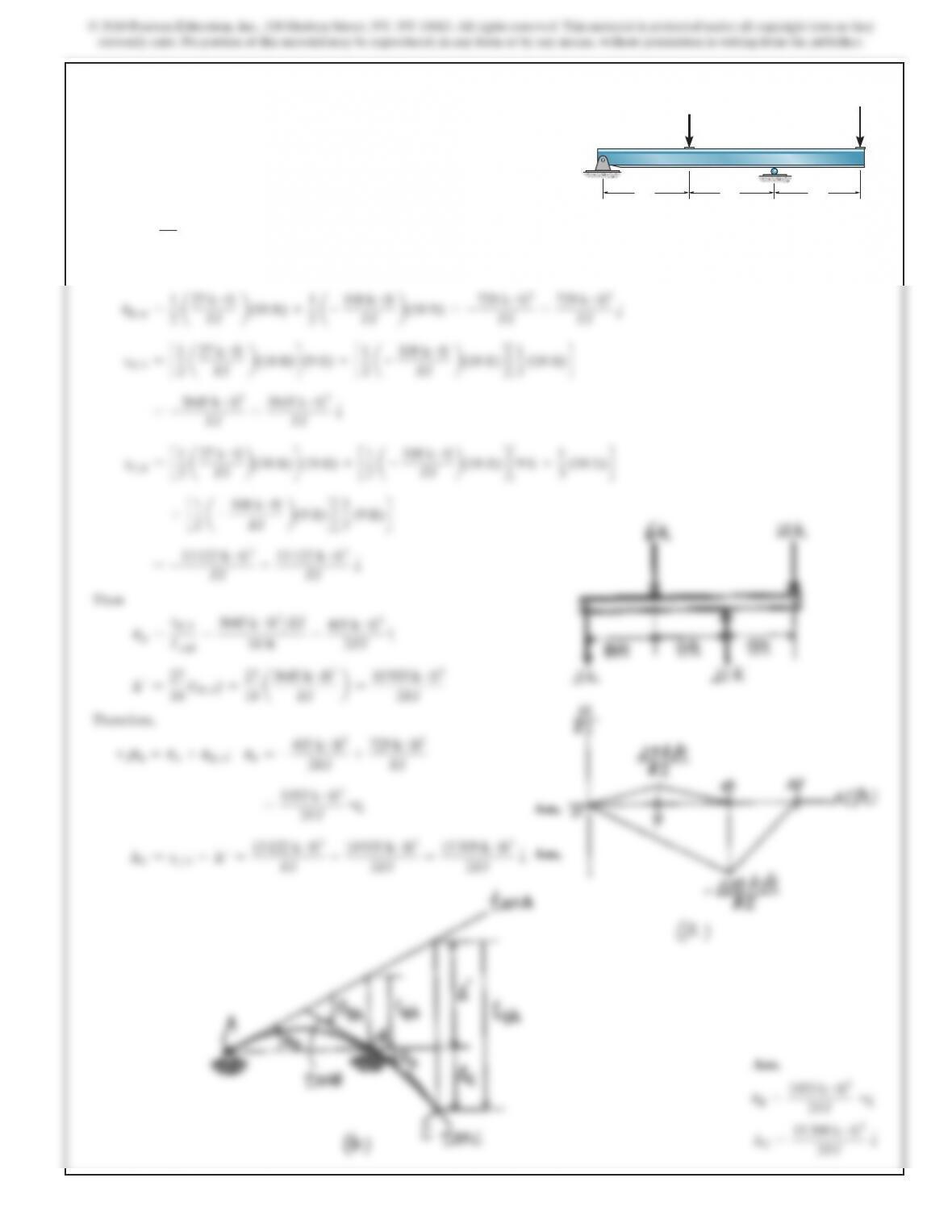
*7–32. Determine the slope at B and the displacement at C.
EI is constant. Use the moment-area theorems.
A
C
B
6 k
12 k
9 ft 9 ft 9 ft
SOLUTION
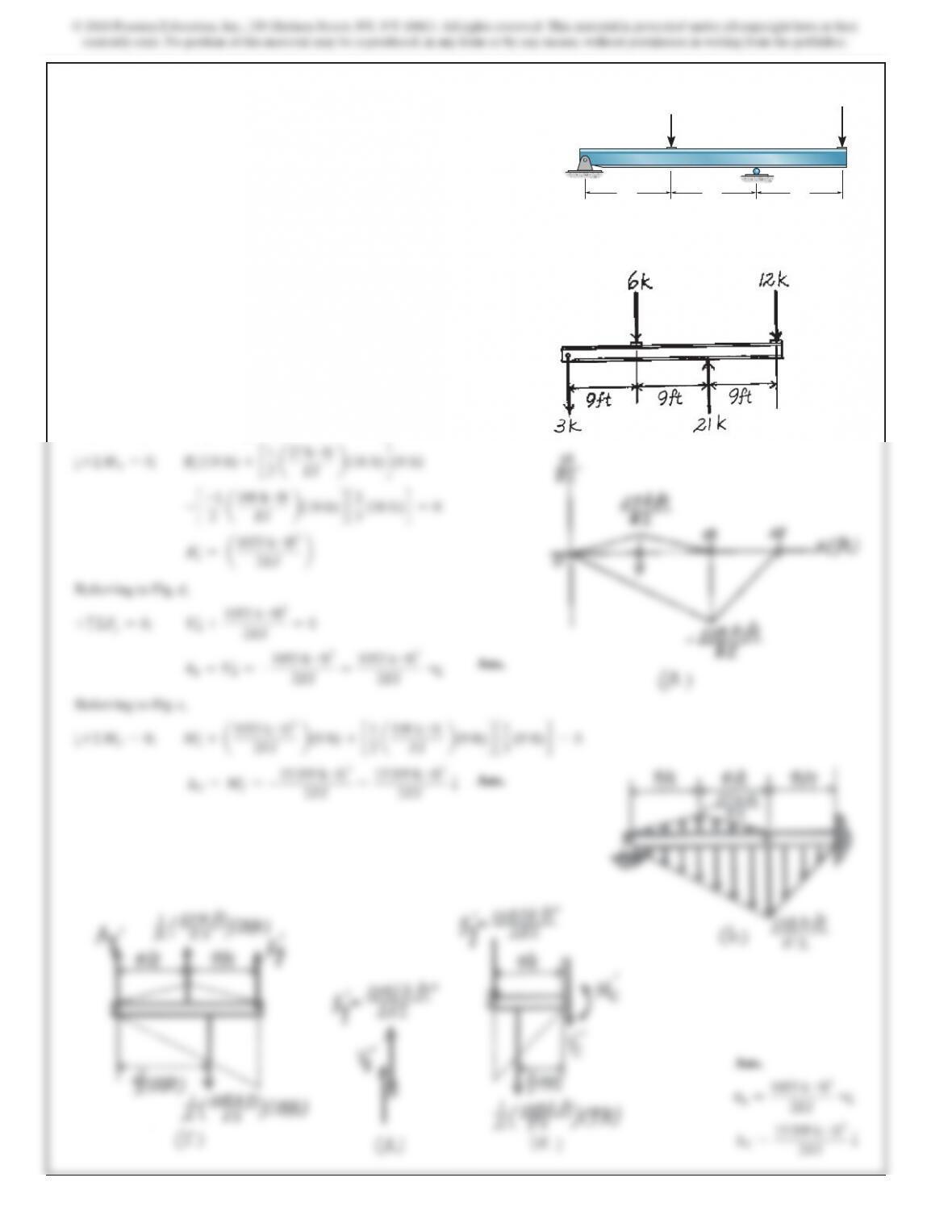
Using the
M
EI
diagram and the elastic curve shown in Figs. a
and b, respectively, theorems 1 and 2 give
u
B
>
A=
1
2
a27 k #ft
EI
b
(18 ft) +
1
2
a
–
108 k #ft
EI
b
(18 ft) =–
729 k #ft2
EI
=
729 k #ft2
EI
A
t
B
>
A=
c1
2
a27 k #ft
EI
b
(18 ft)
d
(9 ft) +
c1
2
a
–
108 k #ft
EI
b
(18 ft)
dc1
3
(18 ft)
d
=–
3645 k #ft3
EI
=
3645 k #ft3
EI
T
t
C
>
A=
c1
2
a27 k #ft
EI b
(18 ft)
d
(18 ft) +
c1
2
a
–
108 k #ft
EI b
(18 ft)
dc
9 ft +
1
3
(18 ft)
d
+
c1
2
a
–
108 k #ft
EI
b
(9 ft)
dc2
3
(9 ft)
d
=–
13 122 k #ft3
EI
=
13 122 k #ft3
EI
T
Then
u
A=
t
B
>
A
LAB
=
3645 k #ft3>EI
18 ft
=
405 k
#
ft
2
2EI
B
∆′ =
27
18
(tB
>
A)=
27
18
a3645 k #ft3
EI
b
=
10 935 k #ft3
2EI
Therefore,
+
A
uB=uA+uB
>
A;
uB=–
405 k #ft2
2EI
+
729 k #ft2
EI
=
1053 k #ft2
2EI
∆C=tC
>
A–∆′ =
13 122 k #ft3
EI
–
10 935 k #ft3
2EI
=
15 309 k #ft3
2EI
T
Ans.
u
B=
1053 k #ft2
2EI
∆C=
15 309 k #ft3
2EI
T
Ans.
Ans.
352
7–33. Determine the slope at B and the displacement at C.
EI is constant. Use the conjugate-beam method.
A
C
B
6 k
12 k
9 ft 9 ft 9 ft
SOLUTION
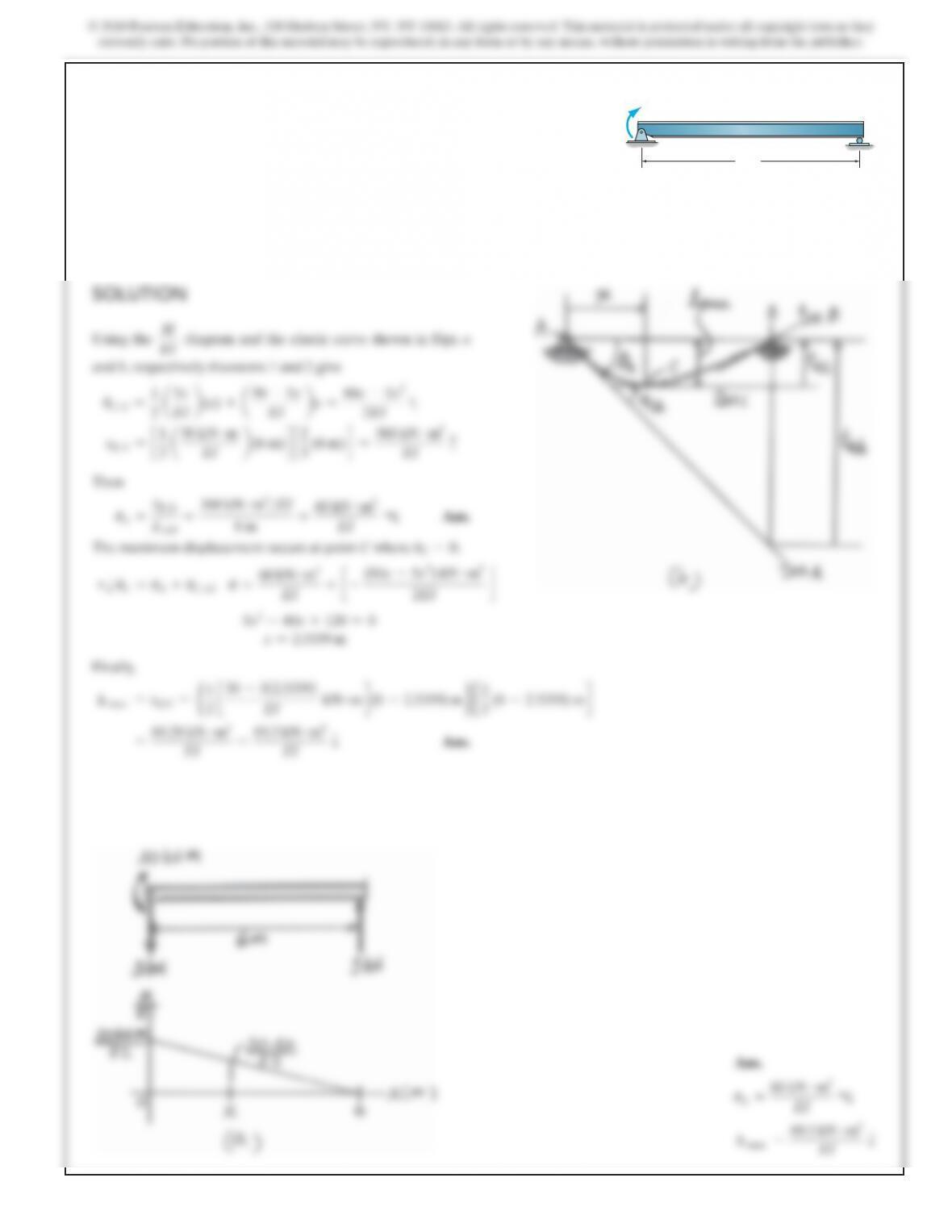
The real beam and conjugate beam are shown in Figs. a and b,
respectively. Referring to Fig. c,
a
+ΣMA=0;
By
′(18 ft) +
c1
2
a27 k #ft
EI
b
(18 ft)
d
(9 ft
)
–
c–1
2
a108 k #ft
EI
b
(18 ft)
dc2
3
(18 ft)
d
=
0
B′
y=
a1053 k #ft2
2EI
b
Referring to Fig. d,
+
c
ΣFy=0;
V′
B+
1053 k #ft2
2EI
=
0
uB=V′
B=–
1053 k #ft2
2EI
=
1053 k #ft2
2EI
Referring to Fig. e,
a
+ΣMC=0;
MC
′+
a1053 k #ft2
2EI
b
(9 ft) +
c1
2
a108 k #ft
EI
b
(9 ft)
dc2
3
(9 ft)
d
=
0
∆C=M′
C=–
15309 k #ft3
2EI
=
15309 k #ft3
2EI
T
Ans.
u
B=
1053 k #ft2
2EI
∆
C=
15309 k #ft3
2EI
T
Ans.
Ans.
353
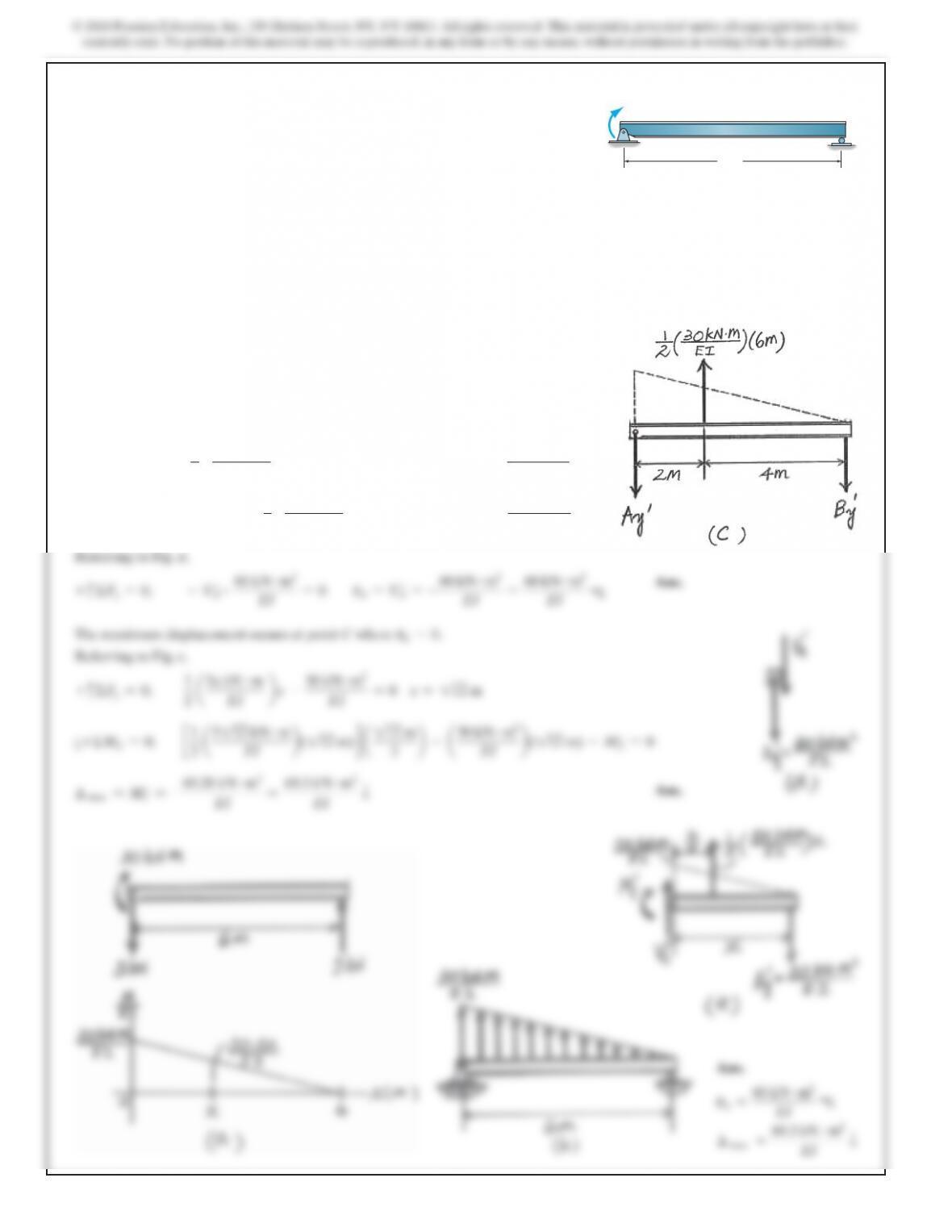
7–34. Determine the maximum displacement of the beam
and the slope at A. EI is constant. Use the moment-area
theorems.
B
A
30 kN
?
m
6 m
EI
354
7–35. Solve Prob. 7–34 using the conjugate-beam method.
B
A
30 kN
?
m
6 m
SOLUTION
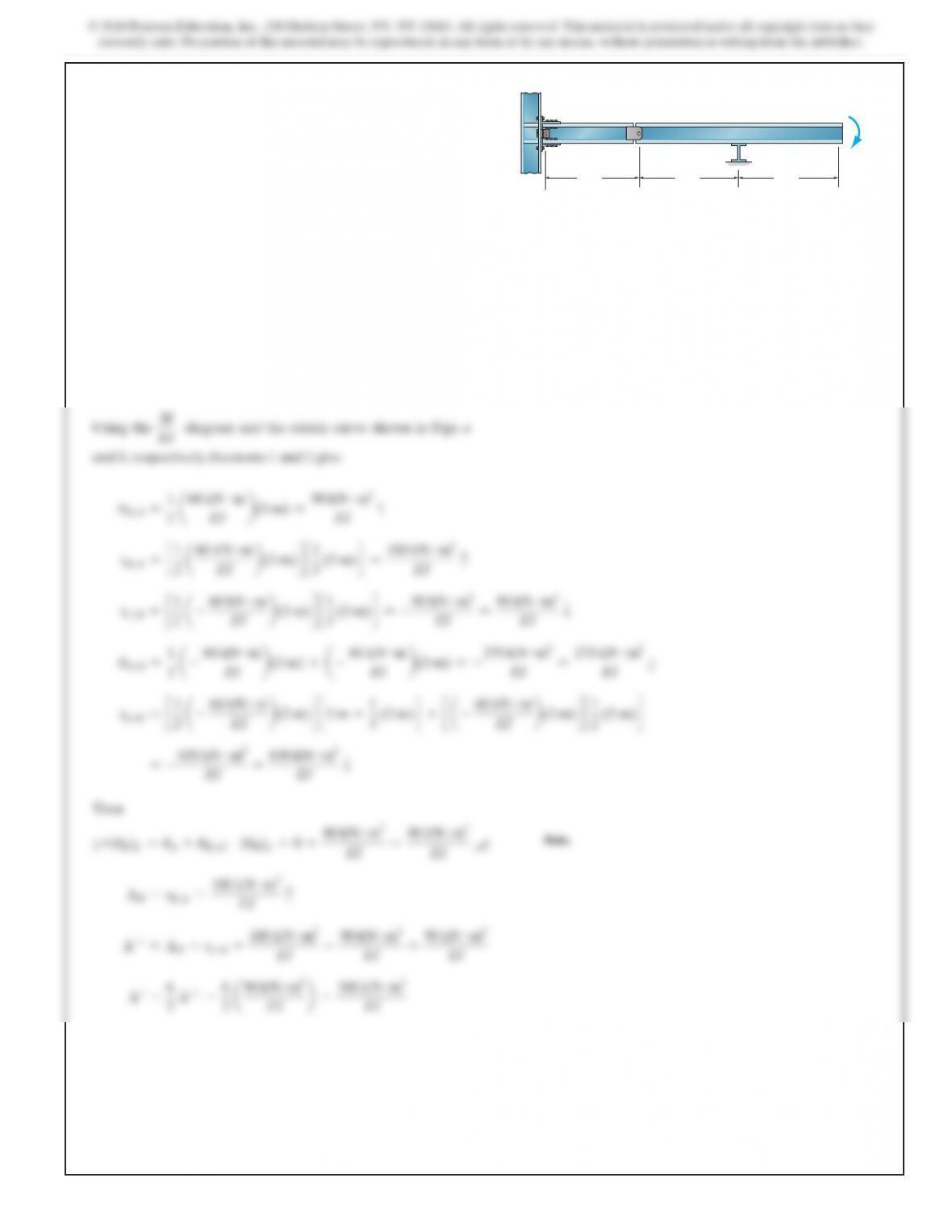
The real beam and conjugate beam are shown in Figs. a and b,
respectively. Referring to Fig. c,
a
+ΣMA=0;
c1
2
a30 kN #m
EI
b
(6 m)
d
(2 m) –B′
y(6 m) =0
B′
y=
30 kN #m2
EI
a
+ΣMB=0;
A′
y(6 m) –
c1
2
a30 kN #m
EI b
(6 m)
d
(4 m) =0
A′
y=
60 kN #m2
EI
2
EI
EI
a
c1
2
EI b
3b
EI b
∆ max =M′
C=–
69.28 kN #m3
EI
=
69.3 kN #m3
EI
T
Ans.
u
A=
60 kN #m2
EI
∆ max =
69.3 kN #m3
EI
T
Ans.
355
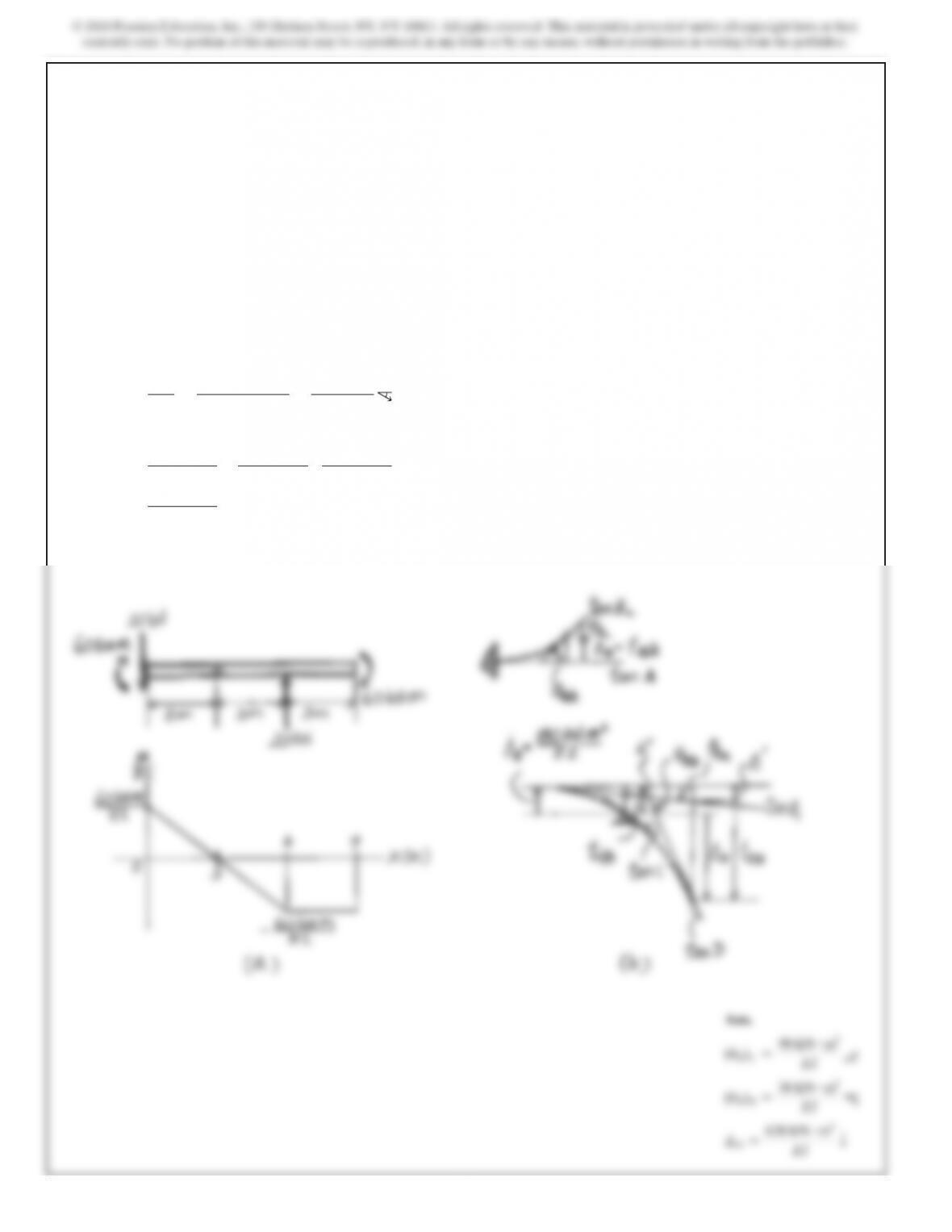
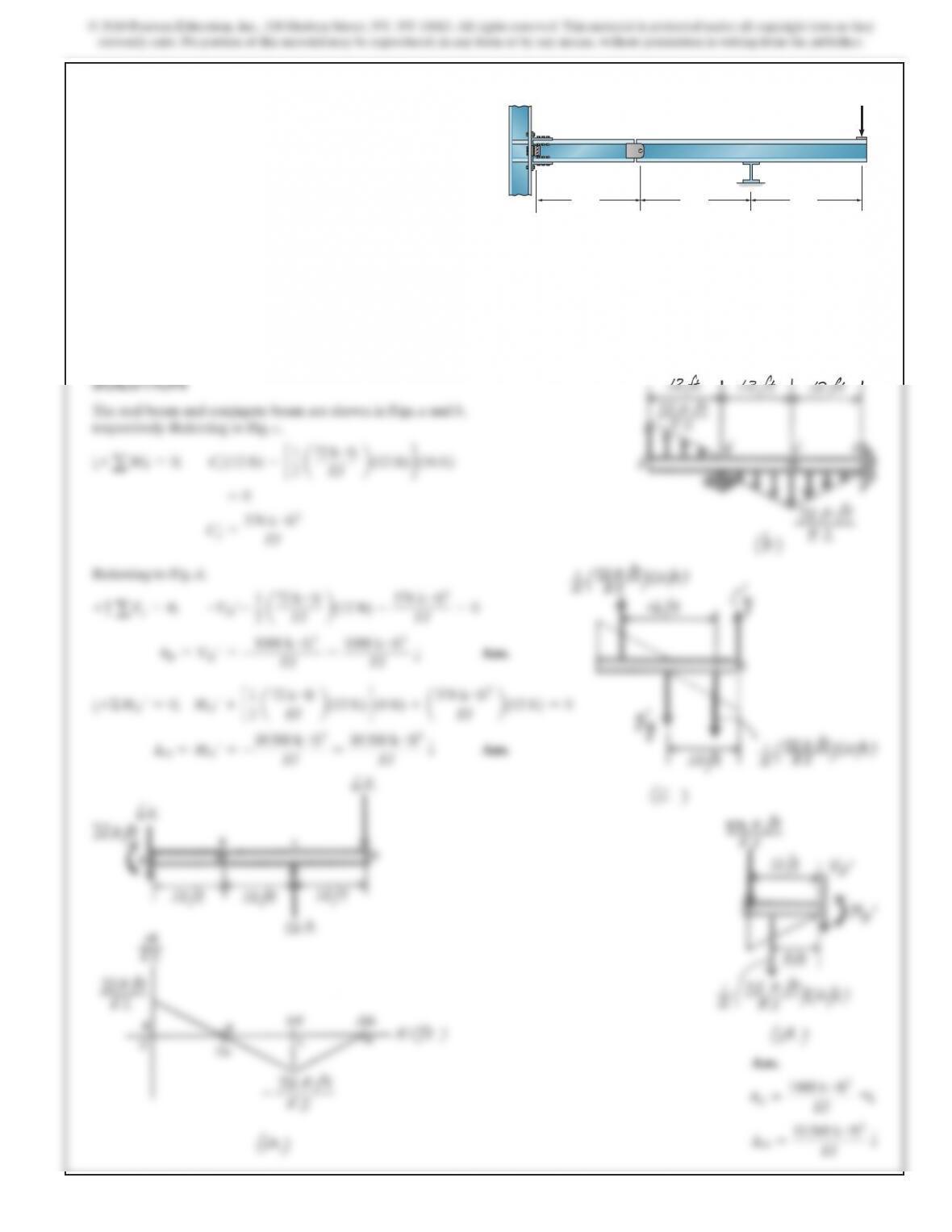
*7–36. Determine the slope to the left and right of B and the
displacement at D. EI is constant. Use the moment-area
theorems.
3 m 3 m 3 m
ABC
D
60 kN ?
m
SOLUTION
M
>
A;
EI
EI
∆B=tB
>
A=
180 kN #m3
EI
c
∆
′′ =∆B–tC
>
B=
180 kN #m3
EI
–
90 kN #m3
EI
=
90 kN #m3
EI
∆′ =
6
3
∆′′ =
6
3
a90 kN #m3
EI b
=
180 kN #m3
EI
356
7–36. (Continued)
(
uB)R=
∆′
LBD
=
180 kN #m3>EI
6 m
=
30 kN #m2
EI
Ans.
∆
D
=t
D
>
B
+∆′ –∆B
=
630 kN #m3
EI
+
180 kN #m3
EI
–
180 kN #m3
EI
=
630 kN #m3
EI
T Ans.
EI
357
7–37. Determine the displacement at D and the slope at
D. Assume A is a fixed support, B is a pin, and C is a roller.
Use the conjugate-beam method.
12 ft 12 ft 12 ft
A
BC
D
6 k
EI
358
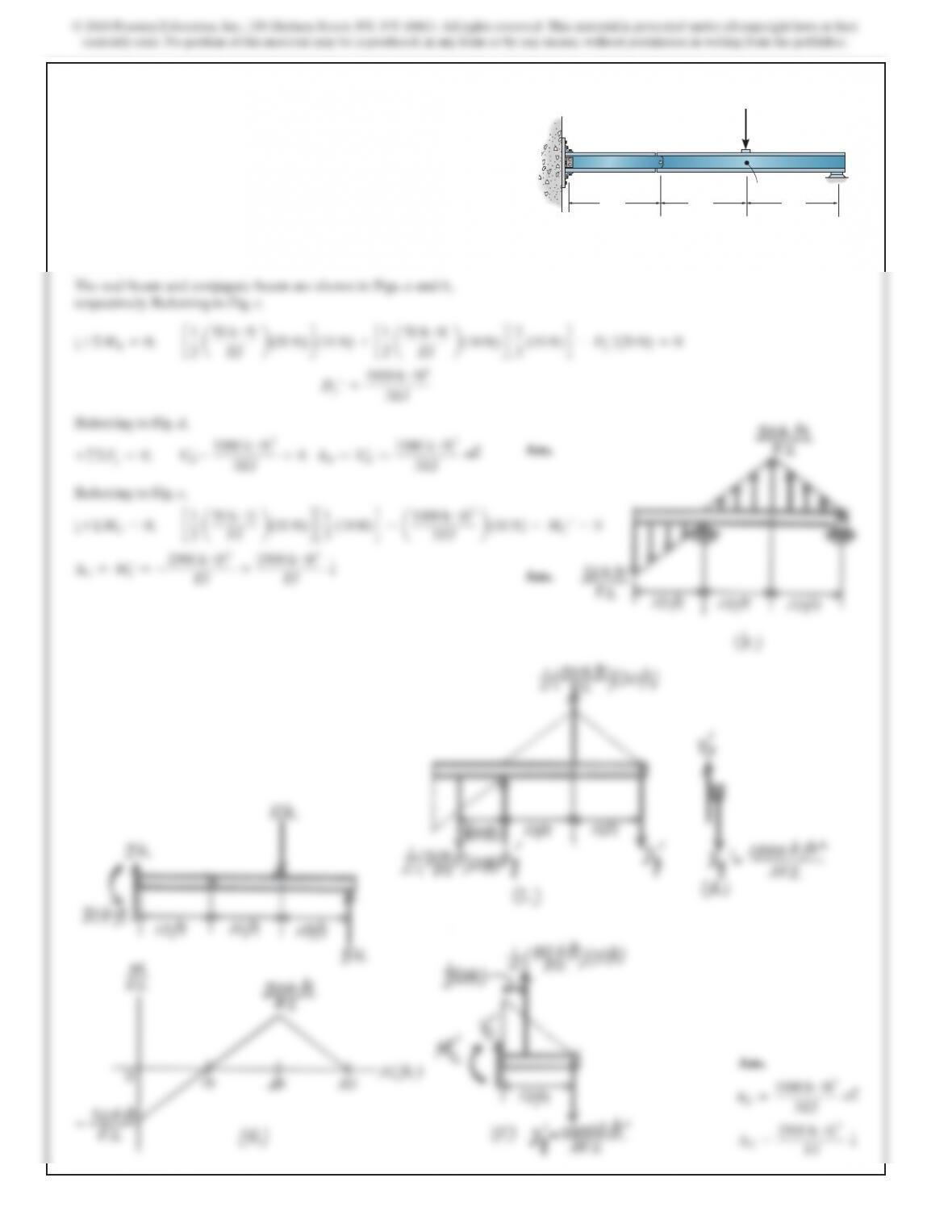
7–38. Determine the displacement at C and the slope at D.
Assume A is a fixed support, B is a pin, and D is a roller. Use
the conjugate-beam method.
10 ft 10 ft 10 ft
10 k
AB
D
C
SOLUTION
Ans.
u
D=
1000 k #ft2
3EI
∆C=
2500 k #ft3
EI
T