313
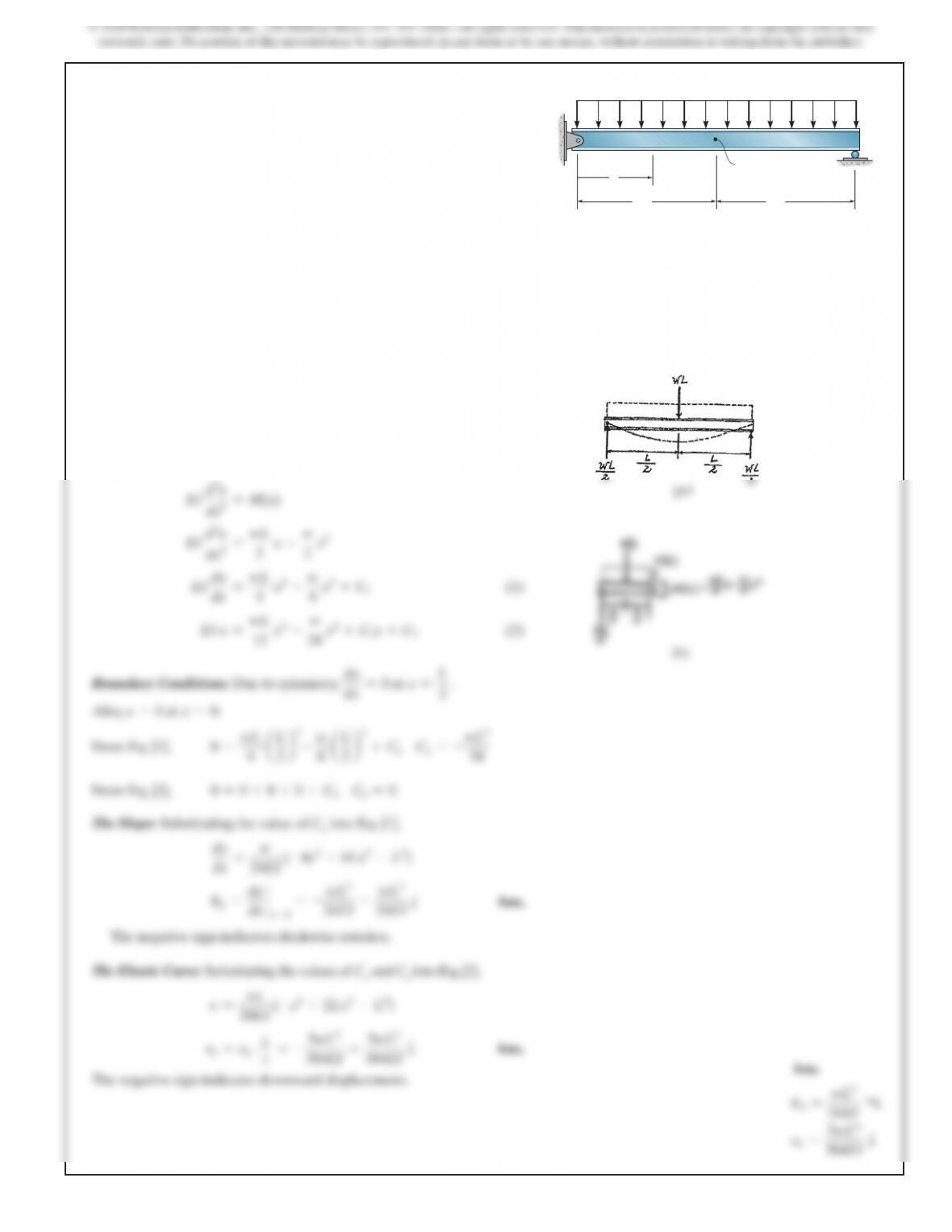
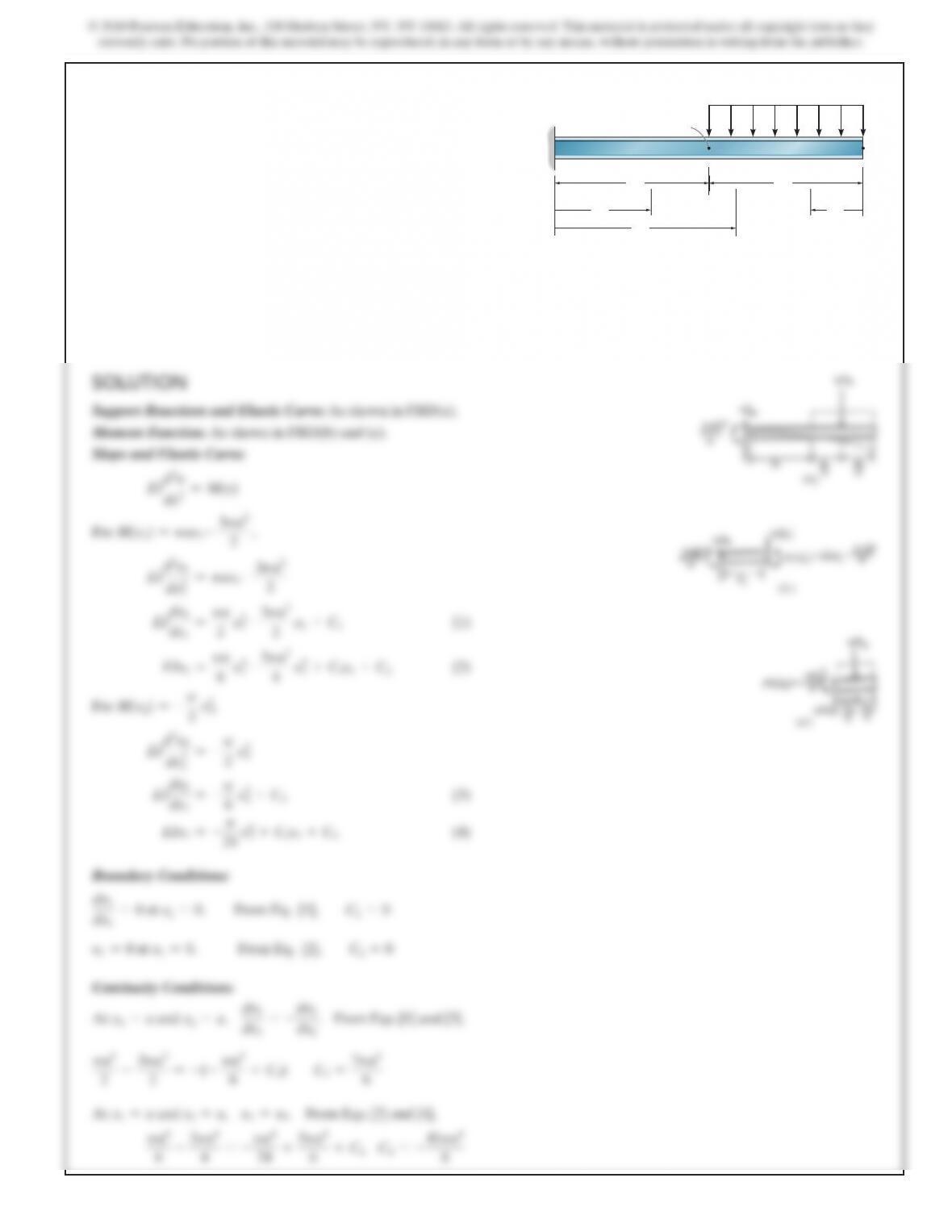
7–1. Determine the equation of the elastic curve using the
coordinate x, and specify the slope at point A and the deflection
at point C. EI is constant.
SOLUTION
Support Reactions and Elastic Curve: As shown on FBD(a).
Moment Function: As shown on FBD(b).
Slope and Elastic Curve:
E
I
d2
y
dx
2=M(x)
E
I
d2
y
dx
2=
wL
2
x–
w
2
x2
EI
dy
dx
=
wL
4
x2–
w
6
x3+C1 (1)
EI y=
wL
12
x3–
w
24
x4+C1x+C
2
(2)
Boundary Conditions: Due to symmetry,
dy
dx
=
0
at
x
=
L
2
.
Also,
y=0
at
x=0.
From Eq. [1],
0
=
wL
4
aL
2b2
–
w
6
aL
2b3
+C1
C1=–
wL3
24
From Eq. [2],
0=0+0+0+C2
C2=0
The Slope: Substituting the value of C1 into Eq. [1],
dy
dx
=
w
24EI
(–4x3+6Lx2–L3
)
d
y
dx `x=0
wL3
24EI
wL3
24EI
The negative sign indicates clockwise rotation.
The Elastic Curve: Substituting the values of C1 and C2 into Eq. [2],
y=
wx
24EI
(–x3+2Lx2–L3)
y
c=yx=
L
2
=–
5wL4
384EI
=
5wL4
384EI
T Ans.
The negative sign indicates downward displacement. Ans.
u
A=
wL3
24EI
y
c=
5wL4
384EI
T
AB
w
x
C
L
__
2
L
__
2
315
3EI
Ans.
19
200 lb #ft2
3EI
316
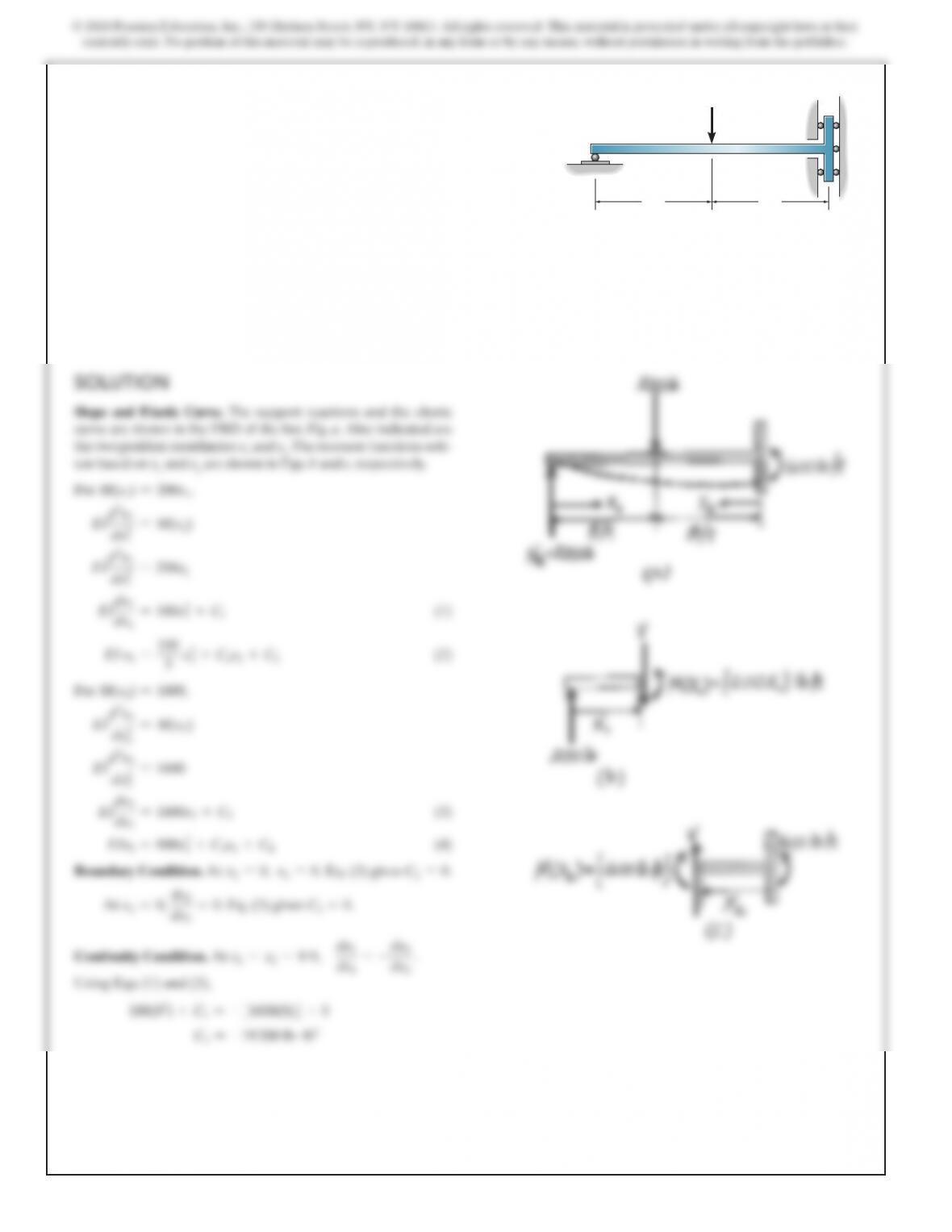
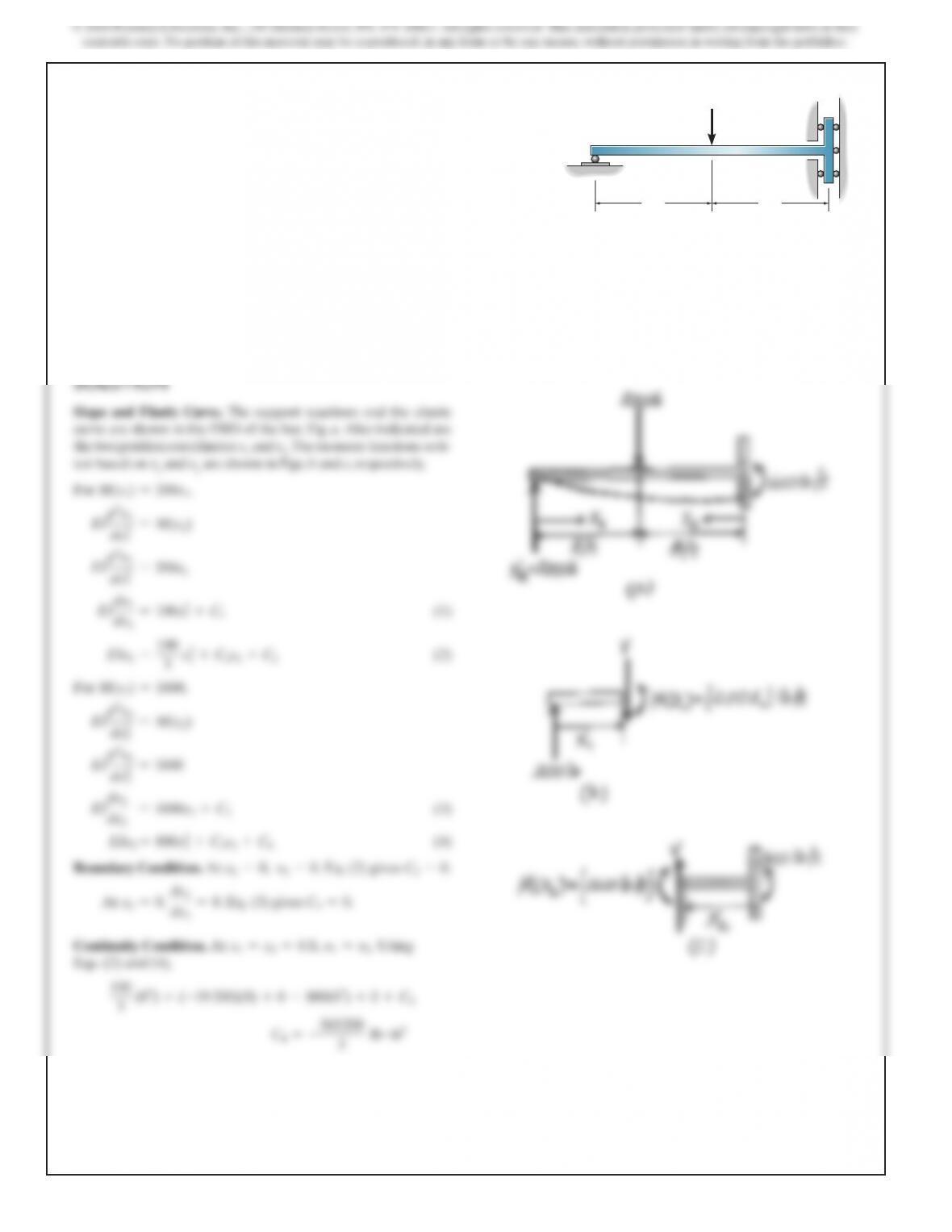
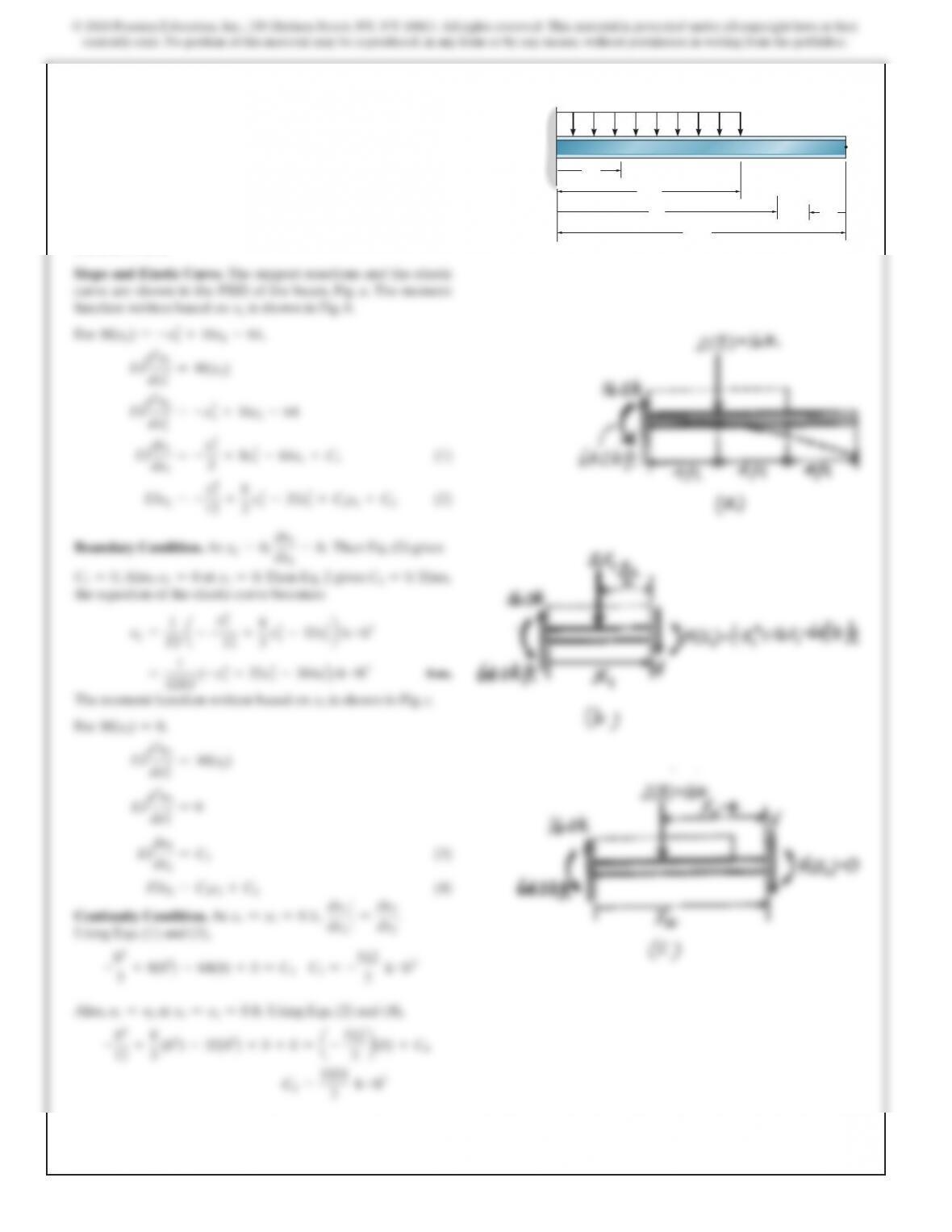
7–3. Determine the slope at C, and the deflection at B of the
bar in Prob. 7–2.
A
C
B
200 lb
8 ft 8 ft
3
317
Ans.
u
C=
12
800 lb #ft2
EI
y
B=
563
200 lb #ft3
3EI
T
3EI
3EI
3EI
SOLUTION
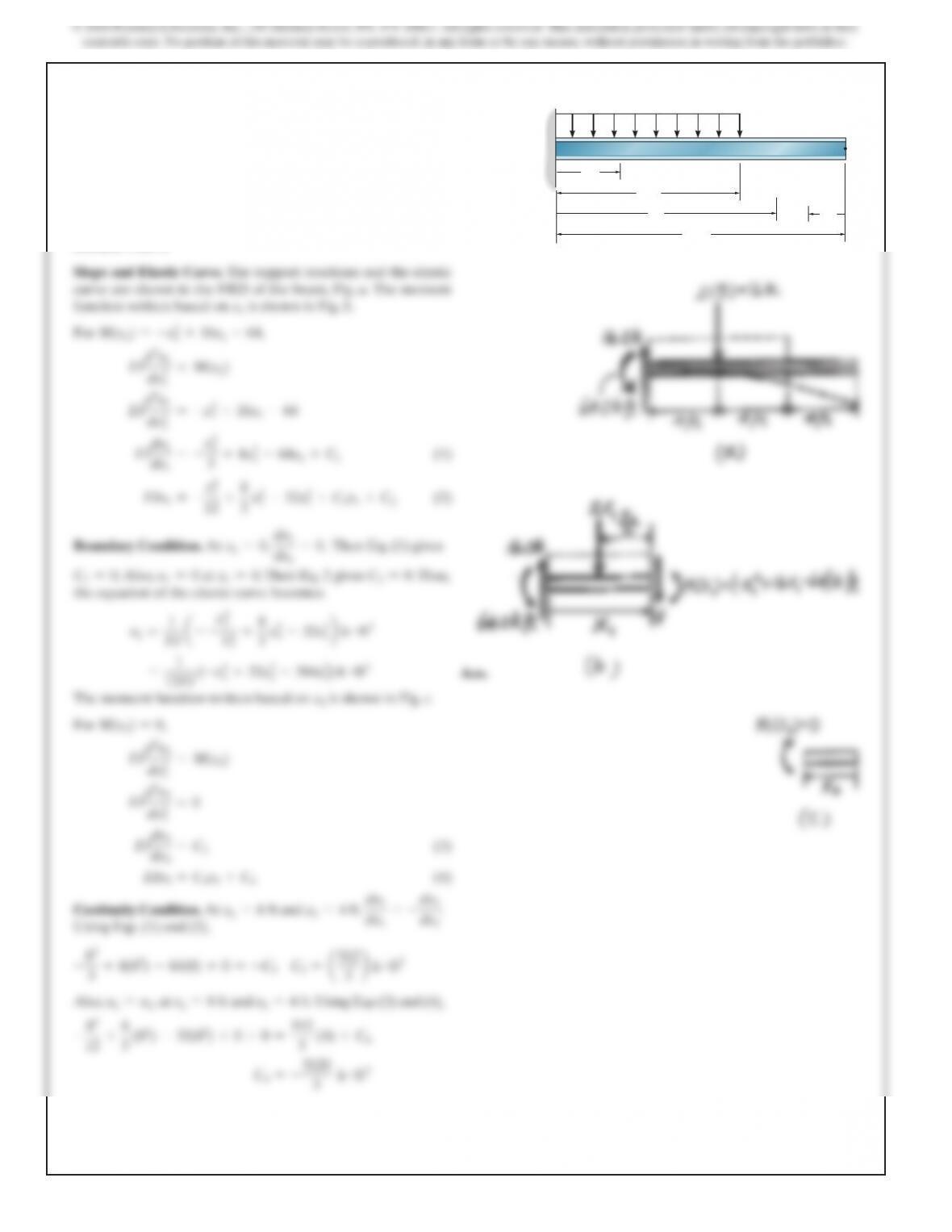
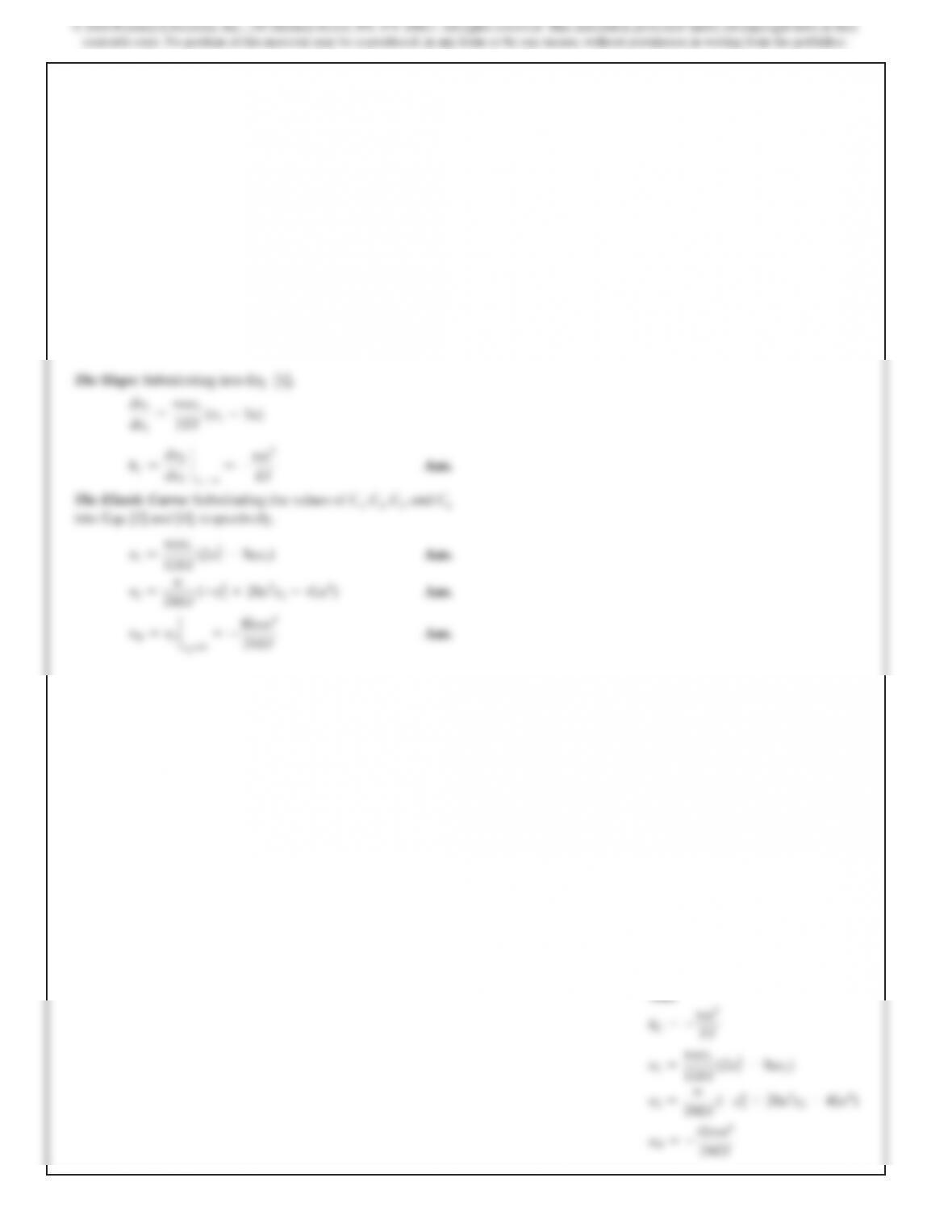
*7–4. Determine the equations of the elastic curve using the
coordinates x1 and x2 and specify the slope and deflection at B.
EI is constant.
A
2 k>ft
8 ft
12 ft
B
x1
x2x3
C
319
3EI
3EI
Ans.
y
1=
1
12EI
(–x1
4+32x1
3–384x1
2) k
#
ft
3
y
2=
1
3EI
(–512x2+1024) k
#
ft
3
u
B=
512 k #ft2
3EI
y
B=
5120 k #ft3
3EI
T
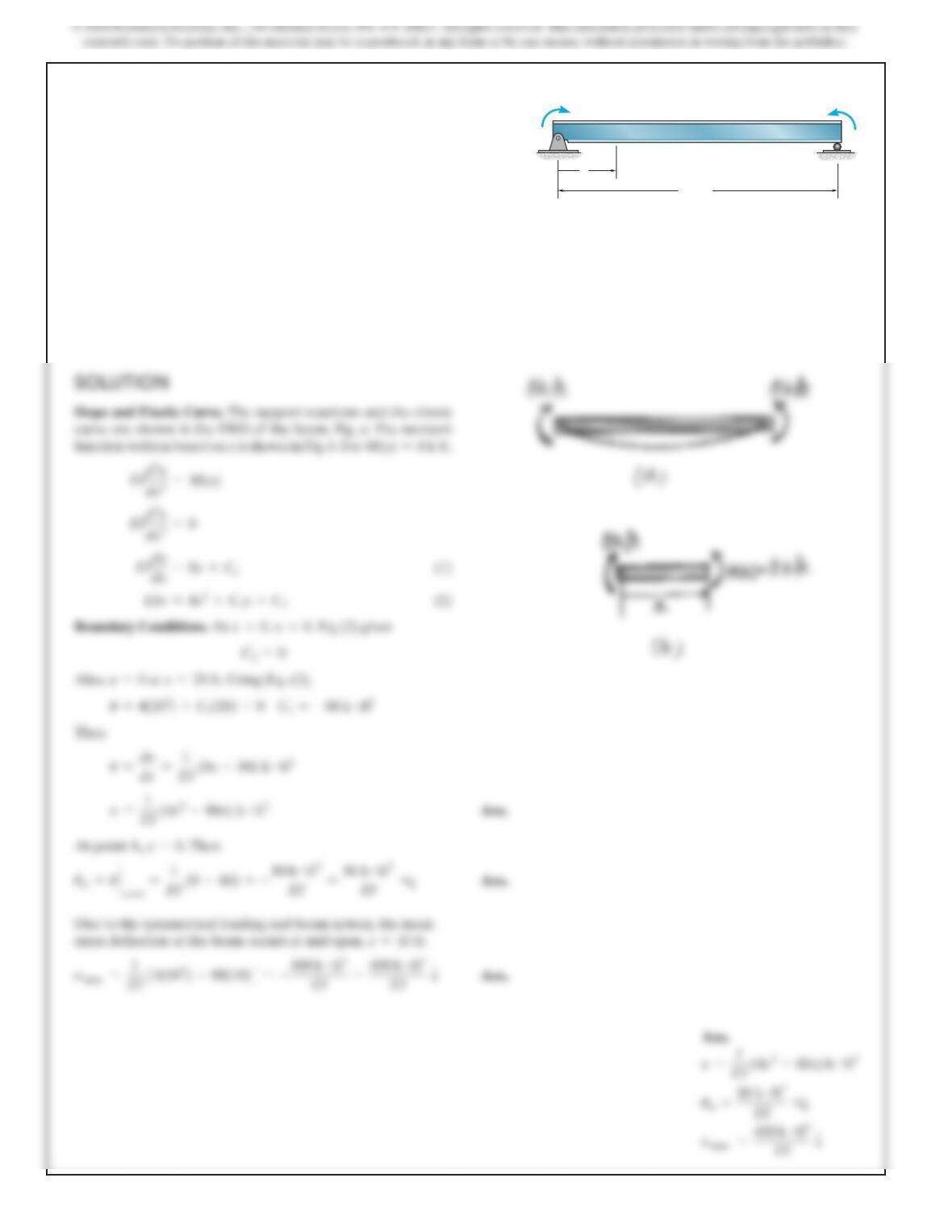
7–5. Determine the equations of the elastic curve using the
coordinates x1 and x3 and specify the slope and deflection at
point B. EI is constant.
SOLUTION
A
2 k>ft
8 ft
12 ft
B
x1
x2x3
C
321
3EI
322
Ans.
y=
1
EI
(4x2–80x) k
#
ft
3
uA=
80 k #ft2
EI
y max =
400 k #ft3
EI
T
EI
EI
EI
1
EI
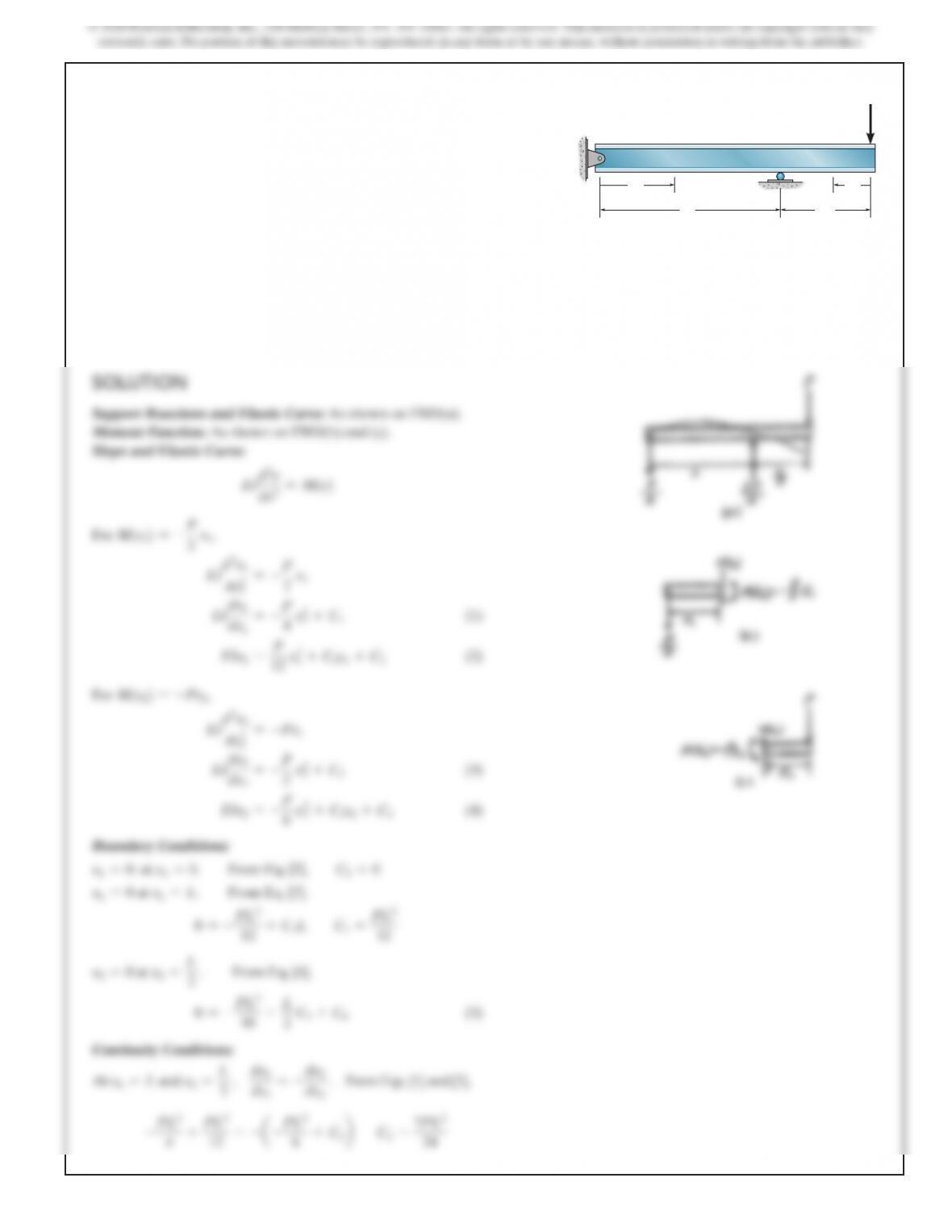
7–7. Determine the equations of the elastic curve for the
beam using the xl and x2 coordinates. Specify the beam’s
maximum deflection. EI is constant.
L
A
B
P
x2
—
2
L
x1
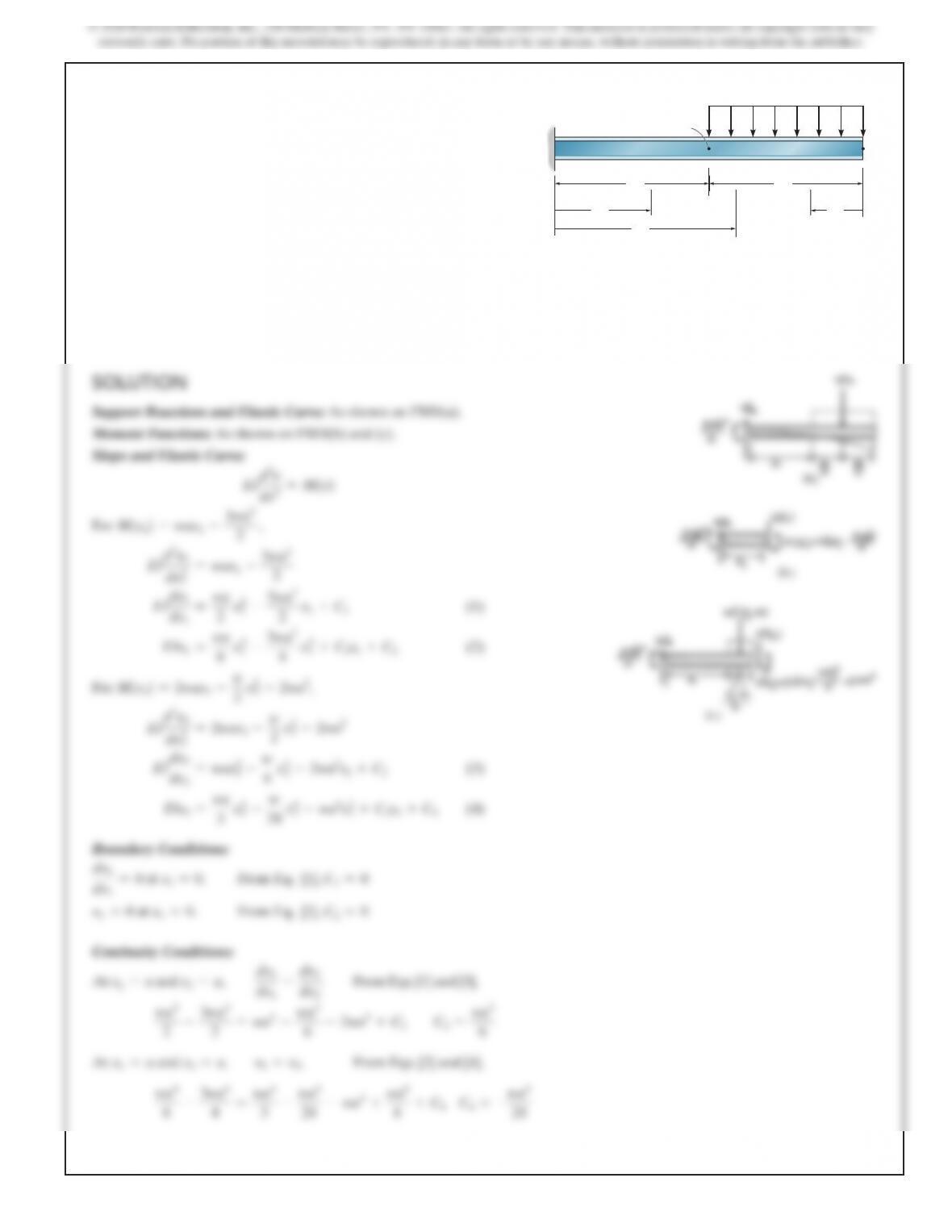
*7–8. Determine the equations of the elastic curve using the
coordinates x1 and x2 and specify the slope at C and
displacement at B. EI is constant.
BA
a
x1
x3
x2
a
w
C
326
Ans.
u
C=–
wa2
EI
y
1=
wax1
12EI
(2x1
2–9ax1
)
y
2=
w
24EI
(–x2
4+28a3x2–41a4
)
y
B=–
41wa4
24EI
7–8. (Continued)
wax1
12EI
)
w
24EI
)
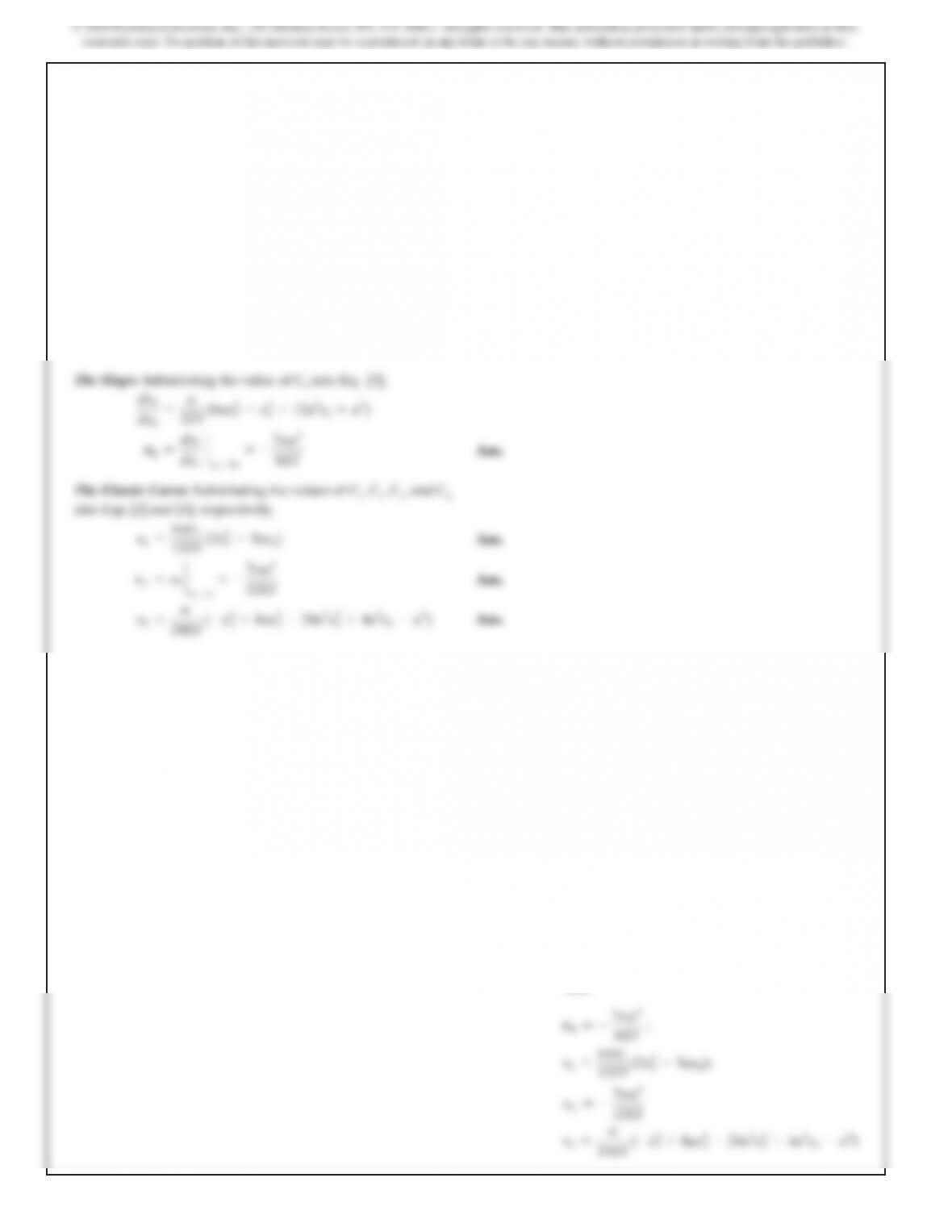
7–9. Determine the equations of the elastic curve using the
coordinates x1 and x3 and specify the slope at B and deflection
at C. EI is constant.
BA
a
x1
x3
x2
a
w
C
328
Ans.
u
B=–
7wa3
6EI
;
y
1=
wax1
12EI
(2x1
2–9ax1)
;
y
C=–
7wa4
12EI
y
3=
w
24EI
(–x3
4+8ax3
3–24a2x3
3+4a3x3–a4
)
7–9. (Continued)
y
wax1
12EI
y
w
)
24EI
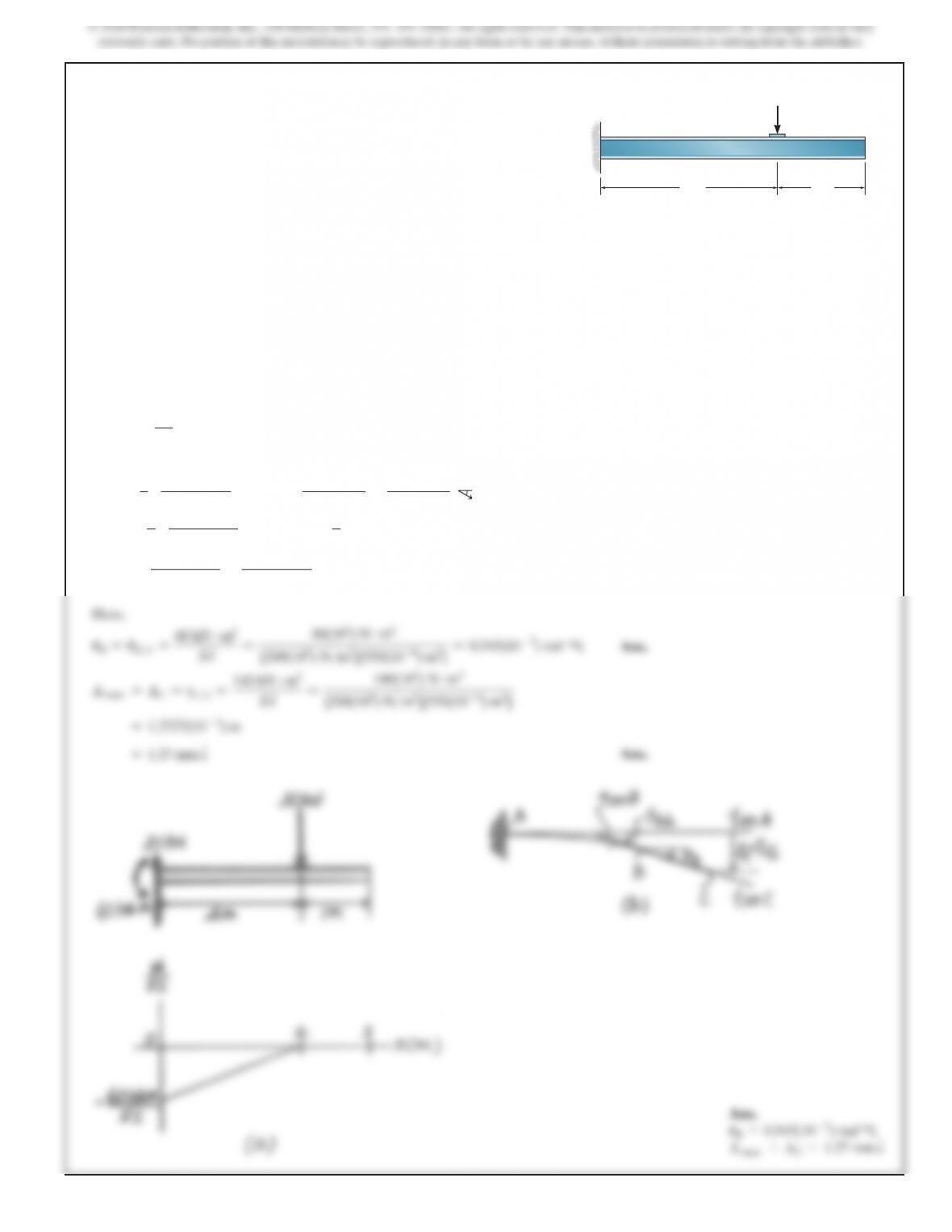
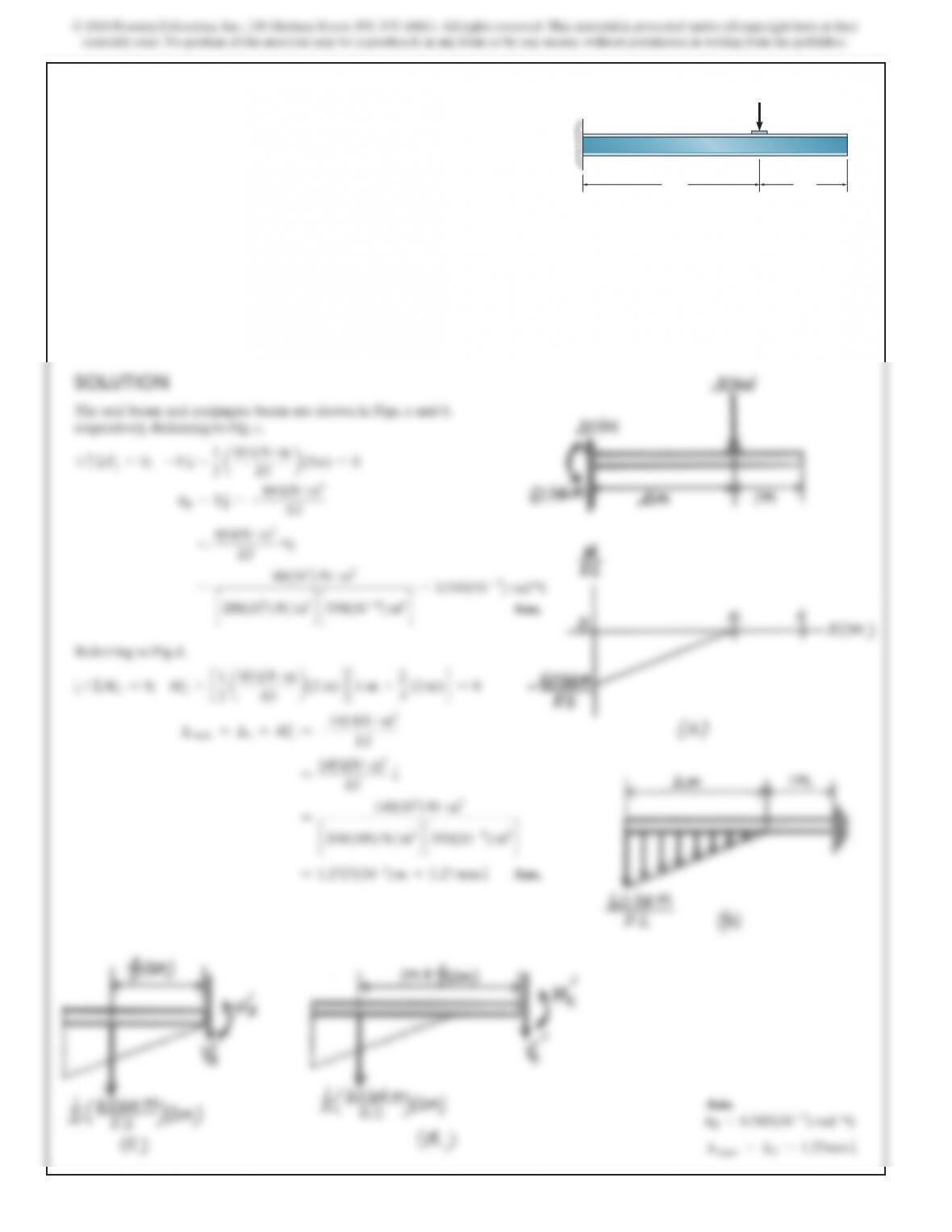
7–11. Solve Prob. 7–10 using the conjugate-beam method.
SOLUTION
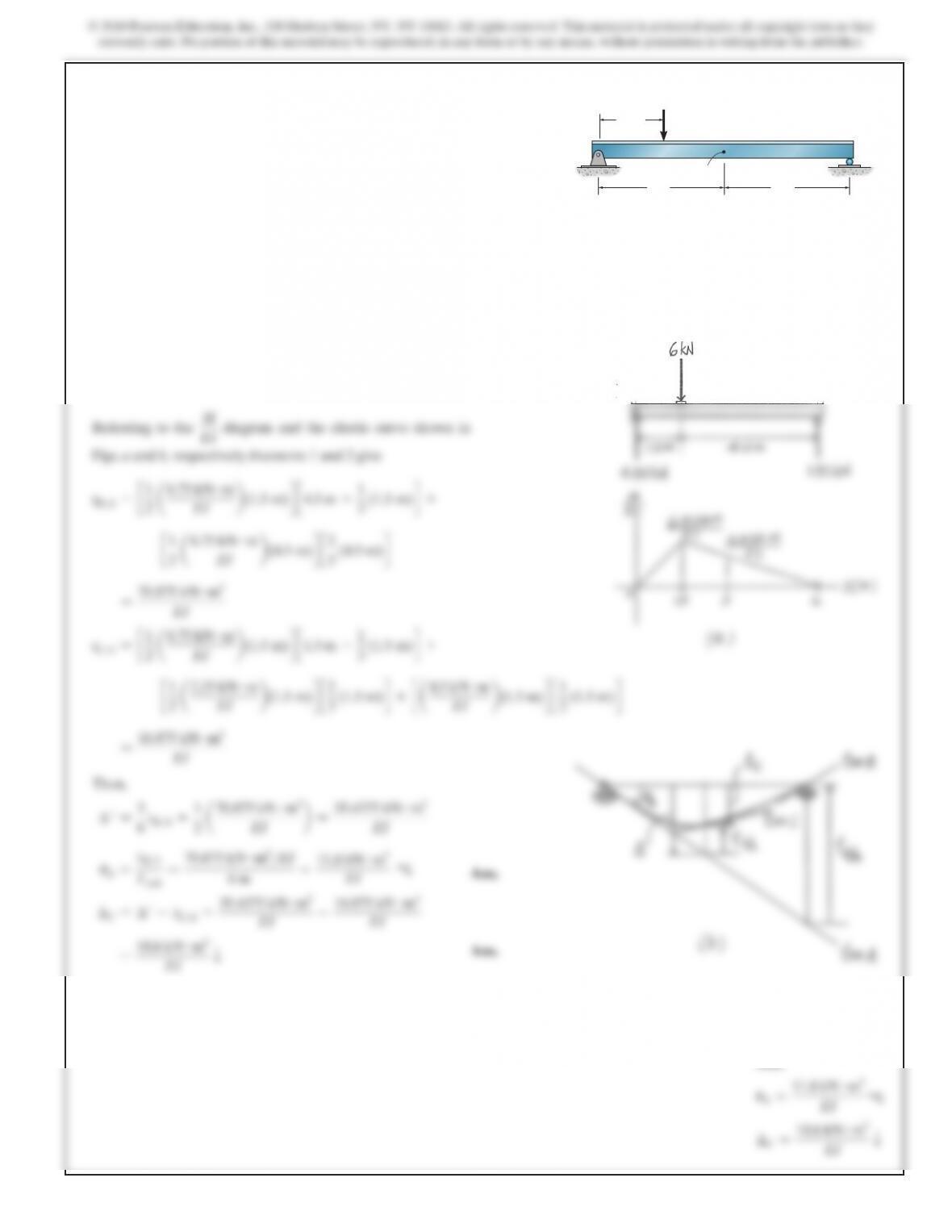
The real beam and conjugate beam are shown in Figs. a and b,
respectively. Referring to Fig. c,
+
c
ΣFy=0;
–VB
′–
1
2
a60 kN #m
EI b
(2m) =
0
u
B=V′
B=–
60 kN #m2
EI
=
60 kN #m2
EI
=
60(103) N #m2
140 kN #m3
=0.545(10 –3) ra
d
2 m 1 m
AB
C
30 kN
331
Ans.
u
A=
11.8 kN #m2
EI
∆
C=
18.6 kN #m3
EI
T
SOLUTION
M
EI
*7–12. Use the moment-area theorems and determine the
slope at A and displacement at C. EI is constant.
A
6 kN
C
3 m 3 m
B
1.5 m
7–13. Solve Prob. 7–12 using the conjugate-beam method.
SOLUTION
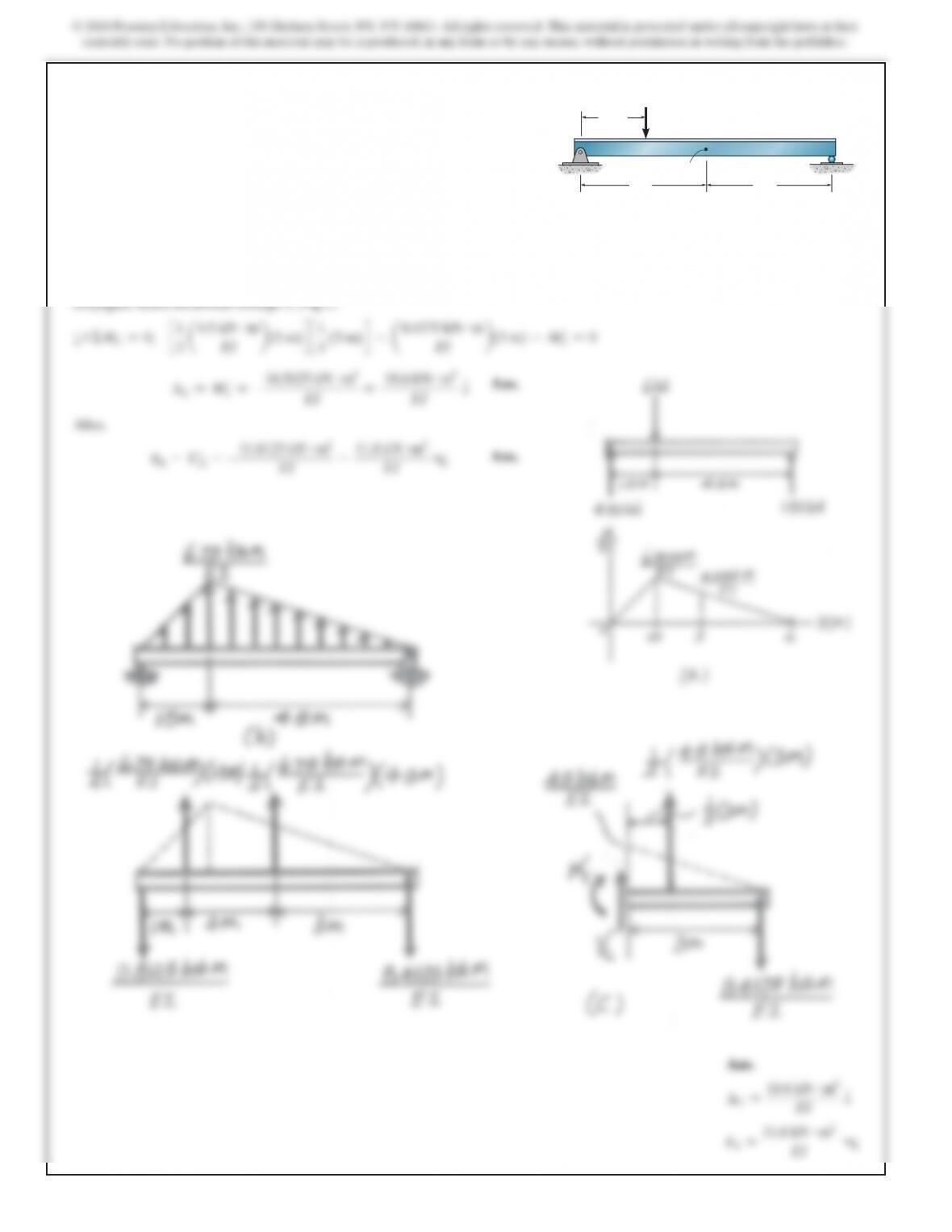
The real beam and conjugate beam are shown in Figs. a and b,
respectively. Referring to the FBD of the right segment of the
A
6 kN
C
3 m 3 m
B
1.5 m