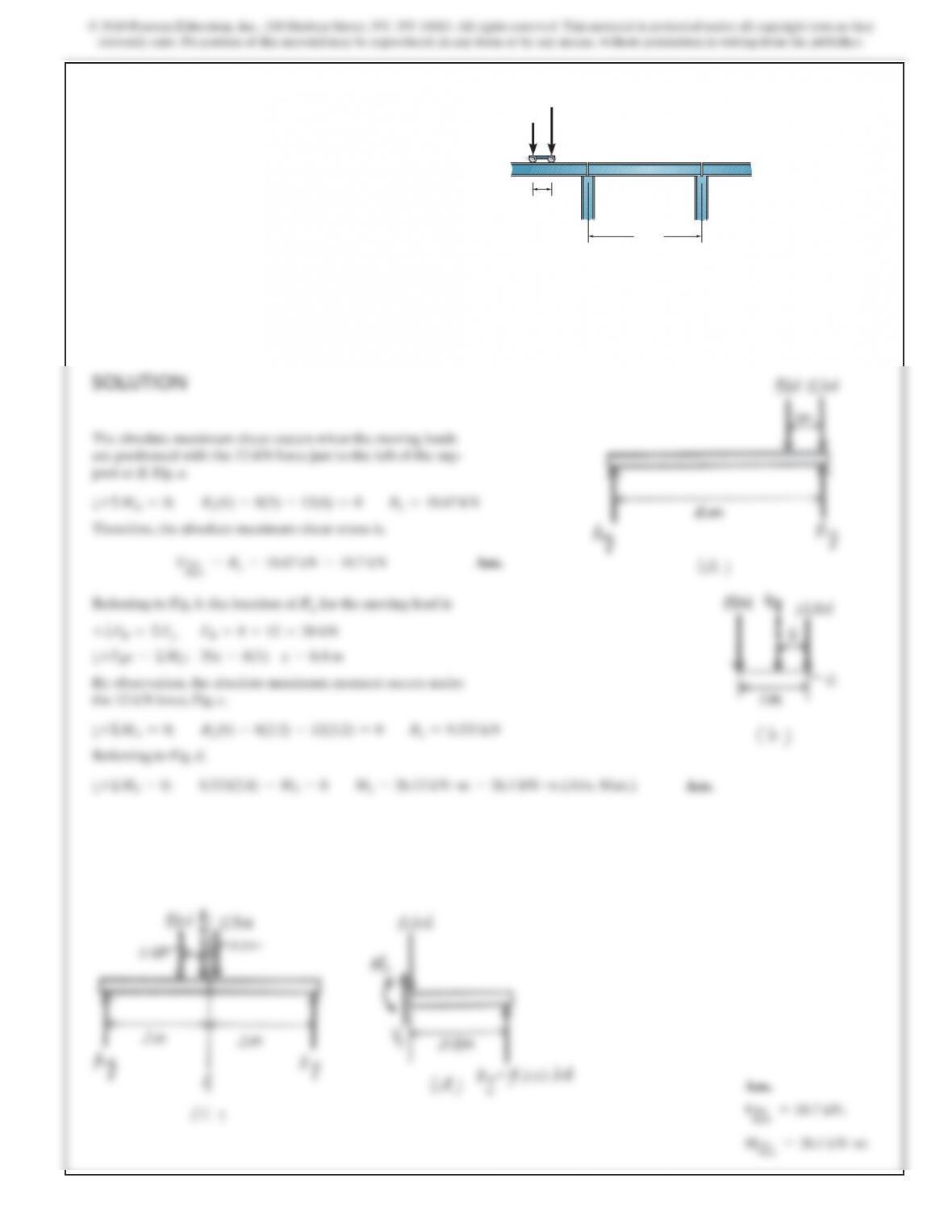
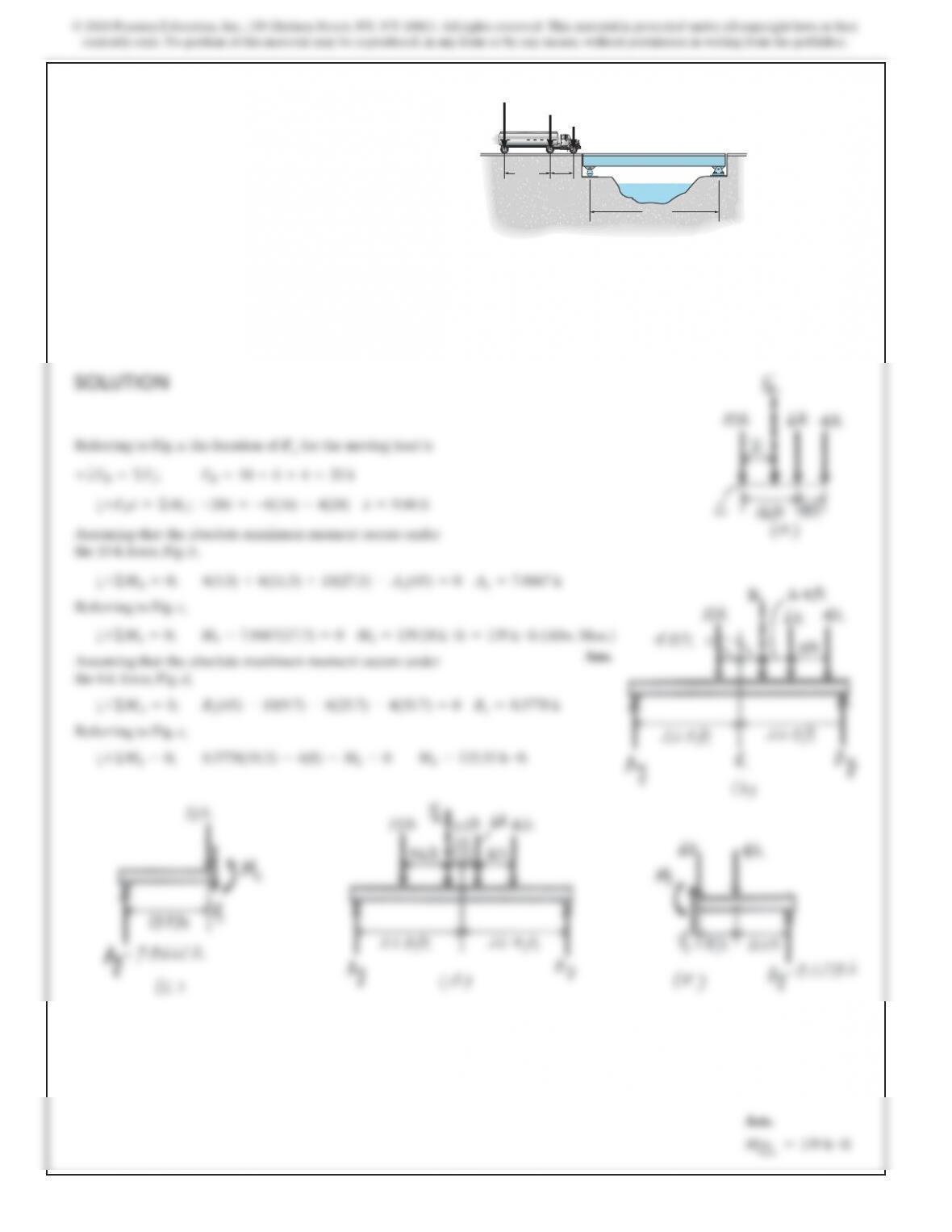
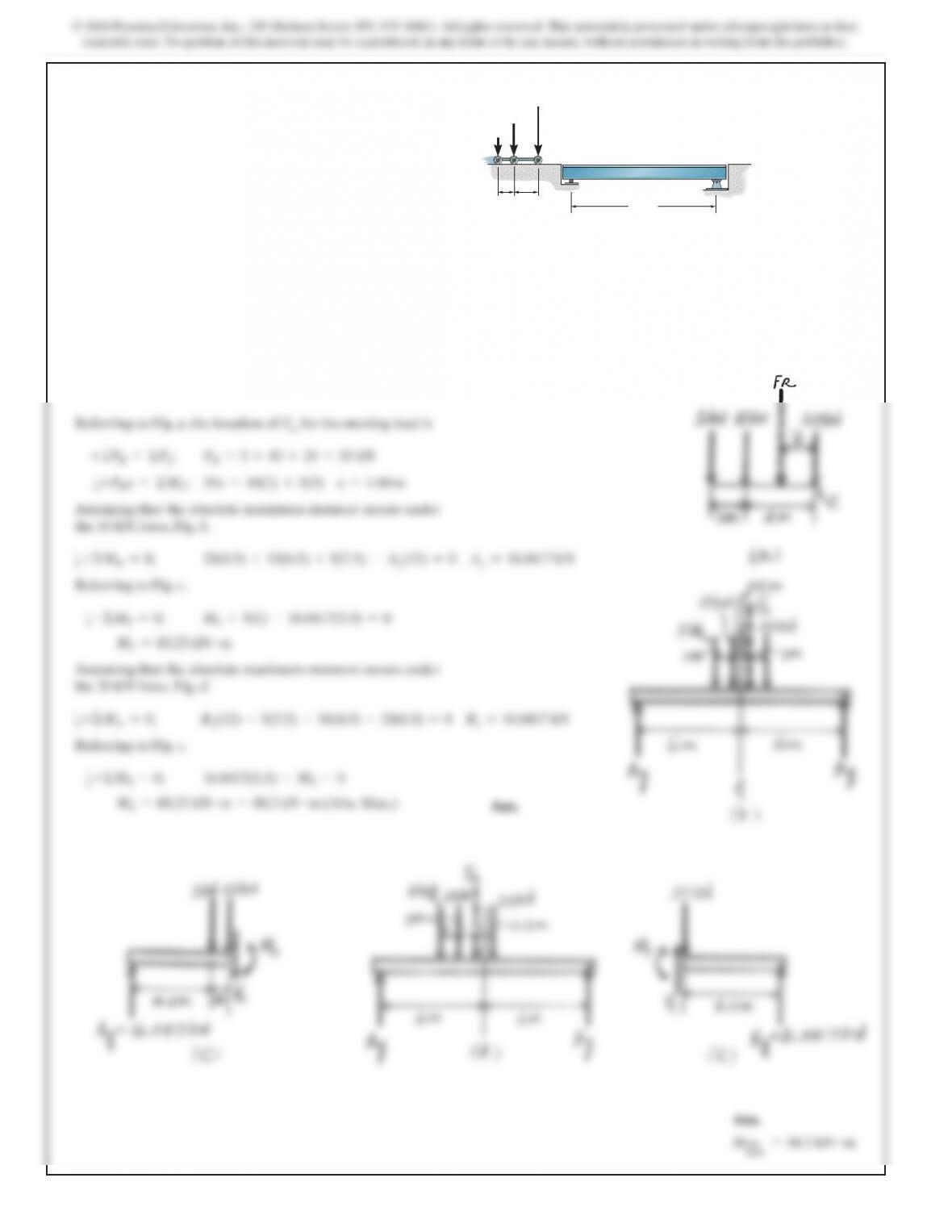
6–75. The maximum wheel loadings for the wheels of a crane
that is used in an industrial building are given. The crane travels
along the runway girders that are simply supported on columns.
Determine (a) the absolute maximum shear in intermediate
girder AB, and (b) the absolute maximum moment in the
girder.
B
A
1 m
6 m
8 kN
12 kN
303
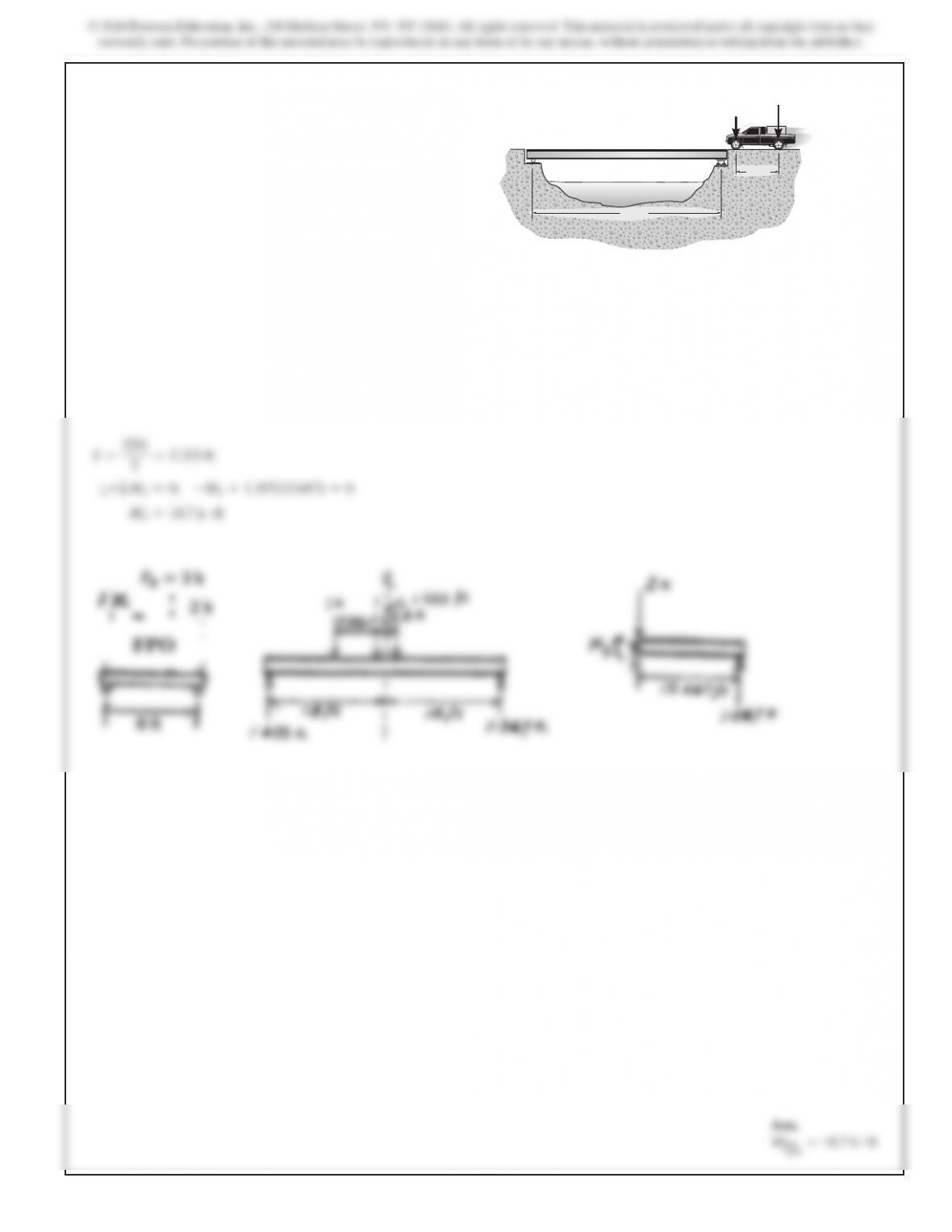
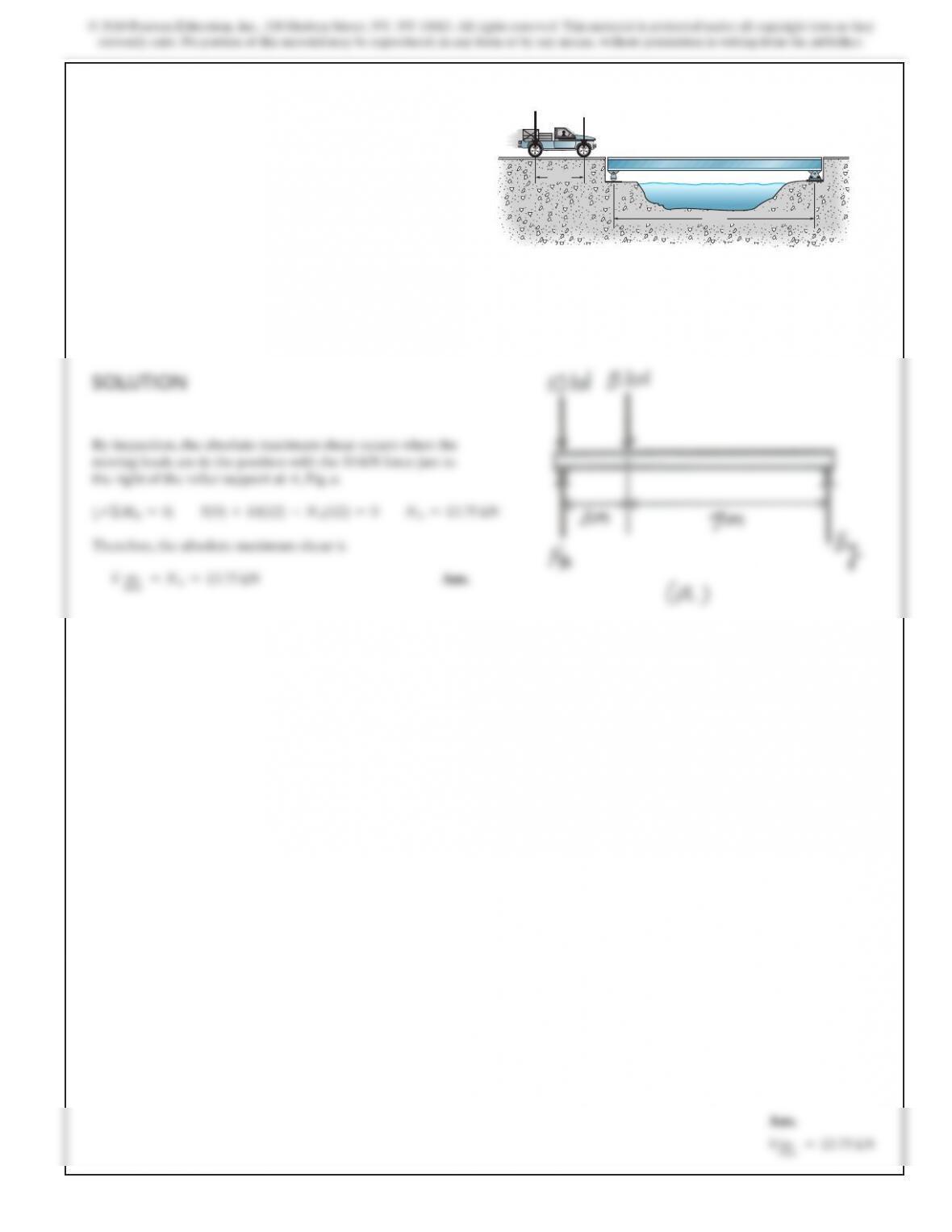
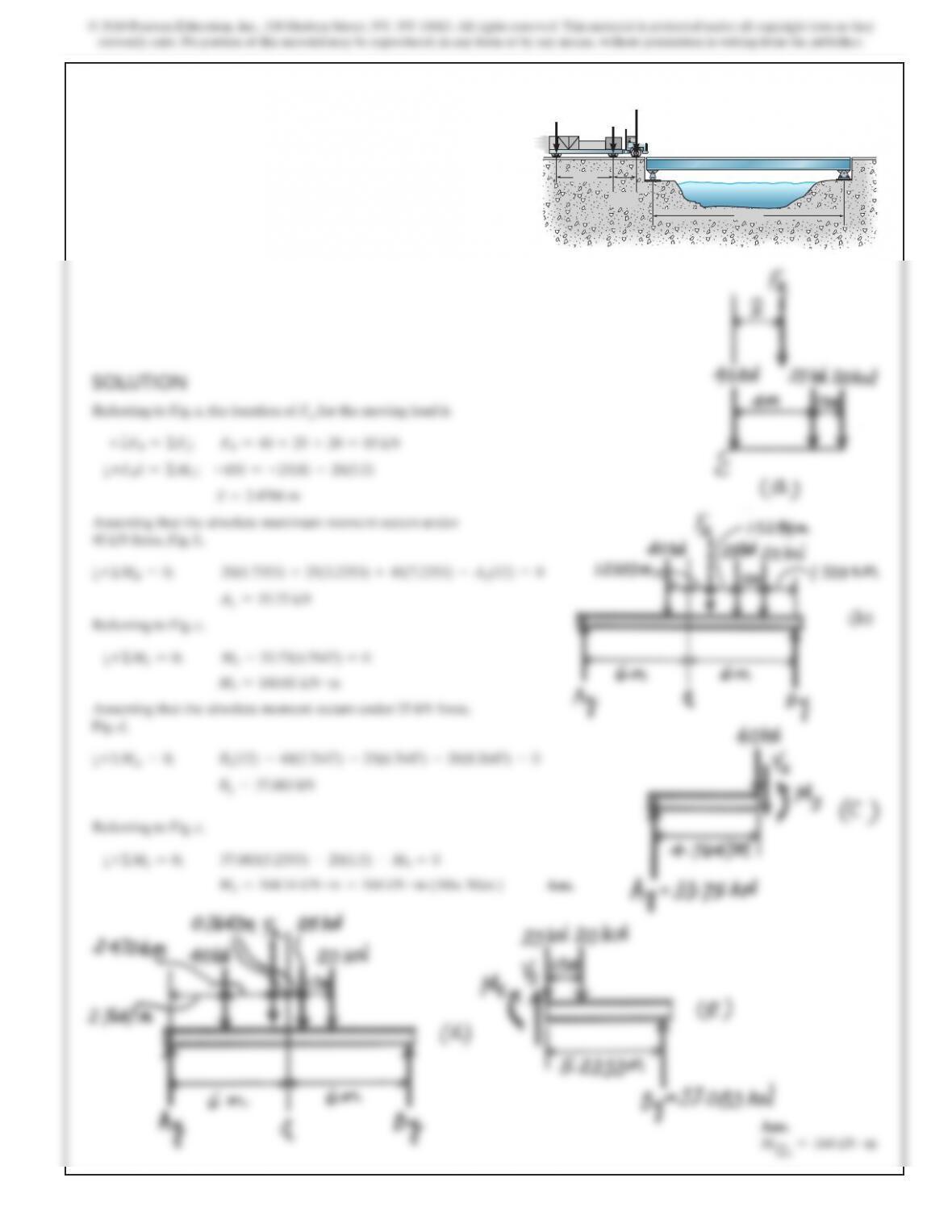
6–77. Determine the absolute maximum live moment in the
girder bridge due to the loading shown. The load is applied
directly to the girder.
SOLUTION
x
=
2(8)
3
=5.333 f
t
a+ΣMS=0;
–MS+1.367(13.667) =0
MS=18.7 k #ft
Ans.
M
abs
max
=18.7 k #ft
AB
30 ft
8 ft
1 k
2 k
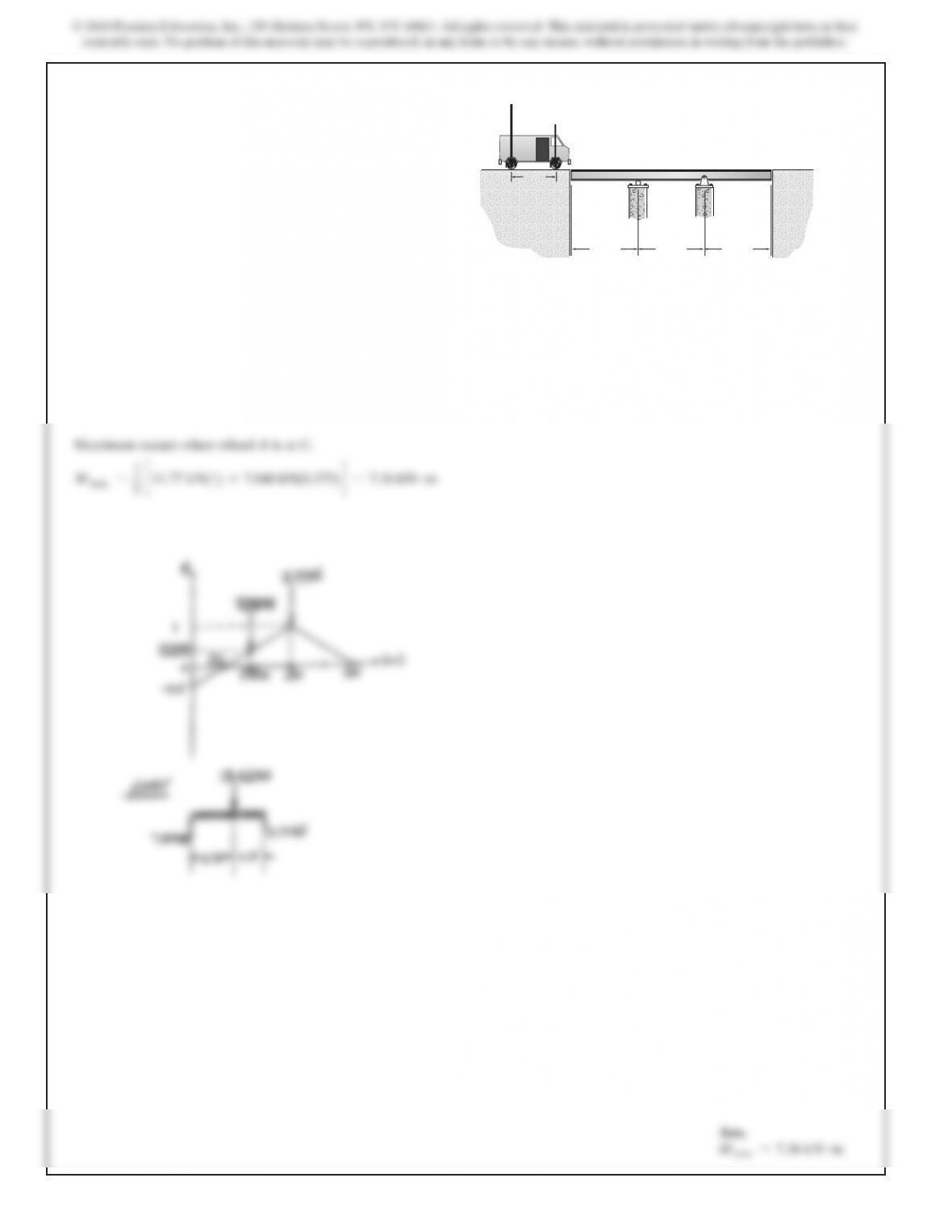
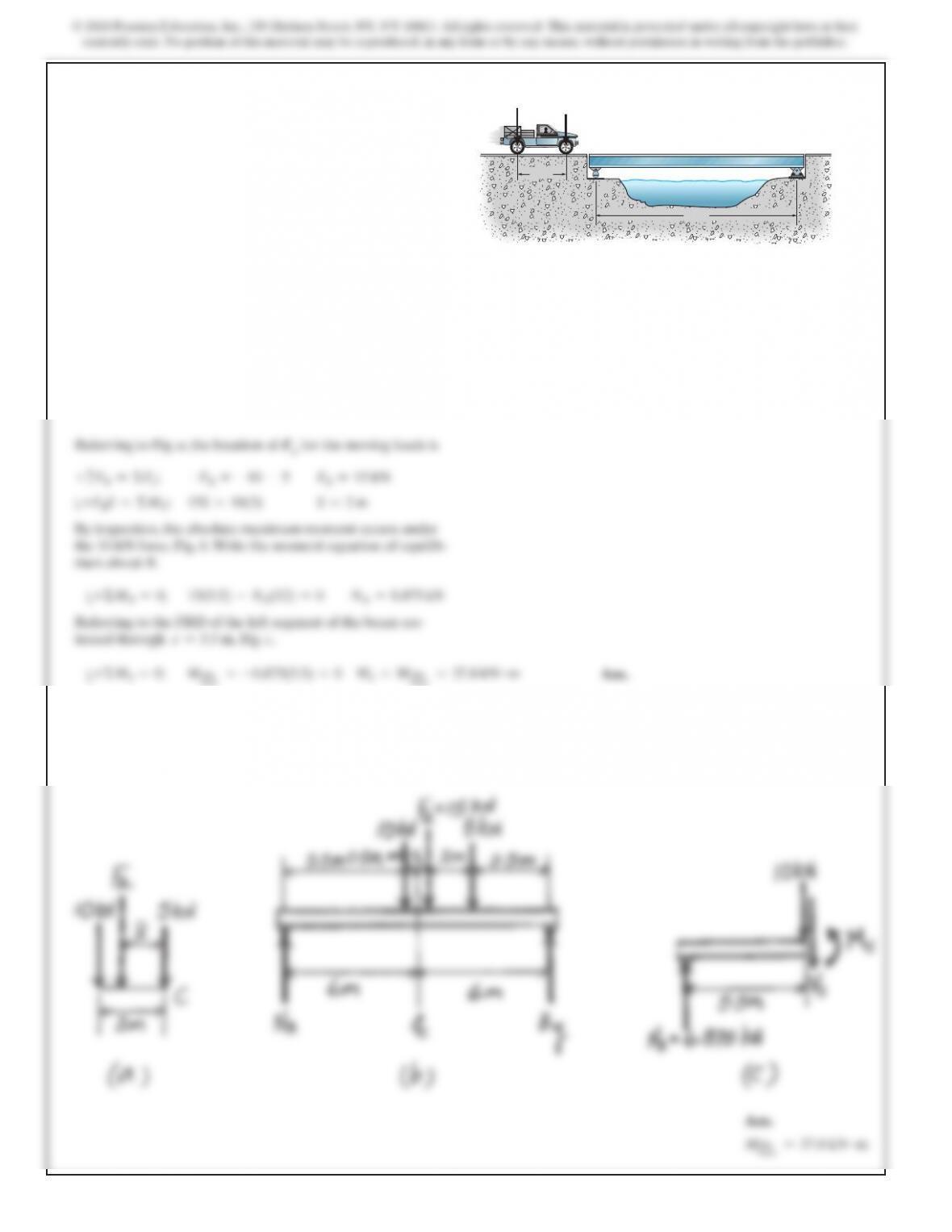
6–79. Determine the absolute maximum shear in the bridge
girder due to the loading shown.
12 m
3 m
10 kN
A
5 kN
B
SOLUTION
*6–80. Determine the absolute maximum moment in the
bridge girder due to the loading shown.
12 m
3 m
10 kN
A
5 kN
B
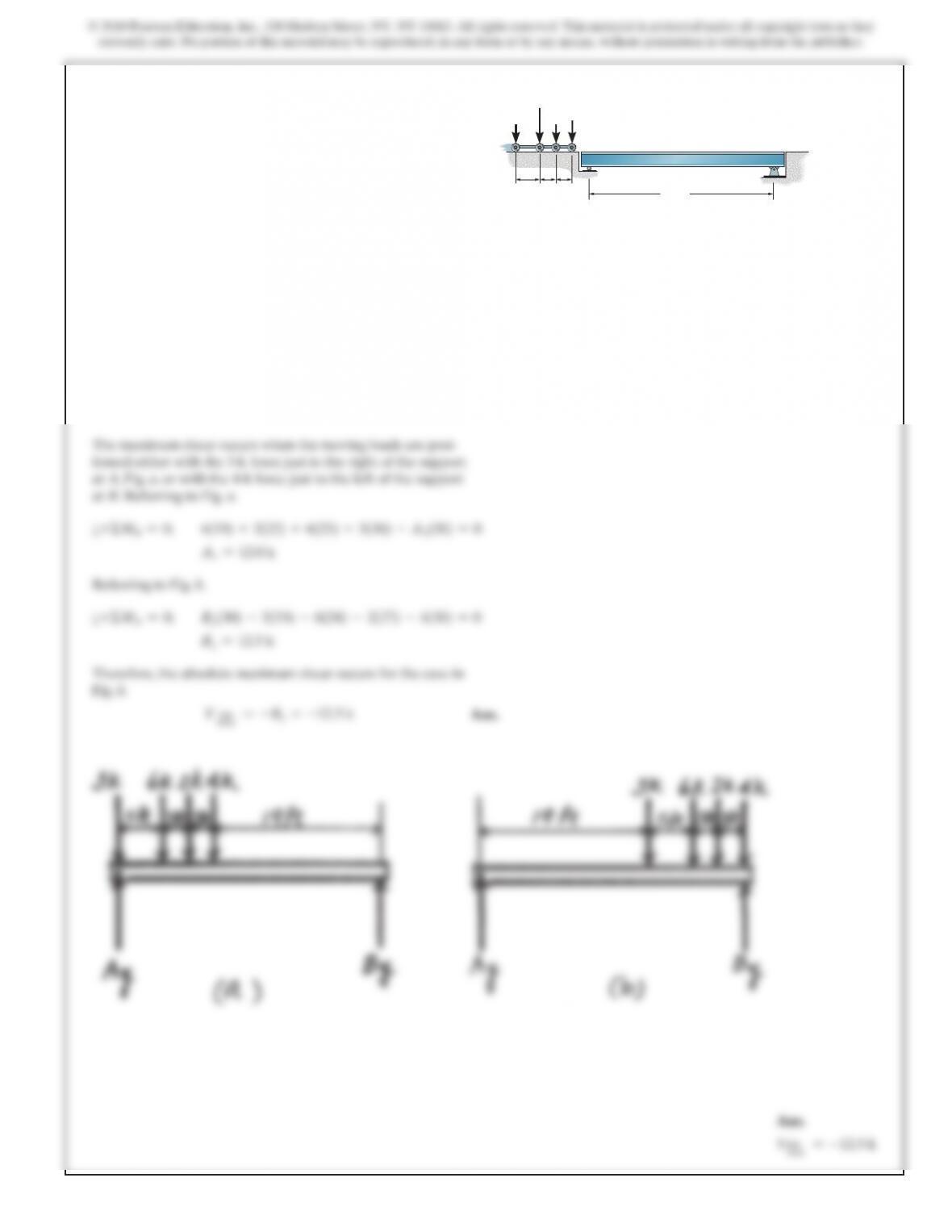
6–81. Determine the absolute maximum shear in the beam
due to the loading shown.
SOLUTION
30 ft
3 k
6 k
2 k
3 ft3 ft5 ft
4 k
6–83. Determine the absolute maximum moment in the
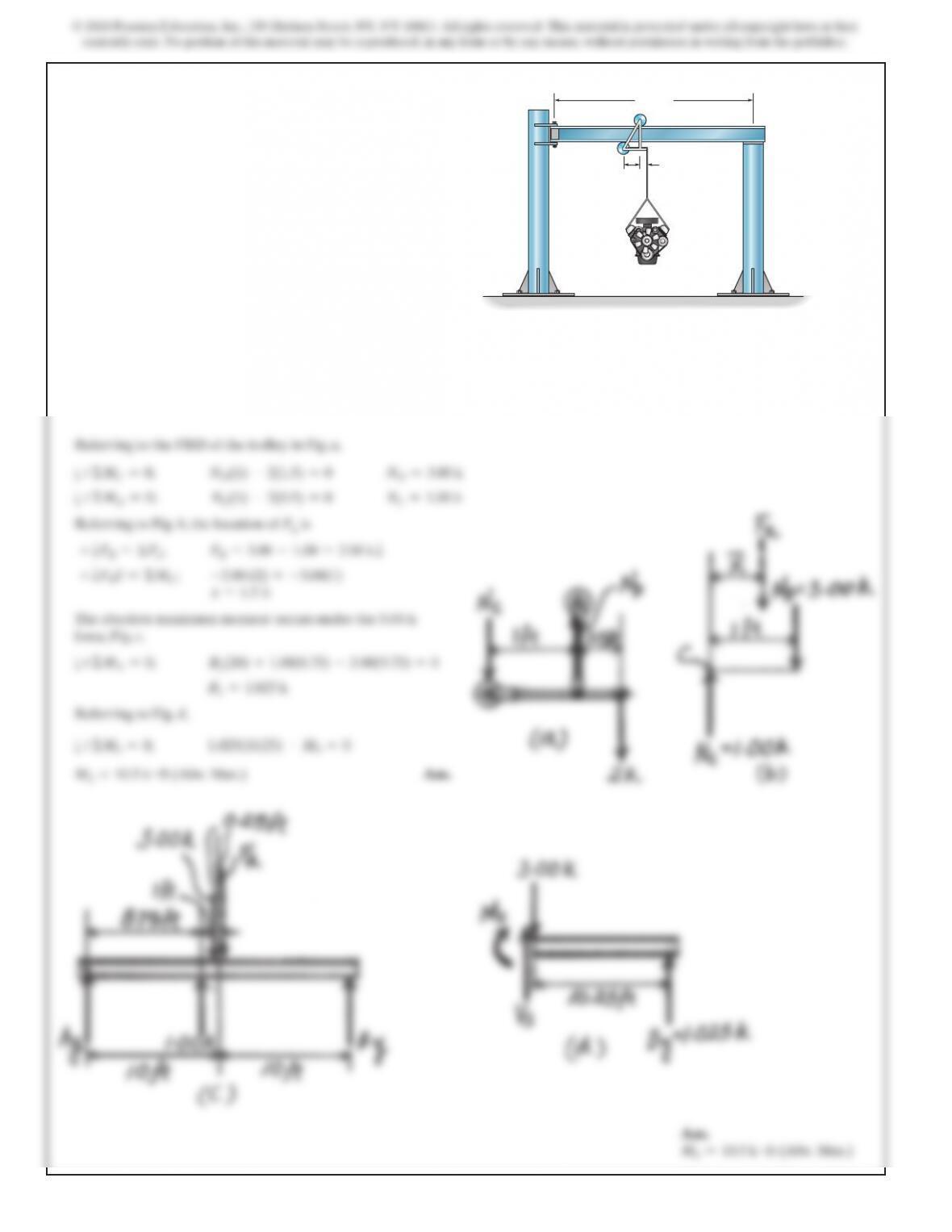
beam due to the loading shown.
12 m
20 kN
25 kN
40 kN
4 m
AB
1.5 m
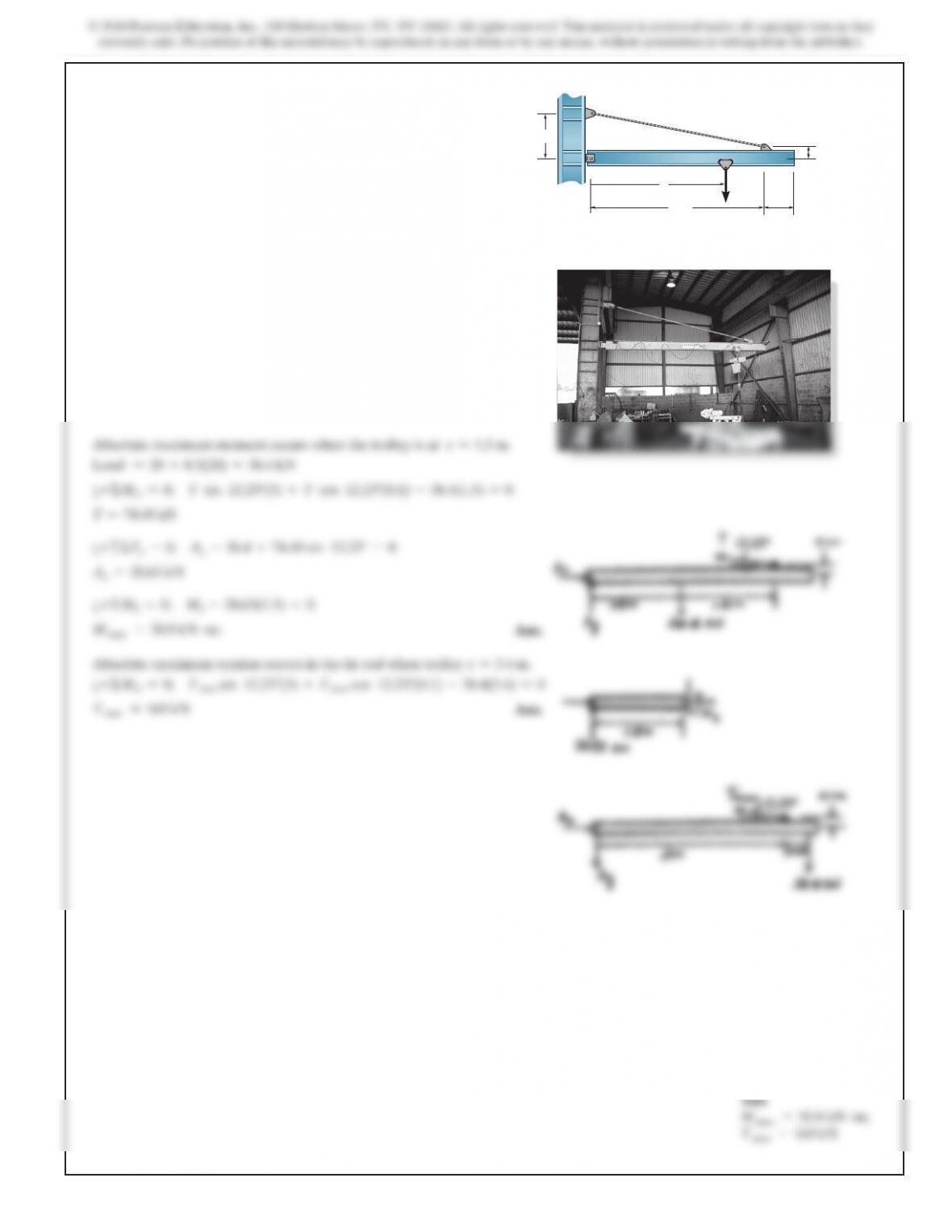
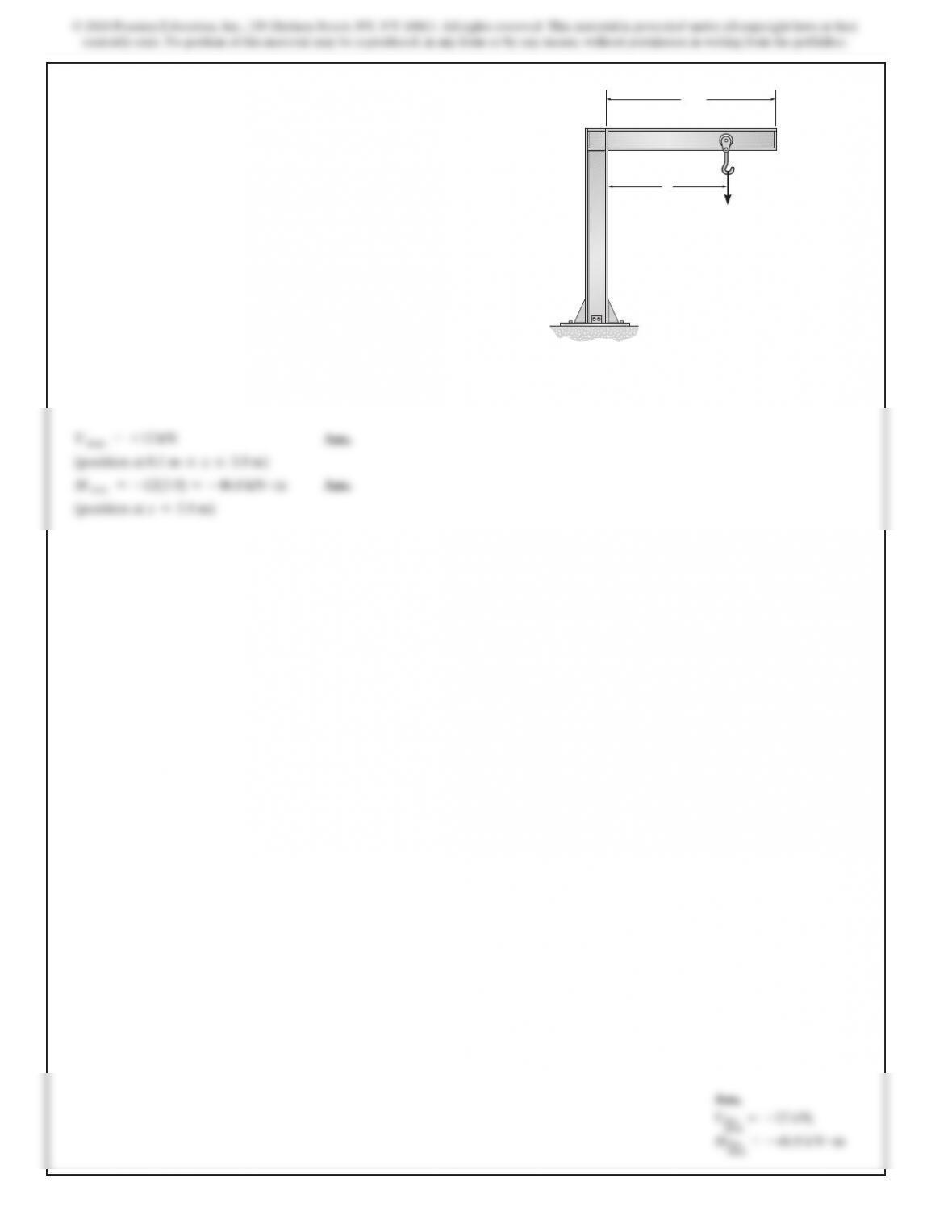
6–1P. The chain hoist on the wall crane can be placed
anywhere along the boom
(0.1 m 6x63.4 m)
and has a
rated capacity of 28 kN. Use an impact factor of 0.3 and
determine the absolute maximum bending moment in the
boom and the maximum force developed in the tie rod BC. The
boom is pinned to the wall column at its left end A. Neglect the
size of the trolley at D.
SOLUTION
0.75
m
3 m
x
0.5 m
0.1
m
28 kN
A
D
B
C
312