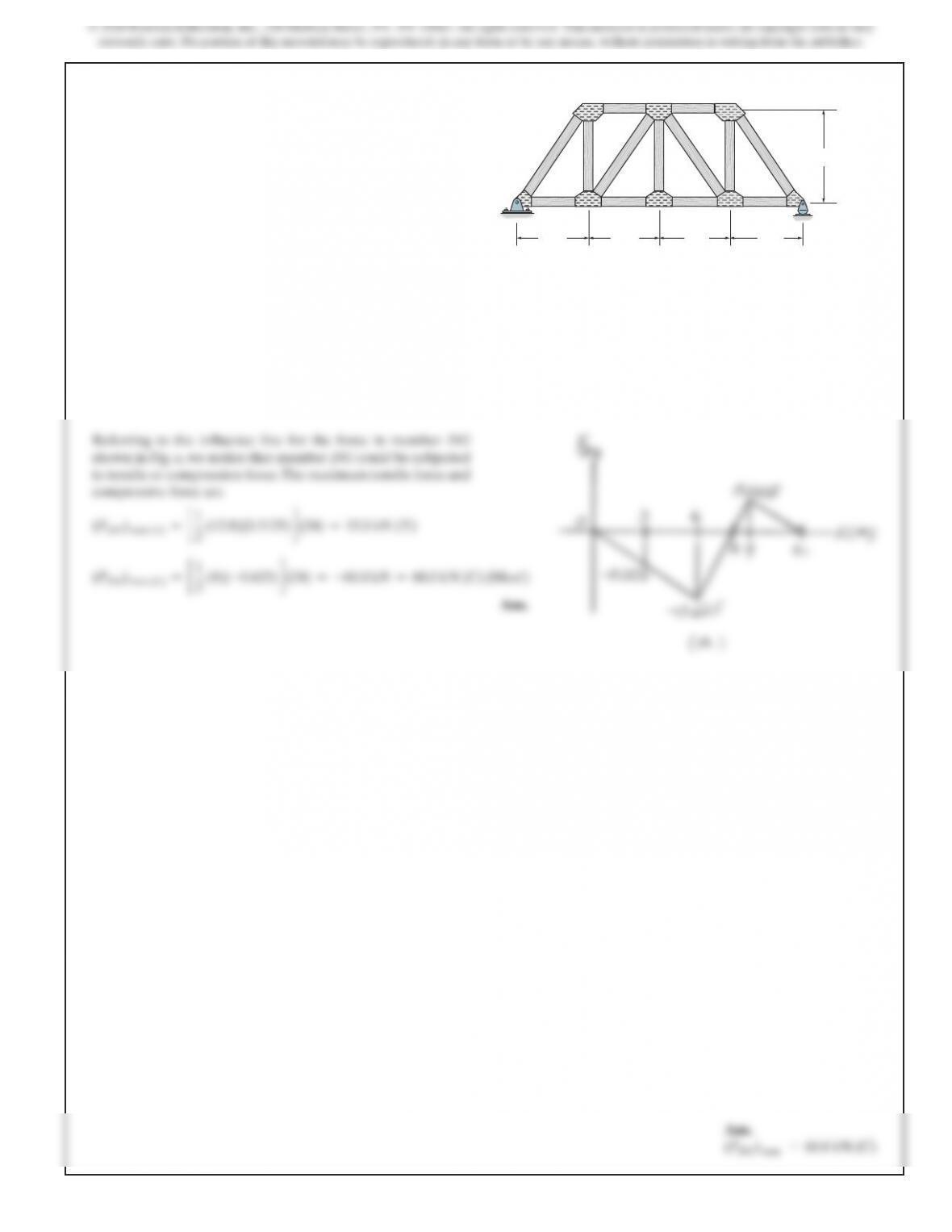
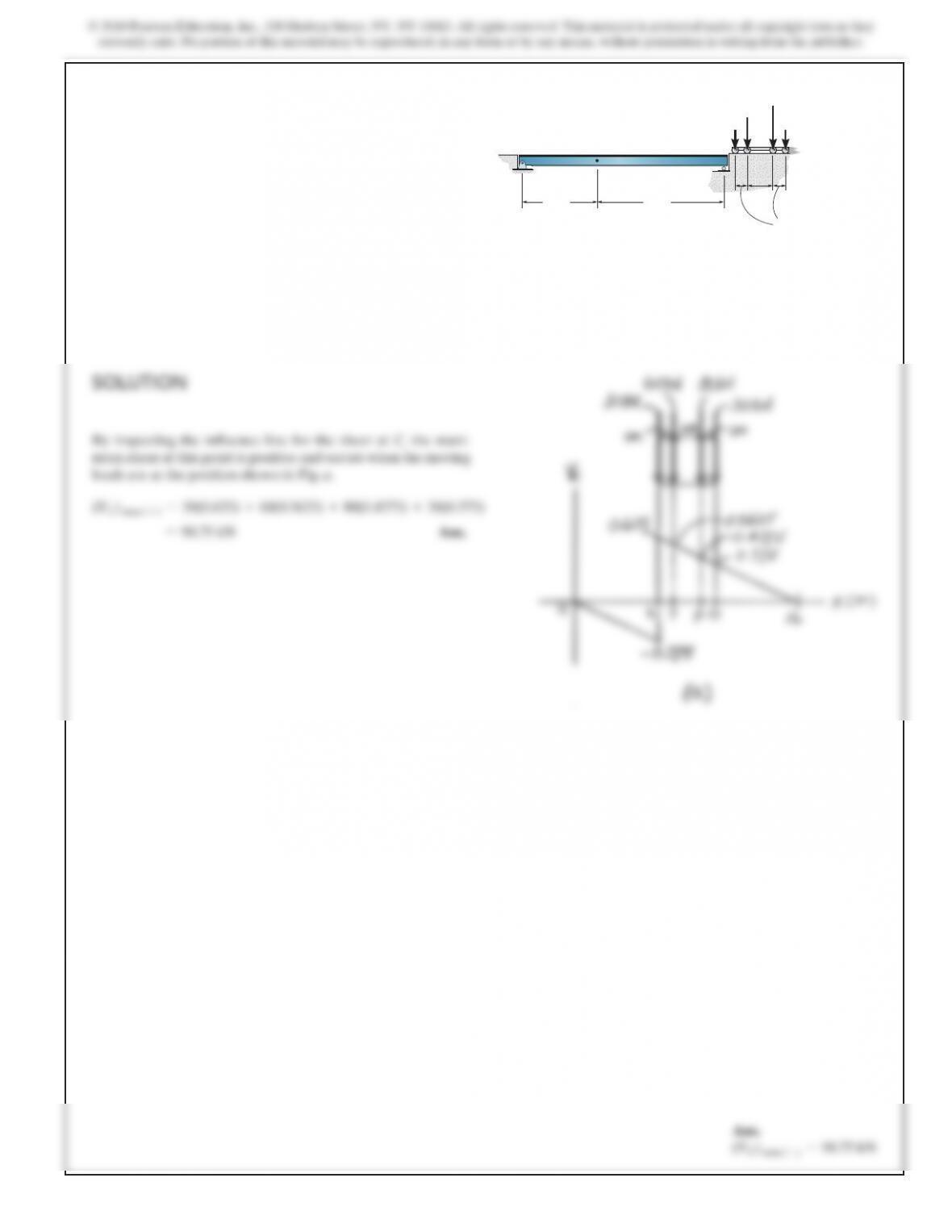
6–61. Draw the influence line for the force in member DG,
and then determine the maximum force (tension or compression)
that can be developed in this member due to a uniform live load
of 24 kN>m which is transmitted to the truss along the bottom
cord.
SOLUTION
A
E
B
H
CC
G
D
F
3 m 3 m 3 m 3 m
4 m
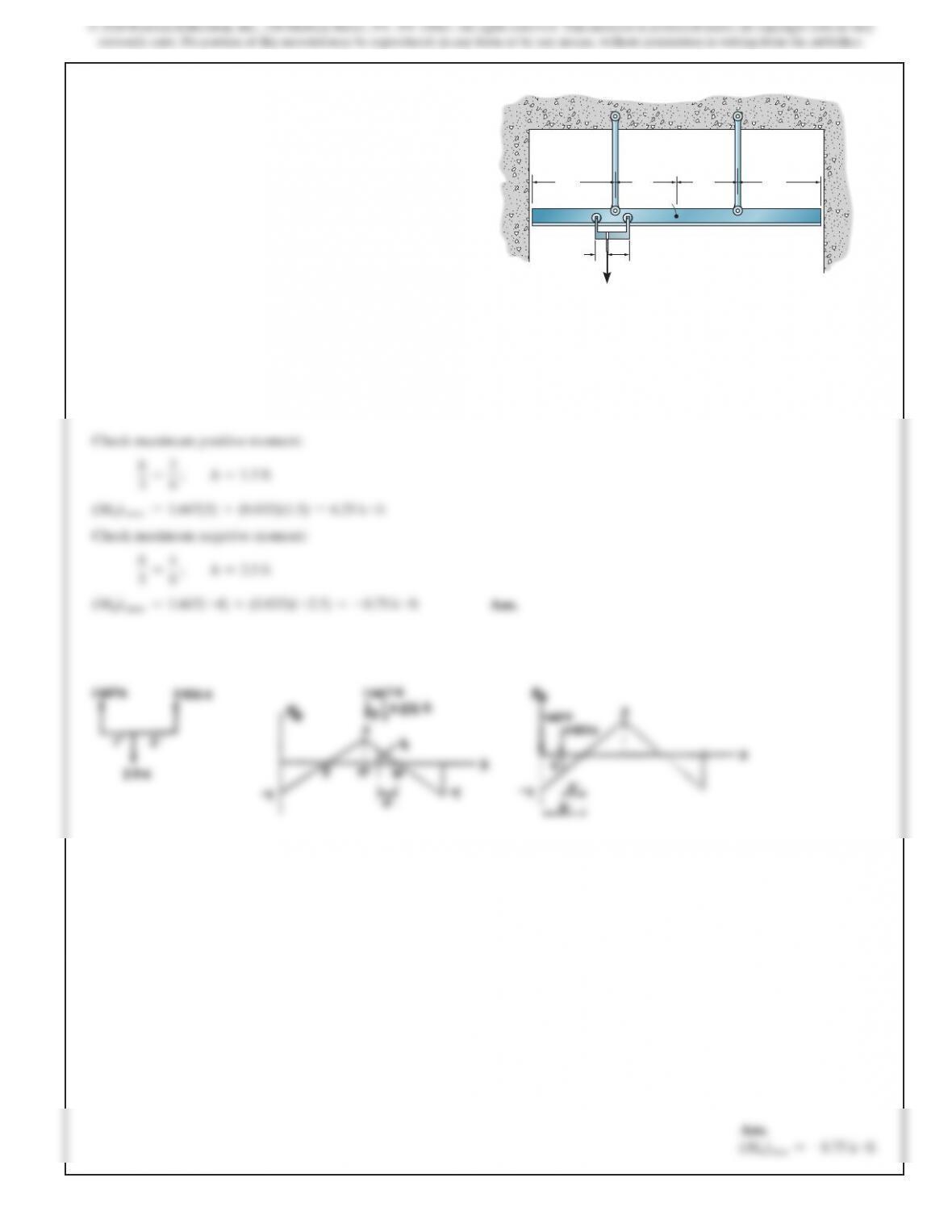
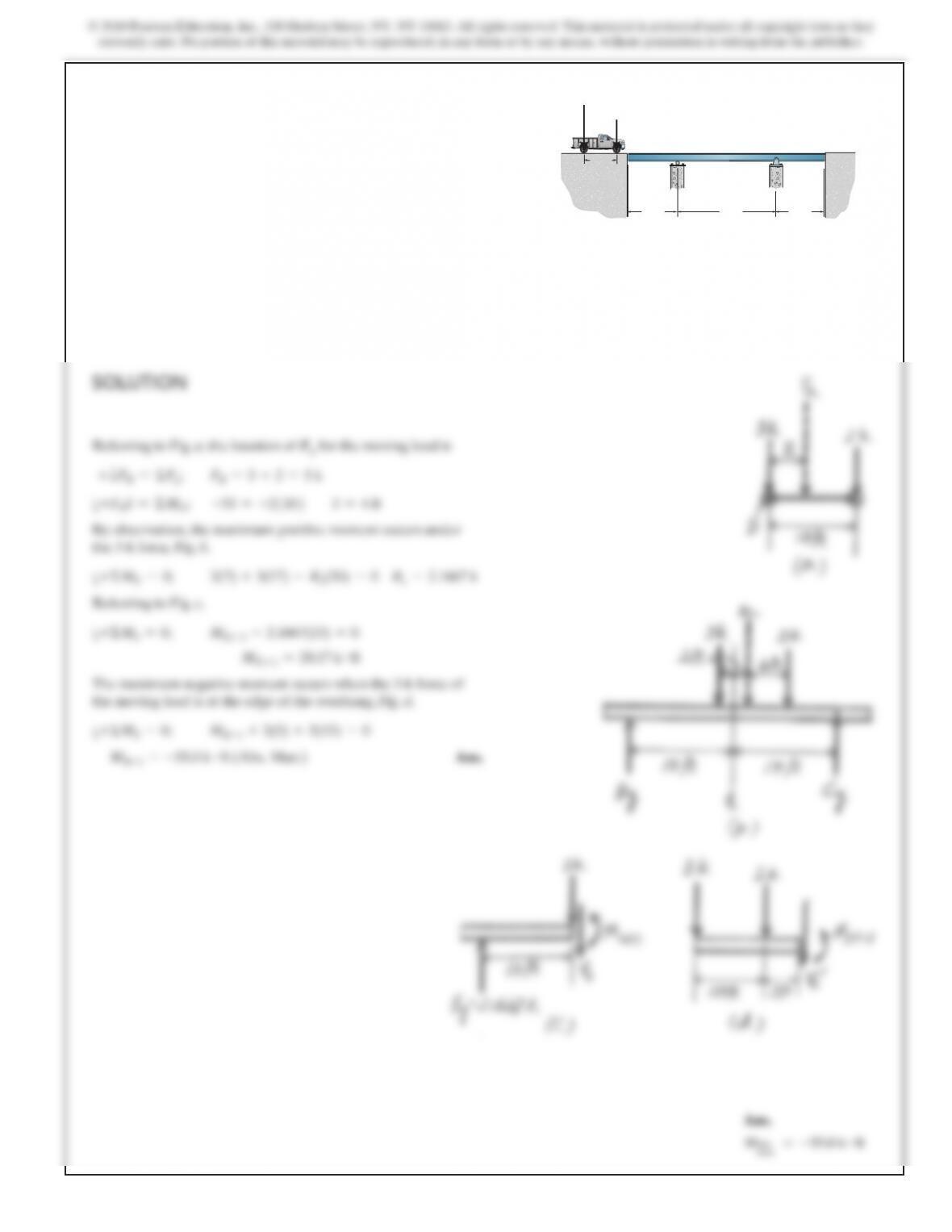
6–63. Determine the maximum moment in the suspended
rail at point B if the rail supports the load of 2.5 k on the trolley.
SOLUTION
8 ft 8 ft6 ft6 ft
ABC
2.5 k
2 ft1 ft
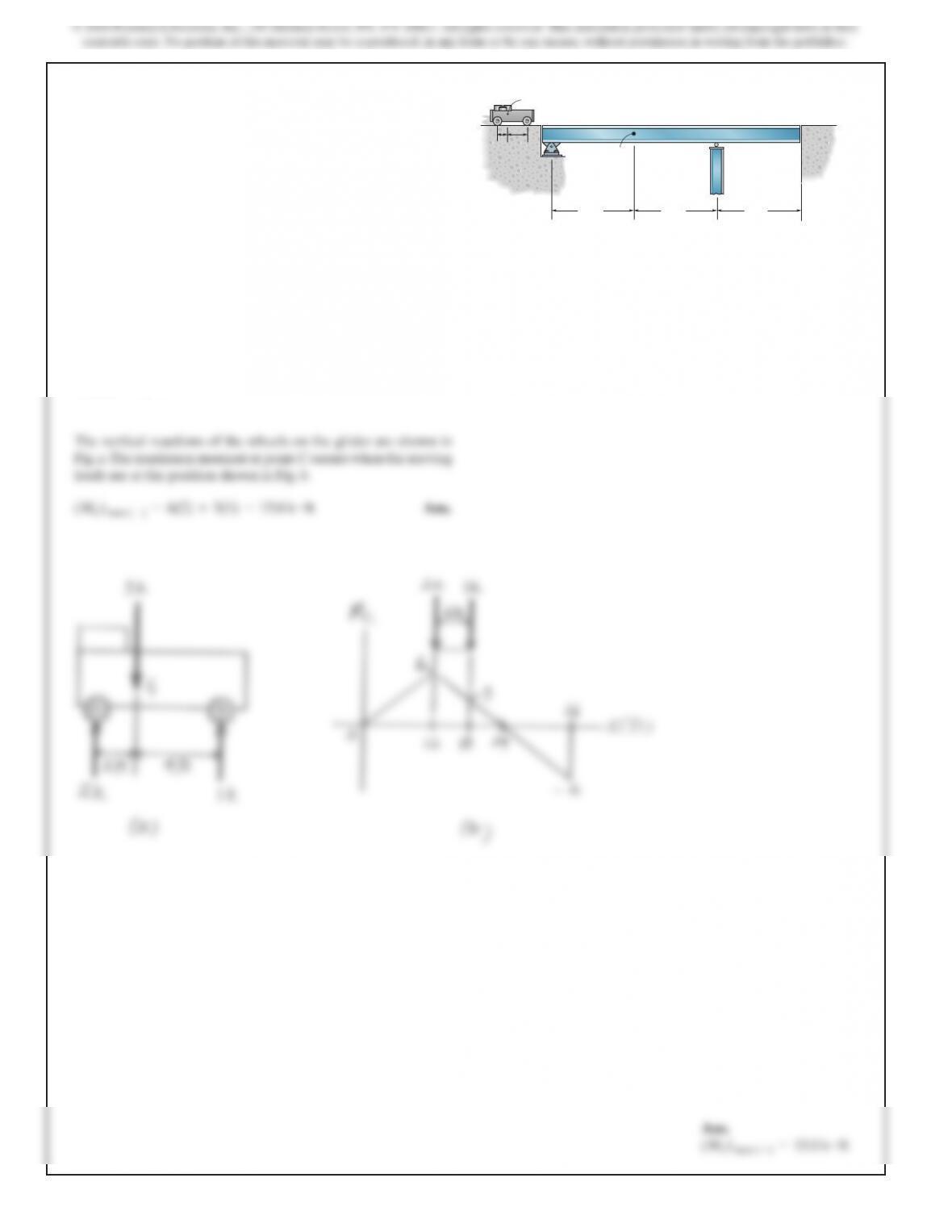
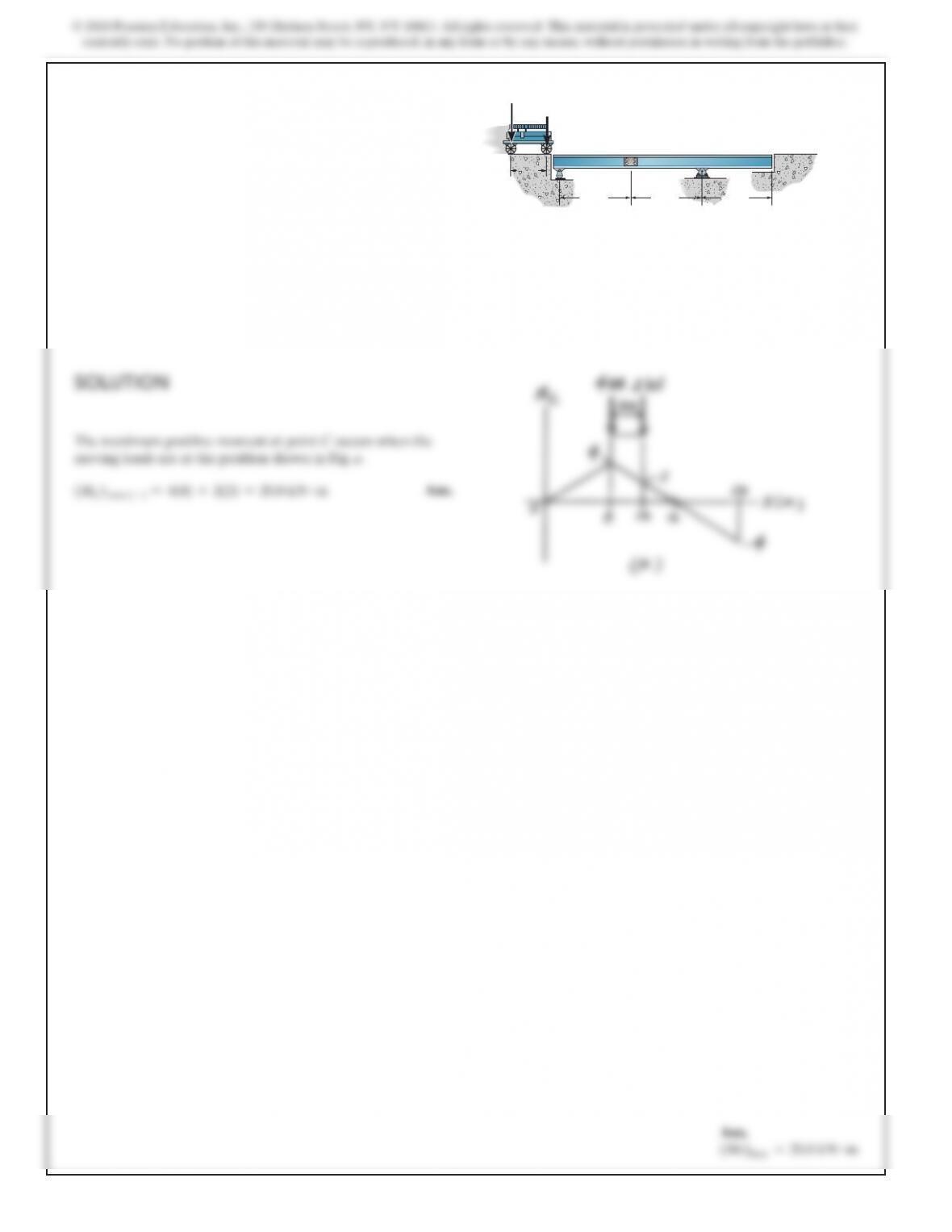
6–65. Determine the maximum live shear at C caused by the
moving loads.
6 m 10 m
C
AB
30 kN
30 kN
60 kN
80 kN
2 m
1 m
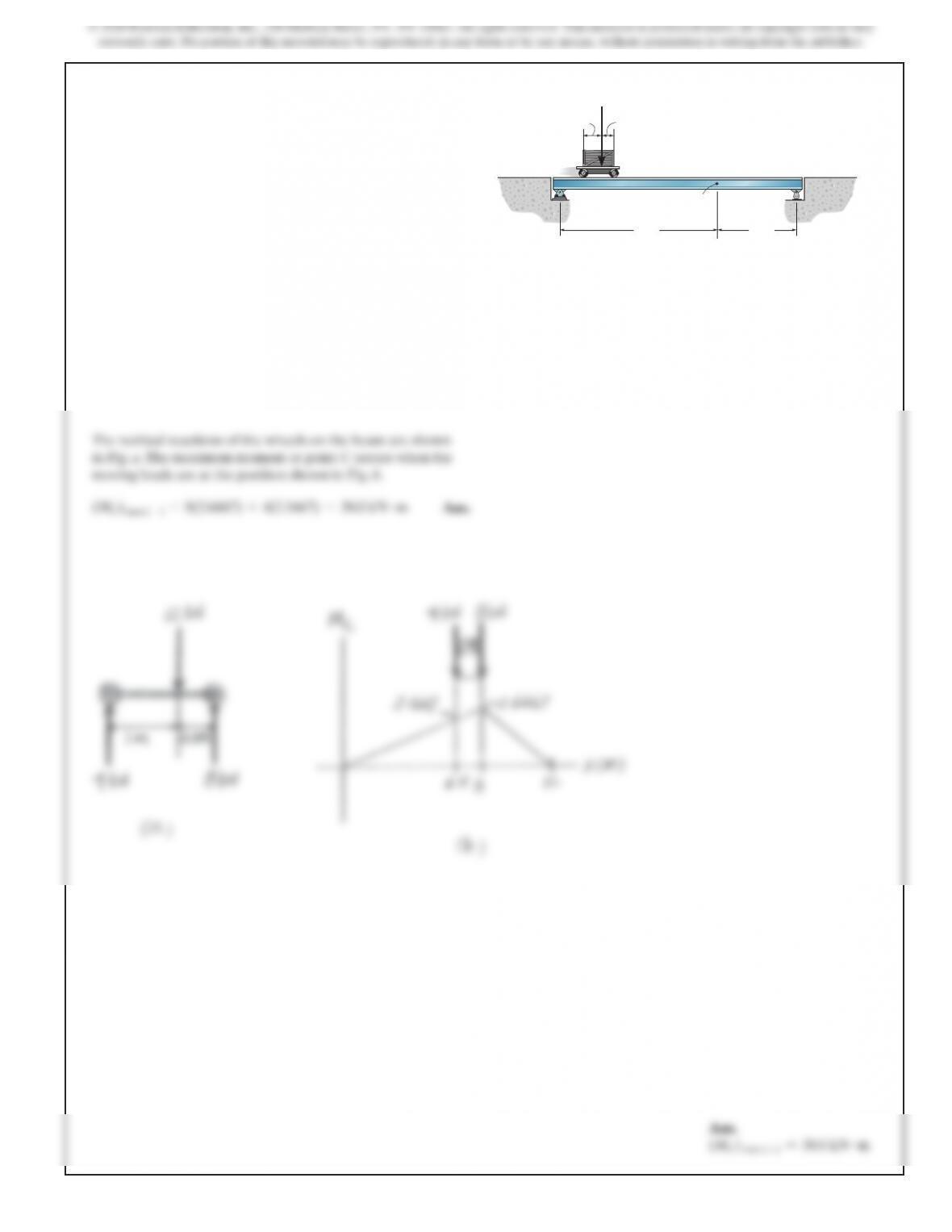
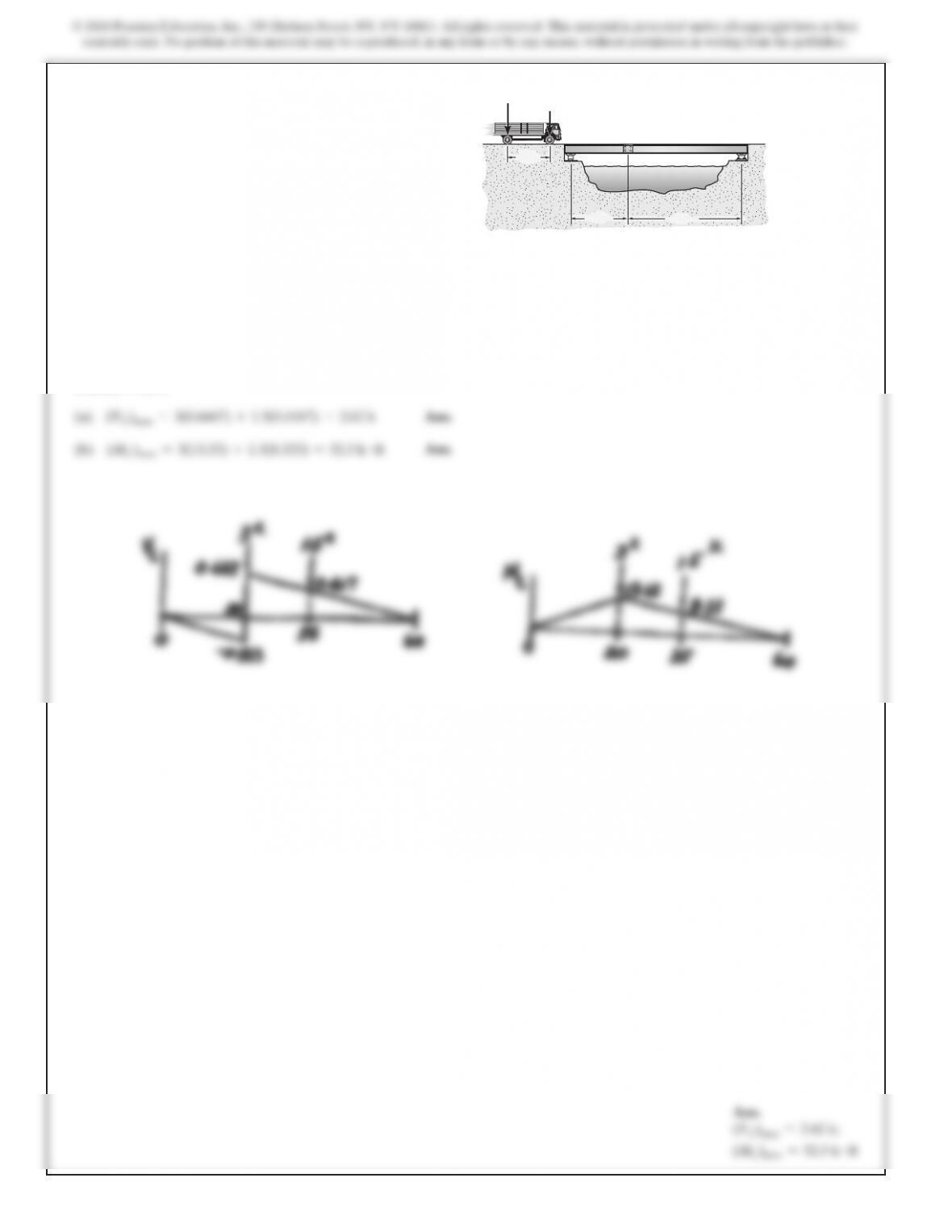
6–67. Determine the maximum moment at C caused by the
moving load.
SOLUTION
8 m 4 m
ACB
1 m 0.5 m
12 kN
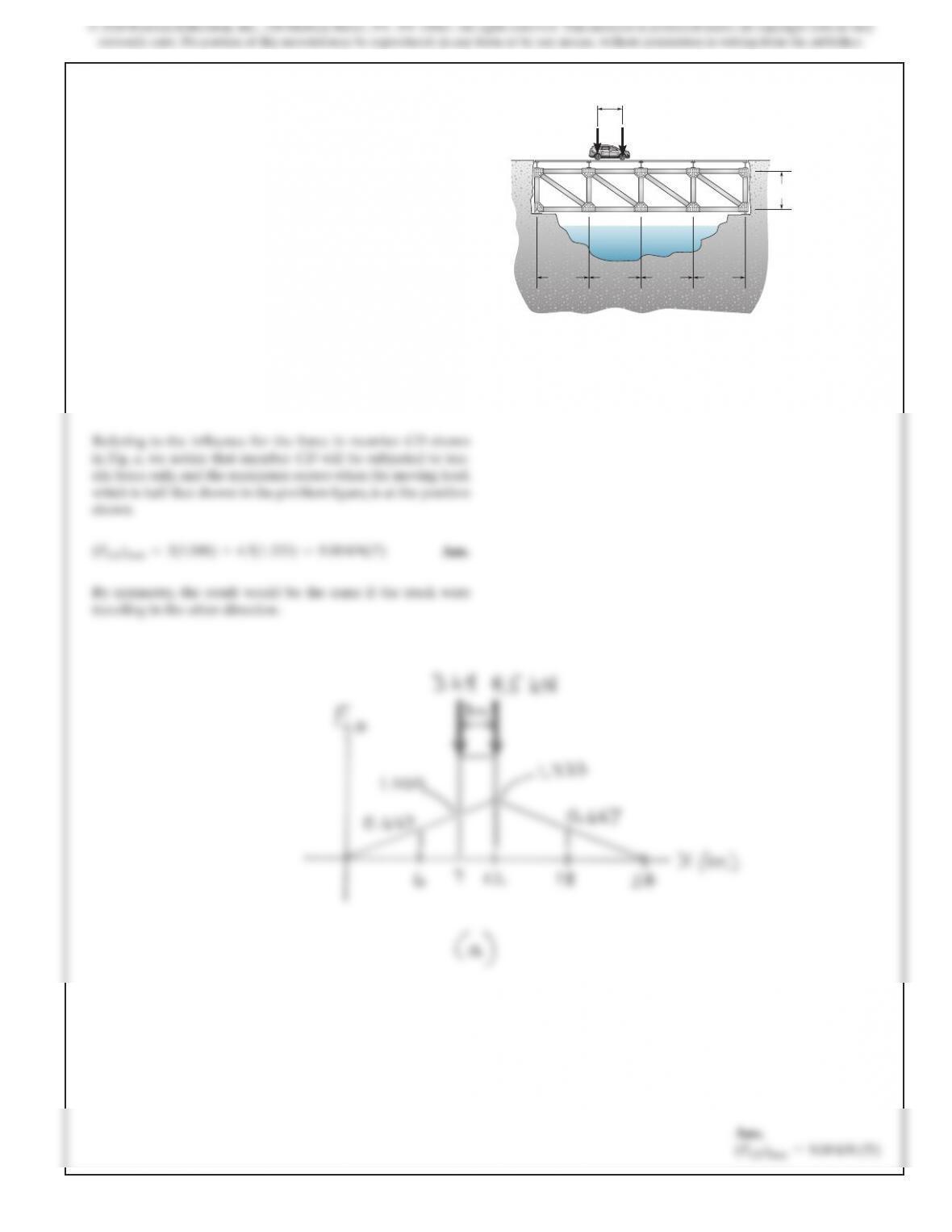
6–69. Draw the influence line for the force in member CD of
the bridge truss. Determine the maximum live force (tension or
compression) that can be developed in the member due to a
15-kN truck having the wheel loads shown. Assume the truck
can travel in either direction along the center of the deck, so
that half the load shown is transferred to each of the two side
trusses. Also assume the members are pin connected at the
gusset plates.
SOLUTION
6 m 6 m 6 m 6 m
4.5
m
3 m
6 kN 9 kN
ABCDE
FGHIJ
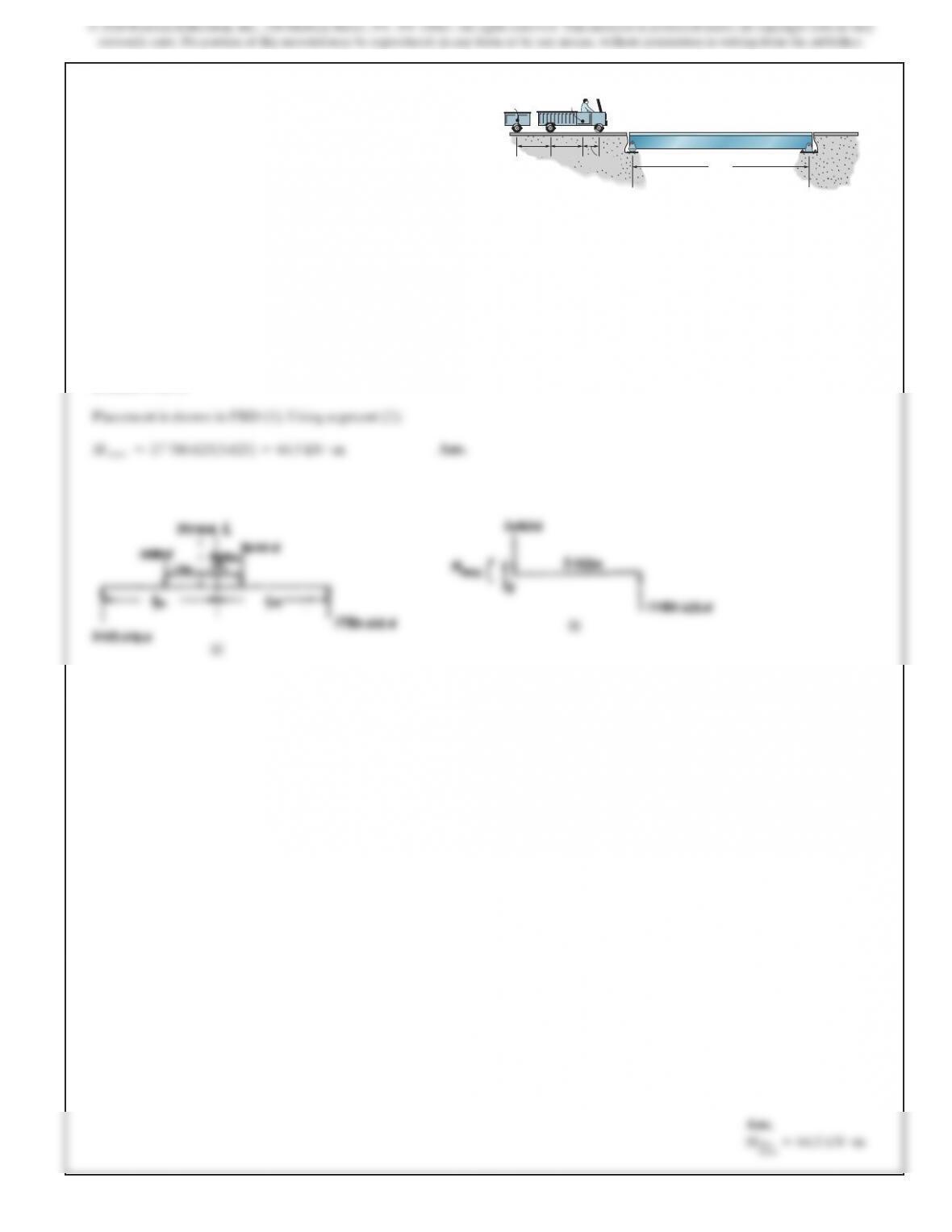
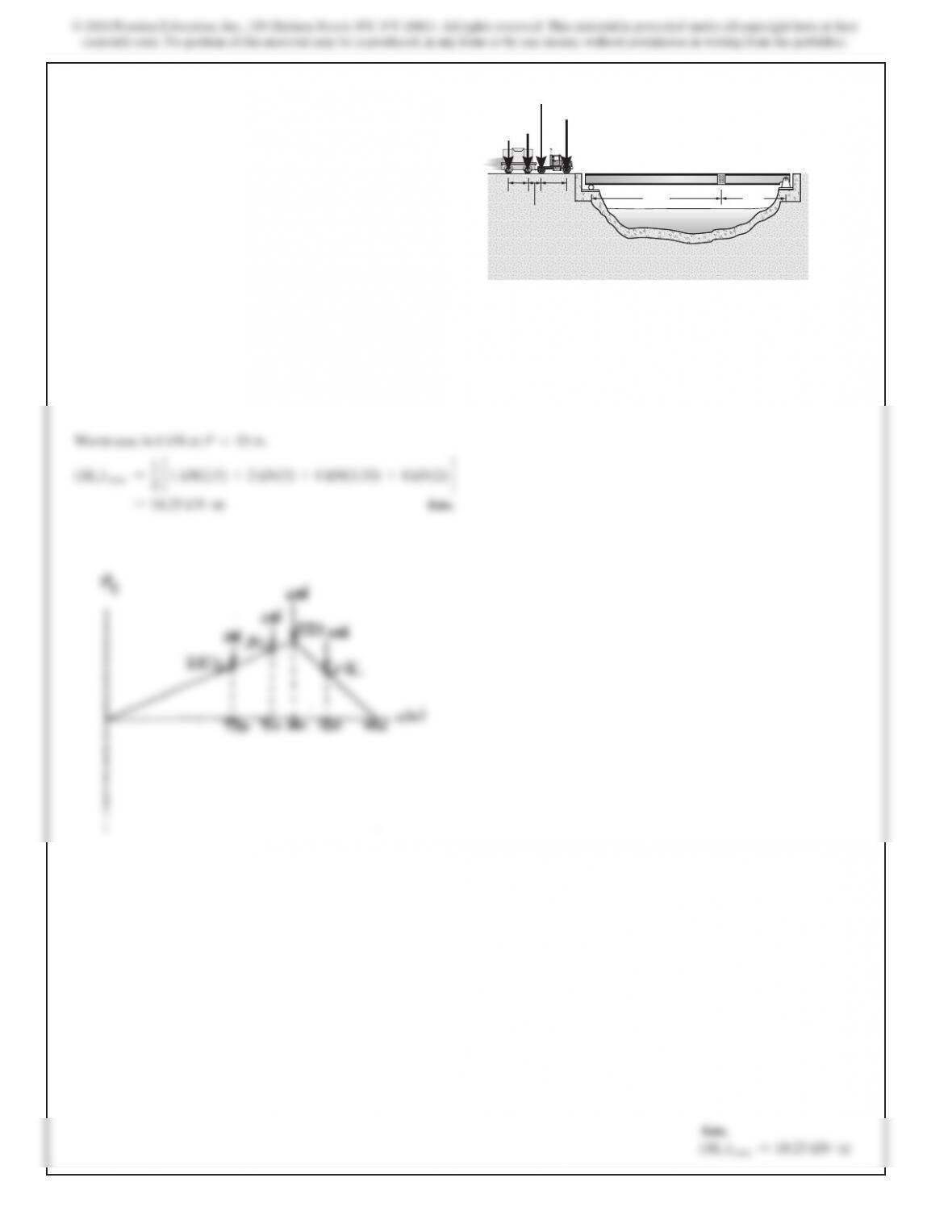
6–71. The truck has a mass of 4 Mg and mass center at G1,
and the trailer has a mass of 1 Mg and mass center at G2.
Determine the absolute maximum live moment developed in
the bridge.
SOLUTION
8 m
AB
G
1
G
2
1.5 m 0.75 m
1.5 m
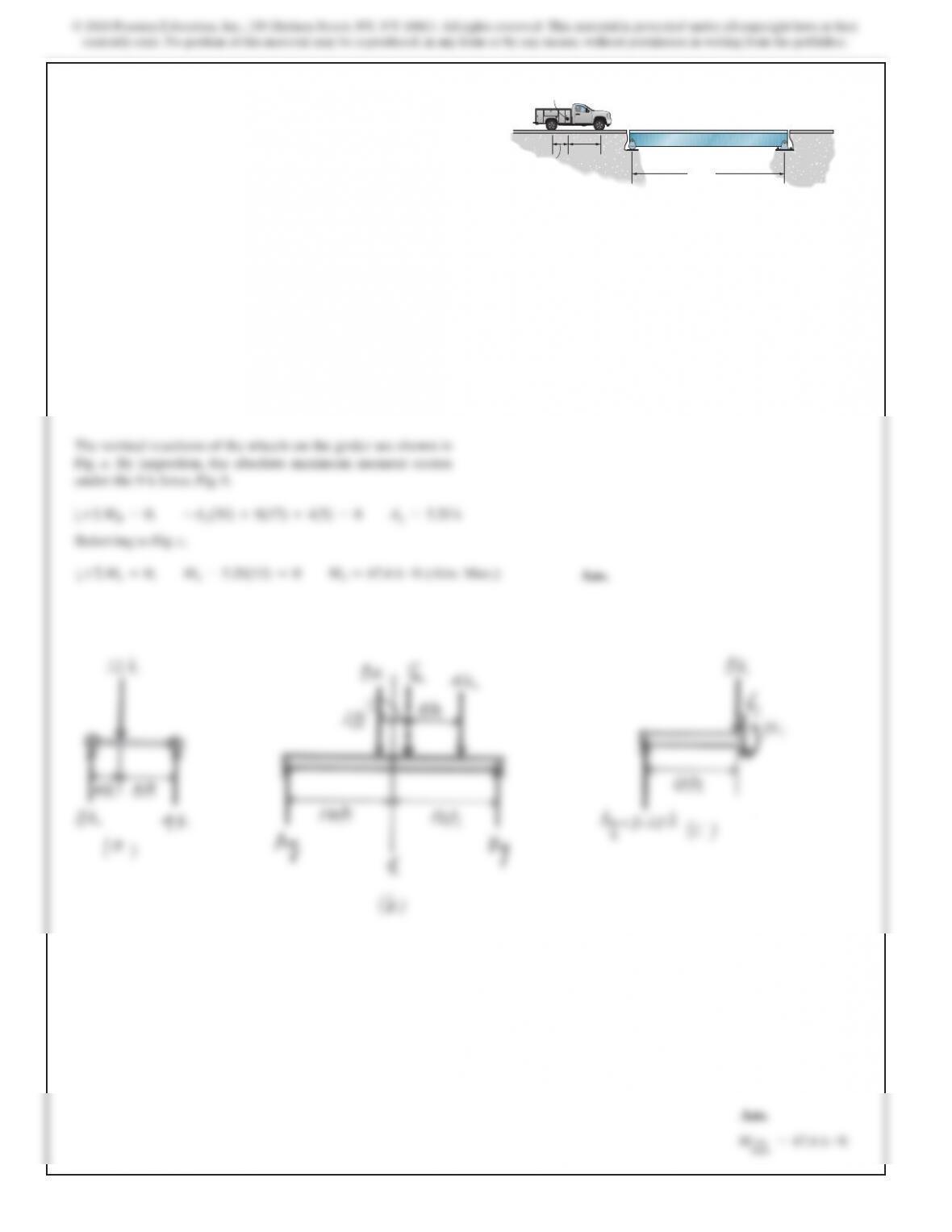
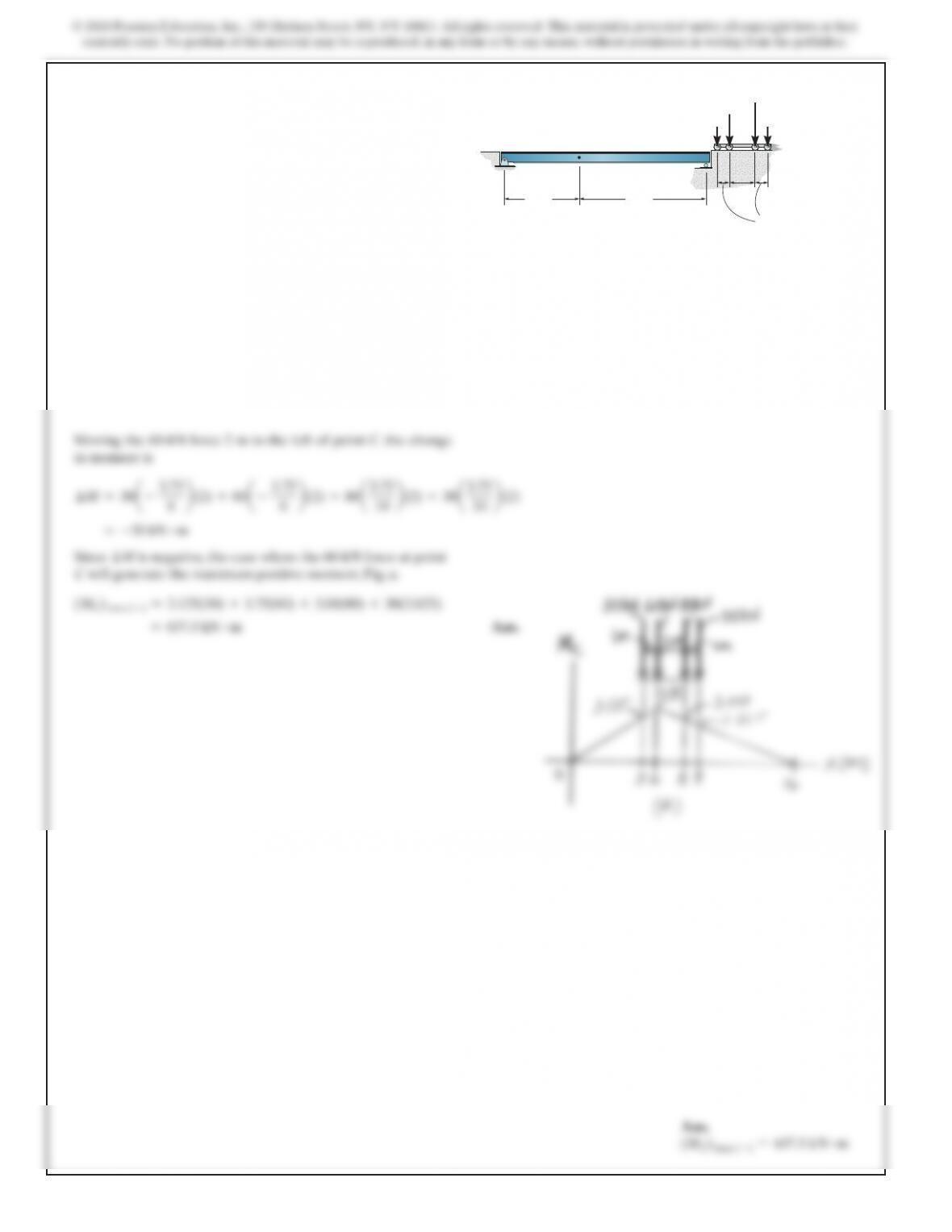
6–73. Determine the absolute maximum live moment in the
girder bridge due to the loading shown. The load is applied
directly to the girder.
15 ft 30 ft 15 ft
ABD
10 ft
3 k
2 k
C