C
40
0 lb>ft
4 k
3 k
4 ft 3 ft
C
A
B
12 ft
6 ft
SOLUTION
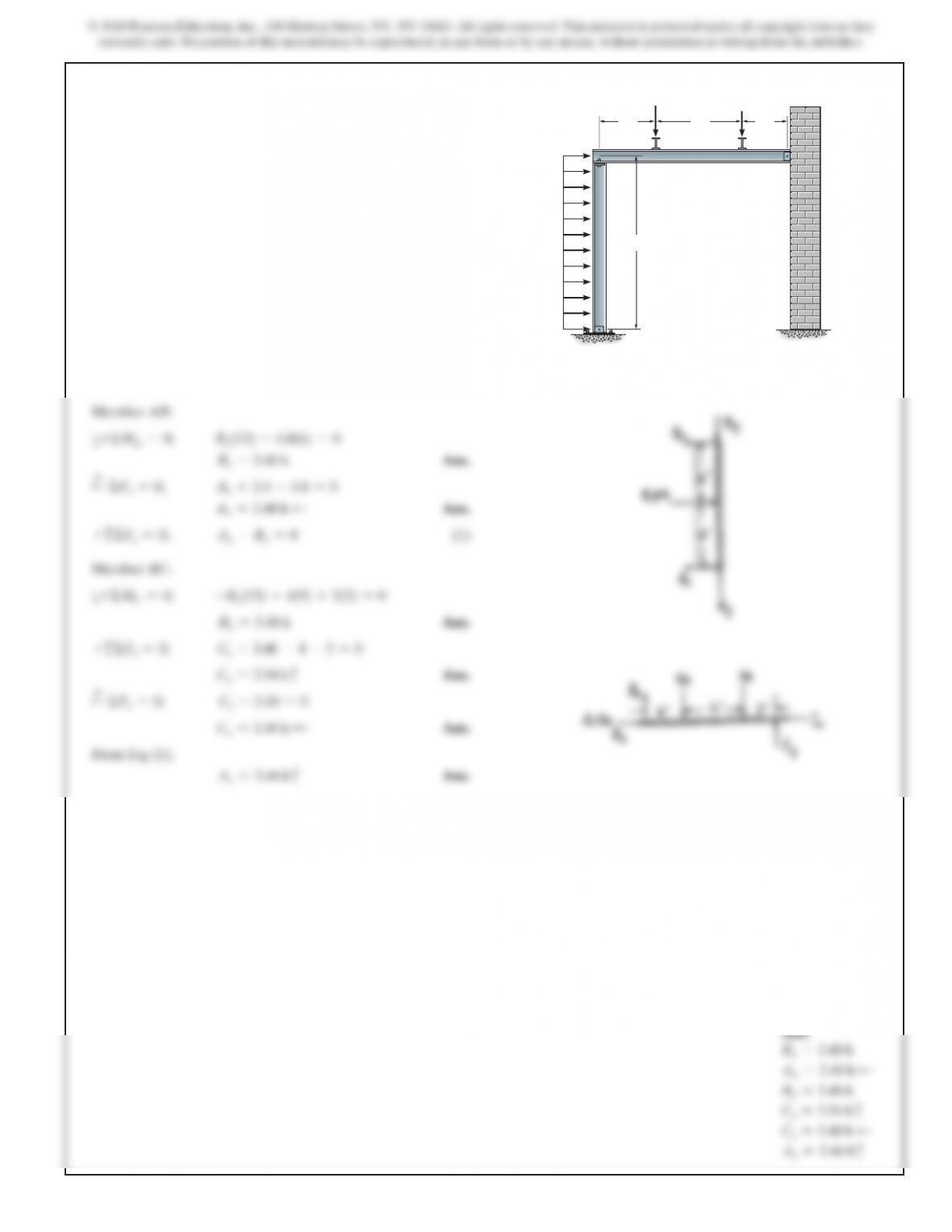
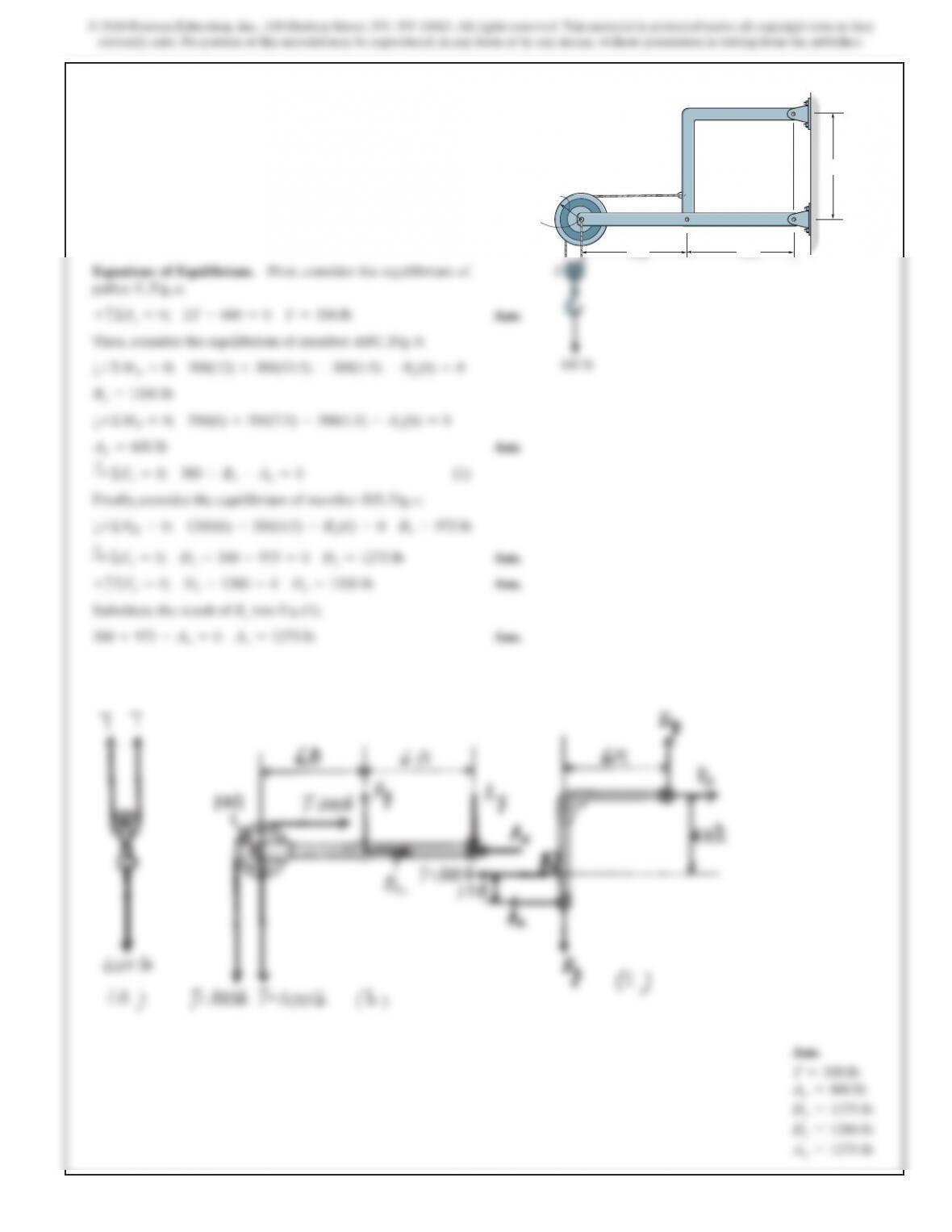
2–34. Determine the horizontal and vertical components of
force at the connections A, B, and C. Assume each of these
connections is a pin.
6 6
SOLUTION
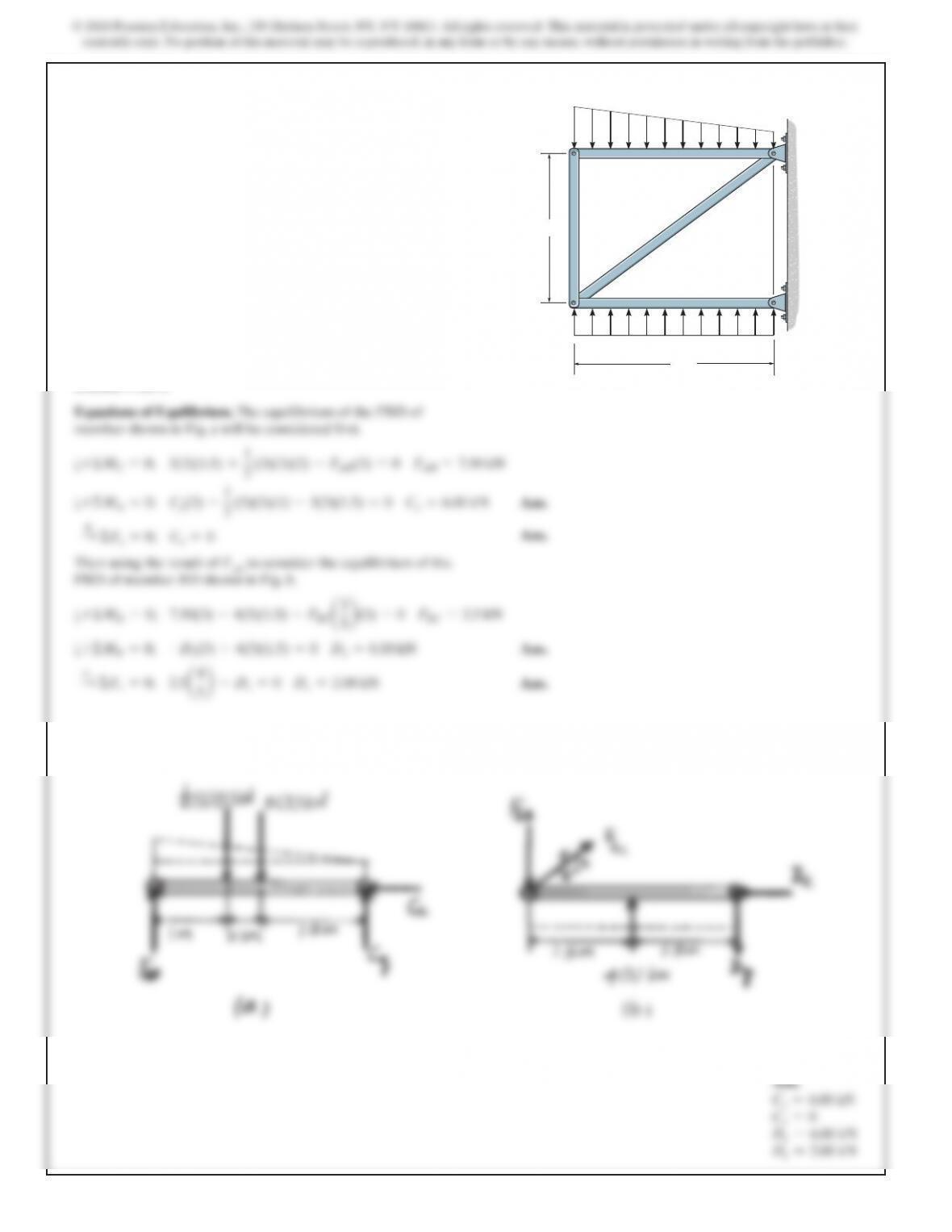
6 m 6 m
4 m
2.5
m
A
B
C
6 kN>m
6 kN>m
2 kN
>m
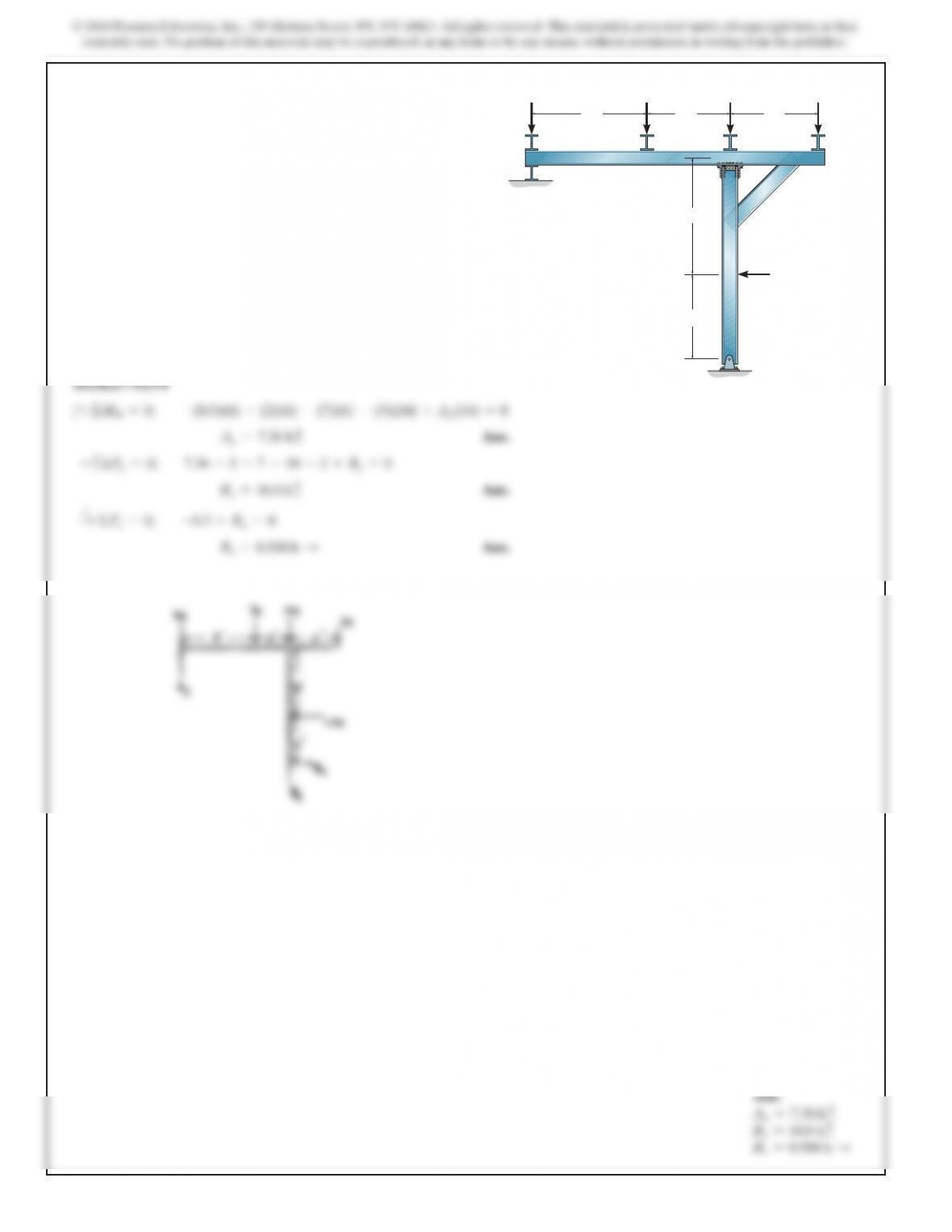
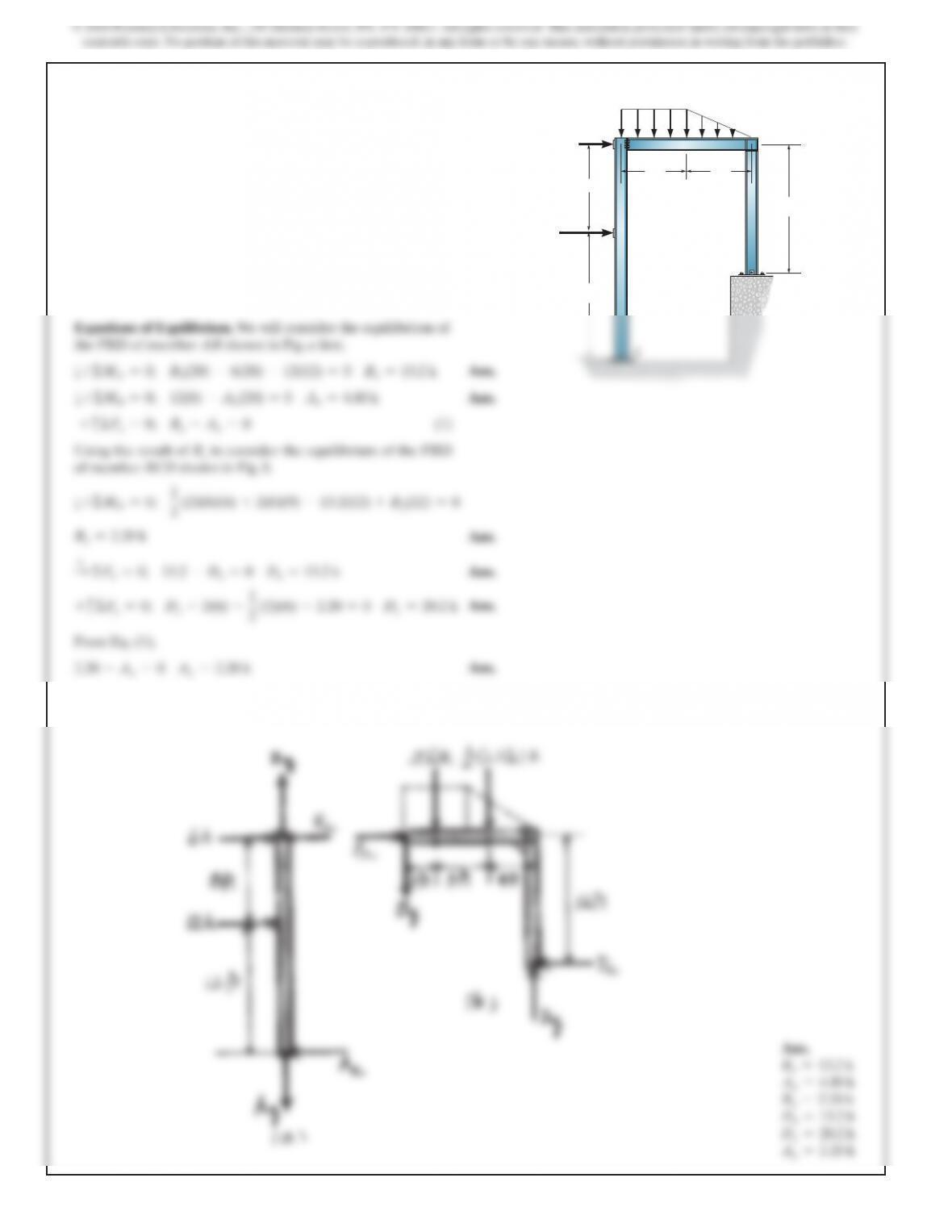
2–41. Determine the components of reaction at the pinned
supports A and C of the two-member frame. Neglect the
thickness of the members. Assume B is a pin.
2–41. (Continued)
6 9
4 k>ft
12 ft
30 k 10 k
10 ft
5 ft 5 ft
4 ft4 ft
8 ft
A
BD
E
F
C
10 ft
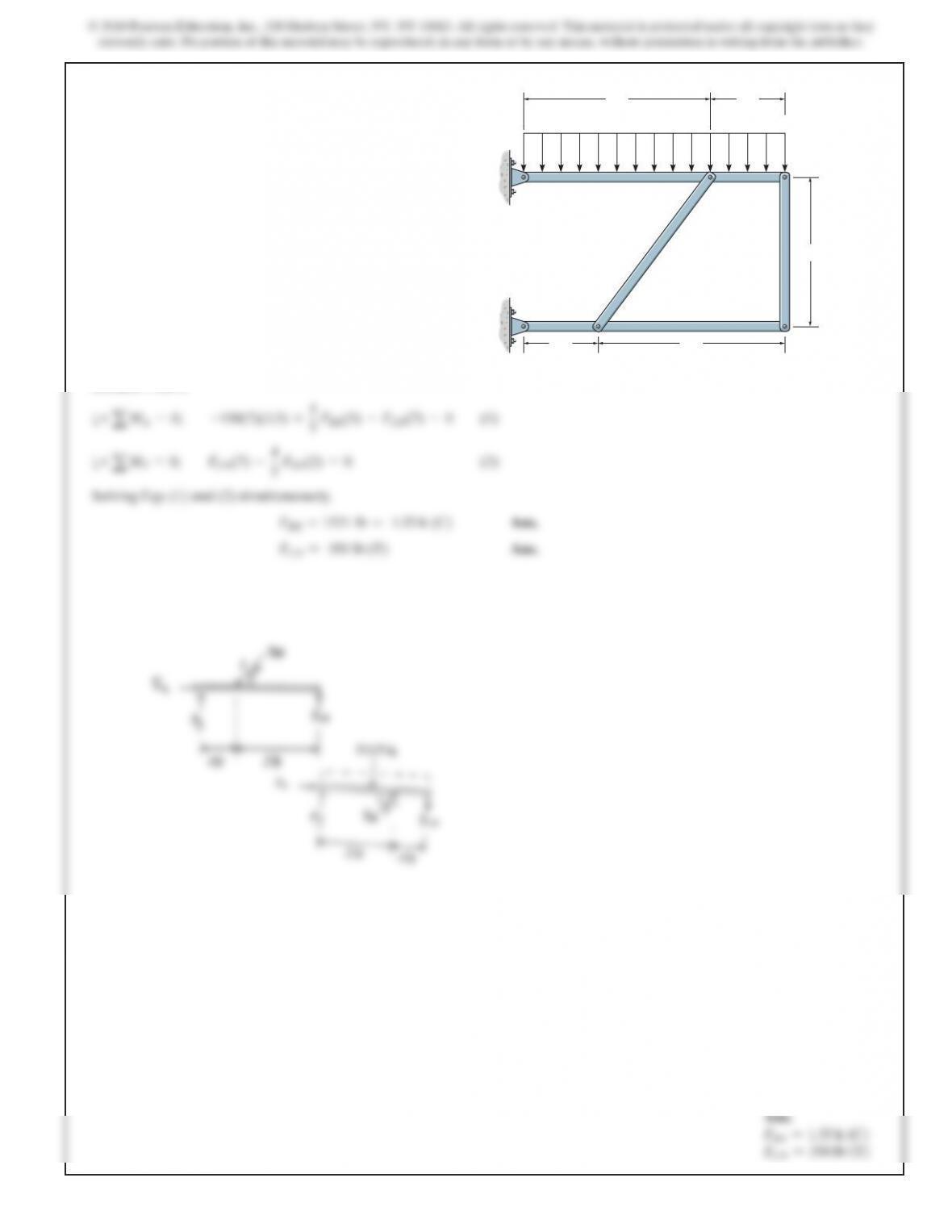
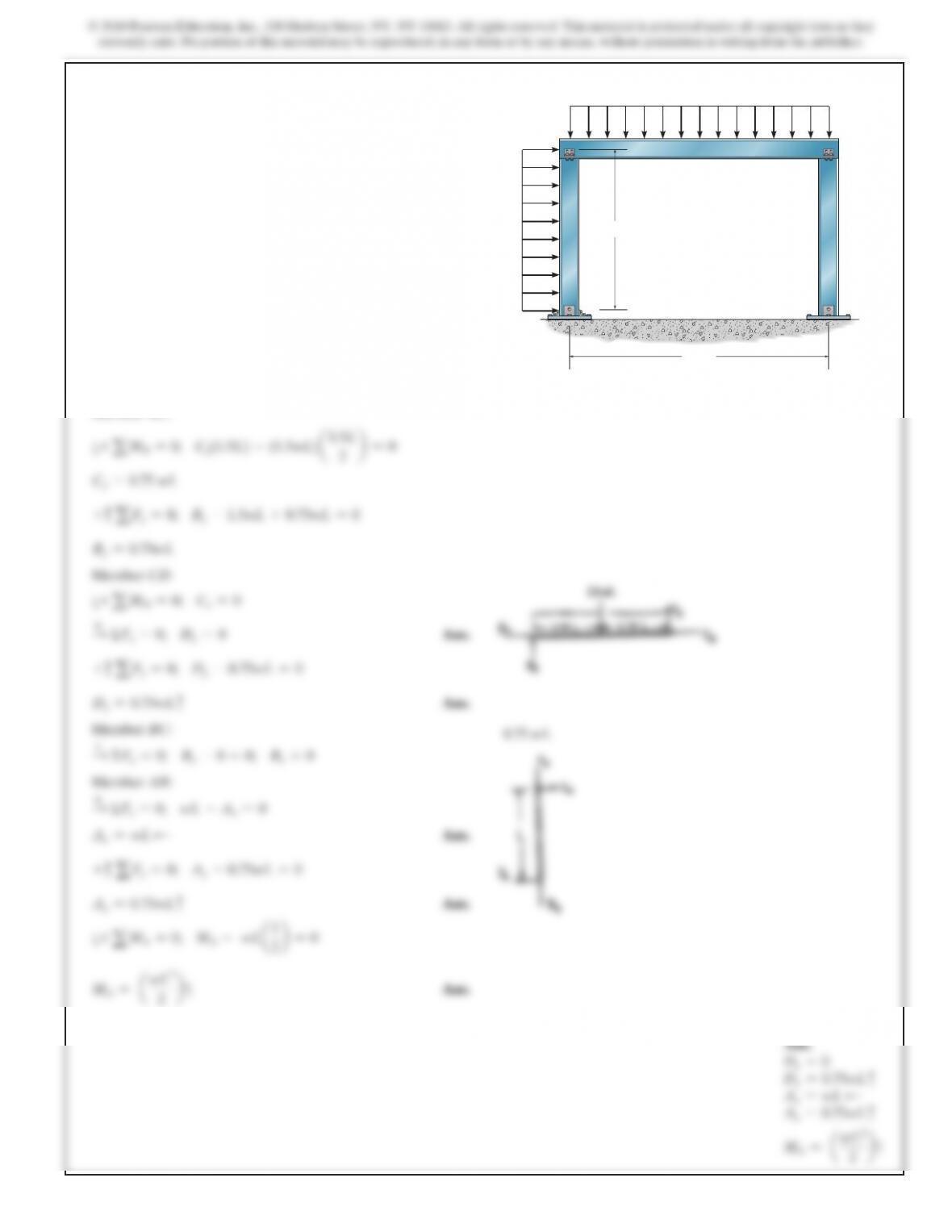
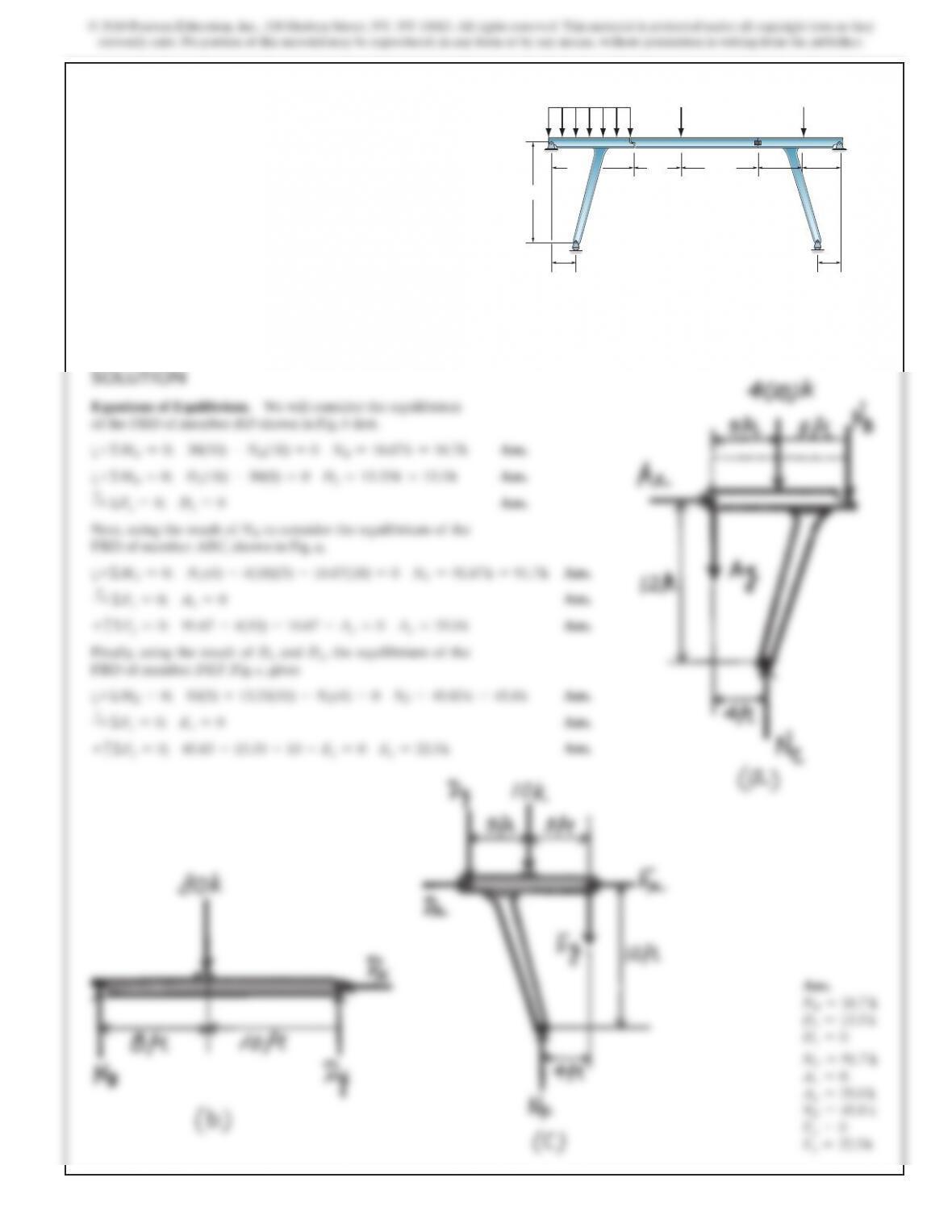
2–43. The bridge frame consists of three segments which can
be considered pinned at A, D, and E, rocker supported at C
and F, and roller supported at B. Determine the horizontal and
vertical components of reaction at all these supports due to the
loading shown.
Ans.
NB=16.7 k
D
y
=13.3 k
Dx=0
NC=91.7 k
Ax=0
Ay=35.0 k
NF=45.8 k
Ex=0
Ey=22.5
k
7 0
6 ft
120 lb
>ft
600 lb 600 lb
800 lb800 lb
400 lb 400 lb
A C
6 ft 6 ft 6 ft
10 ft
5 ft
D G
E F
B
Ans.
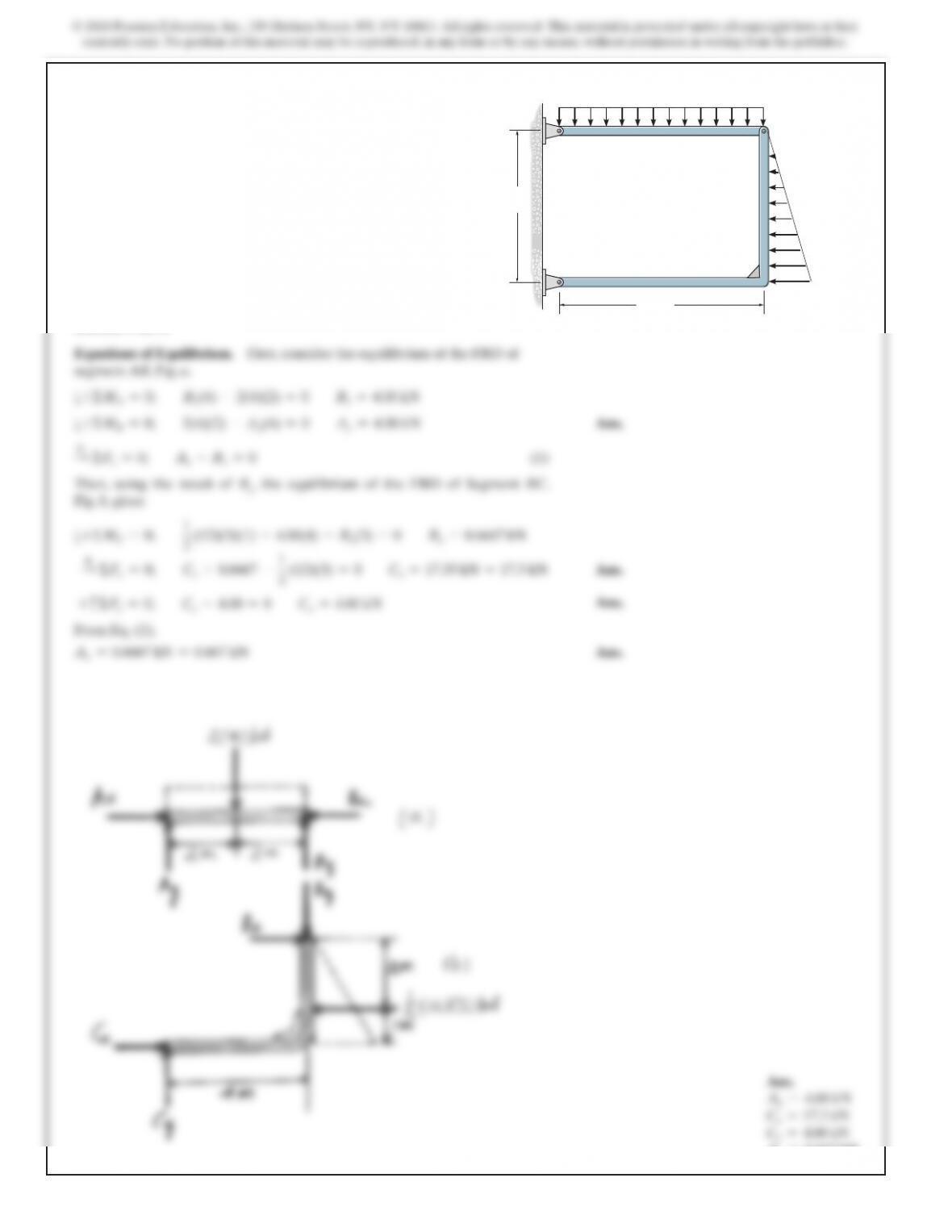
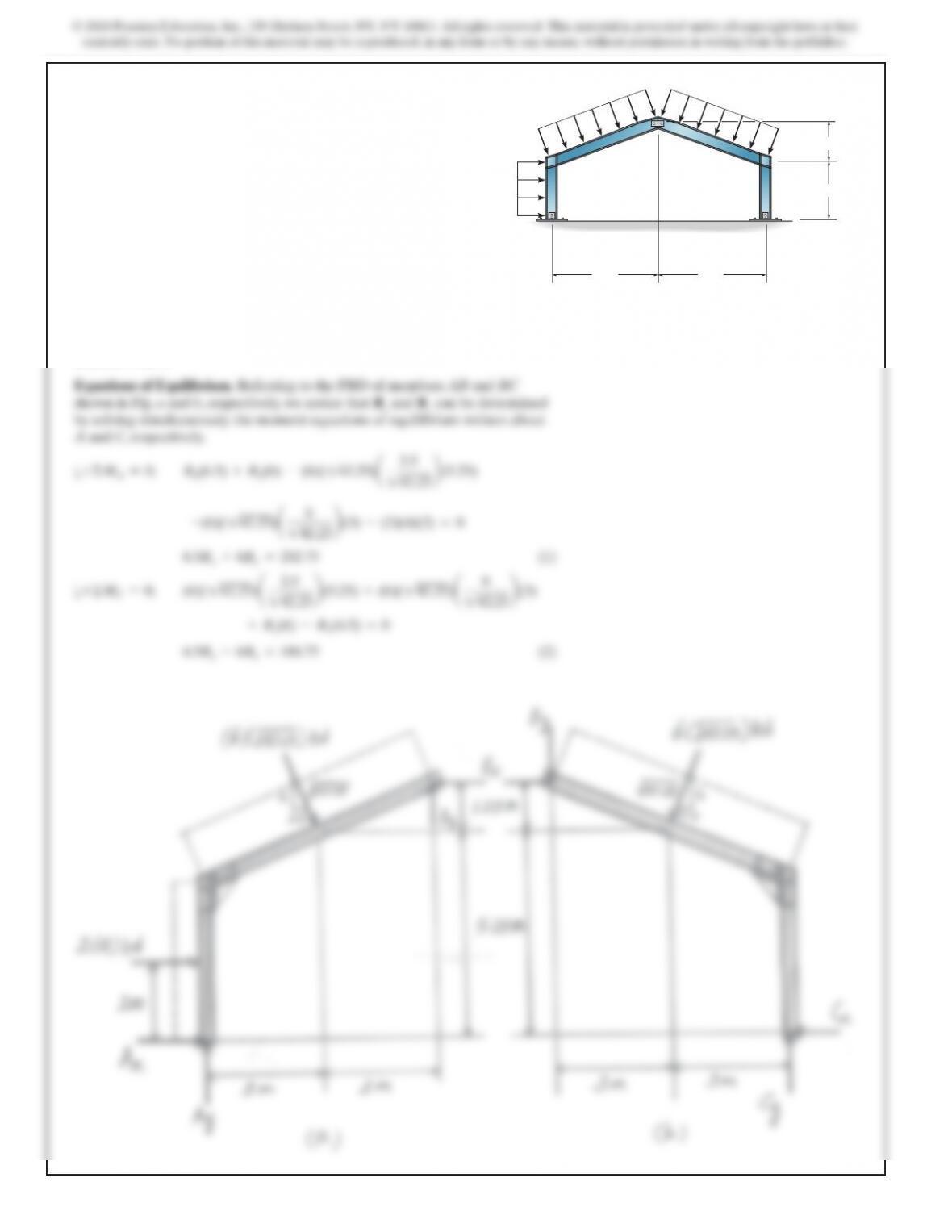
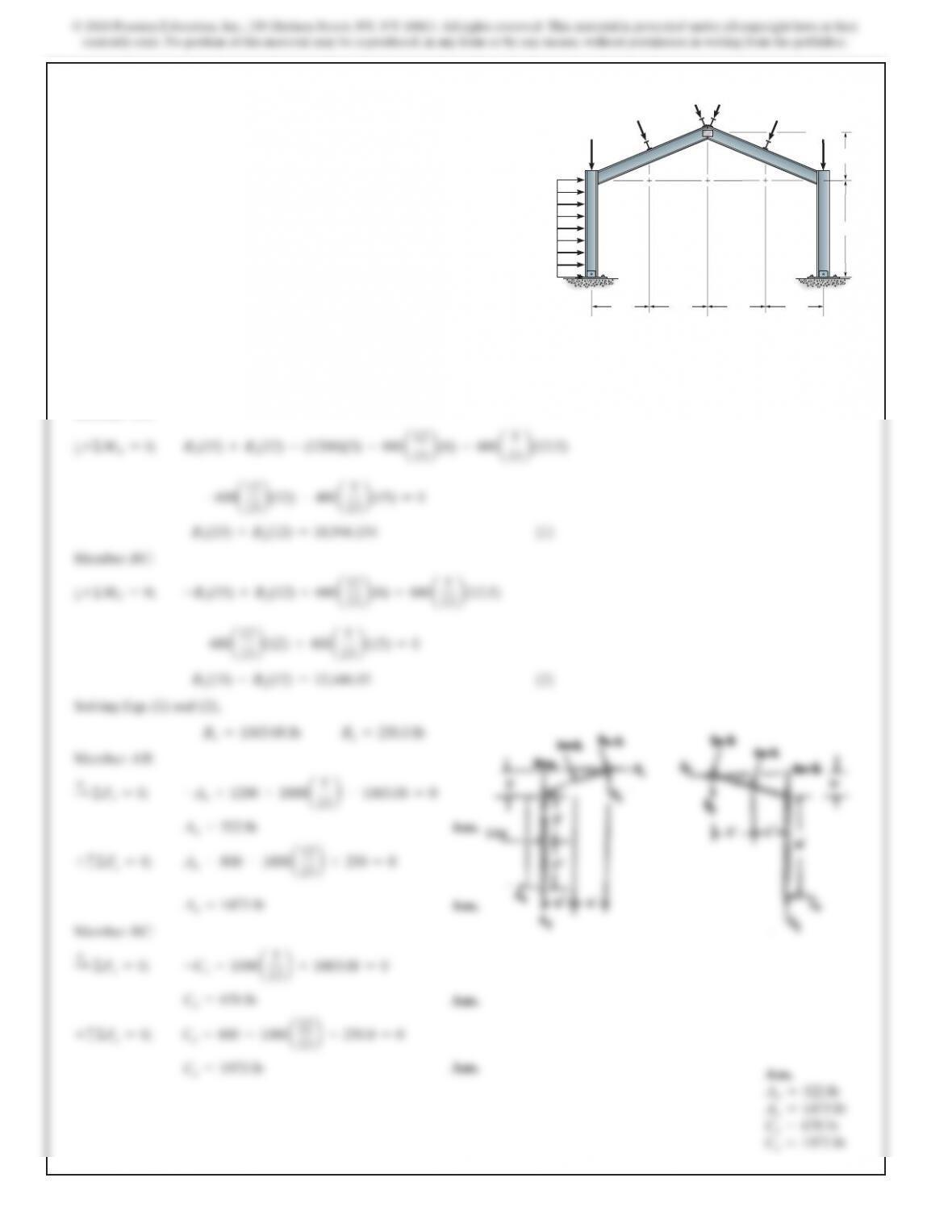
*2–44. Determine the horizontal and vertical reactions at the
connections A and C of the gable frame. Assume that A, B, and
C are pin connections. The purlin loads such as D and E are
applied perpendicular to the center line of each girder.
SOLUTION
Member AB:
a
+ΣMA=0;
Bx(15) +By(12) –(1200)(5) –600
a12
13 b
(6) –600
a5
13 b
(12.5
)
–400
a12
13 b
(12) –400
a5
13 b
(15) =
0
Bx(15) +By(12) =18,946.154
(1)
Member BC:
a
+ΣMC=0;
–Bx(15) +By(12) +600
a12
13 b
(6) +600
a5
13 b
(12.5
)
4
00
a12
13 b
(12) +400
a5
13 b
(15) =
0
Bx(15) –By(12) =12,446.15
(2)
Solving Eqs. (1) and (2),
Bx=1063.08 lb
By=250.0 lb
Member AB:
+
SΣFx=0;
–Ax+1200 +1000
a5
13 b
–1063.08 =0
Ax=522 lb
+
c
ΣFy=0;
Ay–800 –1000
a12
13 b
+250 =
0
Ay=1473 lb
Member BC:
+
SΣFx=0;
–Cx–1000
a5
13 b
+1063.08 =0
Cx=678 lb
+
c
ΣFy=0;
Cy–800 –1000
a12
13 b
–250.0 =
0
Cy=1973 lb
Ans.
Ax=522 lb
Ay=1473 lb
Cx=678 lb
Cy=1973 lb
Ans.
Ans.
Ans.
Ans.
7 1
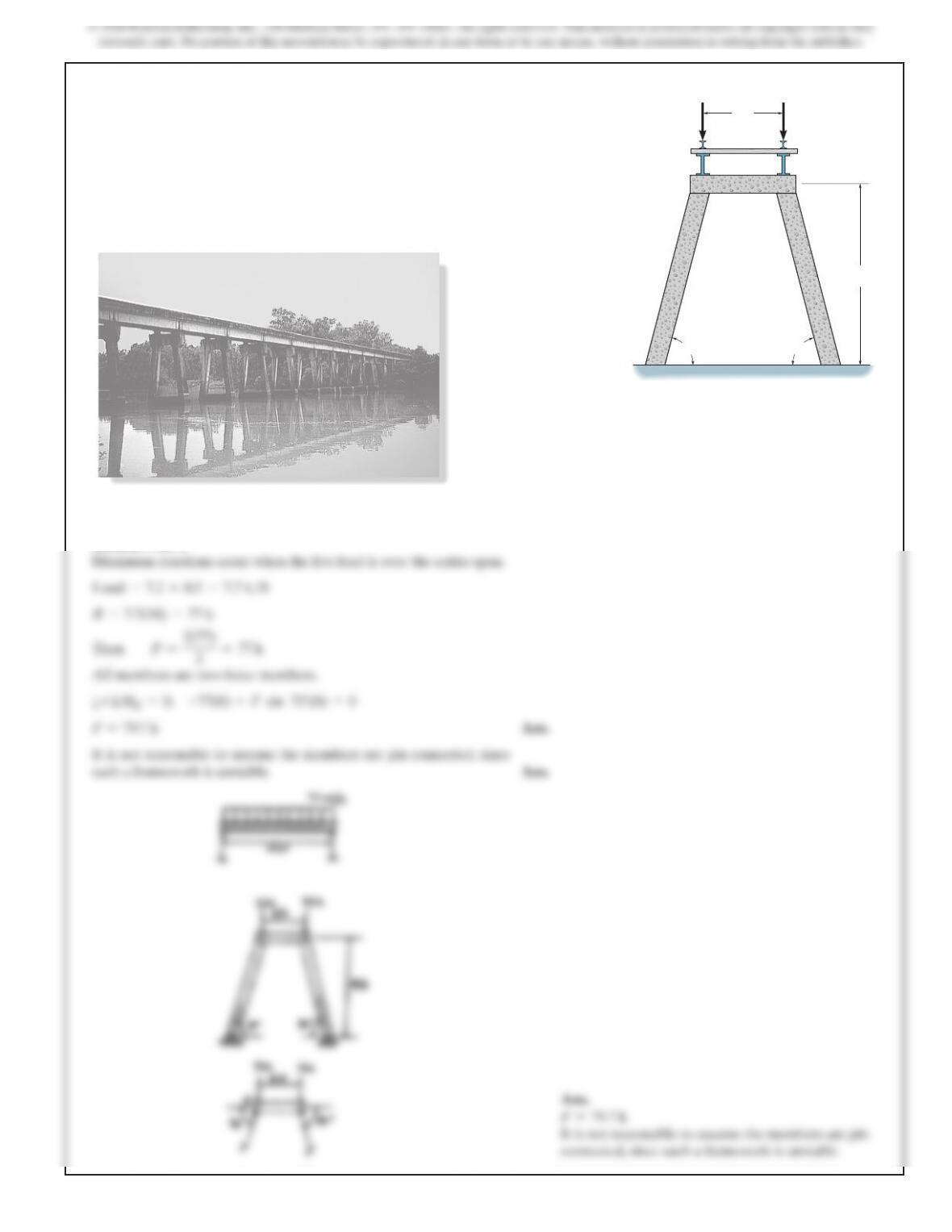
2–1P. The railroad trestle bridge shown in the photo is
supported by reinforced concrete bents. Assume the two simply
supported side girders, track bed, and two rails have a weight of
0.5
k>ft
and the load imposed by a train is
7.2
k>ft.
Each girder
is 20 ft long. Apply the load over the entire bridge and
determine the compressive force in the columns of each bent.
For the analysis assume all joints are pin connected and neglect
the weight of the bent. Are these realistic assumptions?
SOLUTION
PP
8 ft
18 ft
AD
BC
758758