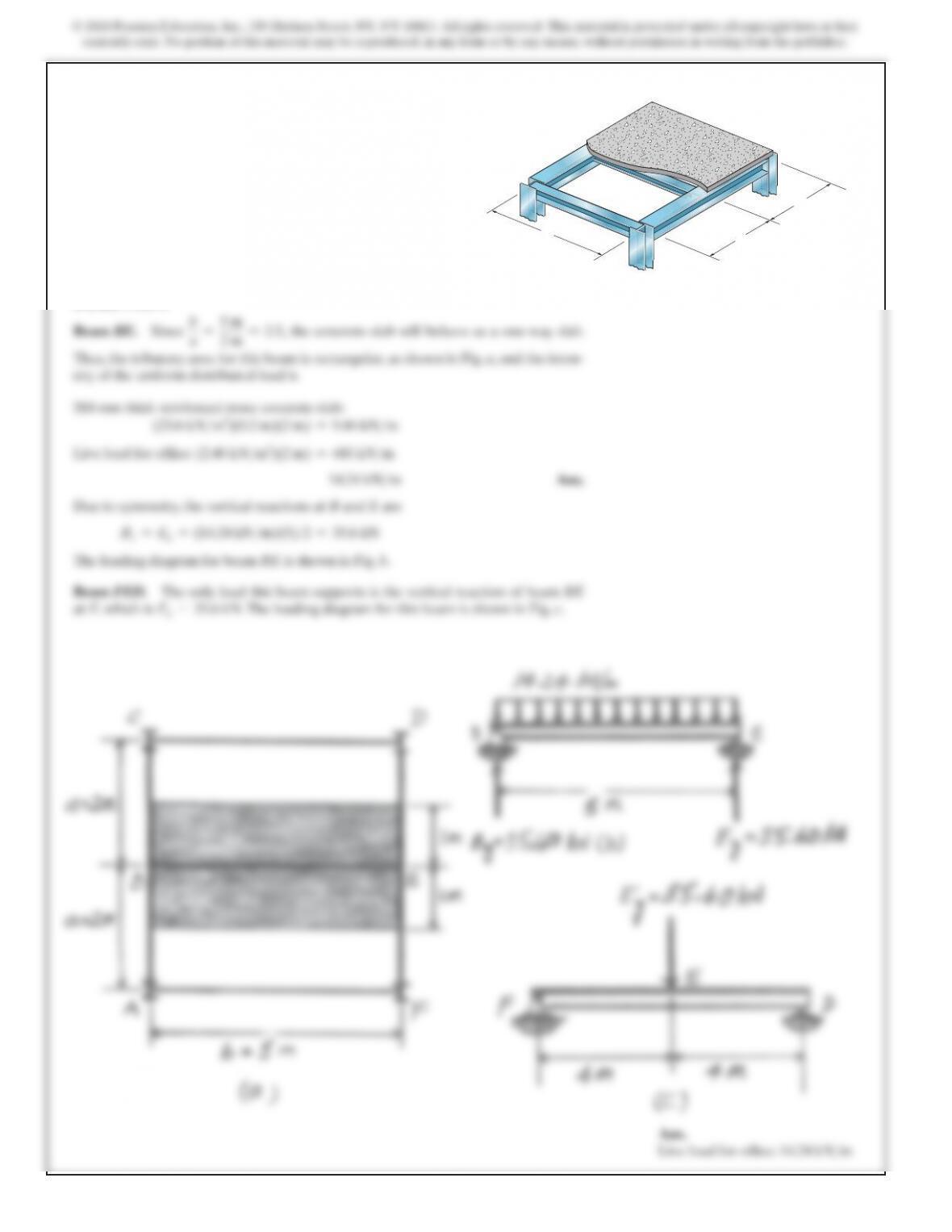
2–1. The steel framework is used to support the
reinforced stone concrete slab that is used for an office.
The slab is 200 mm thick. Sketch the loading that acts
along members BE and FED. Take
a=2
m,
b=5
m.
Hint: See Tables 1.2 and 1.4.
A
B
C
D
E
F
ba
a
SOLUTION
b
5 m
A
B
C
D
E
F
ba
a
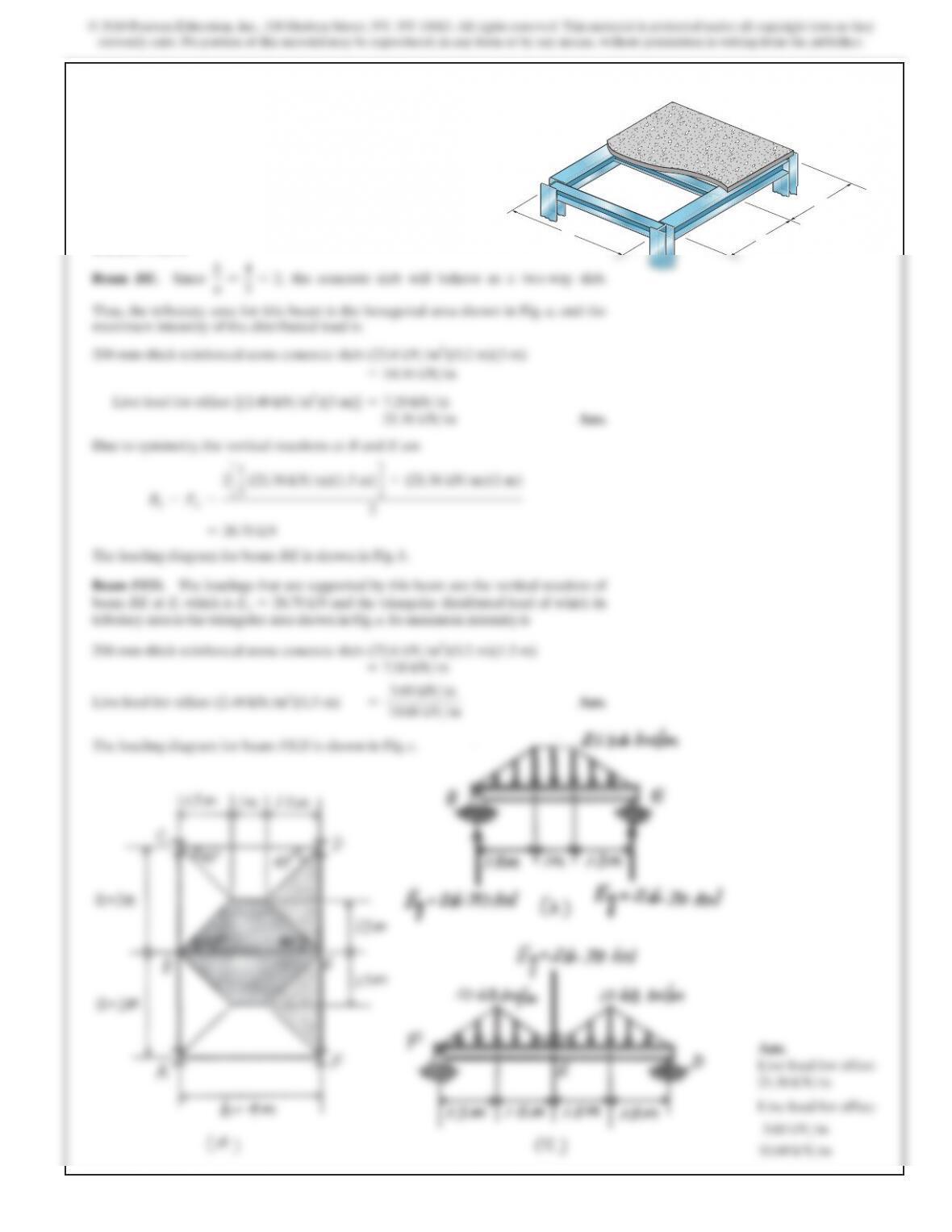
2–2. Solve Prob. 2–1 with
a=3
m,
b=4
m.
SOLUTION
b
4
2 8
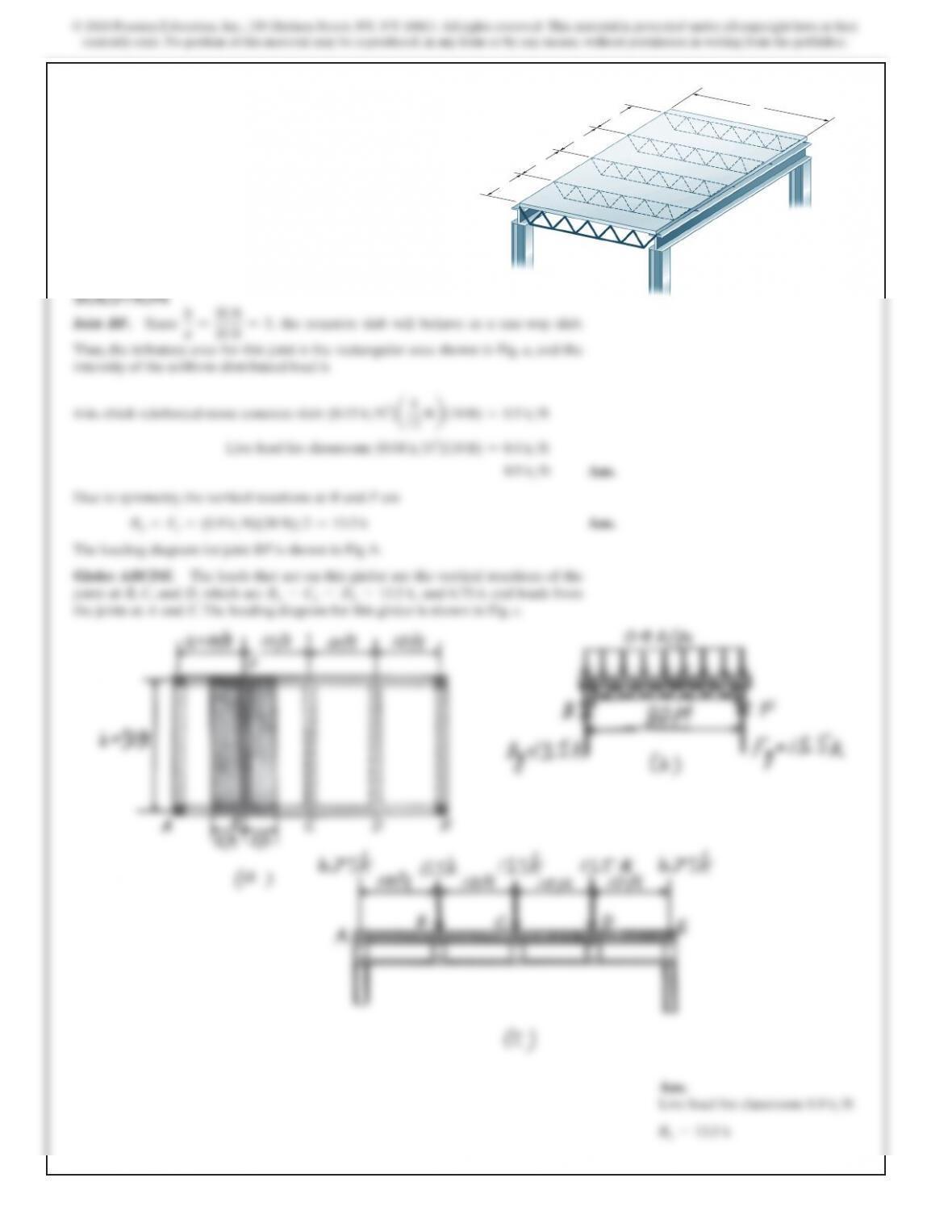
2–3. The floor system used in a school classroom consists of a
4-in. reinforced stone concrete slab. Sketch the loading that
acts along the joist BF and side girder ABCDE. Set
a=10
ft,
b=30
ft.
Hint: See Tables 1.2 and 1.4.
A
E
b
a
a
a
a
B
C
D
F
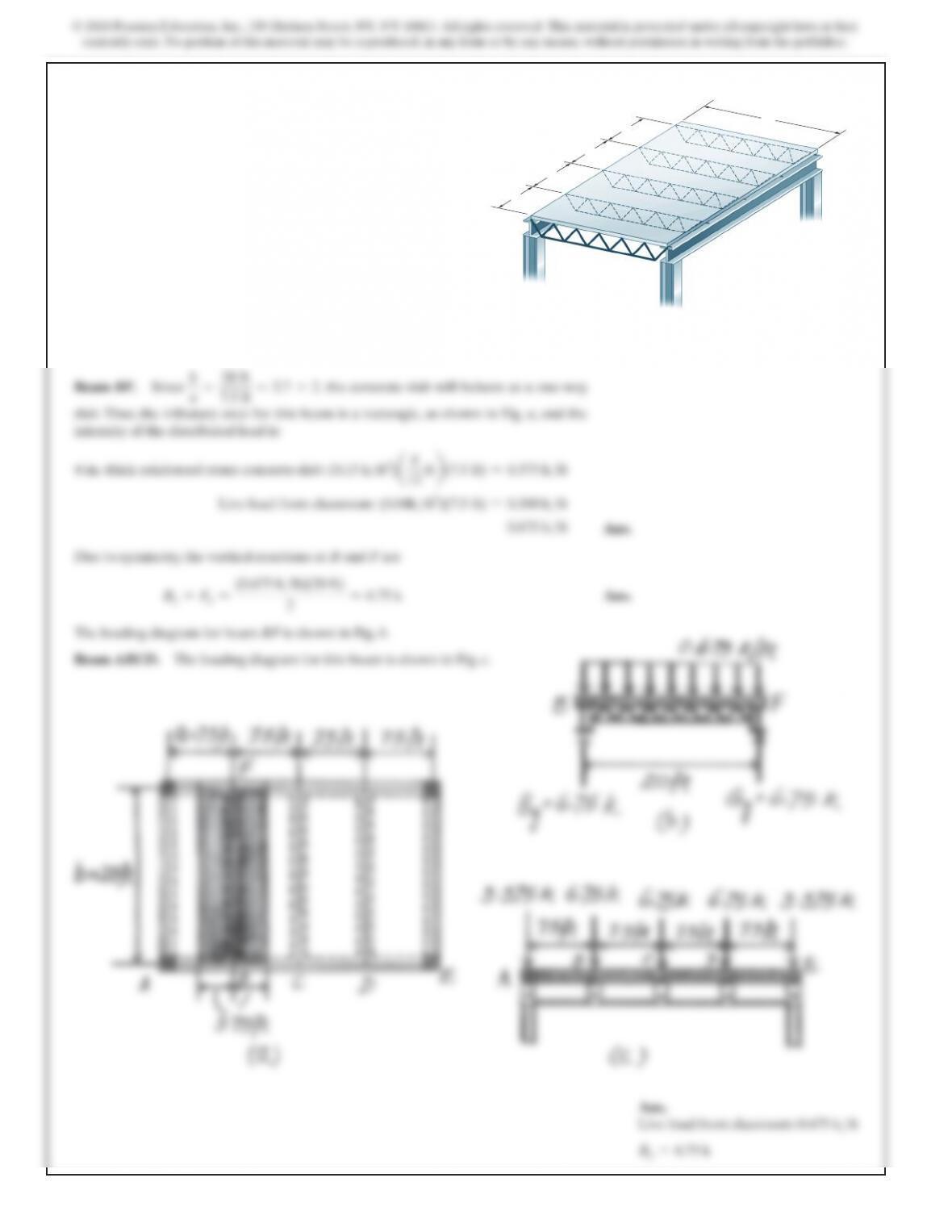
The loading diagram for joist BF is shown in Fig. b.
Girder ABCDE. The loads that act on this girder are the vertical reactions of the
joists at B, C, and D, which are
By=Cy=Dy=13.5 k,
and 6.75-k end loads from
the joists at A and E. The loading diagram for this girder is shown in Fig. c.
By=13.5 k
Ans.
Live load for classroom:
0.9 k>ft
SOLUTION
b
15 ft
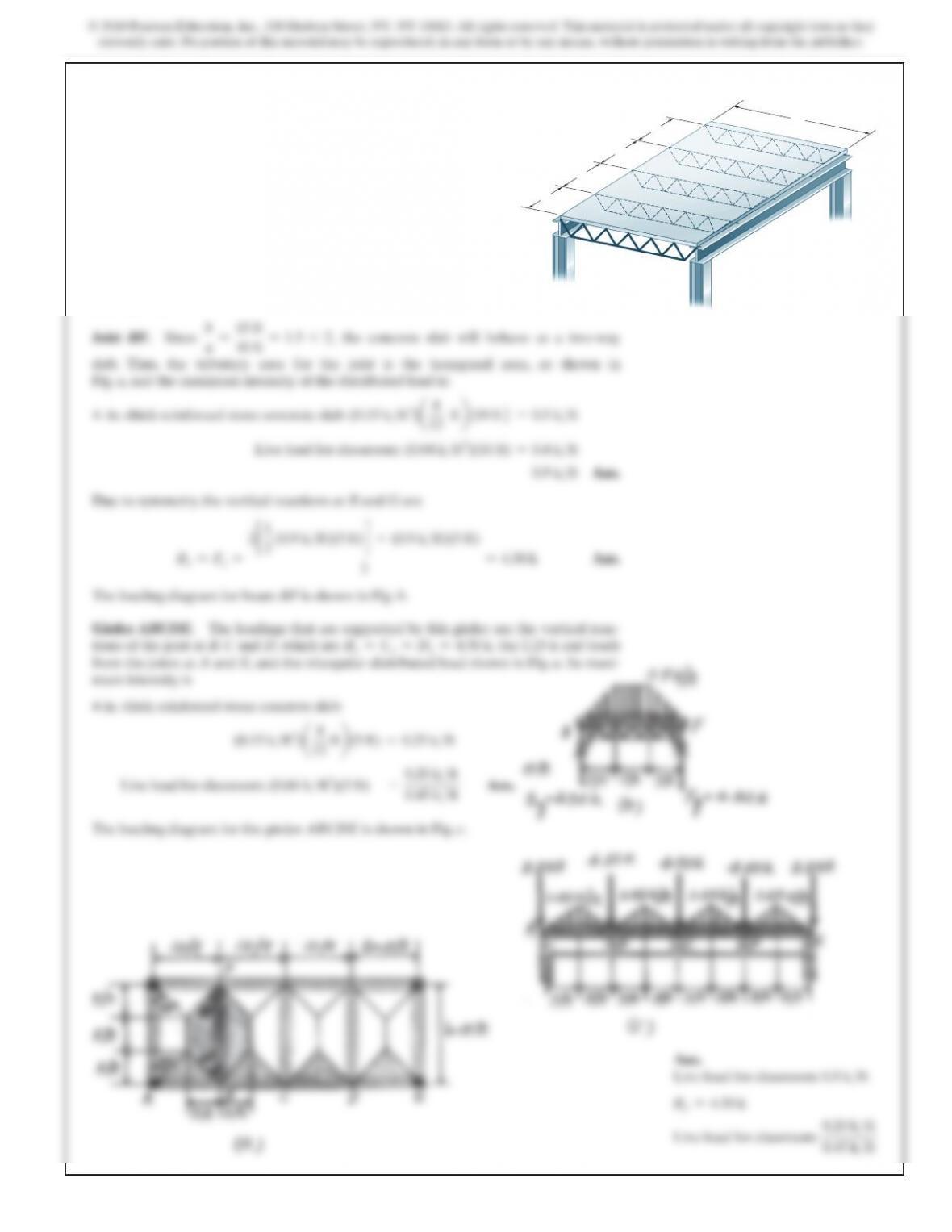
*2–4. Solve Prob. 2–3 with
a=10
ft,
b=15
ft.
A
E
b
a
a
a
a
B
C
D
F
3 0
2–5. Solve Prob. 2–3 with
a=7.5
ft,
b=20
ft.
SOLUTION
b
20 ft
A
E
b
a
a
a
a
B
C
D
F
Ans.
Live load from classroom:
0.675 k>ft
By=6.75 k
3 2
2–7. Solve Prob. 2–6 if
b=8
ft,
a=8
ft.
Ans.
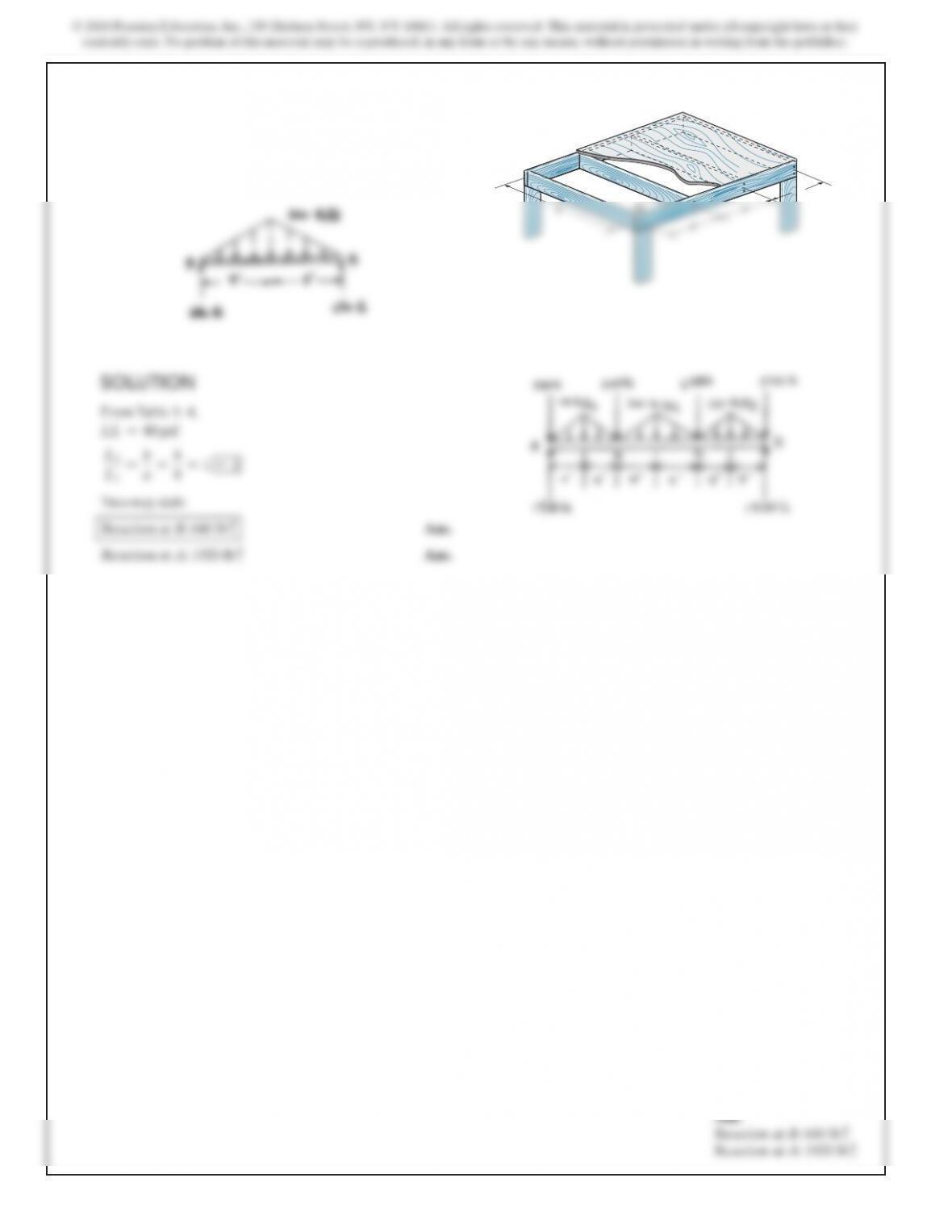
Reaction at B: 640 lb
c
Reaction at A: 1920 lb
c
a
A
B
C
D
G
E
F
3 3
Ans.
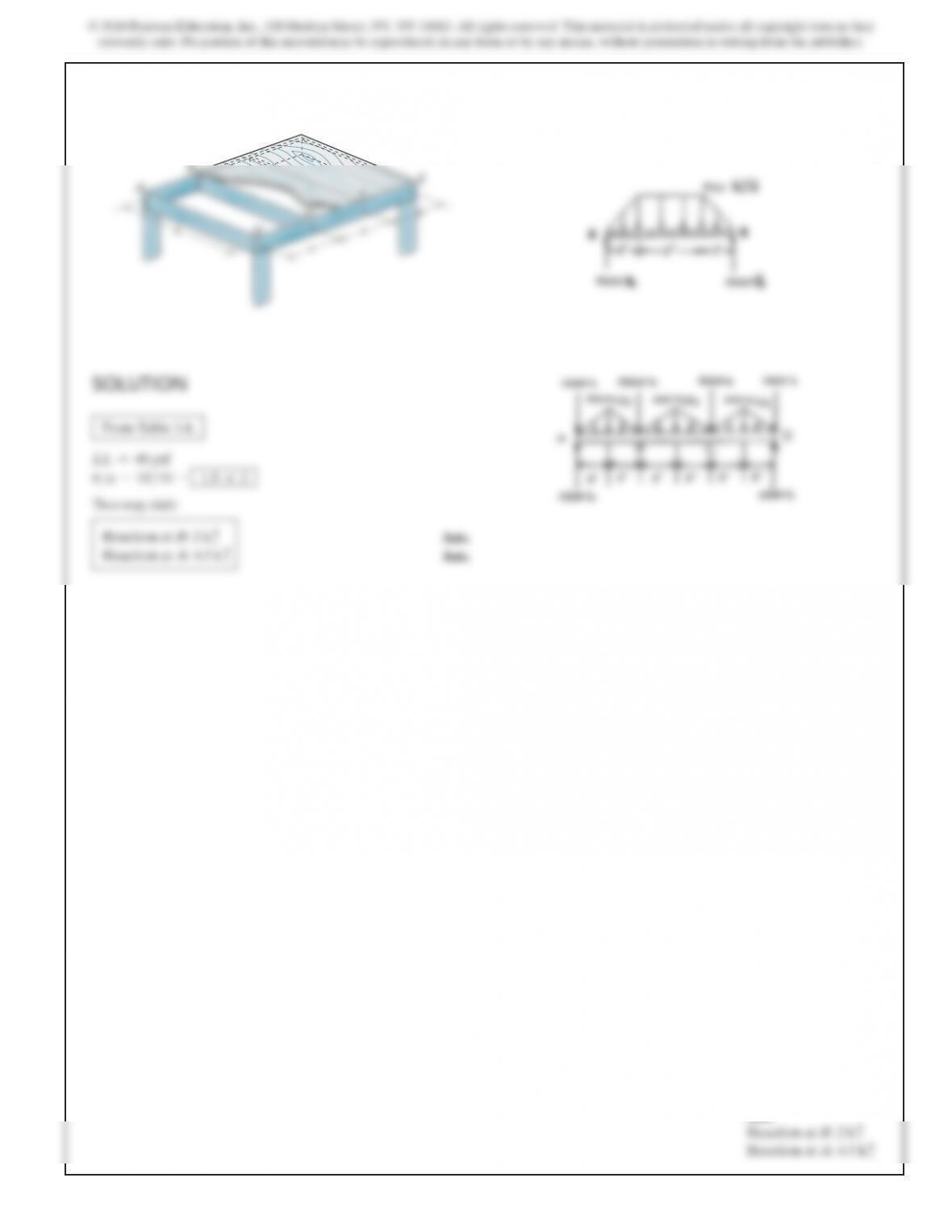
Reaction at B: 2 k
c
Reaction at A: 4.5 k
c
Reaction at B: 2 k
c
Reaction at A: 4.5 k
c
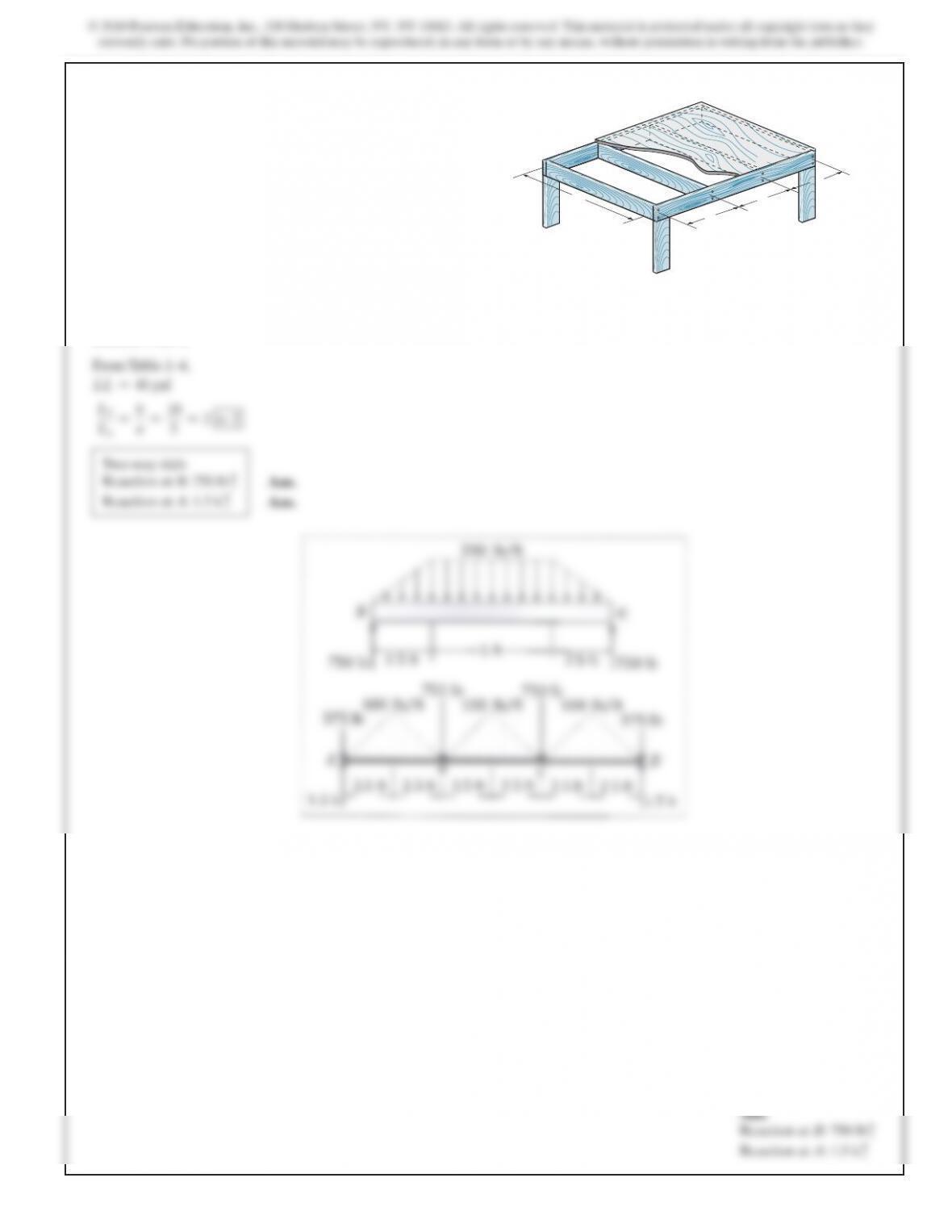
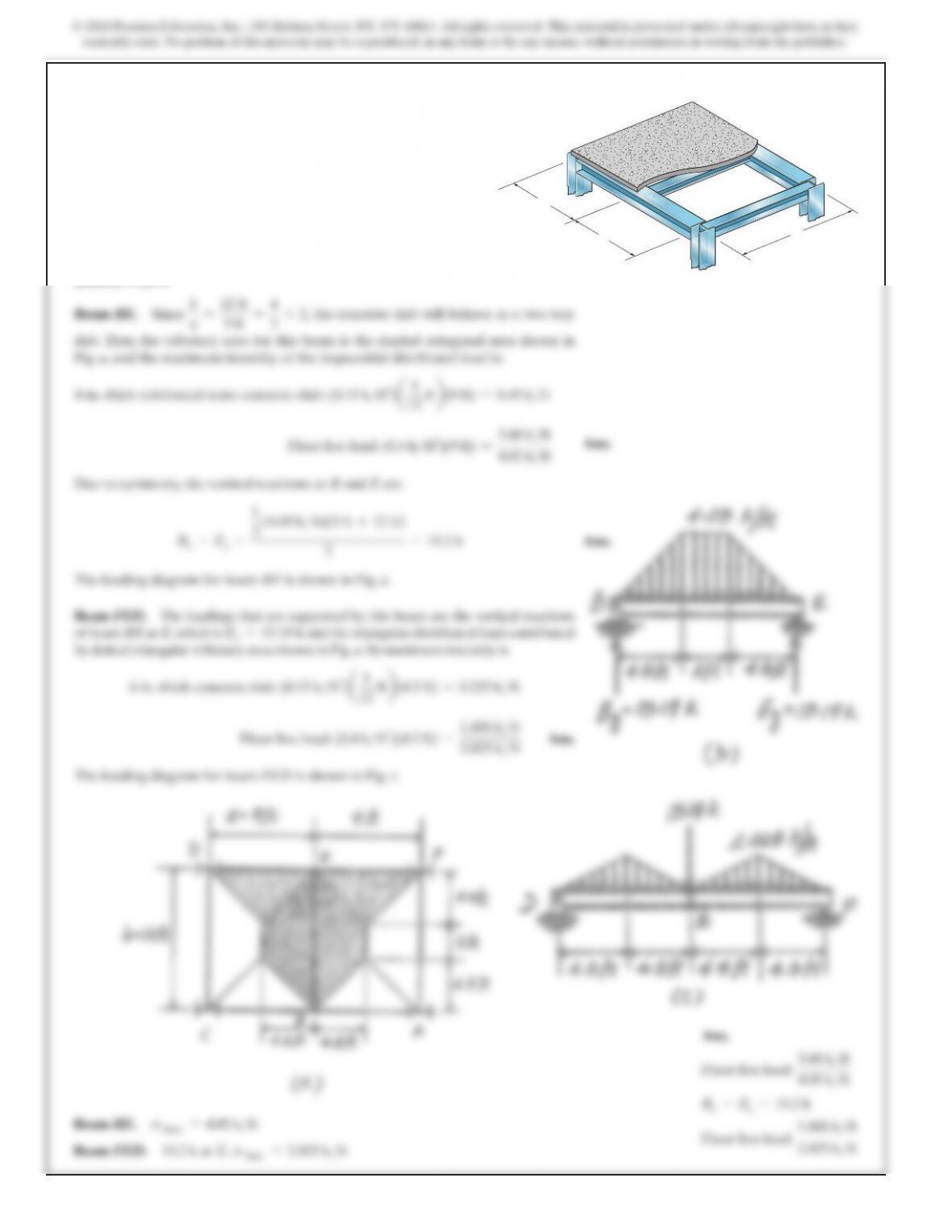
From Table 1.4,
LL =40 psf
b>a=15>10 =
1.5 …2
Two-way slab:
Ans.
Ans.
3 4
SOLUTION
b
12 ft
4
2–9. The steel framework is used to support the 4-in.
reinforced stone concrete slab that carries a uniform live
loading of
400
lb>ft2.
Sketch the loading that acts along
members BE and FED. Set
a=9
ft,
b=12
ft.
Hint: See
Table 1.2.
A
B
C
D
E
F
b
a
a
Ans.
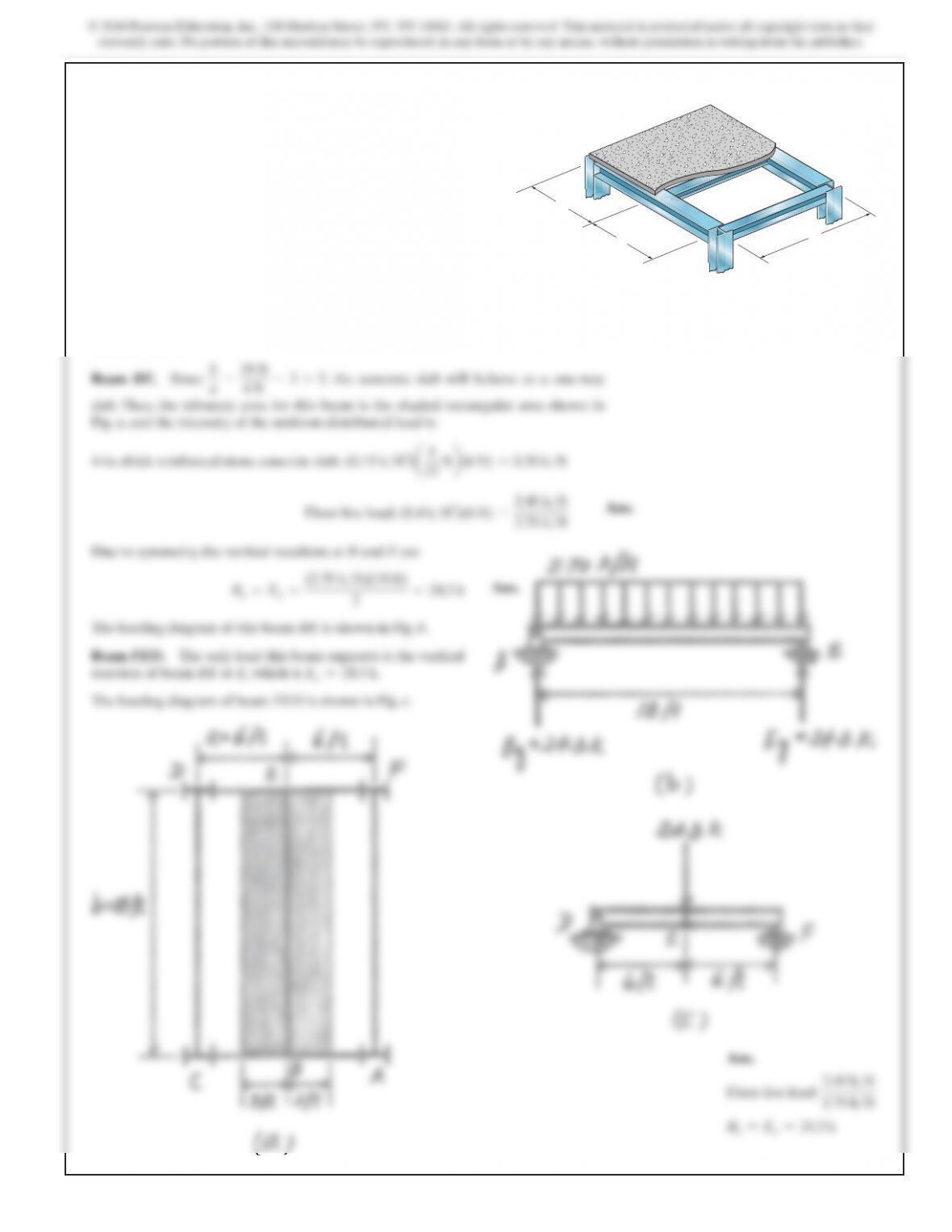
F
loor live load:
3.60 k>ft
4.05 k>ft
By=Ey=15.2 k
F
loor live load:
1.800 k>ft
2.025 k>ft
Beam BE.
w max =4.05 k>ft
Beam FED.
15.2 k at E, w max =2.025 k>ft
3 5
2–10. Solve Prob. 2–9, with
a=6
ft,
b=18
ft.
SOLUTION
b
18 ft
A
B
C
D
E
F
b
a
a
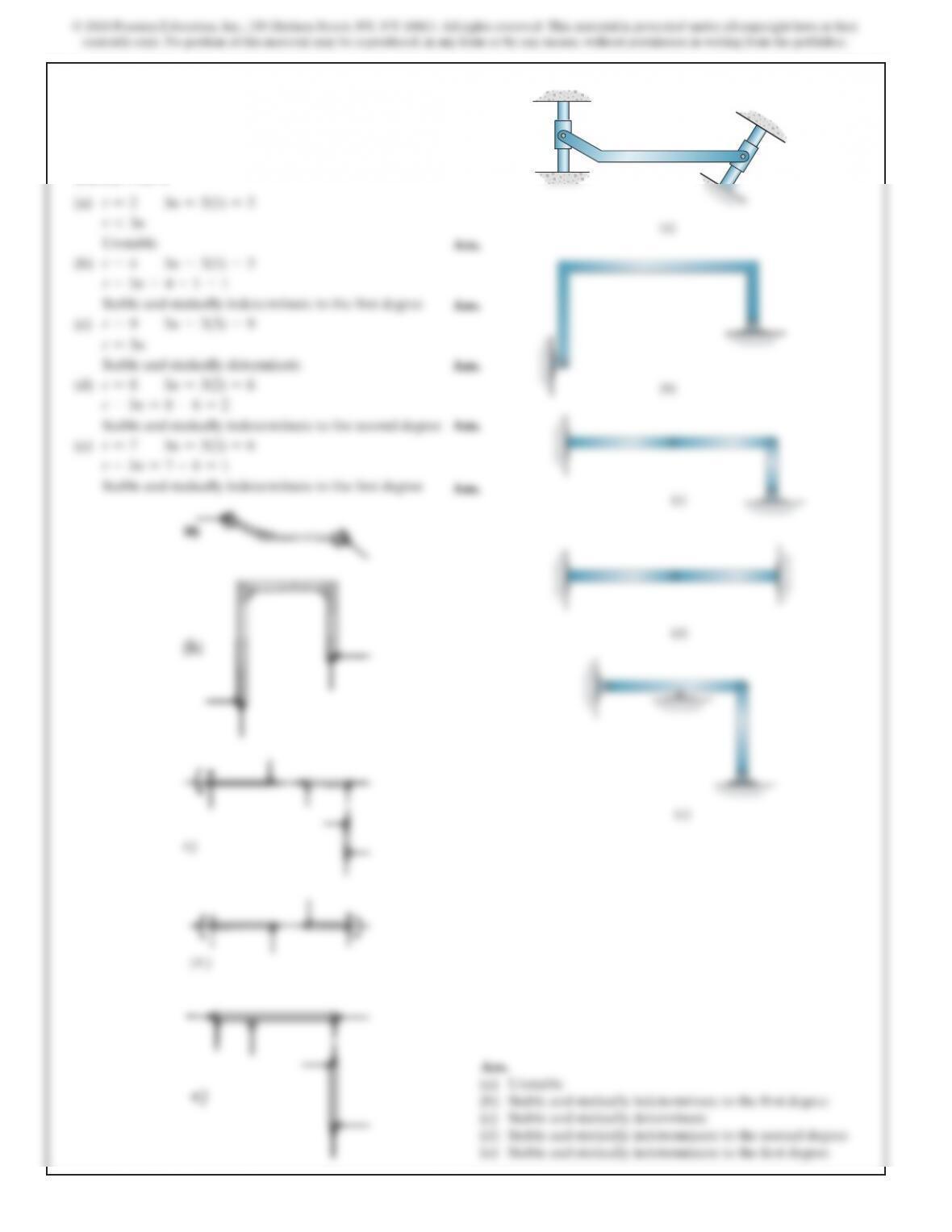
Ans.
F
loor live load:
2.40 k>ft
2.70 k
>
f
t
By=Ey=24.3 k
3 6
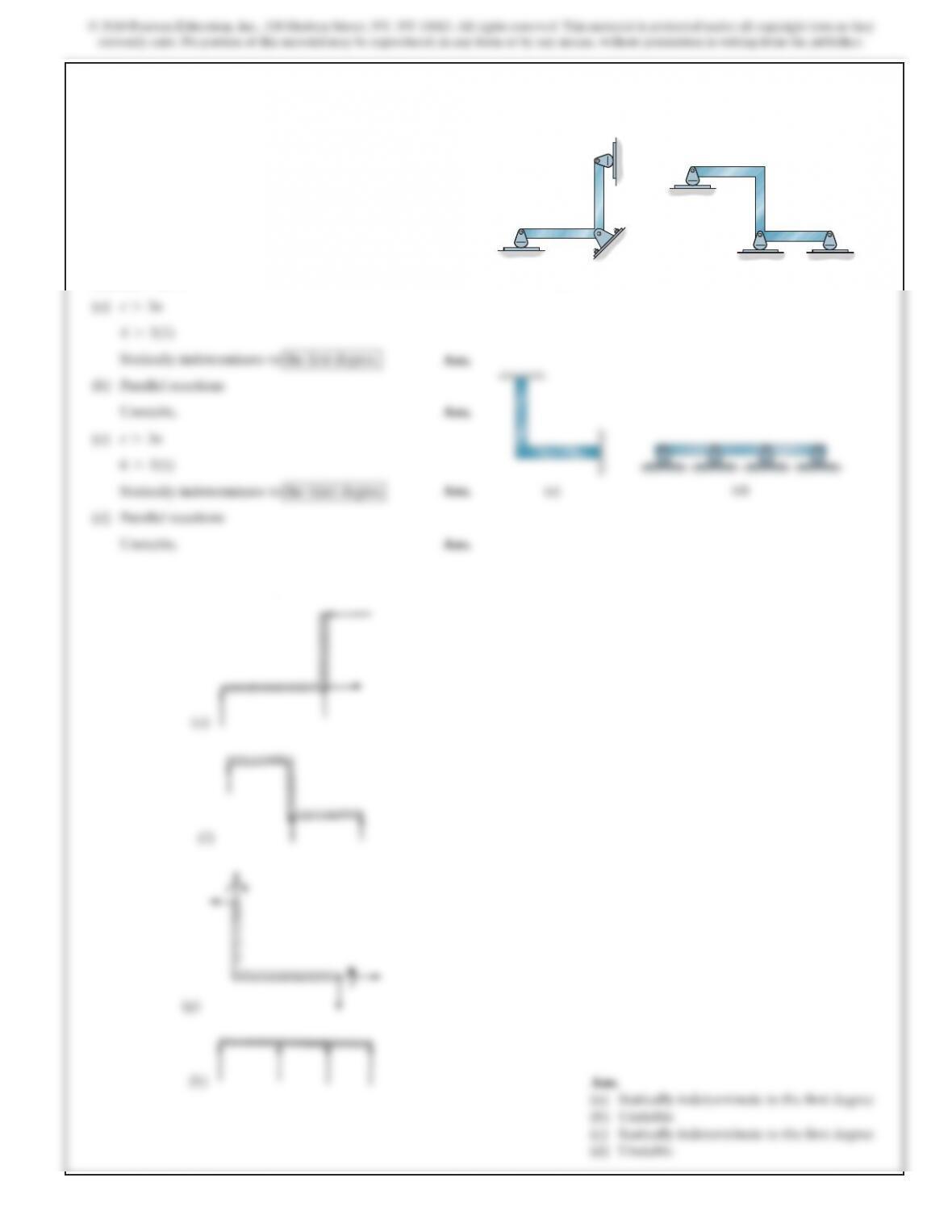
(e)
Ans.
(a) Unstable
(b) Stable and statically indeterminate to the first degree
(c) Stable and statically determinate
(d) Stable and statically indeterminate to the second degree
(e) Stable and statically indeterminate to the first degree
3 7
SOLUTION
*2–12. Classify each of the structures as statically determinate,
statically indeterminate, or unstable. If indeterminate, specify the
degree of indeterminacy.
(a)
(b)
(a) Statically indeterminate to the first degree
(b) Unstable
(c) Statically indeterminate to the first degree
(d) Unstable
3 8
3 9
(a)
SOLUTION
*2–16. Classify each of the structures as statically determinate,
statically indeterminate, or unstable. If indeterminate, specify
the degree of indeterminacy.