Solution
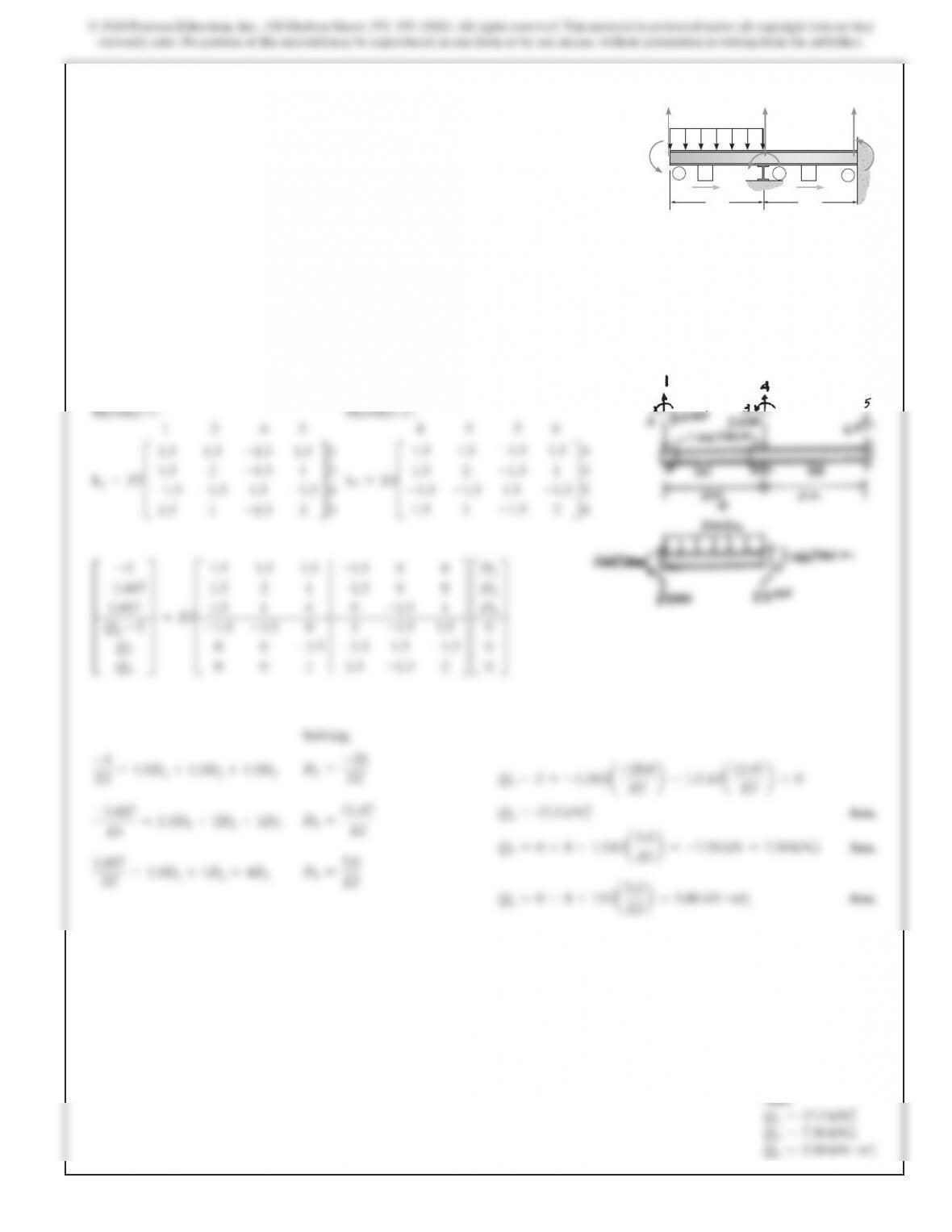
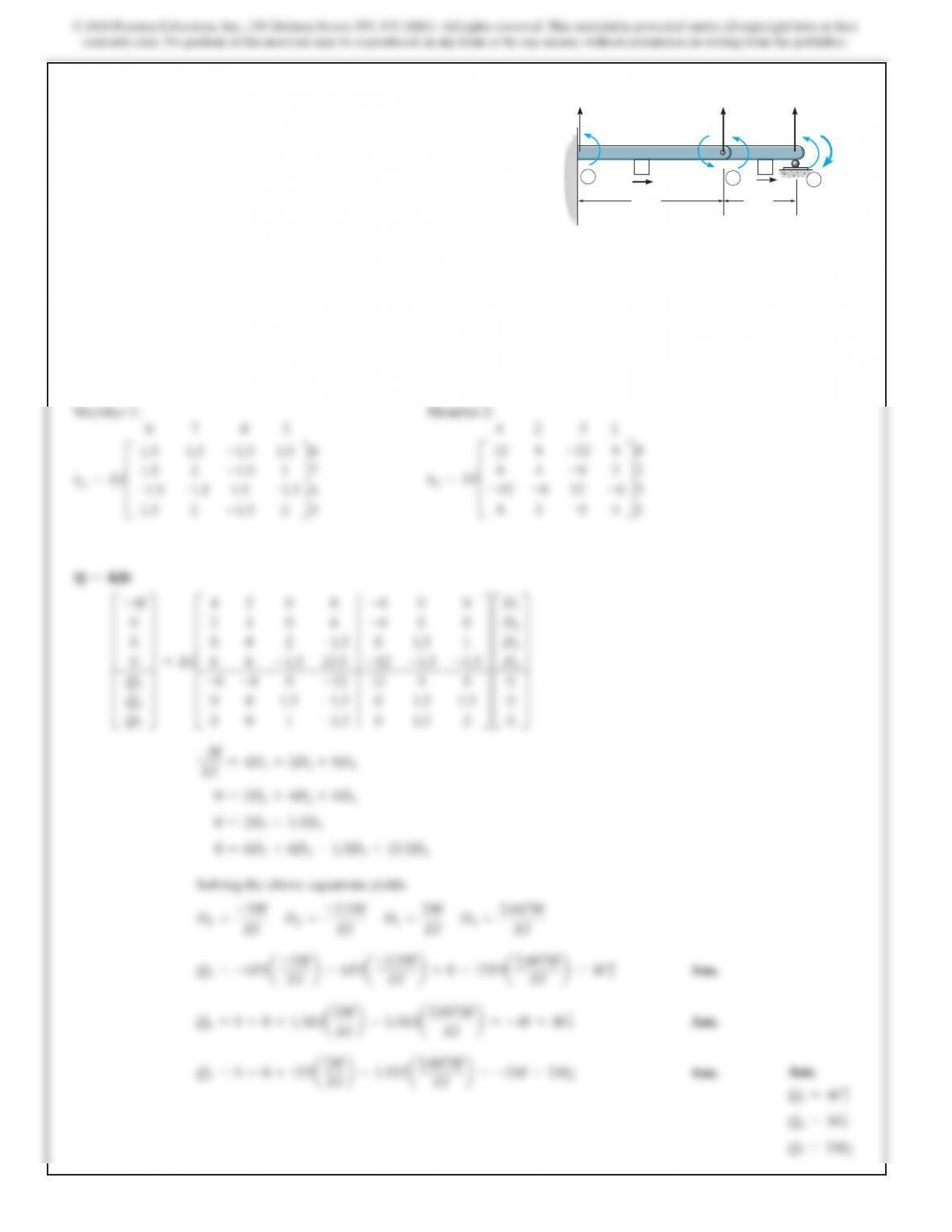
15–1. Determine the reactions at the supports. Assume ② is a
roller. EI is constant.
2 m 2 m
123
5 kN>m
12
45
1
23
6
672
Solution
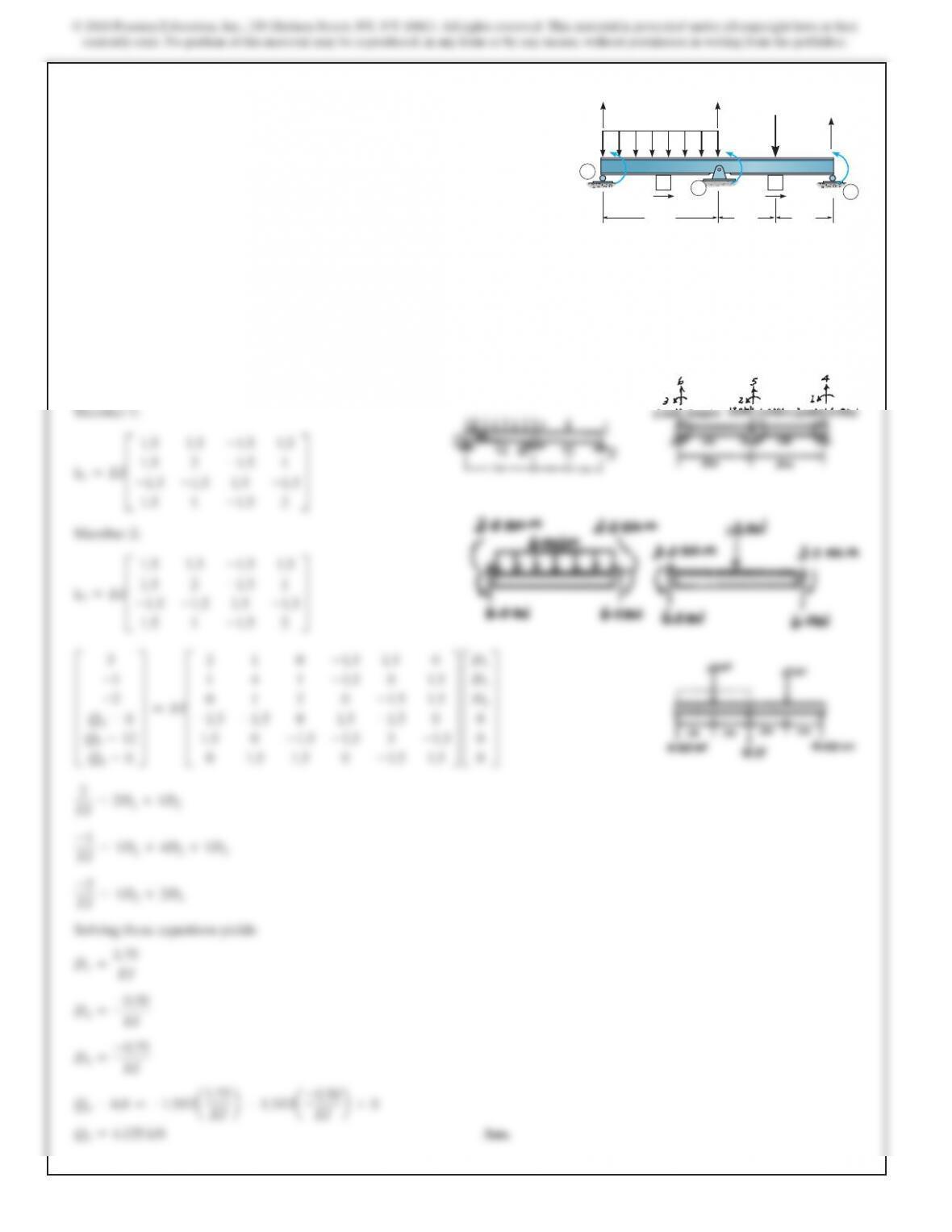
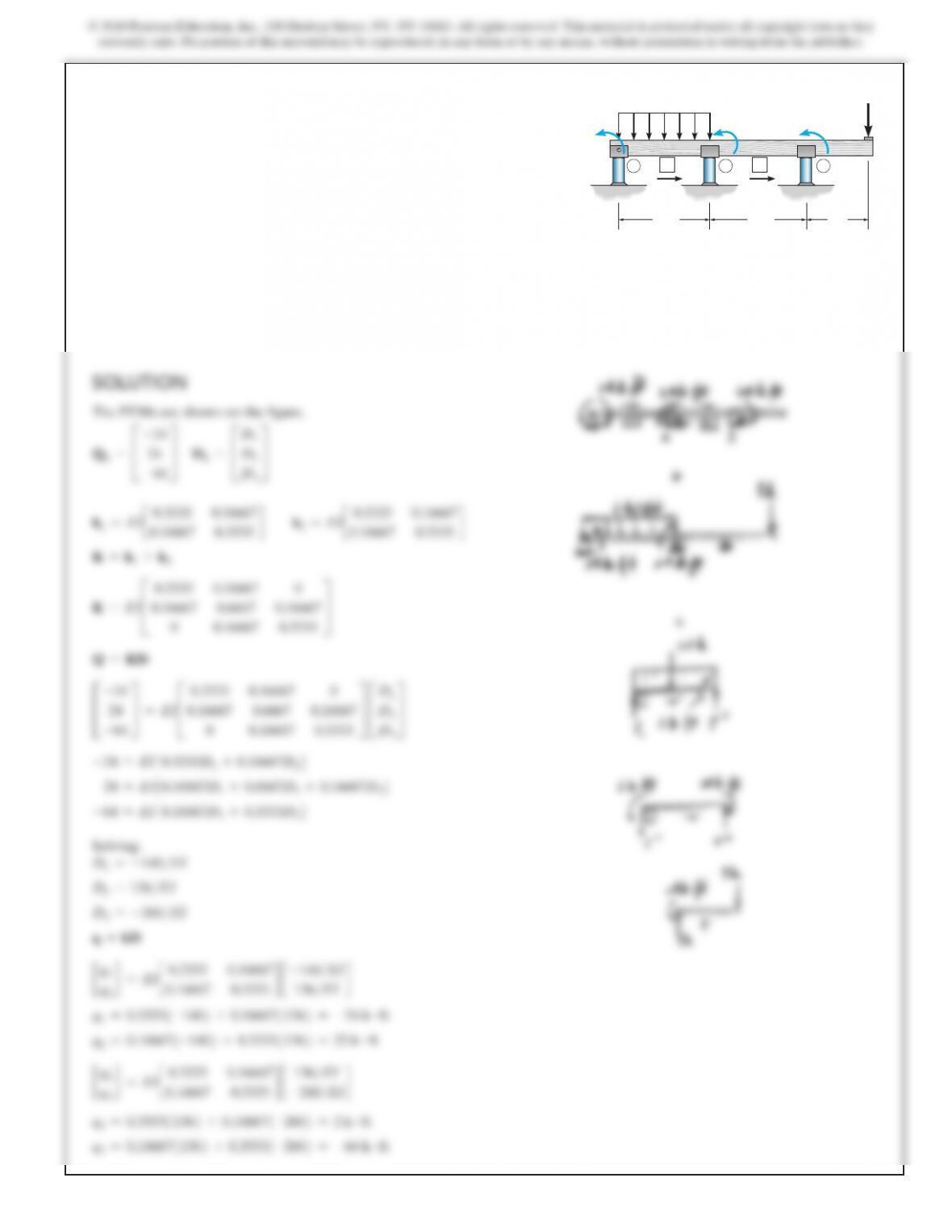
15–2. Determine the reactions at the supports. EI is constant.
3
11 2
6 kN
>
m
2 m
3
6
1 m 1 m
5
4
21
12 kN
2
673
Ans.
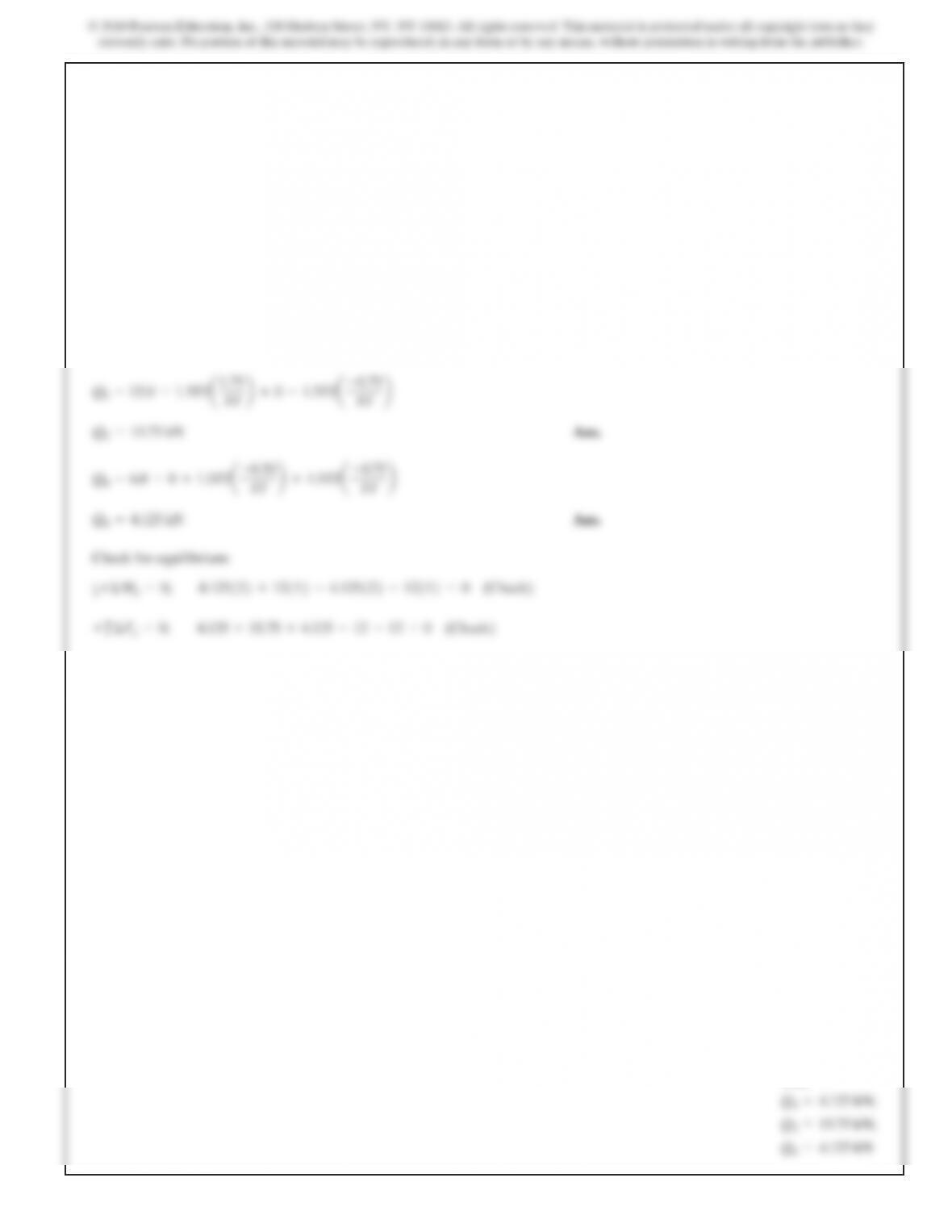
Q4=4.125 kN;
Q5=15.75 kN;
Q6=4.125 kN
Q
5–12.0 =1.5EI
a1.75
EI b
+0–1.5EI
a–0.75
EI b
Q5=15.75 kN
Ans.
Q
6–6.0 =0+1.5EI
a–0.50
EI b
+1.5EI
a–0.75
EI b
Q6=4.125 kN
Ans.
Check for equilibrium:
a+ΣM2=0;
4.125122+12112–4.125122–12112=0
(Check)
+
c
ΣFy=0;
4.125 +15.75 +4.125 –12 –12 =0
(Check)
15–2 (Continued)
Solution
15–3. Determine the reactions at the supports. EI is constant.
12
6
7
4
3
21
5
M0
2 m 1 m
123
676
Ans.
F1=11.8 k
F2=7.00 k
F3=13.2 k
F1=11.8 k
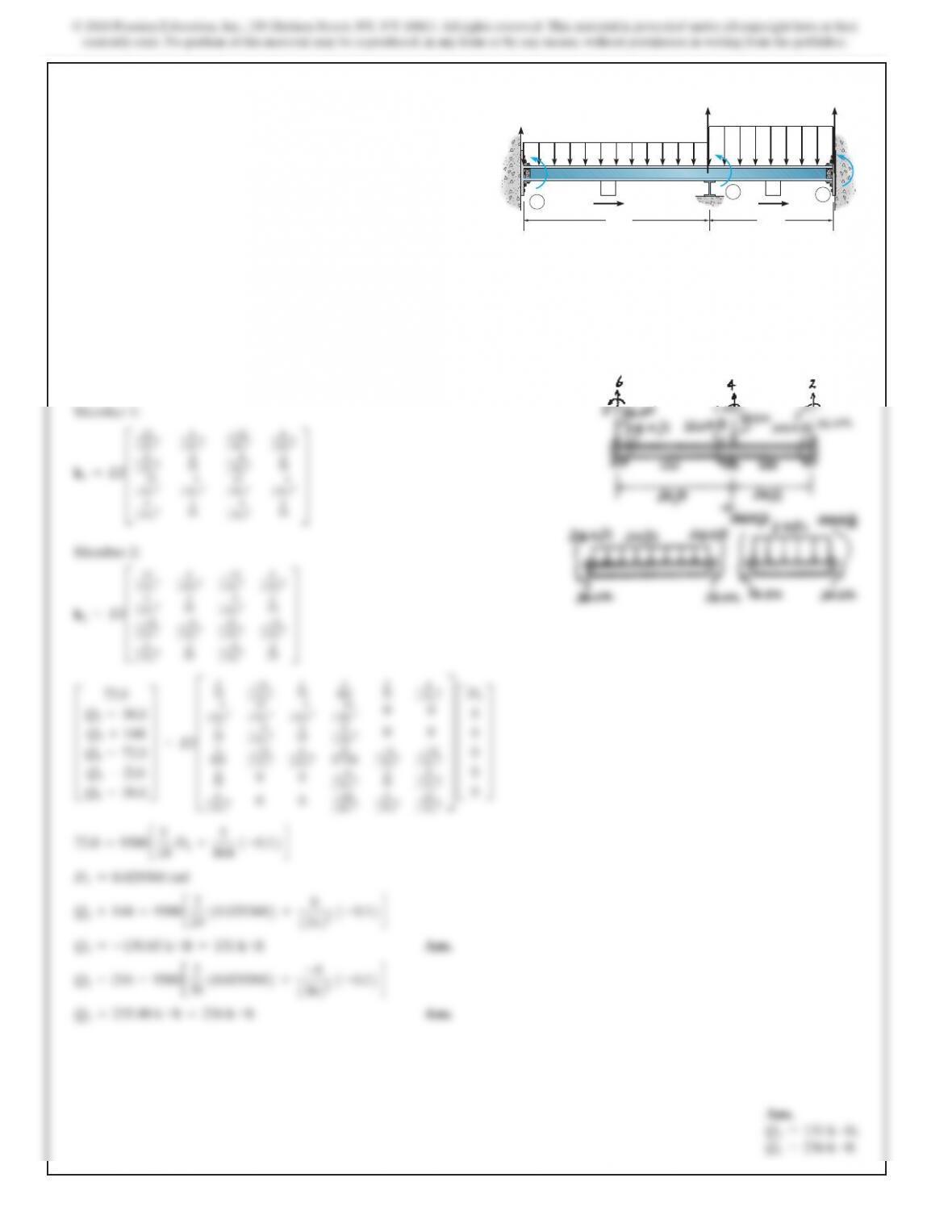
Solution
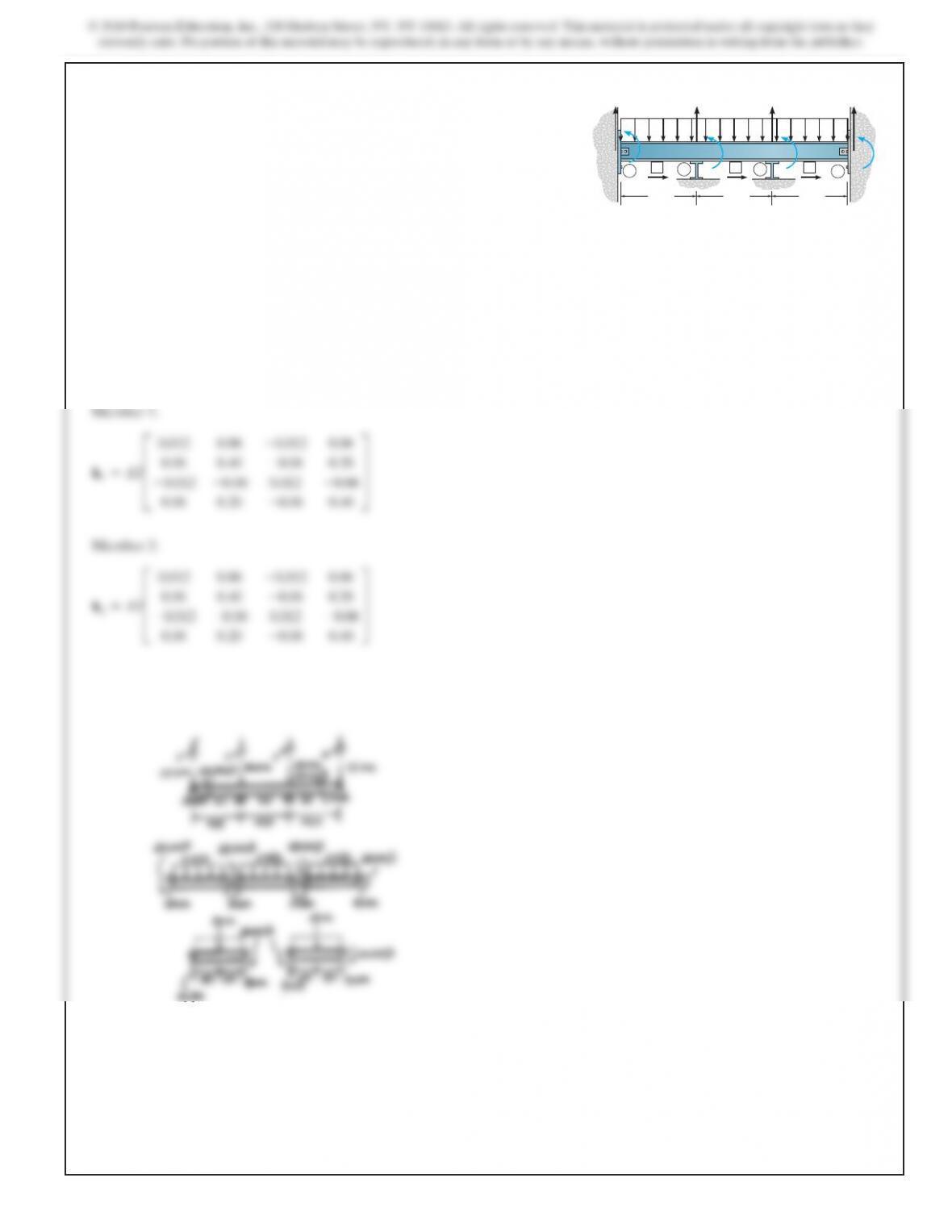
15–5. Determine the moments at ② and ③. Assume ② and ③
are rollers and ① and ④ are pins. EI is constant.
1 2 3
12 3
10 ft 10 ft 10 ft
3 k>ft
123
5678
4
4
678
Solution
Member 1:
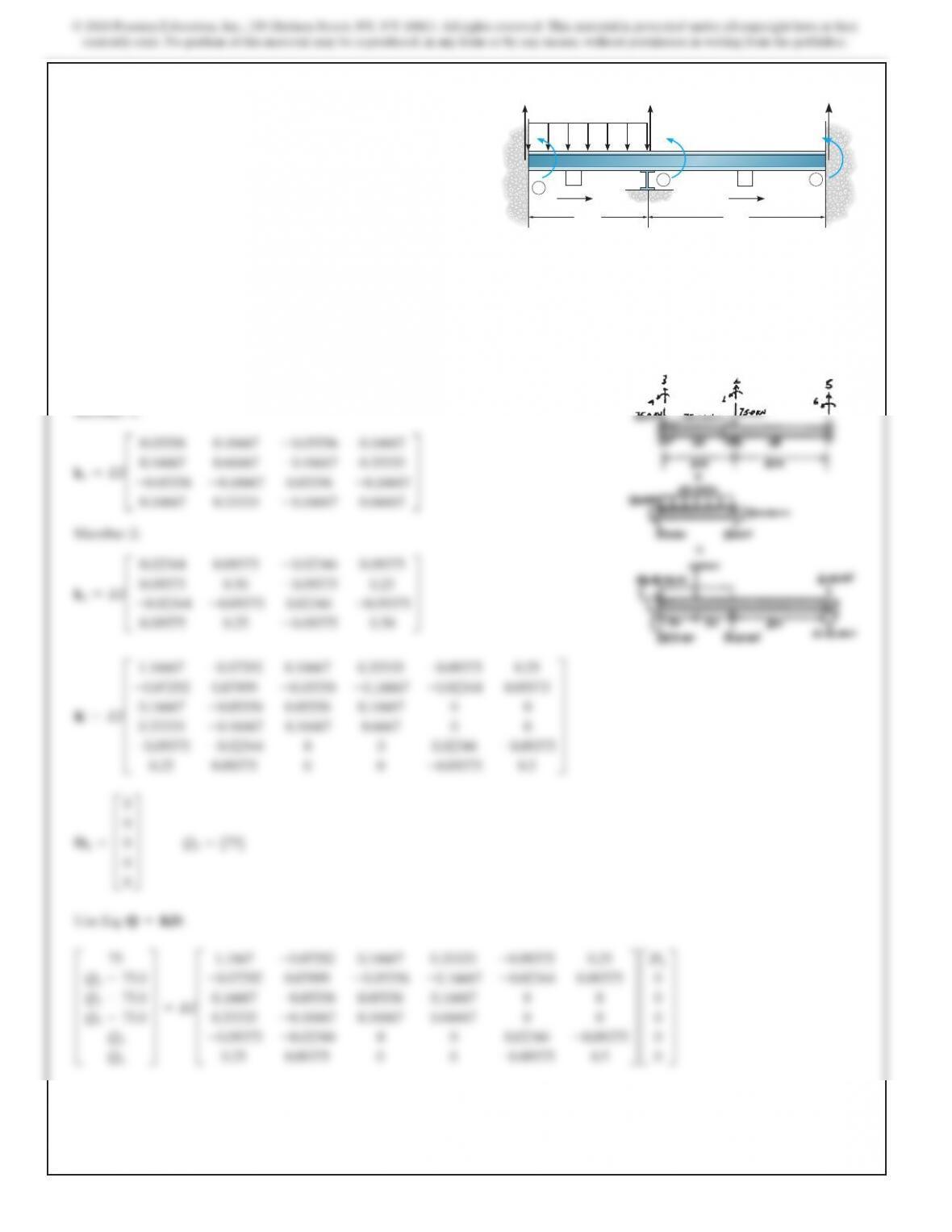
15–7. Determine the reactions at the supports. EI is a
constant.
5 m 2.5 m
12
12 kN>m
12
1
2
5
463
3
Member 2:
Solution
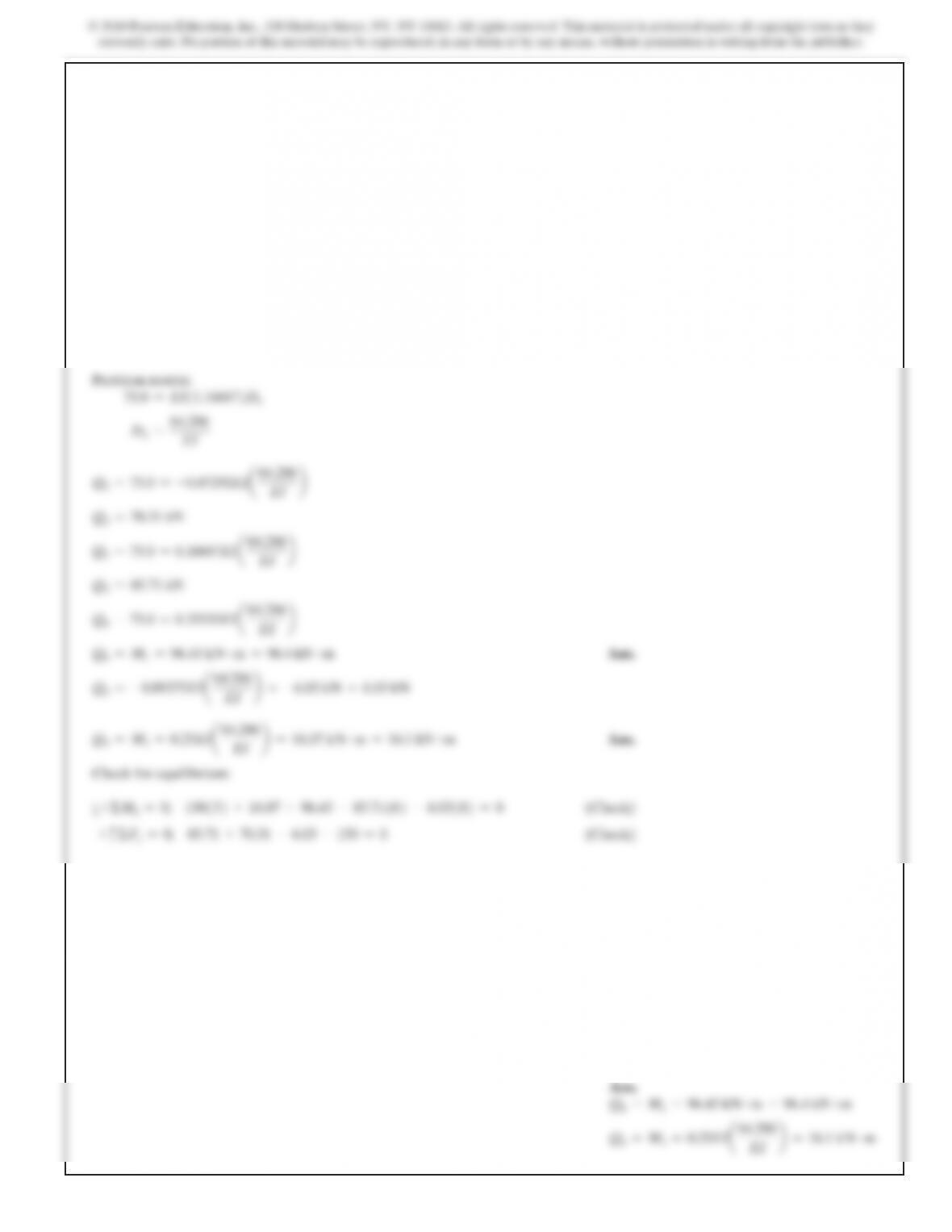
*15–8. Determine the moments at the supports. Assume ② is
a roller. EI is constant.
6 m 8 m
25 kN>m
1
4
3
2
5
6
123
12
684
Ans.
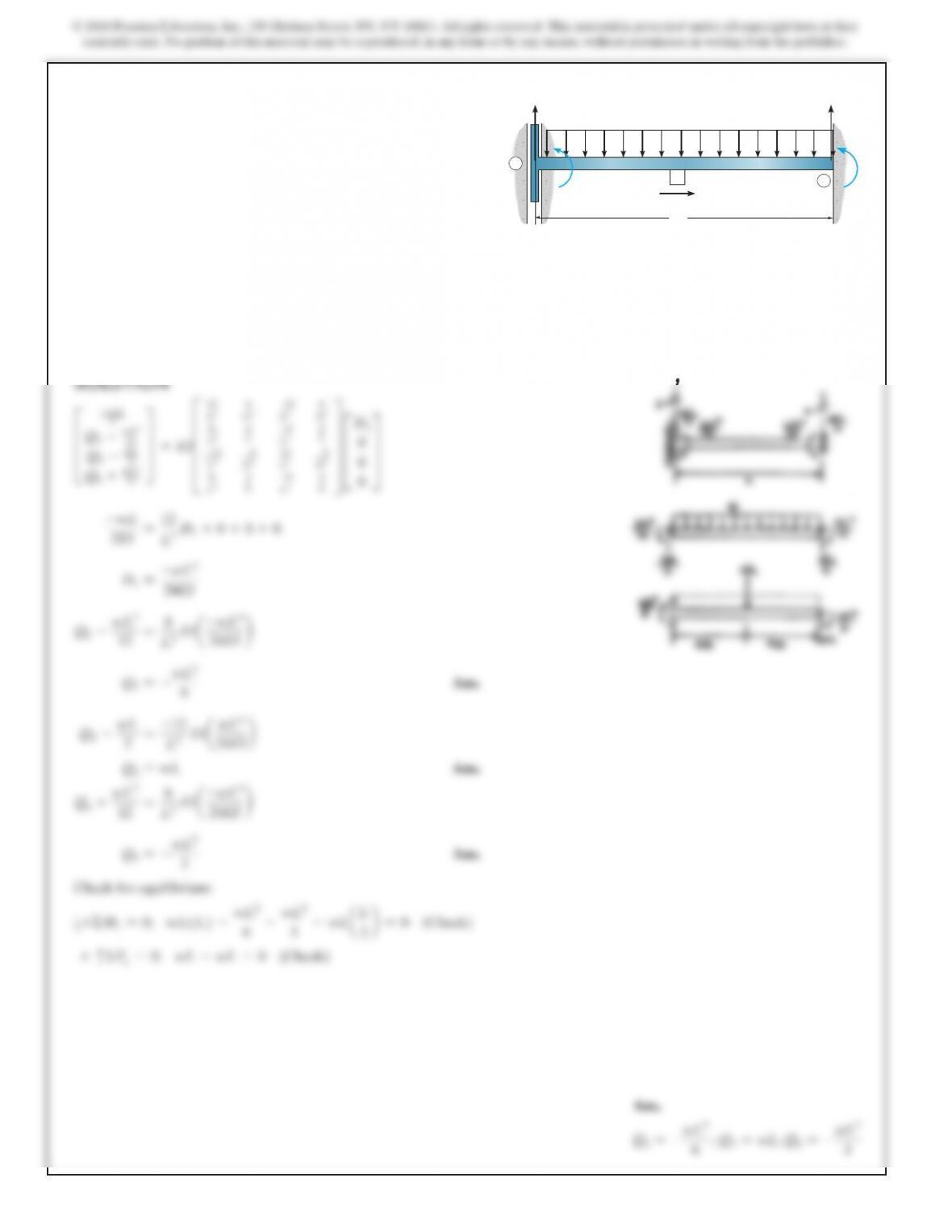
Q2=–
wL2
6
; Q3=wL; Q4=–
wL2
3
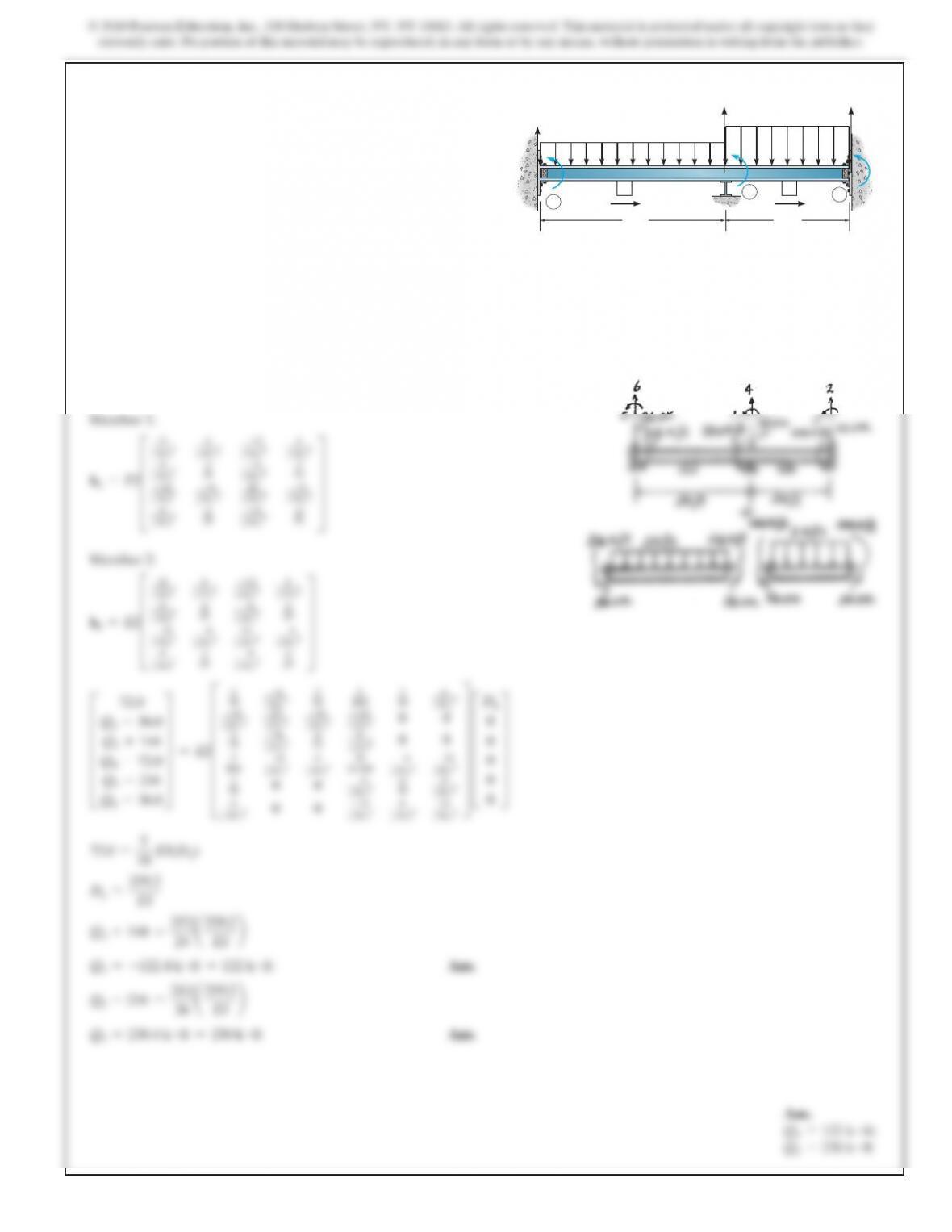
15–10. Determine the moments at ① and ③. Assume ② is a
roller and ① and ③ are fixed. Also, here EI is constant.
Solution
2 k>ft
3 k>ft
36 ft
6
42
51
24 ft
12
1
23