3.1. Hair Zone 1manufactures a brand of hair styling gel. It is considering adding a
modified version of the product—a foam that provides stronger hold. Hair Zone’s
variable costs and prices to wholesalers are:
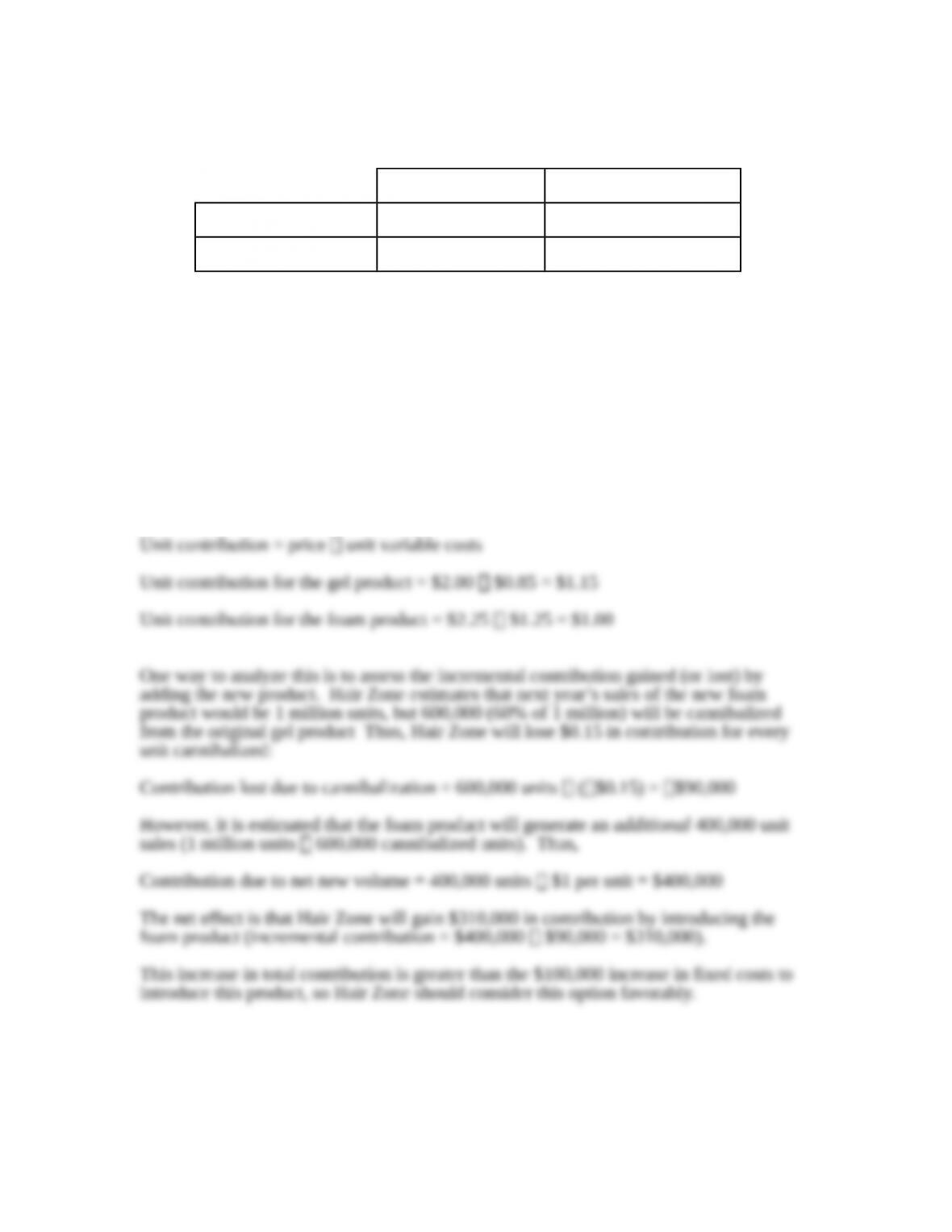
Current hair gel New foam product
Unit selling price 2.00 2.25
Unit variable costs .85 1.25
Hair Zone expects to sell 1 million units of the new styling foam in the first year
after introduction, but it expects that 60% of those sales will come from buyers
who normally purchase Hair Zone’s styling gel. Hair Zone estimates that it would
sell 1.5 million units of the gel if it did not introduce the foam. If the fixed cost of
launching the new foam will be $100,000 during the first year, should Hair Zone
add the new product to its line? Why or why not?
Answer:
This is a cannibalization problem. To analyze this problem, we need to determine unit
contributions:
Copyright © 2015 Pearson Education, Inc.
A3-1
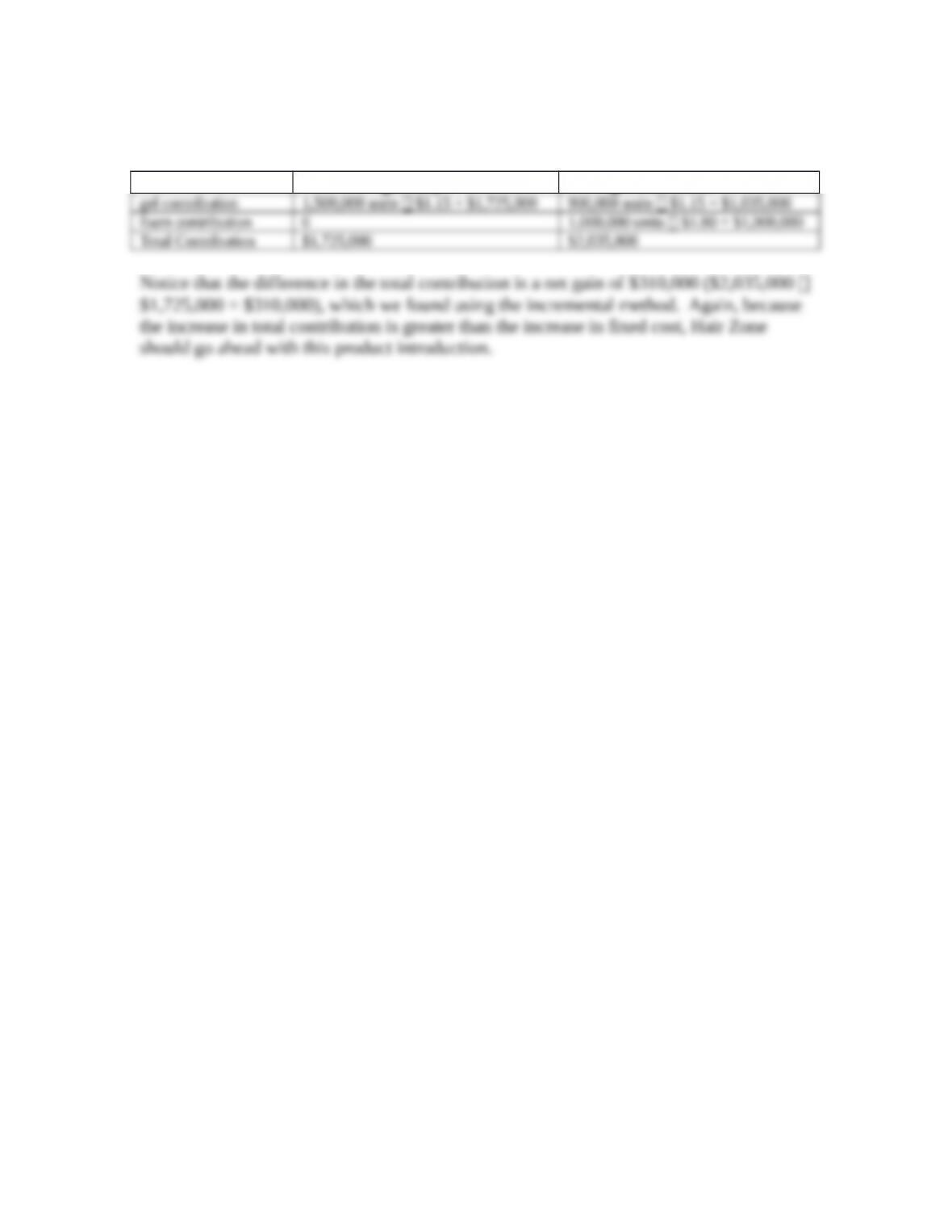
Another way to see this is to compare Hair Zone’s total contribution with and without the
introduction of the new product:
gel only gel and foam
Copyright © 2015 Pearson Education, Inc.
A3-2
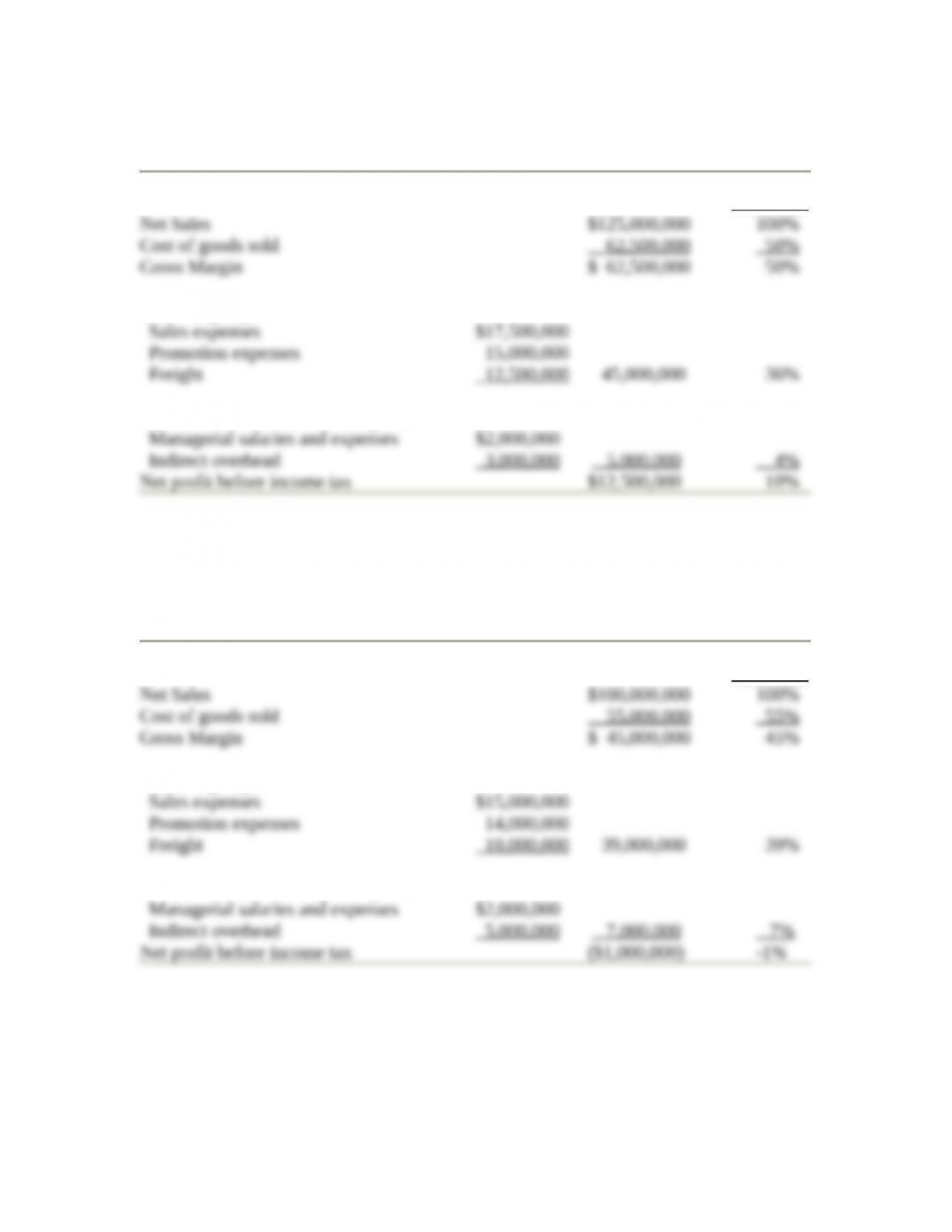
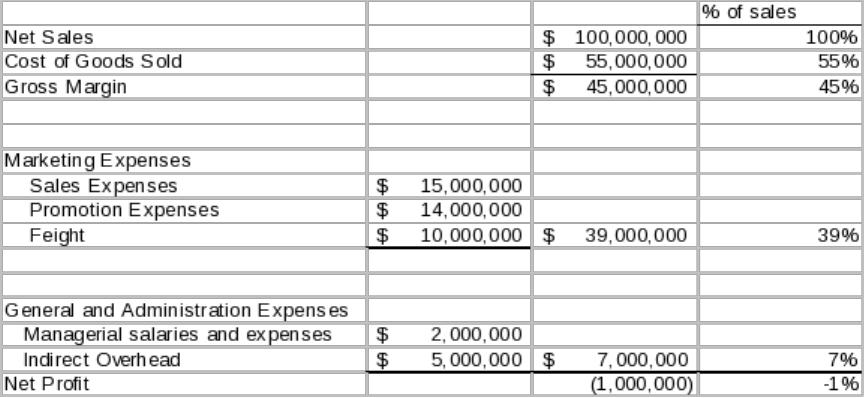
Table A3.1
Pro Forma Profit-and-Loss Statement for the 12-Month Period Ended December 31, 2013
% of sales
Marketing Expenses
General and Administrative Expenses
Table A3.2
Profit-and-Loss Statement for the 12-Month Period Ended December 31, 2013
% of sales
Marketing Expenses
General and Administrative Expenses
Copyright © 2015 Pearson Education, Inc.
A3-3
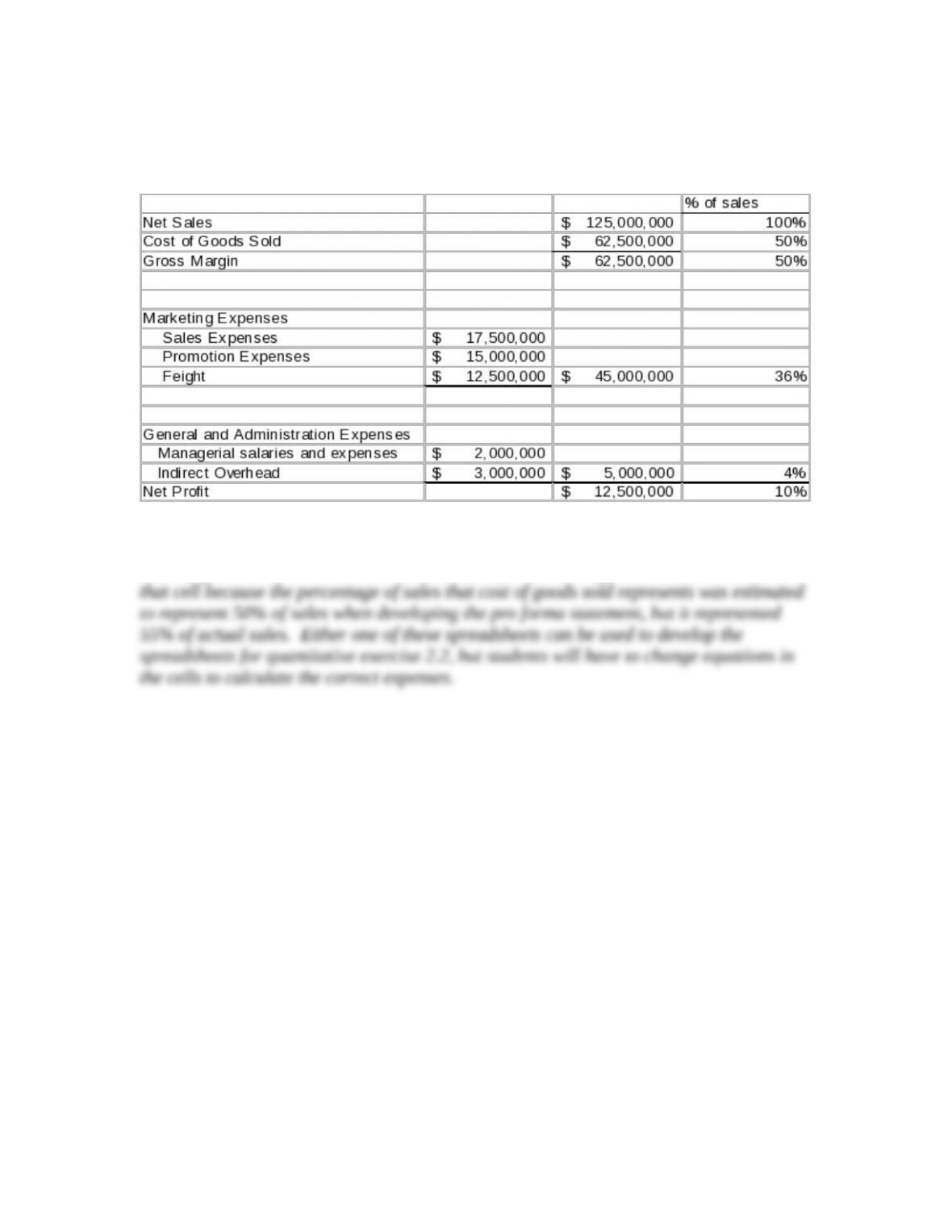
Spreadsheet A3.1
Pro Forma Profit-and-Loss Statement for the 12-Month Period Ended December 31, 2013
Teaching Note: Note that the absolute amount for the cost of goods sold was entered in
Spreadsheet A3.2
Profit-and-Loss Statement for the 12-Month Period Ended December 31, 2013
Copyright © 2015 Pearson Education, Inc.
A3-4
Copyright © 2015 Pearson Education, Inc.
A3-5
Additional Quantitative Exercises
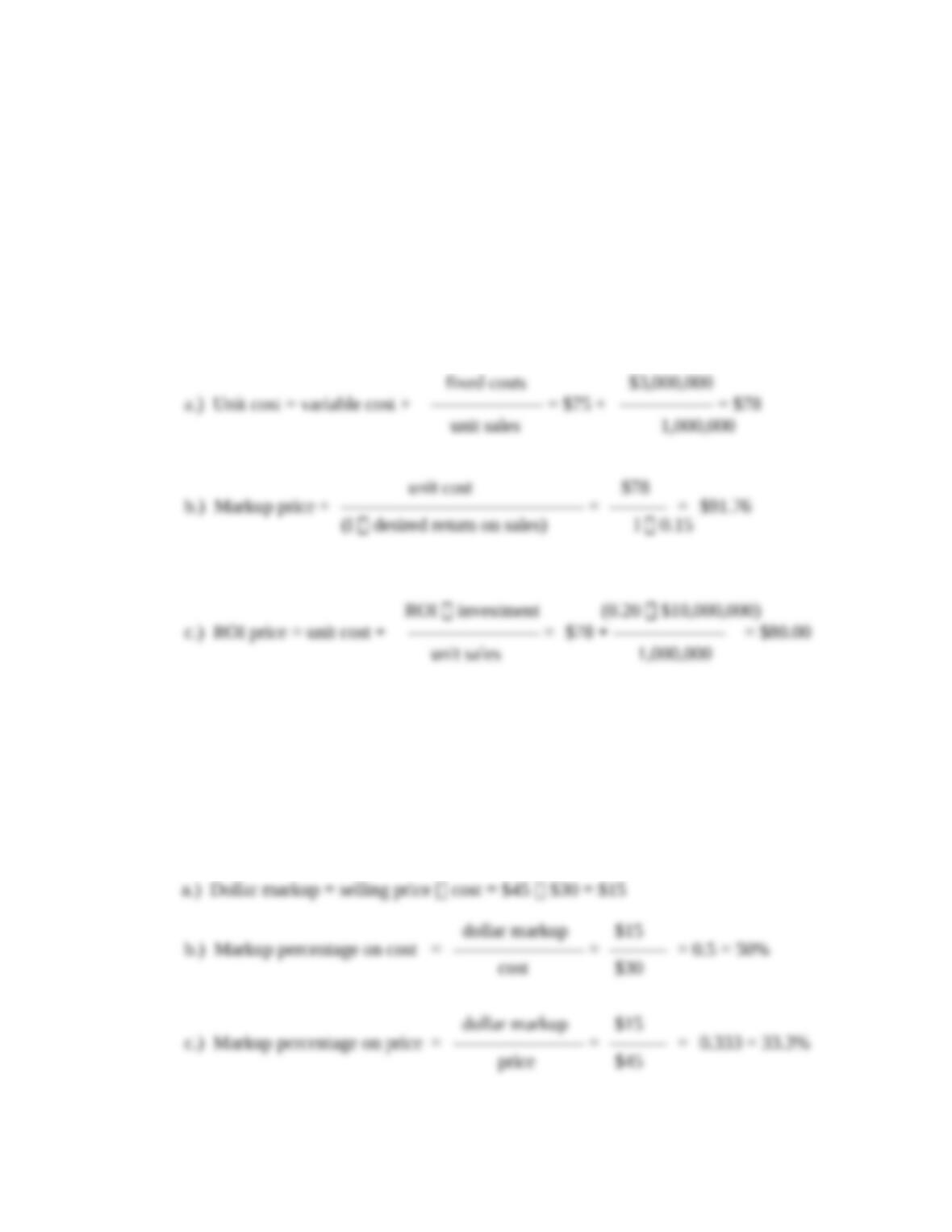
1. Chill Out, a manufacturer of outdoor patio heaters, realizes a cost of $75 for every
heater it produces. Total fixed costs equal $3 million. If the company manufactures 1
million heaters, compute the following:
a. unit cost
b. markup price if the company desires a 15% return on sales
c. ROI price if the company desires a 20% return on an investment of $10
million
Answer:
2. A women’s apparel retailer purchases items to sell in the store. If the retailer
purchases a blouse for $30 and sells it for $45, determine the following:
a. dollar markup
b. markup percentage on cost
c. markup percentage on selling price
Answer:
Copyright © 2015 Pearson Education, Inc.
A3-6
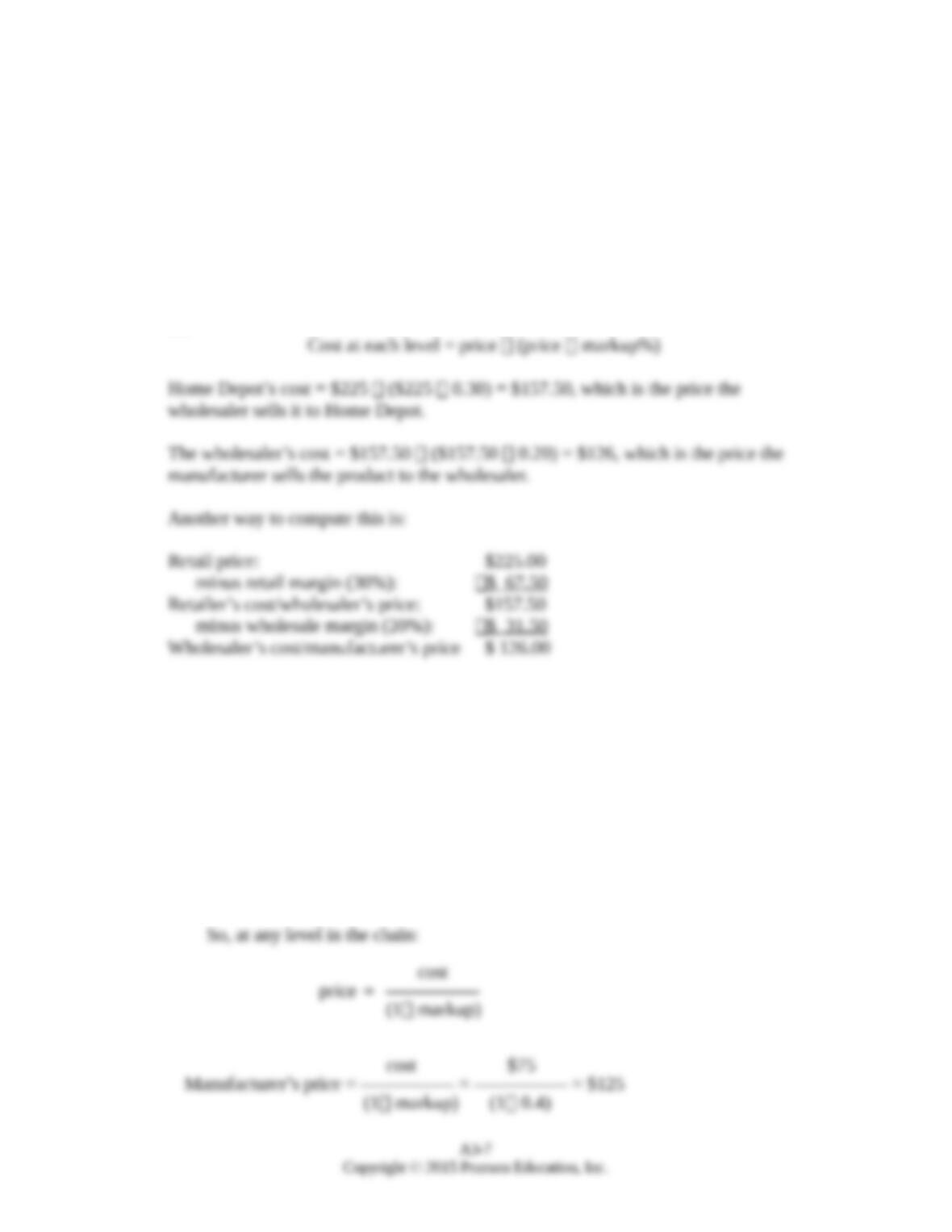
3. A consumer purchases a lawn mower from Home Depot for $225. Home Depot’s
markup is 30%, and the wholesaler’s is 20%, both based on selling price. For what
price does the manufacturer sell the product to the wholesaler?
Answer:
price cost
Markup percentage on price = ——————
price
so,
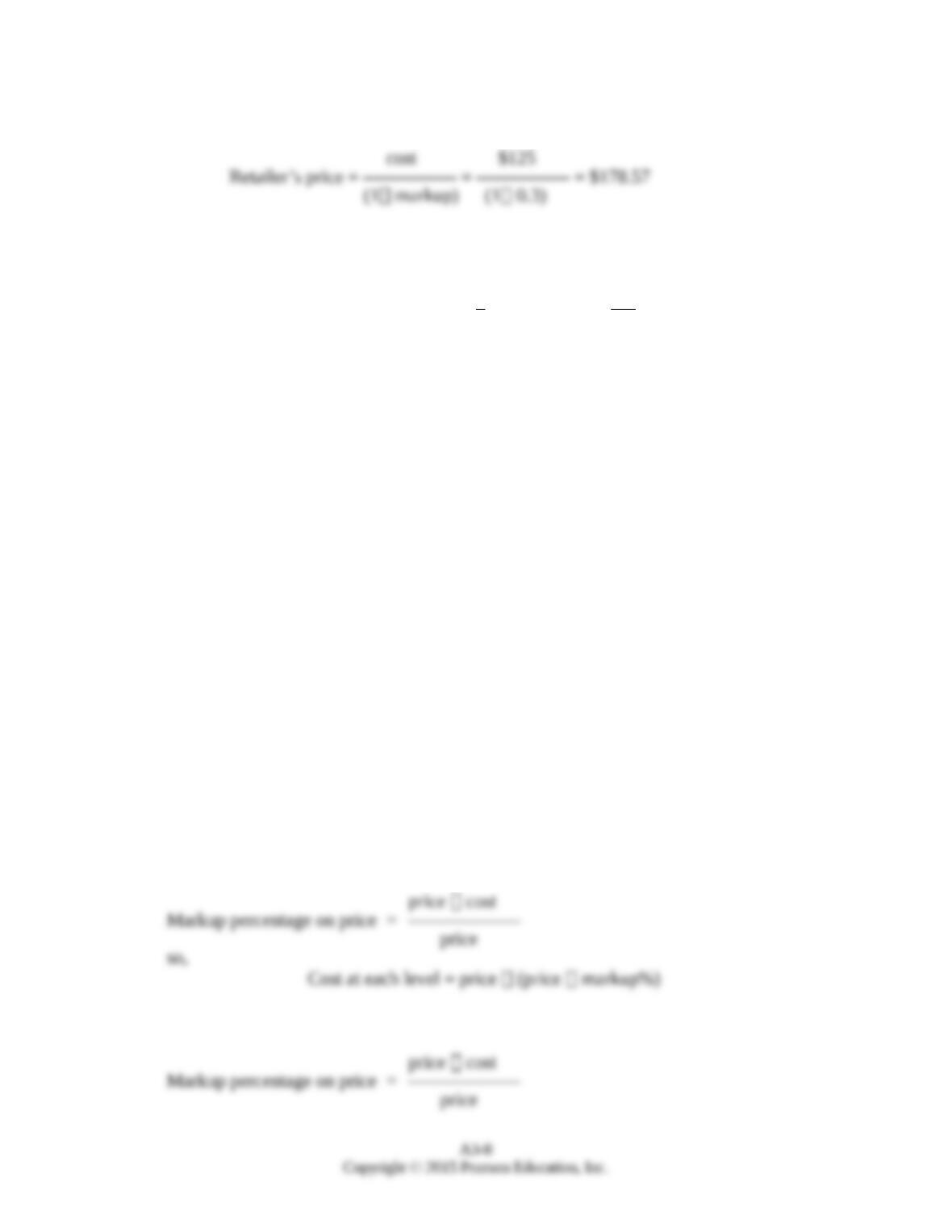
4. A bicycle manufacturer has a unit cost of $75 and wishes to achieve a margin of 40%
based on selling price. If the manufacturer sells directly to a retailer who then adds a
set margin of 30% based on selling price, determine the retail price charged to
consumers.
Answer:
price cost
Markup percentage on price = ——————
price
5. Complete the blanks in the following markup chain. All markup percentages are
based on selling prices.
$ %
Retail selling price $4.00
Retail markup ____________ 50%
Retail cost ____________
Wholesale selling price ____________
Wholesale markup ____________ __________
Wholesale cost ____________
Manufacturer’s selling price ____________
Manufacturer’s markup ____________ 60%
Manufacturer’s cost $0.48
Answer:
To complete this chain, students need the following equations:
Dollar markup = selling price cost
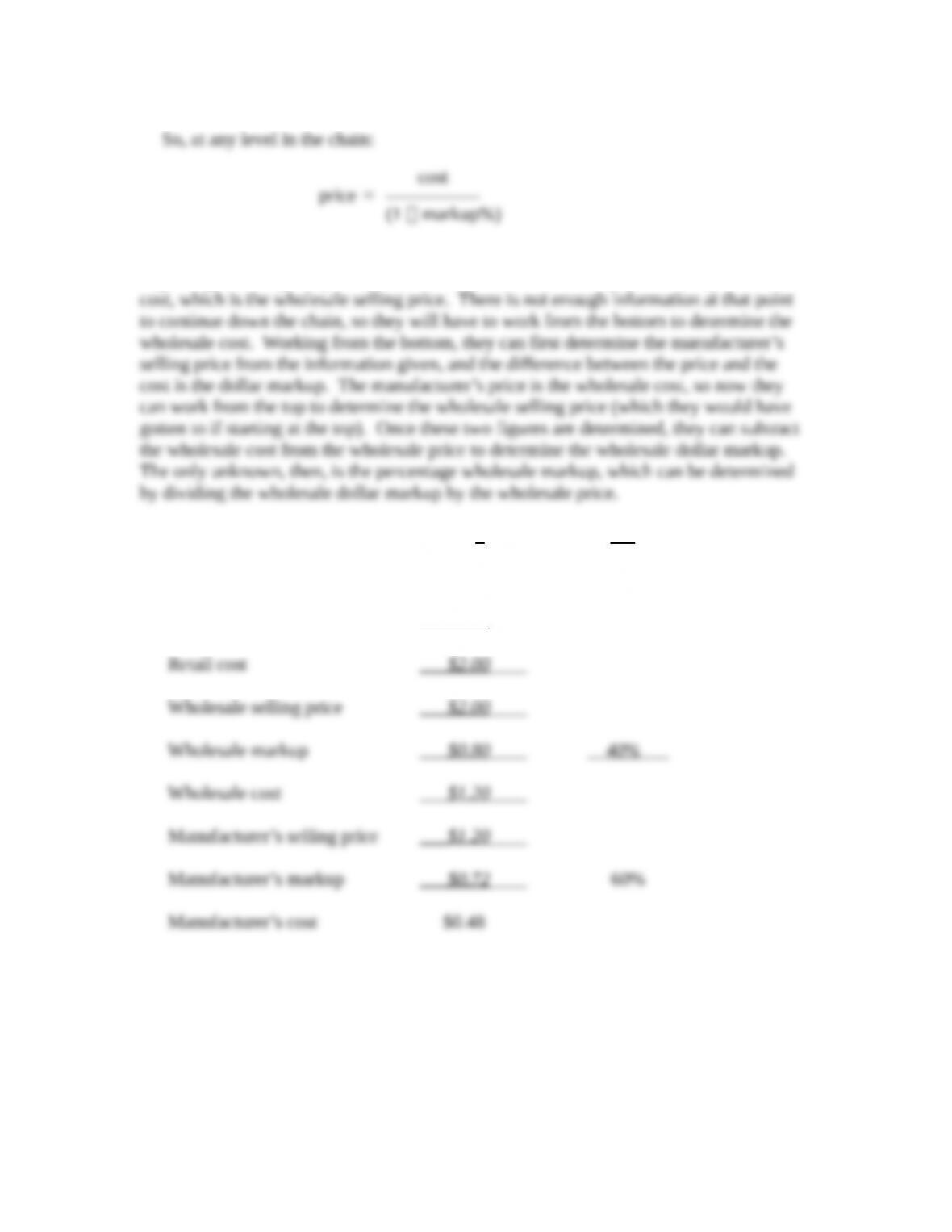
To fill in the blanks on this chain, students can begin either at the top or the bottom. If
beginning at the top, they can determine the retail dollar markup, followed by the retail
$ %
Retail selling price $4.00
Retail markup ___$2.00____ 50%
6. Note: Only use this exercise if the equations given in the teaching note were
covered. Suppose a retailer uses a markup of 40% based on price and found that his
competitor was using a markup of 50% percent based on cost and wanted to know
what this would be as a percentage of selling price. Are these equivalent?
Copyright © 2015 Pearson Education, Inc.
A3-9
Answer:
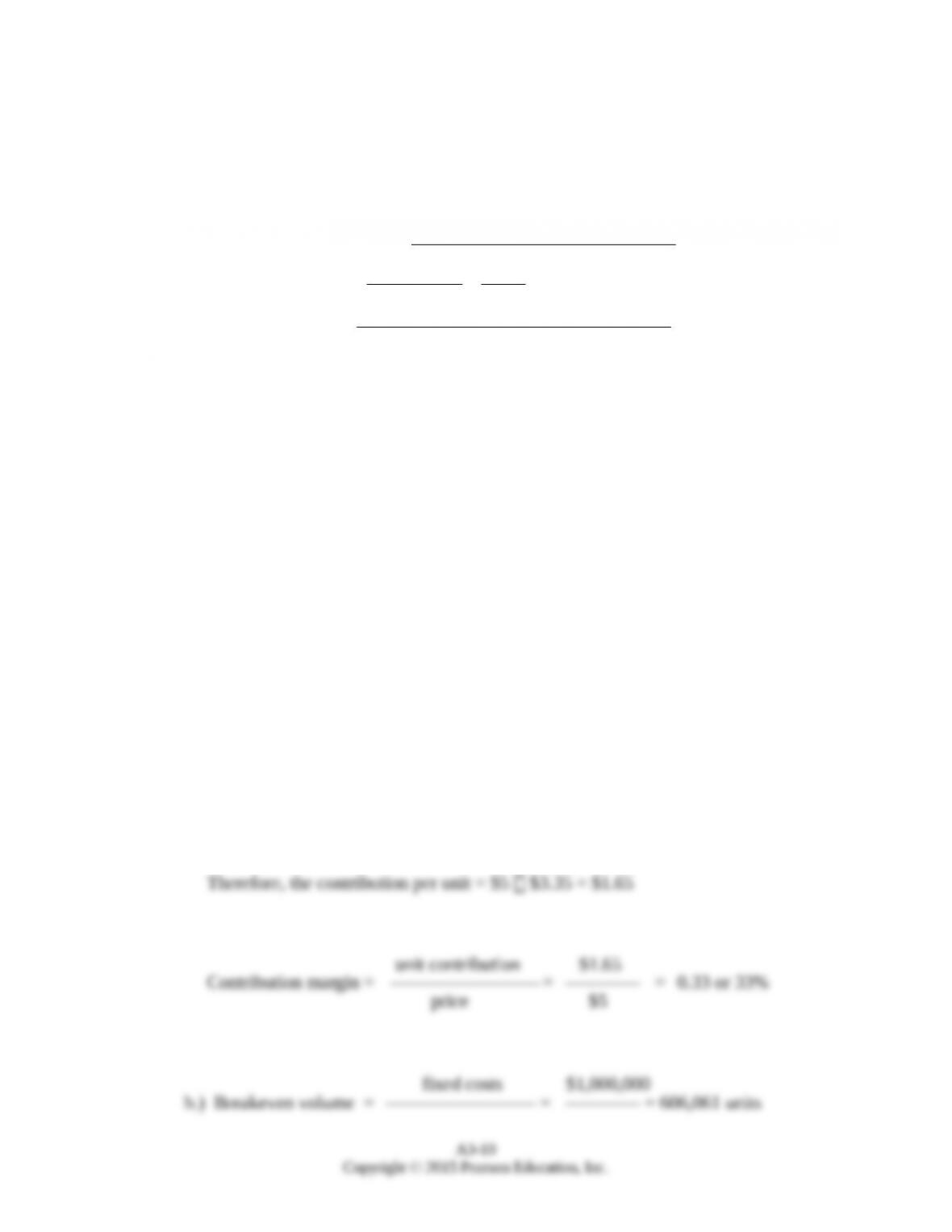
The equations given in the teaching note are:
The calculation is:
These are not equivalent as the first retailer is using a 40% markup based on price, but the
competitor is using a lower markup based on price (33.3%).
7. 2Seasons, Inc. manufactures holiday wreaths and sells them directly to retailers for
$5.00. The manufacturer’s cost information is as follows:
Variable cost $3.35/wreath
Advertising and promotion $300,000
Overhead $700,000
Calculate the following:
a. contribution per unit and contribution margin for the manufacturer
b. break-even volume in units and dollars
c. volume in units and dollar sales necessary if Seasons’s profit goal is
$500,000
d. net profit if 6 million wreaths are sold
Answer:
a.) Unit contribution = selling price unit variable cost
price sellingon percentage markup – 100%
price sellingon percentage markup
=cost on percentage Markup
coston percentage markup + 100%
coston percentage markup
= price sellingon percentage Markup
%3.33 =
0%51
0%5
=
0%5 + 100%
0%5
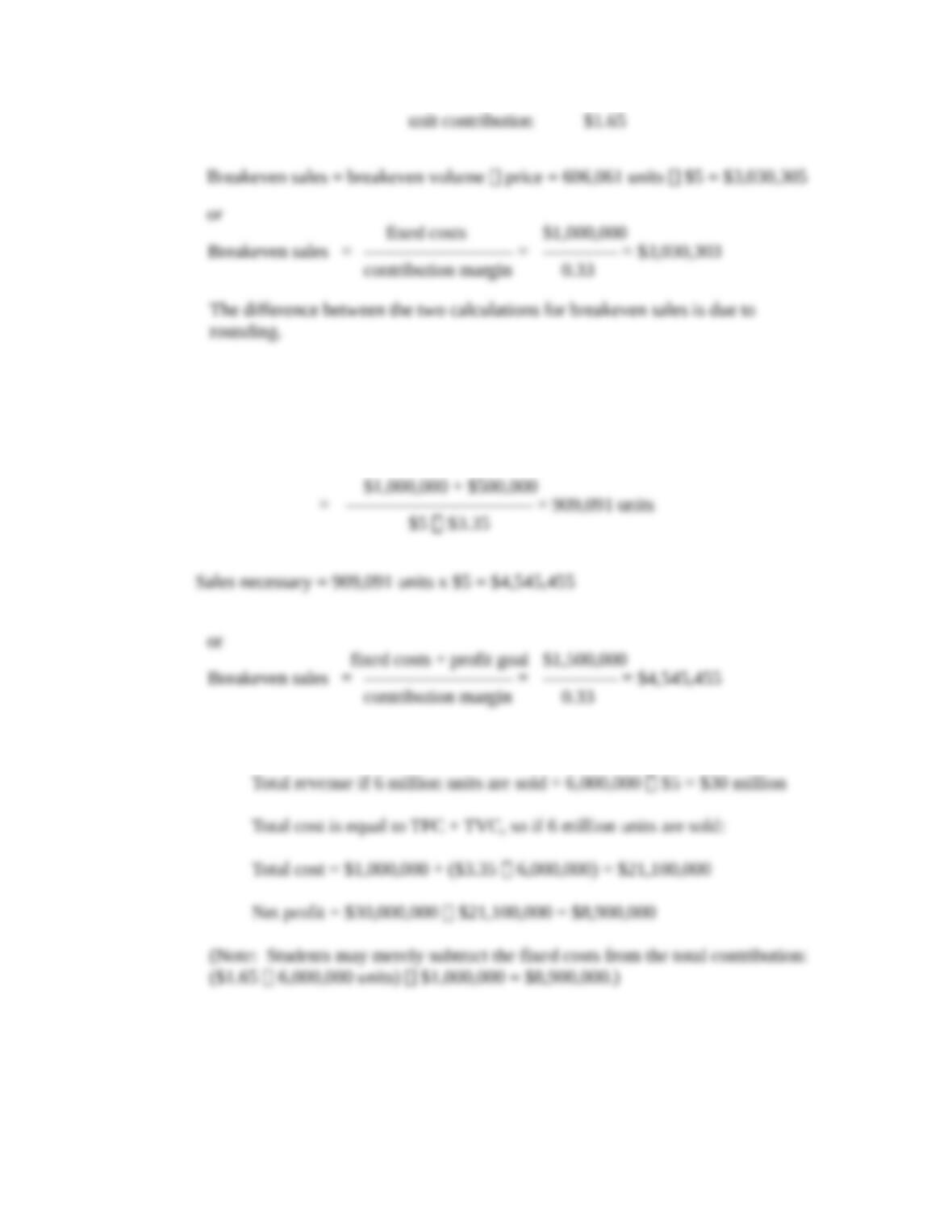
fixed costs + profit goal
c.) Unit volume = ———————————
price variable cost
d.) Net profit = total revenue total costs
Copyright © 2015 Pearson Education, Inc.
A3-11