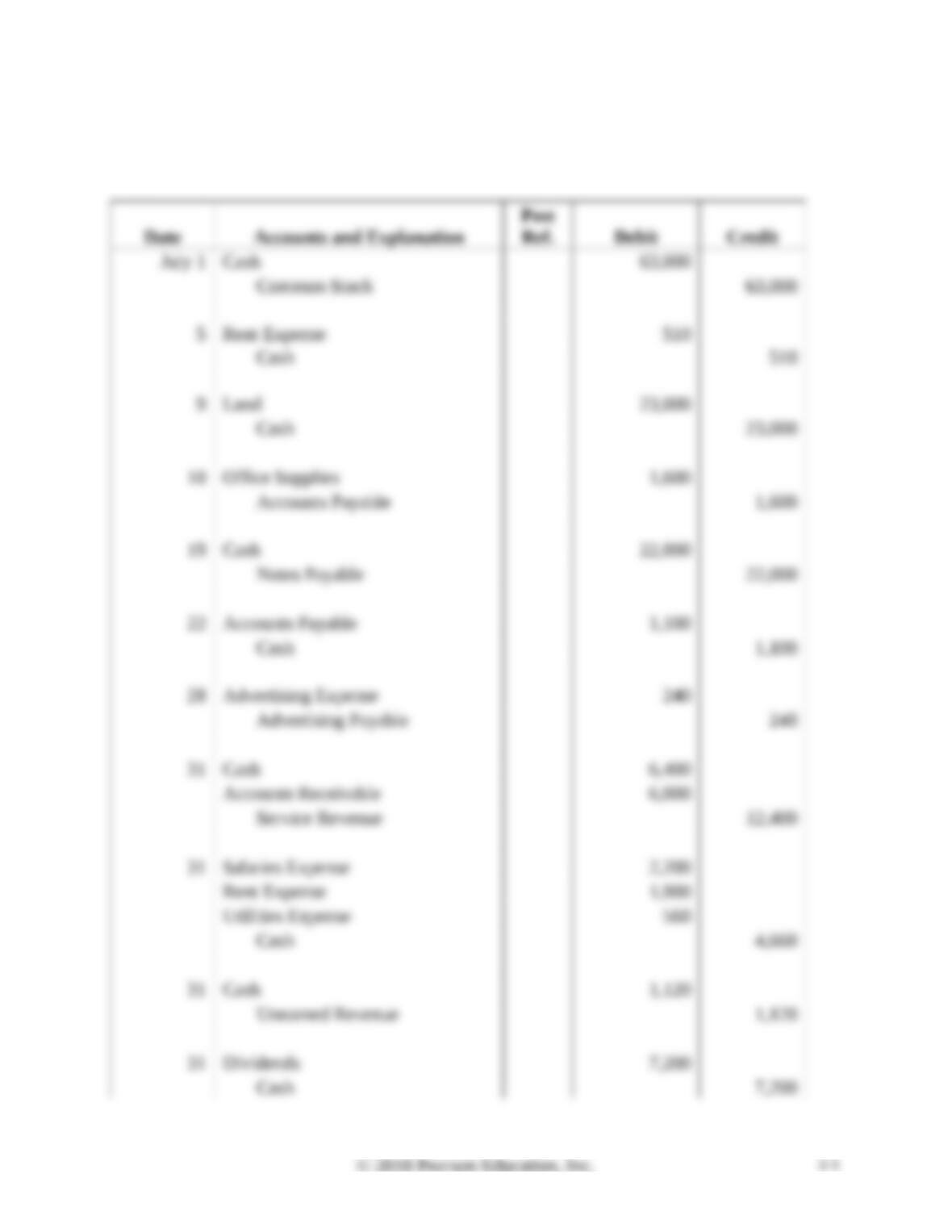
SOLUTION
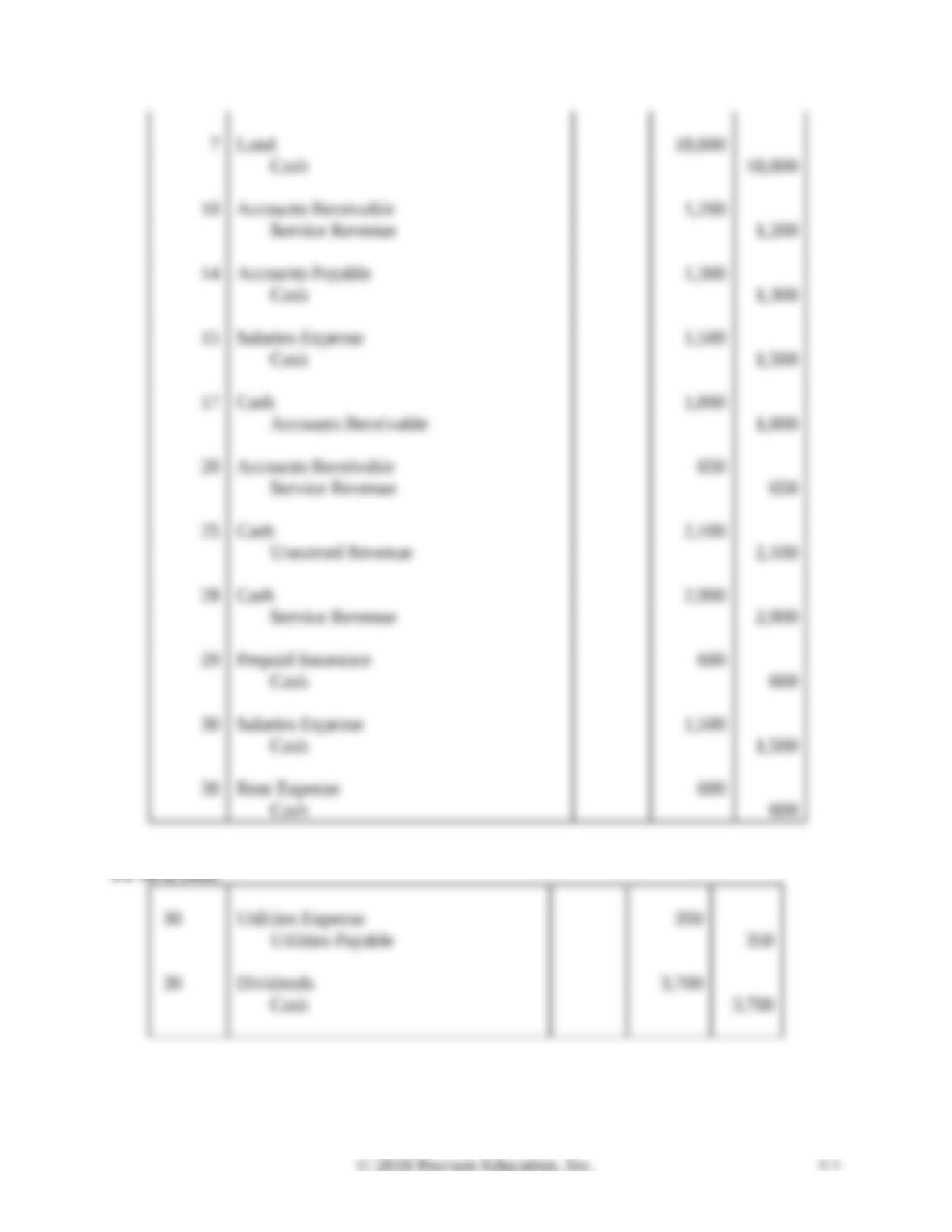
Requirement 1
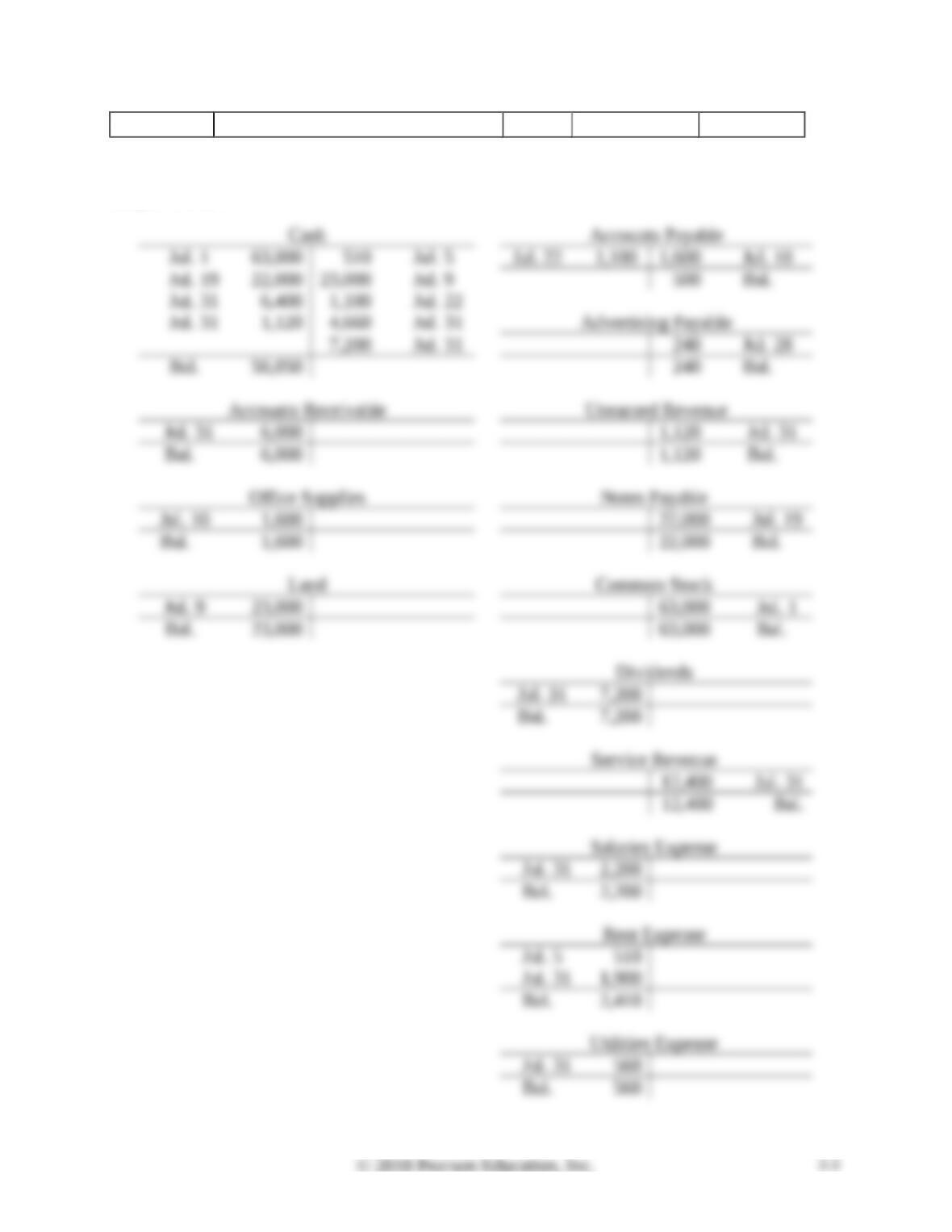
P2-29A, cont.
Requirement 2
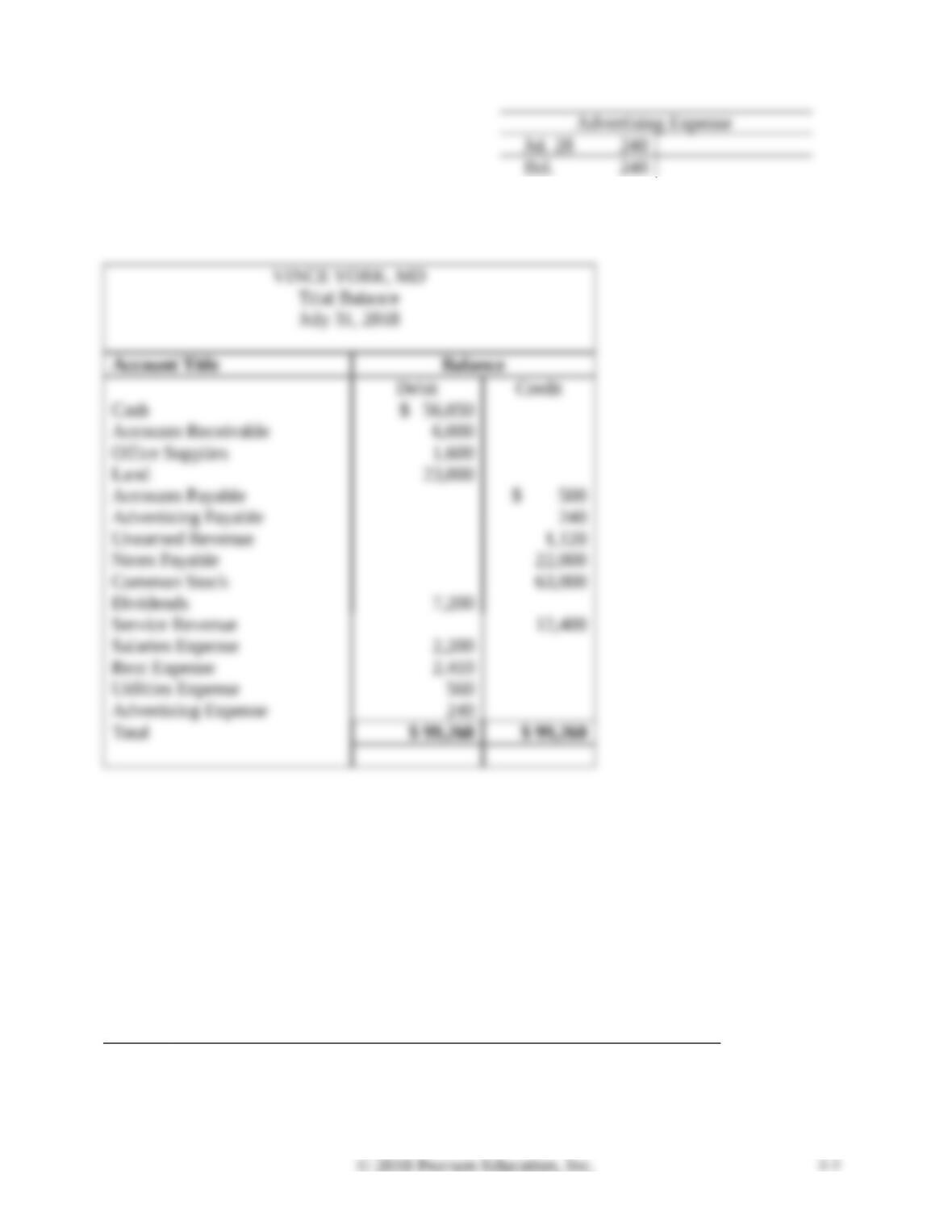
P2-29A, cont.
Requirement 3
P2-30A Journalizing transactions, posting journal entries to T-accounts, and preparing a
trial balance
Learning Objectives 3, 4
4. Total Debits $58,300
Ann Simpson started her practice as a design consultant on September 1, 2018. During the first
month of operations, the business completed the following transactions:
Sep. 1 Received $48,000 cash and issued common stock to Simpson.
4 Purchased office supplies, $1,200, and furniture, $1,300, on account.
6 Performed services for a law firm and received $1,900 cash.
7 Paid $18,000 cash to acquire land to be used in operations.
10 Performed services for a hotel and received its promise to pay the $1,200 within one
week.
14 Paid for the furniture purchased on September 4 on account.
15 Paid assistant’s semimonthly salary, $1,500.
17 Received cash on account, $1,000.
20 Prepared a design for a school on account, $650.
25 Received $2,100 cash for design services to be performed in October.
28 Received $2,900 cash for consulting with Plummer & Gordon.
29 Paid $600 cash for a 12-month insurance policy starting on October 1.
30 Paid assistant’s semimonthly salary, $1,500.
30 Paid monthly rent expense, $600.
30 Received a bill for utilities, $350. The bill will be paid next month.
30 Paid cash dividends of $3,700.
Requirements
1. Record each transaction in the journal using the following account titles: Cash; Accounts
Receivable; Office Supplies; Prepaid Insurance; Land; Furniture; Accounts Payable; Utilities
Payable; Unearned Revenue; Common Stock; Dividends; Service Revenue; Salaries
Expense; Rent Expense; and Utilities Expense. Explanations are not required.
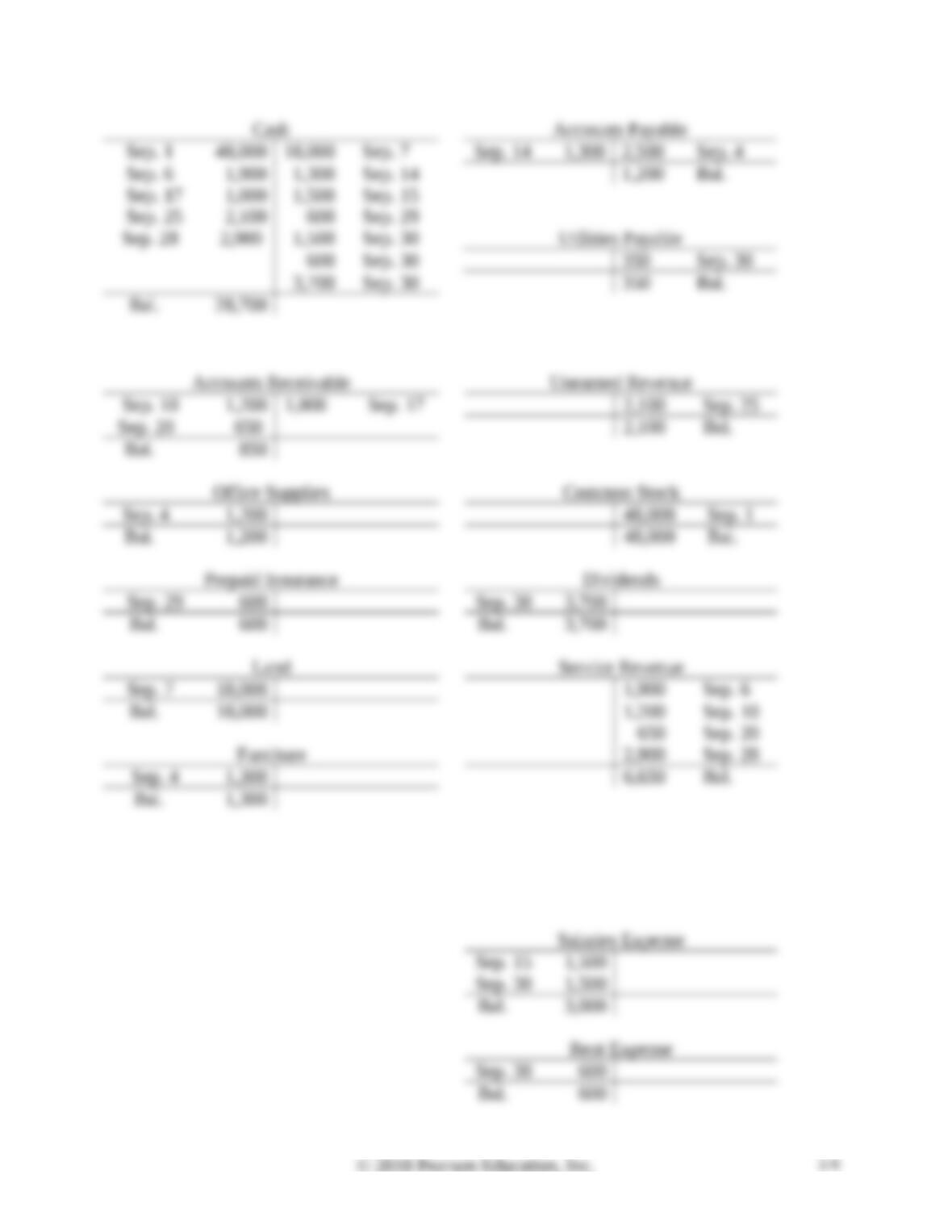
2. Open a T-account for each of the accounts.
3. Post the journal entries to the T-accounts, using transaction dates as posting references in the
ledger accounts. Label the balance of each account Bal.
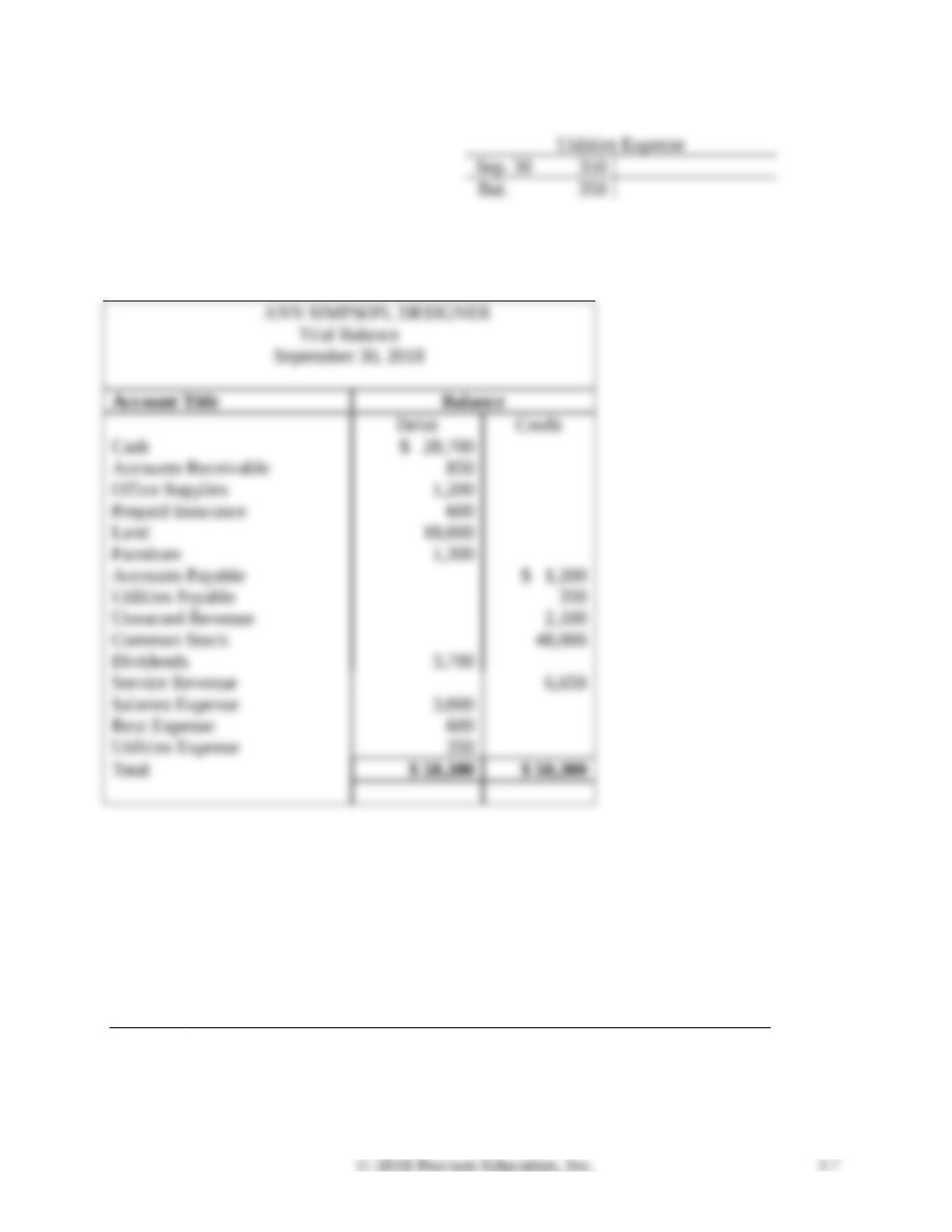
4. Prepare the trial balance of Ann Simpson, Designer, as of September 30, 2018.
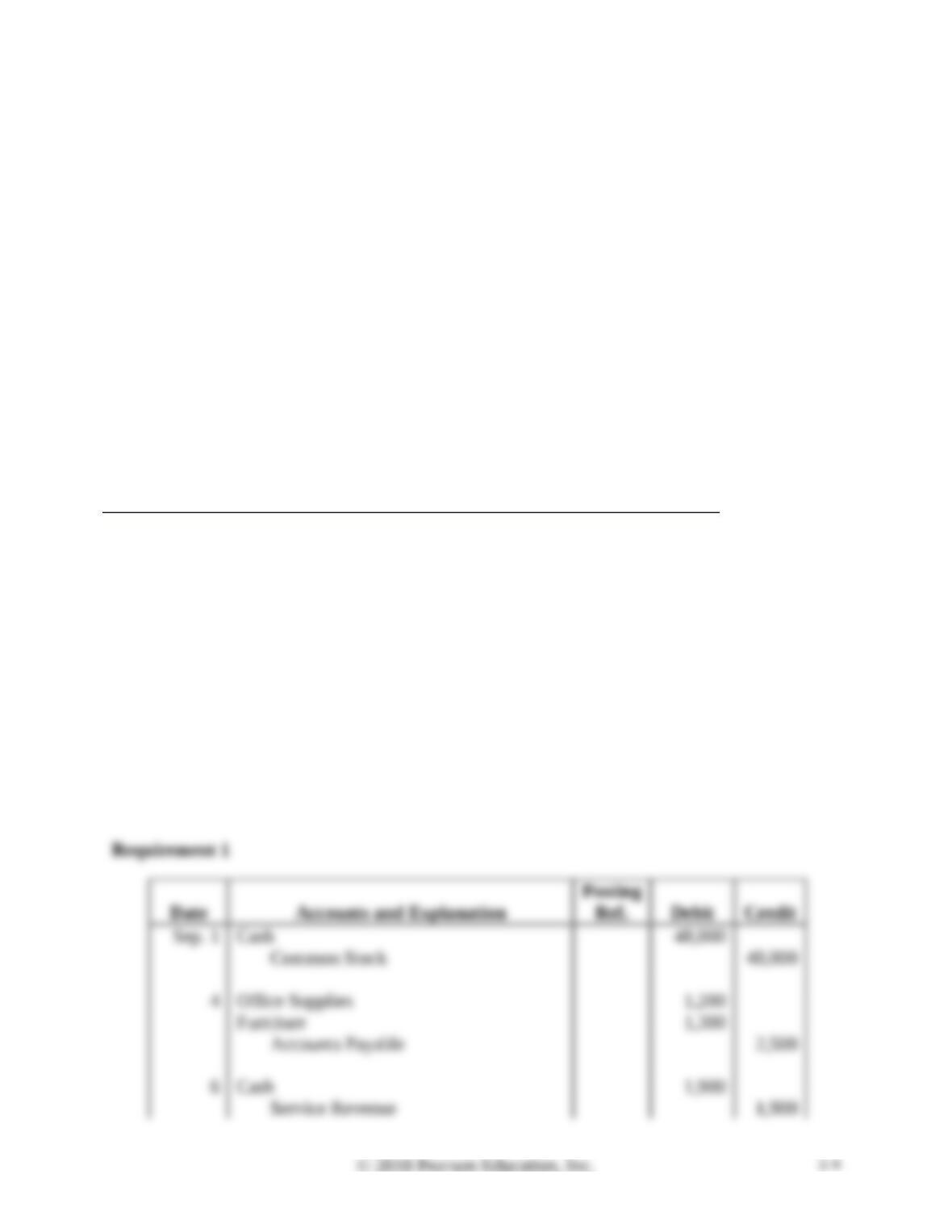
SOLUTION
Requirements 2 and 3
P2-30A, cont.
Requirement 4
P2-31A Journalizing transactions, posting journal entries to four-column accounts, and
preparing a trial balance
Learning Objectives 3, 4
3. Cash Balance $50,160
Terrence Murphy opened a law office on January 1, 2018. During the first month of operations,
the business completed the following transactions:
Jan. 1 Murphy contributed $78,000 cash to the business, Terrence Murphy, Attorney. The
business issued common stock to Murphy.
3 Purchased office supplies, $600, and furniture, $1,700, on account.

4 Performed legal services for a client and received $1,000 cash.
7 Purchased a building with a market value of $130,000, and land with a market value of
$25,000. The business paid $25,000 cash and signed a note payable to the bank for the
remaining amount.
11 Prepared legal documents for a client on account, $400.
15 Paid assistant’s semimonthly salary, $1,120.
16 Paid for the office supplies purchased on January 3 on account.
18 Received $2,700 cash for helping a client sell real estate.
19 Defended a client in court and billed the client for $1,800.
25 Received a bill for utilities, $600. The bill will be paid next month.
29 Received cash on account, $1,500.
30 Paid $1,200 cash for a 12-month insurance policy starting on February 1.
30 Paid assistant’s semimonthly salary, $1,120.
31 Paid monthly rent expense, $1,800.
31 Paid cash dividends of $2,200.
Requirements
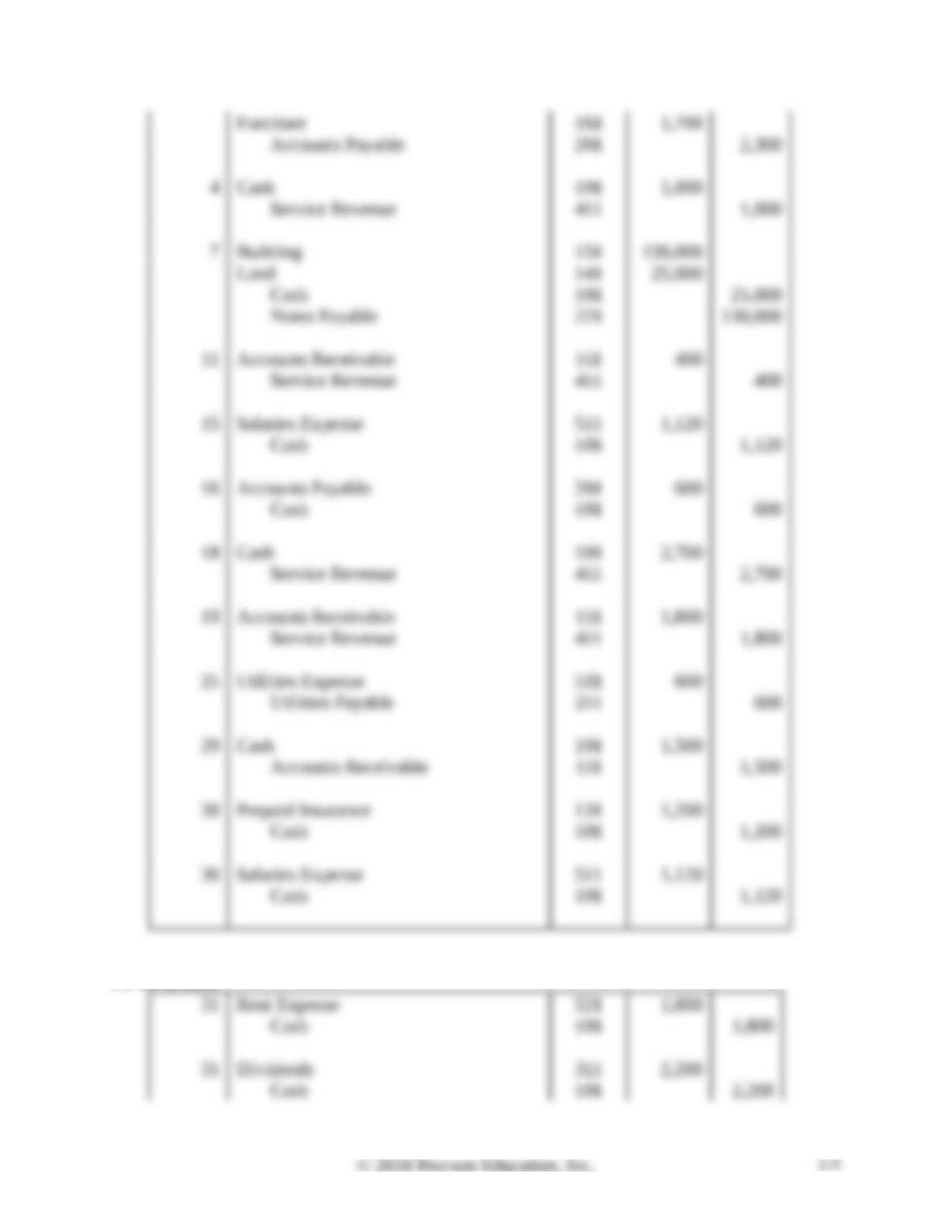
1. Record each transaction in the journal, using the following account titles: Cash; Accounts
Receivable; Office Supplies; Prepaid Insurance; Land; Building; Furniture; Accounts
Payable; Utilities Payable; Notes Payable; Common Stock; Dividends; Service Revenue;
Salaries Expense; Rent Expense; and Utilities Expense. Explanations are not required.
2. Open the following four-column accounts including account numbers: Cash, 101; Accounts
Receivable, 111; Office Supplies, 121; Prepaid Insurance, 131; Land, 141; Building, 151;
Furniture, 161; Accounts Payable, 201; Utilities Payable, 211; Notes Payable, 221; Common
Stock, 301; Dividends, 311; Service Revenue, 411; Salaries Expense, 511; Rent Expense,
521; and Utilities Expense, 531.
3. Post the journal entries to four-column accounts in the ledger, using dates, account numbers,
journal references, and posting references. Assume the journal entries were recorded on page
1 of the journal.
4. Prepare the trial balance of Terrence Murphy, Attorney, at January 31, 2018.
SOLUTION
Requirements 1 and 3
P2-31A, cont.
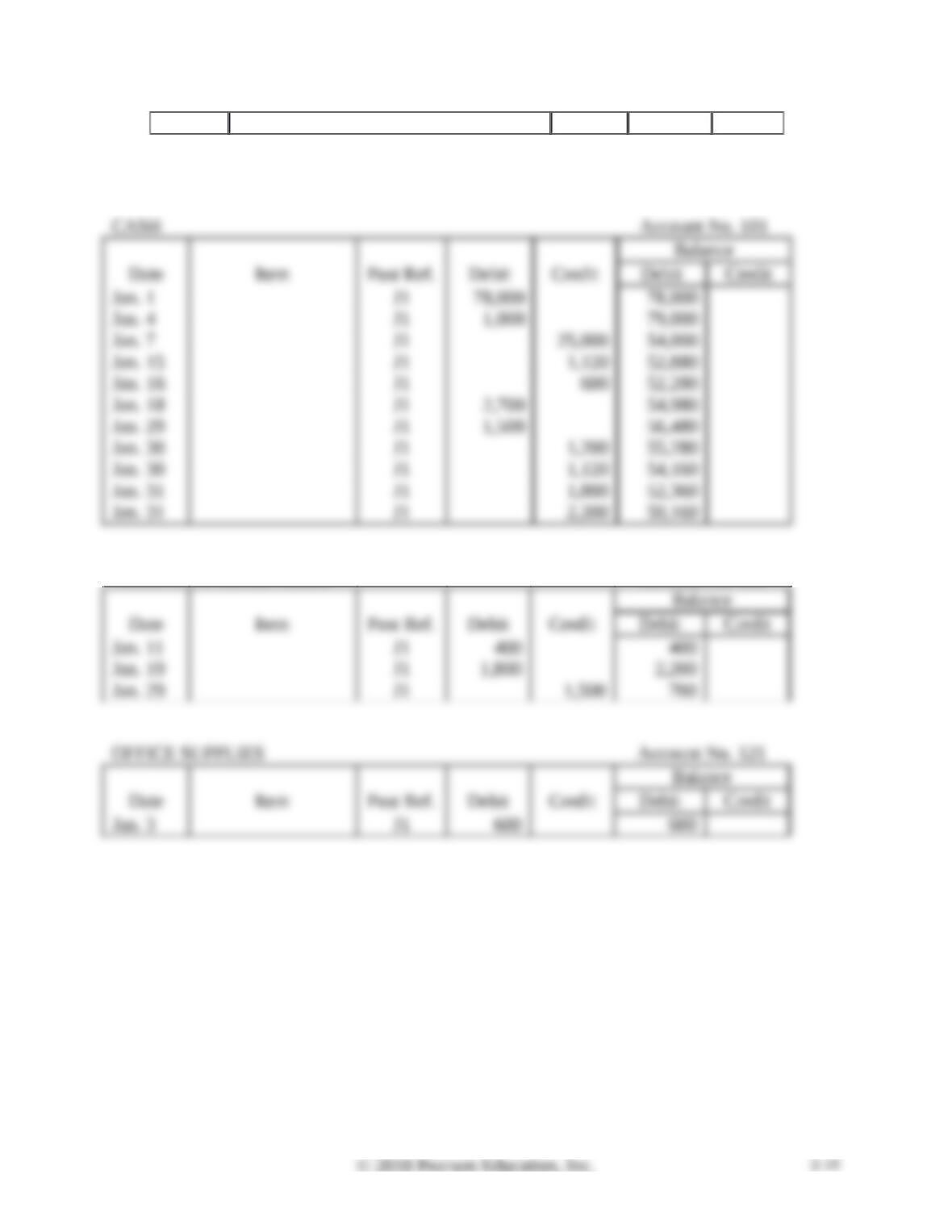
Requirements 2 and 3
ACCOUNTS RECEIVABLE Account No. 111