b. Suggest ways to improve the Kowal Manufacturing Company’s internal controls
over hiring and payroll processing. (CPA Examination, adapted)
1. A system of advice forms should be installed so that new hires, terminations, rate
2. Before applicants are hired, their backgrounds should be investigated by
3. The supply of blank time cards should be removed. At the beginning of each week
4. The foreman should collect the time cards at the end of the week, approve them,
5. The payroll checks should be distributed to the workers by a responsible person
In addition, the following changes should be made because the problem does not state
that these procedures are being followed:
If the Company has a cost system that requires the workers to prepare production
The payroll checks should be prenumbered to control their issuance.
A responsible person other than the chief accountant and the payroll clerks should
From time to time, an officer of the Company should witness a payroll
15-1
©2018 Pearson Education, Inc.
Accounting Information Systems
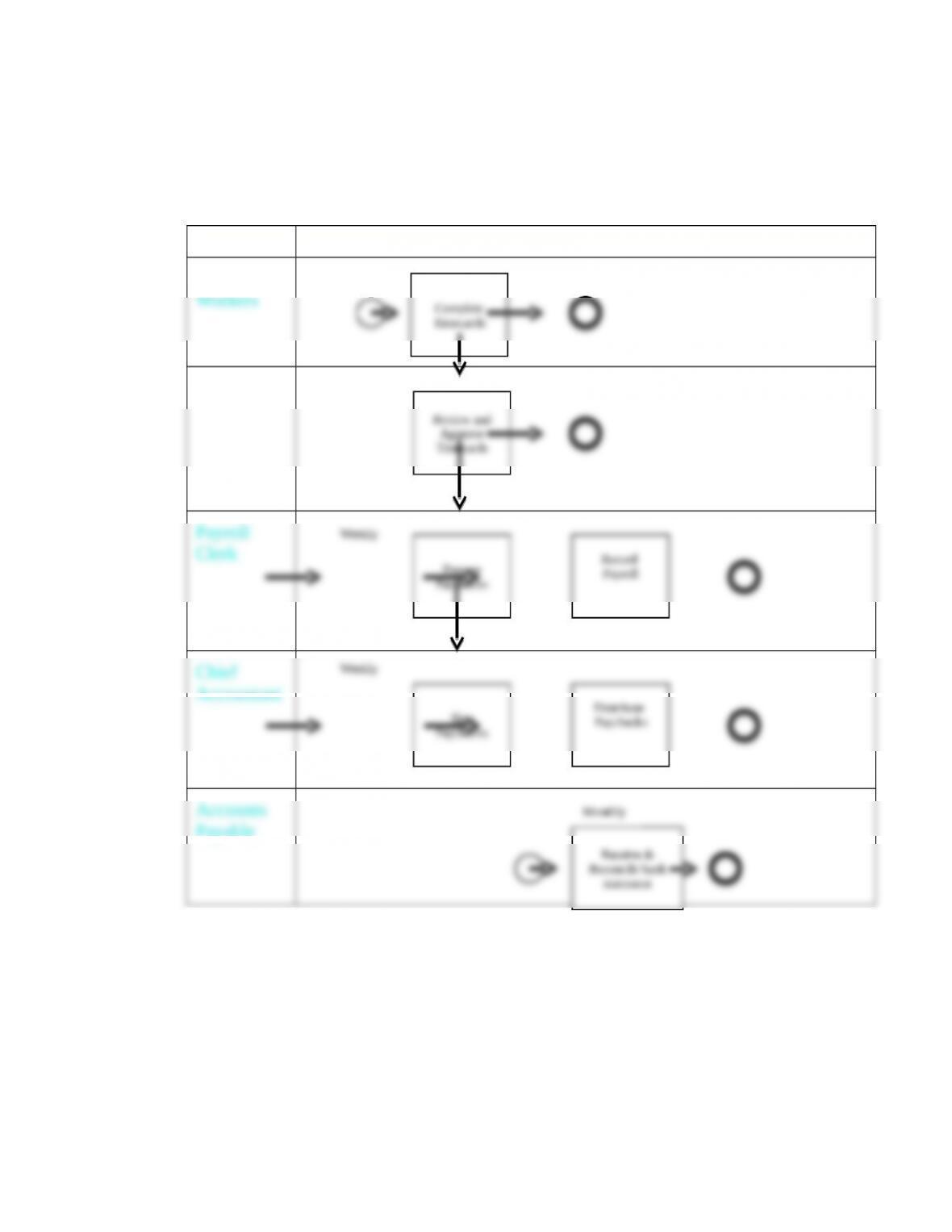
c. Draw a BPMN diagram that shows Kowal Manufacturing Company’s payroll
process redesigned to implement your suggestions in step b.
Specific solutions will vary, depending upon what weaknesses the student identified in
step b. The following diagram incorporates all suggestions except for HR’s role.
Employee Activity
Factory
Workers
Supervisor
Accounts
Payable
15-2
©2018 Pearson Education, Inc.
Receive &
Reconcile bank
statement
Monthly
Complete
Timecards
Weekly
Paychecks
Accounting Information Systems
15.5 Arlington Industries manufactures and sells engine parts for large industrial
equipment. The company employs over 1,000 workers for three shifts, and most
employees work overtime when necessary. Figure 15-10 depicts the procedures
followed to process payroll. Additional information about payroll procedures
follows:
The HRM department determines the wage rates of all employees. The process
begins when a form authorizing the addition of a new employee to the payroll
master file is sent to the payroll coordinator for review and approval. Once the
information about the new employee is entered in the system, the computer
automatically calculates the overtime and shift differential rates for that
employee.
A local accounting firm provides Arlington with monthly payroll tax updates,
which are used to modify the tax rates.
Employees record time worked on time cards. Every Monday morning the
previous week’s time cards are collected from a bin next to the time clock, and
new time cards are left for employees to use. The payroll department manager
reviews the time cards to ensure that hours are correctly totaled; the system
automatically determines if overtime has been worked or a shift differential is
required.
The payroll department manager performs all the other activities depicted in
Figure 15-10
The system automatically assigns a sequential number to each payroll check. The
checks are stored in a box next to the printer for easy access. After the checks are
printed, the payroll department manager uses an automatic check-signing
machine to sign the checks. The signature plate is kept locked in a safe. After the
checks have been signed, the payroll manager distributes the paychecks to all
first-shift employees. Paychecks for the other two shifts are given to the shift
supervisor for distribution.
The payroll master file is backed up weekly, after payroll processing is finished.
(CMA Examination, adapted)
15-3
©2018 Pearson Education, Inc.
Accounting Information Systems
a. Identify and describe at least three weaknesses in Arlington Industries’ payroll
process.
The payroll processing system at Arlington Industries violates the principle of
There is no authorization of employees’ time cards by a supervisor or other
Time cards are not stored securely when completed on Fridays.
There is no authorization of overtime.
b. Identify and describe at least two different areas in Arlington’s payroll
processing system where controls are satisfactory.
The personnel department determines the wage rate and initiates the setup of
payroll records, which is a good example of segregation of duties.
15.6 Excel Problem
Objective: Learn how to find and correct errors in complex spreadsheets used for
payroll.
a. Read the article “Ferret Out Spreadsheet Errors” by Mark G. Simkin, in the
Journal of Accountancy (February 2004). You can find a copy online by accessing
www.aicpa.org.
b. Download the worksheet referenced in the article.
c. Enter the following erroneous data in the worksheet you downloaded in step b:
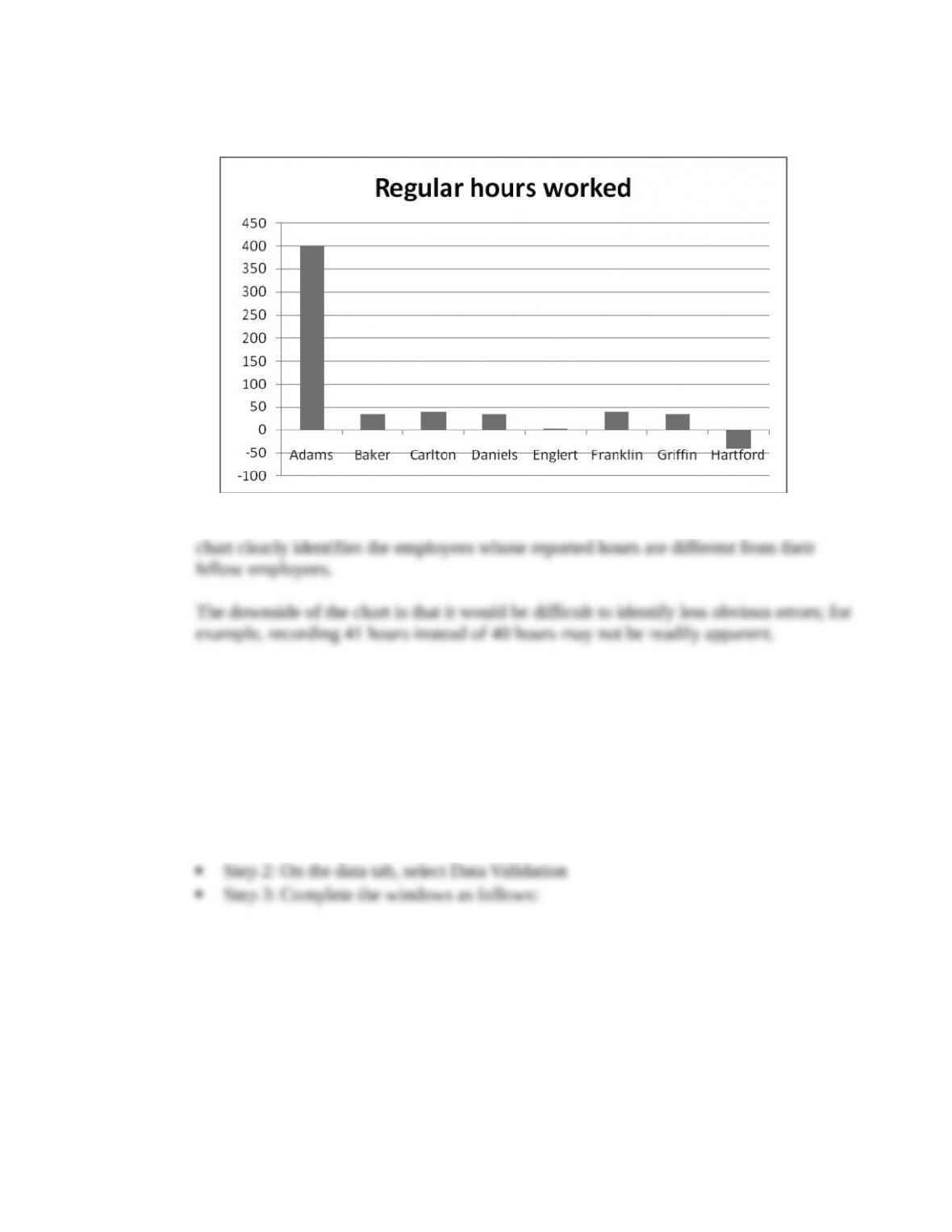
Change hours worked for Adams to 400,
Change hours worked for Englert to 4, and
Change hours worked for Hartford to –40.
Create a chart like that shown in Exhibit 2 of the article. Which of the errors are
easily found by the chart? What are the strengths and limitations of creating such
charts to detect errors? Print out your chart and save your work.
15-4
©2018 Pearson Education, Inc.
Accounting Information Systems
Note: Disable data validation on the hours worked column in order to input erroneous
data.
The errors on the time cards of Adams, Englert, and Hartfort are easily identified. The
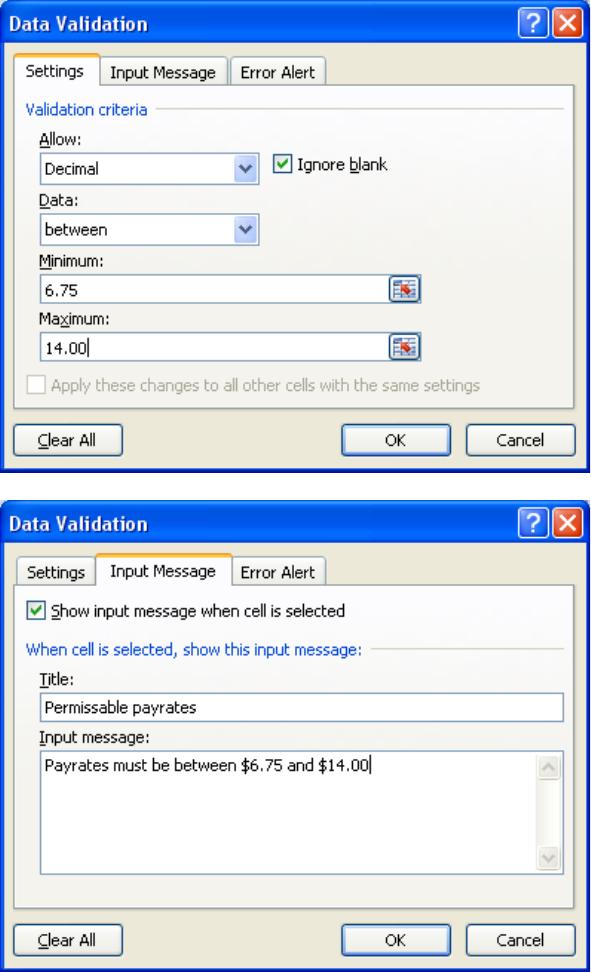
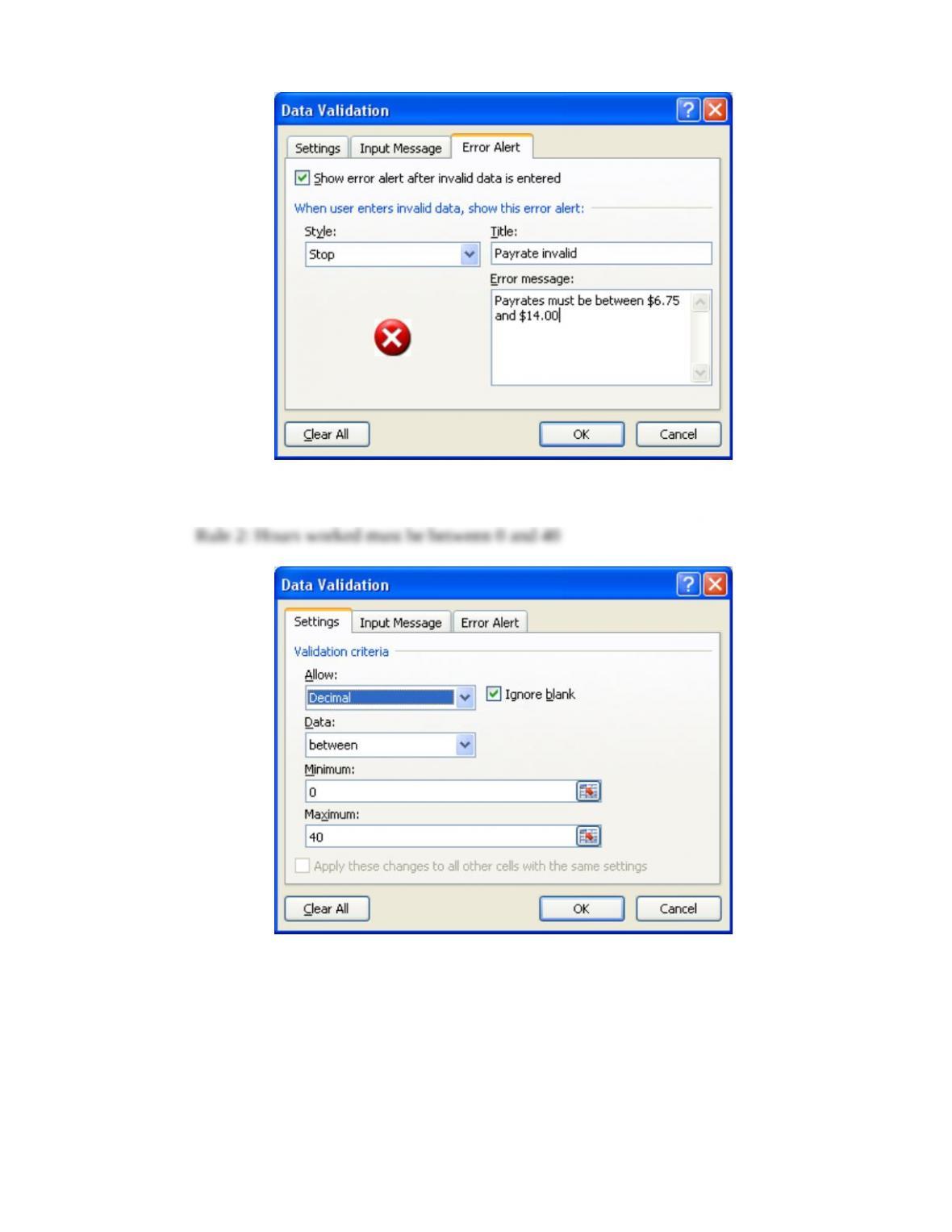
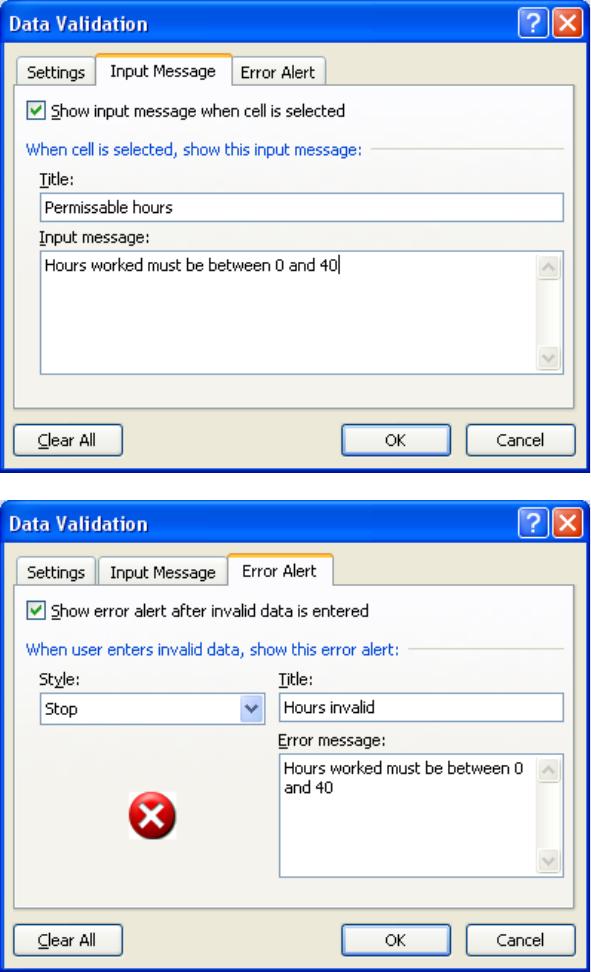
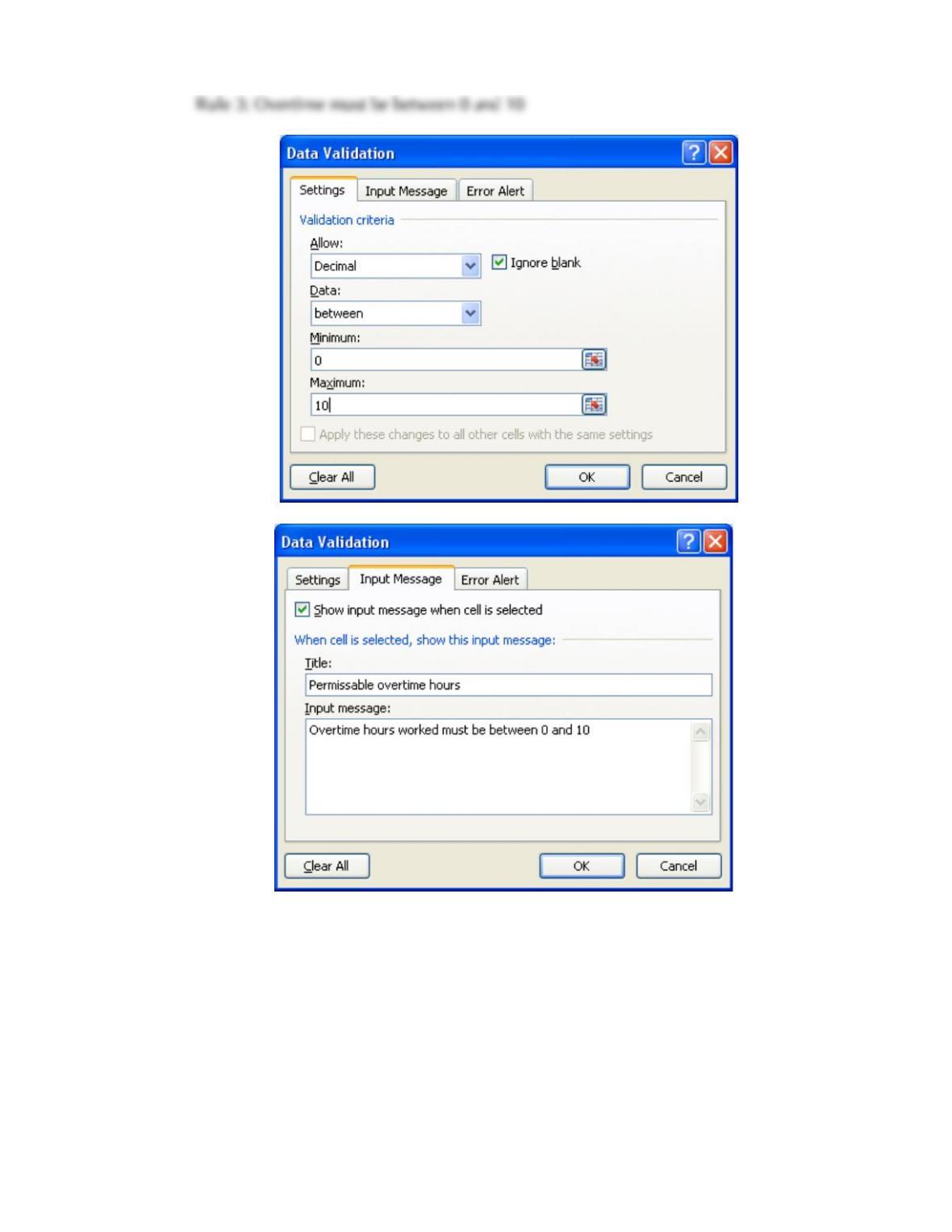
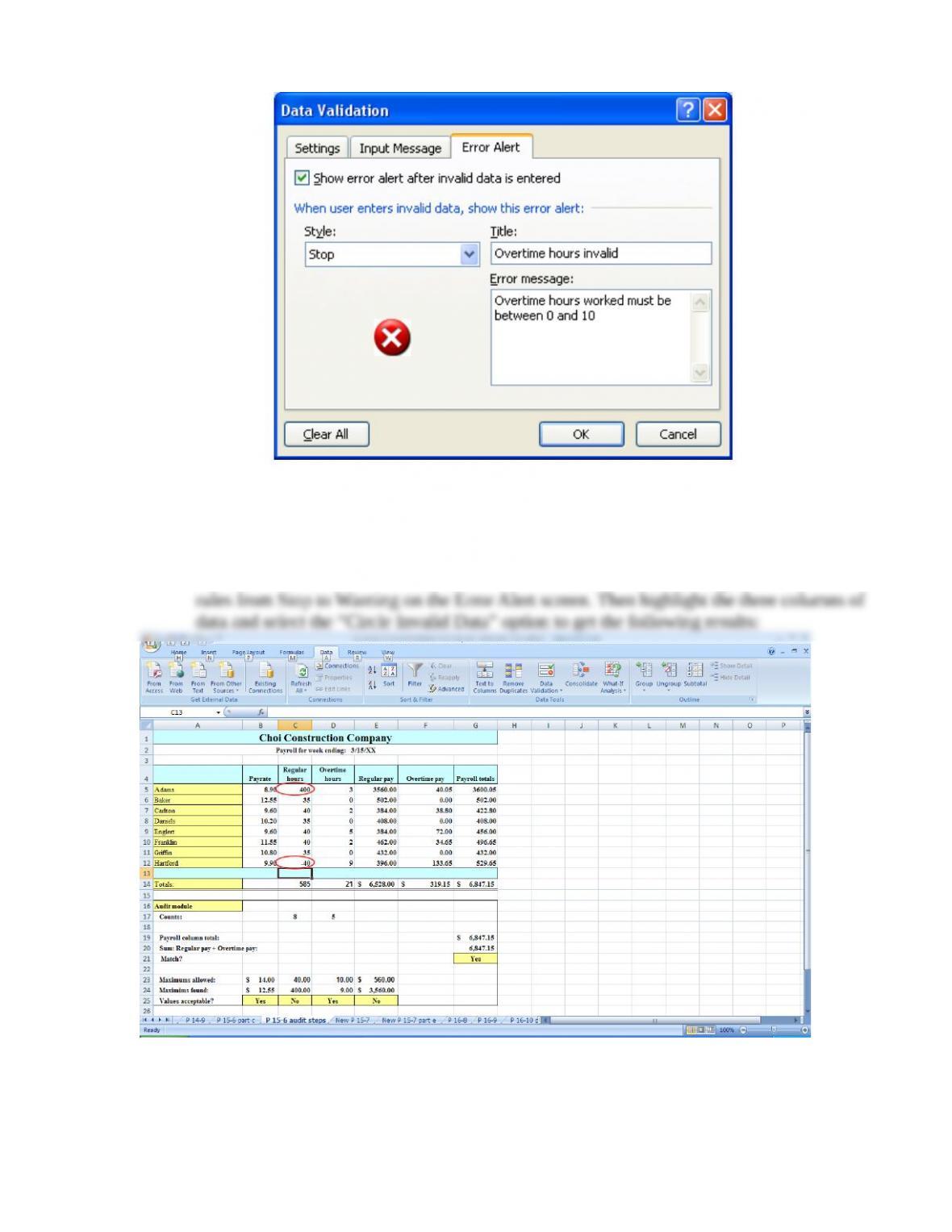
d. Create the three data validation rules described in the article (Exhibits 4–7
illustrate how to create the first rule). Print out screen shots of how you create
each rule, and save your work. (Note: The article “Block That Spreadsheet
Error” by Theo Callahan, in the Journal of Accountancy (August 2002) provides
additional examples of data validation rules.)
Rule 1: Payrates must be between $6.75 and $14.00.
Step 1: Select the relevant range of cells
15-5
©2018 Pearson Education, Inc.
Accounting Information Systems
15-6
©2018 Pearson Education, Inc.
Accounting Information Systems
15-7
©2018 Pearson Education, Inc.
Accounting Information Systems
15-8
©2018 Pearson Education, Inc.
Accounting Information Systems
15-9
©2018 Pearson Education, Inc.
Accounting Information Systems
e. Follow the instructions for using the formula auditing tool. Print out a screen
shot showing use of the tool to circle invalid data (yours should be similar to
Exhibit 9 in the article).
Note: This is now another Data Validation feature. To test it, first change all validation
15-10
©2018 Pearson Education, Inc.