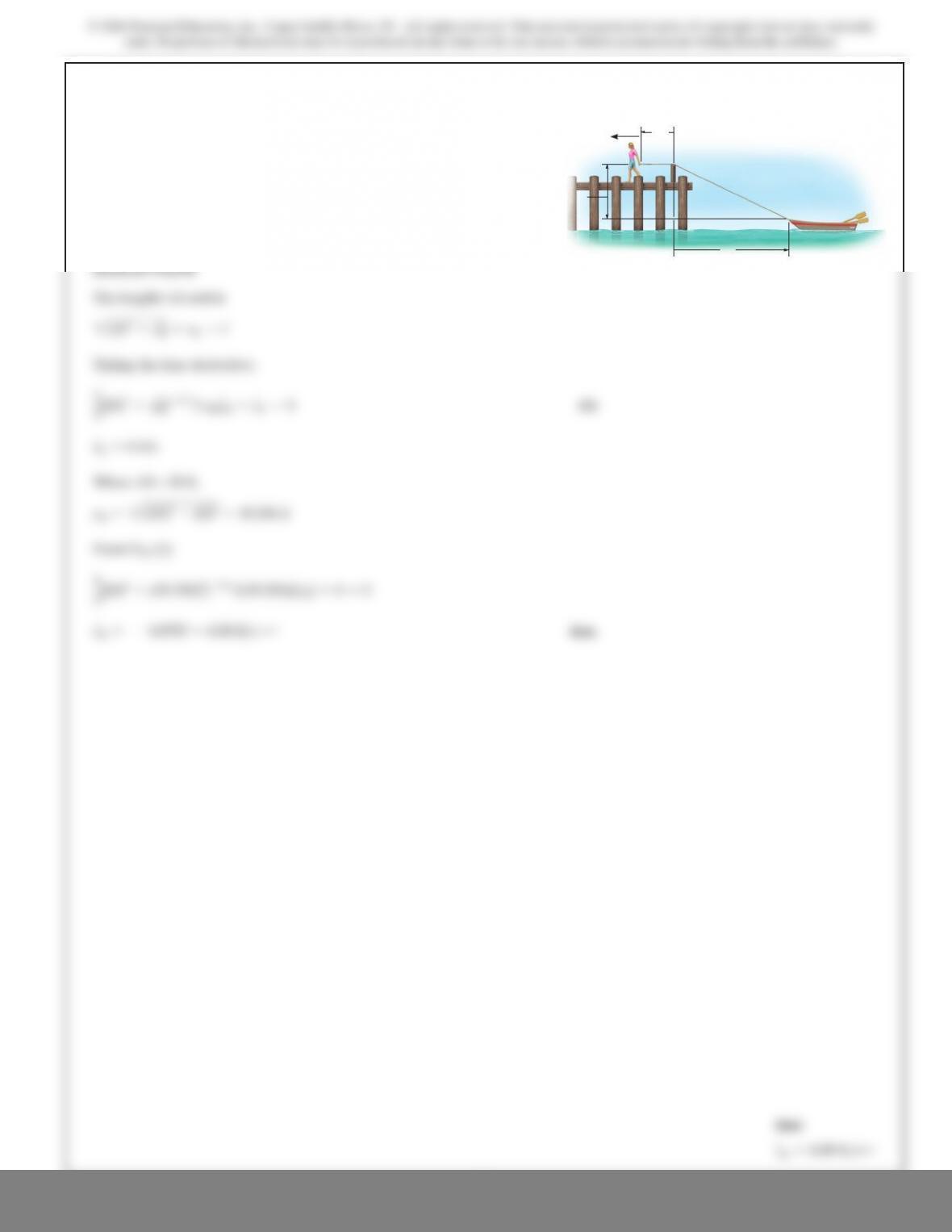
*12–212.
Taking the time derivative:
2(8)2+xB
T
h
e g
i
r
l
at Cstan
d
s near t
h
e e
d
ge of t
h
e p
i
er an
d
pu
ll
s
i
n t
h
e
rope horizontally at a constant speed of Determine
how fast the boat approaches the pier at the instant the
rope length AB is 50 ft.
6ft>s.
A
C
x
C
x
B
6ft/s
8ft
B
8ft
B
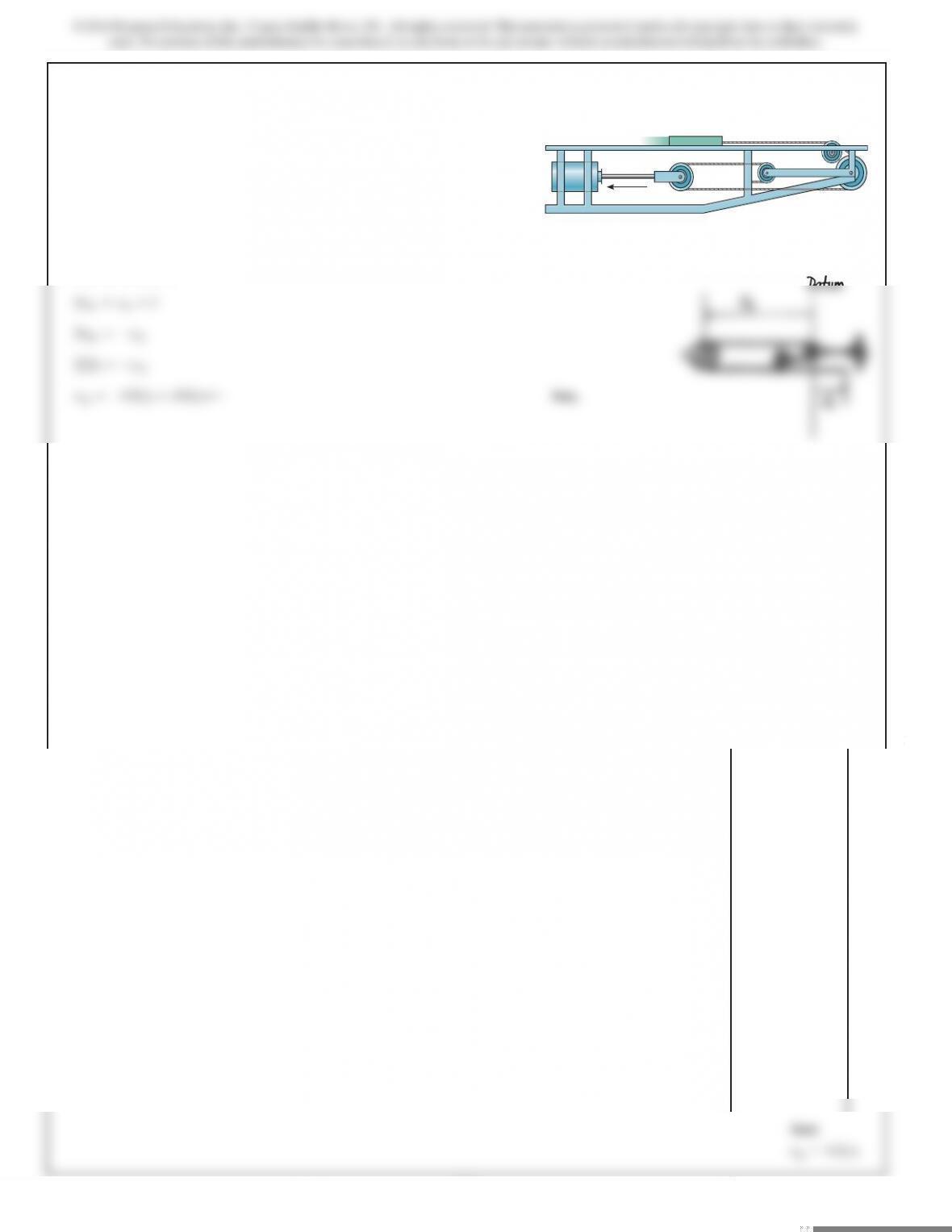
12–213.
SOLUTION
Ans.vA=-4ft>s=4ft>s;
2(2) =-vA
2vH=-vA
2sH+sA=l
If the hydraulic cylinder Hdraws in rod BC at
determine the speed of slider A.
2ft>s,
A
BC
H
223
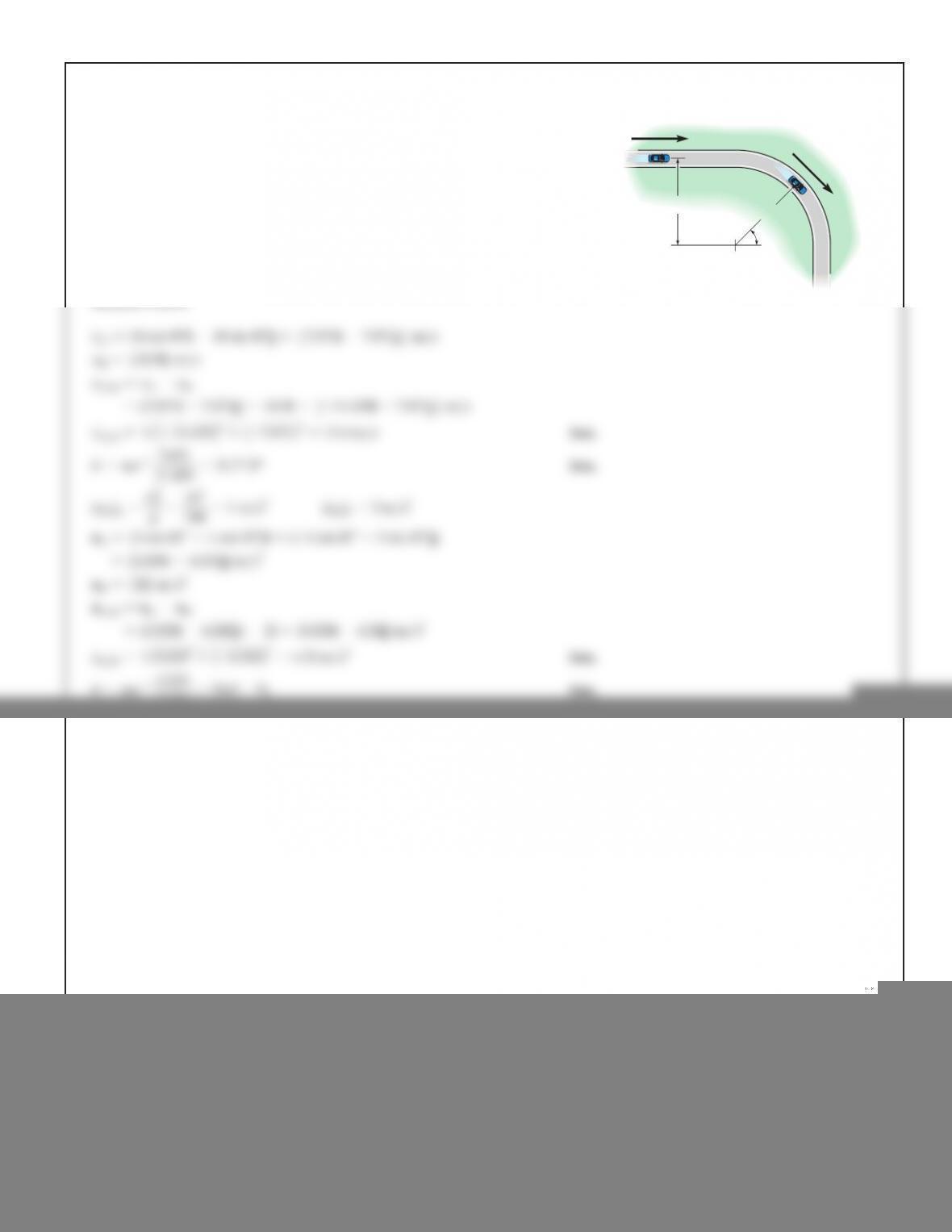
12–214.
At the instant shown, the car at A is traveling at
10 m
>
s around the curve while increasing its speed at 5 m
>
s2.
The car at B is traveling at 18.5 m
>
s along the straightaway and
increasing its speed at 2 m
>
s2. Determine the relative velocity
and relative acceleration of A with respect to B at this instant.
yB fi
18.5 m
/
s
yA fi 10 m/s
100 m
45
100 m
A
B
SOLUTION
vA=10 cos 45°i–10 sin 45°j=57.071i–7.071j6 m>s
vB={18.5i} m>s
v
A
>
B
=v
A
–v
B
=(7.071i–7.071j)–18.5i=5–11.429i–7.071j6 m>s
vA
>
B=
2
(–11.429)2+(–7.071)2=13.4 m
>
s Ans.
u=tan–1
7.071
11.429
=31.7° d Ans.
(aA)n=
vA
2
r
=
10
2
100
=1 m
>
s2 (aA)t
=
5 m
>
s
2
a
A
=(5 cos 45°–1 cos 45°)i+(–1 sin 45°–5 sin 45°)j
=
{2.828i
–
4.243j} m
>
s
2
aB
=
{2i} m
>
s
2
a
A
>
B
=a
A
–u
B
=
(2.828i
–
4.243j)
–
2i
=
{0.828i
–
4.24j} m
>
s
2
aA
>
B=
2
0.8282+(–4.243)2=4.32 m
>
s2 Ans.
u=tan–1
4.243
0.828
=79.0°c Ans.
Ans:
vA
>
B
=13.4 m>s
u
v=31.7°
d
aA
>
B=4.32 m
>
s
2
u
a=79.0°
c
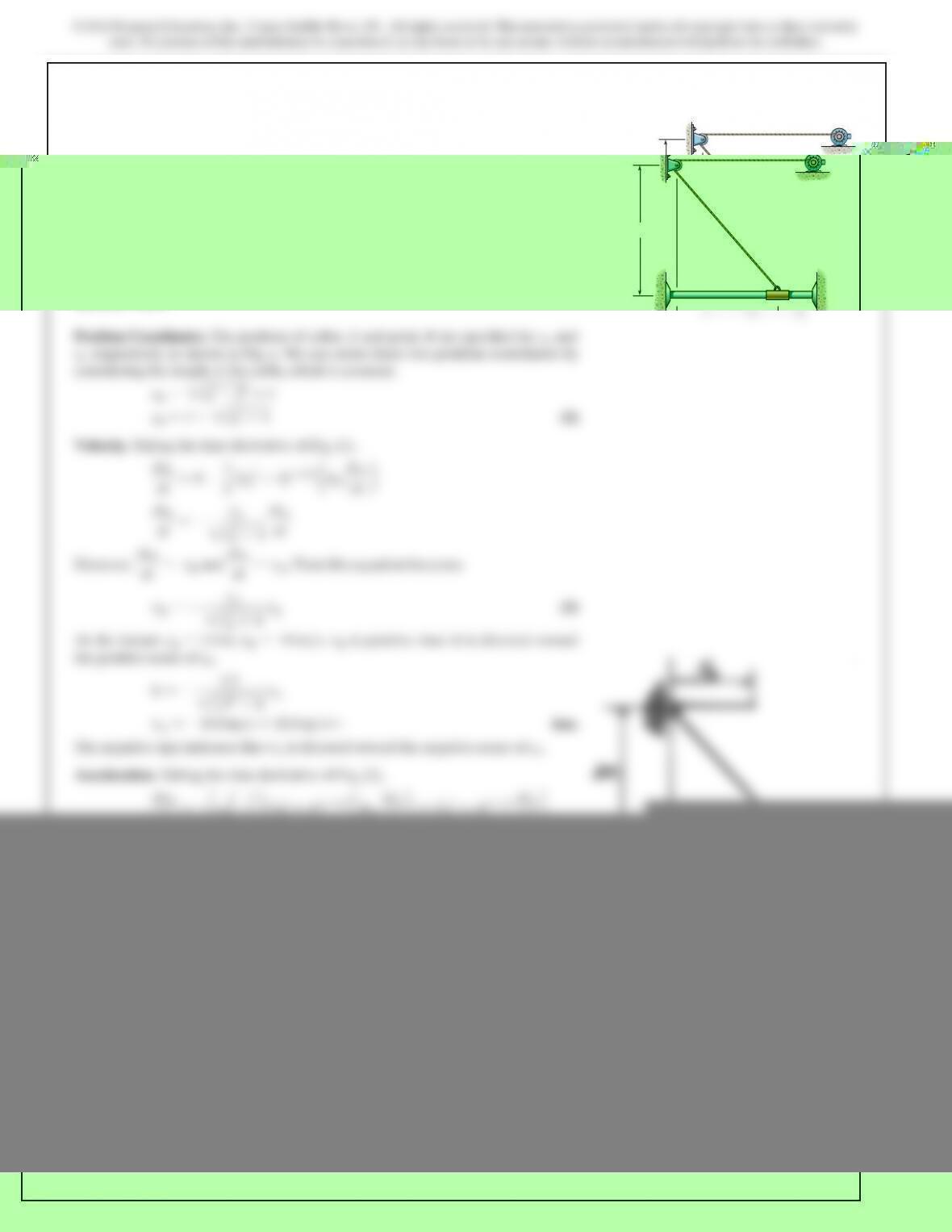
12–215.
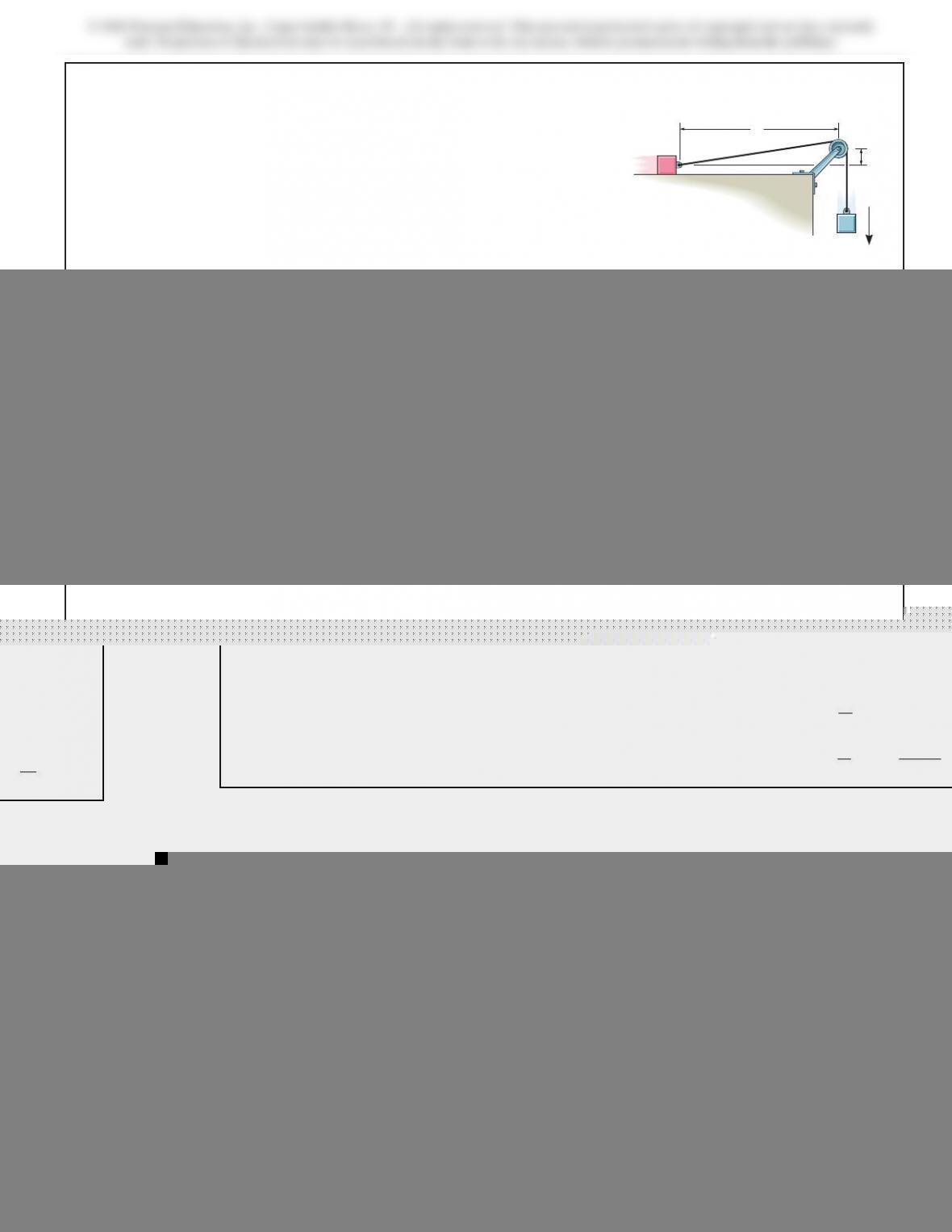
The motor draws in the cord at B with an acceleration of
aB = 2 m
>
s2. When sA = 1.5 m, vB = 6 m
>
s. Determine the
velocity and acceleration of the collar at this instant.
B
2 m
A
SOLUTION
225
*12–216.
If
bl
oc
k
B
i
s mov
i
ng
d
own w
i
t
h
a ve
l
oc
i
ty an
d
h
as an
acceleration
determine the velocity and acceleration of
block
Ain terms of the parameters shown.
aB,
vB
Ans.
Ans.aA= – aB(1+ah
sBb2
)1/2 +vAvBh2
sA
3(1+ah
sAb2
)–1/2
aA=v
#
A=-v
#
B(1 +ah
sAb2
)1/2 –vBa1
2b(1 +ah
sAb2
)–1/2(h2)( –2)(sA)–3s
#
A
vA= – vB(1 +ah
sAb2
)1/2
vA=s
#
A=–s
#
B(s2
A+h2)1/2
sA
0=s
#
B+1
2(s2
A+h2)–1/2 2sAs
#
A
l=sB+3sB
h
A
B
v
B
,a
B
s
A

12–217.
The crate Cis being lifted by moving the roller at A
downward with a constant speed of along the
guide. Determine the velocity and acceleration of the crate
at the instant When the roller is at B, the crate
rests on the ground. Neglect the size of the pulley in the
calculation. Hint: Relate the coordinates and using
the problem geometry, then take the first and second time
derivatives.
xA
xC
s=1m.
vA=2m>s
Thus,
Ans.
Ans.aC=-0.512 m>s2=0.512 m>s2c
aC–[(3)2+16]–3/2 (3)2(2)2+[(3)2+16]–1/2 (2)2+0=0
vC=-1.2 m>s=1.2 m>sc
vC+[(3)2+16]–1/2 (3)(2) =0
aA=x
$
A=0
vA=x
#
A=2m>s
xA=3m
xC=3m
xC+2xA
2+(4)2=l
C
A
4m
4m
B
x
A
x
C
Ans:
12–218.
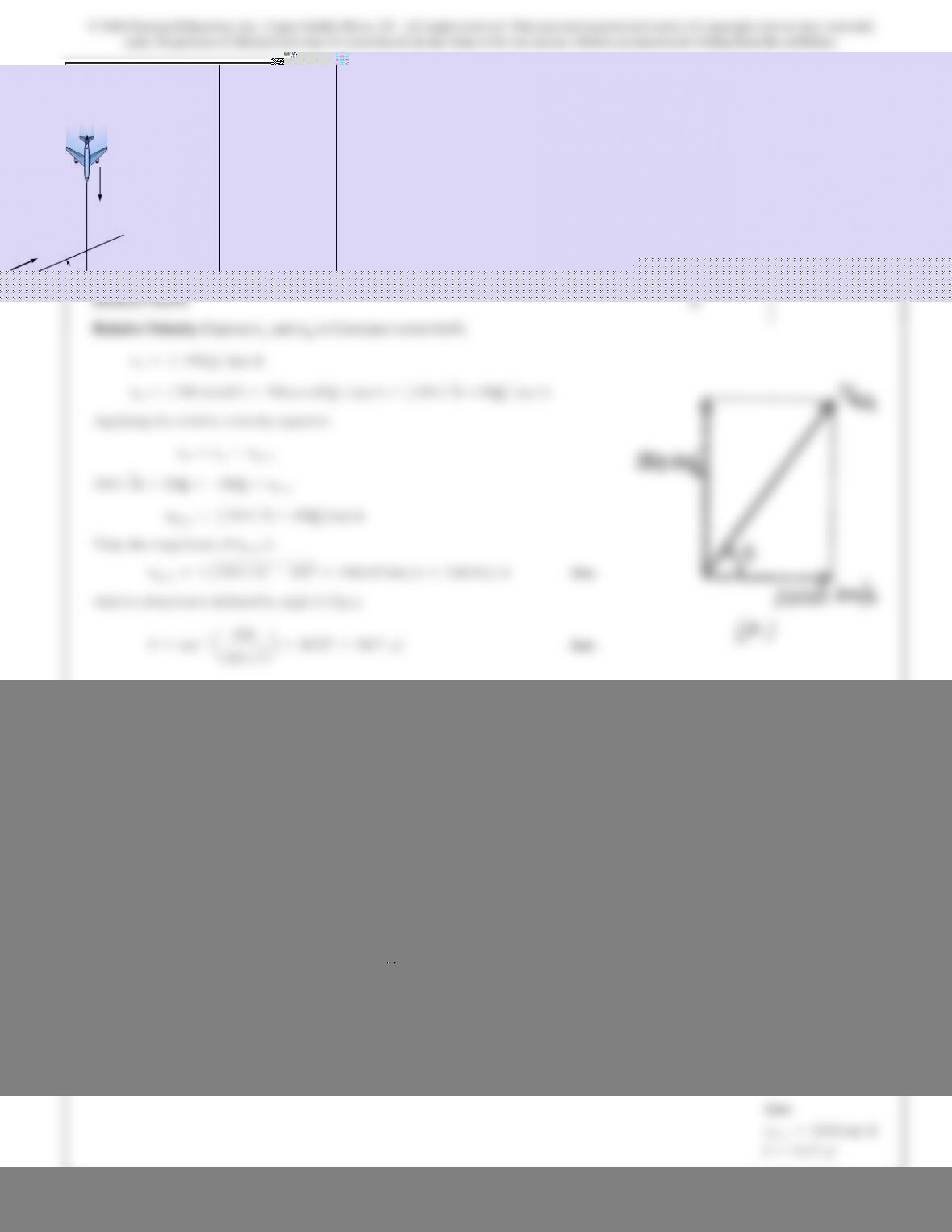
Two planes, A and B, are flying at the same altitude. If their
velocities are
vA=500 km>h
and
vB=700 km>h
such
that the angle between their straight-line courses is u
=60°,
determine the velocity of plane B with respect to plane A.A
vA fi 500 km/h
vB fi 700 km/h
60
12–219.
SOLUTION
Ans.
Ans.
Ans.
Ans.u=tan–13371.28
560.77 =80.6°
a
aB>A=2(560.77)2+(3371.28)2=3418 mi>h2
={560.77i+3371.28j}–0={560.77i+3371.28j}mi>h2
aB>A=aB–aA
aA=0
={560.77i+3371.28j}mi>h2
aB=(3200 cos 60° –1200 cos 30°)i+(3200 sin 60° +1200 sin 30°)j
(aB)n=v2
A
r=402
0.5 =3200 mi>h2(aB)t=1200 mi>h2
u=tan–120
20.36 =44.5° a
vB>A=220.362+202=28.5 mi>h
=(–34.64i+20j)–(–55i)={20.36i+20j}mi>h
vB>A=nB–nA
vA={–55i}mi>h
vB= –40 cos 30°i+40 sin 30°j={–34.64i+20j}mi>h
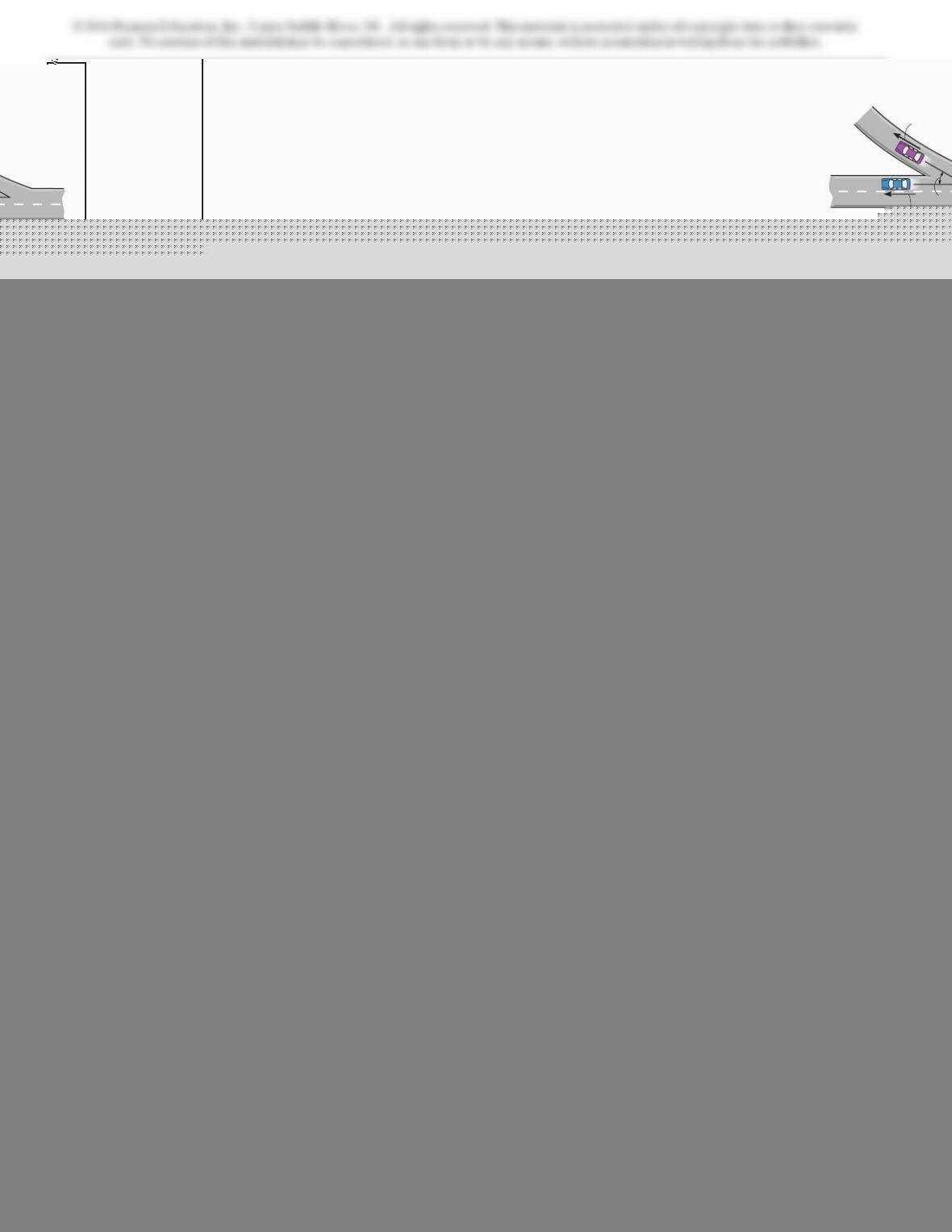
At the instant shown, cars Aand Bare traveling at speeds
of 55 mi/h and 40 mi/h, respectively. If Bis increasing its
speed by while Amaintains a constant speed,
determine the velocity and acceleration of Bwith respect
to A. Car Bmoves along a curve having a radius of curvature
of 0.5 mi.
1200 mi>h2,
vB=40 mi/h
vA=55 mi/h
B
A30°
229
*12–220.
The boat can travel with a speed of 16 km
>
h in still water. The
point of destination is located along the dashed line. If the
water is moving at 4 km
>
h, determine the bearing angle
u
at
which the boat must travel to stay on course.
vW 4 km/h
70
u
SOLUTION
v
B
=v
W
+v
B
>
W
vB cos 70°i+vB sin 70°j=– 4j+16 sin
u
i+16 cos
u
j
(
+
S
)
vB cos 70°=0+16 sin
u
(+
c
)
vB sin 70°=–4 +16 cos
u
2.748 sin u –cos u+0.25 =0
Solving,
u=15.1°
Ans.
Ans:
u=15.1°

230
12–221.
SOLUTION
Thus, the magnitude of the relative velocity is
Ans.
And its direction is
Ans.
One can obtained the time trequired for boats Aand Bto be 1500 ft apart by noting
that boat Bis at rest and boat Atravels at the relative speed for a
distance of 1500 ft.Thus
Ans.t=1500
vA
>
B
=1500
13.48 =111.26 s =1.85 min
vA>B=13.48 ft>s
u=tan–113.43
1.213 =84.8°
vA>B=2(–1.213)2+13.432=13.48 ft>s=13.5 ft>s
vA>B
vA>B={–1.213i+13.43j}ft>s
40 sin 30°i+40 cos 30°j=30 cos 45°i+30 sin 45°j+vA>B
Two boats leave the pier Pat the same time and travel in
the directions shown. If and ,
determine the velocity of boat Arelative to boat B. How
long after leaving the pier will the boats be 1500 ft apart?
vB=30 ft>svA=40 ft>s
y
B
A
v
B
= 30 ft/s
v
A
= 40 ft/s
30°
12–222.
SOLUTION
. Applying the relative velocity equation, we have
(1)
For the second case, and .
Applying the relative velocity equation, we have
(2)
Equating Eqs. (1) and (2) and then the iand jcomponents,
(3)
(4)
Solving Eqs. (3) and (4) yields
Substituting the result of into Eq. (1),
Thus, the magnitude of is
Ans.
and the directional angle that makes with the xaxis is
vW
u
vw=2(–30)2+502=58.3 km>h
vW
vw=[–30i+50j]km>h
(vw>c)1
(vw>c)1=-30 km>h(vw>c)2=-42.43 km>h
50 =80 +(vw>c)2sin 45°
(vw>c)1=(vw>c)2cos 45°
vw=(vw>c)2cos 45° i+
C
80 +(vw>c)2sin 45°
D
j
vw=80j+(vw>c)2cos 45°i+(vw>c)2sin 45° j
vw=vc+vw>c
vW>C=(vW>C)2cos 45°i+(vW>C)2sin 45° jvC=[80j]km>h
vw=(vw>c)1i+50j
vw=50j+(vw>c)1i
vw=vc+vw>c
vW>C=(vW>C)1i
A car is traveling north along a straight road at 50 km>h. An
instrument in the car indicates that the wind is coming from
the east. If the car’s speed is 80 km>h, the instrument
indicates that the wind is coming from the northeast. Deter-
mine the speed and direction of the wind.
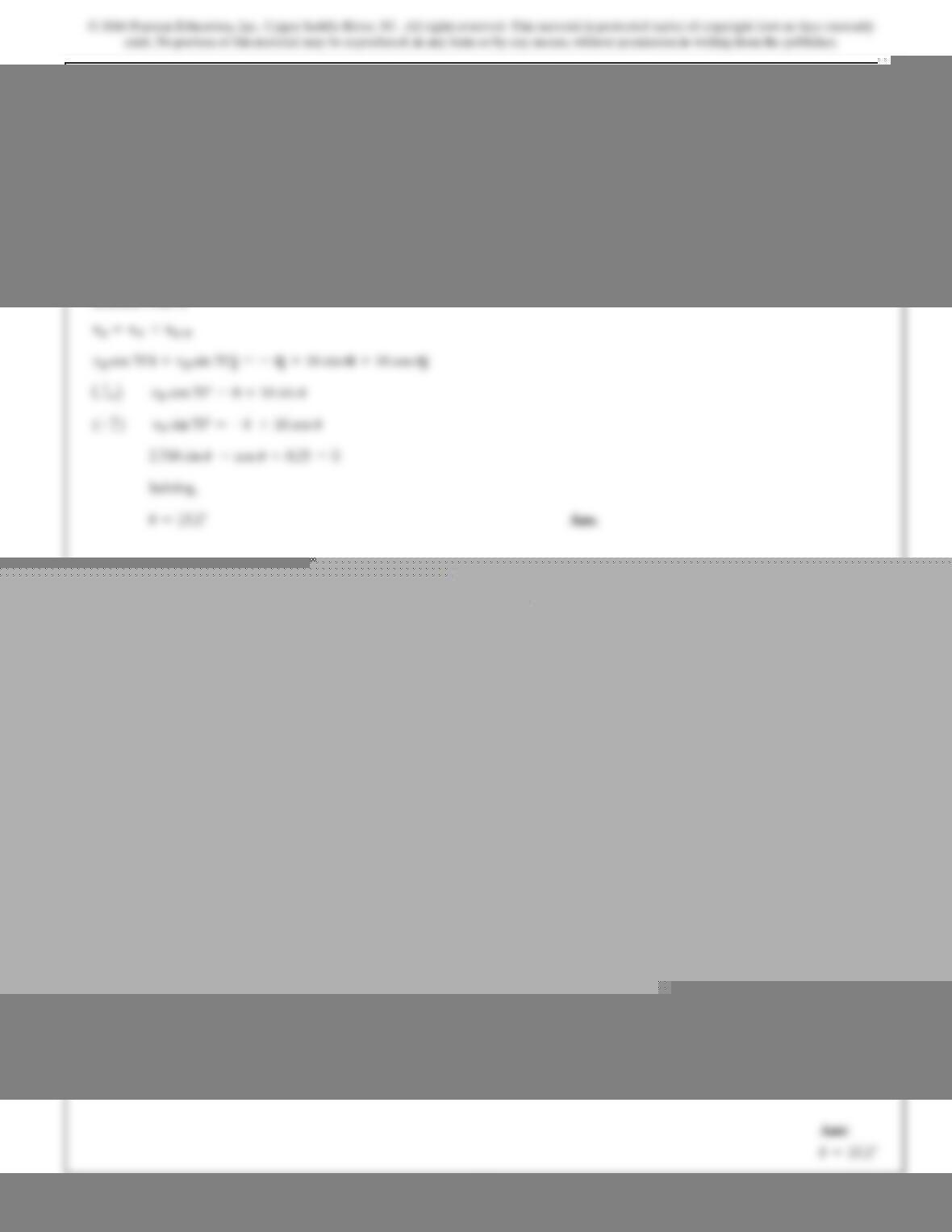
12–223.
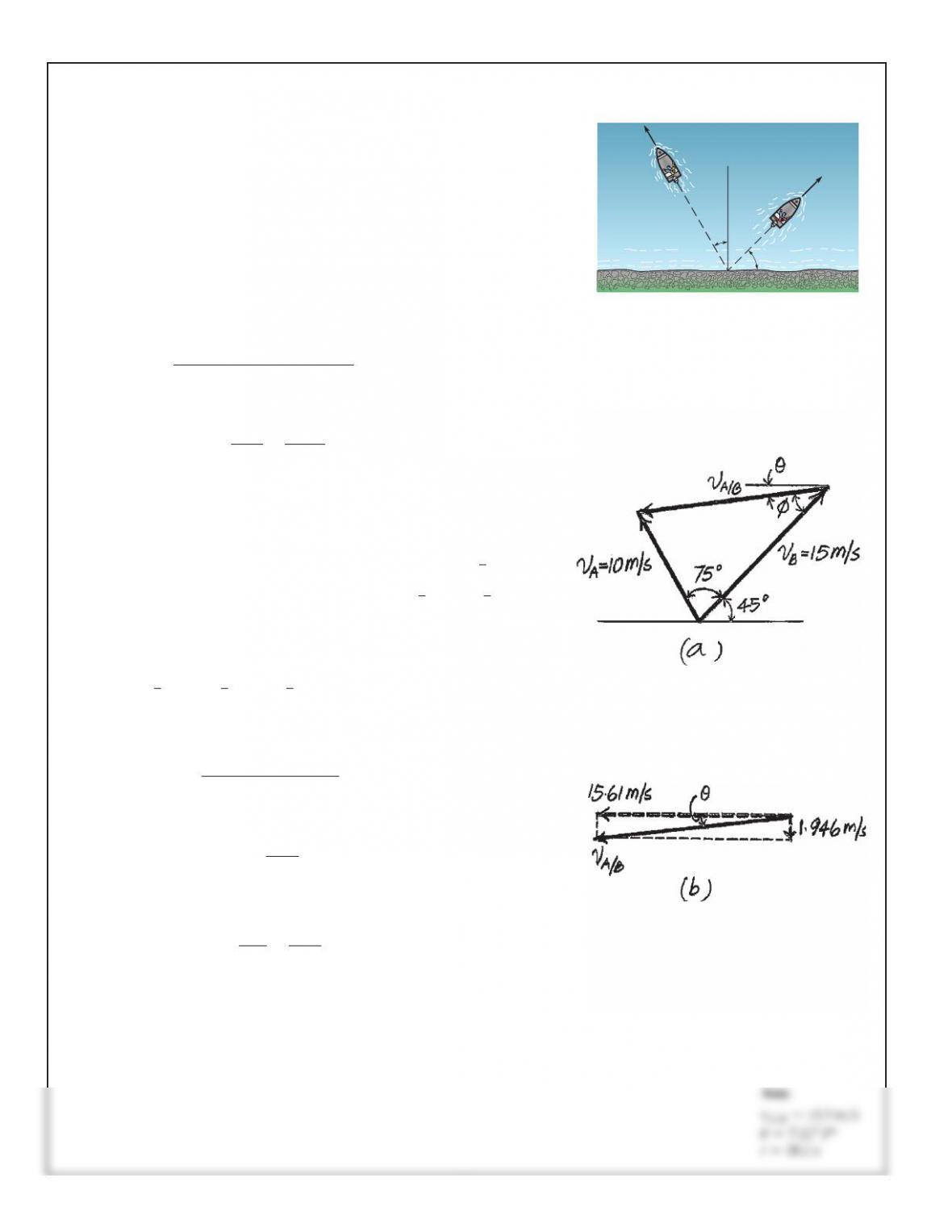
Two boats leave the shore at the same time and travel in the
directions shown. If
vA=10 m>s
and
vB=15 m>s,
determine the velocity of boat A with respect to boat B. How
long after leaving the shore will the boats be 600 m apart?
SOLUTION
A
O
B
vA fi 10 m/s
vB fi 15 m/s
30
45