
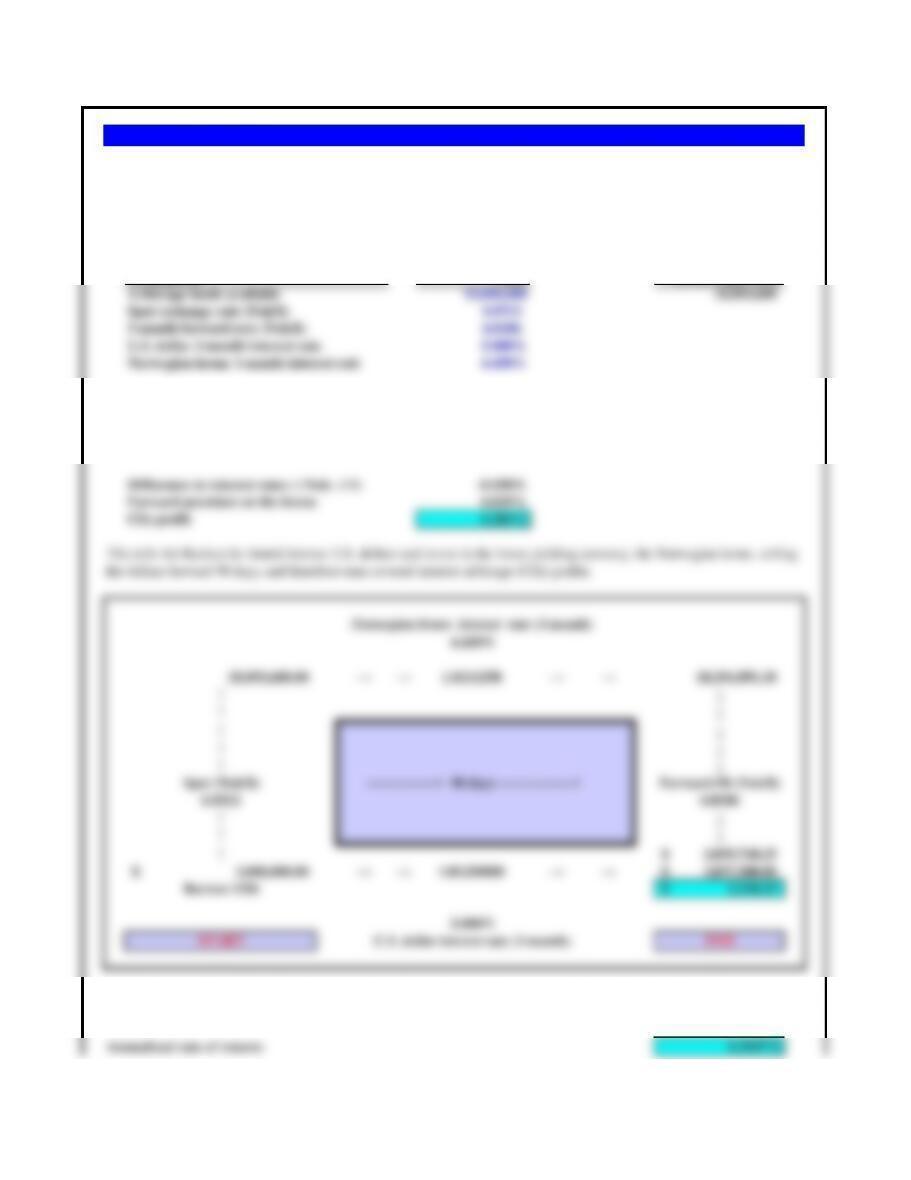
Value Krone Equivalent
Arbitrage funds available $3,000,000 18,093,600
Spot exchange rate (Nok/$)
6.0312
3-month forward rate (Nok/$)
6.0186
U.S. dollar 3-month interest rate 5.000%
Norwegian krone 3-month interest rate 4.450%
Problem 6.15 Statoil of Norway’s Arbitrage
Assumptions
Statoil, the national oil company of Norway, is a large, sophisticated, and active participant in both the currency and
petrochemical markets. Although it is a Norwegian company, because it operates within the global oil market, it considers
the U.S. dollar as its functional currency, not the Norwegian krone. Ari Karlsen is a currency trader for Statoil, and has
immediate use of either $3 million (or the Norwegian krone equivalent). He is faced with the following market rates, and
wonders whether he can make some arbitrage profits in the coming 90 days.
Arbitrage Rule of Thumb: If the difference in interest rates is greater than the forward premium/discount, or expected

Assumptions London New York
Spot exchange rate ($/€) 1.3264 1.3264
One-year Treasury bill rate 3.900% 4.500%
Expected inflation rate Unknown 1.250%
a. What do the financial markets suggest for inflation in Europe next year?
b. Estimate today’s one-year forward exchange rate between the dollar and the euro.
a. What do the financial markets suggest for inflation in Europe next year?
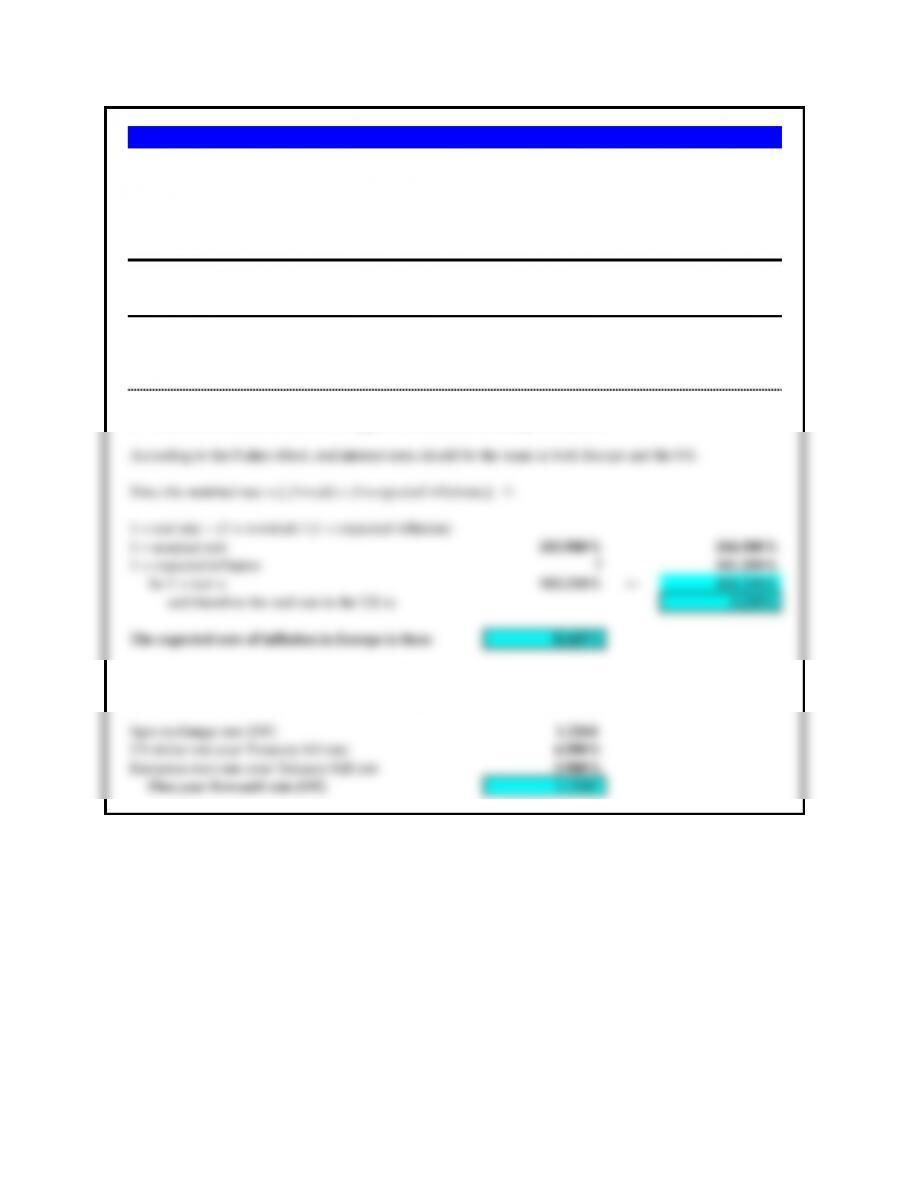
According to the Fisher effect, real interest rates should be the same in both Europe and the US.
Since the nominal rate = [ (1+real) x (1+expected inflation) ] – 1:
1 + real rate = (1 + nominal) / (1 + expected inflation)
1 + nominal rate 103.900% 104.500%
1 + expected inflation ? 101.250%
So 1 + real = 103.210% ←103.210%
and therefore the real rate in the US is: 3.210%
The expected rate of inflation in Europe is then: 0.669%
b. Estimate today‘s one-year forward exchange rate between the dollar and the euro.
Spot exchange rate ($/€) 1.3264
US dollar one-year Treasury bill rate 4.500%
European euro one-year Treasury bill rate 3.900%
One year forward rate ($/€) 1.3341
Problem 6.16 Separated by the Atlantic
The separation of over 3,000 nautical miles and five time zones, money and foreign exchange markets in
both London and New York are very efficient. The following information has been collected from the
respective areas:

Assumptions Value
Spot exchange rate ($/€) $1.3620
Expected US inflation for coming year 2.500%
Expected French inflation for coming year 3.500%
Current chateau nominal weekly rent (€) € 9,800.00
Forecasting the future rent amount and exchange rate: Value
Purchasing power parity exchange rate forecast ($/€) 1.3488
Spot (one year) = Spot x ( 1 + US$ inflation ) / ( 1 + French inflation )
Nominal monthly rent, in euros, one year from now 10,143.00
Rent now x ( 1 + inflation France )
Cost of rent one year from now in US dollars 13,681.29$
Rent one year from now / PPP forecasted spot rate
Problem 6.17 Chamonix Chateau Rentals
You are planning a ski vacation to Mt. Blanc in Chamonix, France, one year from now. You are
negotiating over the rental of a chateau. The chateau’s owner wishes to preserve his real income
against both inflation and exchange rate changes, and so the present weekly rent of €9,800
(Christmas season) will be adjusted upwards or downwards for any change in the French cost of
living between now and then. You are basing your budgeting on purchasing power parity (PPP).
French inflation is expected to average 3.5% for the coming year, while U.S. dollar inflation is
expected to be 2.5%. The current spot rate is $1.3620/€. What should you budget as the U.S.
dollar cost of the one week rental?
Note: students may inquire as to whether the euro, a currency for a multitude of countries which
may actually have substantial differencies in inflation locally, really will react to inflationary
pressures and differentials as PPP would predict. A good question.
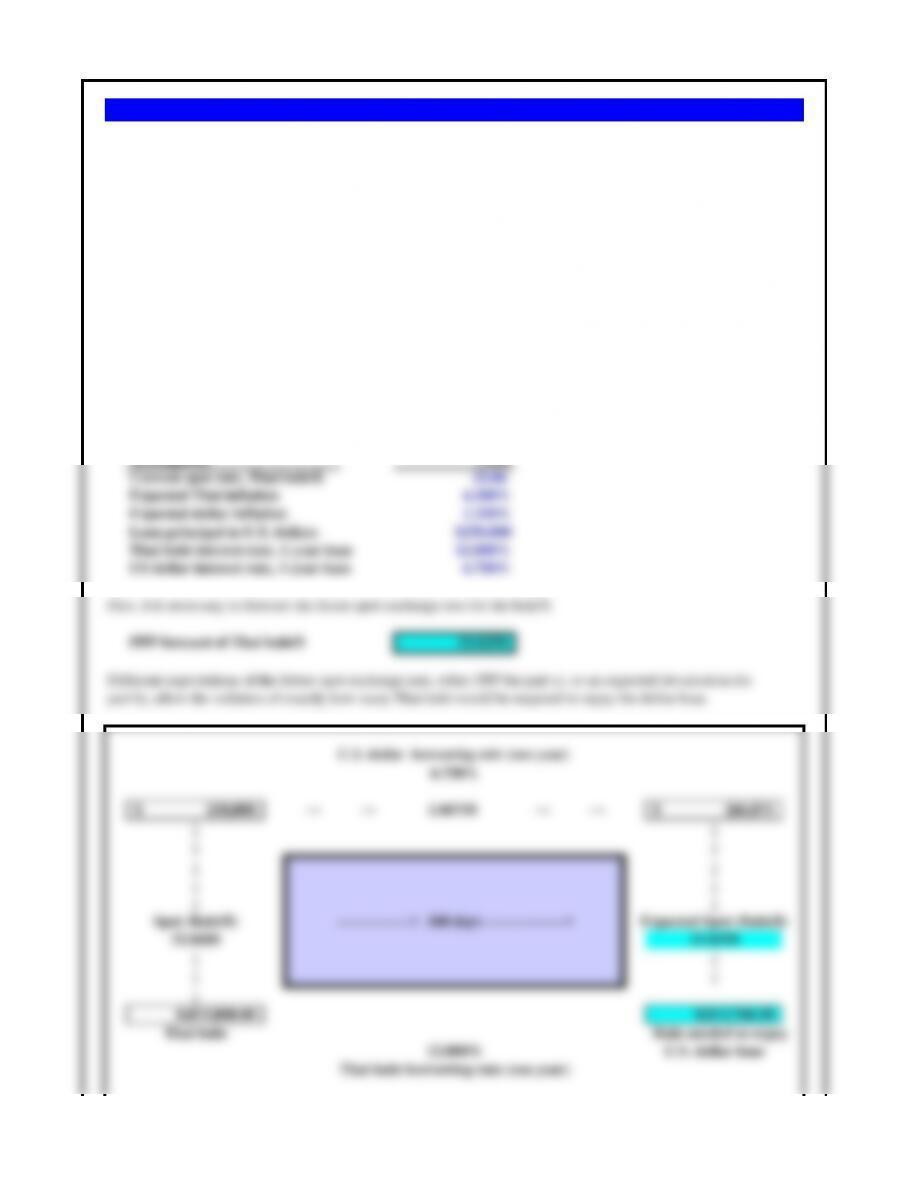
Value
Current spot rate, Thai baht/$ 32.06
Expected Thai inflation 4.300%
Expected dollar inflation 1.250%
Loan principal in U.S. dollars $250,000
Thai baht interest rate, 1-year loan 12.000%
US dollar interest rate, 1-year loan 6.750%
First, it is necessary to forecast the future spot exchange rate for the baht/$.
PPP forecast of Thai baht/$ 33.0258
Different expectations of the future spot exchange rate, either PPP for part a), or an expected devaluation for
part b), allow the isolation of exactly how many Thai baht would be required to repay the dollar loan.
U.S. dollar borrowing rate (one year)
6.750%
250,000$ → → 1.06750 → → 266,875$
↓ ↓
↓ ↓
↓ ↓
↓ ↓
↓ ↓
Spot (Baht/$) —————> 360 days —————-> Expected Spot (Baht/$)
32.0600 33.0258
↓ ↓
↓ ↓
↓
8,015,000.00 8,813,760.38
Thai baht Baht needed to repay
12.000% U.S. dollar loan
Thai baht borrowing rate (one year)
Problem 6.18 East Asiatic Company — Thailand
Assumptions
The East Asiatic Company (EAC), a Danish company with subsidiaries all over Asia, has been funding its Bangkok
subsidiary primarily with U.S. dollar debt because of the cost and availability of dollar capital as opposed to Thai
baht-denominated (B) debt. The treasuer of EAC-Thailand is considering a one-year bank loan for $250,000. The
current spot rate is B32.06/$, and the dollar-based interest is 6.75% for the one year period. One year loans are
12.00% in baht.
a. Assuming expected inflation rates of 4.3% and 1.25% in Thailand and the United States, repectively, for the
coming year, according to purchase power parity, what would the effective cost of funds be in Thai baht terms?
b. If EAC’s foreign exchange advisers believe strongly that the Thai government wants to push the value of the
baht down against the dollar by 5% over the coming year (to promote its export competitiveness in dollar
markets), what might the effective cost of funds end up being in baht terms?
c. If EAC could borrow Thai baht at 13% per annum, would this be cheaper than either part (a) or part (b)
above?
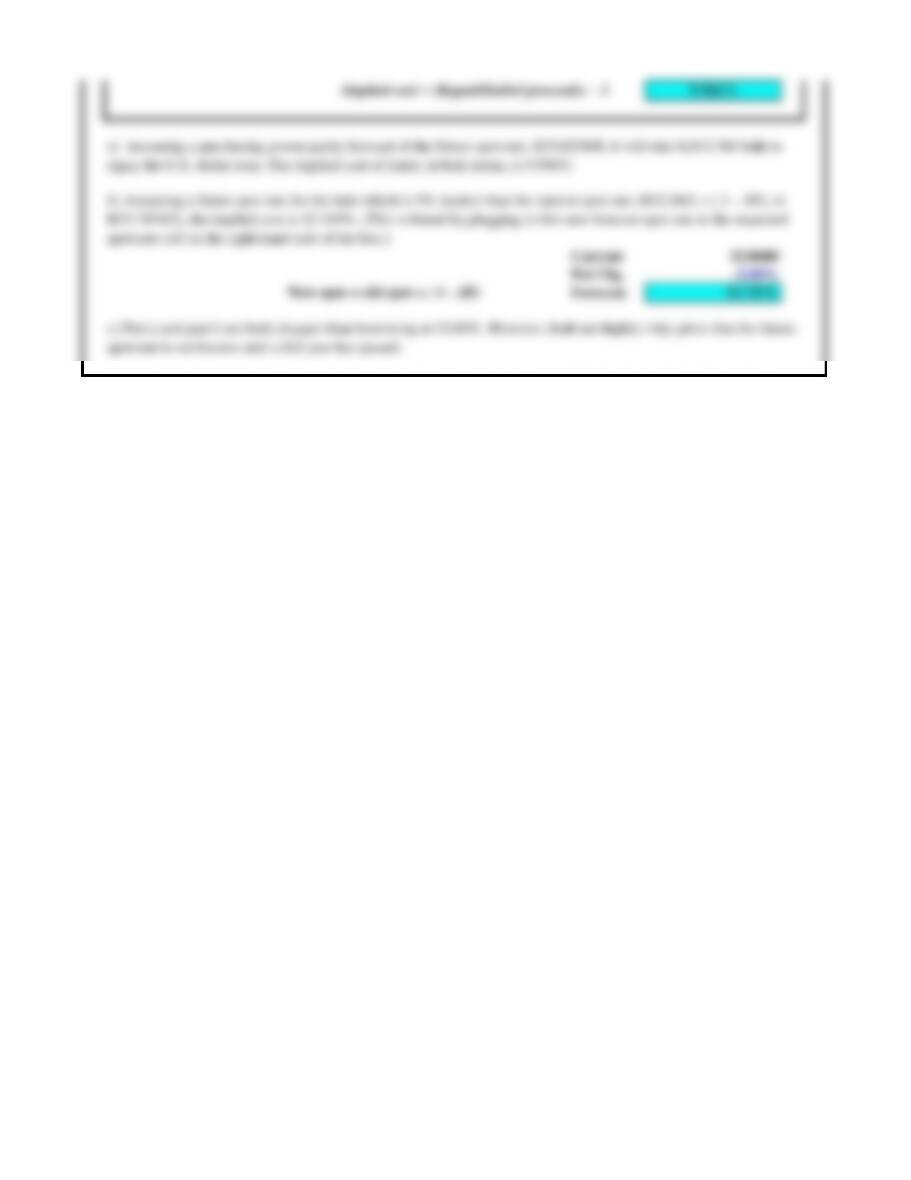
Implied cost = (Repaid/Initial proceeds) – 1 9.966%
Current 32.0600
Pct Chg -5.00%
New spot = old spot ÷ ( 1 – .05) Forecast 33.7474
b) Assuming a future spot rate for the baht which is 5% weaker than the current spot rate (B32.06/$ ÷ ( 1 – .05), or
B33.7474/$), the implied cost is 12.369%. (This is found by plugging in this new forecast spot rate in the expected
spot rate cell on the right-hand-side of the box.)
c) Part a and part b are both cheaper than borrowing at 12.00%. However, both are highly risky given that the future
spot rate is not known until a full year has passed.
a) Assuming a purchasing power parity forecast of the future spot rate, B33.0258/$, it will take 8,813,760 baht to
repay the U.S. dollar loan. The implied cost of funds, in baht terms, is 9.966%.
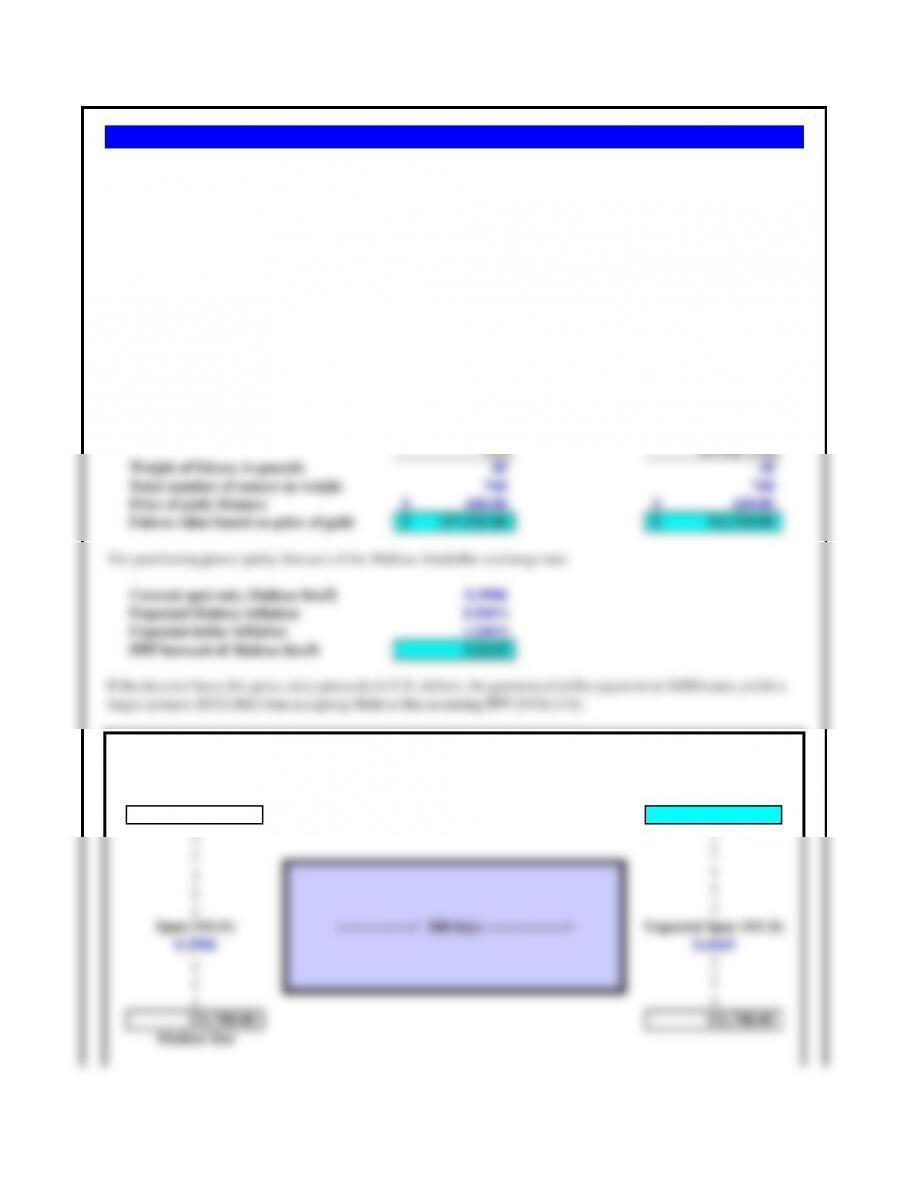
Now In One Year
Weight of falcon, in pounds 48 48
Total number of ounces in weight 768 768
Price of gold, $/ounce 440.00$ 420.00$
Falcon value based on price of gold 337,920.00$ 322,560.00$
The purchasing power parity forecast of the Maltese lira/dollar exchange rate:
Current spot rate, Maltese lira/$ 0.3900
Expected Maltese inflation 8.500%
Expected dollar inflation 1.500%
PPP forecast of Maltese lira/$ 0.4169
Investor Receives
in March 2004
Current Value Assuming PPP
337,920$ 316,116$
↓ ↑
↓ ↑
↓ ↑
↓ ↑
↓ ↑
Spot (ML/$) —————> 360 days —————-> Expected Spot (ML/$)
0.3900 0.4169
↓ ↑
↓ ↑
↓ ↑
131,788.80 131,788.80
Maltese lira
Problem 6.19 Maltese Falcon
Imagine that the mythical solid gold falcon, initially intended as a tribute by the Knights of Malta to the King of
Spain in appreciation for his gift of the island of Malta to the order in 1530, has recently been recovered. The falcon
is 14 inches high and solid gold, weighing approximately 48 pounds. Assume that gold prices have risen to
$440/ounce, primarily as a result of increasing political tensions. The falcon is currently held by a private investor in
Istanbul, who is actively negotiating with the Maltese government on its purchase and prospective return to its island
home. The sale and payment are to take place one year from now in March 2004, and the parties are negotiating
over the price and currency of payment. The investor has decided, in a show of goodwill, to base the sales price only
on the falcon’s specie value – its gold value.
The current spot exchange rate is 0.39 Maltese lira (ML) per 1.00 U.S. dollar. Maltese inflation is expected to be
about 8.5% for the coming year, while U.S. inflation, on the heels of a double-dip recession, is expected to come in
at only 1.5%. If the investor bases value in the U.S. dollar, would he be better off receiving Maltese lira in one year
(assuming purhcasing power parity), or receiving a guaranteed dollar payment (assuming a gold price of $420 per
ounce)?
If the investor bases his gross sales proceeds in U.S. dollars, the guaranteed dollar payment at $420/ounce yields a
larger amount ($322,560) than accepting Maltese lira assuming PPP ($316,116).

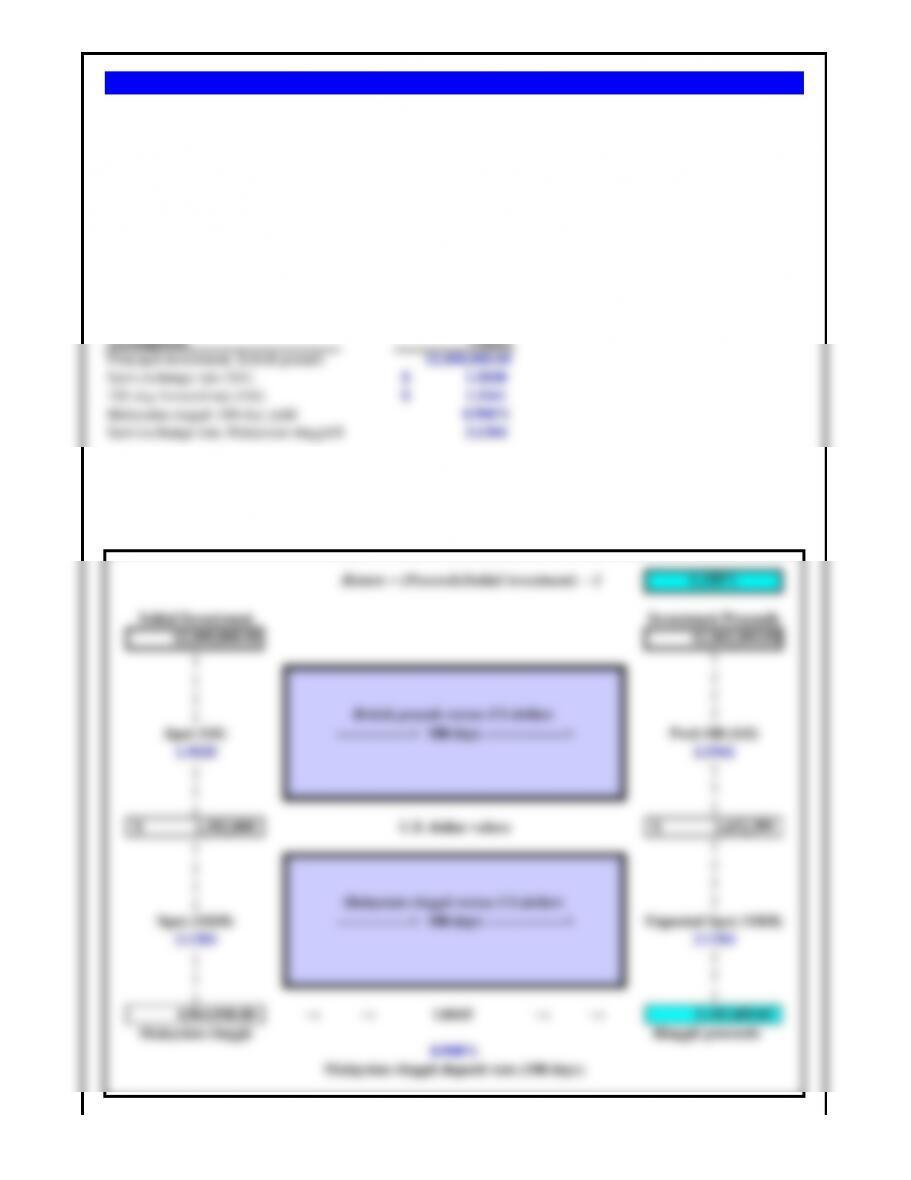
Assumptions Values
Principal investment, British pounds
£1,000,000.00
Spot exchange rate ($/£)
1.5820$
180-day forward rate ($/£)
1.5561$
Malaysian ringgit 180-day yield
8.900%
Spot exchange rate, Malaysian ringgit/$
3.1384
The initial pound investment implicitly passes through the dollar into Malaysian ringgit. The ringgit is fixed
against the dollar, hence the ending Malaysian ringgit/$ rate is the same as the current spot rate. The pound,
however, is not fixed to either the dollar or ringgit. Clayton Moore can purchase a forward against the dollar,
allowing him to cover the dollar/pound exchange rate.
Return = (Proceeds/Initial investment) – 1 6.188%
Initial Investment Investment Proceeds
£1,000,000.00 £1,061,884.84
↓ ↑
↓ ↑
↓ ↑
↓British pounds versus US dollars ↑
Spot ($/£) —————> 180 days —————-> Fwd-180 ($/£)
1.5820 1.5561
↓ ↑
↓ ↑
↓ ↑
1,582,000$ U.S. dollar values 1,652,399$
↓ ↑
↓ ↑
↓ ↑
↓
Malaysian ringgit versus US dollars
↑
Spot (M$/$) —————> 180 days —————-> Expected Spot (M$/$)
3.1384 3.1384
↓ ↑
↓ ↑
↓ ↑
4,964,948.80 → → 1.0445 → → 5,185,889.02
Malaysian ringgit Ringgit proceeds
8.900%
Malaysian ringgit deposit rate (180 days)
Problem 6.20 Malaysian Risk
Clayton Moore is the manager of an international money market fund managed out of London. Unlike many money
funds that guarantee their investors a near risk-free investment with variable interest earnings, Clayton Moore’s fund
is a very aggressive fund that searches out relatively high interest earnings around the globe, but at some risk. The
fund is pound-denominated. Clayton is currently evaluating a rather interesting opportunity in Malaysia. Since the
Asian Crisis of 1997, the Malaysian government enforced a number of currency and capital restrictions to protect
and preserve the value of the Malaysian ringgit. The ringgit was fixeded to the U.S. dollar at RM3.80/$ for seven
years. In 2005, the Malaysian government allowed the currency to float against several major currencies. The
current spot rate today is RM3.13485/$. Local currency time deposits of 180-day maturities are earning 8.900% per
annum. The London eurocurrency market for pounds is yielding 4.200% per annum on similar 180-day maturities.
The current spot rate on the British pound is $1.5820/£, and the 180-day forward rate is $1.5561/£.

If Clayton Moore invests in the Malaysian ringgit deposit, and accepts the uncovered risk associated with the RM/$
exchange rate (managed by the government), and sells the dollar proceeds forward, he should expect a return of
6.188% on his 180-day pound investment. This is better than the 4.200% he can earn in the euro-pound market.
Interestingly, if Clayton chose to NOT sell the dollars forward, and accepted the uncovered risk of the $/£ exchange
rate as well, he may or may not do better than 6.188%. For example, if the spot rate remained unchanged at
$1.5820/£, Clayton’s return would only be 4.450%. This demonstrates that much of the added return Clayton is
earning is arising from the forward rate itself, and not purely from the nominal interest differentials.
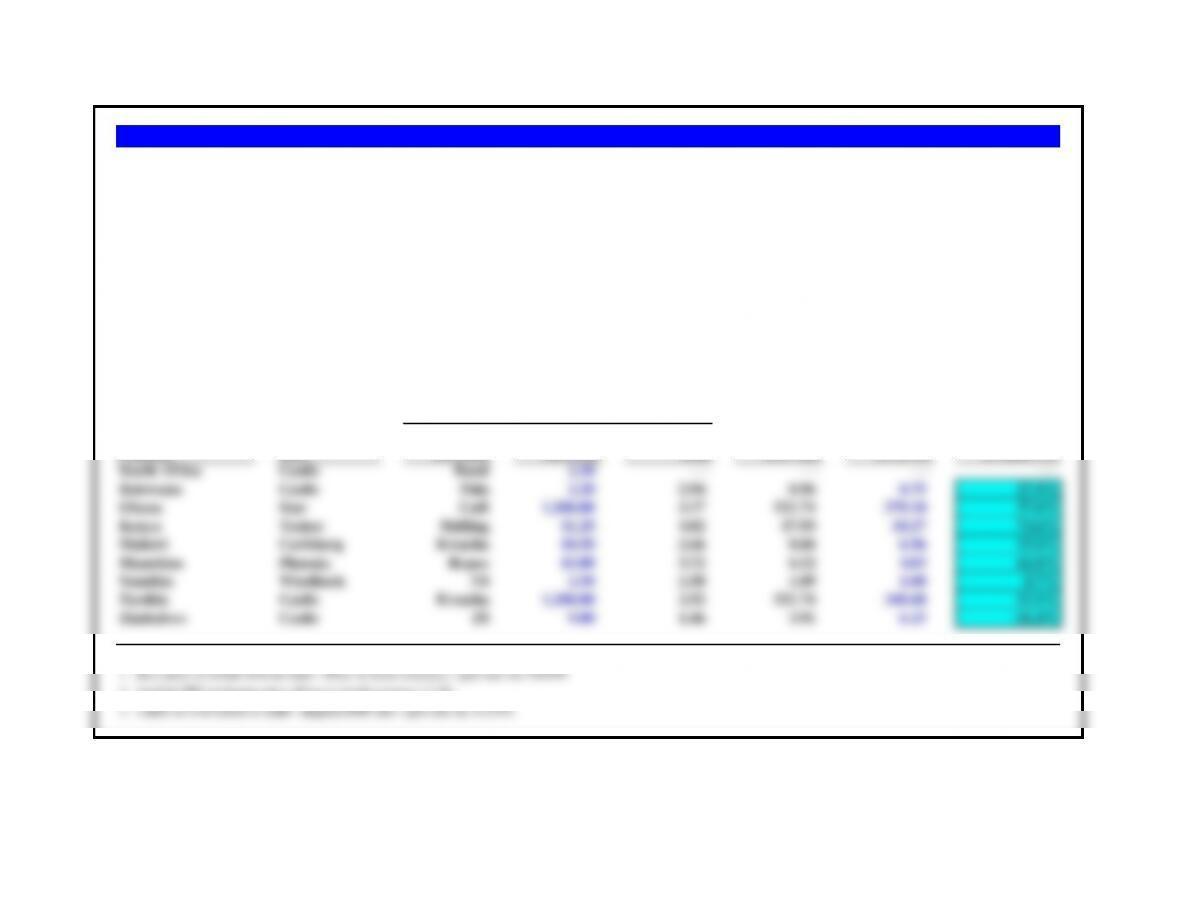
Spot Under or
Local Local In Implied rate overvalued
Country Beer currency currency rand PPP rate (3/15/99) to rand (%)
South Africa Castle Rand 2.30 —- —- —- —-
Botswana Castle Pula 2.20 2.94 0.96 0.75 27.9%
Ghana Star Cedi 1,200.00 3.17 521.74 379.10 37.6%
Kenya Tusker Shilling 41.25 4.02 17.93 10.27 74.6%
Malawi Carlsberg Kwacha 18.50 2.66 8.04 6.96 15.6%
Mauritius Phoenix Rupee 15.00 3.72 6.52 4.03 61.8%
Namibia Windhoek N$ 2.50 2.50 1.09 1.00 8.7%
Zambia Castle Kwacha 1,200.00 3.52 521.74 340.68 53.1%
Zimbabwe Castle Z$ 9.00 1.46 3.91 6.15 -36.4%
Beer Prices
In 1999 the Economist magazine reported the creation of an index or standard for the evaluation of African currency values using the local prices of beer.
Beer was chosen as the product for comparison because McDonald’s had not peneterated the African continent beyond South Africa, and beer met most of the
same product and market characteristics required for the construction of a proper currency index. Investec, a South African investment banking firm, has
replicated the process of creating a measure of purchasing power parity (PPP) like that of the Big Mac Index of the Economist, for Africa.
The index compares the cost of a 375 milliliter bottle of clear lager beer across sub-Sahara Africa. As a measure of PPP the beer needs to be relatively
homogeneous in quality across countries, needs to possess substantial elements of local manufacturing, inputs, distribution, and service, in order to actually
provide a measure of relative purchasing power. The beers are first priced in local currency (purchased in the taverns of the local man, and not in the high–
priced tourist centers), then converted to South African rand. The prices of the beers in rand are then compared to form one measure of whether the local
currencies are undervalued (-%) or overvalued (+%) versus the South African rand. Use the data in the exhibit and complete the calculation of whether the
individual currencies are under- or over-valued.
Problem 6.21 The Beer Standard
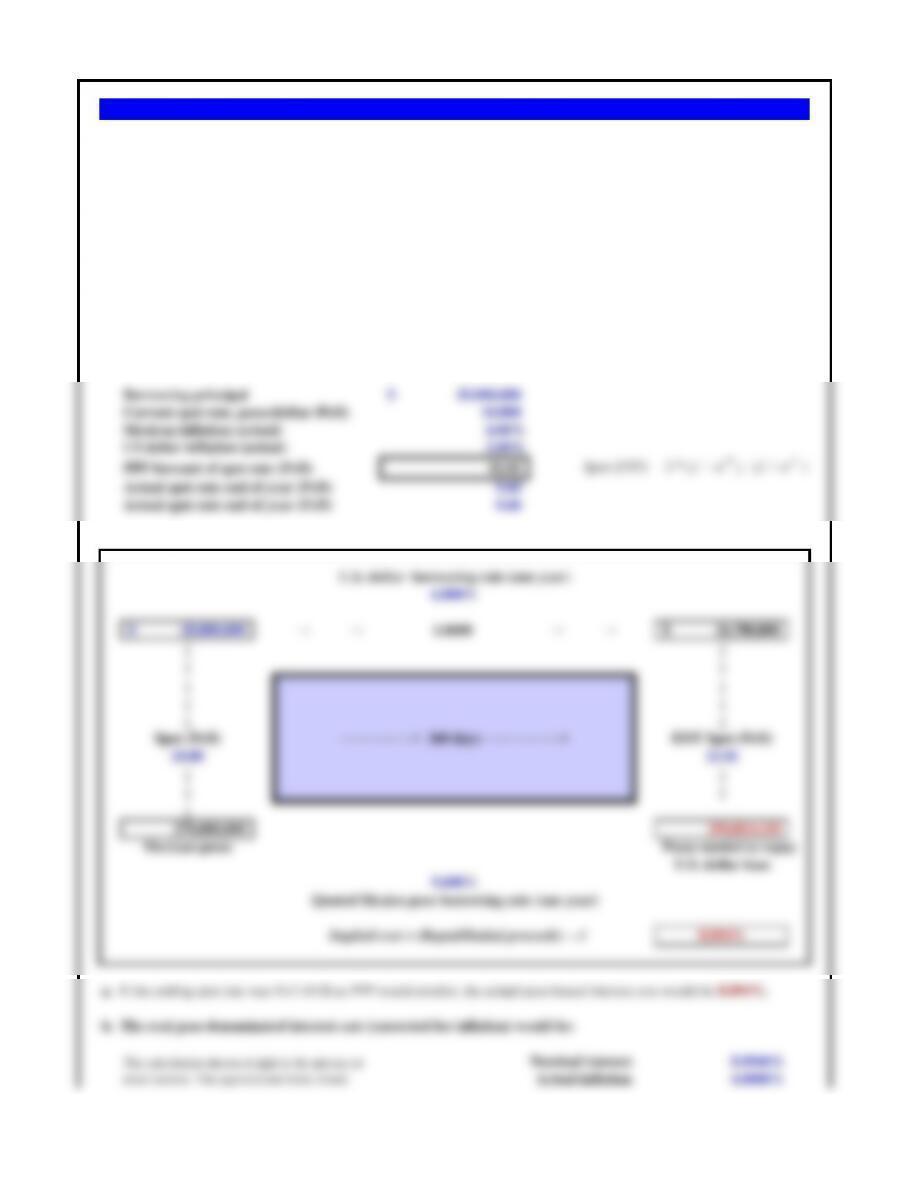
Borrowing principal 25,000,000$
Current spot rate, pesos/dollar (Ps/$) 10.800
Mexican inflation (actual) 4.00%
US dollar inflation (actual) 2.00%
PPP forecast of spot rate (Ps/$) 11.01
Spot (PPP) = S * (1 + π Ps ) / (1 + π $ )
Actual spot rate end of year (Ps/$) 9.60
Actual spot rate end of year (Ps/$) 9.60
U.S. dollar borrowing rate (one year)
6.800%
25,000,000$ → → 1.0680 → → 26,700,000$
↓ ↓
↓ ↓
↓ ↓
↓ ↓
↓ ↓
Spot (Ps/$) —————> 360 days —————-> EOY Spot (Ps/$)
10.80 11.01
↓ ↓
↓ ↓
↓
270,000,000 294,014,118
Mexican pesos Pesos needed to repay
U.S. dollar loan
9.600%
Quoted Mexico peso borrowing rate (one year)
Implied cost = (Repaid/Initial proceeds) – 1 8.894%
a. If the ending spot rate was Ps11.01/$ as PPP would predict, the actual peso-based interest cost would be 8.894%.
b. The real peso-denominated interest cost (corrected for inflation) would be:
Nominal interest 8.8940%
Actual inflation 4.0000%
Problem 6.22 Grupo Bimbo (Mexico)
The calculation shown at right is the precise or
exact answer. The approximate form, found
Grupo Bimbo, headquartered in Mexico City, is one of the largest bakery companies in the world. On January 1st, when
the spot exchange rate is Ps10.80/$, the company borrows $25.0 million from a New York bank for one year at 6.80%
interest (Mexican banks had quoted 9.60% for an equivalent loan in pesos). During the year, U.S. inflation is 2% and
Mexican inflation is 4%. At the end of the year the firm repays the dollar loan.
a. If Bimbo expected the spot rate at the end of one year to be that equal to purchasing power parity, what would be the
cost to Bimbo of its dollar loan in peso-denominated interest?
b. What is the real interest cost (adjusted for inflation) to Bimbo, in peso-denominated terms, of borrowing the dollars for
one year, again assuming purchasing power parity ?
c. If the actual spot rate at the end of the year turned out to be Ps9.60/$, what was the actual peso-denominated interest
cost of the loan?

Real peso-interest 4.7058%
simply by subtracting inflation from nominal
interest, would be 4.894%.
b. If the actual end of year spot rate was Ps9.60/$ (just plug it into the spreadsheet for the EOY Spot rate), the actual peso-
denominated interest cost would be -5.067%. (Yes, a negative interest rate.)
Calendar year 2001 2002 2003 2004 2005 2006
Kalina Price (rubles) 260,000
Russian inflation (forecast) 14.0% 12.0% 11.0% 8.0% 8.0%
U.S. inflation (forecast) 2.5% 3.0% 3.0% 3.0% 3.0%
Exchange rate (rubles = USD 1.00) 30.00
a. If the domestic price of the Kalina increases with the rate of inflation, what would its price be over the 2002-2006 period?
g. So what did the Russian ruble end up doing over the 2001-2006 period?
Calendar year 2001 2002 2003 2004 2005 2006
a. Kalina Price with Russian inflation (rubles) 260,000 296,400 331,968 368,484 397,963 429,800
30.00 33.37 36.28 39.10 41.00 42.99
c. Export price if using PPP (dollars) 8,666.67$ 8,883.33$ 9,149.83$ 9,424.33$ 9,707.06$ 9,998.27$
Problem 6.23 AvtoVAZ of Russia’s Kalina Export Pricing Analysis
b. Assuming that the forecasts of US and Russian inflation prove accurate, what would the value of the ruble be over the coming years if its value versus the
dollar followed purchasing power parity?
c. If the export price of the Kalina were set using the purchasing power parity forecast of the ruble-dollar exchange rate, what would the export price be over
the 2002-2006 period?
AvtoVAZ OAO, a leading auto manufacturer in Russia, was launching a new automobile model in 2001, and is in the midst of completing a complete pricing
analysis of the car for sales in Russia and export. The new car, the Kalina, would be initially priced at Rubles 260,000 in Russia, and if exported, $8,666.67 in
U.S. dollars at the current spot rate of Rubles 30 = $1.00. AvtoVAZ intends to raise the price domestically with the rate of Russian inflation over time, but is
worried about how that compares to the export price given U.S. dollar inflation and the future exchange rate. Use the following data table to answer the
pricing analysis questions.
If most of the competition in the target dollar markets were dollar-based manufacturers, their costs and prices might be rising with dollar inflation. The
answers to parts c) and d) provide some ideas or possible boundaries on what you might consider. At fixed exchange rates, the dollar price would rise quite
high by 2006 (to $14,326.68), whereas if rate of exchange had remained fixed the export price would be much lower in 2006 ($9,998.27). Of course pricing
strategies can and should be changed over time with changing market conditions, but the general consensus of analysts would be to expect to increase the at a
rate somewhere inbetween c) and d) forecasts.
d. How would the Kalina’s export price evolve over time if it followed Russian inflation and the exchange rate of the ruble versus the dollar remained
relatively constant over this period of time?
b. Exchange rate (rubles=$1.00) if purchasing
power parity (PPP) holds
e. Vlad, one of the newly hired pricing strategists, believes that prices of automobiles in both domestic and export markets will both increase with the rate of
inflation, and that the ruble/dollar exchange rate will remain fixed. What would this imply or forecast for the future export price of the Kalina?
f. If you were AvtoVAZ, what would you hope would happen to the ruble’s value versus the dollar over time given your desire to export the Kalina? Now if
you combined that ‘hope’ with some assumptions about the competition — other automobile sales prices in dollar markets over time — how might your strategy
evolve?
