
IV. Capital and Natural Resource Markets
Capital rental markets and land rental markets can be understood using the same
basic ideas from the competitive labor market.
Markets for nonrenewable natural resources are dierent.
Capital Rental Markets
The demand for capital is equal to the value of the marginal product of capital, and
equilibrium in the market for capital occurs where the value of the marginal product
of capital is equal to the rental rate of capital.
Whether a rm rents or buys capital depends on a comparison of the cost of a
purchase relative to the stream of rental costs incurred over some future period. The
Mathematical Note develops this result and the concept of present value.
Land Rental Markets
The demand for land is based on the value of marginal product of land, and
equilibrium in the market for land occurs where the value of the marginal product is
equal to the rental rate of land.
The supply of land is xed, so the supply curve is vertical.
Nonrenewable Natural Resource Markets
Oil, gas, and coal are examples of nonrenewable natural resources that are used to
produce energy.
The demand for oil is determined by the value of the marginal product of oil—the
fundamental in&uence on demand—and the expected future price of oil—the
speculative in&uence on demand. The opportunity cost for a trader of buying and
holding oil is the interest rate that could be earned as an alternative.
The supply of oil is determined by known oil reserves, the scale of current oil
production facilities, and the expected future price of oil. The marginal cost of
extracting oil increases, which results in an upward–sloping supply curve for oil.
The market fundamentals price of oil is determined by the value of marginal product
of oil and the marginal cost of extraction.
Speculative forces based on expectations of the future price also can aect the
current price. When expectations are revised so that the price is expected to be
higher in the future, the current demand increases and the current supply
decreases. Speculation can drive a wedge between the equilibrium price and the
market fundamentals price.
The Hotelling Principle states that traders expect the price of a nonrenewable
natural resource to rise at a rate equal to the interest rate. The actual path of a
nonrenewable natural resource will not necessarily rise at this rate because the
actual path depends on exploration and technological changes.
An Economics in Action case considers the U.S. and world market for oil. It analyzes why
energy independence for U.S. oil production won’t mean the U.S. is not aected by changes
in the global price of oil.
When will we run out of oil? Students are very interested in the doomsday issue. When
will we run out of nonrenewable resources such as the hydrocarbon fuels? (Minerals are
dierent because they can be recycled. They are nonrenewable, but somewhat durable.)
Some numbers for your class: At the current usage rate and the current growth rate of
usage and assuming that we will discover no new reserves, the world runs out of coal in
2082, natural gas in 2043, and oil in 2030. But, assure them this will never happen and
explain the reasons: As the resource becomes more scarce, the price increases, causing a
number of actions: 1) society is more willing to explore previously unexplored areas which
were “too expensive” to explore before the price increase, and new deposits will be
© 2016 Pearson Education, Inc.
M A R K E T S F O R FA C T O R S O F P R O D U C T I O N 1 7 9

discovered, 2) the remaining level of resources in existing deposits that were “too
expensive” to extract are now more aordable to extract and will be made available, 3)
Alternate resources that were “too expensive” to use as a substitute resource before the
price change to be eCcient are now eCcient to use, decreasing the rate of use of the initial
resource. With an increase in resource prices, the “empty tank” keeps on extending.
Doomsday and the Hotelling Principle: Another really neat bit of analysis that
addresses the doomsday scenario head-on is the Hotelling Principle. The textbook keeps
this material as simple as possible without losing the point. You can elaborate a bit and
explain the end-game a bit more fully if you wish. To do so, you draw a demand curve for
coal that hits the y-axis at the so-called “choke price.” Explain that today’s expectation of
the choke price and today’s expectation of the year that the resource runs out determines
today’s price. That price, P, is the expected choke price, PCHOKE, discounted by the expected
number of years to running out, T. So P = PCHOKE/(1 + r)T. (Your students will likely have to
have had some exposure to the concept of present value to understand this.) No one
actually performs the calculation of this equilibrium price, but rational owners of reserves
of the natural resource behave as if they performed the calculation. At each point in time,
the future price is expected to rise at a rate equal to the interest rate. But the actual price
&uctuates because expectations about the choke price and the number of years left
&uctuate. And historically, the prices of many resources have fallen because the T has
continually become unexpectedly longer.
Economics in the News considers why salaries in charter schools are lower than those in
public schools. The case looks at data from an Indiana school district. Charter schools had
non-union, less experienced teachers. Public school teachers were unionized and had more
years on the job. Budgets were smaller at charter schools and teacher turnover rates were
higher. Those demand and supply factors are used to analyze the markets for unionized
public school teachers and for charter school teachers.
Mathematical Note
Present Value and Discounting
Rent-versus-Buy Decision
Firms must compare the current cost of buying capital with the future cost of renting the
capital
Comparing Current and Future Dollars
The returns to capital come in the future, so the rm must convert the future
marginal revenue product of capital to a present value. The present value of a
future amount of money is the amount that, if invested today, will grow to be as
large as that future amount when the interest that it will earn is taken into account.
Discounting is converting a future amount of money into a present value.
Compound Interest
Compound interest is the interest on an initial investment plus the interest on the interest
that the investment has already earned.
To illustrate present value, begin with the relationship between an amount invested
today (Present value), the interest income that it earns (Interest income), and the
amount it grows to in the future (Future amount):
Future amount = Present value + Interest income
The interest in the rst year is equal to the present value multiplied by the interest
rate, r, so
© 2016 Pearson Education, Inc.
180 C H A P T E R 1 8
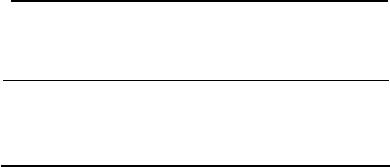
Amount after 1 year = Present value + (Present value r) = Amount after 1 year =
Present value (1 + r).
The amount after 2 years is equal to the amount after 1 year multiplied (1 + r), so
Amount after 2 years = Present value (1 + r)2
Similarly, the amount of money that a person has n years in the future equals:
Amount after n years = Present value (1 + r)n.
Example: $100 saved for 5 years at 6 percent interest equals $100 (1 + 0.06)5 =
$133.82.
Discounting a Future Amount
To discount a future amount into its present value, the formulas above need to be
rearranged.
Rearranging the formula for the amount of money after 1 year shows that:
Present value =
Amount of money 1 year in the future
1 + r
.
In turn, rearranging the formula for the amount of money after 2 years shows that:
Present value =
Amount of money 2 years in the future
(1 + r)2
.
Similarly, the present value of an amount of money n years in the future is:
Present value =
Amount of money n years in the future
(1 + r)n
.
Example: $300 to be paid in 4 years when the interest rate is 5 percent per year for
each year has a present value of $300/(1 + 0.05)4 = $246.81. As a check, $246.81
(1 + 0.05)4 = $300.
Present Value of a Sequence of Future Amounts
If money payments are to be paid at several times in the future, the present value of
this stream of payments is equal to the sum of the present value of each money
payment.
Example: $100 is paid for the next three years at the end of each year. The interest
rate is 6 percent. The present value equals $100/(1 + 0.06) + $100/(1 + 0.06)2 +
$100/(1 + 0.06)3 = $267.30.
The Decision
Renting a unit of capital will require payments to be made in the future. The present
value of this stream of payments is compared to the price of buying the unit of
capital. If the price is greater than the present value of rental payments, the capital
is rented while if the price is less than the present value of the rental payments, the
capital is purchased.
© 2016 Pearson Education, Inc.
M A R K E T S F O R FA C T O R S O F P R O D U C T I O N 1 8 1

A d d i t i o n a l P r o b l e m s
1. Barry makes party ice. He employs workers to bag the
ice who can produce the quantities of ice in an hour
that are listed in the table. The market for ice is
competitive and Barry can sell ice for 50¢ a bag. The
labor market is competitive and the equilibrium wage
rate of baggers is $10.00 an hour.
a. Calculate the marginal product of the workers.
b. Calculate the value of marginal product of the
workers.
c. Find Barry’s demand for labor curve.
d. How much ice does Barry sell?
2. Back at Barry’s ice making plant described in problem
1, the price of party ice falls to 25¢ a bag but baggers’ wages remain at
$10.00 an hour.
a. What happens to Barry’s marginal product?
b. What happens to his value of marginal product?
c. What happens to his demand for labor curve?
d. What happens to the number of baggers that he employs?
3. Back at Barry’s party ice shop described in problem 1, baggers’ wages
increase to $20 an hour, but the price of ice remains at 50¢ a bag.
a. What happens to his value of marginal product?
b. What happens to Barry’s demand for labor curve?
c. How many baggers does Barry employ?
4. What is discounting? What is present value? How do the two relate?
S o l u t i o n s t o A d d i t i o n a l P r o b l e m s
1. a. Marginal product of labor is the increase in
total product that results from hiring one
additional bagger. For example, if Barry
increases the number of baggers hired from
2 to 3, total product (the quantity of ice)
increases from 100 to 180 bags. The
marginal product of 2.5 baggers is 80 bags
of ice. The table shows the remainder of
these marginal products.
© 2016 Pearson Education, Inc.
Number
of
workers
Quantity
of ice
(bags)
1 40
2 100
3 180
4 240
5 290
6 330
7 360
8 380
Number
of
workers
Quantity
of ice
(bags)
Marginal
product
(bags)
1 40
60
2 100
80
3 180
60
4 240
50
5 290
40
6 330
30
7 360
20
8 380
182 C H A P T E R 1 8

b. The value of marginal product of labor is the
increase in total revenue that results from
hiring one additional bagger, which equals
the marginal product multiplied by the price.
The second table shows that the marginal
product of 2.5 workers is 80 bags of ice.
Barry sells the ice for 50¢ a bag, so this
worker’s value of marginal product is 80 bags
50¢ a bag = $40. The schedule showing the
value of marginal products in the table are
calculated similarly.
c. Barry’s demand for labor curve is the same
as his value of marginal product curve.
d. Barry sells 370 bags. Barry hires the number
of baggers that makes the value of marginal product equal to the wage rate of $10
an hour. When Barry hires 7.5 baggers, marginal product is 20 bags of ice in an
hour, which Barry sells for 50 cents a bag. The value of marginal product is $10—the
same as the wage rate. Barry hires 7.5 baggers and produces 370 bags of ice an
hour.
2. a. The marginal product does not change. The marginal product that results from
hiring 2.5 baggers an hour is still 80 bags of ice.
b. The value of marginal product decreases. If Barry hires 2.5 baggers an hour, the
marginal product is (still) 80 bags of ice. Now Barry sells the ice for 25 cents, so the
value of marginal product is 80 bags 25¢ a bag = $20, down from $40.
c. Barry’s demand for labor decreases, and his demand for labor curve shifts leftward.
Barry is willing to pay the baggers their value of marginal product, and the fall in the
price of ice has lowered their value of marginal product.
d. Barry will hire fewer baggers. At the wage rate of $10.00, the number of baggers
Barry hires decreases to 5.5 as the demand for labor curve shifts leftward.
3. a. The value of marginal product does not change. If Barry hires 2.5 baggers an hour,
the marginal product is (still) 80 bags of ice and Barry sells the ice for 50 cents a
bag, so the value of marginal product remains at $40.
b. Barry’s demand for labor remains the same because the value of marginal product
of labor has not changed.
c. Barry will hire fewer baggers. At the wage rate of $20 an hour, Barry hires the
number of baggers that makes the value of marginal product equal to $20 an hour.
Barry now hires 5.5 baggers an hour—down from 7.5 an hour. The marginal product
that results when Barry hires 5.5 baggers is 40 bags of ice an hour, and Barry sells
this ice for 50 cents a bag. The value of marginal product is $20 an hour, which is
equal to the wage that Barry must now pay.
4. Discounting is converting a future amount of money into a present value. If a rm did
not receive money today but instead received that money in the future, the rm would
forgo the interest that this sum of money would have earned over that period. The
present value of a future amount of money is the amount that, if invested today,
grows to be as large as that future amount when the interest that it earns is taken into
account. If a person is to receive a number of periodic payments in the future, then
© 2016 Pearson Education, Inc.
Number
of
workers
Marginal
product
(bags)
Value of
marginal
product
(dollars)
1.5 60 30
2.5 80 40
3.5 60 30
4.5 50 25
5.5 40 20
6.5 30 15
7.5 20 10
M A R K E T S F O R FA C T O R S O F P R O D U C T I O N 183
that person can use discounting to establish the present value of that future income
stream.
A d d i t i o n a l D i s c u s s i o n Q u e s t i o n s
1. Do advances in technology replace jobs with capital and increase
unemployment? Emphasize that the rm’s demand curve for labor depends
on the value of marginal product (VMP) of labor, which is comprised of both
the marginal product (MP) of labor and the value to the rm of the goods or
services labor helps produce, which is price (P). Have the students mentally
work through the following series of impacts that an increase in the MP of
capital has on the labor market in the long run:
What happens to the demand for labor when capital becomes more
productive? Point out that if the rm substitutes capital for labor, then some
labor is unemployed, but the remaining labor is more productive (higher
eective capital to labor ratio) and earns a higher wage (VMP = W).
Who gains from increased productivity? The competitive rm passes on
the cost savings to the consumers through lower prices. The rise in consumer
buying power and the higher incomes of those remaining employees increase
the overall demand for goods and services in the economy.
What happens to the level of employment? Because most rms are
experiencing increased demand for their goods and services, the price facing
rms in these markets rises. The result is that the value of marginal product
for labor in those markets increases with output, increasing the overall
demand for labor in the labor market.
2. Why do college graduates earn, on average, so much more than
non-graduates? Part of the bene ts of earning a degree in higher education
is that the graduate has acquired additional critical thinking skills that make
him or her much more productive (better able to contribute towards making
goods and services that the rest of society values more highly than those
goods and services that non-graduates can make). The existence of a
signi cant wage dierential between these two groups of people over time is
contributing evidence that a college education is a good signal to employers of
a value of marginal product of labor. Looking at the unemployment rates for
those with a college education versus those without a college education as we
have gone through the nancial crisis and the recession will bring this home
even more than wages.
3. Do union actions impose the costs of increased labor bene”ts onto
the consumer? Ask the students to identify the opportunity cost associated
with employment levels and wage rates in unionized labor markets.
Emphasize that labor unions try to raise demand for their labor by
appealing to governments to raise import quotas on foreign goods and
services and to restrict immigration of labor. All of these activities are
aimed at increasing the wages paid to union laborers through increasing
the price of the goods and services produced by union labor. This increases
their value of marginal product and the wage the rm is willing to pay.
If the rm is a perfectly competitive rm, then the increase in labor costs
leads some rms to exit the industry, and the equilibrium market price
that consumers must pay for the goods and services rises and both
producer surplus and consumer surplus decrease.
© 2016 Pearson Education, Inc.
1 8 4 C H A P T E R 1 8
You can make the point that unions are similar to monopolies in that both
violate Adam Smith’s “Invisible Hand” idea. In particular, for both unions
and monopolies, people looking out for only their self-interest take actions
that harm society. So for both unions and monopolies, decisions made in
the private interest do not further the social interest.
You might look at General Motors or Ford pre- nancial crisis and the
concessions that unions made to change the costs of care production.
4. Why do unions support the minimum wage? Union members earn much
more than the minimum wage, so why do unions support the minimum wage?
The answer is that low-skill labor that earns the minimum wage and high-skill
union labor are substitutes. A rise in the minimum wage induces a substitution
eect—a decrease in the quantity of low-skilled labor demanded, and an
increase in the demand for union labor. With an increase in demand for union
labor, the wage rate of union labor rises.
© 2016 Pearson Education, Inc.
M A R K E T S F O R FA C T O R S O F P R O D U C T I O N 1 8 5