Chapter 22
ANSWERS TO QUESTIONS
1. Explain why the aggregate demand curve slopes downward and the short-run aggregate
supply curve slopes upward.
2. Identify three factors that can shift the aggregate demand curve to the right and three different
factors that can shift the aggregate demand curve to the left.
3. “The depreciation of the dollar from February 2009 to February 2014 had a positive effect
on aggregate demand in the United States.” Is this statement true, false, or uncertain?
Explain your answer.
4. What determines the unemployment rate when output is at potential?
5. As the labor force becomes more productive over time, how is the long-run aggregate supply
curve affected?
6. Why are central banks so concerned with inflation expectations?
7. “If prices and wages are perfectly flexible, then γ = 0 and changes in aggregate demand have
8. What factors shift the short-run aggregate supply curve? Do any of these factors shift the
long-run aggregate supply curve? Why?
9. If large budget deficits cause the public to think there will be higher inflation in the future,
what is likely to happen to the short-run aggregate supply curve when budget deficits rise?
10. Internet sites that enable people to post their resumes online reduce the costs of job searches.
How do you think the Internet has affected the natural rate of unemployment?
11. When aggregate output is below the natural rate of output, what happens to the inflation rate
over time if the aggregate demand curve remains unchanged? Why?
12. Suppose the public believes that a newly announced anti-inflation program will work and so
inflation rate in the short run?
The inflation rate will be lower than it otherwise would be and aggregate output will be
13. If the unemployment rate is above the natural rate of unemployment, holding other factors
constant, what will happen to inflation and output?
14. What happens to inflation and output in the short run and the long run when government
spending increases?
15. What factors led to decreases in both the unemployment and inflation rates in the 1990s?
16. Are there any “good” supply shocks?
17. Why did the Federal Reserve pursue inherently recessionary policies in the early 1980s?
18. In what ways is the Volcker disinflation considered a success? In what ways is it considered a
failure?
19. Why did China fare much better than the United States and the United Kingdom during the
2007–2009 financial crisis?
ANSWERS TO APPLIED PROBLEMS
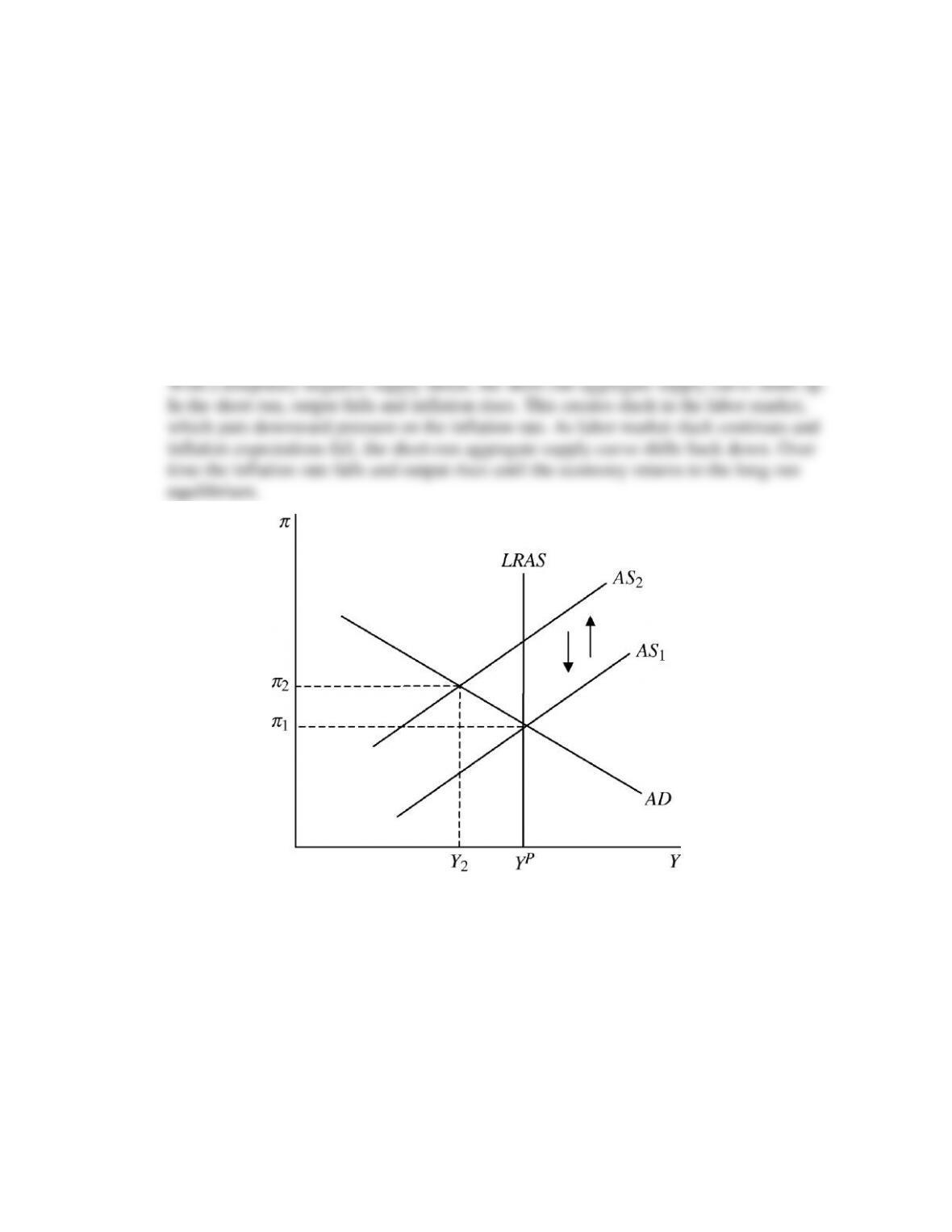
20. Using an aggregate demand and supply graph, show and describe the effects in both the
short run and the long run of the following:
a. A temporary negative supply shock.
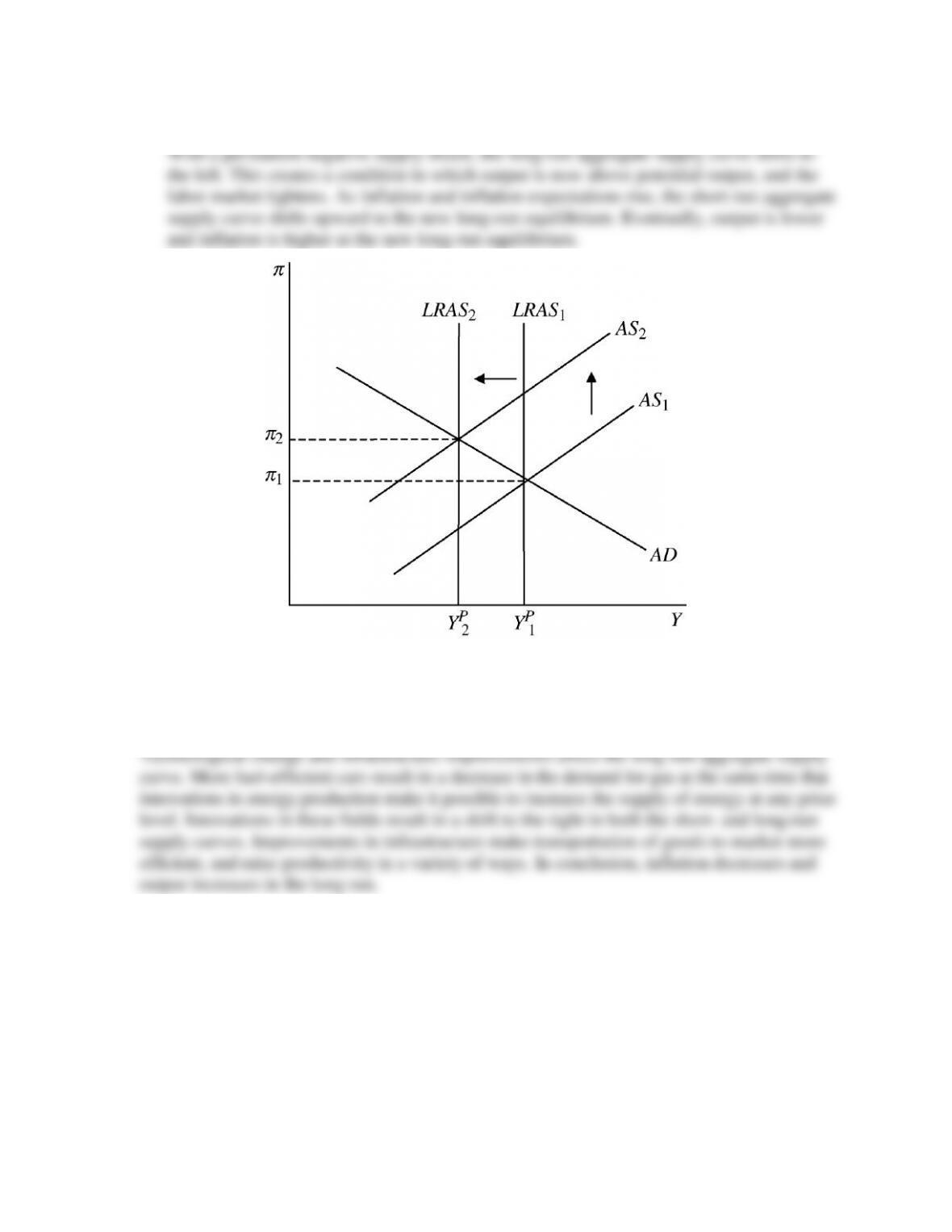
b. A permanent negative supply shock.
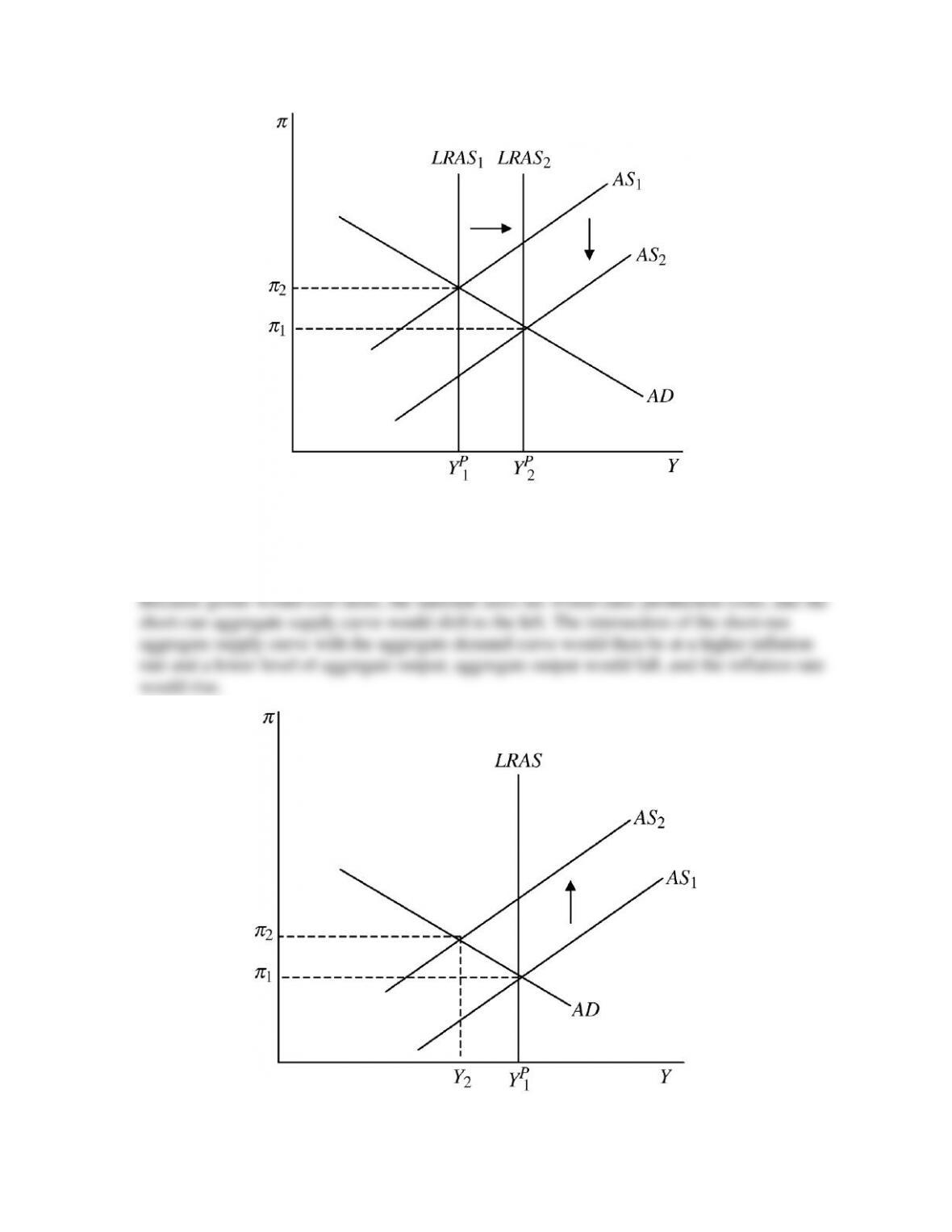
21. Suppose the President gets Congress to pass legislation that encourages investment in
research and the development of new technologies. Assuming this policy leads to a positive
productivity change for the U.S. economy, use aggregate demand and supply analysis to
predict the effects on inflation and output. Demonstrate these effects on a graph.
22. Proposals advocating the implementation of a national sales tax have been presented before
Congress. Predict the effects of such a tax on the aggregate supply and demand curves,
showing the effects on output and inflation. Use a graph of aggregate supply and demand to
demonstrate these effects.