Chapter 15
ANSWERS TO QUESTIONS
1. If the manager of the open market desk hears that a snowstorm is about to strike New York
City, making it difficult to present checks for payment there and so raising the float, what
defensive open market operations will the manager undertake?
2. During the holiday season, when the public’s holdings of currency increase, what defensive
open market operations typically occur? Why?
3. If the Treasury pays a large bill to defense contractors and as a result its deposits with the
Fed fall, what defensive open market operations will the manager of the open market desk
undertake?
As we saw in Chapter 14, when the Treasury’s deposits at the Fed fall, the monetary base
4. If float decreases to below its normal level, why might the manager of domestic operations
consider it more desirable to use repurchase agreements to affect the monetary base, rather
than an outright purchase of bonds?
5. “The only way that the Fed can affect the level of borrowed reserves is by adjusting the
discount rate.” Is this statement true, false, or uncertain? Explain your answer.
6. “The federal funds rate can never be above the discount rate.” Is this statement true, false,
or uncertain? Explain your answer.
7. “The federal funds rate can never be below the interest rate paid on reserves.” Is this
statement true, false, or uncertain? Explain your answer.
8. Why is paying interest on reserves an important tool for the Federal Reserve in managing
crises?
9. Why are repurchase agreements used to conduct most short-term monetary policy
operations, rather than the simple, outright purchase and sale of securities?
10. Open market operations are typically repurchase agreements. What does this tell you about
the likely volume of defensive open market operations relative to the volume of dynamic open
market operations?
11. Following the global financial crisis in 2008, assets on the Federal Reserve’s balance sheet
increased dramatically, from approximately $800 billion at the end of 2007 to $3 trillion by
2011. Many of the assets held are longer-term securities acquired through various loan
programs instituted as a result of the crisis. In this situation, how could reverse repos
(matched sale–purchase transactions) help the Fed reduce its assets held in an orderly
fashion, while reducing potential inflationary problems in the future?
12. “Discount loans are no longer needed because the presence of the FDIC eliminates the
possibility of bank panics.” Is this statement true, false, or uncertain?
13. What are the disadvantages of using loans to financial institutions to prevent bank panics?
14. “Considering that raising reserve requirements to 100% makes complete control of the
money supply possible, Congress should authorize the Fed to raise reserve requirements to
this level.” Discuss.
15. Compare the methods of controlling the money supply—open market operations, loans to
financial institutions, and changes in reserve requirements—on the basis of the following
criteria: flexibility, reversibility, effectiveness, and speed of implementation.
16. Why was the Term Auction Facility more widely used by financial institutions than the discount
window during the global financial crisis?
17. What are the advantages and disadvantages of quantitative easing as an alternative to
conventional monetary policy when short-term interest rates are at the zero lower bound?
18. Why is the composition of the Fed’s balance sheet a potentially important aspect of monetary
policy during an economic crisis?
19. What is the main advantage and the main disadvantage of an unconditional policy
commitment?
ANSWERS TO APPLIED PROBLEMS
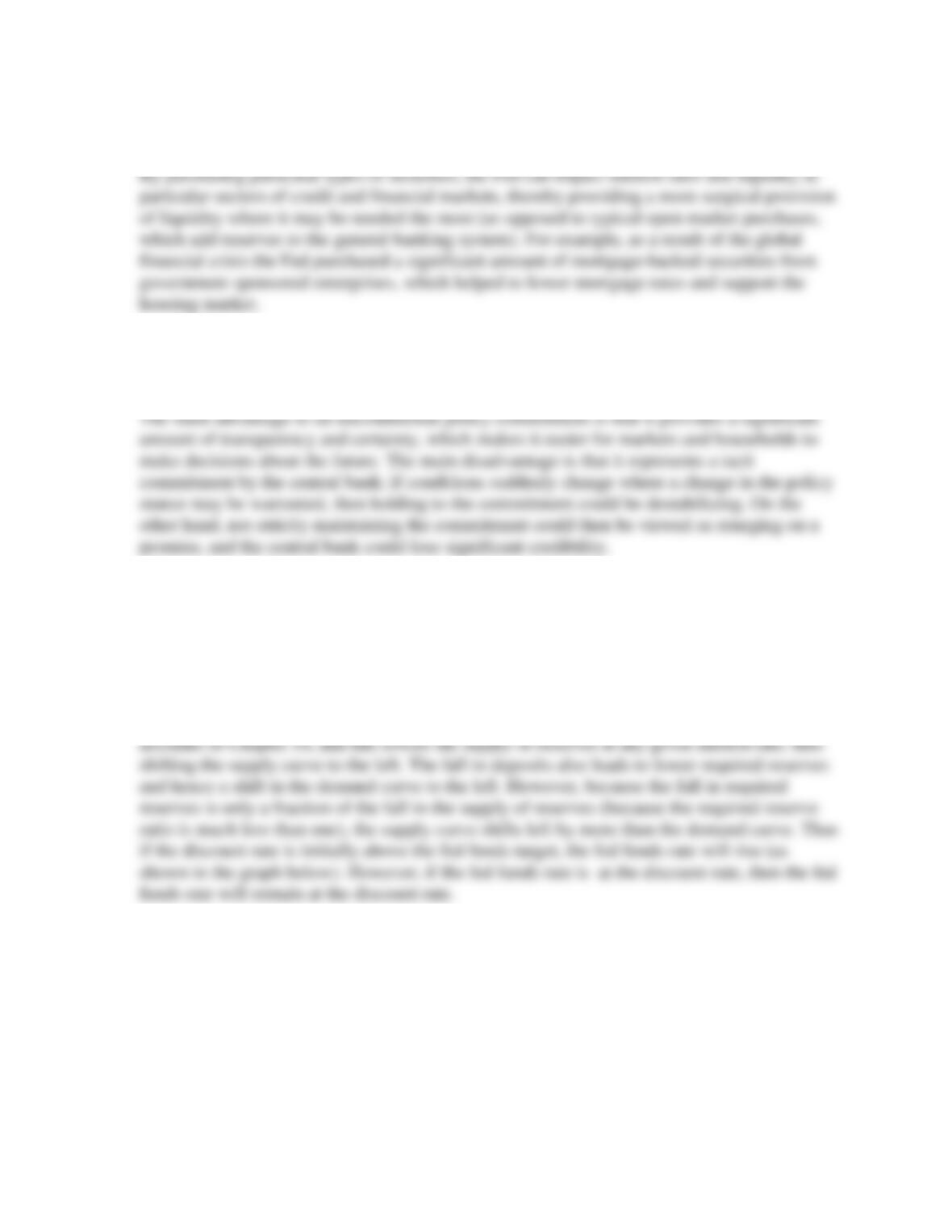
20. If a switch occurs from deposits into currency, what happens to the federal funds rate? Use
the supply and demand analysis of the market for reserves to explain your answer.
The switch from deposits into currency lowers the amount of reserves as was shown in the T-
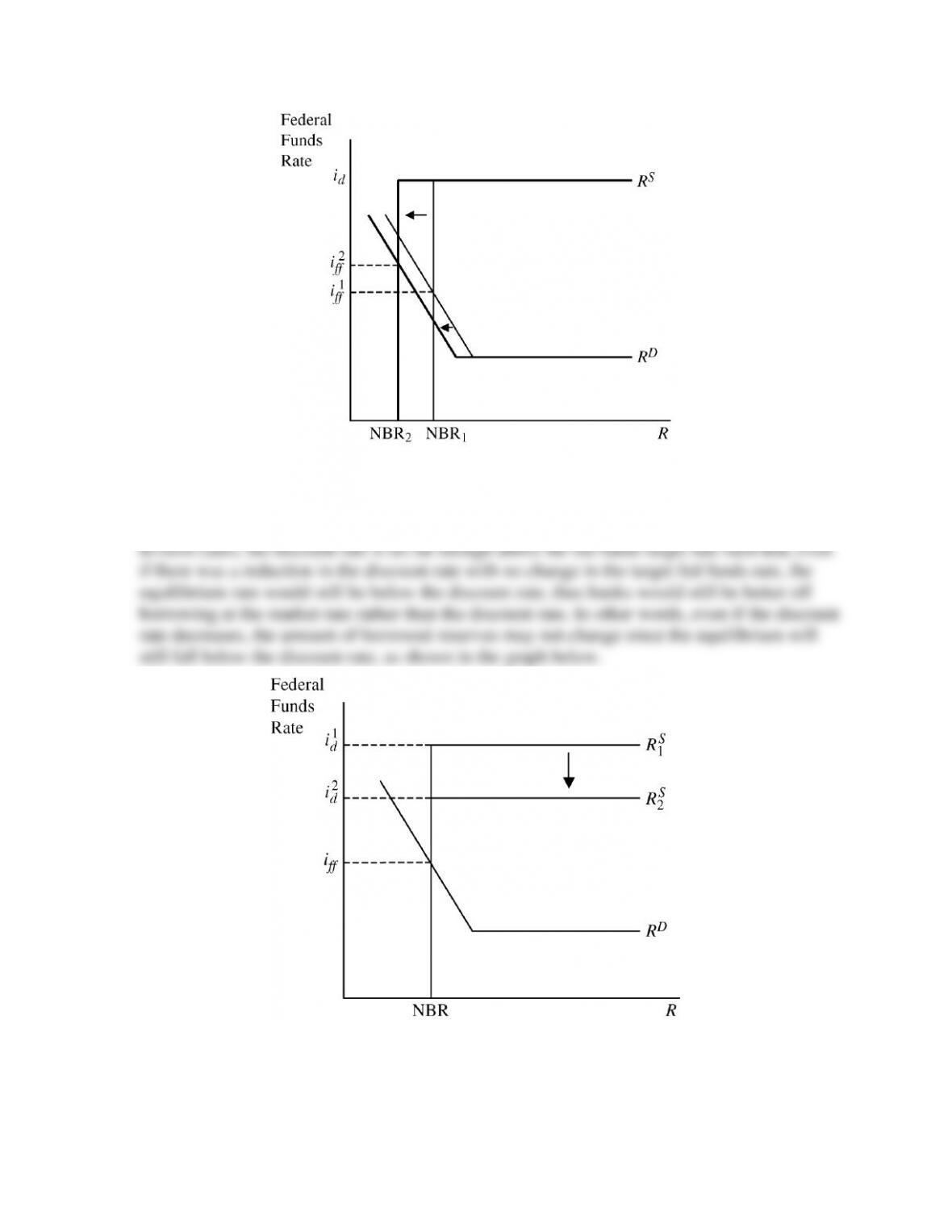
21. Why is it that a decrease in the discount rate does not normally lead to an increase in
borrowed reserves? Use the supply and demand analysis of the market for reserves to explain.