CHAPTER 7
Quick Check
1. a. False. The participation rate has increased over time.
2. a. (Monthly hires + monthly separations)/monthly employment =(5.7+5.2)/139.0=7.8%
3. a. W/P=1/(1+)=1/1.05=0.952
Dig Deeper
4. a. Answers will vary.
©2017 Pearson Education, Inc.
114
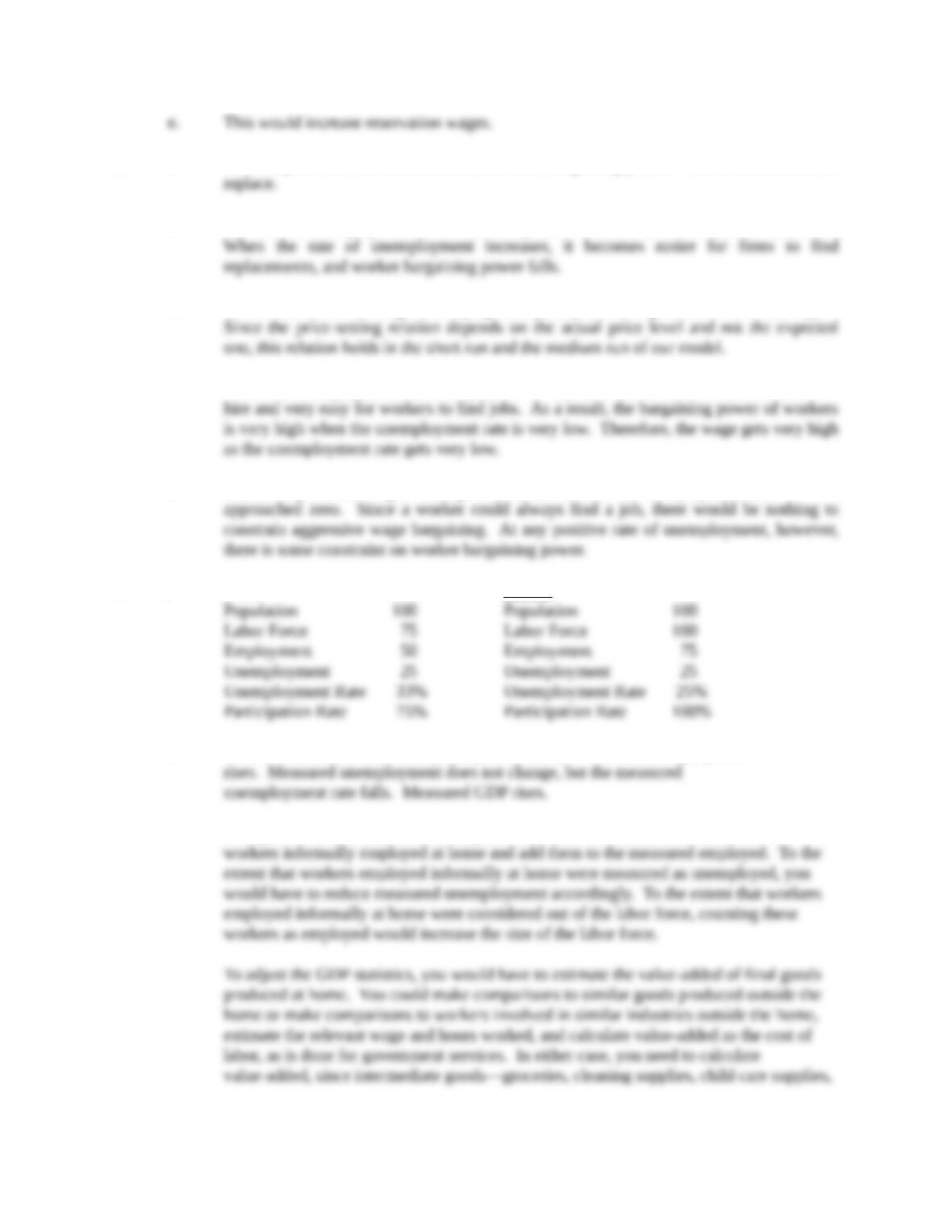
5. a. The computer network administrator has more bargaining power. She is much harder to
b. The rate of unemployment is the most important indicator of labor market conditions.
c. In our model, the real wage is always given by the price-setting relation: W/P=1/(1+).
6. a. When the unemployment rate is very low, it is very difficult for firms to find workers to
b. Presumably, the real wage would grow without bound as the unemployment rate
7. a. EatIn EatOut
b. The measured labor force and participation rate rise. Measured employment
c. To adjust the labor market statistics, you would have to estimate the number of
©2017 Pearson Education, Inc.
115
Explore Further
8. a. 56%; (0.56)2= 31; (0.56)6 = 3.0%
b. 56%
c. second month: (0.56)2=31%; sixth month: (0.56)6 = 3.0%
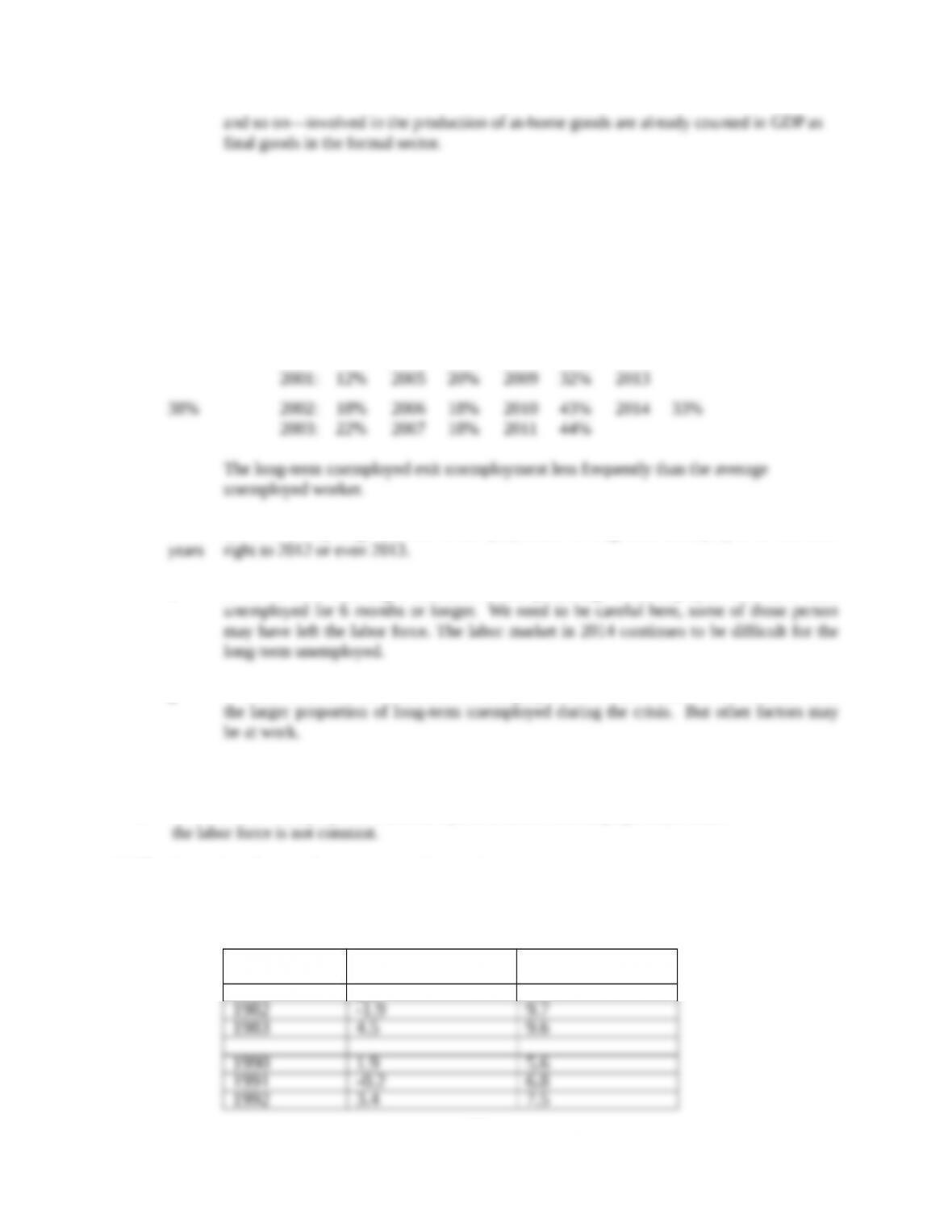
d. 2000: 11% 2004 22% 2008 20% 2012 41%
e. There is a very large increase in the proportion of long term unemployed in the crisis
f. In 2014, there is a slight reduction in the percentage of unemployed who have been
g. It would seem that the extension of unemployment insurance benefits did coincide with
9. a-b. Answers will depend on when the page is accessed.
c. The decline in unemployment does not equal the increase in employment, because
10.The dynamics of unemployment around recessions.
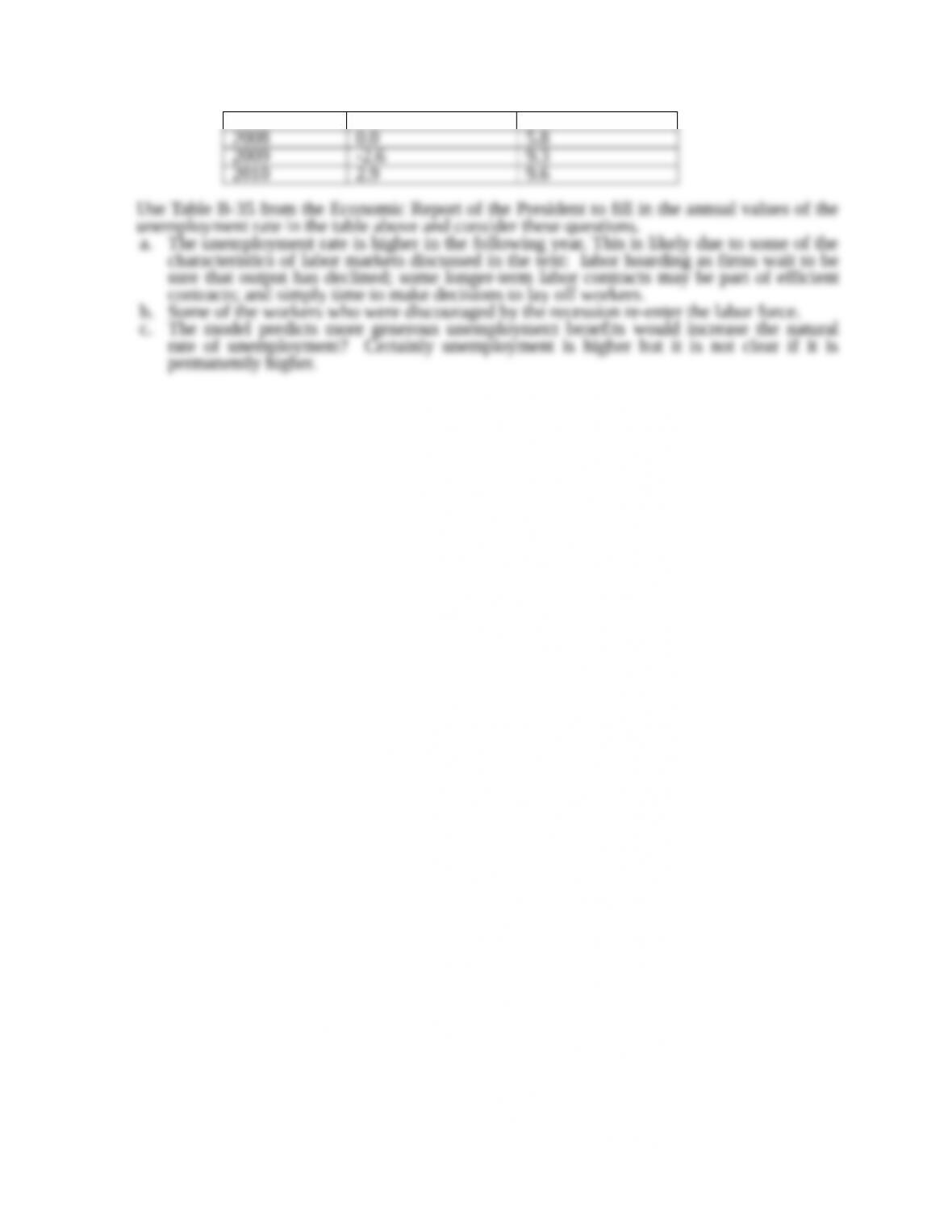
The table below shows the behavior of annual real GDP growth around 3 recessions. This data is
from Table B-4 of the Economic Report of the President:
Year Real GDP Growth Unemployment
rate
1981 2.5 7.6
©2017 Pearson Education, Inc.
116
©2017 Pearson Education, Inc.
117