CHAPTER 3
Quick Check
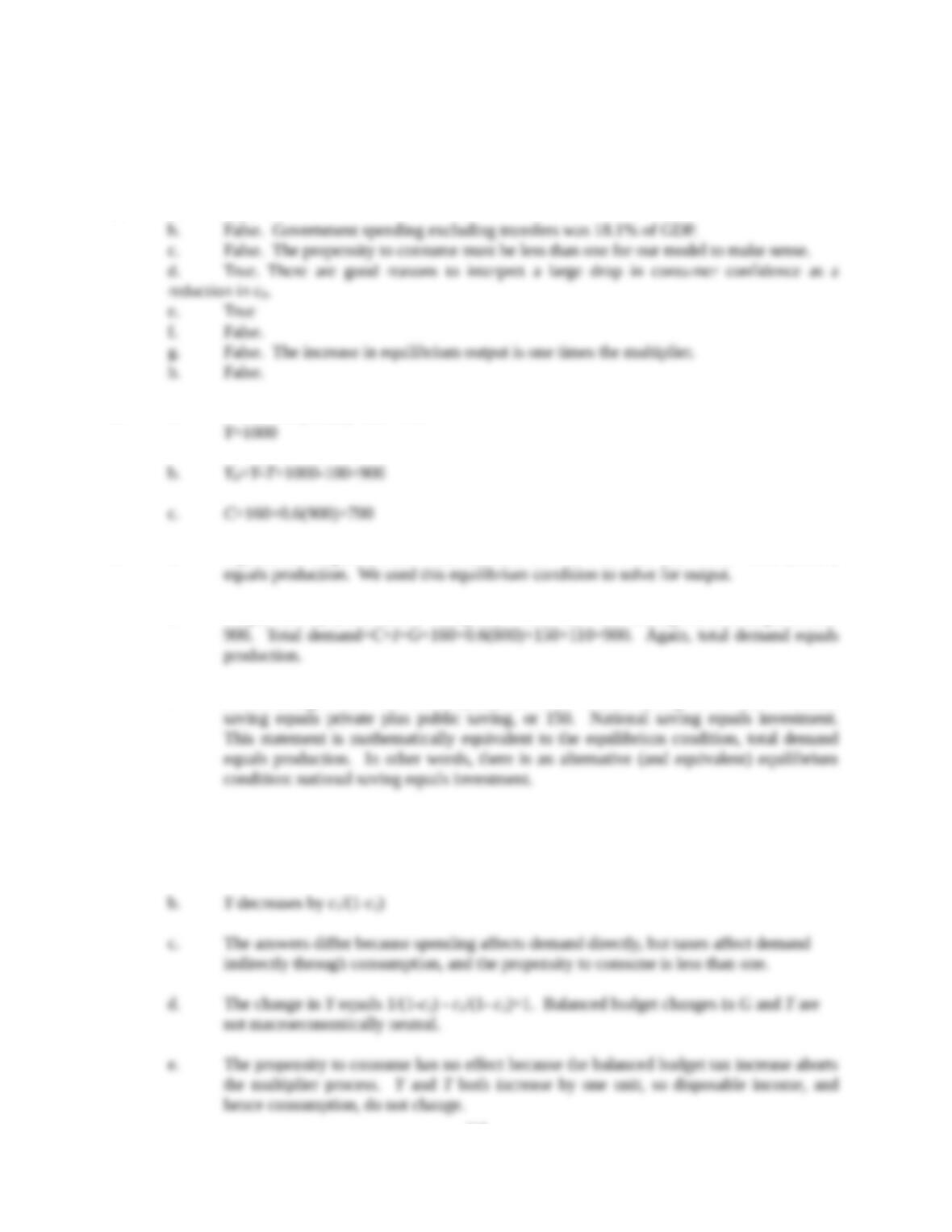
1. a. True.
2. a. Y=160+0.6(Y-100)+150+150
3. a. Equilibrium output is 1000. Total demand=C+I+G=700+150+150=1000. Total demand
b. Output falls by (40 times the multiplier) = 40/(1-.6)=100. So, equilibrium output is now
c. Privatesaving=Y–C–T=900-160-0.6(800)-100=160. Public saving =T–G=-10. National
Dig Deeper
4. a. Y increases by 1/(1-c1)
©2017 Pearson Education, Inc.
114
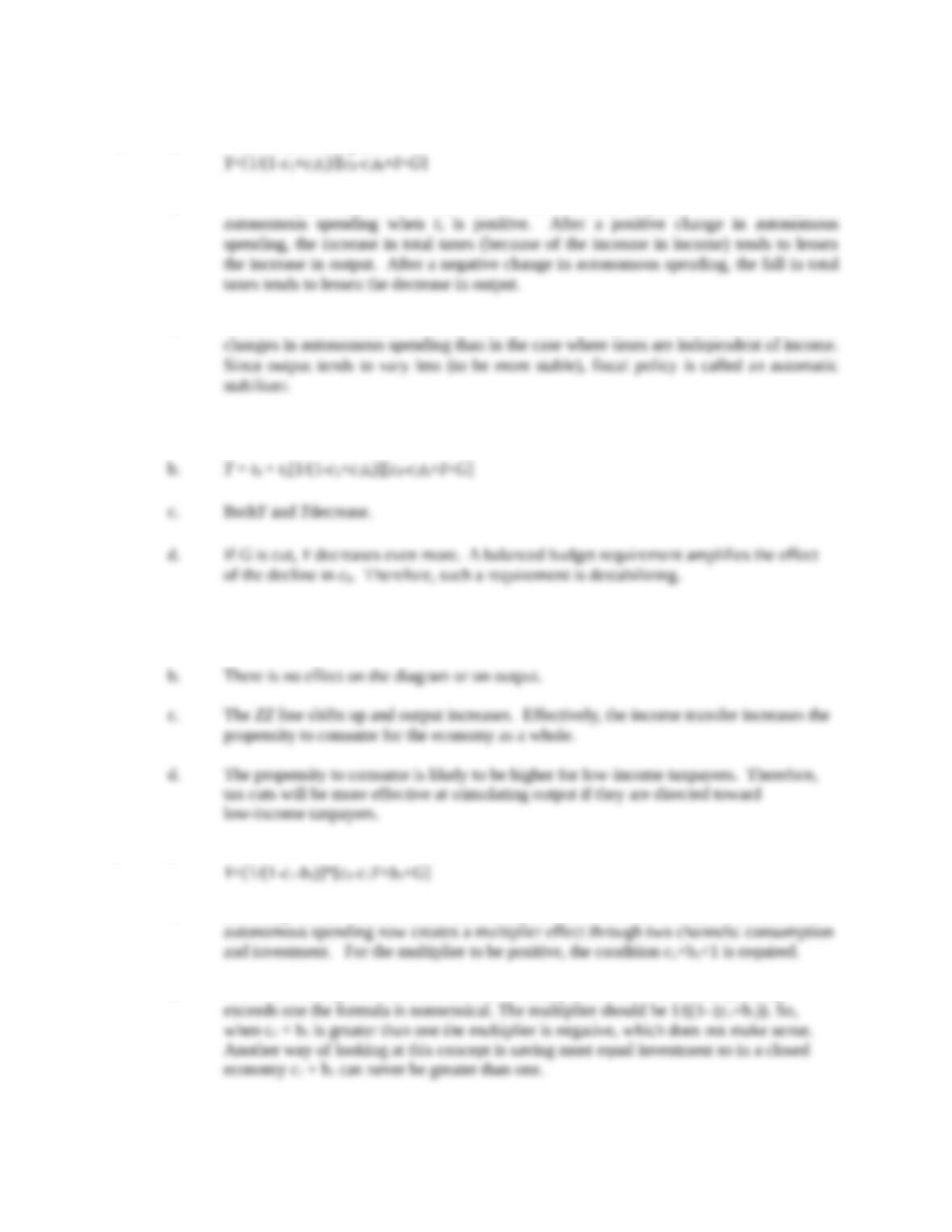
5. a. Y=c0+c1YD+I+Gimplies
b. The multiplier=1/(1-c1+c1t1)<1/(1-c1), so the economy responds less to changes in
c. Because of the automatic effect of taxes on the economy, the economy responds less to
6. a. Y=[1/(1-c1+c1t1)][c0–c1t0+I+G]
7. a. In the diagram representing goods market equilibrium, the ZZ line shifts up. Output
increases.
8. a. Y=C+I+G
b. Including the b1Y term in the investment equation increases the multiplier. Increases in
c. When c1 + b1 is greater than one there is no multiplier effect. When total spending
d. Output increases by b0 times the multiplier. Investment increases by the change in b0
©2017 Pearson Education, Inc.
115
Explore Further
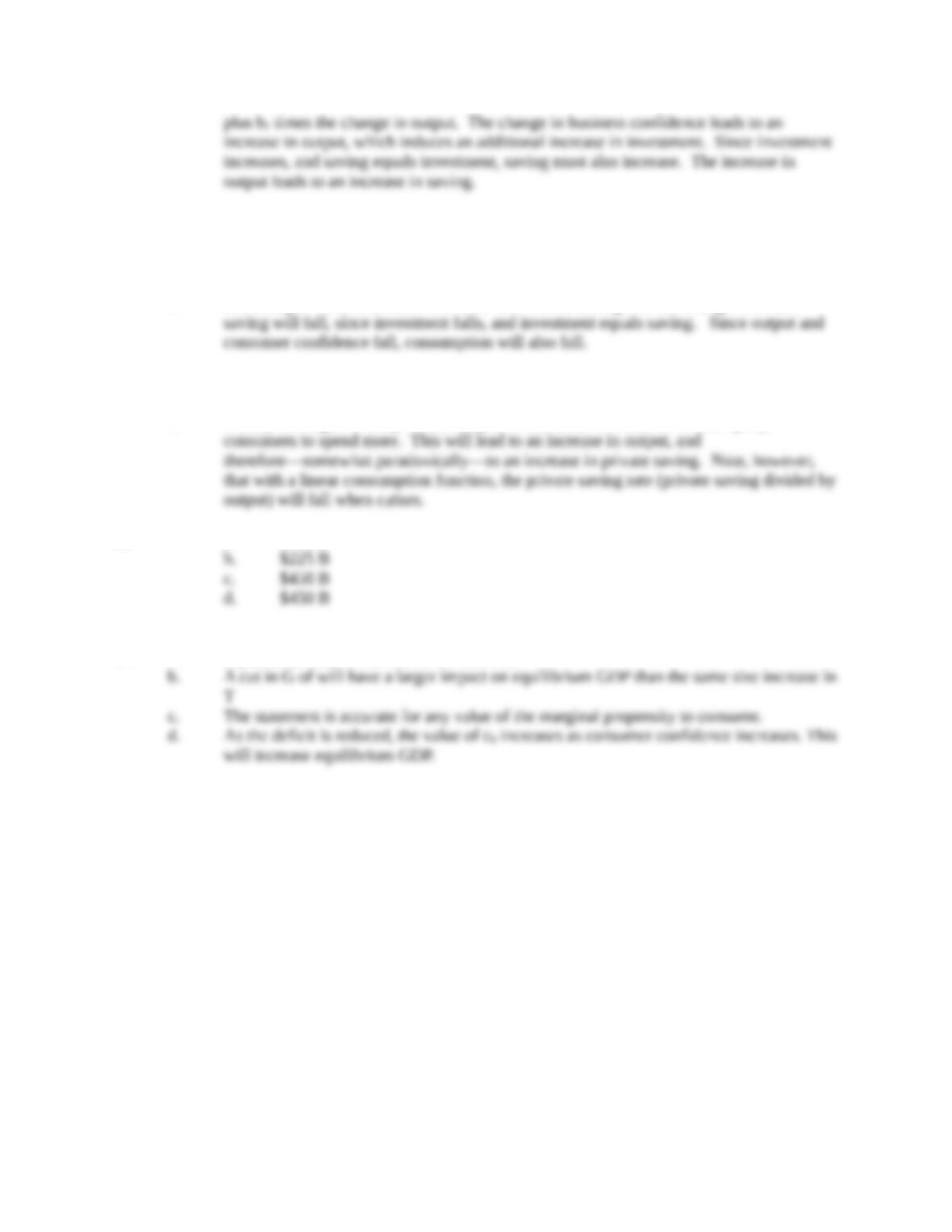
9. a. Output will fall.
b. Since output falls, investment will also fall. Public saving will not change. Private
c. Output, investment, and private saving would have risen.
d. Clearly this logic is faulty. When output is low, what is needed is an attempt by
10. a. $450 B
11. a. Equilibrium output will fall in the short run
©2017 Pearson Education, Inc.
116