CHAPTER 15
Quick Check
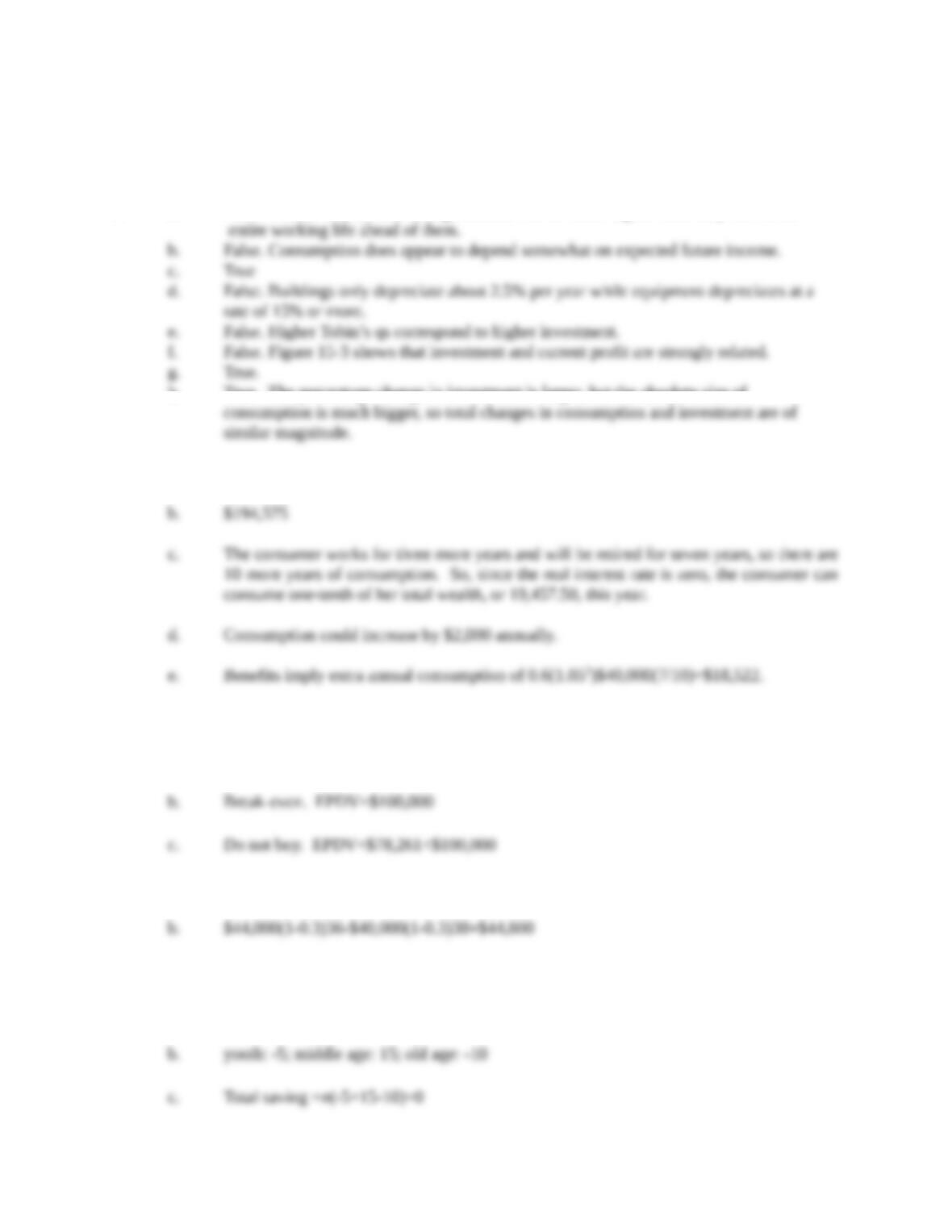
1. a. False. Human wealth for a college student will be much higher since they have their
h. True. The percentage change in investment is larger, but the absolute size of
2. a. (1-0.25)(1+1.05+1.052)$40,000=$94,575
3. The EPDV of purchasing the machine is /(r+) = $18,000/(r+0.08)
a. Buy. EPDV=$138,462>$100,000
4. a. $44,000(1-0.4)36-$40,000(1-0.4)38=$38,400
Dig Deeper
5. a. EPDV of future labor income = $30. Consumption=$10 in all three periods.
©2017 Pearson Education, Inc.
114
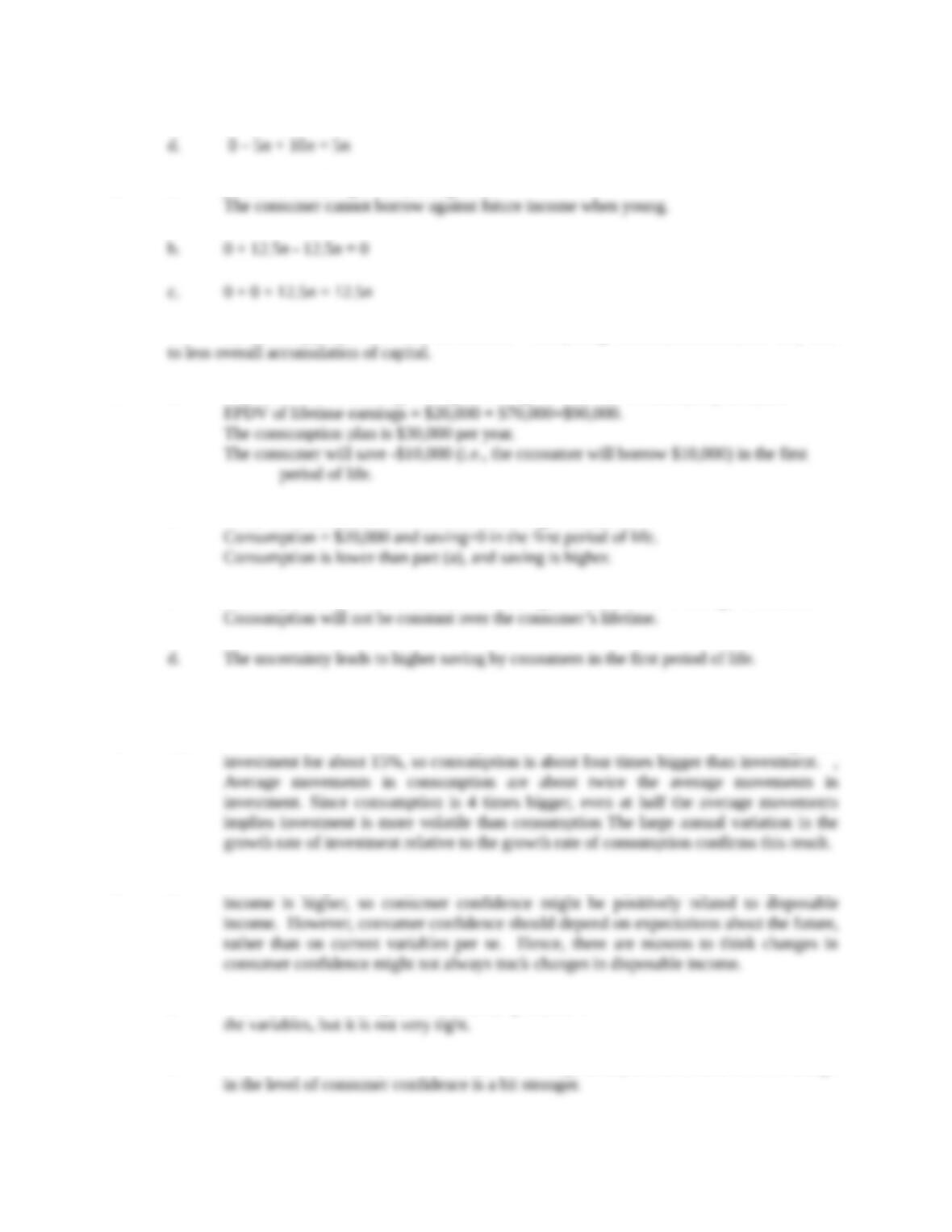
6. a. youth: 5; middle age: 12.5; old age: 12.5
d. By allowing people to borrow to consume when young, financial liberalization may lead
7. a. Expected value of earnings during middle age is 0.5($40,000+$100,000)=$70,000.
b. In the worst case, the EPDV of lifetime earnings = $60,000.
c. Consumption in youth is $20,000; in middle age is $50,000; and in old age is $50,000.
Explore Further
8. a-c. Between 1960 and 20144, consumption accounted for 63% of GDP on average and
9. a. Consumers may be more optimistic about the future (and spend more) when disposable
b. There could be a weak positive relationship between
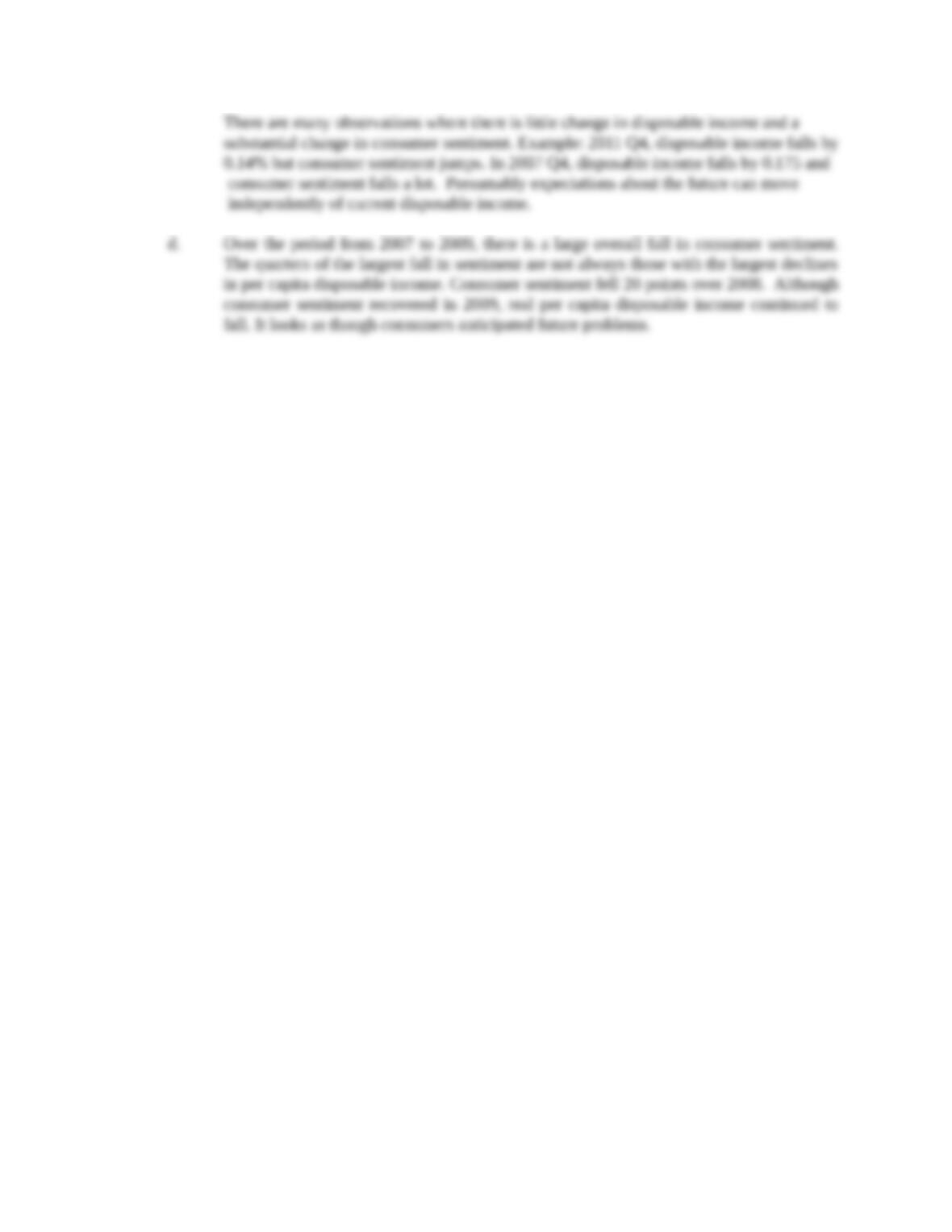
c. The overall relationship between the percent change in disposable income and the change
©2017 Pearson Education, Inc.
115
©2017 Pearson Education, Inc.
116