Chapter 10. The Facts of Growth
I. MOTIVATING QUESTION
What do economists know about growth?
The chapter answers this question from two perspectives. First, it describes the empirical facts about
growth across a spectrum of economies in the postwar period, with a brief discussion of growth over a
broader time span. Second, it introduces an aggregate production function with constant returns to labor
and capital together, but decreasing returns to each input separately. The chapter points out that this
production function implies that growth cannot be sustained indefinitely by capital accumulation.
Ongoing technological progress is required to sustain growth.
II. WHY THE ANSWER MATTERS
Over the course of decades, the effects of output growth on economic welfare dominate the effects of
output fluctuations. Understanding growth is of fundamental importance for the world’s poorer
economies, many of which have suffered negative per capita growth rates in the postwar period.
III. KEY TOOLS, CONCEPTS, AND ASSUMPTIONS
1. Tools and Concepts
i. The chapter introduces logarithmic scales for variable plots.
ii. The chapter develops an aggregate production function with two inputs—labor and capital—and
constant returns to scale.
IV. SUMMARY OF THE MATERIAL
1. Measuring the Standard of Living
Output per person provides some measure of a country’s standard of living. However, to compare real
output per person across countries, it is important to use a consistent set of prices for the goods produced
in each country. Basic subsistence goods tend to be cheaper in poor countries than in rich ones, and
subsistence goods account for a larger proportion of output in poor economies than in rich ones. Unless
these price differences are taken into account, a comparison of real GDP per person will tend to understate
the relative real income of poor countries. GDP measures using a common set of prices are called
purchasing power parity (PPP) numbers. PPP numbers also remove exchange rate fluctuations from the
calculation of the standard of living.
©2017 Pearson Education, Inc. Publishing as Prentice Hall
10-49
Output per person is taken as a measure of the standard of living because economists assume that
happiness increases with output per person. A box in the text argues that the relationship between
happiness and output per person is more complicated. The evidence seems to support the conclusion that
happiness increases with income per person. Overall, rich people are happier than poor people.However,
happiness gains from higher income phase out at higher levels of income.
©2017 Pearson Education, Inc. Publishing as Prentice Hall
10-50
2. Growth in Rich Countries Since 1950
Using PPP numbers, the text examines growth in four large economies—France, Japan, the United
Kingdom, and the United States—and draws two conclusions. First, there has been a vast improvement
in the standard of living in these economies since 1950. Second, levels of output per capita have tended
to converge over time.
The convergence result extends to the OECD countries and even to a set of countries broader than the
OECD. Convergence holds in general among the sample of economies that in 1950 had output per
person at least 1/4 as large as the United States. Not all countries in this sample have converged,
however. For example, Argentina, Uruguay, and Venezuela were all nearly as rich as France in 1950, but
far behind France by 2003. Over time, the force of compounding has a tremendous impact on output and
economic growth.
3. A Broader Look across Time and Space
From a broader historical perspective—say, the past 2000 years or so—growth rates achieved by rich
economies since 1950 seem exceptionally high. Moreover, the historical record seems more accurately
described by leapfrogging than by convergence, since the identity of the richest country has changed
several times since per capita growth became positive in the West (ca. 1500).
A closer look at growth since 1960 for a broad sample of 70 countries reveals clear signs of convergence
for OECD economies and most Asian economies, but not, in general, for African economies. Many
African economies—already poor in 1960—have had negative growth since then.
The text notes these facts about growth in African economies, but focuses on growth in rich and emerging
economies. There is some discussion of institutions in slow-growing countries in Chapter 12.
4. Thinking About Growth: A Primer
To think seriously about growth, it is necessary to modify the aggregate production function to include
capital:
Y=F(K,N).
(10.1)
+ +
The function F defines the state of technology. The function is assumed to exhibit constant returns to
scale (CRS) over labor and capital together, and therefore decreasing returns to each factor individually.
The CRS assumption also implies that equation (10.1) can be rewritten as
Y/N=F(K/N, 1).
(10.3)
+
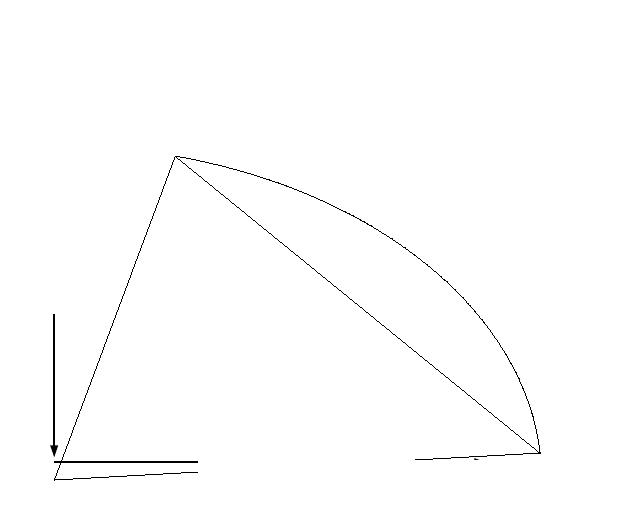
Given CRS, the increase in output per worker from an extra unit of capital per worker will decline as K/N
increases. Thus, the aggregate production function has the shape depicted in Figure 10-4.
There are two potential sources of growth in output per worker. One is capital accumulation (increases in
K/N) , and the other is technological progress, which changes the F function so that a given value of K/N
produces more and more Y/N. Capital accumulation alone cannot sustain growth indefinitely, because
©2017 Pearson Education, Inc. Publishing as Prentice Hall
10-51
decreasing returns imply that larger and larger increases in capital per worker would be required. At some
point, society would be unwilling to save the necessary resources to provide for the required increases in
capital per worker, and growth would cease. Sustained growth requires sustained technological progress.
Figure 10-4: Output and Capital per Worker
V. PEDAGOGY
The analysis of growth seems relatively disconnected from the material in the earlier chapters. One way
to tie things together is to assume that the production function is without capital and define the normal
growth rate of output as the productivity growth rate plus the growth rate of the labor force. This
definition implies that normal growth of output per worker equals productivity growth. Essentially, this
chapter (along with Chapters 11 and 12) asks whether this definition must be modified when capital is
included in the production function. In the long run, the answer is no. Over time, output growth is
determined by productivity growth. Chapter 12 makes this point more formally.
VI. EXTENSIONS
Instructors may wish to explain how the inclusion of capital would affect the analysis of the medium run
developed in previous chapters. Essentially, the working assumption thus far has been that the capital
stock changes very slowly, so it can be treated as fixed in the medium run. A fixed capital stock and a
neoclassical production function (equation (10.1)) together imply that the firm’s marginal cost curve rises
©2017 Pearson Education, Inc. Publishing as Prentice Hall
Output per Worker, Y/N
Capital per Worker, K/N
Y/N=F(K/N,1)
10-52
with employment, since there are decreasing returns to labor. Thus, the markup over the wage will not be
fixed, but will depend positively on the level of employment, as well as the market power of firms.
VII. OBSERVATIONS
The aggregate production function in the text is defined in terms of output per worker. If the ratio of
employment to population is constant, then growth of output per worker equals growth of output per
person.
©2017 Pearson Education, Inc. Publishing as Prentice Hall
10-53