P5-14. Time value: Present value of a lump sum
LG 2; Intermediate
N 6, I 8%, FV $100
Solve for PV $63.02
P5-15. Personal finance: Time value and discount rates
LG 2; Intermediate
(3) N 10, I 12%, FV $1,000,000
b. (1) N 15, I 6%, FV $1,000,000 (2)
(3) N 15, I 12%, FV $1,000,000
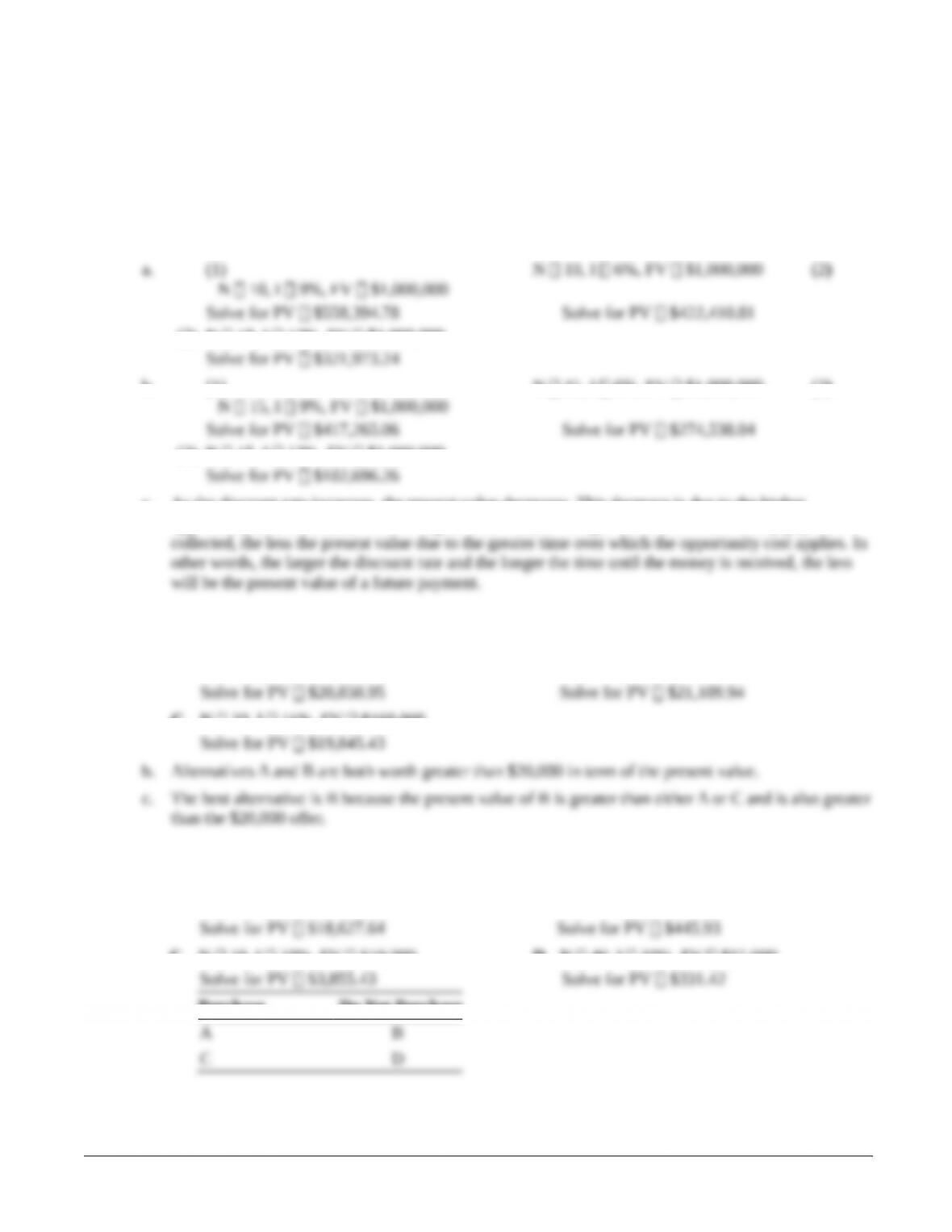
c. As the discount rate increases, the present value decreases. This decrease is due to the higher
opportunity cost associated with the higher rate. Also, the longer the time until the lottery payment is
P5-16. Personal finance: Time value comparisons of single amounts
LG 2; Intermediate
a. AN 3, I 11%, FV $28,500 BN 9, I 11%, FV $54,000
CN 20, I 11%, FV $160,000
P5-17. Personal finance: Cash flow investment decision
LG 2; Intermediate
AN 5, I 10%, FV $30,000 BN 20, I 10%, FV $3,000
CN 10, I 10%, FV $10,000 DN 40, I 10%, FV $15,000
Purchase Do Not Purchase
© 2015 Pearson Education, Inc.
2 Gitman/Zutter Principles of Managerial Finance, Brief, Seventh Edition
P5-18. Calculating deposit needed
LG 2; Challenge
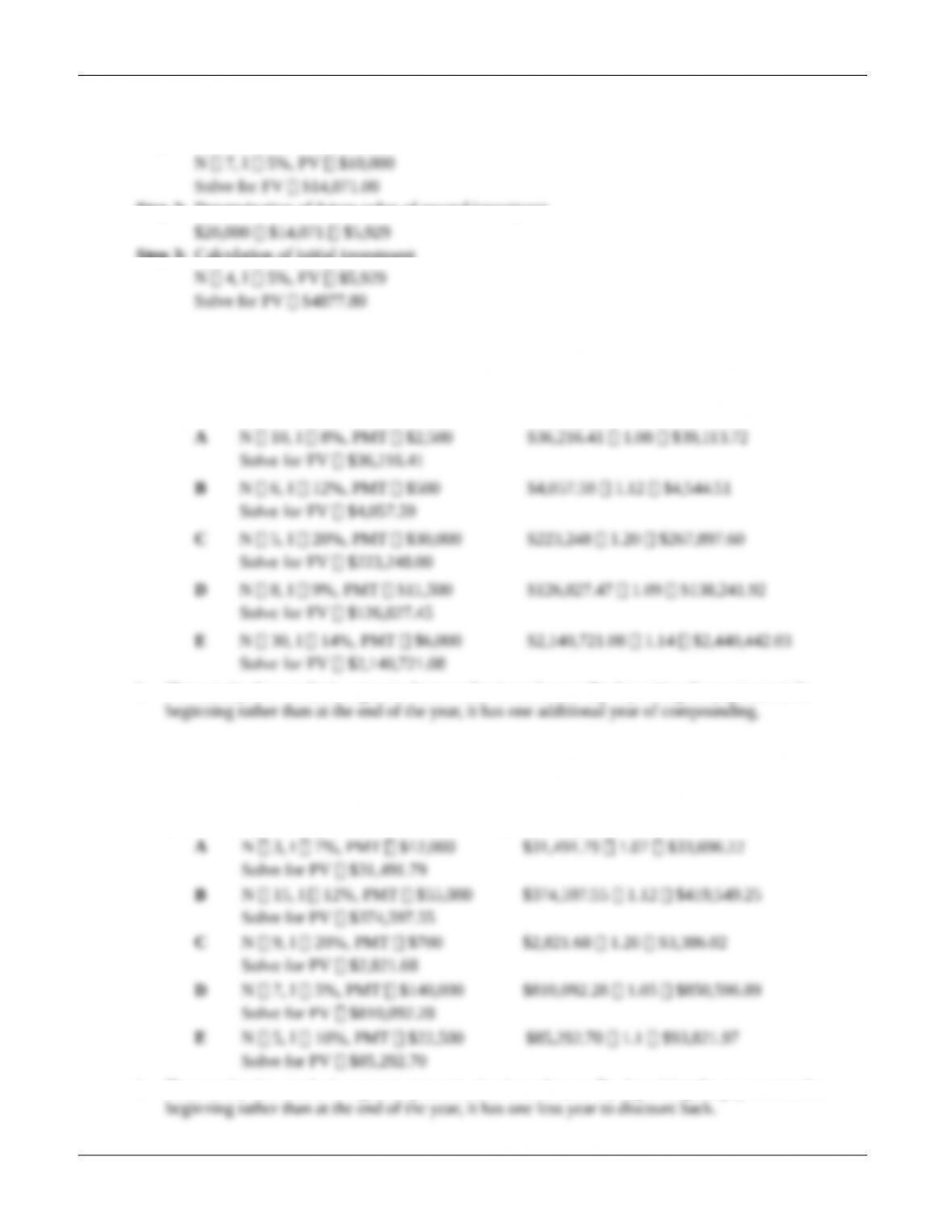
Step 1: Determination of future value of initial investment
Step 2: Determination of future value of second investment
Step 3: Calculation of initial investment
P5-19. Future value of an annuity
LG 3; Intermediate
a. Future value of an ordinary annuity vs. annuity due
(1) Ordinary Annuity (2) Annuity Due
b. The annuity due results in a greater future value in each case. By depositing the payment at the
P5-20. Present value of an annuity
LG 3; Intermediate
a. Present value of an ordinary annuity vs. annuity due
(1) Ordinary Annuity (2) Annuity Due
b. The annuity due results in a greater present value in each case. By depositing the payment at the
© 2015 Pearson Education, Inc.
Chapter 3: Financial Statements and Ratio Analysis 3
P5-21. Personal finance: Time value—annuities
LG 3; Challenge
a. Annuity C (Ordinary) Annuity D (Due)
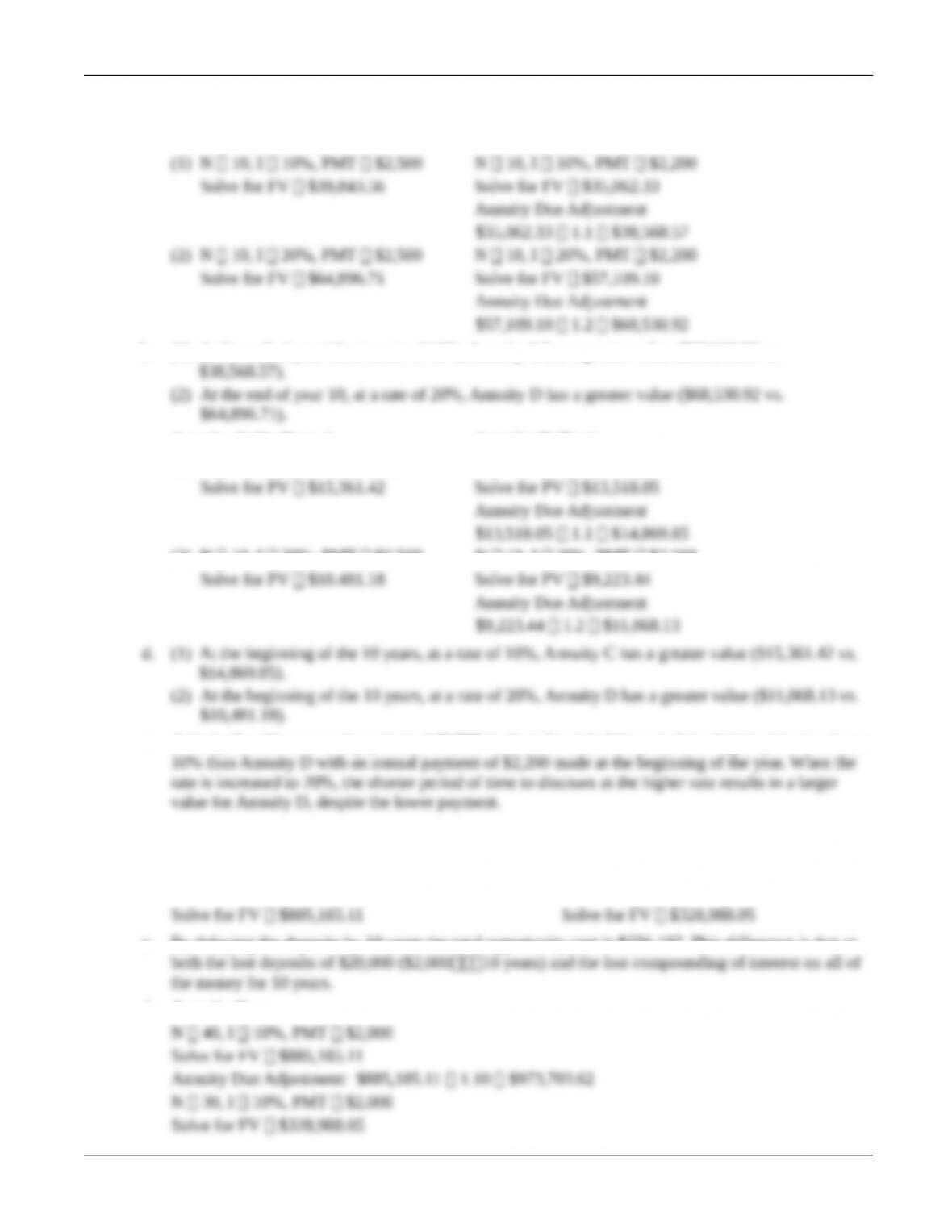
b. (1) At the end of year 10, at a rate of 10%, Annuity C has a greater value ($39,843.56 vs.
c. Annuity C (Ordinary) Annuity D (Due)
(1) N 10, I 10%, PMT $2,500 N 10, I 10%, PMT $2,200
(2) N 10, I 20%, PMT $2,500 N 10, I 20%, PMT $2,200
e. Annuity C, with an annual payment of $2,500 made at the end of the year, has a higher present value at
P5-22. Personal finance: Retirement planning
LG 3; Challenge
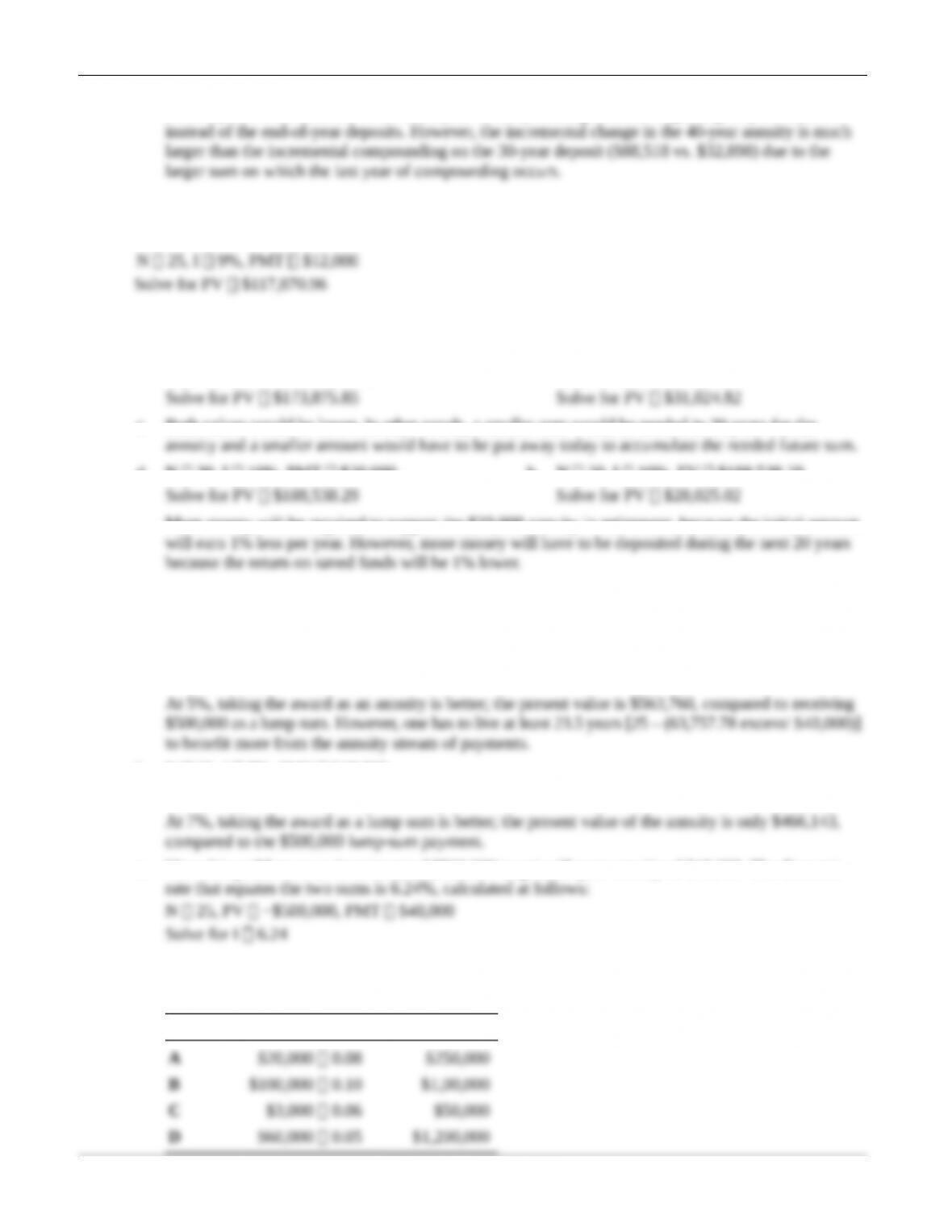
a. N 40, I 10%, PMT $2,000 b. N 30, I 10%, PMT $2,000
c. By delaying the deposits by 10 years the total opportunity cost is $556,197. This difference is due to
d. Annuity Due:
© 2015 Pearson Education, Inc.
4 Gitman/Zutter Principles of Managerial Finance, Brief, Seventh Edition
Annuity Due Adjustment: $328,988.05 1.10 $361,886.85
Both deposits increased due to the extra year of compounding from the beginning-of-year deposits
P5-23. Personal finance: Value of a retirement annuity
LG 3; Intermediate
P5-24. Personal finance: Funding your retirement
LG 2, 3; Challenge
a. N 30, I 11%, PMT $20,000 b. N 20, I 9%, FV $173.875.85
c. Both values would be lower. In other words, a smaller sum would be needed in 20 years for the
d. N 30, I 10%, PMT $20,000 b. N 20, I 10%, FV $188,538.29
More money will be required to support the $20,000 annuity in retirement, because the initial amount
P5-25. Personal finance: Value of an annuity vs. a single amount
LG 2, 3; Intermediate
a. N 25, I 5%, PMT $40,000
Solve for PV $563,757.78
b. N 25, I 7%, PMT $40,000
Solve for PV $466,143.33
c. View this problem as an investment of $500,000 to get a 25-year annuity of $40,000. The discount
P5-26. Perpetuities
LG 3; Basic
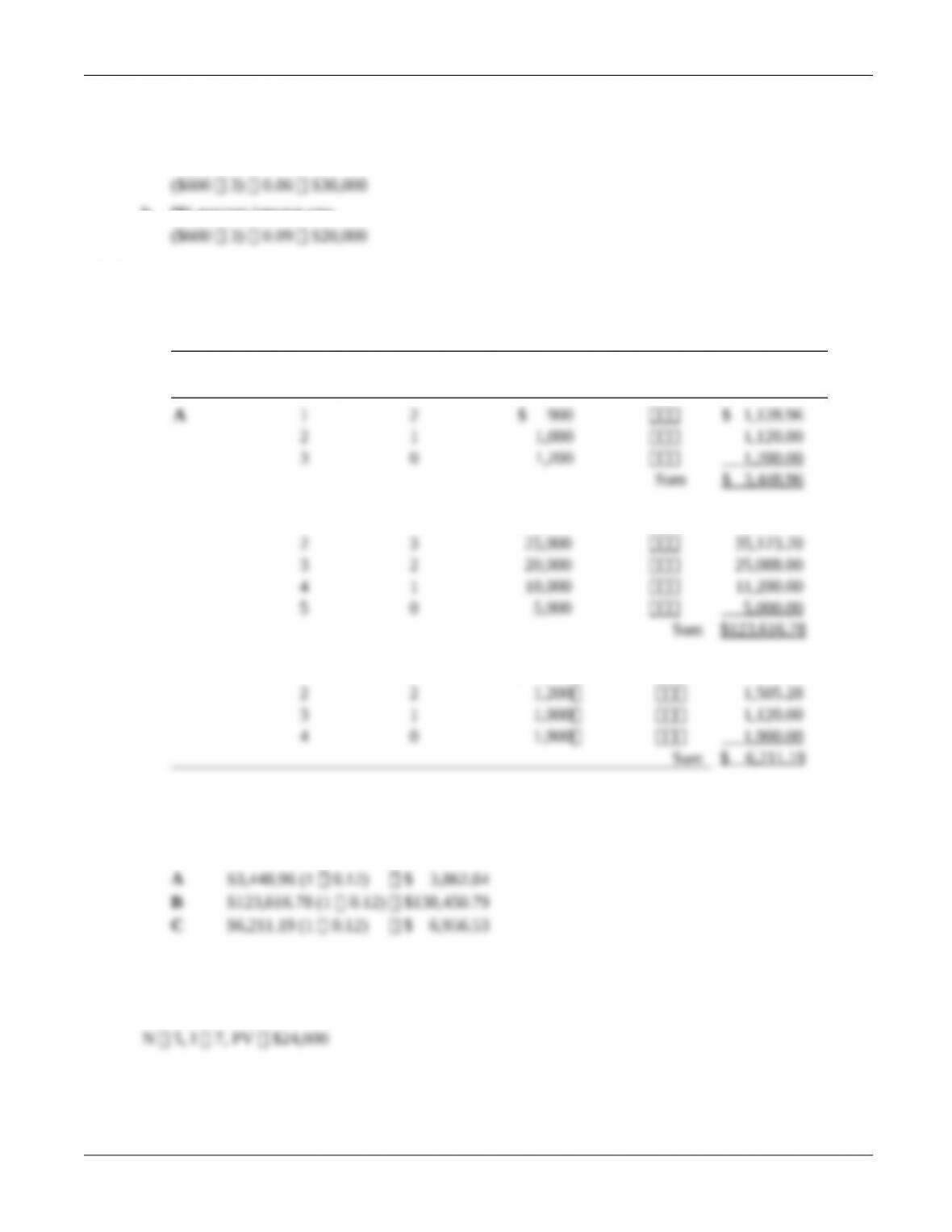
Case Equation Value
© 2015 Pearson Education, Inc.
Chapter 3: Financial Statements and Ratio Analysis 5
P5-27. Personal finance: Creating an endowment
LG 3; Intermediate
a. 6% interest rate
b. 9% percent interest rate
P5-28. Value of a mixed stream
LG 4; Challenge
a.
Cash Flow
Stream Year
Number of Years
to Compound Cash flow
Interest
Rate Future Value
B1 4 $30,000 $ 47,205.58
C1 3 $ 1,200 $1,685.91
b. If payments are made at the beginning of each period the present value of each of the end-of-period
cash flow streams will be multiplied by (1 i) to get the present value of the beginning- of-period cash
flows.
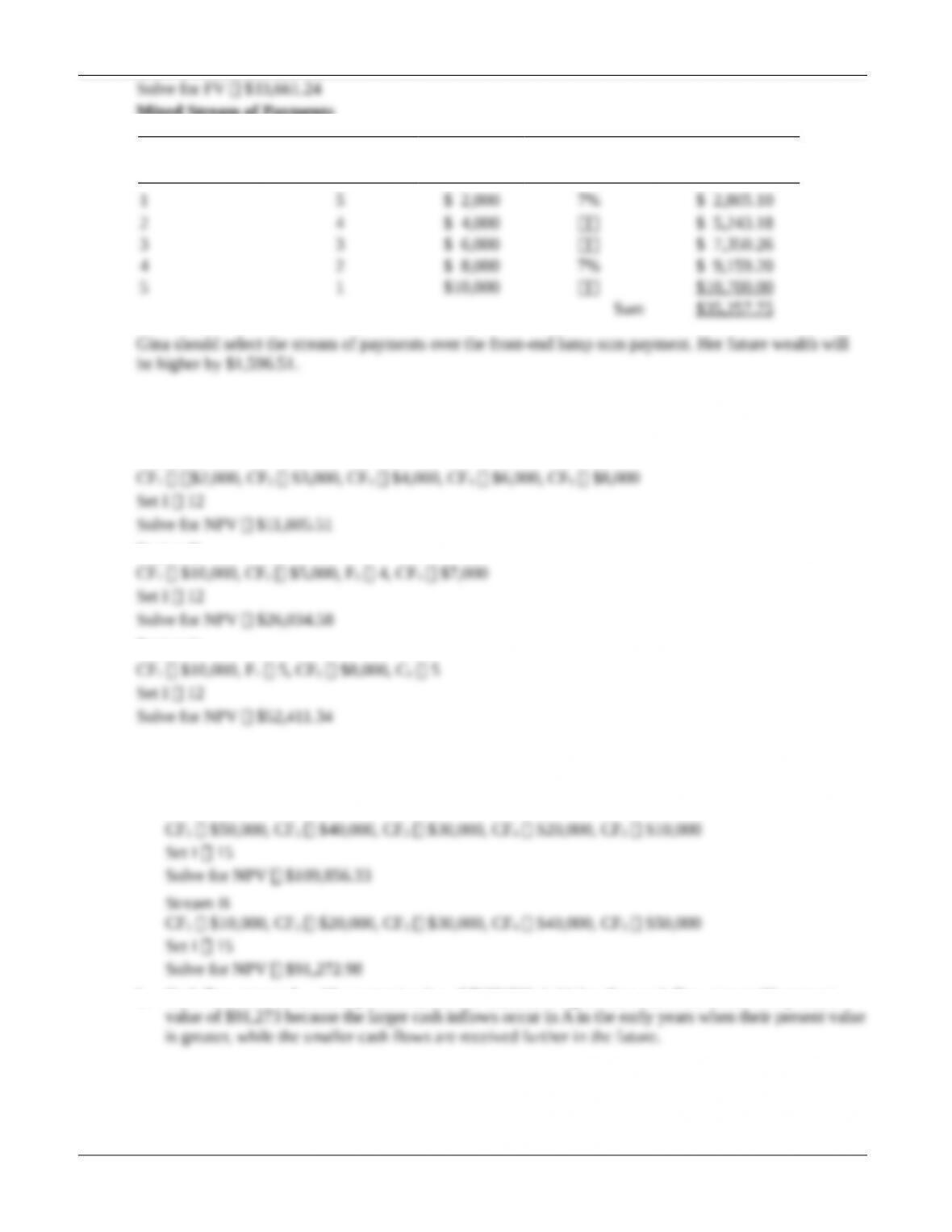
P5-29. Personal finance: Value of a single amount vs. a mixed stream
LG 4; Intermediate
Lump-Sum Deposit
© 2015 Pearson Education, Inc.
6 Gitman/Zutter Principles of Managerial Finance, Brief, Seventh Edition
Mixed Stream of Payments
Beginning of
Year
Number of Years
to Compound Cash Flow Interest Rate Future Value
P5-30. Value of mixed streams
LG 4; Basic
Project A
Project B
Project C
P5-31. Present value—Mixed streams
LG 4; Intermediate
a. Stream A
b. Cash flow stream A, with a present value of $109,856, is higher than cash flow stream B’s present
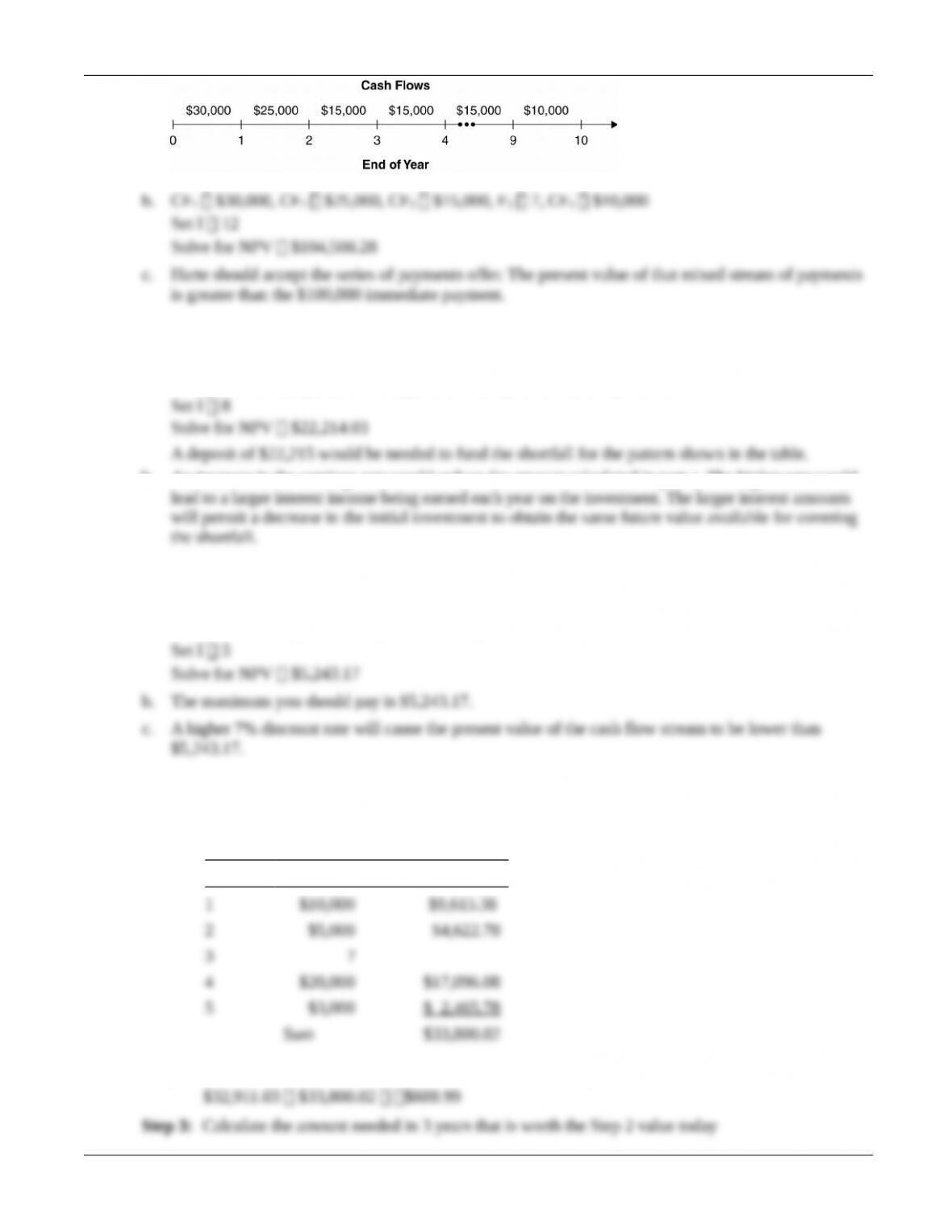
P5-32. Value of a mixed stream
LG 1, 4; Intermediate
a.
© 2015 Pearson Education, Inc.
Chapter 3: Financial Statements and Ratio Analysis 7
P5-33. Personal finance: Funding budget shortfalls
LG 4; Intermediate
a. CF1 $5,000, CF2 $4,000, CF3 $6,000, CF4 $10,000, CF5 $3,000
b. An increase in the earnings rate would reduce the amount calculated in part a. The higher rate would
P5-34. Relationship between future value and present value-mixed stream
LG 4; Intermediate
a. CF1 $800, CF2 $900, CF3 $1,000, CF4 $1,500, CF5 $2,000
P5-35. Relationship between future value and present value-mixed stream
LG 4; Intermediate
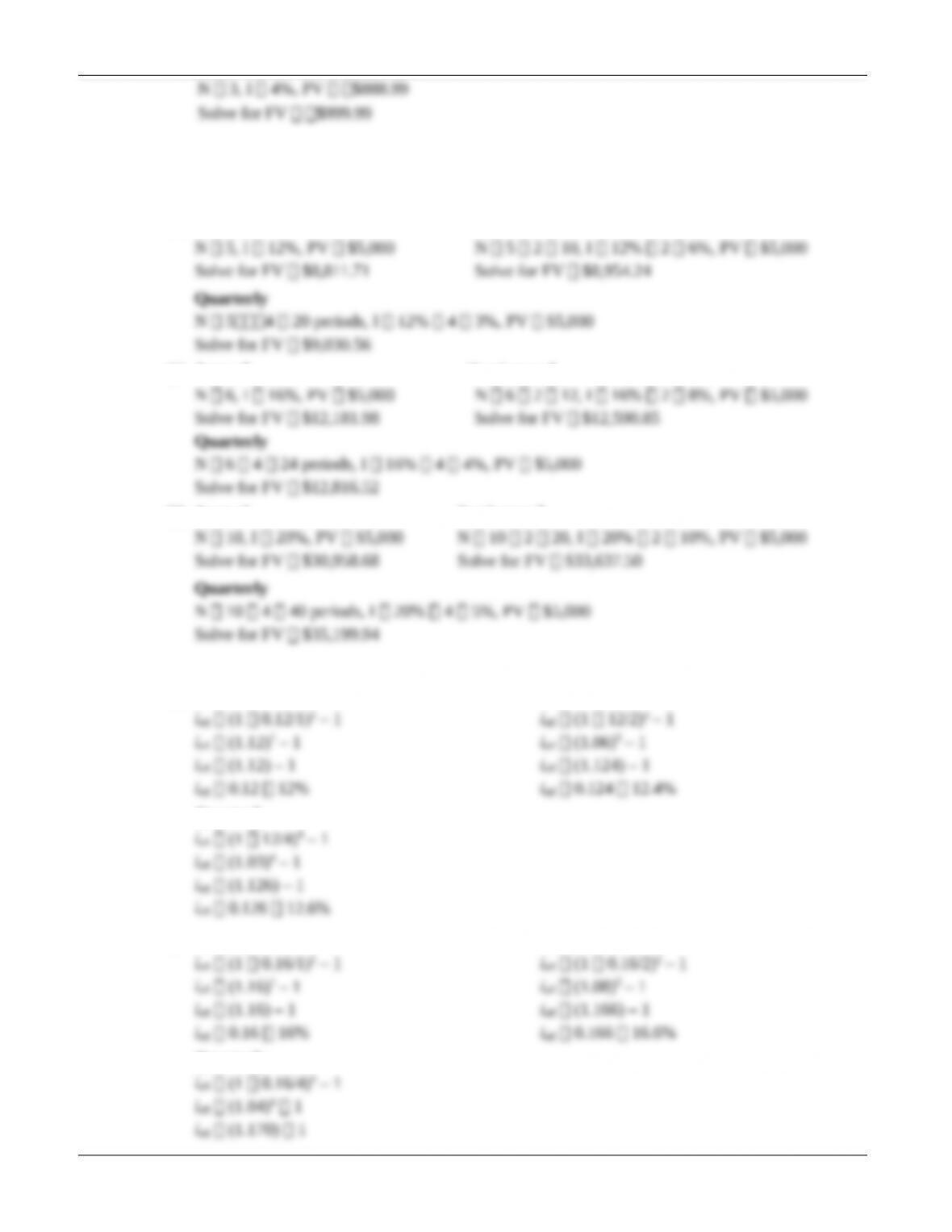
Step 1: Calculation of present value of known cash flows
Year CFtPV @ 4%
Step 2: Identify difference between total amount and sum in Step 1.
© 2015 Pearson Education, Inc.
8 Gitman/Zutter Principles of Managerial Finance, Brief, Seventh Edition
P5-36. Changing compounding frequency
LG 5; Intermediate
a. Compounding frequency
(1) Annual Semiannual
(2) Annual Semiannual
(3) AnnualSemiannual
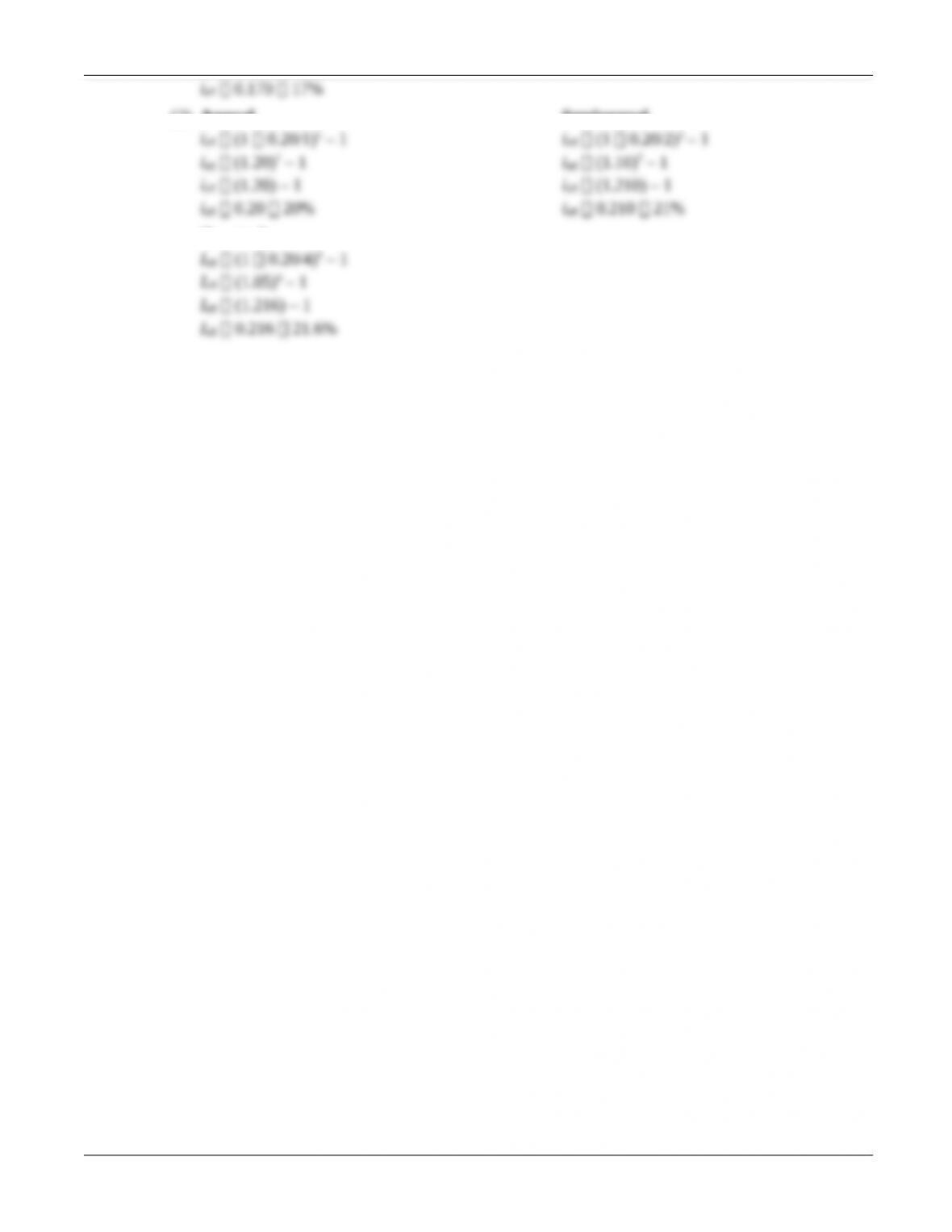
b. Effective interest rate: ieff (1 r/m)m – 1
(1) Annual Semiannual
Quarterly
(2) Annual Semiannual
Quarterly
© 2015 Pearson Education, Inc.
Chapter 3: Financial Statements and Ratio Analysis 9
(3) Annual Semiannual
Quarterly
© 2015 Pearson Education, Inc.