Chapter 4: Cash Flow and Financial Planning 49
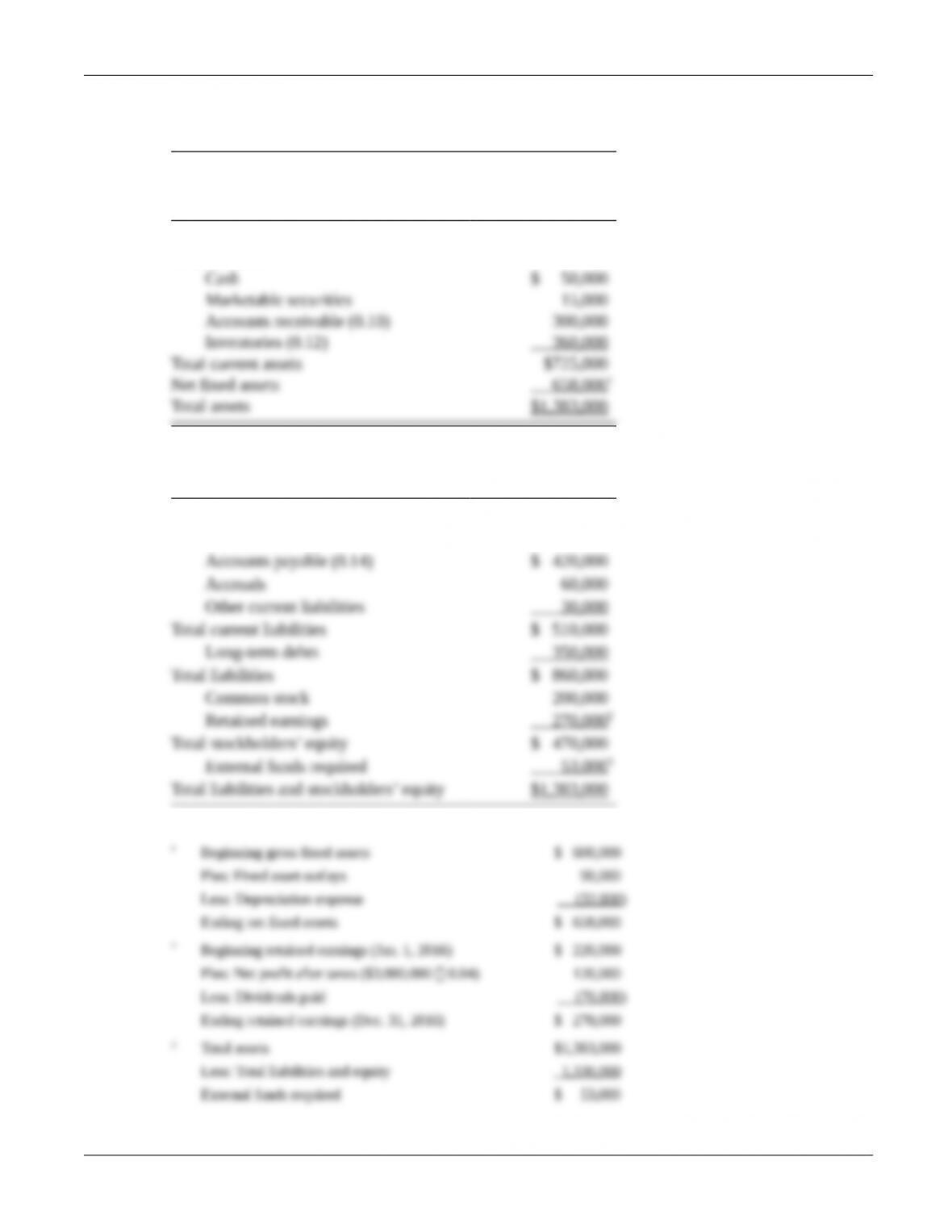
P4-17. Pro forma balance sheet—basic
LG 5; Intermediate
a.
Pro Forma Balance Sheet
Leonard Industries
December 31, 2016
Assets
Current assets
Pro Forma Balance Sheet
Leonard Industries
December 31, 2016
Liabilities and stockholders’ equity
Current liabilities
© 2015 Pearson Education, Inc.
50 Gitman/Zutter Principles of Managerial Finance, Brief, Seventh Edition
b. Based on the forecast and desired level of certain accounts, the finance manager should arrange for
c. If Leonard Industries reduced its 2016 dividend to $17,000 or less, the firm would not need any
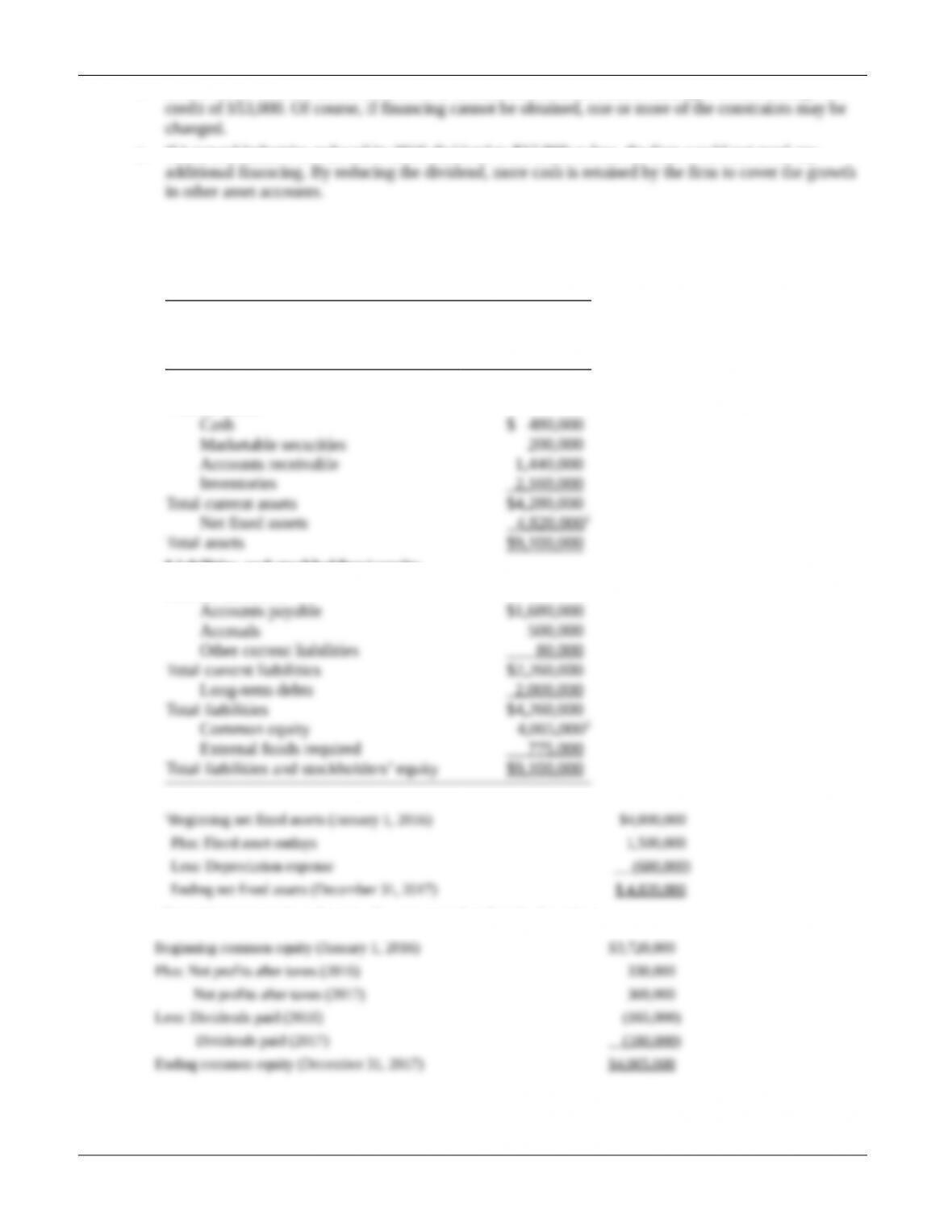
P4-18. Pro forma balance sheet
LG 5; Intermediate
a.
Pro Forma Balance Sheet
Peabody & Peabody
December 31, 2017
Assets
Current assets
Liabilities and stockholders’ equity
Current liabilities
2Note: Common equity is the sum of common stock and retained earnings.
b. Peabody & Peabody must arrange for additional financing of at least $775,000 over the next two years
based on the given constraints and projections.
© 2015 Pearson Education, Inc.
Chapter 4: Cash Flow and Financial Planning 51
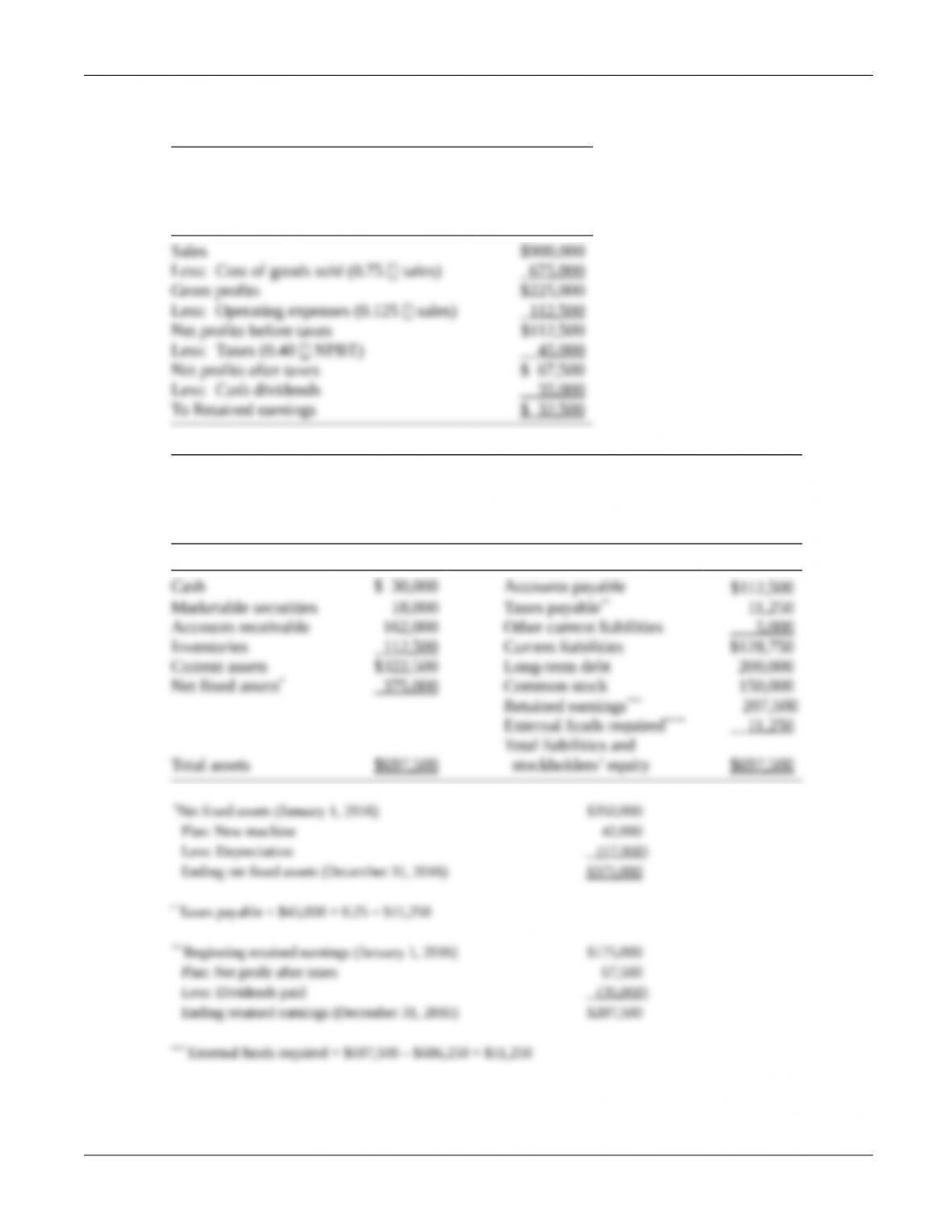
P4-19. Integrative—pro forma statements
LG 5; Challenge
a.
Pro Forma Income Statement
Red Queen Restaurants
for the Year Ended December 31, 2016
(percent-of-sales method)
b.
Pro Forma Balance Sheet
Red Queen Restaurants
December 31, 2016
(Judgmental Method)
Assets Liabilities and Equity
c. Using the judgmental approach, the external funds requirement is $11,250.
© 2015 Pearson Education, Inc.
52 Gitman/Zutter Principles of Managerial Finance, Brief, Seventh Edition
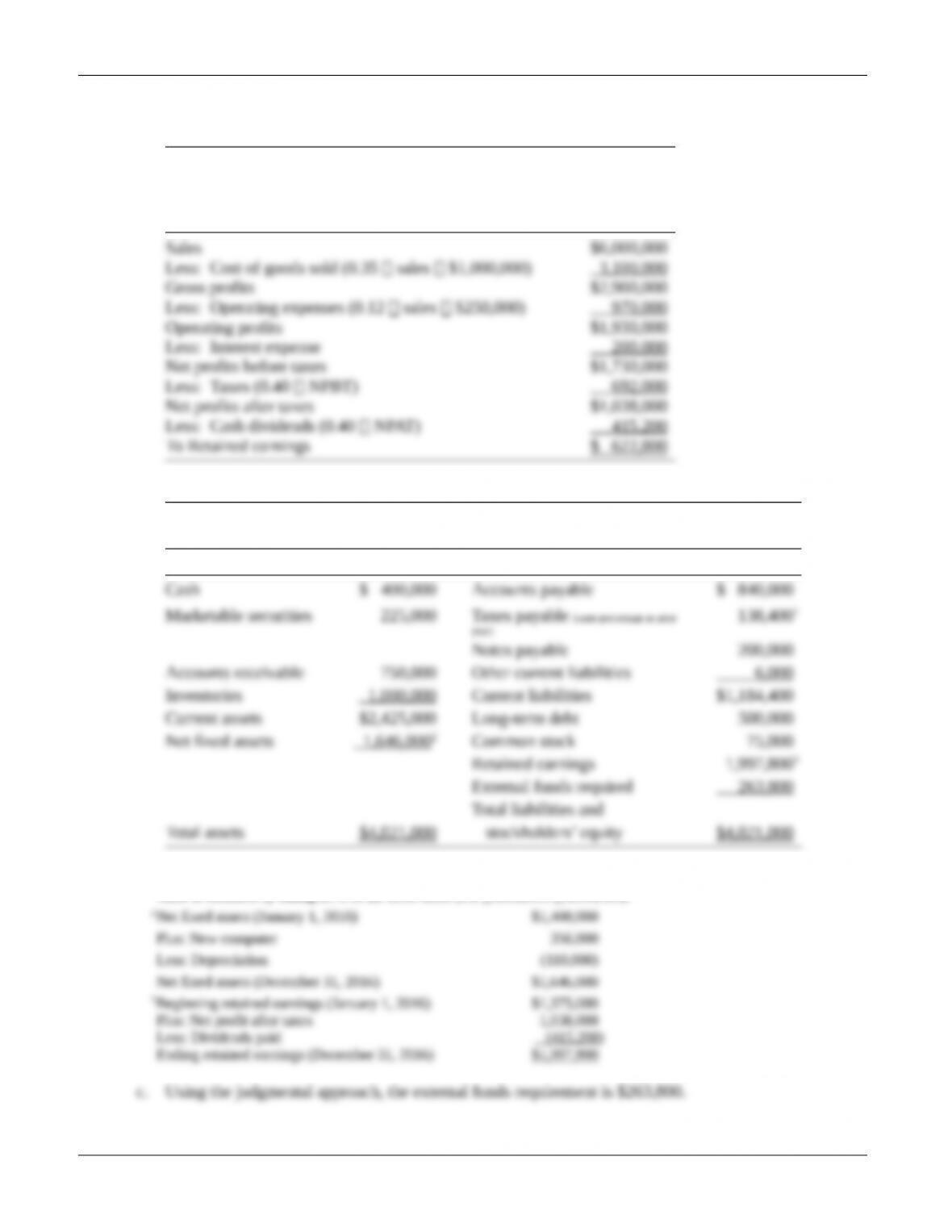
P4-20. Integrative—pro forma statements
LG 5; Challenge
a.
Pro Forma Income Statement
Provincial Imports, Inc.
for the Year Ended December 31, 2016
(Based on fixed and variable cost data)
b.
Pro Forma Balance Sheet Provincial Imports, Inc.
December 31, 2016 (Judgmental Method)
Assets Liabilities and Equity
1Taxes payable for 2015 are nearly 20% of the 2015 taxes on the income statement. The pro forma
value is obtained by taking 20% of the 2016 taxes (0.2 $692,000 $138,400).
© 2015 Pearson Education, Inc.
Chapter 4: Cash Flow and Financial Planning 53
P4-21. Ethics problem
LG 3; Intermediate
Investors welcome increased transparency, accountability, and integrity. It is probable that investors will
appreciate dissemination of negative information, although we would expect the stock price to drop
Case
Case studies are available on www.myfinancelab.com.
Preparing Martin Manufacturing’s 2016 Pro Forma Financial Statements
In this case, the student prepares pro forma financial statements, using them to determine whether Martin
Manufacturing will require external funding in order to embark on a major expansion program.
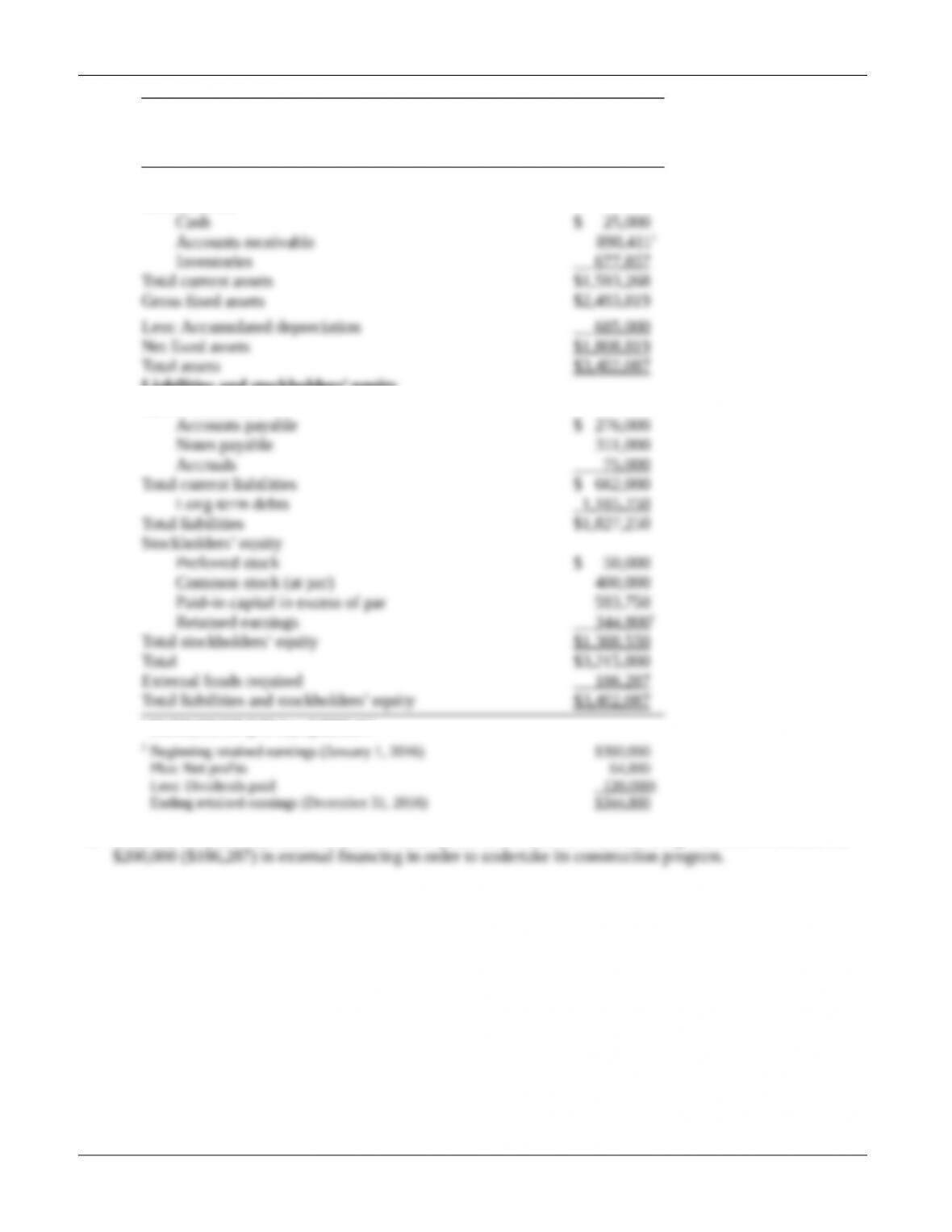
a.
Martin Manufacturing Company
Pro Forma Income Statement
for the Year Ended December 31, 2016
Note:Calculations “driven” by cost of goods sold and operating expense (excluding
depreciation, which is given) percentages.
© 2015 Pearson Education, Inc.
54 Gitman/Zutter Principles of Managerial Finance, Brief, Seventh Edition
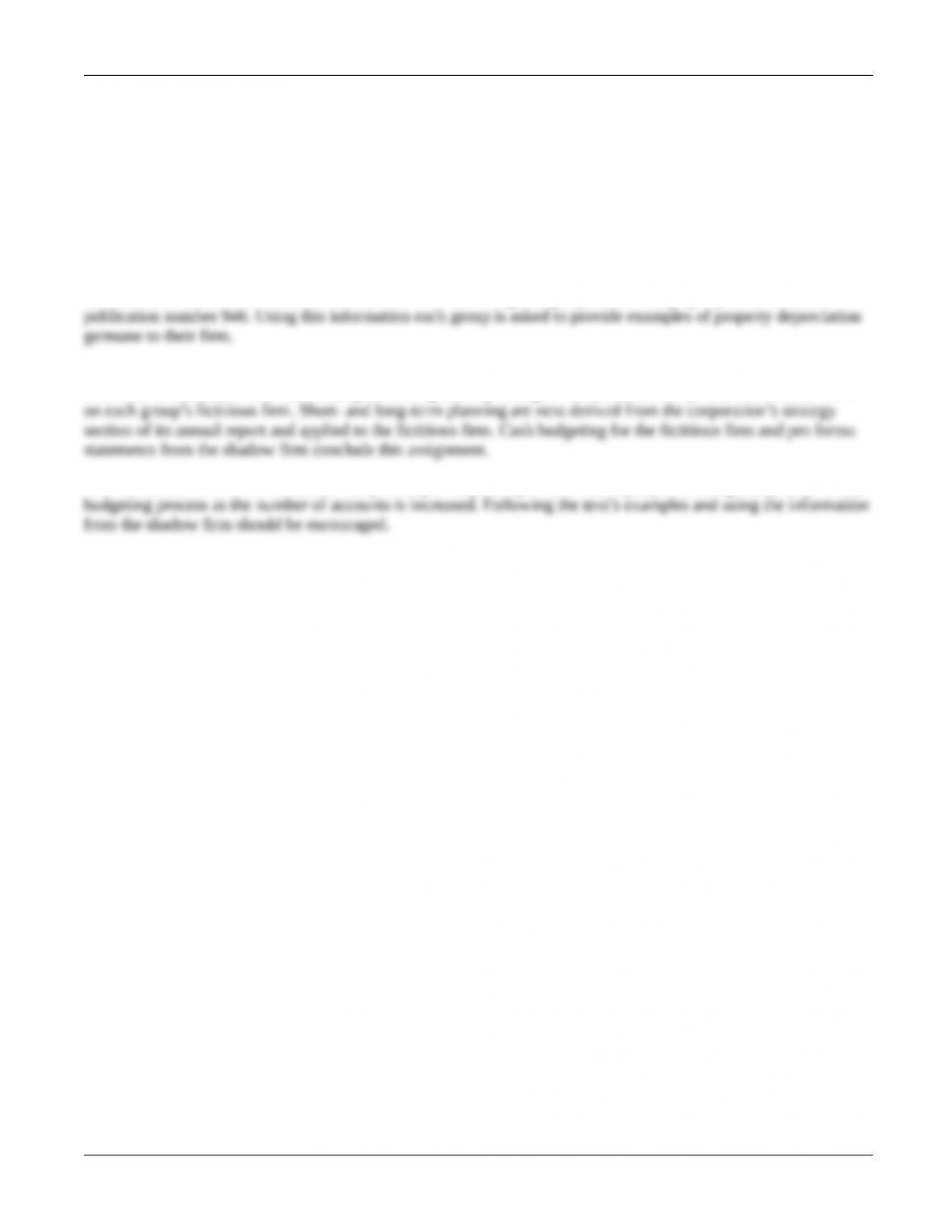
b.
Martin Manufacturing Company
Pro Forma Balance Sheet
December 31, 2016
Assets
Current assets
Liabilities and stockholders’ equity
Current liabilities
1$6,500,000/365 50 days $890,411
c. Based on the pro forma financial statements prepared above, Martin Manufacturing will need to raise about
© 2015 Pearson Education, Inc.
Chapter 4: Cash Flow and Financial Planning 55
Spreadsheet Exercise
The answer to Chapter 4’s ACME Company spreadsheet problem is located on the Instructor’s Resource Center at
www.pearsonhighered.com/irc under the Instructor’s Manual.
Group Exercise
Group exercises are available on www.myfinancelab.com.
The focus of this chapter’s exercise is each group’s fictitious firm and its asset depreciation. Students are
asked to first visit the IRS’s website and retrieve information regarding depreciation of property as described in
The second set of objectives centers on financial planning. Each group is asked to evaluate their shadow firm’s
statement of cash flows over the recent past and explain any changes. This effort is then paired with similar work
The best advice here is for students to keep it simple. Impress upon them the rapidly increasing complexity of any
© 2015 Pearson Education, Inc.