Plant-level operating income
$ 400
$ 396
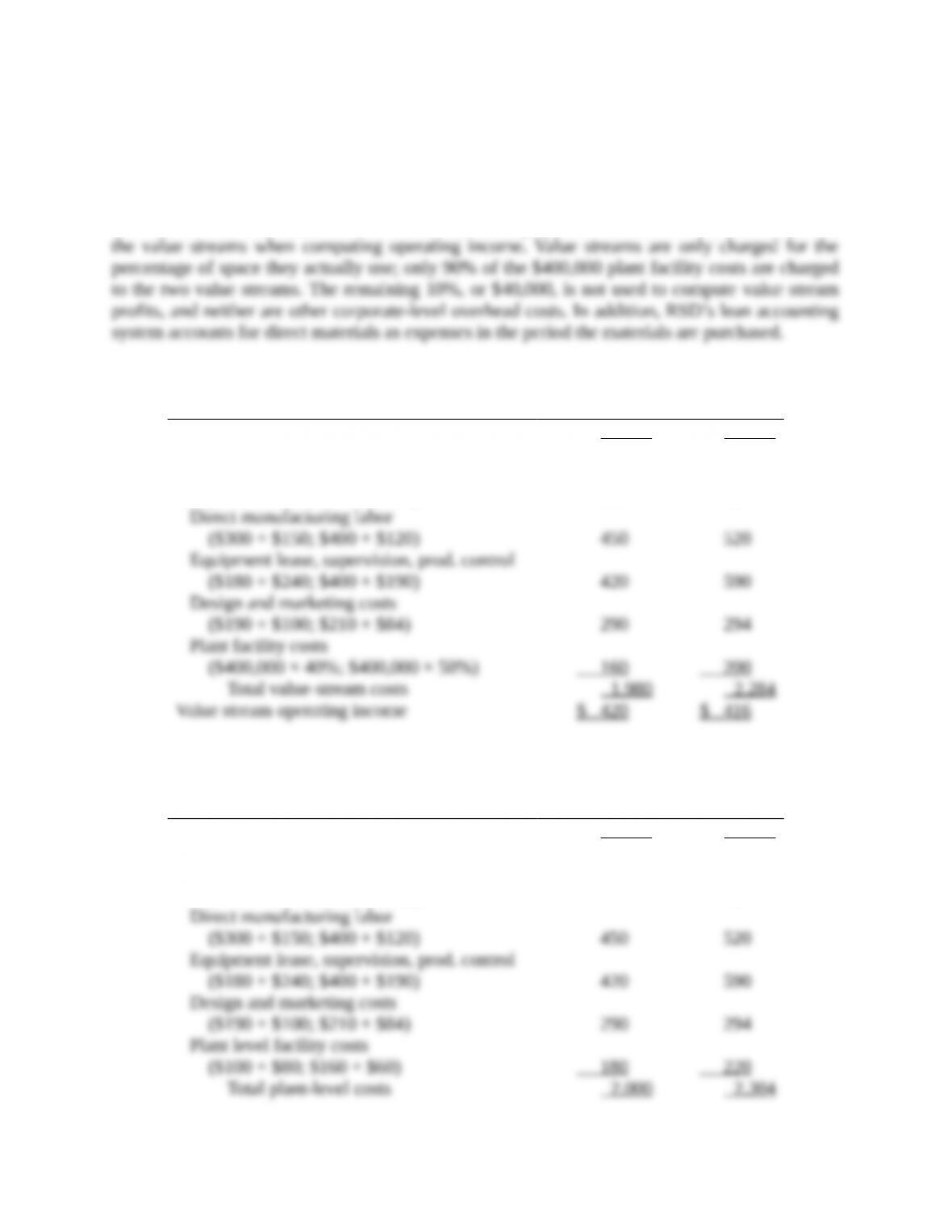
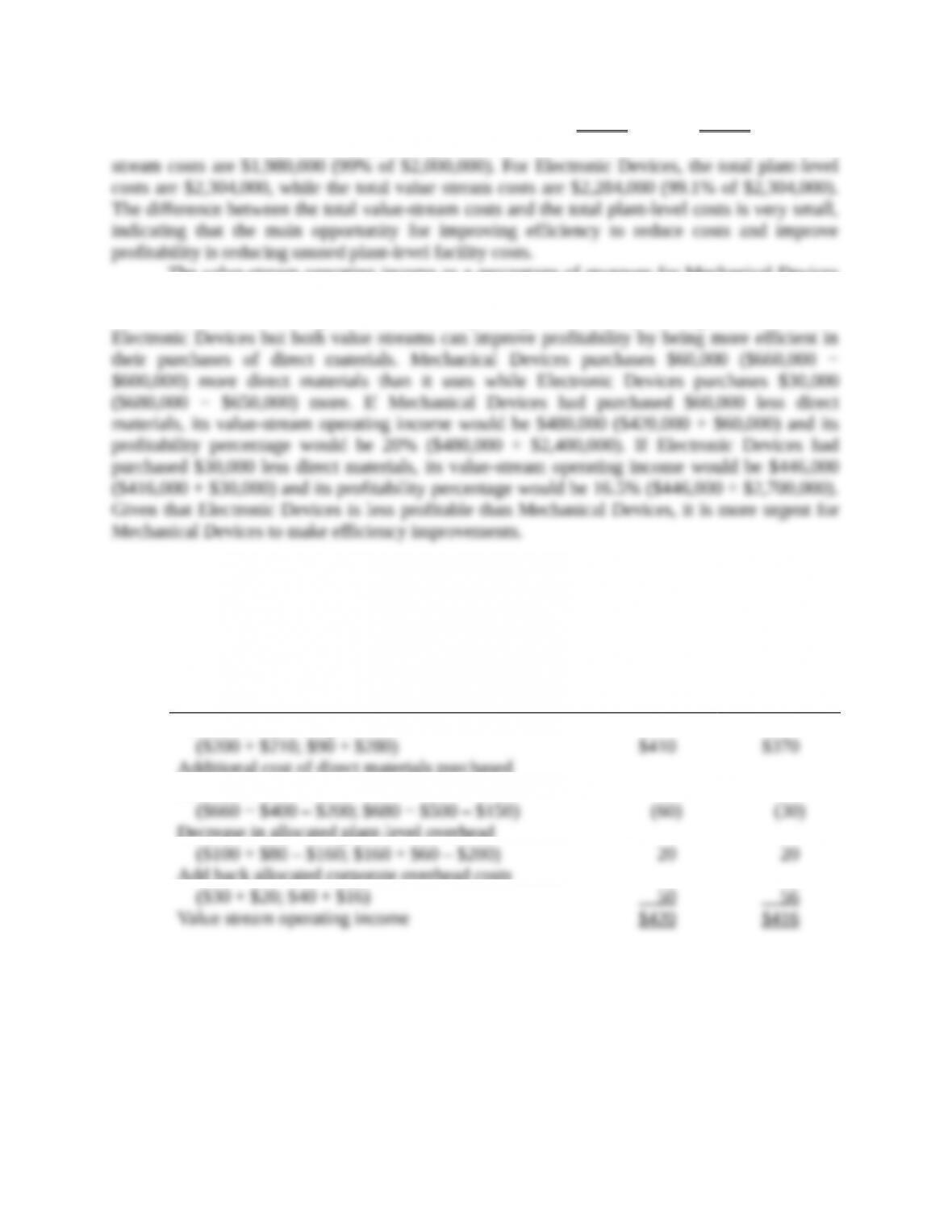
For Mechanical Devices, the total plant-level costs are $2,000,000, while the total value
stream costs are $1,980,000 (99% of $2,000,000). For Electronic Devices, the total plant–level
costs are $2,304,000, while the total value stream costs are $2,284,000 (99.1% of $2,304,000). The
difference between the total value-stream costs and the total plant-level costs is very small,
indicating that the main opportunity for improving efficiency to reduce costs and improve
profitability is reducing unused plant-level facility costs.
The value-stream operating income as a percentage of revenues for Mechanical Devices is
17.5% ($420,000 ÷ $2,400,000) and for Electronic Devices is 15.4% ($416,000 ÷ $2,700,000).
Mechanical Devices has higher value stream operating income as a percentage of revenue than
Electronic Devices but both value streams can improve profitability by being more efficient in
their purchases of direct materials. Mechanical Devices purchases $60,000 ($660,000 − $600,000)
more direct materials than it uses while Electronic Devices purchases $30,000 ($680,000 −
$650,000) more. If Mechanical Devices had purchased $60,000 less direct materials, its value–
stream operating income would be $480,000 ($420,000 + $60,000) and its profitability percentage
would be 20% ($480,000 ÷ $2,400,000). If Electronic Devices had purchased $30,000 less direct
materials, its value-stream operating income would be $446,000 ($416,000 + $30,000) and its
profitability percentage would be 16.5% ($446,000 ÷ $2,700,000). Given that Electronic Devices
is less profitable than Mechanical Devices, it is more urgent for Mechanical Devices to make
efficiency improvements.
Value-stream operating income analyses ignore allocated corporate overhead costs because
these costs cannot be controlled or influenced by plant-level managers. The following factors
explain the differences between traditional operating income and lean accounting income for the
two value streams (in thousands of dollars):
Mechanical
Devices
Electronic
Devices
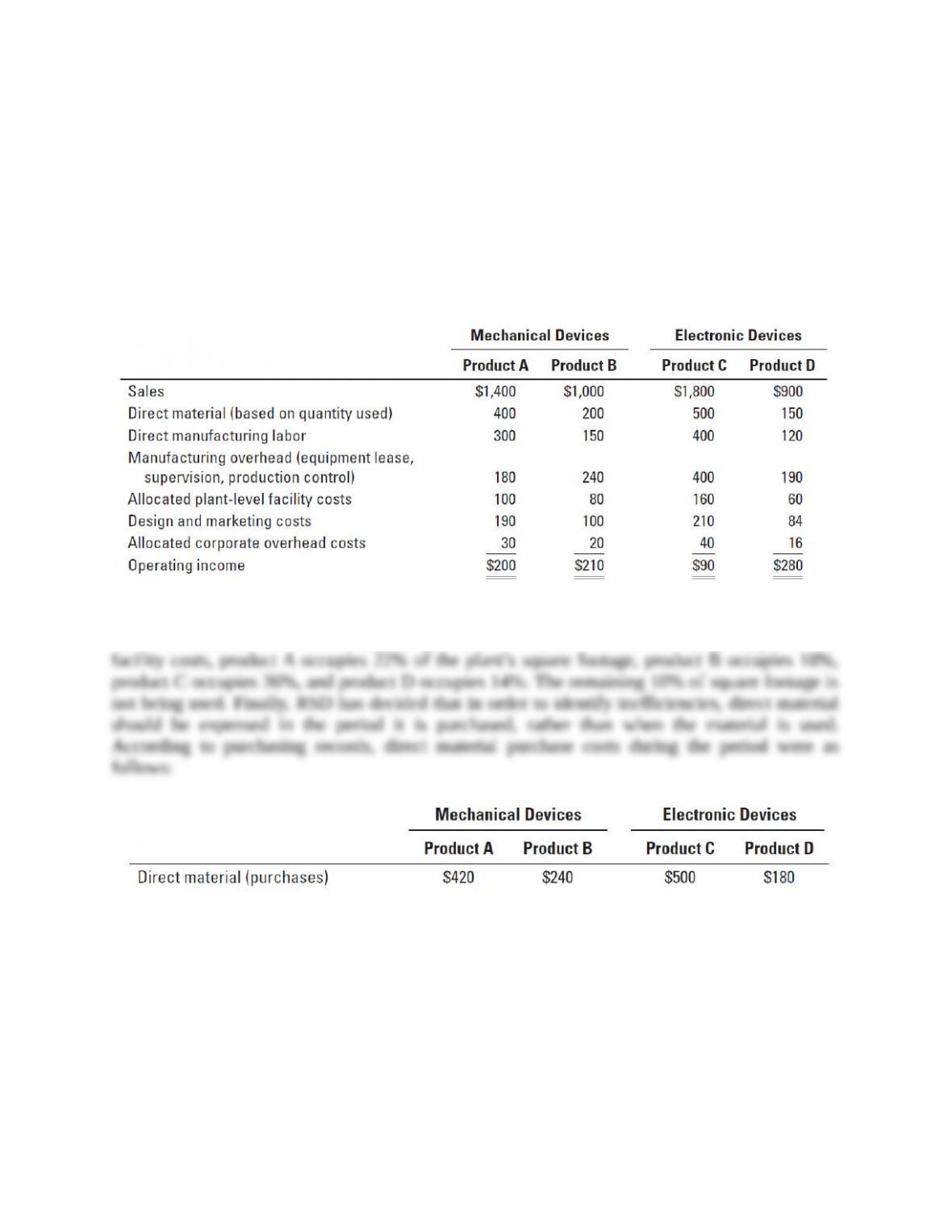
Traditional operating income
($200 + $210; $90 + $280)
$410
$370
Additional cost of direct materials purchased
over direct materials used
($660 − $400 – $200; $680 − $500 – $150)
(60)
(30)
Decrease in allocated plant-level overhead
($100 + $80 – $160; $160 + $60 – $200)
20
20
Add back allocated corporate overhead costs
($30 + $20; $40 + $16)
50
56
Value stream operating income
$420
$416