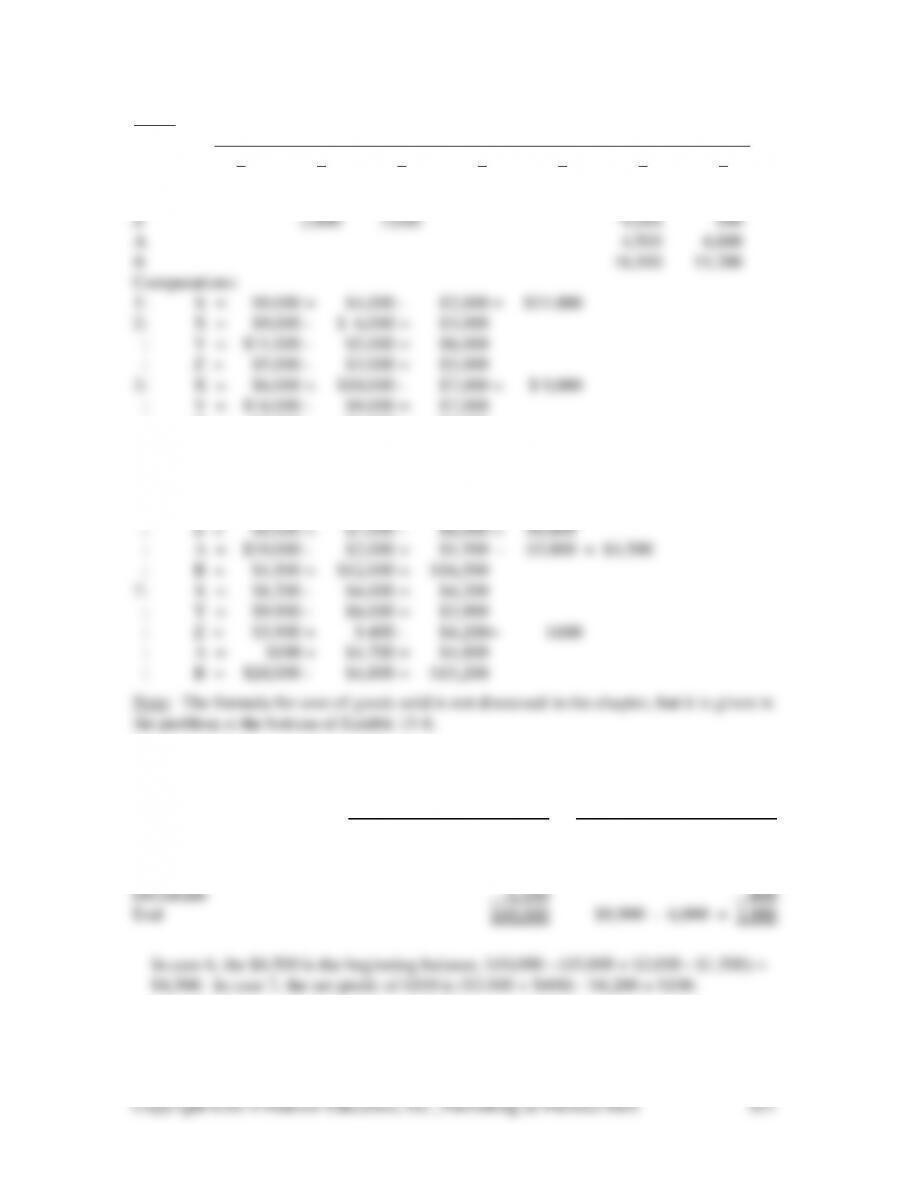
15-38 (20-30 min.)
Case
1 2 3 4 5 6 7
X $11,000 $3,000 $9,000 $14,000 $7,500 $ 8,000 $ 4,200
Y 6,000 7,000 2,000 3,900
: Z = $7,000 – $4,000 = $3,000
4: X = $8,000 + $12,000 – $6,000 = $14,000
5: X = $3,000 + $4,500 = $7,500
6: X = $14,000 – $6,000 = $8,000
: Y = $6,000 – $4,000 = $2,000
The following framework may help on cases 6 and 7:
Stockholders’ equity: Case 6 Case 7
Beginning ? = 4,500 $8,200 – 4,000 = 4,200
Additional investments +5,000 0
Net profit Y = 6,000 – 4,000 = +2,000 ? = 100
15-39 (45-75 min.)
2. CONNECTIVITY PLUS
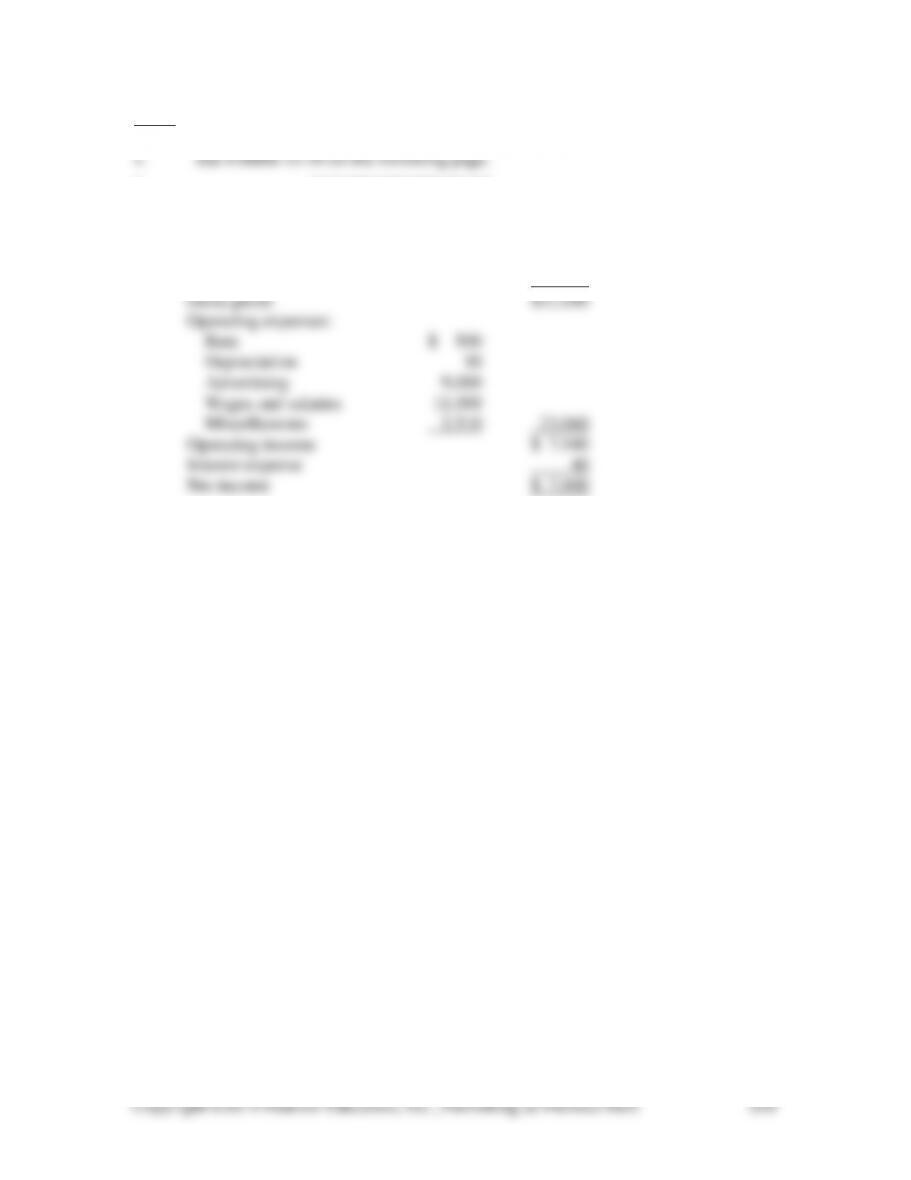
Statement of Income
For the Month Ended April 30, 20X1
Sales $62,000
Cost of goods sold 31,000
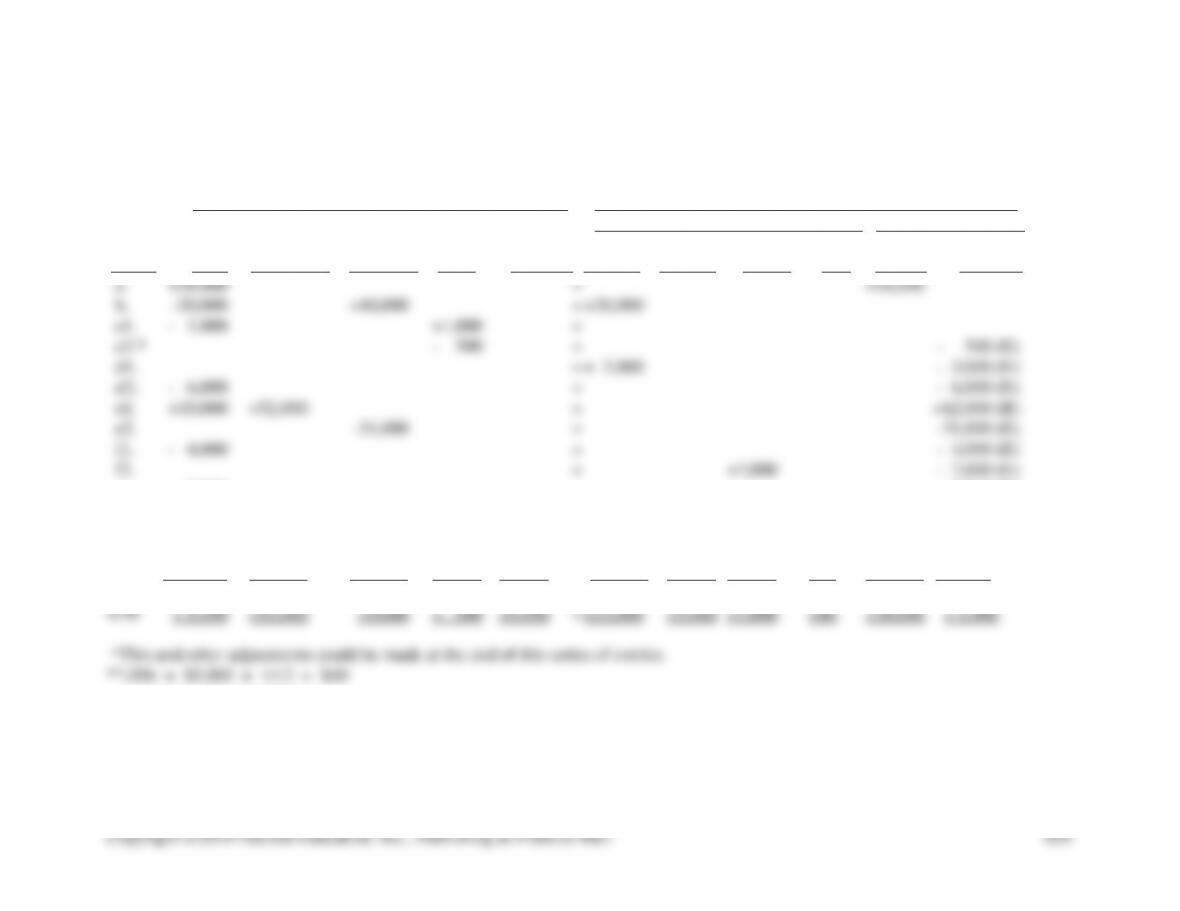
EXHIBIT 15-39
Assets = Liabilities + Stockholders’ Equity
Pre- Fixtures Liabilities Stockholders’ Equity
Accounts paid & Equip- Accounts Notes Accr. Accr. Paid-in Retained
Trans. Cash + Receivable +Inventory +Rent + ment = Payable +Payable + Wages + Int. + Capital + Earnings
g. – 2,510 = – 2,510 (E)
h. – 1,000 +6,000 = +5,000
i. = +40** – 40 (E)
j. – 50 = – 50 (E)
k. – 6,000 = – 6,000 (D)
Balance
Copyright ©2014 Pearson Education, Inc., Publishing as Prentice Hall.
660
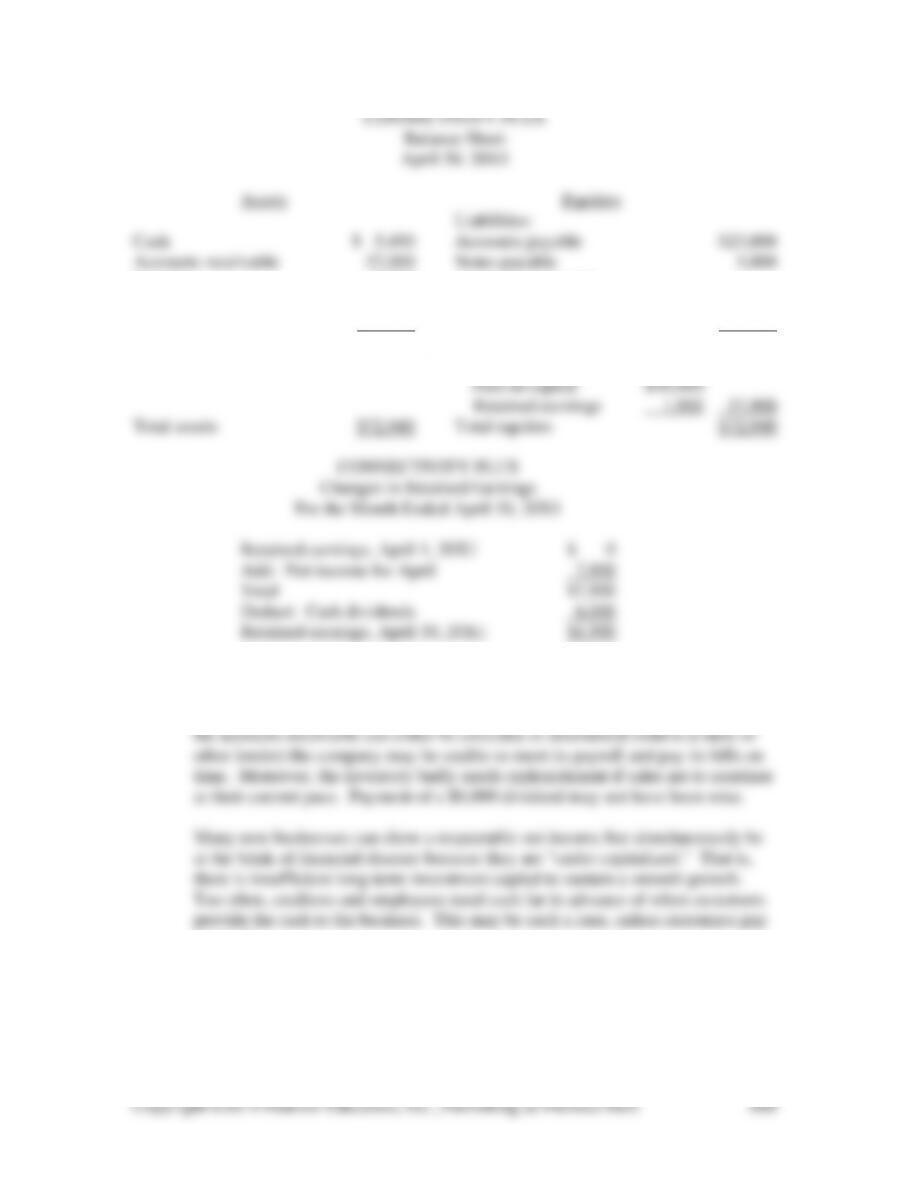
CONNECTIVITY PLUS
Balance Sheet
April 30, 20X1
Assets Equities
Liabilities:
Cash $ 5,490 Accounts payable $23,000
Accounts receivable 52,000 Notes payable 5,000
Inventory 9,000 Accrued wages and
Prepaid rent 500 salaries payable 7,000
Fixtures and equipment, net 5,950 Accrued interest payable 40
Total Liabilities $35,040
Stockholders’ equity:
3. The picture in this set of financial statements is not unusual for new businesses.
Some of the liabilities are very current: accounts payable, $23,000, and accrued
wages, $7,000. These are much larger than the $5,490 of cash. Unless much of
promptly.
15-40 (30 min.)
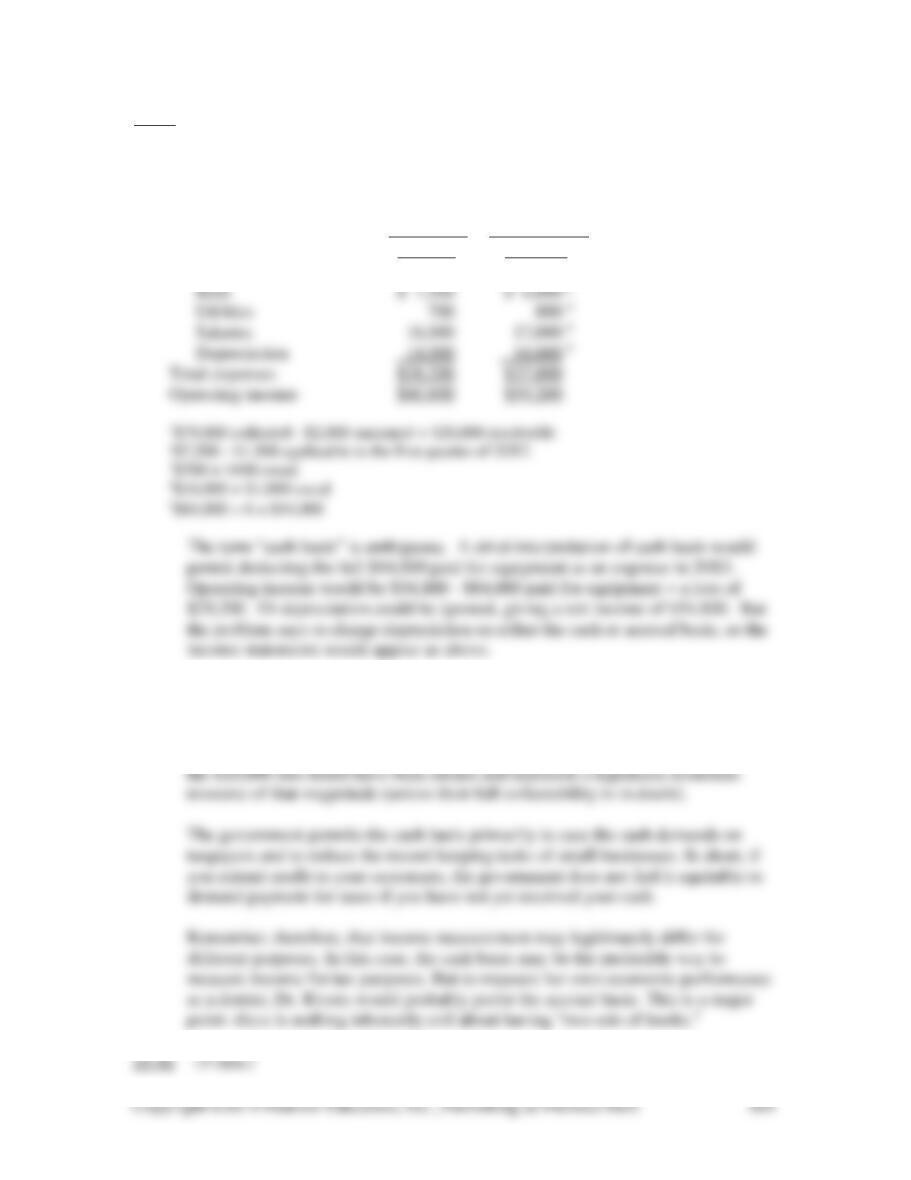
1. DR. F. RIVERA, DENTIST
Income Statement
For the Year Ended December 31, 20X1
Cash Basis Accrual Basis
Fee revenue $79,000 $97,000 1
Expenses:
2. The accrual basis provides a better measure of economic performance because it
encompasses all assets and liabilities arising from operations rather than their
immediate cash effects alone. For example, the $2,000 advance payment has not
yet been earned and therefore represents an obligation of Dr. Rivera. However,

1. Dr. 2. Cr. 3. Cr. 4. Cr. 5. Dr. 6. Cr. 7. Cr. 8. Cr.
1. F. Purchases of inventory should be debited to Inventory and credited to
Accounts Payable.
3. T
5. F. The first sentence is correct. However, credit entries always must be on the
right.
7. F. Decreases in assets are shown on the credit side, but decreases in liabilities and
stockholders’ equity are shown on the debit side.
9. F. All credits are on the right.
15-43 (10-15 min.)
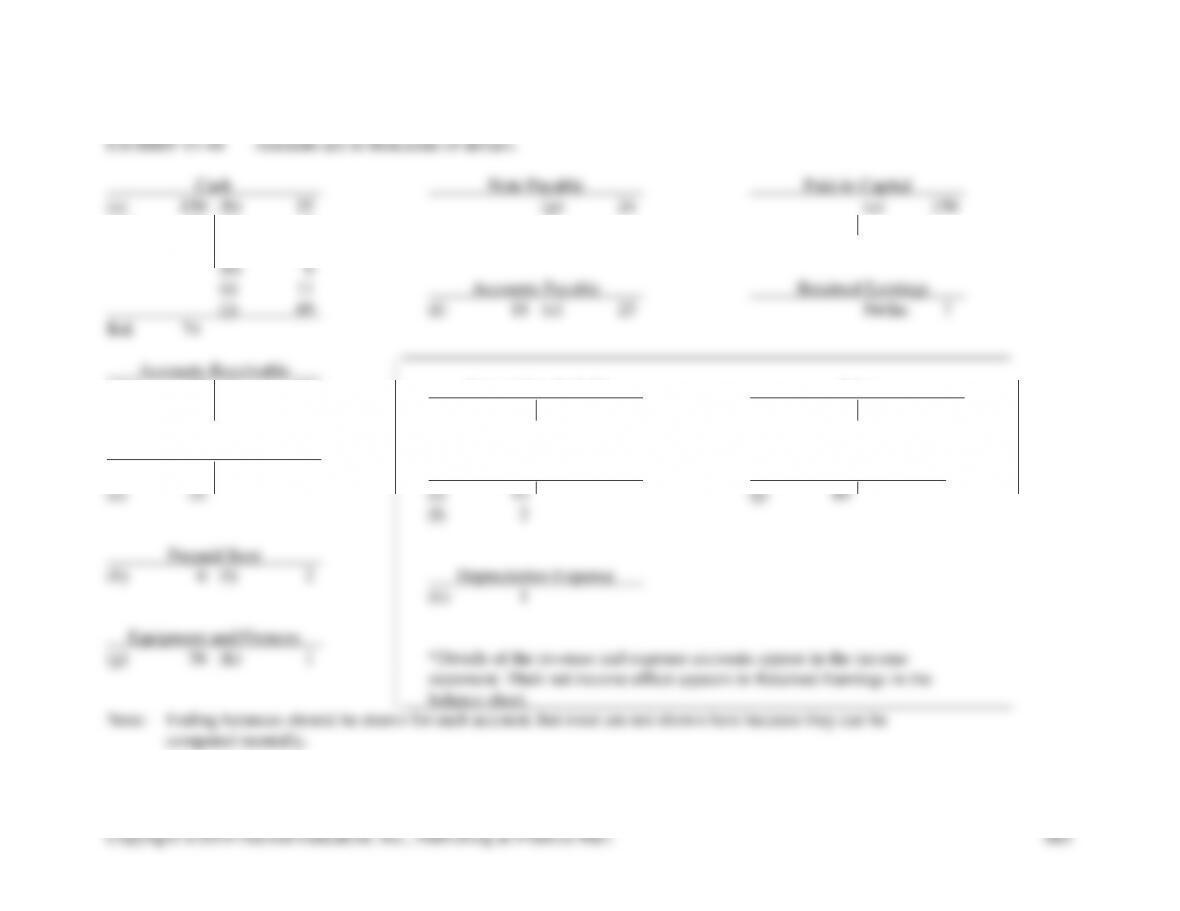
1 and 2. These accounts will generally have a beginning balance. The balances are
omitted in the following T-accounts.
Cash
Dues Receivable
Accounts Receivable
a. 600
a. 600
b. 200
d. 200
b. 150
d. 200
c. 210
b. 350
c. 210
Copyright ©2014 Pearson Education, Inc., Publishing as Prentice Hall.
663
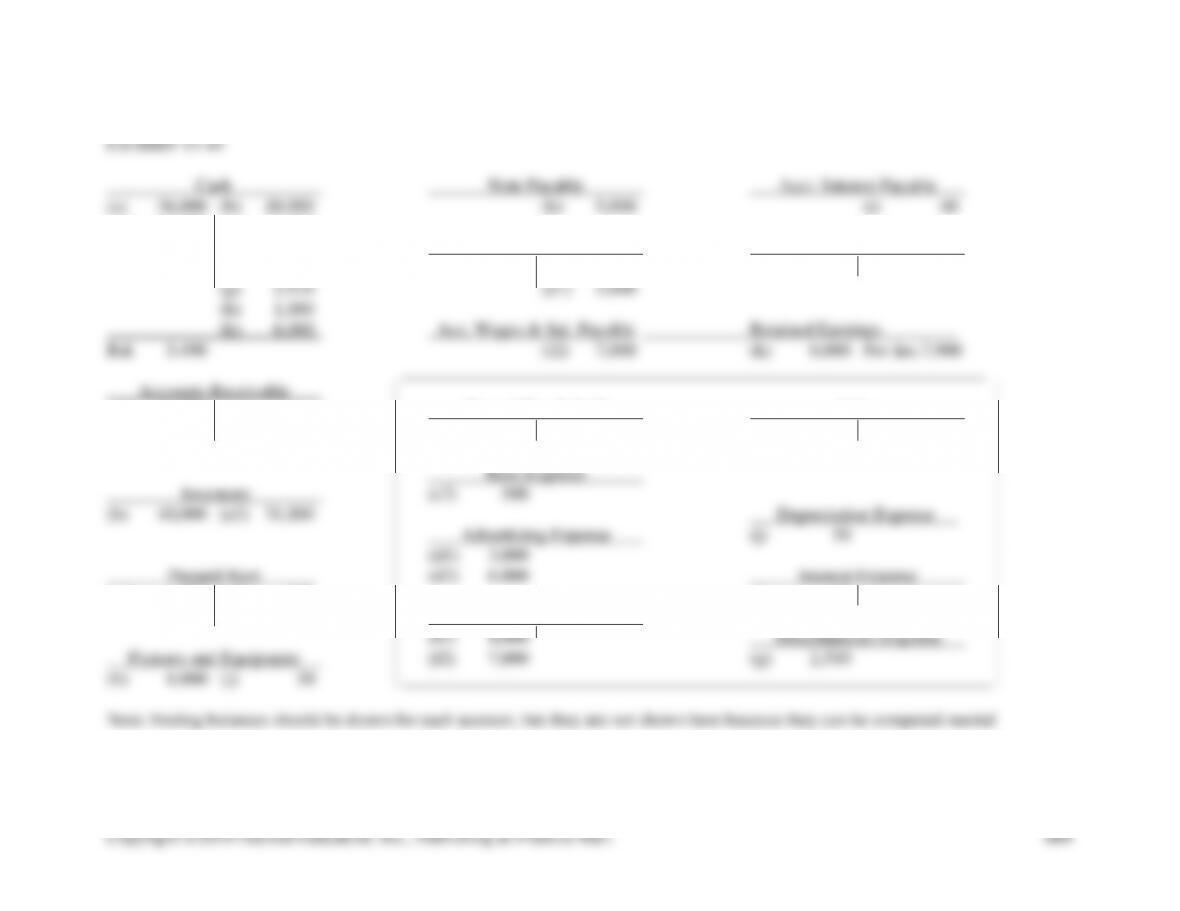
EXHIBIT 15-44 Amounts are in thousands of dollars.
Cash Note Payable Paid-in Capital
(a) 150 (b) 35 (g) 24 (a) 150
(d1) 35 (f) 18
(e) 20 (g) 12
(d1) 75 (e) 20 Cost of Goods Sold Sales
(d2) 40 (d1) 110
Merchandise Inventory
(b) 35 (d2) 40 Rent Expense Wages, Sal., & Comm.
Copyright ©2014 Pearson Education, Inc., Publishing as Prentice Hall.
664
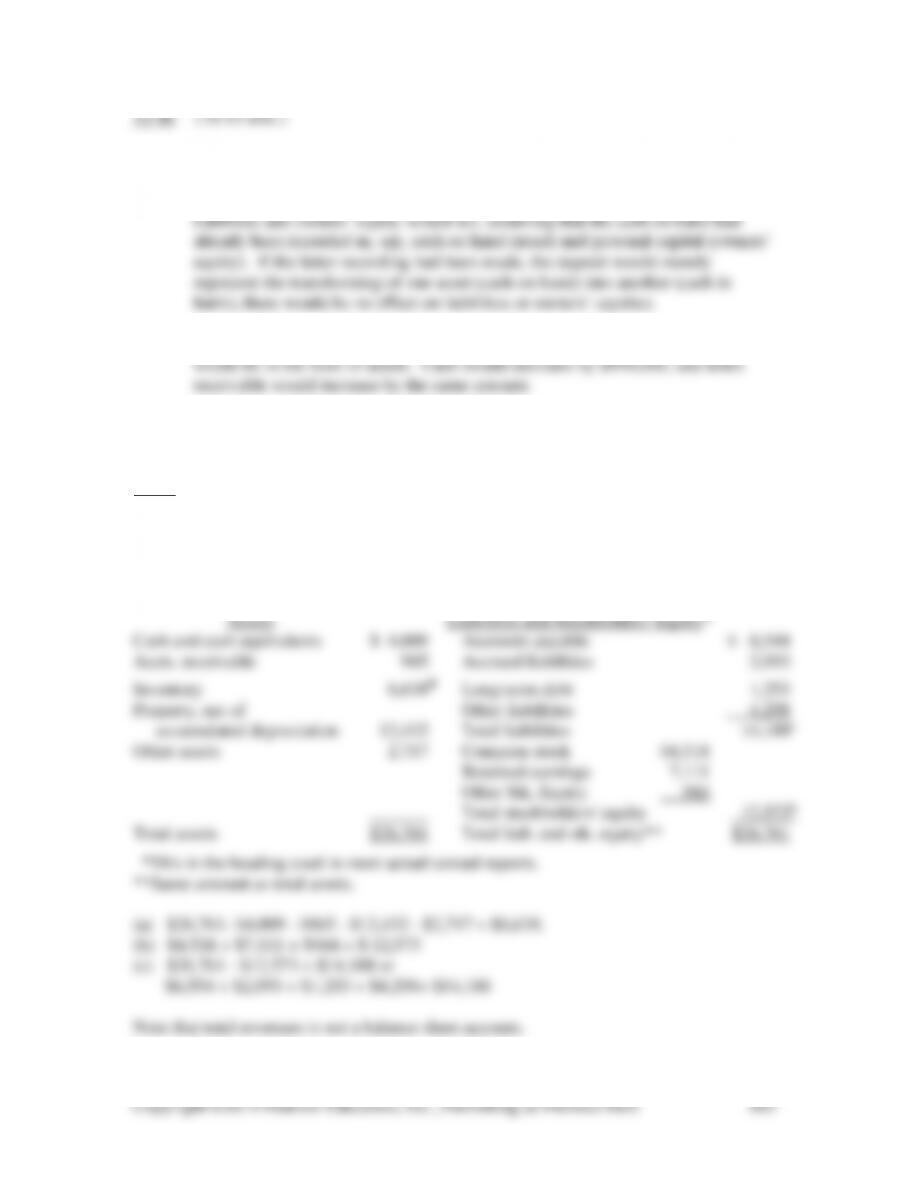
EXHIBIT 15-45
Cash Note Payable Accr. Interest Payable
(a) 36,000 (b) 20,000 (h) 5,000 (i) 40
(e1) 10,000 (c1) 1,000
(d2) 6,000 Accounts Payable Paid-in Capital
(f1) 4,000 (b) 20,000 (a) 36,000
(e1) 52,000 Cost of Goods Sold Sales
(e2) 31,000 (e1) 62,000
(c1) 1,000 (c2) 500 (i) 40
Wages & Sal. Expense
Copyright ©2014 Pearson Education, Inc., Publishing as Prentice Hall.
665
15-46 (10-15 min.)
1. The bank’s assets (cash) and liabilities (deposits) would each increase by $5,000.
Your mix of personal assets would change, but your total assets and your
2. The bank’s total assets and liabilities would be unaffected. The only change
3. Personal cash (asset) would increase by $20,000, and personal liabilities (note
payable) would increase by the same amount.
15-47 (20 min.)
COSTCO WHOLESALE CORPORATION
Balance Sheet
August 28, 2011
(in millions of dollars)
15-48 (20-25 min.)
1. GOOGLE INC.
Income Statement
For the Year Ended December 31, 2011
2. GOOGLE INC.
Changes in Retained Earnings
For the Year Ended December 31, 2011
3. Google did not pay any cash dividends. Apparently management decided that
15-49 (15-25 min.)
The following is Dell’s income statement. Students may use other acceptable
formats. Accounts payable and cash are irrelevant.
DELL INC.
Income Statement
15-50 (10 min.)
The sale of the new shares will bring in cash of $50,000 and add $50,000 to the existing
$150,000 of capital, but instead of the capital being identified with a particular owner it
1. Percentage increase in total assets:
($14,998 ÷ $14,419) – 1 = 4.0%
2. Assets = Liabilities + Shareholders’ Equity
$14,998 = $5,155 + $9,843
3. Beginning retained earnings $6,095
Net income 2,133
4. Percentage growth in net income, fiscal 2011:
($2,133 ÷ $1,907) – 1 = 11.9%
15-52 (45-60 min.) For the solution to this Excel Application Exercise, follow the
month.
3. Cash decreased by $76,000. This is not unusual for a young company. Many of
expenses.
15-53 (20 – 30 min.)
The purpose of this game is to help students identify different types of implicit
transactions. Usually implicit transactions are harder for students to understand than
15-54 (15-25 min.) NOTE TO INSTRUCTOR: This solution is based on the web site
changed.
1. McDonalds’ largest asset is property and equipment, comprising about 69% of
2. One measure of the size of a company is its total assets. McDonalds’ total assets
increased 3%, from $32.0 billion to $33.0 billion. This is shown on the balance
sheet.
3. McDonalds’ total revenues grew about 12.2%, from $24,075 million to $27,006
4. Each of the basic financial statements includes clues that McDonalds is a
corporation. Most obvious is that each statement is labeled “consolidated.” The
5. The “Report of Independent Auditors” indicates that McDonalds’ financial
statements comply with GAAP. The quote from the auditor’s report is: “[T]he